
European goldenrod (Solidago virgaurea, )
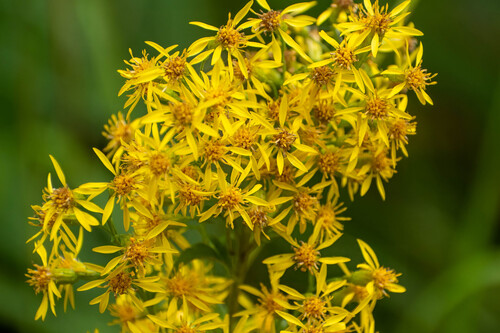
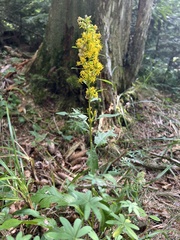
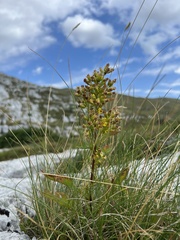
European goldenrod (Solidago virgaurea L.) is a perennial in the Asteraceae family, native to Europe and temperate Asia, growing from open lowland woods to subalpine rock outcrops. It does not form the dense colonies of its widely invasive North American relatives and provides late-season nectar as well as having a long tradition of medicinal use.
Read moreEuropean goldenrod, Woundwort and Goldenrod
Allow a few hours of direct sun per day, preferably morning or evening.
Full sun; tolerates light partial shade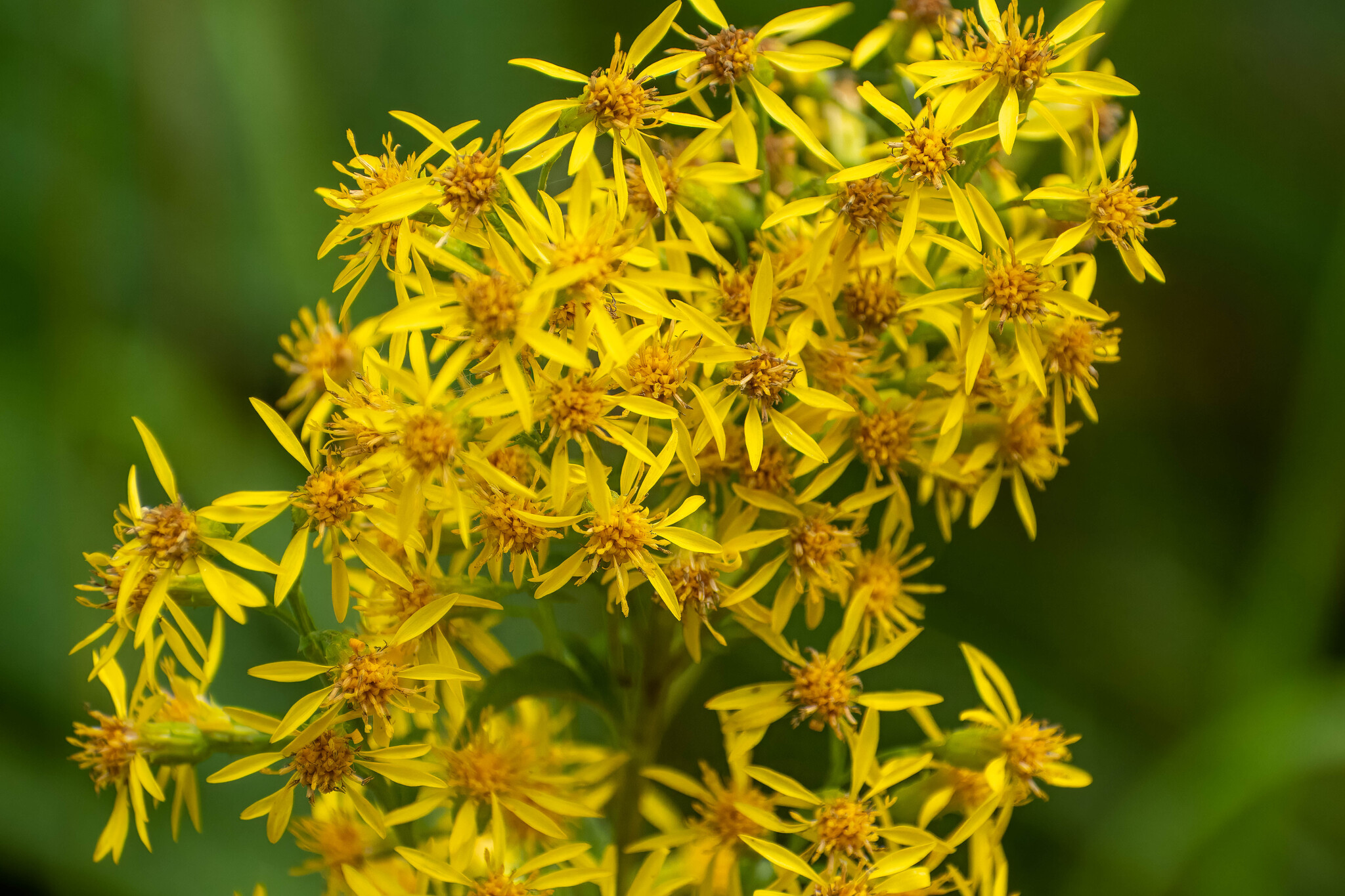
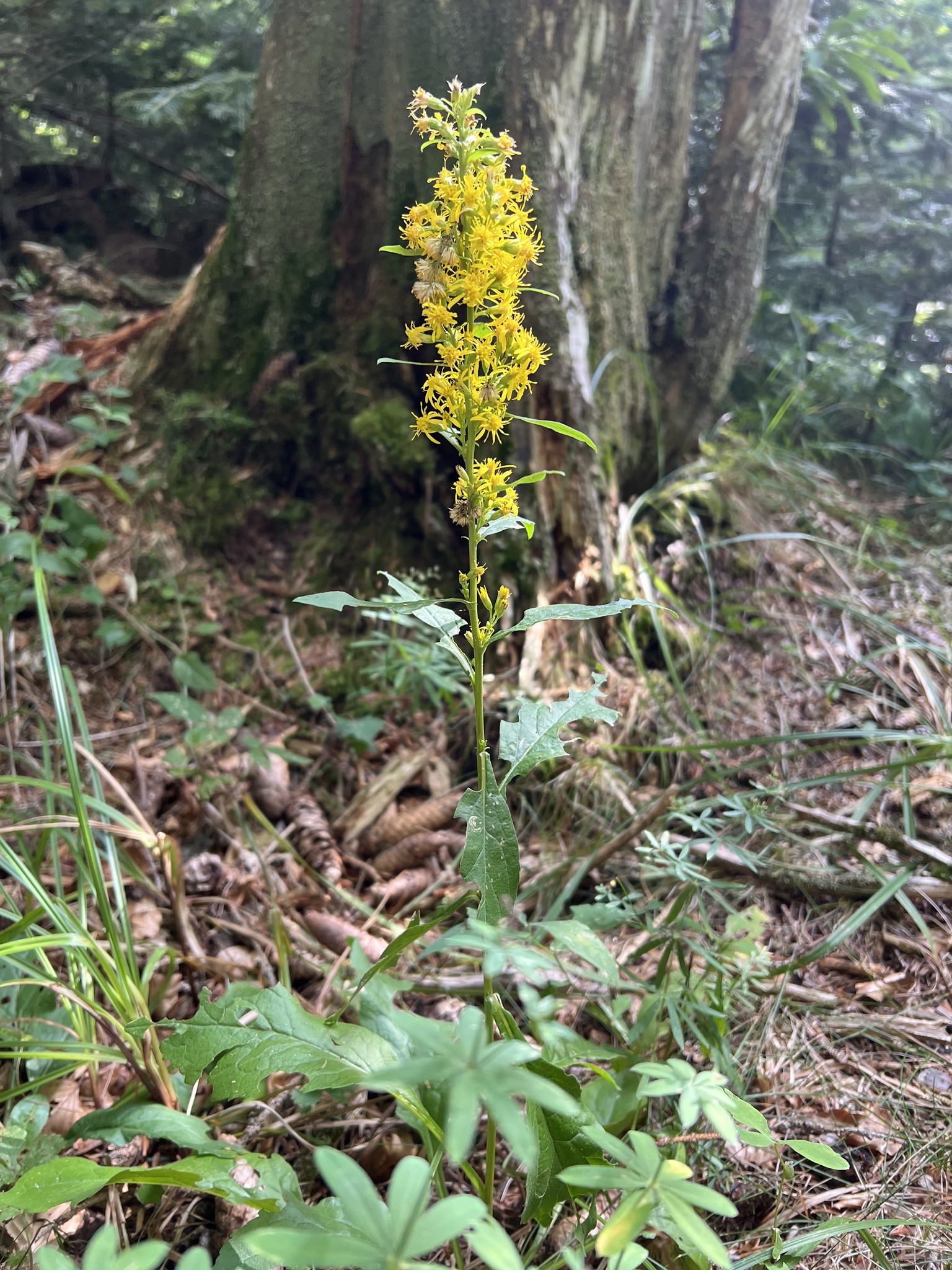
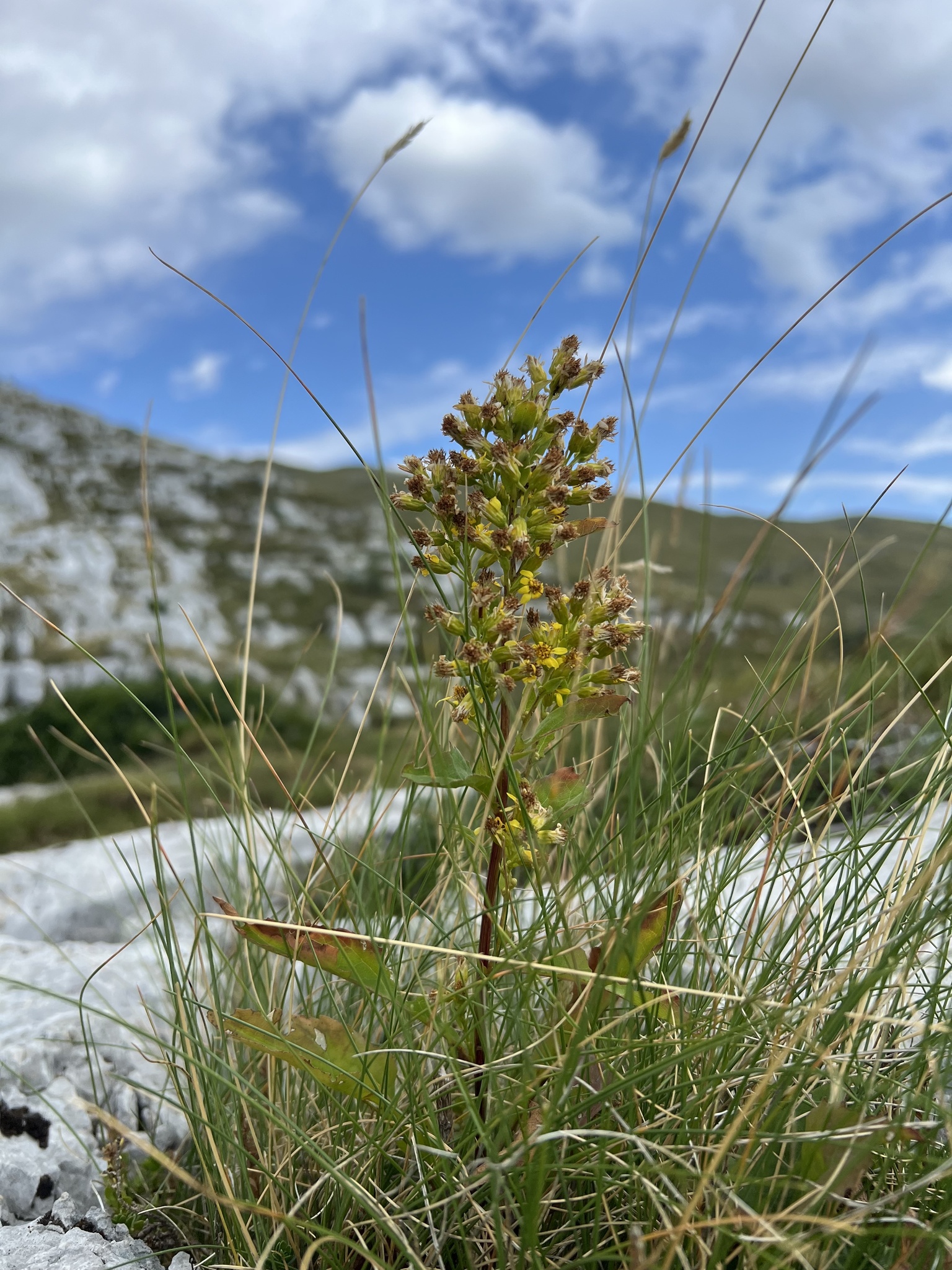


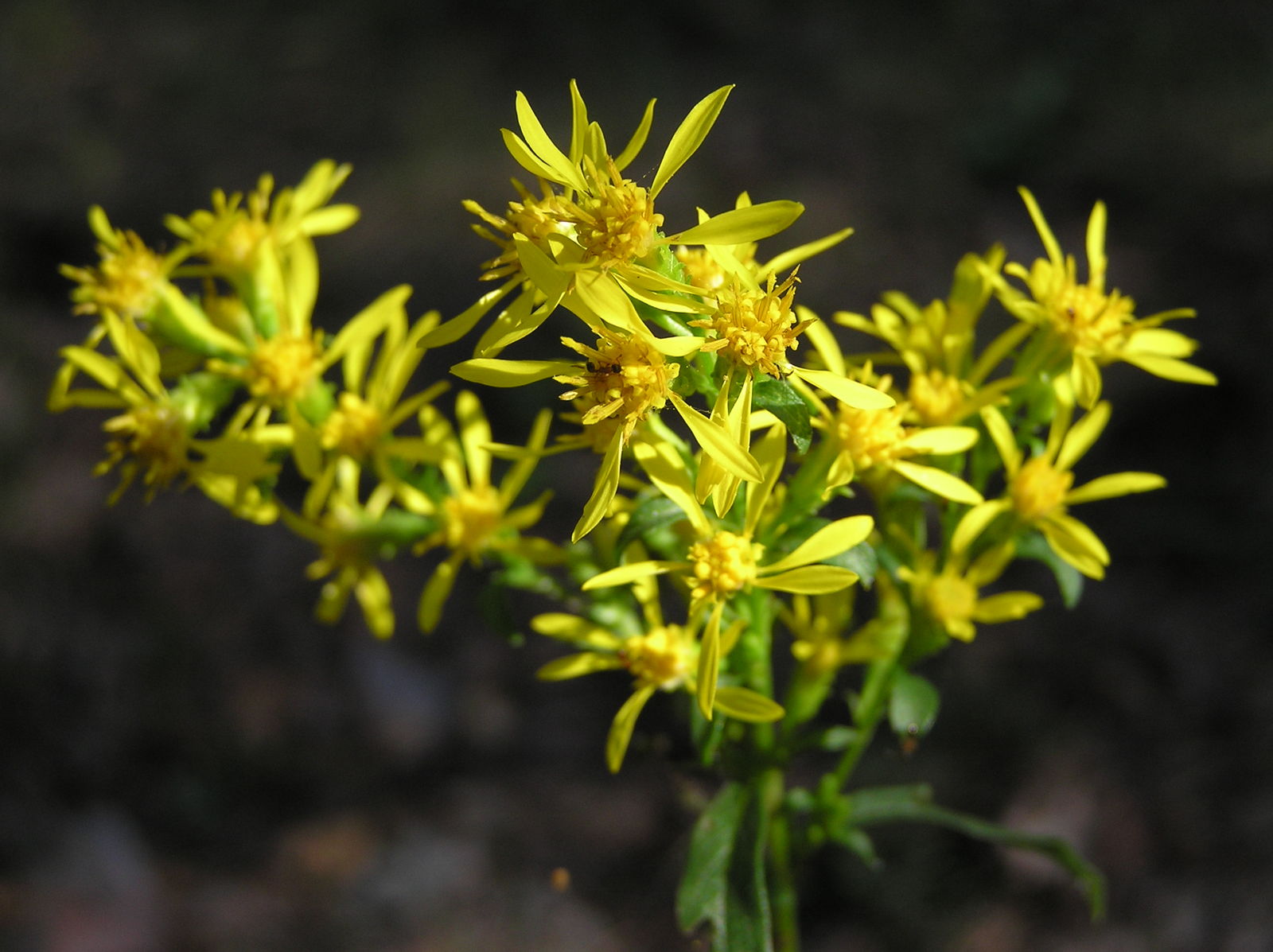
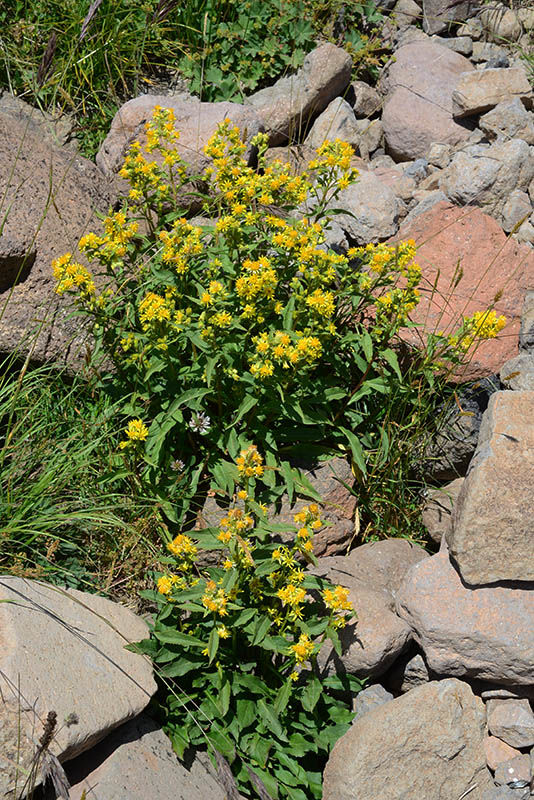
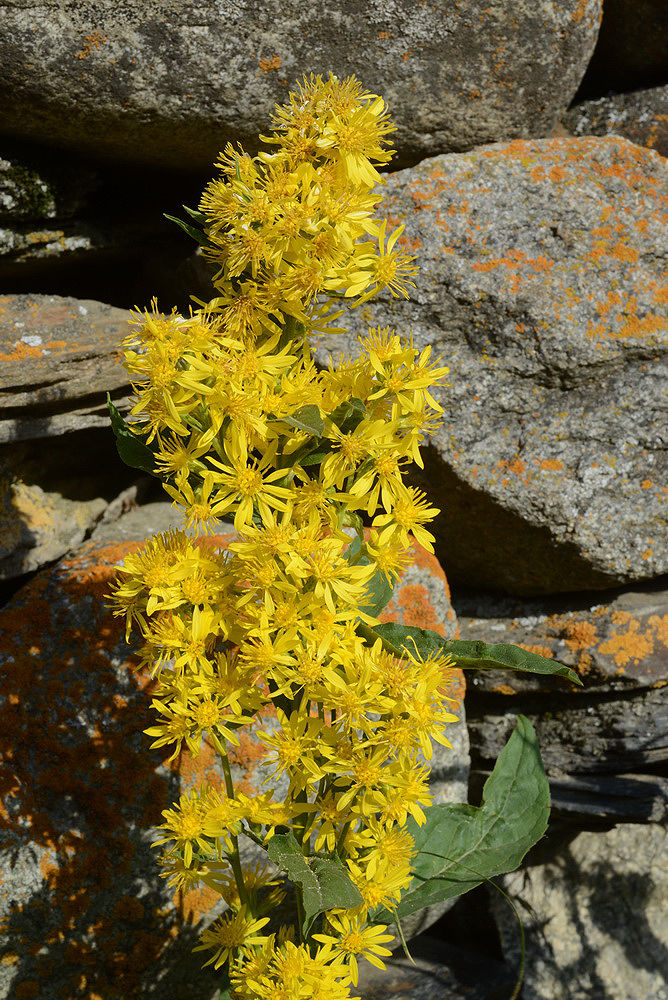
© photo
(c) Михаил Малышев, some rights reserved (CC BY), uploaded by Михаил Малышев · cc-by
Mirko Ubović · cc0
Taken Aug 7, 2012 by Tela Botanica − Dominique REMAUD (cc-by-sa)
Taken Jul 7, 2011 by Tela Botanica − Jean Michel FOULETIER (cc-by-sa)
Taken Oct 3, 2019 by curritodelacroix (cc-by-sa)
Taken Aug 30, 2012 by Tela Botanica − Jean-Jacques HOUDRÉ (cc-by-sa)
Taken Oct 29, 2019 by Eduard (cc-by-sa)
© copyright of the Board of Trustees of the Royal Botanic Gardens, Kew.


Global distribution
POWO and INPN treat Solidago virgaurea as native to Europe and temperate Asia, from Western Europe to central Siberia and as far as the Philippines. In France it is part of the common flora, especially in mountains and the south, without the invasive status of its North American relatives.
- Native5
- Metropolitan France
- Central and Northern Europe
- Russia and Siberia
- China
- Philippines (Luzon)
Hexagons: regions where the plant occurs. Green dots: native range.1
Identity
European goldenrod (Solidago virgaurea L., 1753) forms a compact clump 20 cm–1.2 m (8 in–4 ft) tall, without the long creeping rhizomes of its North American relatives. Also known as woundwort or goldenrod, this member of Solidago in the Asteraceae family was described by Linnaeus in Species Plantarum in 1753. 1 2
French vernacular names recorded by INPN include herbe des Juifs and baguette d’Aaron, alongside names meaning goldenrod. The genus name comes from Latin solidare, to make solid or whole, referring to an old herbal use for wound healing. The epithet virgaurea joins virga, rod, and aurea, golden, matching the image conveyed by the English name. 3 8
North American relatives Solidago canadensis and Solidago gigantea invade disturbed ground and roadsides in Europe and are classified as invasive alien species there. European goldenrod, by contrast, belongs to the native flora and does not form dense colonies that impoverish local vegetation. 4
Late-season yellow flowers make European goldenrod a recognized nectar source. Bees, hoverflies and butterflies visit it actively when many other perennials have already finished flowering. 8
Recognition
A short rootstock produces a simple or sparingly branched stem with alternate, lance-shaped leaves, broader at the base and finely toothed along the edges. This gives European goldenrod a much more compact outline than the tall, branched stems of Solidago canadensis. 4 5
The flower arrangement offers the most reliable field clue. Bright yellow heads 1–2 cm (0.4–0.8 in) wide form a simple raceme or short panicle at the stem tip, never the broad, one-sided pyramidal panicle of the North American goldenrods. Bloom runs through summer and fall, from July to October in its northern temperate range, with timing varying by altitude. 5 4
At mountain elevations of 1,500–2,800 m (4,900–9,200 ft), a shorter form occupies subalpine and alpine habitats. Its small size alone should not lead to rejecting an otherwise sound identification. 4
Useful taxonomy
Subspecies recognized within Solidago virgaurea by POWO include Solidago virgaurea subsp. rupicola (Rouy) Lambinon, described from France, and Solidago virgaurea subsp. jailarum (Juz.) Tzvelev, from Crimea. These taxa mainly reflect local adaptation to elevation and substrate, rather than a major difference in appearance for field identification. 1
Keeping the accepted name Solidago virgaurea L. in view avoids confusion with historical synonyms still found in older regional floras. Non-specialists should also consider neighboring genera: several late-season, yellow-flowered Asteraceae have a similar outline without belonging to Solidago. 1 2
Seed packets labeled simply goldenrod can sometimes contain cultivars derived from Solidago canadensis or horticultural hybrids. The accepted botanical name helps distinguish these commercial mixtures from the European wild plant described here. 5
Habitat and range
Western Europe, central Siberia and populations reaching the Philippines on Luzon fall within the documented native range. In France the species is common across much of the country, especially in mountains and the south, but rarer in the strictly Mediterranean zone. 1 3
Open woods, heathland, rocky ground, cliffs and dry meadows all provide habitat, on both acidic and chalky soils from sea level to subalpine areas. This tolerance accounts for its presence from disturbed lowland sites to mountain rock outcrops. 5 4
European goldenrod's native status underlies the absence of management or eradication measures targeting it in Europe. That distinguishes it from Solidago canadensis, which is actively monitored in several European countries. 3
Life cycle and reproduction
Spring shoots emerge from a short rootstock rather than the extensive clonal networks of North American goldenrods. The stems lengthen through spring and early summer before flowering, corresponding to March through June in its northern range. 4
Summer-to-fall flowering is followed by pollination, mainly by bees, hoverflies and butterflies. Each head then produces small achenes with a feathery pappus. Wind disperses these fruits over relatively short distances. 5 8
In gardens, propagation is by seed sown in a cold frame in spring or by clump division in spring or fall. Division provides a quicker route to a plant with the same flowering characteristics as its parent. 5
Uses and risks
Perenual lists Solidago virgaurea as non-toxic to cats and dogs, while leaving its effects on horses undocumented. No toxic constituent associated with ingestion is listed for the species. 9
European herbalists used the whole plant for wound healing as early as the 15th and 16th centuries, which explains the English name woundwort. The European Medicines Agency has since evaluated a monograph on the dried aerial parts, traditionally prepared as herbal tea for minor urinary complaints. 7
A recent review reports diuretic activity comparable to furosemide in animal studies, together with anti-inflammatory and antioxidant effects observed in the laboratory. It also emphasizes the lack of randomized clinical trials in humans. As a precaution, traditional medicinal use is discouraged during pregnancy or breastfeeding and in chronic kidney failure. 6 5
Varieties, look-alikes and related plants
Compact growth and a narrow flower cluster separate European goldenrod from several look-alikes:
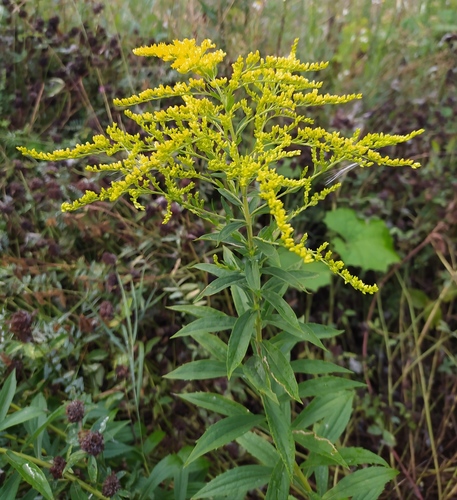
- Solidago canadensis and Solidago gigantea are taller, spread through long creeping rhizomes and bear much broader inflorescences, often leaning to one side;
- Jacobaea vulgaris has yellow rayed heads and deeply divided leaves, clearly different from the narrow goldenrod raceme;
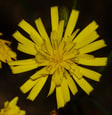
- Hieracium species have solitary or loosely grouped yellow heads, without the elongated raceme characteristic of Solidago virgaurea.
Before confirming identification, examine the narrow raceme rather than a broad panicle, the size of the rootstock and the absence of long creeping rhizomes. These features together are more useful than yellow flowers alone. 4 5
Main sources
- Plants of the World Online / Kew, Solidago virgaurea L.
- International Plant Names Index, Solidago virgaurea L.
- INPN, Solidago virgaurea L., 1753
- InfoFlora Switzerland, Solidago virgaurea subsp. virgaurea
- Plants For A Future, Solidago virgaurea
- PMC, Solidago virgaurea, ethnomedicinal uses, phytochemistry and pharmacological activities review
- European Medicines Agency, Solidaginis virgaureae herba monograph
- Herbal Reality, Goldenrod (Solidago virgaurea)
- Perenual, horticultural and toxicity traits, Solidago virgaurea
Frequently asked questions
Is European goldenrod invasive like Canada goldenrod?
No. Solidago virgaurea is native to Europe and temperate Asia and does not form the dense rhizomatous colonies of Solidago canadensis or Solidago gigantea, two North American species classified as invasive in Europe.
Is European goldenrod toxic to cats and dogs?
No. Perenual lists Solidago virgaurea as non-toxic to cats and dogs. This source does not document its effects on horses.
Why does European goldenrod have names such as herbe des Juifs and baguette d’Aaron?
These are old French vernacular names recorded by INPN alongside solidage verge d’or and verge d’or. They refer to the same plant in regional French floras.
Does European goldenrod have a recognized medicinal use?
The European Medicines Agency has evaluated a monograph on the dried aerial parts, traditionally used as herbal tea for minor urinary complaints. Randomized clinical trials in humans nevertheless remain limited.
How can I distinguish Solidago virgaurea from Solidago canadensis?
Solidago virgaurea forms a compact clump without long creeping rhizomes and has flower heads in a narrow cluster. Solidago canadensis spreads through long rhizomes and bears a broad pyramidal panicle that often faces one side.
Where does European goldenrod grow in France?
It grows in open woods, heathland, rocky ground and dry meadows, on acidic to chalky soils from sea level to subalpine areas. It is rarer in the strictly Mediterranean zone.
Similar plants
If you are unsure about a plant’s toxicity, ask a botanist or veterinarian for advice.