
Bog bilberry (Vaccinium uliginosum, )
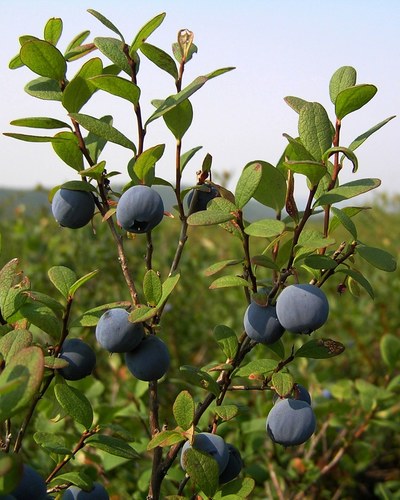
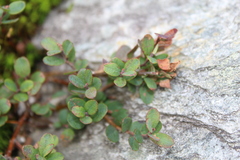
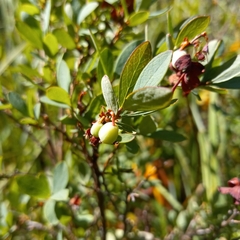
Bog bilberry (Vaccinium uliginosum) is a deciduous subshrub in the Ericaceae family, spread across circumboreal bogs and tundra in the Northern Hemisphere. Its round brown stems, smooth-edged blue-green leaves and white-fleshed fruit clearly distinguish it from common bilberry, a frequent source of field confusion that has helped sustain centuries of legends about its alleged toxicity.
Read moreBog bilberry, Bog blueberry, Alpine bilberry, Bog whortleberry and Northern bilberry
Allow a few hours of direct sun per day, preferably morning or evening.
Full sun in cool climates; partial shade tolerated farther south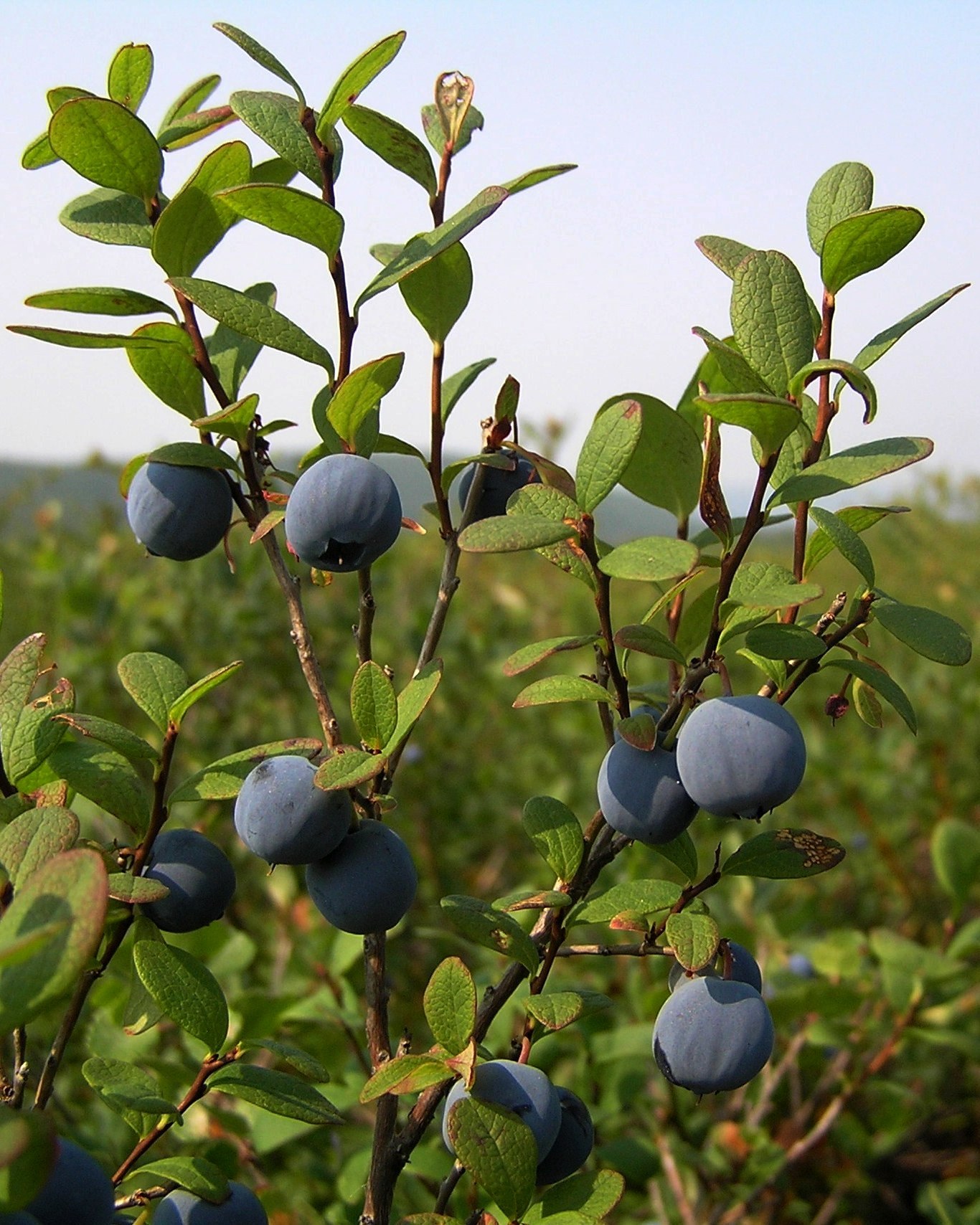


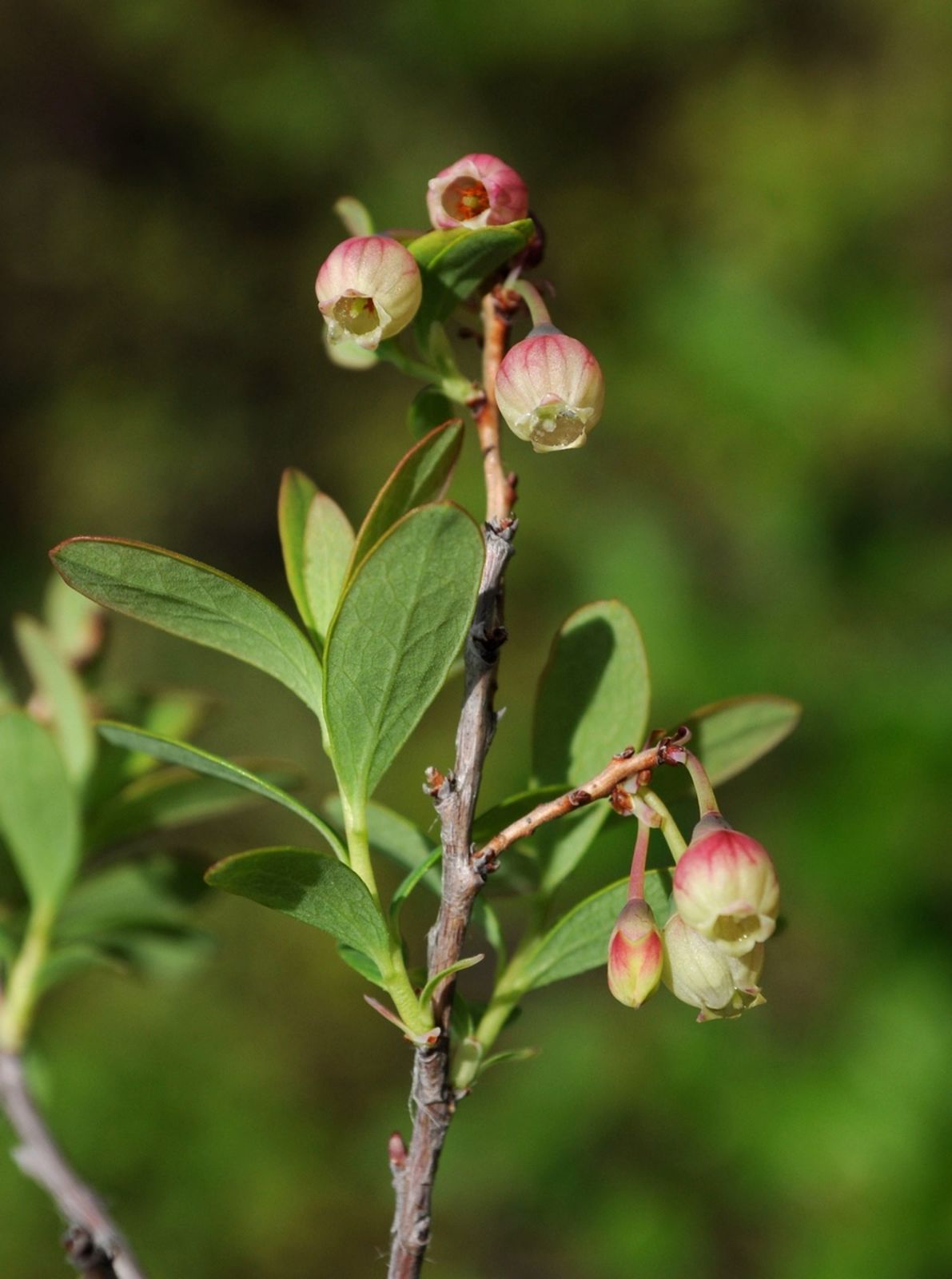
© photo
(c) Ольга Курякова, some rights reserved (CC BY-NC), uploaded by Ольга Курякова · cc-by-nc
Alex Karasoulos · cc0
Jeremy Buegge · cc0
Taken Jul 13, 2012 by Tela Botanica − Jean-Jacques HOUDRÉ (cc-by-sa)
Taken Jul 13, 2018 by Miguel Blanco Marigorta (cc-by-sa)
Taken Jan 1, 1800 by Tela Botanica − Thierry Pernot (cc-by-sa)
Taken Feb 18, 2017 by Yoan MARTIN (cc-by-sa)
© copyright of the Board of Trustees of the Royal Botanic Gardens, Kew.




Global distribution
The native range of Vaccinium uliginosum covers Arctic and subarctic regions of the Northern Hemisphere, from Alaska to Greenland and from Scandinavia to the Russian Far East and Japan. Beyond this Arctic core it persists in isolated mountain populations in the Alps, Pyrenees, Jura, Vosges and Rocky Mountains, always in bogs or high-elevation tundra.
- Native9
- France
- Norway
- Greenland
- Russia
- Japan
- Canada
- United States
- China
- Mongolia
Hexagons: regions where the plant occurs. Green dots: native range.1
Identity
Bog bilberry (Vaccinium uliginosum L., 1753), also known as bog blueberry, alpine bilberry, bog whortleberry or northern bilberry, is a deciduous subshrub in the Ericaceae family. It occurs throughout the bogs and tundra of the Northern Hemisphere. The epithet uliginosum comes from Latin uliginosus, meaning “growing in marshy ground”: it describes the habitat rather than the fruit or its color. 1 8
Names preserve a striking cultural divide around this berry. French regional names include airelle des fanges, airelle bleue and orcette. German Rauschbeere, “intoxicating berry,” and Slovak Šialenica, “mad berry,” convey a longstanding Central European reputation for toxicity. That reputation is absent in North America and Asia, despite the plant being the same species. 5
Recognition
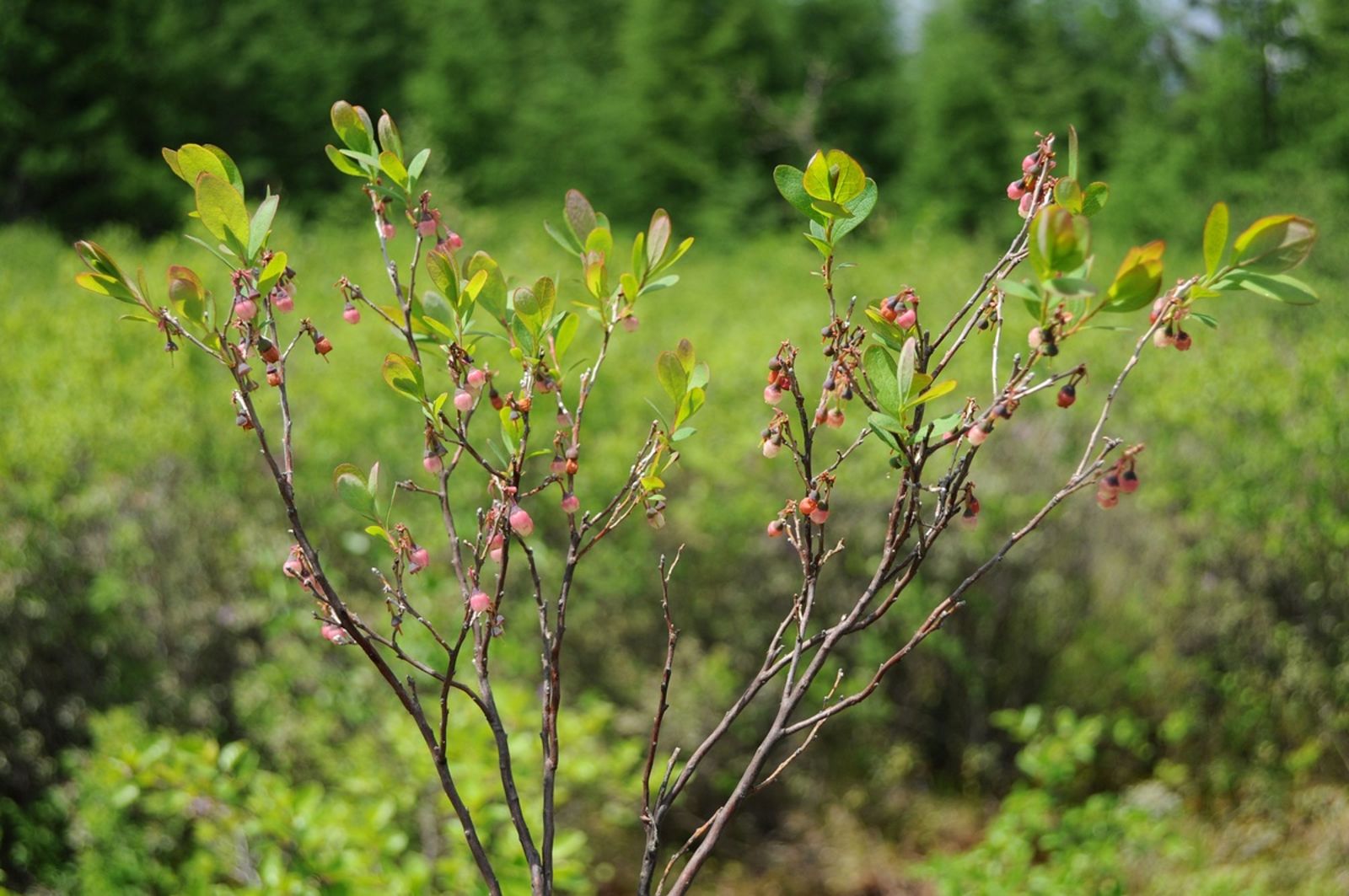
Round brown shoots distinguish Vaccinium uliginosum from common bilberry at a glance. Its twigs are rounded and brownish, rather than angular and green, so the stem provides a useful first check even when the leaves or fruit are unavailable. 3 2
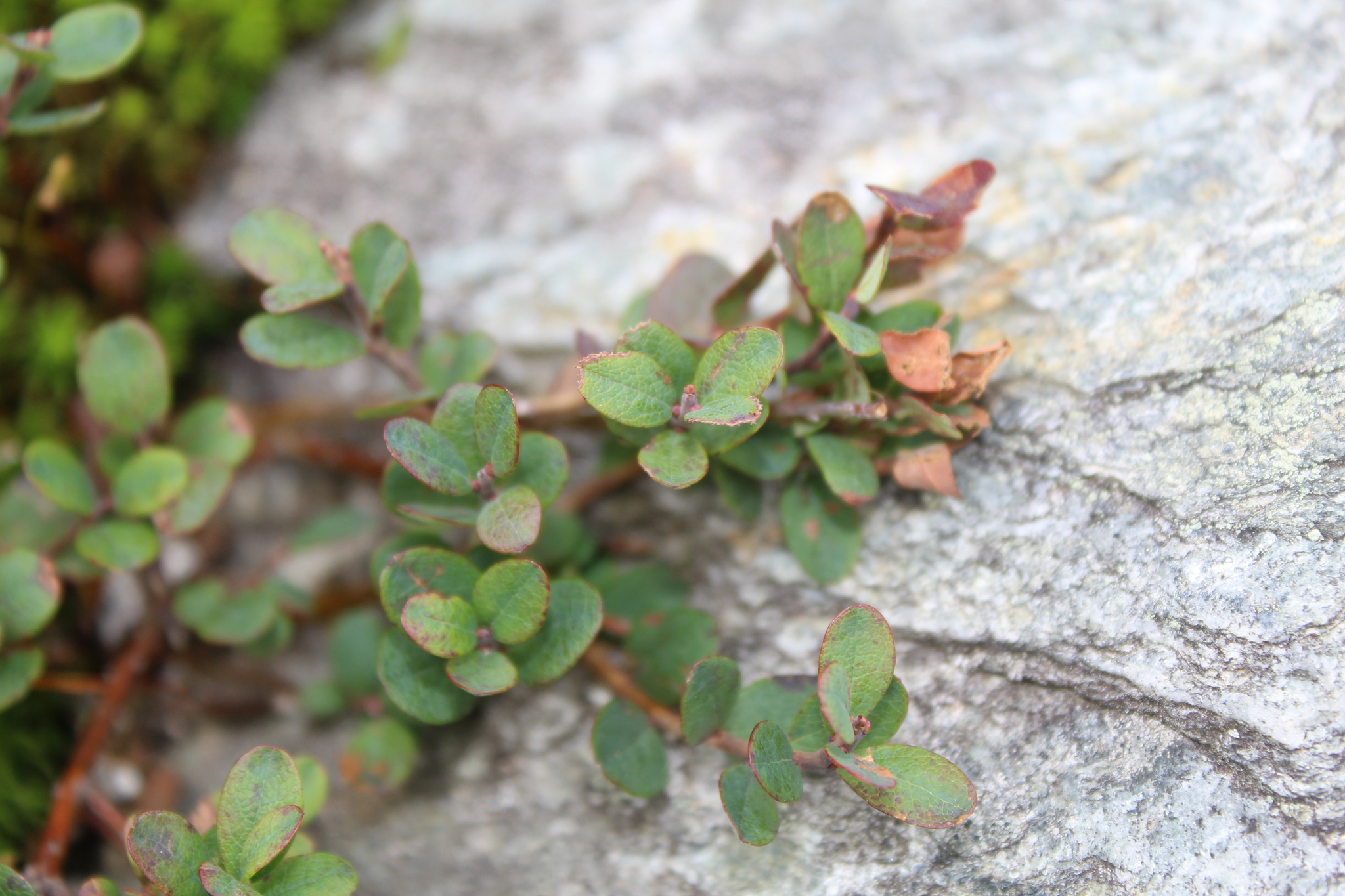
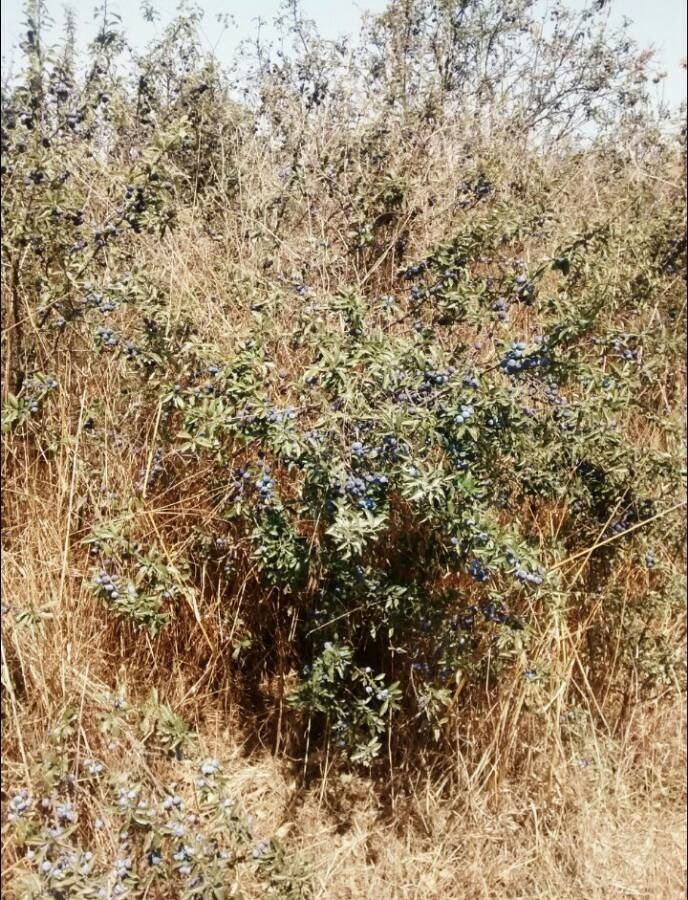
Low bog bilberry colonies stand 10–75 cm (4–30 in) tall, rarely more, and form dense mats across peat. Their leaves are oval to nearly round, smooth-edged and blue-green, without teeth. This separates them from the finely toothed leaves of common bilberry, the relative with which they are most often confused. 3
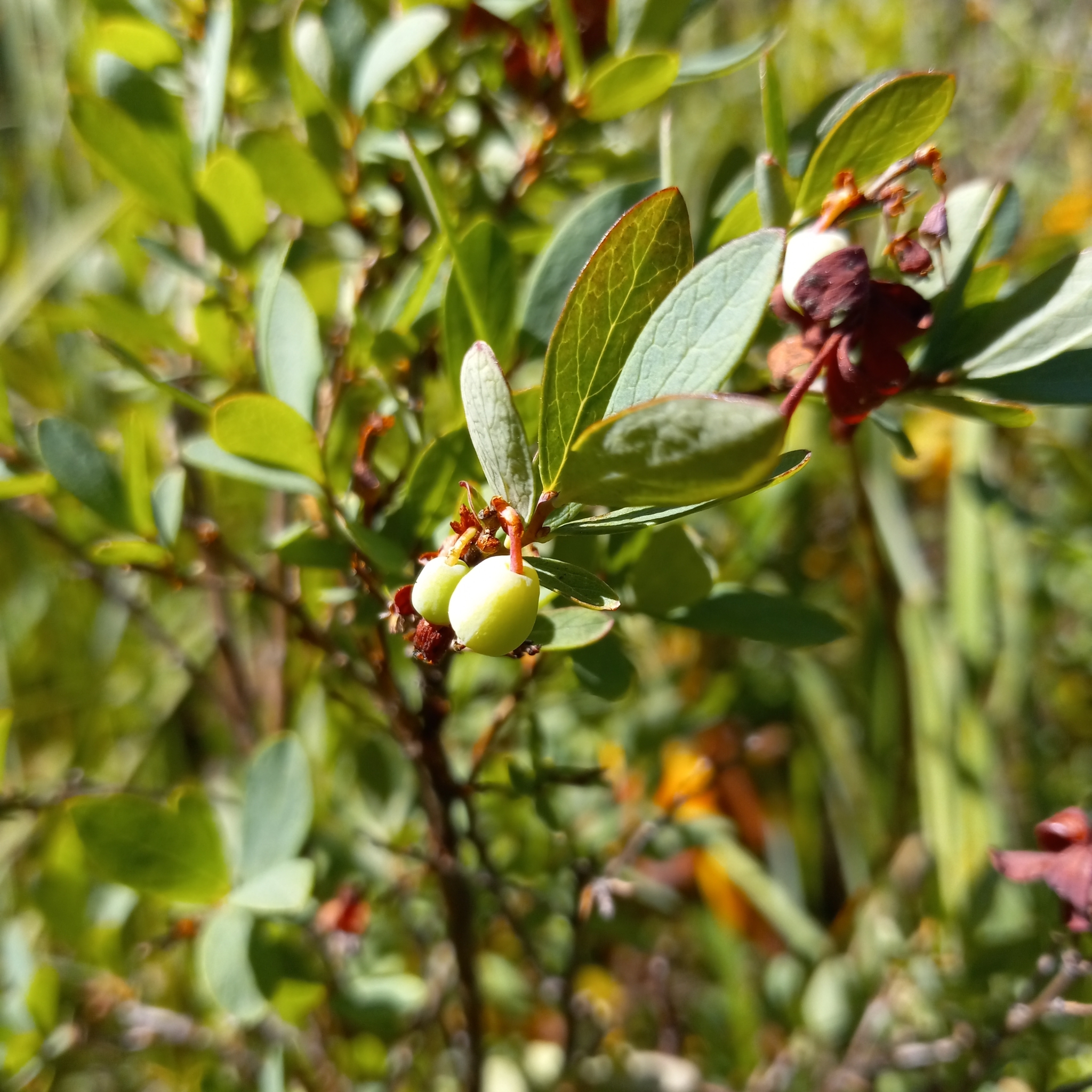
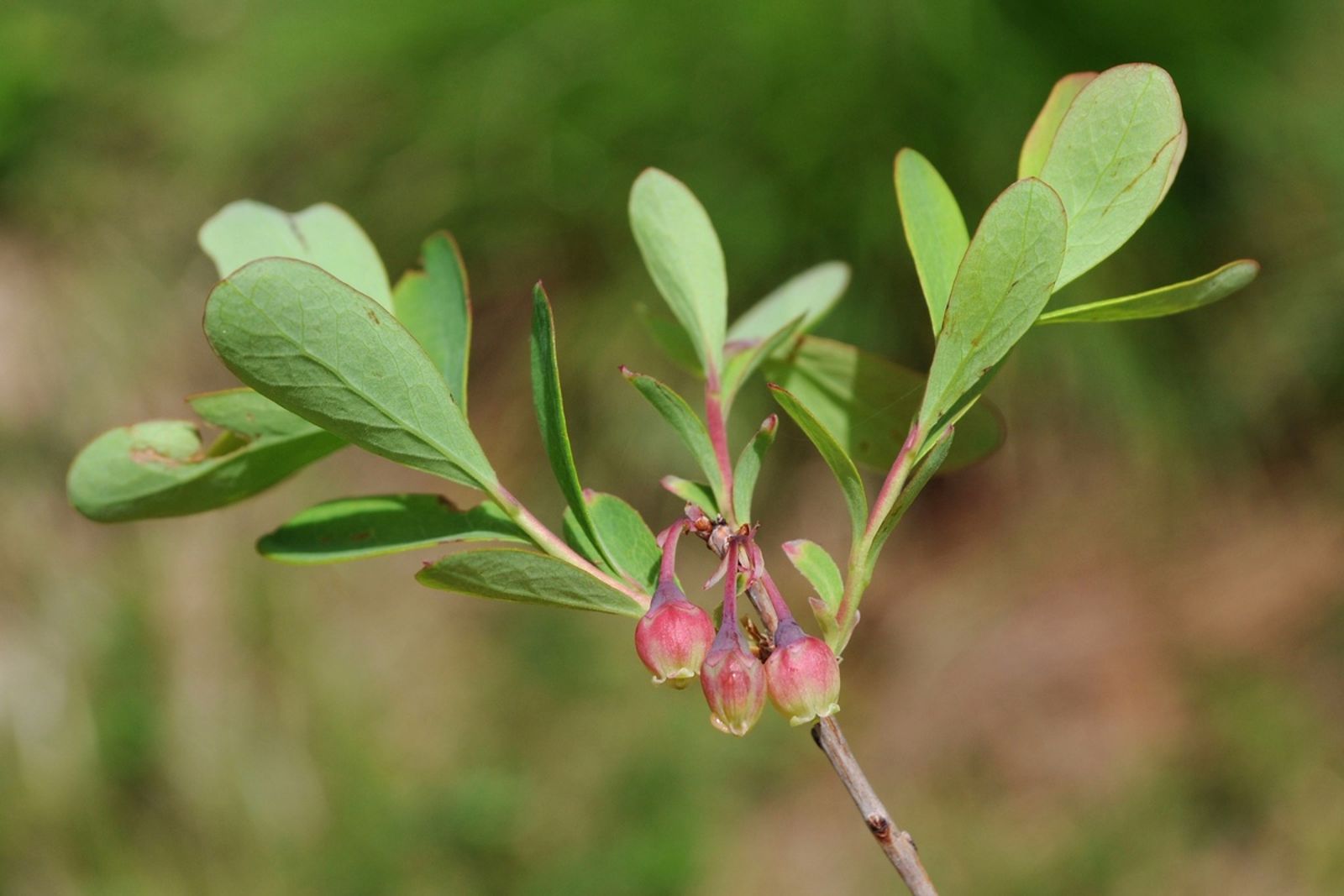
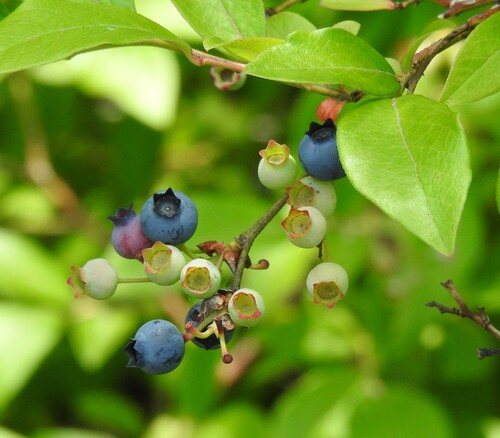
Nodding pinkish-white urn flowers measure 4–6 mm (0.16–0.24 in) and appear in groups of two or three in leaf axils in spring. They develop into round blue-black fruit 5–8 mm (0.2–0.3 in) across, covered in a thin waxy bloom. The white or greenish flesh barely stains fingers, unlike the red-purple staining flesh of common bilberry. 2 3
Useful taxonomy
POWO and Kew retain Vaccinium uliginosum L. as the accepted name, with several recognized subspecies within the species. The autonym uliginosum covers most of the circumboreal range. The more recently described subspecies vulcanorum (Kom.) Alsos & Elven is restricted to subalpine volcanic substrates in the Russian Far East. 1
Historical names at varietal or subspecific rank include Vaccinium uliginosum var. alpinum Bigelow and Vaccinium uliginosum var. pubescens (Wormsk. ex Hornem.) Hornem.. These long designated dwarf or hairy high-mountain populations; POWO now places them in synonymy with the typical species. The complete binomial remains the most stable reference. 1
Habitat and range
Arctic and subarctic landscapes hold the core native range of Vaccinium uliginosum, from Alaska to Greenland and from Scandinavia to the Russian Far East and Japan. Beyond that circumboreal core, isolated populations persist in temperate mountain regions, separated from the broad northern distribution. 4 8
In French mountain ranges, bog bilberry occurs in the Alps, Jura, Vosges and Pyrenees, on bogs, wet heaths and acidic subalpine grassland. Elevations generally range from 900 to 1,800 m (2,950–5,900 ft) depending on the massif. Several mountain departments regulate picking through local prefectural orders; these are French local rules. 6
Acidic, saturated ground defines its habitat: raised bogs, sphagnum heaths, open tundra and lightly shaded boreal conifer woodland. Rhizomatous mats stabilize the bog surface and feed Arctic wildlife, from ptarmigan to black bears. NatureServe considers the species globally stable, although some mountain populations remain locally vulnerable to bog drainage. 4 7
Life cycle and reproduction
Spring flowers are pollinated by insects, producing berries that ripen slowly from summer into early fall. Latitude and elevation shift the timing; within the northern native range, the fruiting period extends roughly from July to September rather than following a single fixed harvest date. 4
Colony expansion depends chiefly on underground rhizomes, which build a continuous carpet across the peat. Roots penetrate only 15–20 cm (6–8 in), an adaptation to saturated, poorly oxygenated soil. Once a colony is established, reproduction by seed remains uncommon. 4
Following fire in tundra or wooded peatland, bog bilberry resprouts from rhizomes protected by the wet peat. Peak fruit production has been observed 50–120 years after fire, showing how recovery and fruit yield can unfold over a much longer period than a few growing seasons. 4
Uses and risks
Raw or cooked bog bilberries are traditionally eaten in jam and pies across Arctic and boreal regions. Contrary to the Central European belief carried by the German and Slovak names, a recent scientific review found no chemical evidence of fruit toxicity, including in tests on a cat heart and isolated dog tissues. 5
Proposed explanations for that reputation remain unconfirmed. They include fruit contamination by the fungus Monilinia and accidental gathering of another poisonous plant from the same habitat. The review concludes that the contrast mainly reflects cultural differences between harvesting regions rather than a chemical difference in the fruit itself. 5
Traditional preparations also use dried leaves and fruit as herbal tea. The berries provide vitamin C and keep well when dried, rather like raisins, offering another way to preserve a seasonal harvest from northern habitats. 2
Varieties, look-alikes and related plants
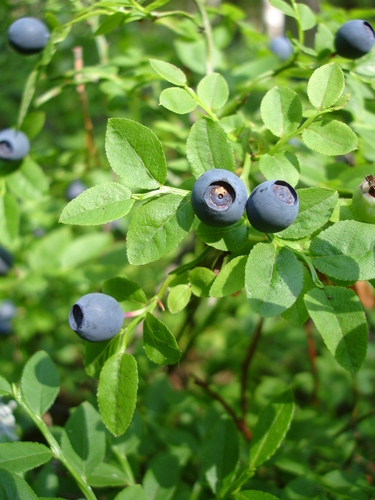
Common bilberry (Vaccinium myrtillus) is the most frequent look-alike. It has angular green stems and fruit with staining red-purple flesh; bog bilberry instead has round brown stems and white flesh that leaves almost no stain. Checking both stem shape and the cut fruit gives a clearer comparison than berry color alone. 3
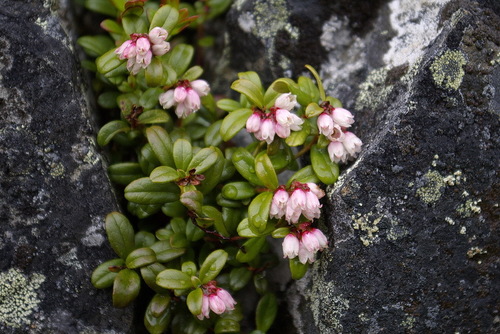
Two other bog plants need separating in the field. Empetrum nigrum, black crowberry, has evergreen needlelike leaves very different from bog bilberry’s broad foliage. Vaccinium vitis-idaea, lingonberry, has leathery evergreen leaves and clustered red fruit, again contrasting with the deciduous blue-green leaves of bog bilberry. 3
Limestone or drained soil above pH 6 rapidly causes chlorosis through iron deficiency. Yellowing in those conditions is a reliable warning that the plant has been placed outside the acidic bog conditions of its native habitat. 2
Main sources
- Plants of the World Online / Kew, Vaccinium uliginosum L.
- Plants For A Future, Vaccinium uliginosum
- Trees and Shrubs Online, Vaccinium uliginosum
- US Forest Service FEIS, Vaccinium uliginosum species review
- Frontiers in Toxicology, bog bilberry alleged toxicity review
- INPN MNHN, Vaccinium uliginosum L., 1753
- NatureServe Explorer, Vaccinium uliginosum
- Wikipedia EN, Vaccinium uliginosum
Frequently asked questions
Is bog bilberry poisonous?
A recent scientific review found no chemical evidence of toxicity in the fruit. Its reputation as an intoxicating or poisonous berry is strong in Central Europe, but absent in North America and Asia, where the same species is commonly eaten.
How can I tell bog bilberry from common bilberry?
Vaccinium myrtillus has angular green stems, toothed leaves and staining red-purple fruit flesh. Vaccinium uliginosum has round brown stems, smooth-edged blue-green leaves and white flesh that barely stains.
Why is bog bilberry said to cause intoxication?
The German name Rauschbeere and Slovak name Šialenica have conveyed this belief for centuries. Suggested explanations, including a parasitic fungus or confusion with another poisonous plant in the same habitat, remain unconfirmed.
Where does bog bilberry grow in France?
It occurs in the Alps, Jura, Vosges and Pyrenees, always in bogs or wet acidic heathland, generally at 900–1,800 m depending on the mountain range.
Can I grow bog bilberry in a garden?
It can grow in a container of peat kept wet in a cool climate. However, the plant is still mainly harvested wild, because the very slow growth of natural bog colonies is hard to reproduce in cultivation.
Can I eat bog bilberry fruit like ordinary bilberries?
Yes, raw or cooked in jam or pies, as traditionally harvested in Arctic and boreal regions. Its white flesh and milder flavor distinguish it from the red-purple fruit of common bilberry.
Similar plants
If you are unsure about a plant’s toxicity, ask a botanist or veterinarian for advice.