
Garden pansy (Viola × wittrockiana, )
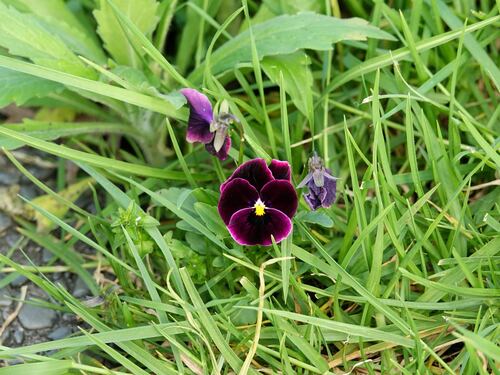
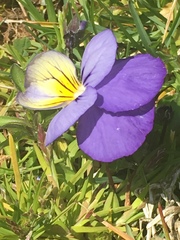

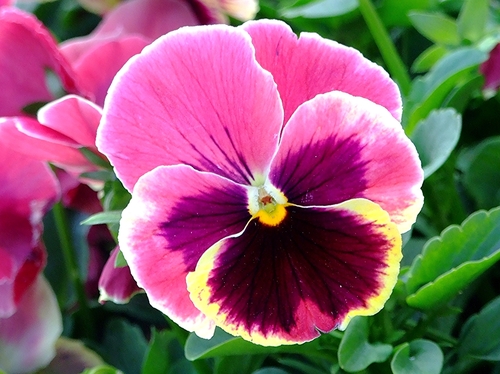
Garden pansy (Viola × wittrockiana) is a horticultural hybrid in the genus Viola, family Violaceae. Grown mainly as a biennial or short-lived perennial, it brings color to beds, borders and containers from fall through late winter and spring. Its large, five-petaled flowers distinguish it from smaller perennial violets.
Read moreGarden pansy and Pansy
Place in indirect light or in a shaded room.
Gentle cool-season sun to partial shade; avoid hot summer sun.


© photo
Jacqui Geux · cc-by
Bobby McCabe · cc-by
Wikimedia Commons · CC BY-SA or Public Domain
(c) Jacqui Geux, some rights reserved (CC BY) · cc-by
(c) Bobby McCabe, some rights reserved (CC BY) · cc-by
Global distribution
Viola × wittrockiana is a horticultural hybrid cultivated worldwide. It originated in European breeding programs crossing Viola species, notably Viola tricolor and its relatives.
- Cultivated5
- Europe
- Metropolitan France
- United Kingdom
- United States
- Japan
Hexagons: regions where the plant occurs. Green dots: native range.↗
Identity
Garden pansy (Viola × wittrockiana Gams), also known as pansy, is a horticultural hybrid in the genus Viola, family Violaceae. Rather than a wild species in the strict sense, the name covers large-flowered bedding pansies developed through crosses involving Viola tricolor, Viola lutea, Viola altaica and related species. 1 7
Five petals, a spur, simple leaves with often scalloped edges and a low habit place pansies within Viola. Yet Viola × wittrockiana is a distinct horticultural group, recognizable in the large flowers grown for bedding displays and winter containers. Its hybrid name distinguishes these garden plants from the broader range of violets. 5 6
Most garden pansies are grown as biennials: sown in summer, transplanted in fall and flowering through the cool season into spring. They can survive longer in cool climates, but growers generally replace them when summer heat brings flowering to a halt. Their practical lifespan therefore depends partly on growing conditions. 2 1
Recognition
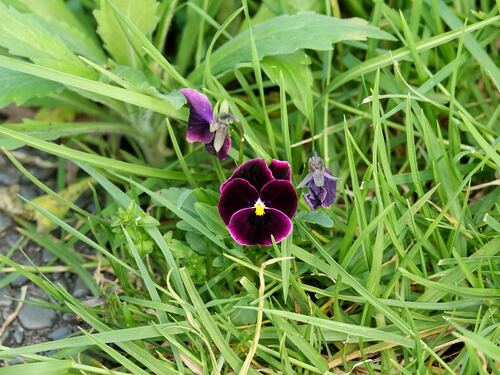
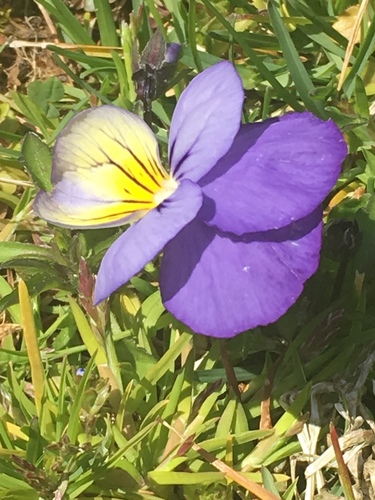
A broad, flat flower with five unequal petals is the clearest visual feature. A dark center or blotches often form a face-like pattern. Colors span almost the entire horticultural palette: purple, blue, yellow, white, orange, red, pink and near-black, in solid colors or bicolored combinations. 1 7
Compared with Viola cornuta, garden pansy generally has larger flowers and a bulkier outline. Compared with Viola tricolor, it is more extensively selected, with enlarged corollas and uniform series developed for production in small nursery pots. These differences reflect horticultural selection rather than a change in the basic five-petaled flower structure. 4 2
Low clumps reach 10–25 cm (4–10 in), with green, oval or slightly heart-shaped leaves. Flowering favors cool conditions: fall, mild winters, late winter and spring. Prolonged heat produces elongated stems, smaller flowers and seed formation, explaining why a healthy spring display can deteriorate as summer advances. 2 1
Sowing and planting
Sowing time follows the desired flowering season. Summer sowing followed by fall transplanting suits a late-winter-to-spring display in temperate climates. For immediate color, young plants bought in nursery pots can be planted in fall or late winter. Adjust those seasonal windows to local temperatures rather than following a universal calendar. 1 2
Keep the soil moist but well drained. A humus-rich border is sufficient in the ground; a planter needs drainage holes to prevent crown rot. Pansies tolerate cold much better than they tolerate a saturated, compacted growing medium. Drainage remains essential even when temperatures are low and growth is slow. 2
Gentle sun to bright partial shade provides a suitable exposure. Sun supports flowering in winter and spring, while light shade prolongs the display as temperatures rise. This combination explains their success in cool balcony plantings and their frequent disappearance from summer containers as sustained heat becomes the limiting factor. 1 4
Cool conditions are the main constraint when raising pansies from seed. Germination is poor in oppressive heat, while seedlings become leggy if light is insufficient. Successful summer sowing balances an early enough start for sturdy fall plants with temperatures low enough to avoid damping-off and weak growth. Buying young plants in fall bypasses this stage, but those plants still require a healthy crown and a free-draining medium. 2 1
Cool-season flowering
The main strength of garden pansy is lasting color when few annuals flower. Plants may pause during a hard freeze, then resume once temperatures rise above freezing. That ability to recover gives them a place in containers from fall through winter into spring, provided local winter conditions allow the roots to survive. 2 1
Remove faded flowers regularly to keep the display dense. Deadheading limits seed production, reduces damp tissues that favor disease and encourages new buds. Water moderately in cold-weather containers: a moist root zone should never mean a waterlogged one. The aim is steady moisture without leaving the crown sitting in saturated compost. 2
Modern horticultural series serve different purposes: large flowers make bedding displays easy to read from a distance, smaller flowers withstand poor weather better, and trailing forms suit hanging baskets. A series name describes a selected garden form; it does not replace the botanical identity of Viola × wittrockiana, the garden pansy. 1 7
Cold and heat affect pansies differently. A frosty night may flatten flowers, yet clumps often recover during a mild spell if their roots have not frozen in a small, dry pot. A hot week instead speeds seed formation and reduces flower size. For a lasting container display, protect the root volume and accept temporary winter pauses in flowering. 2
Look-alikes and horticultural series
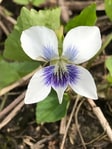
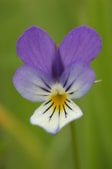
The closest look-alikes all belong to Viola. Viola odorata is the fragrant, perennial sweet violet; Viola tricolor is wild pansy; Viola cornuta is horned violet, often smaller and longer lived. Garden pansy, Viola × wittrockiana, is the large-flowered horticultural hybrid commonly planted in containers. 5 6
These distinctions have practical consequences. The hybrid name identifies a particular garden group rather than every member of Viola. Likewise, the uses of sweet violet, especially its fragrance and some traditional food uses, cannot all be transferred to garden pansies merely because the plants share a genus. 2 3
Pansy flowers may be edible when grown without unsuitable treatments, but decorative garden-center plants are not automatically intended for food. Production residues, correct identification and the growing medium matter alongside the botanical name. A flowering plant sold for a balcony display offers no automatic assurance of suitability for eating. 3 6
Safety and edible flowers
The ASPCA lists violets as non-toxic to cats and dogs. Garden pansy is therefore a relatively safe choice for a family balcony, provided pets are kept from eating large amounts of growing medium, fertilizer or treated plants. The non-toxic classification does not make everything in the container suitable for consumption. 3
For people, pansy flowers are known as edible decorations, but only when produced for that purpose. A plant sold in a decorative nursery pot may have received treatments incompatible with consumption. Edibility is conditional: the flower can be suitable food, while an ornamental plant bought without that assurance should not automatically be harvested. 6 1
Sowing, transplanting, container growing and cold tolerance all concern the garden hybrid Viola × wittrockiana, within the wider genus Viola. Keeping that identity clear brings the plant's seasonal behavior and its large-flowered garden forms together without treating every violet as the same crop. 2 8
An edible pansy is a flower grown for food, rather than any flowering plant bought to decorate a window box. If culinary use is the goal, start with seeds or plants grown without treatments incompatible with consumption. This distinction matters even when the identification is certain and the flowers appear clean and healthy. 3 1
Main sources
- Royal Horticultural Society, Viola search results
- North Carolina Extension Gardener Plant Toolbox, Viola
- ASPCA, Violet toxicity entry
- Missouri Botanical Garden, Viola plant finder results
- Plants of the World Online / Kew, Viola L.
- Encyclopaedia Britannica, violet genus
- Wikipedia EN, Pansy
- Wikidata, Viola × wittrockiana
Frequently asked questions
Is garden pansy a species?
No. Garden pansy is a horticultural hybrid. It is distinct from the genus Viola as a whole and from Viola odorata, Viola cornuta and Viola tricolor.
When should I sow garden pansies?
Seeds are often sown in cool summer conditions, then transplanted in fall for flowering from late winter through spring.
Can pansies survive frost?
Yes, depending on the cultivar and provided the soil drains well. Flowering slows during hard freezes and resumes as temperatures rise.
Are pansies toxic to cats and dogs?
The ASPCA violet entry lists them as non-toxic. Still, keep treated plants away from pets that chew flowers.
Can you eat pansy flowers?
Yes, if correctly identified and grown without pesticides. Decorative plants from garden centers should not automatically be considered food.
How does garden pansy differ from Viola cornuta?
Viola cornuta usually has smaller flowers and is often more perennial. Viola × wittrockiana represents the large-flowered bedding pansies.
Similar plants
If you are unsure about a plant’s toxicity, ask a botanist or veterinarian for advice.