
Violet (Viola, )
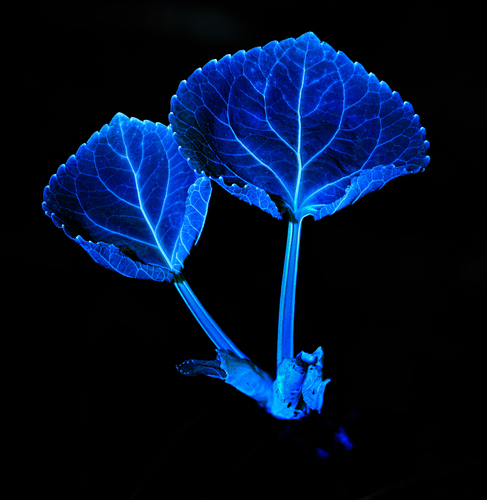
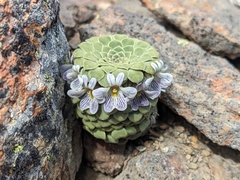
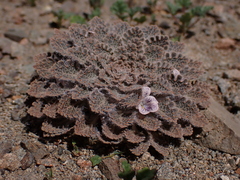
Violet (Viola) is a genus in the Violaceae family that includes both perennial violets, such as sweet violet (Viola odorata), and garden pansies (Viola × wittrockiana). Around 500–600 species occur in temperate regions worldwide. All share a characteristic five-petaled flower with a spur.
Read moreViolet, Pansy, Sweet violet and Garden pansy


© photo
Alan Rockefeller · cc-by-sa
Todd Boland · cc-by
Nolan Exe · cc-by
© copyright of the Board of Trustees of the Royal Botanic Gardens, Kew.
Global distribution
Viola is widespread in temperate regions of the Northern Hemisphere, with centers of diversity in North America, the Andes and Japan. Some species reach Australasia, Hawaii and tropical mountains. Pansies and many cultivated violets are also planted throughout temperate regions; this ornamental range must be distinguished from the native range.
- Native8
- Metropolitan France
- Germany
- United States
- Japan
- Peru
- China
- Australia
- Canada
Hexagons: regions where the plant occurs. Green dots: native range.1
Identity
Violet (Viola L.) belongs to the Violaceae family and shares its genus with pansies. This large genus contains roughly 500–600 species, depending on the reference, mostly in temperate regions of the Northern Hemisphere. Centers of diversity include North America, the Andes and Japan. 1 2
Gardeners generally use violet for small-flowered perennials, often fragrant, such as sweet violet (Viola odorata). Pansy usually refers to large-flowered Viola, especially the garden pansy (Viola × wittrockiana), while viola is also a familiar garden name. These distinctions reflect horticultural usage rather than a division into separate botanical genera. 4 5
Recognition
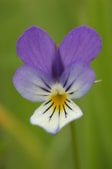
Five unequal petals provide the clearest floral clue to the genus Viola. The lower petal extends backward into a short spur holding nectar. This shared structure identifies both violets and pansies even when flower size differs greatly from one species or garden selection to another. 2 3
Simple leaves are often heart-shaped or oval, with scalloped edges. They grow in rosettes or along short stems, and conspicuous stipules accompany each leaf base. Plants remain low, forming clumps or carpets and rarely growing above 30 cm (12 in) in height. 3 6
Flower size and overall habit usually separate a violet from a pansy in garden usage. Most perennial violets bear small, discreet flowers; garden pansies have large, often two- or three-colored corollas. Sweet violet has a distinctive fragrance, whereas many cultivated hybrids have little or none. 4 5
Useful taxonomy
Described by Linnaeus in 1753, Viola is the type genus of Violaceae within the order Malpighiales. With estimates ranging from 500 to more than 600 species, it is the largest genus in its family and one of the larger genera of flowering plants. Differences in the total reflect the taxonomic reference being used. 1 7
Familiar cultivated species and hybrids include:
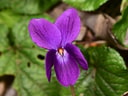
- Viola odorata L., sweet violet;
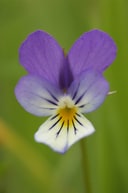
- Viola tricolor L., wild pansy;
- Viola cornuta L., horned violet;
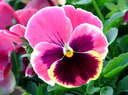
- Viola × wittrockiana Gams, garden pansy.
The garden pansy (Viola × wittrockiana) is a complex horticultural hybrid derived partly from wild pansy. Series names sold in garden centers, such as Sorbet, describe horticultural ranges, not botanical ranks. Keeping these names distinct helps separate garden hybrids from wild species of the genus. 1 4
Habitat and range
Temperate Northern Hemisphere regions hold most Viola species, but the genus also reaches widely separated places including Hawaii, Australasia and the Andes. Its centers of diversity include North America, the Andes and Japan, showing how broadly this group extends beyond familiar garden settings. 1 2
Habitats vary considerably between species. Many violets grow in cool woodland and along forest edges; others occupy meadows, banks, rocky ground or alpine zones. A preference for moisture-retentive soil and good light without scorching exposure links many of these otherwise different growing sites. 3 5
Ornamental planting carries many species, and most garden pansies, well beyond their original ranges. Beds, borders and containers form part of this cultivated distribution. The area where people grow these plants should therefore be distinguished from the natural distribution of wild species. 4 7
Life cycle and reproduction
Hardy herbaceous perennials make up most Viola, with some enduring considerable cold outdoors. Garden pansies are often grown as biennials instead. Spring is the main flowering season, sometimes followed by fall bloom; pansies can continue flowering through the middle of a mild winter. 5 3
Many species produce two kinds of flowers during the growing season. Open, colorful spring flowers receive insect visitors. Later, hidden cleistogamous flowers develop; these never open and fertilize themselves, allowing abundant seed production without any pollinator visiting the flower. 2 1
Seed dispersal adds another distinctive feature. The ripe capsule splits into three valves and throws its seeds a short distance. Each seed carries a fatty elaiosome, which attracts ants that take it toward their nest. This ant-mediated dispersal, called myrmecochory, helps explain the quiet spread of violets through woodland. Garden propagation uses cool sowing, division of perennial clumps or cuttings from offsets, depending on the species. 6 5
Uses and risks
Beds and containers account for much of the ornamental use of Viola. Perennial violets carpet cool woodland ground and borders; garden pansies bring color to beds and window boxes from fall to spring. Some species, especially sweet violet, are also grown for their fragrance, long used in perfumery and confectionery. 4 6
Several Viola have edible flowers. Sweet violet and pansy flowers decorate pastries and confectionery when grown without chemical treatments. The ASPCA lists violets and pansies as nontoxic to cats and dogs. Large intakes may cause mild digestive upset, but the low toxicity makes them suitable choices for gardens and balconies shared with pets or young children. 8 2
Varieties, look-alikes and related plants
Two broad garden groups account for most cultivated Viola. Perennial violets, including sweet violet (Viola odorata) and horned violet (Viola cornuta), form lasting clumps with small flowers. Garden pansies (Viola × wittrockiana) and wild pansies (Viola tricolor) bear larger flowers and are often renewed each season. When buying, check the species or series, foliage condition and health of the crown. 4 5
Common identification difficulties involve:
- Viola odorata, sweet violet, a fragrant perennial sometimes confused with scentless forms;
- Viola tricolor, wild pansy, often mistaken for a small garden pansy;
- Viola × wittrockiana, garden pansy, whose large flowers can obscure its hybrid origin.
A five-petaled flower with a spur, heart-shaped leaves with visible stipules and a low-growing habit remain the most reliable guides to the genus Viola. Together, these features link the modest woodland violet and the much larger-flowered garden pansy despite their different appearance and garden use. 3 1
Main sources
- Plants of the World Online / Kew, Viola L.
- Encyclopaedia Britannica, violet (plant genus Viola)
- Missouri Botanical Garden, Viola plant finder results
- Royal Horticultural Society, Viola search results
- North Carolina Extension Gardener Plant Toolbox, Viola
- Plants For A Future, Viola odorata
- USDA GRIN Taxonomy, genus Viola
- ASPCA, violet (Viola species) toxicity entry
Frequently asked questions
Are violets and pansies the same plant?
They belong to the same genus, Viola. Gardeners generally call the small-flowered, often fragrant perennials violets, and large-flowered Viola, especially garden hybrids, pansies.
Are violets poisonous to cats and dogs?
No. The ASPCA lists violets and pansies as nontoxic to cats and dogs. Eating a large amount may at most cause mild digestive upset.
Can you eat violet and pansy flowers?
Yes. Flowers of several Viola, including sweet violet and pansies, are edible and used in baking and confectionery, provided the plants have been grown without chemical treatments.
Why does my violet produce flowers that never open?
Many Viola produce hidden cleistogamous flowers after spring flowering. These remain closed and self-pollinate, producing plenty of seeds without pollinators.
How do violets spread by seed in the garden?
The ripe capsule splits into three valves and ejects its seeds. Each seed carries a small fatty reserve, the elaiosome, which attracts ants. The ants carry it away, dispersing the plant beyond its parent clump.
How much sun do violets and pansies need?
Gentle sun to cool partial shade suits them best. Intense summer sun shortens flowering and scorches foliage, especially in woodland violets.
How many species are in the genus Viola?
Estimates range from about 500 to 600 species, making Viola the largest genus in the Violaceae family. Most occur in temperate regions worldwide.
Species in this genus
Similar plants
If you are unsure about a plant’s toxicity, ask a botanist or veterinarian for advice.