















01
Nhận diện hoặc tìm kiếm
Một bức ảnh, hoặc tìm theo tên.

Bách khoa toàn thư
Với mỗi loài, một trang thông tin đầy đủ: cây cần gì, đến từ đâu, dùng để làm gì, nhận biết thế nào, và có nguy hiểm cho vật nuôi của bạn không.
4,8 trên các kho ứng dụng50.000+ người trồng cây
Monstera deliciosa
Tên gọi khác: Philodendron pertusum, Monstera borsigiana
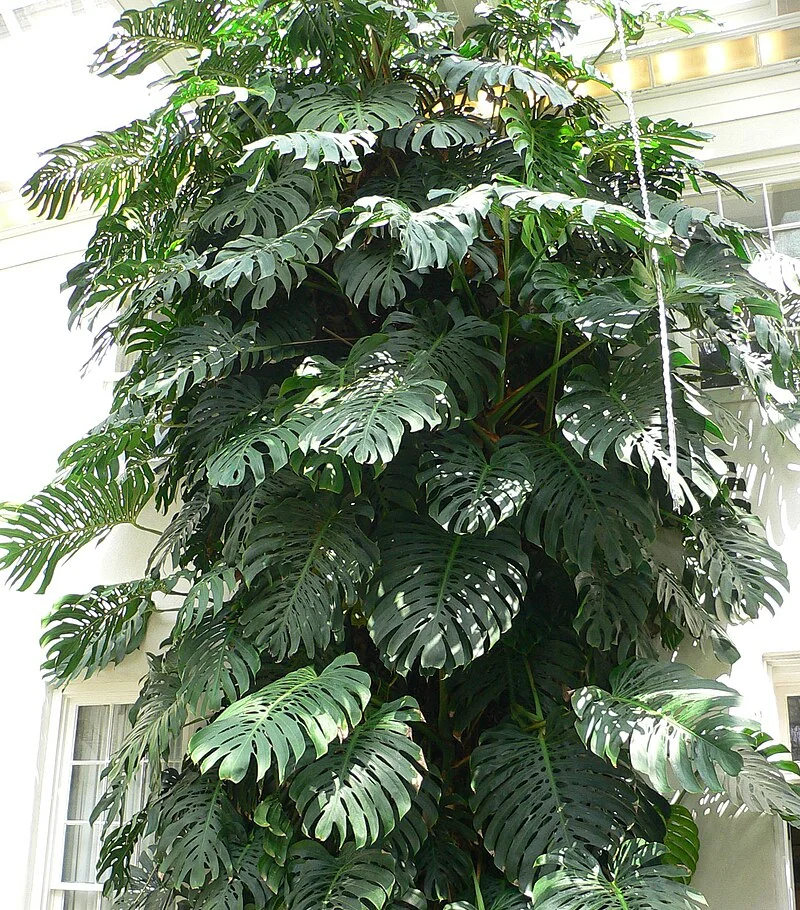
 +15
Monstera deliciosa có nguồn gốc từ rừng mưa nhiệt đới miền nam Mexico và Trung Mỹ. Những chiếc lá lớn của nó xẻ thùy và thủng lỗ khi cây trưởng thành, càng nhiều ánh sáng thì càng rõ.
Monstera deliciosa có nguồn gốc từ rừng mưa nhiệt đới miền nam Mexico và Trung Mỹ. Những chiếc lá lớn của nó xẻ thùy và thủng lỗ khi cây trưởng thành, càng nhiều ánh sáng thì càng rõ.
The specific epithet deliciosa means "delicious", referring to the edible fruit. The genus Monstera is named from the Latin word for "monstrous" or "abnormal", and refers to the unusual leaves with natural holes that members of the genus have. Its popular name as a houseplant of "Swiss cheese plant", or just "cheese plant", is commonly stated to refer to the "eyes" or holes that develop in its leaves similar to the holes in some Swiss-type cheeses such as Emmental cheese.
Nguồn: Wikipedia
This member of the arum family (Araceae) is a hemiepiphyte with aerial roots. It is able to grow up to 20 m (66 ft) high in the wild, with large, leathery, glossy, pinnate, heart-shaped leaves 25, 90 cm (10, 35.5 in) long by 25, 75 cm (10, 29.5 in) broad. The leaves on young plants are smaller and entire with no lobes or holes, but soon produce lobed and fenestrate leaves as they grow. Although it can grow very tall in nature, it only measures between 2 and 3 m (6.6 and 9.8 ft) when grown indoors.
Nguồn: Wikipedia
Monstera deliciosa is native to humid tropical forests, in lowlands and on lower mountains, in the south of Mexico and also in Costa Rica, Guatemala and Panama. The seeds fall to the ground, then the seedlings crawl (negative phototropism) until they meet a tree on which to attach. The many adjacent roots thus allow the plant to anchor against its new support and reach the canopy light (although it rarely grows in full sun and prefers a light dimmed by the foliage).
Nguồn: Wikipedia
Monstera deliciosa is commonly grown outdoors as an ornamental plant in the tropics and subtropics. The plant requires a lot of space and a rich and loose soil (ideally garden soil and compost in equal parts). If it grows in the ground it is better to plant it near a tree, where it can climb, if not against a trellis. It is a "moderately greedy plant", in that it needs to be watered just to keep the soil slightly moist. Its hardiness is 11 (that is to say the coldest at −1 °C or 30 °F).
Nguồn: Wikipedia
Monstera deliciosa is moderately toxic to both cats and dogs because it contains needle-like insoluble calcium oxalate crystals. These crystals may cause injury to the mouth, tongue, and digestive tract. It also causes dermatitis by direct contact with cat and dog skin.
Nguồn: Wikipedia
In those areas where it grows naturally, M. deliciosa is considered a delicacy due to its sweet and exotic flavor. The fruit may be ripened by cutting it when the first scales begin to lift up and it begins to exude a pungent odor. It is wrapped in a paper bag and set aside until the scales begin popping off. The scales are then brushed off or fall away to reveal the edible flesh underneath. The flesh, which is similar to pineapple in texture, can be cut away from the core and eaten.
Nguồn: Wikipedia
Các tab của trang thông tin, giống hệt trong ứng dụng: phần tổng quan, rồi đến các mục trong bài viết Wikipedia về loài, bằng ngôn ngữ của bạn.
Độ khó, độc tính, ánh sáng, tưới nước.
Mô tả, phân bố, trồng trọt: các mục trong bài viết Wikipedia của loài, bằng ngôn ngữ của bạn.
Chuyển từ mục này sang mục khác như trong ứng dụng, không cần rời trang thông tin.
Thử ngay trên trang này: chuyển tab
Monstera deliciosa
Tên gọi khác: Philodendron pertusum, Monstera borsigiana
+15Monstera deliciosa có nguồn gốc từ rừng mưa nhiệt đới miền nam Mexico và Trung Mỹ. Những chiếc lá lớn của nó xẻ thùy và thủng lỗ khi cây trưởng thành, càng nhiều ánh sáng thì càng rõ.
Monstera deliciosa có nguồn gốc từ rừng mưa nhiệt đới miền nam Mexico và Trung Mỹ. Những chiếc lá lớn của nó xẻ thùy và thủng lỗ khi cây trưởng thành, càng nhiều ánh sáng thì càng rõ.
The specific epithet deliciosa means "delicious", referring to the edible fruit. The genus Monstera is named from the Latin word for "monstrous" or "abnormal", and refers to the unusual leaves with natural holes that members of the genus have. Its popular name as a houseplant of "Swiss cheese plant", or just "cheese plant", is commonly stated to refer to the "eyes" or holes that develop in its leaves similar to the holes in some Swiss-type cheeses such as Emmental cheese.
Nguồn: Wikipedia
This member of the arum family (Araceae) is a hemiepiphyte with aerial roots. It is able to grow up to 20 m (66 ft) high in the wild, with large, leathery, glossy, pinnate, heart-shaped leaves 25, 90 cm (10, 35.5 in) long by 25, 75 cm (10, 29.5 in) broad. The leaves on young plants are smaller and entire with no lobes or holes, but soon produce lobed and fenestrate leaves as they grow. Although it can grow very tall in nature, it only measures between 2 and 3 m (6.6 and 9.8 ft) when grown indoors.
Nguồn: Wikipedia
Monstera deliciosa is native to humid tropical forests, in lowlands and on lower mountains, in the south of Mexico and also in Costa Rica, Guatemala and Panama. The seeds fall to the ground, then the seedlings crawl (negative phototropism) until they meet a tree on which to attach. The many adjacent roots thus allow the plant to anchor against its new support and reach the canopy light (although it rarely grows in full sun and prefers a light dimmed by the foliage).
Nguồn: Wikipedia
Monstera deliciosa is commonly grown outdoors as an ornamental plant in the tropics and subtropics. The plant requires a lot of space and a rich and loose soil (ideally garden soil and compost in equal parts). If it grows in the ground it is better to plant it near a tree, where it can climb, if not against a trellis. It is a "moderately greedy plant", in that it needs to be watered just to keep the soil slightly moist. Its hardiness is 11 (that is to say the coldest at −1 °C or 30 °F).
Nguồn: Wikipedia
Monstera deliciosa is moderately toxic to both cats and dogs because it contains needle-like insoluble calcium oxalate crystals. These crystals may cause injury to the mouth, tongue, and digestive tract. It also causes dermatitis by direct contact with cat and dog skin.
Nguồn: Wikipedia
In those areas where it grows naturally, M. deliciosa is considered a delicacy due to its sweet and exotic flavor. The fruit may be ripened by cutting it when the first scales begin to lift up and it begins to exude a pungent odor. It is wrapped in a paper bag and set aside until the scales begin popping off. The scales are then brushed off or fall away to reveal the edible flesh underneath. The flesh, which is similar to pineapple in texture, can be cut away from the core and eaten.
Nguồn: Wikipedia
01
Một bức ảnh, hoặc tìm theo tên.
02
Độ khó, độc tính, ánh sáng và tưới nước, ngay đầu trang thông tin.
03
Các mục trong bài viết Wikipedia của loài, từng tab một, bằng ngôn ngữ của bạn.
Sau phần tổng quan, mỗi tab là một mục trong bài viết Wikipedia về loài. Thư viện ảnh cho thấy lá, hoa, quả, dáng cây và vỏ cây để giúp bạn nhận biết loài.
Monstera deliciosa
Tên gọi khác: Philodendron pertusum, Monstera borsigiana
+15Monstera deliciosa có nguồn gốc từ rừng mưa nhiệt đới miền nam Mexico và Trung Mỹ. Những chiếc lá lớn của nó xẻ thùy và thủng lỗ khi cây trưởng thành, càng nhiều ánh sáng thì càng rõ.
Monstera deliciosa có nguồn gốc từ rừng mưa nhiệt đới miền nam Mexico và Trung Mỹ. Những chiếc lá lớn của nó xẻ thùy và thủng lỗ khi cây trưởng thành, càng nhiều ánh sáng thì càng rõ.
The specific epithet deliciosa means "delicious", referring to the edible fruit. The genus Monstera is named from the Latin word for "monstrous" or "abnormal", and refers to the unusual leaves with natural holes that members of the genus have. Its popular name as a houseplant of "Swiss cheese plant", or just "cheese plant", is commonly stated to refer to the "eyes" or holes that develop in its leaves similar to the holes in some Swiss-type cheeses such as Emmental cheese.
Nguồn: Wikipedia
This member of the arum family (Araceae) is a hemiepiphyte with aerial roots. It is able to grow up to 20 m (66 ft) high in the wild, with large, leathery, glossy, pinnate, heart-shaped leaves 25, 90 cm (10, 35.5 in) long by 25, 75 cm (10, 29.5 in) broad. The leaves on young plants are smaller and entire with no lobes or holes, but soon produce lobed and fenestrate leaves as they grow. Although it can grow very tall in nature, it only measures between 2 and 3 m (6.6 and 9.8 ft) when grown indoors.
Nguồn: Wikipedia
Monstera deliciosa is native to humid tropical forests, in lowlands and on lower mountains, in the south of Mexico and also in Costa Rica, Guatemala and Panama. The seeds fall to the ground, then the seedlings crawl (negative phototropism) until they meet a tree on which to attach. The many adjacent roots thus allow the plant to anchor against its new support and reach the canopy light (although it rarely grows in full sun and prefers a light dimmed by the foliage).
Nguồn: Wikipedia
Monstera deliciosa is commonly grown outdoors as an ornamental plant in the tropics and subtropics. The plant requires a lot of space and a rich and loose soil (ideally garden soil and compost in equal parts). If it grows in the ground it is better to plant it near a tree, where it can climb, if not against a trellis. It is a "moderately greedy plant", in that it needs to be watered just to keep the soil slightly moist. Its hardiness is 11 (that is to say the coldest at −1 °C or 30 °F).
Nguồn: Wikipedia
Monstera deliciosa is moderately toxic to both cats and dogs because it contains needle-like insoluble calcium oxalate crystals. These crystals may cause injury to the mouth, tongue, and digestive tract. It also causes dermatitis by direct contact with cat and dog skin.
Nguồn: Wikipedia
In those areas where it grows naturally, M. deliciosa is considered a delicacy due to its sweet and exotic flavor. The fruit may be ripened by cutting it when the first scales begin to lift up and it begins to exude a pungent odor. It is wrapped in a paper bag and set aside until the scales begin popping off. The scales are then brushed off or fall away to reveal the edible flesh underneath. The flesh, which is similar to pineapple in texture, can be cut away from the core and eaten.
Nguồn: Wikipedia
Độc tính được ghi chi tiết theo từng loài vật: chó, mèo, ngựa. Trang thông tin giải thích vì sao cây có độc, cách bảo vệ vật nuôi và cần làm gì nếu chúng ăn phải, kèm thông tin liên hệ của các trung tâm chống độc.
Monstera deliciosa
Tên gọi khác: Philodendron pertusum, Monstera borsigiana
+15Monstera deliciosa có nguồn gốc từ rừng mưa nhiệt đới miền nam Mexico và Trung Mỹ. Những chiếc lá lớn của nó xẻ thùy và thủng lỗ khi cây trưởng thành, càng nhiều ánh sáng thì càng rõ.
Monstera deliciosa có nguồn gốc từ rừng mưa nhiệt đới miền nam Mexico và Trung Mỹ. Những chiếc lá lớn của nó xẻ thùy và thủng lỗ khi cây trưởng thành, càng nhiều ánh sáng thì càng rõ.
The specific epithet deliciosa means "delicious", referring to the edible fruit. The genus Monstera is named from the Latin word for "monstrous" or "abnormal", and refers to the unusual leaves with natural holes that members of the genus have. Its popular name as a houseplant of "Swiss cheese plant", or just "cheese plant", is commonly stated to refer to the "eyes" or holes that develop in its leaves similar to the holes in some Swiss-type cheeses such as Emmental cheese.
Nguồn: Wikipedia
This member of the arum family (Araceae) is a hemiepiphyte with aerial roots. It is able to grow up to 20 m (66 ft) high in the wild, with large, leathery, glossy, pinnate, heart-shaped leaves 25, 90 cm (10, 35.5 in) long by 25, 75 cm (10, 29.5 in) broad. The leaves on young plants are smaller and entire with no lobes or holes, but soon produce lobed and fenestrate leaves as they grow. Although it can grow very tall in nature, it only measures between 2 and 3 m (6.6 and 9.8 ft) when grown indoors.
Nguồn: Wikipedia
Monstera deliciosa is native to humid tropical forests, in lowlands and on lower mountains, in the south of Mexico and also in Costa Rica, Guatemala and Panama. The seeds fall to the ground, then the seedlings crawl (negative phototropism) until they meet a tree on which to attach. The many adjacent roots thus allow the plant to anchor against its new support and reach the canopy light (although it rarely grows in full sun and prefers a light dimmed by the foliage).
Nguồn: Wikipedia
Monstera deliciosa is commonly grown outdoors as an ornamental plant in the tropics and subtropics. The plant requires a lot of space and a rich and loose soil (ideally garden soil and compost in equal parts). If it grows in the ground it is better to plant it near a tree, where it can climb, if not against a trellis. It is a "moderately greedy plant", in that it needs to be watered just to keep the soil slightly moist. Its hardiness is 11 (that is to say the coldest at −1 °C or 30 °F).
Nguồn: Wikipedia
Monstera deliciosa is moderately toxic to both cats and dogs because it contains needle-like insoluble calcium oxalate crystals. These crystals may cause injury to the mouth, tongue, and digestive tract. It also causes dermatitis by direct contact with cat and dog skin.
Nguồn: Wikipedia
In those areas where it grows naturally, M. deliciosa is considered a delicacy due to its sweet and exotic flavor. The fruit may be ripened by cutting it when the first scales begin to lift up and it begins to exude a pungent odor. It is wrapped in a paper bag and set aside until the scales begin popping off. The scales are then brushed off or fall away to reveal the edible flesh underneath. The flesh, which is similar to pineapple in texture, can be cut away from the core and eaten.
Nguồn: Wikipedia
Khám phá phân loại duyệt thư viện cây theo bộ, họ và chi. Bắt đầu từ một loài bạn đã biết và khám phá các loài họ hàng.
Monstera deliciosa
Tên gọi khác: Philodendron pertusum, Monstera borsigiana
+15Monstera deliciosa có nguồn gốc từ rừng mưa nhiệt đới miền nam Mexico và Trung Mỹ. Những chiếc lá lớn của nó xẻ thùy và thủng lỗ khi cây trưởng thành, càng nhiều ánh sáng thì càng rõ.
Monstera deliciosa có nguồn gốc từ rừng mưa nhiệt đới miền nam Mexico và Trung Mỹ. Những chiếc lá lớn của nó xẻ thùy và thủng lỗ khi cây trưởng thành, càng nhiều ánh sáng thì càng rõ.
The specific epithet deliciosa means "delicious", referring to the edible fruit. The genus Monstera is named from the Latin word for "monstrous" or "abnormal", and refers to the unusual leaves with natural holes that members of the genus have. Its popular name as a houseplant of "Swiss cheese plant", or just "cheese plant", is commonly stated to refer to the "eyes" or holes that develop in its leaves similar to the holes in some Swiss-type cheeses such as Emmental cheese.
Nguồn: Wikipedia
This member of the arum family (Araceae) is a hemiepiphyte with aerial roots. It is able to grow up to 20 m (66 ft) high in the wild, with large, leathery, glossy, pinnate, heart-shaped leaves 25, 90 cm (10, 35.5 in) long by 25, 75 cm (10, 29.5 in) broad. The leaves on young plants are smaller and entire with no lobes or holes, but soon produce lobed and fenestrate leaves as they grow. Although it can grow very tall in nature, it only measures between 2 and 3 m (6.6 and 9.8 ft) when grown indoors.
Nguồn: Wikipedia
Monstera deliciosa is native to humid tropical forests, in lowlands and on lower mountains, in the south of Mexico and also in Costa Rica, Guatemala and Panama. The seeds fall to the ground, then the seedlings crawl (negative phototropism) until they meet a tree on which to attach. The many adjacent roots thus allow the plant to anchor against its new support and reach the canopy light (although it rarely grows in full sun and prefers a light dimmed by the foliage).
Nguồn: Wikipedia
Monstera deliciosa is commonly grown outdoors as an ornamental plant in the tropics and subtropics. The plant requires a lot of space and a rich and loose soil (ideally garden soil and compost in equal parts). If it grows in the ground it is better to plant it near a tree, where it can climb, if not against a trellis. It is a "moderately greedy plant", in that it needs to be watered just to keep the soil slightly moist. Its hardiness is 11 (that is to say the coldest at −1 °C or 30 °F).
Nguồn: Wikipedia
Monstera deliciosa is moderately toxic to both cats and dogs because it contains needle-like insoluble calcium oxalate crystals. These crystals may cause injury to the mouth, tongue, and digestive tract. It also causes dermatitis by direct contact with cat and dog skin.
Nguồn: Wikipedia
In those areas where it grows naturally, M. deliciosa is considered a delicacy due to its sweet and exotic flavor. The fruit may be ripened by cutting it when the first scales begin to lift up and it begins to exude a pungent odor. It is wrapped in a paper bag and set aside until the scales begin popping off. The scales are then brushed off or fall away to reveal the edible flesh underneath. The flesh, which is similar to pineapple in texture, can be cut away from the core and eaten.
Nguồn: Wikipedia
Trang thông tin đưa ra hướng dẫn chung. Cách chăm sóc phù hợp với chậu và căn phòng của bạn nằm trên trang của cây, trong Khu vườn của tôi.
Không phải loài nào cũng đã có dữ liệu độc tính hay thư viện ảnh đầy đủ. Trang thông tin hiển thị “Chưa rõ” hoặc “Không có dữ liệu” thay vì đoán mò.
Nếu vật nuôi ăn phải cây, hãy gọi bác sĩ thú y hoặc trung tâm chống độc. Trang thông tin giúp bạn hành động nhanh, nhưng không đưa ra chẩn đoán.
Các thông tin chính (độ khó, độc tính, ánh sáng, tưới nước), thư viện ảnh theo từng bộ phận và phân loại của loài, sau đó là các mục trong bài viết Wikipedia của loài, chia theo tab, bằng ngôn ngữ của bạn.
Mở trang thông tin của loài và chạm vào mục độc tính: mức độ nguy hiểm được ghi chi tiết cho chó, mèo và ngựa khi có dữ liệu.
Nhẹ nhàng lấy phần còn sót trong miệng ra mà không ép buộc, ghi lại bộ phận đã bị ăn và gọi bác sĩ thú y hoặc trung tâm chống độc. Trang thông tin của loài tập hợp các bước này cùng thông tin liên hệ cần thiết.
Trang thông tin của các cây trong khu vườn của bạn vẫn xem được khi không có mạng, kể cả ở góc xa nhất của khu vườn.
Là cách duyệt các loài cây theo bộ, họ và chi. Mỗi cấp cho biết có bao nhiêu loài và giới thiệu một loài tiêu biểu.
Một số loài ít được nghiên cứu hơn những loài khác. Thay vì đoán mò, trang thông tin cho biết khi một dữ liệu chưa có.
Có. Bách khoa toàn thư Floralens cũng xem được trên web, không cần cài ứng dụng, bằng nhiều ngôn ngữ.
Trang thông tin mô tả loài. Trang cây của bạn, trong Khu vườn của tôi, bắt đầu từ trang thông tin đó và điều chỉnh theo chậu, căn phòng và cách bạn chăm sóc.
Chụp ảnh một cây: trang thông tin của nó mở ra cùng kết quả.
Một bức ảnh, hơn 400.000 loài, kết quả trong chưa đầy 5 giây kèm điểm tin cậy và các gợi ý khác.
Xem nhận diện qua ảnhMỗi cây một kế hoạch, thông báo vào giờ bạn chọn và tần suất thay đổi theo mùa.
Xem nhắc nhở chăm sócCác phòng, mỗi cây một trang, ảnh phát triển và hành trình của từng cây.
Xem Khu vườn của tôiNhà thực vật học hiểu khu vườn của bạn như lòng bàn tay. Bạn đặt câu hỏi, câu trả lời tính đến chính cây của bạn.
Xem FloraBa bức ảnh, vài câu hỏi, sau đó là nguyên nhân có thể, các kế hoạch điều trị theo mức ưu tiên và một lần kiểm tra lại sau bảy ngày.
Xem Dr. FloraĐăng ảnh cây của bạn, đặt câu hỏi cho những người làm vườn khác và theo dõi những ai truyền cảm hứng cho bạn.
Xem cộng đồng65 huy hiệu thuộc 6 nhóm, 8 chuỗi 6 cấp độ và 17 huy hiệu duy nhất, đạt được nhờ chính việc bạn làm.
Xem huy hiệu