
Wild angelica (Angelica sylvestris, )
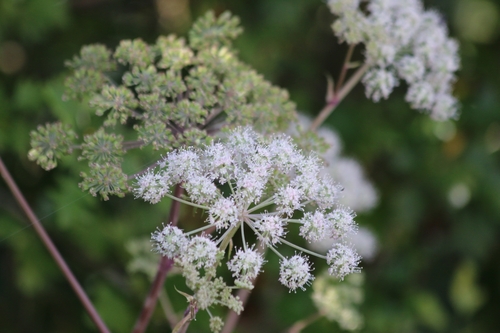
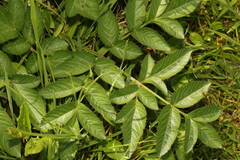
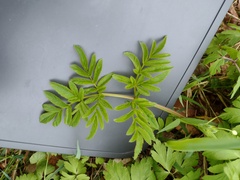
Wild angelica (Angelica sylvestris L., 1753) is a tall perennial in the Apiaceae, native to northwestern Eurasia and frequent in wet meadows, peatlands and riverbanks. A wild relative of cultivated garden angelica, it has a history of modest food and medicinal uses. Introduced populations have become invasive in wetlands of eastern Canada.
Read moreWild angelica and Woodland angelica
Give plenty of ambient light without direct sun on the leaves.
Full sun to light partial shade; tolerates open woodland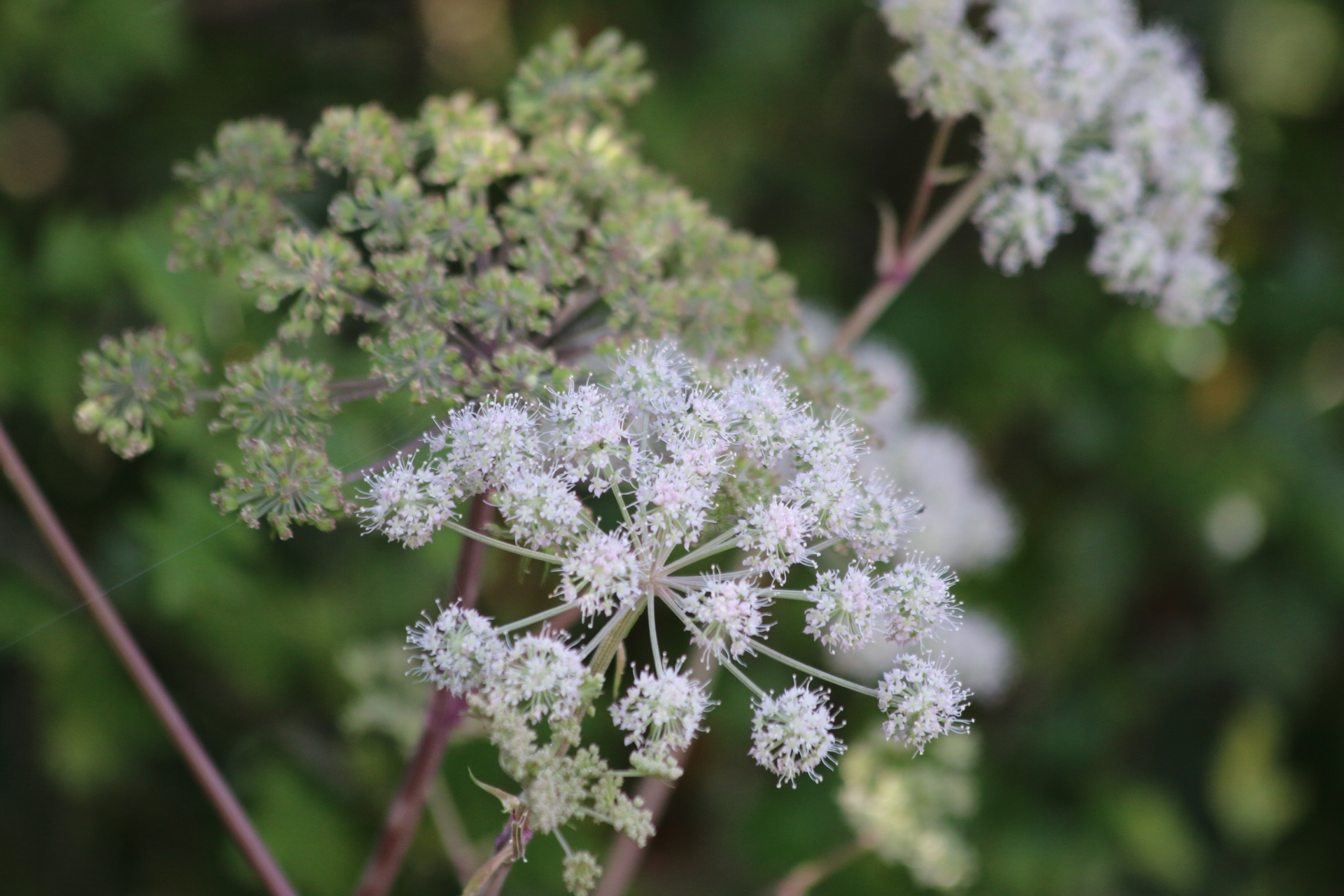
© photo
(c) judithlee, some rights reserved (CC BY-NC), uploaded by judithlee · cc-by-nc
Stephen James McWilliam · cc0
Bartosz Czołczyński · cc0


Global distribution
The native range covers almost all Europe, Russia east to central Siberia, Kazakhstan, Mongolia, Xinjiang, Turkey, the Caucasus, Syria and Lebanon. In France it occurs across most of the country except the Mediterranean fringe and central Atlantic coast. Introduced to eastern Canada in the 18th century, it has become invasive in wetlands there since the late 1980s.
- Native4
- Invasive1
- Metropolitan France
- Europe
- Russia and central Siberia
- Turkey and the Caucasus
- Canada
Hexagons: regions where the plant occurs. Green dots: native range.1
Identity
Wild angelica (Angelica sylvestris L., 1753), also known as woodland angelica, is an herbaceous perennial in the genus Angelica and the Apiaceae family. Rembert Dodoens described it in the 16th century; Carl Linnaeus gave it its definitive binomial name in 1753. 1 2
The name angelica comes from Latin angelicus, itself derived from Greek aggelos, meaning “messenger” and later “messenger of God.” People once believed the plant could protect them against poisons and epidemics. The epithet sylvestris, from Latin silva, meaning forest, describes something growing in woodland or in the wild. This helps distinguish it from its cultivated relative, Angelica archangelica. 3
Recognition
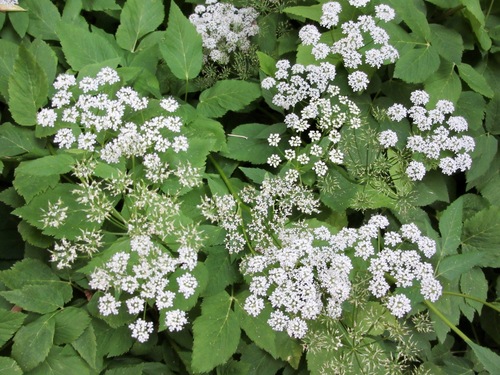
Hollow, ridged, hairless stems distinguish wild angelica, which commonly reaches 50 cm to 1.5 m (1.5–5 ft) and sometimes 2 m (6.5 ft) in rich, moist soil. Often purple-tinged, the stems branch toward the top. Their smooth purple surface contrasts with the hairy, angular stems of common hogweed (Heracleum sphondylium), a frequent source of confusion in the field. 6 4
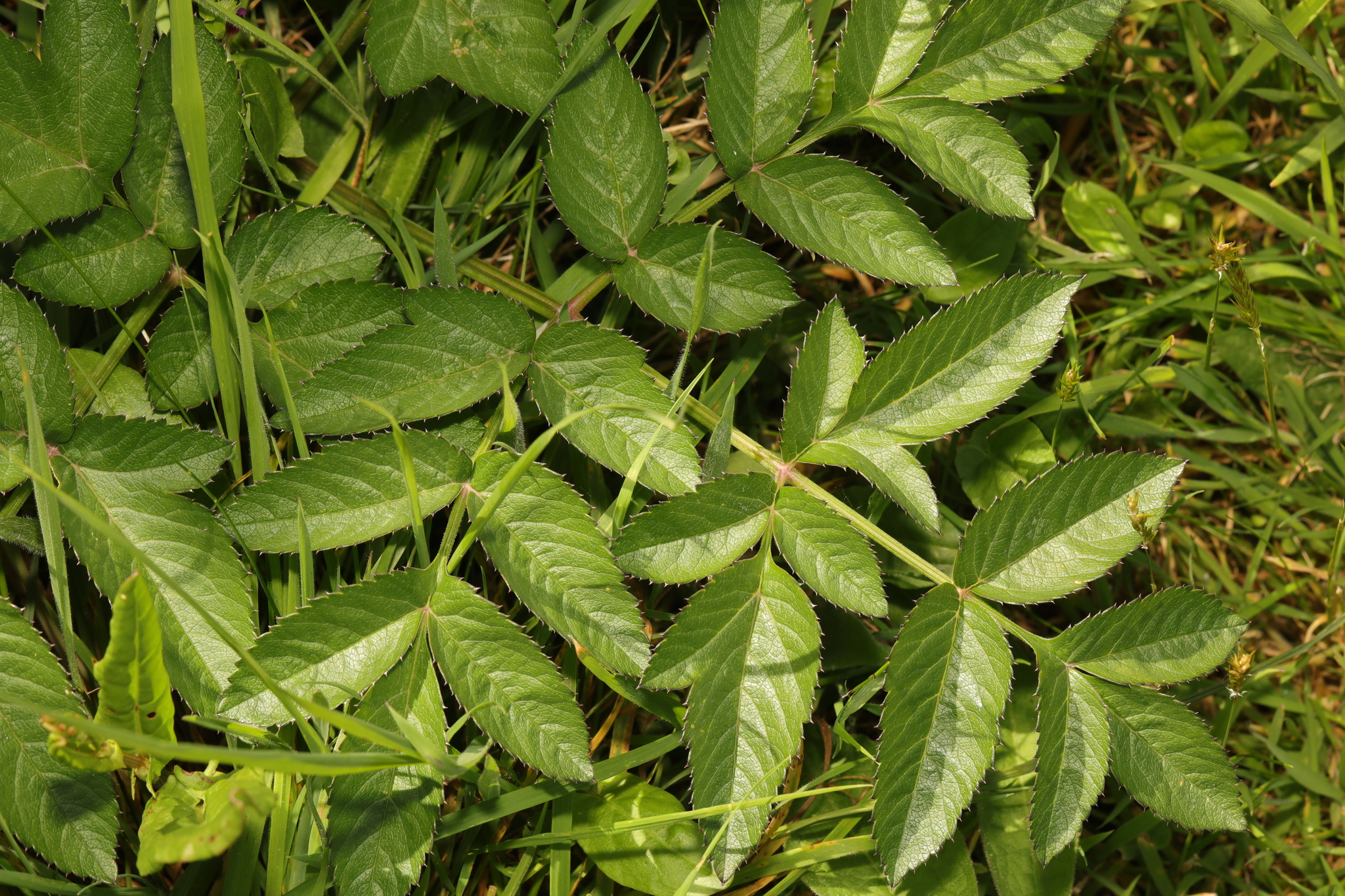
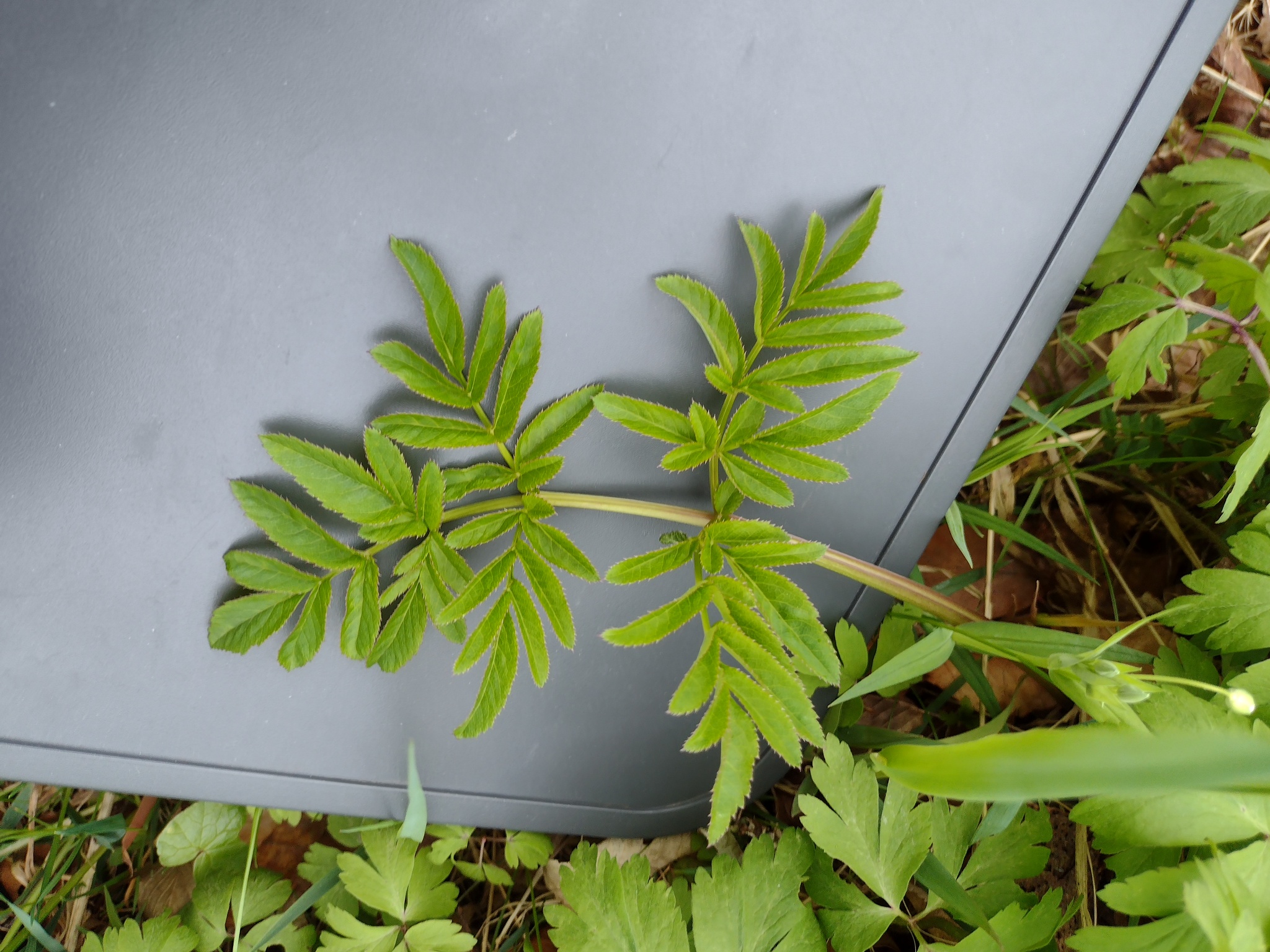
Large basal leaves are divided two or three times into leaflets. Their triangular blades can reach 60 cm (2 ft) long, with lance-shaped to oval leaflets edged by sawlike teeth. Long leaf stalks have swollen sheaths at their bases. Leaves farther up the stem carry smaller, stalkless leaflets. 3
A broad, slightly domed compound umbel has 15–40 downy rays, with flower clusters described as 10–20 cm (4–8 in) across. The tiny white to pink flowers have obovate petals with inward-curving tips. Flattened oval fruits measure about 4 mm (0.16 in) and carry papery wings wider than the body of the fruit. 6 3
Useful taxonomy
Three subspecies accompany the accepted name Angelica sylvestris L. in Plants of the World Online: the typical subspecies sylvestris; villosa, from southwestern and central France to the Pyrenees and northwestern Spain; and elatior, from central Europe to southern Siberia. 1
Older regional floras may use any of these scientific synonyms:
- Athamanta sylvestris (L.) Weber, an older combination
- Imperatoria sylvestris (L.) Lam., an older combination
- Selinum sylvestre Crantz, a historical synonym
- Angelica montana Brot., a historical synonym
Within the subfamily Apioideae, Angelica includes dozens of Eurasian and North American species. Its best-known horticultural representative is Angelica archangelica, grown for stems that can be candied. 1 5
Habitat and range
Across Europe and into central Siberia, wild angelica occupies a broad native range that also includes Kazakhstan, Mongolia, Xinjiang, Turkey, the Caucasus, Syria and Lebanon. INPN records it through most of France, excluding the Mediterranean fringe and the central part of the Atlantic seaboard. 1 2
Fertile wet habitats support it especially well: wet meadows, peatlands, woodland edges and streambanks. Periodic disturbance favors the establishment of large populations. It tolerates soils with a pH above 4 and occurs less often in woodland, on spoil heaps or beside roads. 6
Introduced to eastern Canada in the 18th century, probably for medicinal use, wild angelica first established in Nova Scotia before spreading to New Brunswick, Ontario and Quebec. Since the late 1980s it has become invasive there, locally crowding out native wetland species. That introduced behavior must be distinguished from its place in native Eurasian vegetation. 6
Life cycle and reproduction
July through September marks the flowering period in its native northern range. Stamens mature before the pistils in an individual flower, a sequence called protandry that reduces self-fertilization. The winged fruits are achenes dispersed mainly by water: stream currents can carry them well away from the parent plant. 6
Although classified as perennial, wild angelica often behaves as a partly monocarpic plant: observations indicate that more than half of plants die after flowering once. Early growth is rapid because it draws on reserves in the taproot. Regeneration depends entirely on seeds rather than vegetative multiplication. 6
Uses and risks
Stems, leaf stalks, leaves, flowers, fruits and roots are all described as edible. Young shoots and leaves are boiled as vegetables, stems are candied, and roots and seeds serve as spices. The flavor is nevertheless considered wilder and less aromatic than that of garden angelica, Angelica archangelica. 4
Sap contains photosensitizing furanocoumarins. Contact with skin followed by sunlight can cause burns and dermatitis; gloves reduce exposure when gathering or handling the plant, especially in sunny weather. Edibility therefore does not remove the separate risk from sap on exposed skin. 4
Historically, the roots and seeds were used as antispasmodics, carminatives and expectorants for coughs and digestive complaints. In Turkey, the root is an ingredient in mesir, a traditional medicinal paste associated with Manisa. These are historical uses rather than evidence of medical effectiveness. 4
Varieties, look-alikes and related plants
Wild angelica has no recognized horticultural cultivar. Unlike Angelica archangelica, it remains a spontaneously growing plant, rarely selected for garden cultivation. 1
The most dangerous look-alike is poison hemlock, Conium maculatum, which can be fatal if eaten. Its stems have irregular purple blotches and an unpleasant smell, while wild angelica stems are hairless and uniformly purple. Common hogweed, Heracleum sphondylium, is another source of confusion; it has hairy stems and leaves and begins flowering earlier, from May in the northern range. 6
Garden angelica, Angelica archangelica, differs first in flower color: pale green rather than white to pink. Their traditional uses also differ, with candied stems especially prized from the cultivated plant while wild angelica has largely remained a spontaneously growing relative.
Main sources
- Plants of the World Online / Kew, Angelica sylvestris L.
- INPN / MNHN, Angelica sylvestris L., 1753 - Wild angelica
- Tela Botanica / eFlore bdtfx, Angelica sylvestris L.
- Plants For A Future, Angelica sylvestris
- Integrated Taxonomic Information System, Angelica sylvestris L.
- First Nature, Wild Angelica - Angelica sylvestris
- International Plant Names Index, Angelica sylvestris L.
- Global Biodiversity Information Facility, Angelica sylvestris L.
Frequently asked questions
Is wild angelica toxic?
It is not documented as toxic when eaten by cats, dogs or horses. Its sap does contain photosensitizing furanocoumarins, which can cause skin burns after exposure to sunlight.
How can I distinguish wild angelica from poison hemlock?
Poison hemlock has irregular purple blotches on its stem and an unpleasant smell. Wild angelica has a hairless, ridged stem that is often uniformly purple. Do not gather the plant if identification is uncertain.
Is wild angelica invasive?
In its native European range it is a common wetland plant. Introduced to eastern Canada in the 18th century, it has become invasive since the late 1980s and threatens some Ontario wetlands.
Can you eat wild angelica?
All parts are edible, including young shoots, leaves, candied stems, roots and seeds. Its flavor is considered wilder and less aromatic than that of its cultivated relative, Angelica archangelica.
How does it differ from garden angelica?
Angelica archangelica is cultivated for its candied stems and aromatic root and has pale green flowers. Wild angelica has white to pink flowers, grows spontaneously and has a subtler flavor less prized in confectionery.
Where does the name angelica come from?
It derives from Latin angelicus, from Greek aggelos, meaning messenger and later messenger of God, reflecting the protective powers once attributed to the plant against poisons and epidemics.
Where does wild angelica grow?
In its native range it grows in wet meadows, peatlands, woodland edges and streambanks across northwestern Eurasia, from the United Kingdom to central Siberia and Turkey.
Similar plants
If you are unsure about a plant’s toxicity, ask a botanist or veterinarian for advice.