
Southernwood (Artemisia abrotanum, )
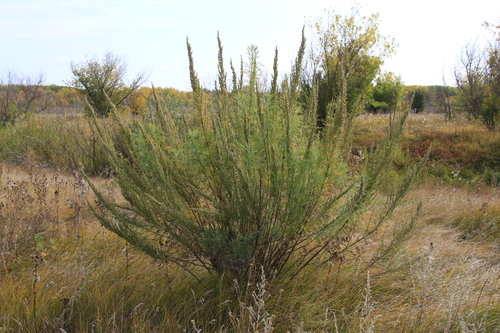

Southernwood (Artemisia abrotanum L.) is an aromatic subshrub in the Asteraceae, cultivated since antiquity for its finely divided leaves and camphor-lemon scent. Rarely found truly wild, it spread through European gardens with traditional uses against clothes moths, in cooking and in folk medicine.
Read moreSouthernwood, Lad's love, Southern wormwood, Old man, Garderobe and Lemon plant
Allow a few hours of direct sun per day, preferably morning or evening.


© photo
(c) Николай Каранов, some rights reserved (CC BY-NC), uploaded by Николай Каранов · cc-by-nc
Wikimedia Commons · CC BY-SA or Public Domain
Wikipedia · CC BY-SA
Taken Oct 15, 2010 by Photoflora - Jean-Luc TASSET (©)
Taken Sep 15, 1995 by Photoflora - Jean-Luc TASSET (©)
Taken Apr 1, 2020 by Milagros Milagros M Montalvo (cc-by-sa)
Taken Jul 5, 2022 by Małgorzata Bienia (cc-by-sa)
Taken Aug 29, 2019 by Kienast Pierre (cc-by-sa)
© copyright of the Board of Trustees of the Royal Botanic Gardens, Kew.




Global distribution
POWO recognizes a narrow native range from Spain to Italy. PFAF notes that the plant's exact origin is obscure: after centuries of cultivation it is hardly ever found truly wild. Herb gardens spread it well beyond that range, as far as Scandinavia and North America.
- Native2
- Introduced2
- Spain
- Italy
- United States
- Canada
Hexagons: regions where the plant occurs. Green dots: native range.1
Identity
Southernwood (Artemisia abrotanum L., 1753), also known as lad's love or southern wormwood, is an aromatic subshrub in the Asteraceae. Its persistent woody base supports herbaceous stems that regrow in spring, reaching 60 cm to 1.2 m (2 to 4 ft) overall. Crushed foliage releases both camphor and a distinct lemon scent, the feature behind the name lemon plant. 1 4
POWO recognizes a narrow native range between Spain and Italy. PFAF nevertheless describes southernwood's exact origin as obscure: cultivation since antiquity means that plants encountered today are almost always associated with gardens rather than truly wild habitats. 1 3
An old household practice explains the French name garderobe: dried sprigs were placed among clothes to deter moths. Southernwood, also called old man, has a long history as a scented domestic herb. 8
Recognition
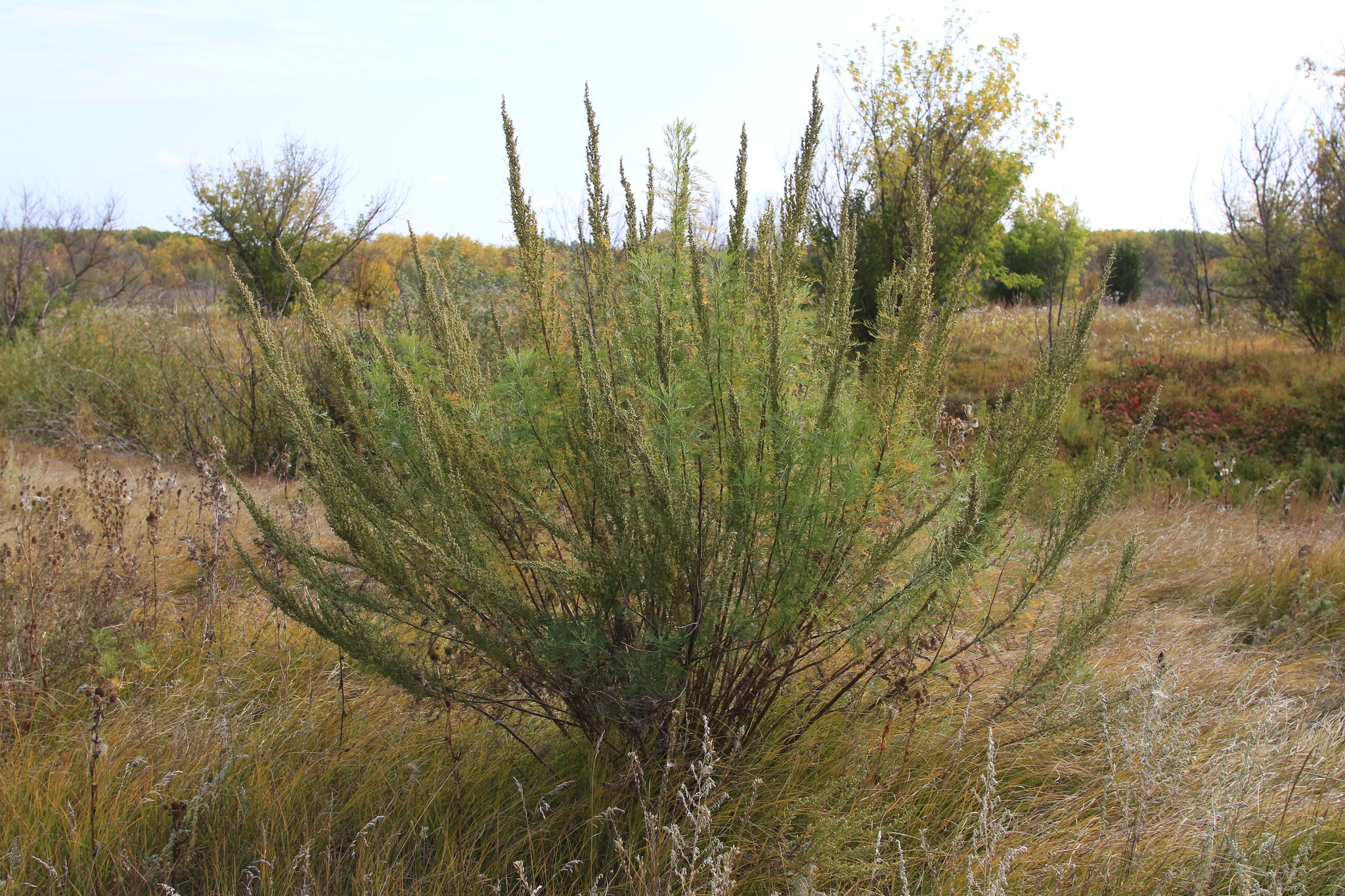
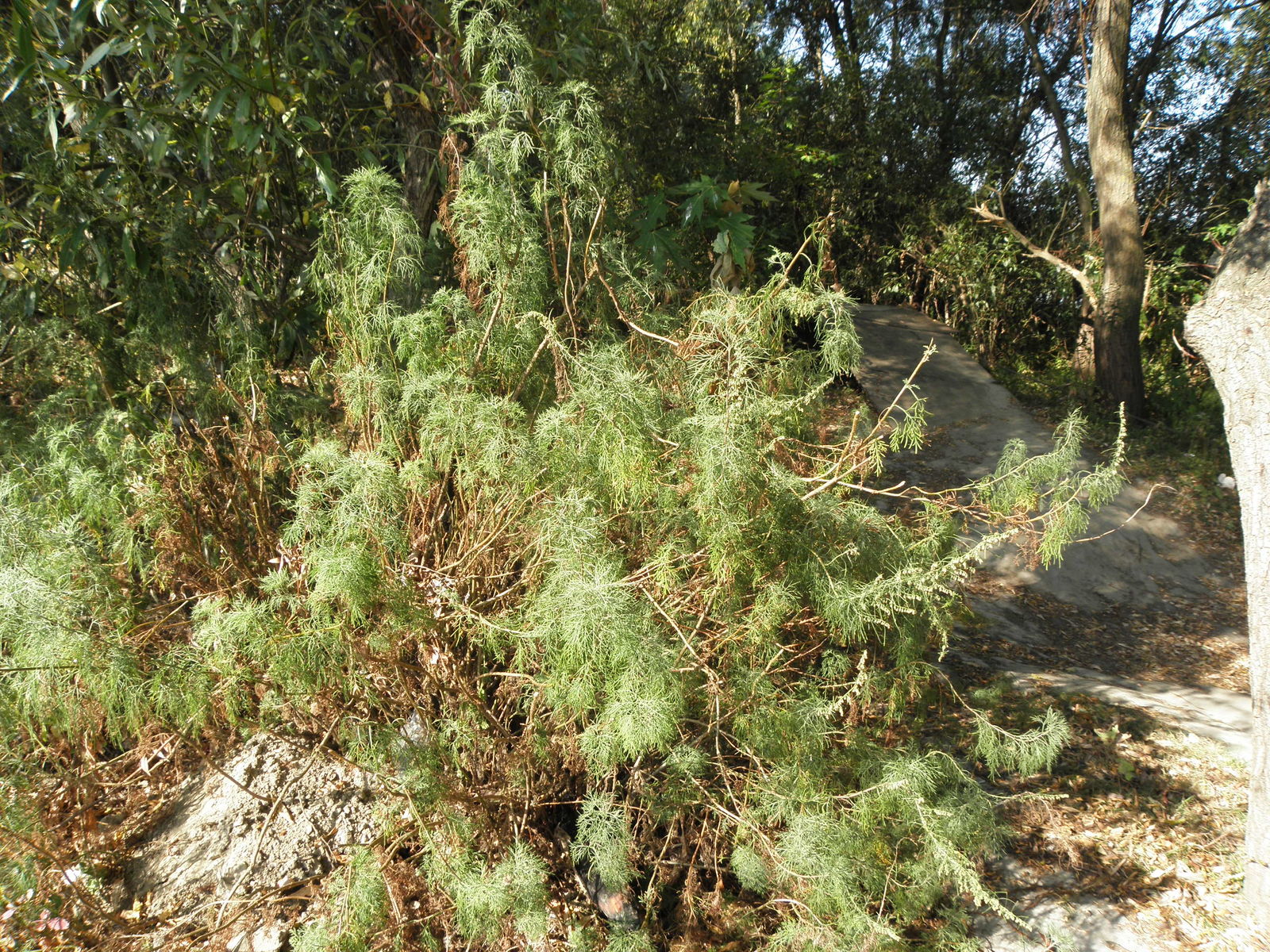
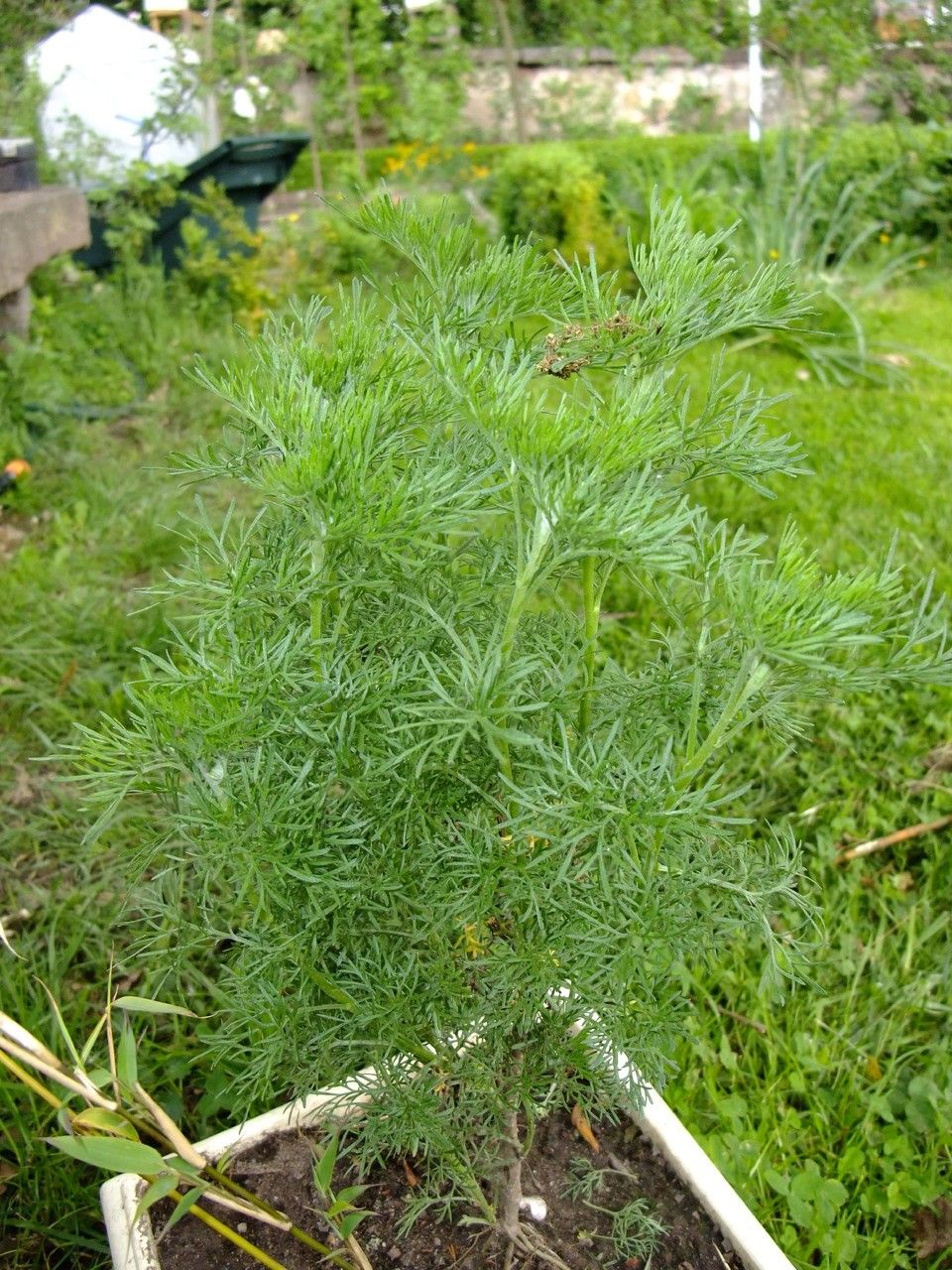
A broad clump of southernwood reaches 50 cm to 1 m (20 to 39 in) across. Its persistent woody base carries softer herbaceous stems. Without cutting back in spring, the base becomes bare within a few seasons; firm annual pruning keeps the plant compact and bushy. 2 5
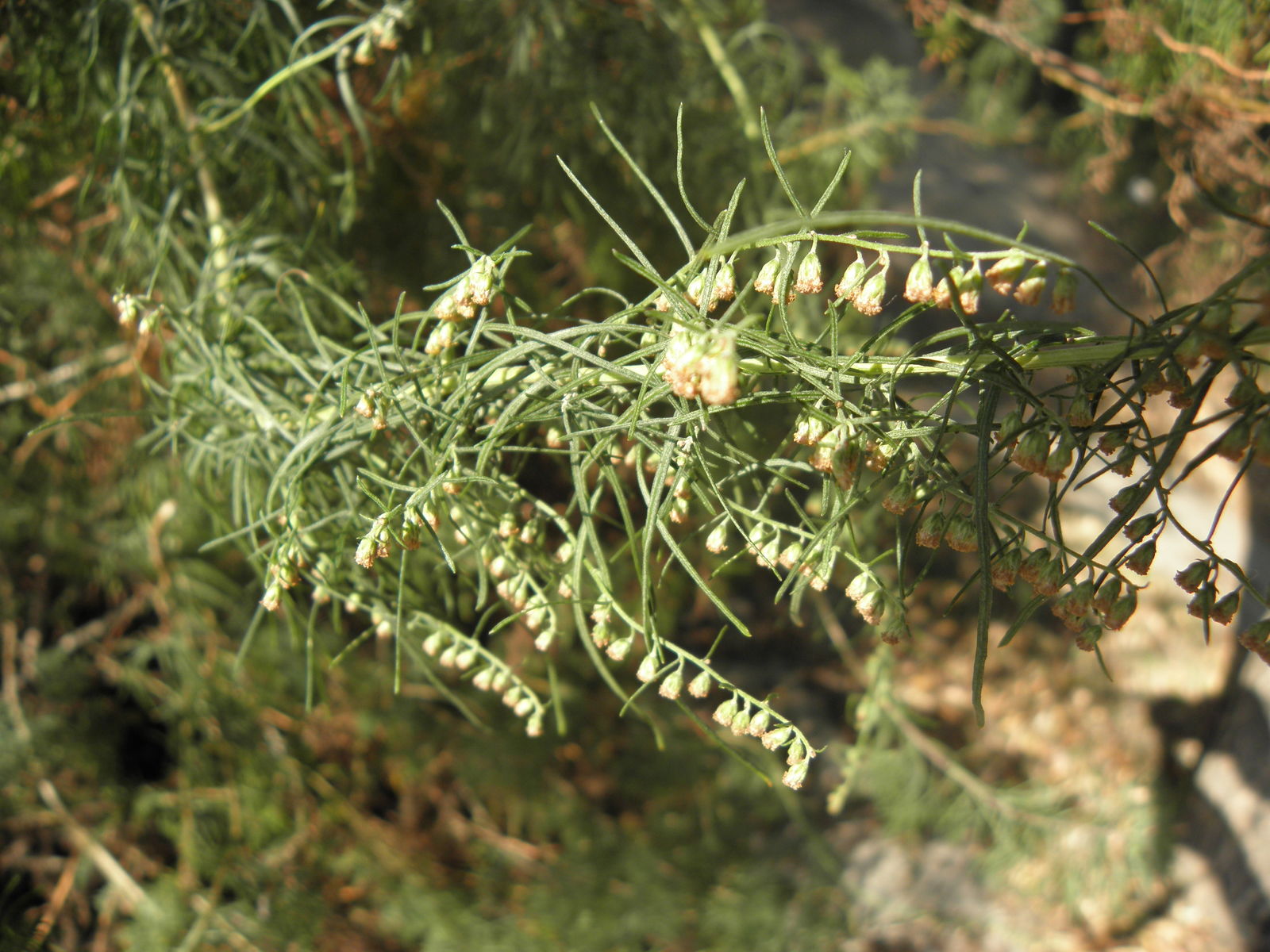
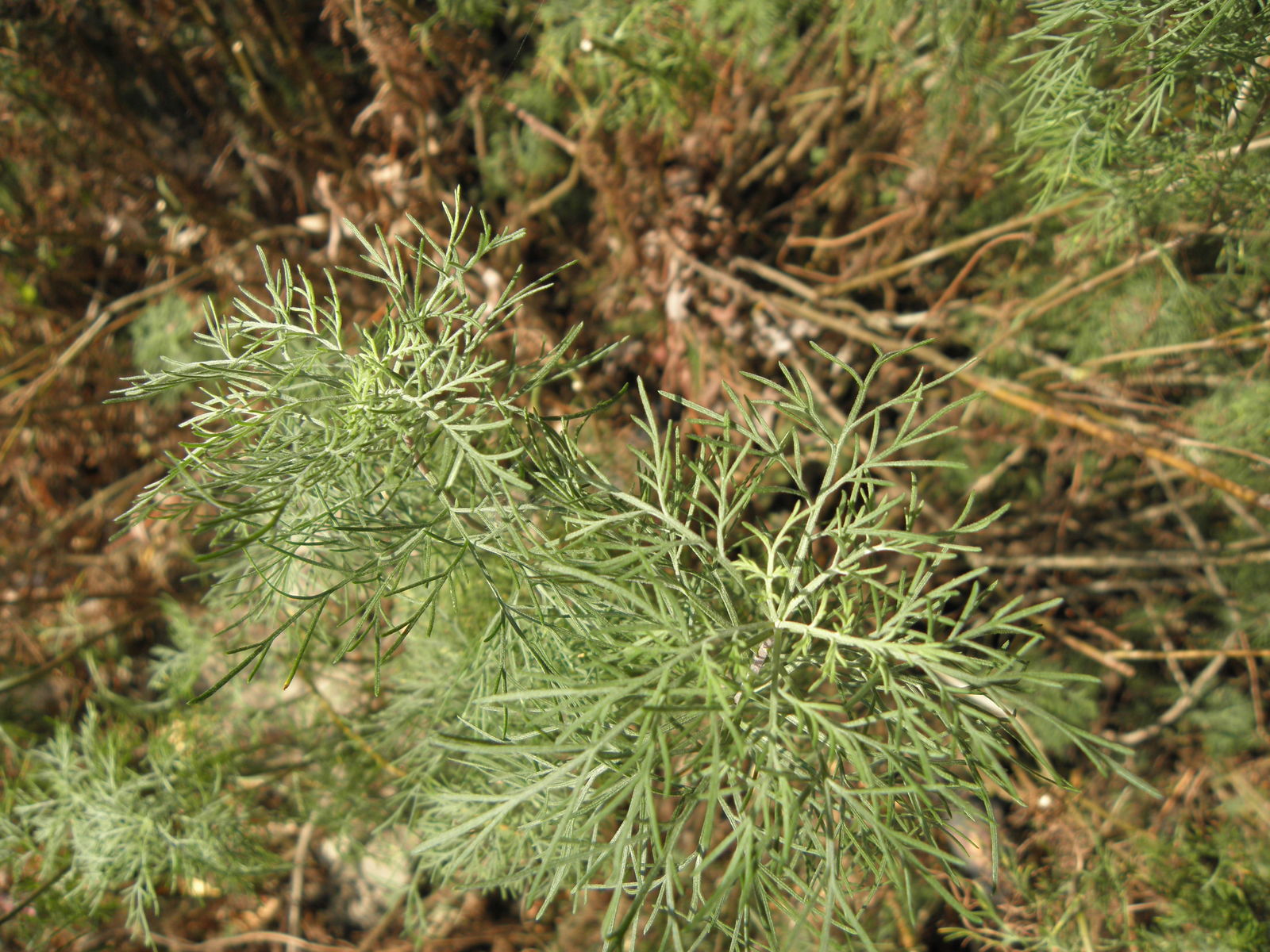
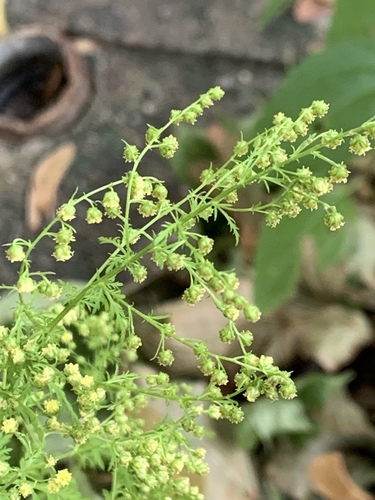
Finely divided, almost feathery leaves range from gray-green to light green. When crushed, they release a camphor-lemon scent, softer and fruitier than common wormwood's. The combination helps distinguish the two plants before flowers appear. 4 3
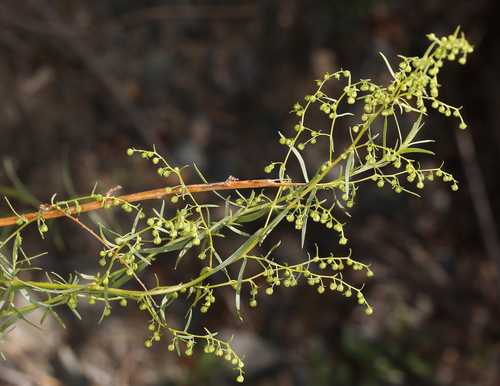
Late, inconspicuous flowers appear from late summer into fall: small, dull yellow heads gather in loose clusters. Flowering is rare and irregular in cool climates, so many garden plants never produce a noticeable floral display. 5 2
Useful taxonomy
Within the Asteraceae, POWO accepts Artemisia abrotanum L., placed in the tribe Anthemideae alongside many related aromatic plants. Historical botanical synonyms include the following names: 1
- Artemisia procera Willd. (historical synonym)
- Artemisia elegans Fisch. ex Ledeb. (historical synonym)
- Artemisia altissima Ehrh. ex DC. (historical synonym)
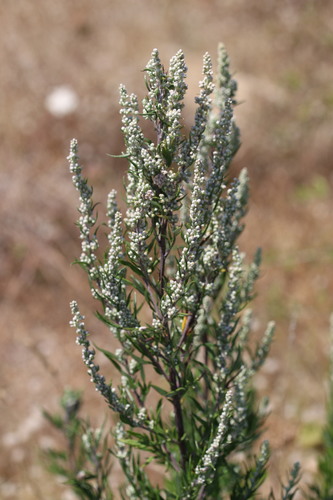
Names shared across Artemisia can cause confusion. Common mugwort (Artemisia vulgaris), common wormwood (Artemisia absinthium) and tarragon (Artemisia dracunculus) are different plants despite their related names. Southernwood differs from these herbaceous relatives in its persistent woody base and distinctly lemony scent, which neither wormwood nor tarragon shares. 4
Habitat and range
The range recognized as native by POWO runs from Spain to Italy. PFAF emphasizes how rarely southernwood is found truly wild, however: centuries of cultivation make its precise original habitat difficult to establish with confidence. 1 3
Centuries of planting in herb and medicinal gardens carried southernwood well beyond that range, into Scandinavia and North America. In these settings it remains associated with gardens rather than characteristically growing as a naturalized plant on waste ground. 8 4
A Swedish heritage survey conducted between 2007 and 2017 documented old forms preserved in rural gardens. These surviving plants show a long, sustained horticultural history well north of the species' presumed native range. 7
Life cycle and propagation
Southernwood is perennial: its woody base survives from year to year, producing fresh herbaceous stems each spring. An established plant withstands about -20 °C (-4 °F). Full sun and poor, draining soil suit it best; shade weakens its shape and noticeably reduces the aromatic oil in its foliage. 2 3
Semi-ripe cuttings taken in late summer provide the usual means of propagation. With warm, draining conditions, rooting takes 4 to 8 weeks, and an established clump develops over one or two growing seasons. Spring division offers another option. Seedlings reproduce the intensity of a parent plant's fragrance less consistently. 3
Uses and risks
Dried southernwood has a long history as an insect repellent. PFAF records its use to protect clothing from moths, a practice also documented in rural Sweden and in the French garderobe tradition. Living plants along vegetable garden edges have also been used to repel certain cabbage moths. 7 3
Young shoots have a bitter, lemony flavor and are used sparingly in cakes, salads or vinegars. The essential oil contains thujone and is toxic if substantial quantities are swallowed. Human toxicity is described as low in the European Food Safety Authority material, while southernwood is considered toxic to cats and dogs. Repeated skin contact can cause dermatitis in susceptible people. 6 3
Folk medicine attributed worm-expelling and digestive properties to southernwood, using infusions to stimulate stomach and intestinal secretions or applying it to wounds. These are historical uses, now largely absent from modern herbal medicine. PFAF explicitly advises against southernwood during pregnancy, especially in its early stages. 3
Branches also supplied a yellow dye for wool. This traditional craft use has largely faded with the availability of synthetic colorants. 8
History, look-alikes and related plants
Swedish rural women included southernwood in church bouquets from the eighteenth century to the late nineteenth. A pastor recorded that its scent helped worshippers stay awake during long sermons. This story inspired the heritage cultivar name Predikoväcka, meaning waking up during the sermon, preserved in a gene bank. 7
The selection Tangerine has a more upright habit and a stronger lemon scent than the typical plant, and rarely flowers. Common wormwood has broader leaves and a harsher smell; tarragon's entire, undivided leaves provide a quick distinction from southernwood's feathery foliage. 2
Main sources
- Plants of the World Online / Kew, Artemisia abrotanum L.
- Royal Horticultural Society, Artemisia abrotanum - Southernwood
- Plants For A Future, Artemisia abrotanum - Southernwood
- NC State Extension Gardener Plant Toolbox, Artemisia abrotanum
- Missouri Botanical Garden Plant Finder, Artemisia abrotanum
- European Food Safety Authority, 2012, compendium of botanicals - Artemisia abrotanum entry
- PMC, Southernwood, Artemisia abrotanum L., in the church bouquet and as heritage plant in Sweden
- Wikipedia (EN), Artemisia abrotanum
- INPN / MNHN, Artemisia abrotanum L., 1753 - Southernwood
Frequently asked questions
Is southernwood the same as common wormwood?
No. Artemisia abrotanum and Artemisia absinthium share a genus and a similar camphor scent, but southernwood has finer leaves, a much more lemony scent and a persistent woody base that common wormwood lacks.
Is southernwood toxic to cats and dogs?
Its thujone-rich essential oil is considered toxic to cats and dogs if swallowed. Human toxicity is classed as low, with problems associated with consuming large amounts.
Can you eat southernwood?
Young shoots have a bitter, lemony taste and are used in small quantities in cakes, salads or vinegars. Large or regular consumption is not recommended.
Why is southernwood called garderobe?
Ce nom ancien désigne son usage domestique le plus répandu, des brins séchés glissés dans les armoires pour éloigner les mites des vêtements, un usage documenté aussi bien en France qu'en Sweden.
Should you prune southernwood every year?
Yes. Without cutting back in spring, the base soon becomes woody and bare. A firm annual pruning maintains dense, fragrant foliage.
Does southernwood grow wild?
Rarely. Its exact origin is uncertain because it has been cultivated for so long that it is hardly ever found outside gardens, unlike relatives such as Artemisia vulgaris.
What is Tangerine southernwood?
Tangerine is a rare selection of southernwood with a more upright, broader habit than the typical plant and a stronger lemon scent. It rarely flowers.
Similar plants
If you are unsure about a plant’s toxicity, ask a botanist or veterinarian for advice.