
Siberian dogwood (Cornus alba, )
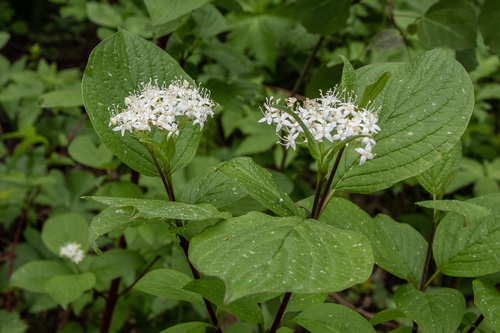
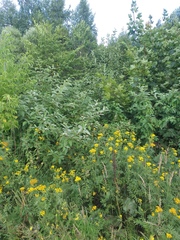
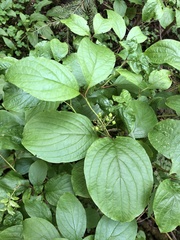
Siberian dogwood (Cornus alba) is a deciduous shrub in the Cornaceae, native to Siberia, the Russian Far East, Mongolia, northern China and North Korea. It forms dense thickets at woodland edges and along streams. Its young coral-red stems stand out in winter, with annual hard pruning encouraging their strongest color.
Read moreSiberian dogwood, Red-barked dogwood, White dogwood and Tatarian dogwood

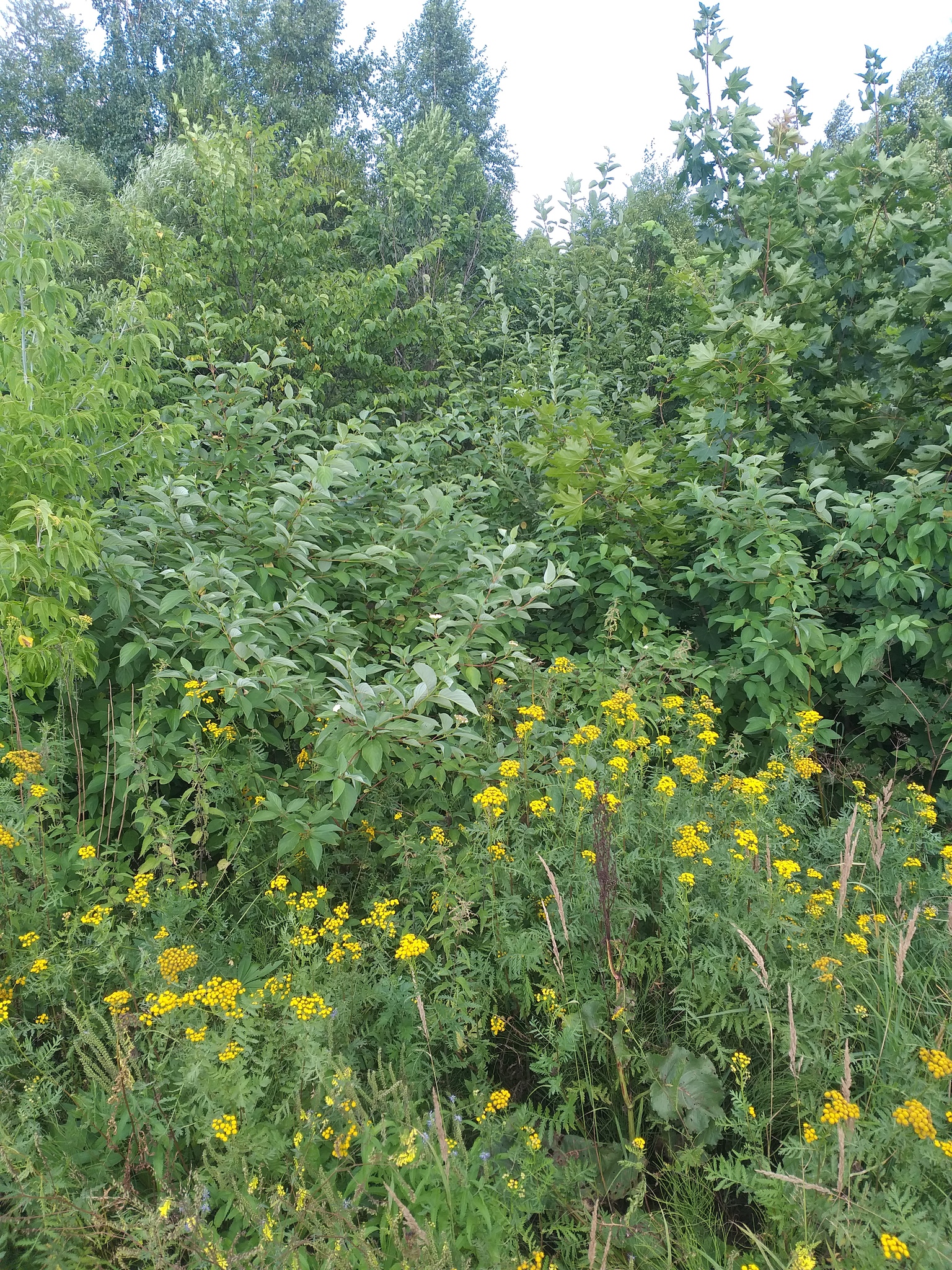


© photo
(c) Nikolay V Dorofeev, some rights reserved (CC BY-NC), uploaded by Nikolay V Dorofeev · cc-by-nc
Dmitriy Bochkov · cc-by
Valerii Glazunov · cc-by
Taken Sep 15, 2003 by Photoflora - Jean-Luc TASSET (©)
Taken May 23, 2015 by Tela Botanica − Yoan MARTIN (cc-by-sa)
Taken Jul 22, 2022 by Oğuzhan (cc-by-sa)
Taken Jul 19, 2021 by Mandi L. (cc-by-sa)
Taken Jul 21, 2022 by Oğuzhan (cc-by-sa)
© copyright of the Board of Trustees of the Royal Botanic Gardens, Kew.




Global distribution
Cornus alba is native to Siberia, the Russian Far East, Mongolia, northern China and North Korea, growing in mixed forests and riverside thickets up to 1,700 m (5,600 ft). Introduced to western Europe as an ornamental in the 18th century, it is now widely cultivated there and locally escapes from gardens near wetlands.
- Native4
- Introduced3
- Russia
- Mongolia
- China
- North Korea
- United Kingdom
- Lithuania
- United States
Hexagons: regions where the plant occurs. Green dots: native range.1
Identity
Siberian dogwood (Cornus alba L., 1767), also known as white dogwood or Tatarian dogwood, is a deciduous shrub in the genus Cornus, family Cornaceae. It grows from Siberia and the Russian Far East to northern China and North Korea. Carl Linnaeus described it in 1767. 1 7
British horticulture received the species through a seed shipment from Saint Petersburg. Nurseryman Philip Miller received the seeds shortly before Linnaeus's description, from Daniel Messerschmidt's collection in Kamchatka. Long confused with North American red-osier dogwood (Cornus sericea), Siberian dogwood has upright stems rather than trailing ones, and blue-white fruit rather than the untinted white fruit of its American relative. 3
Recognition
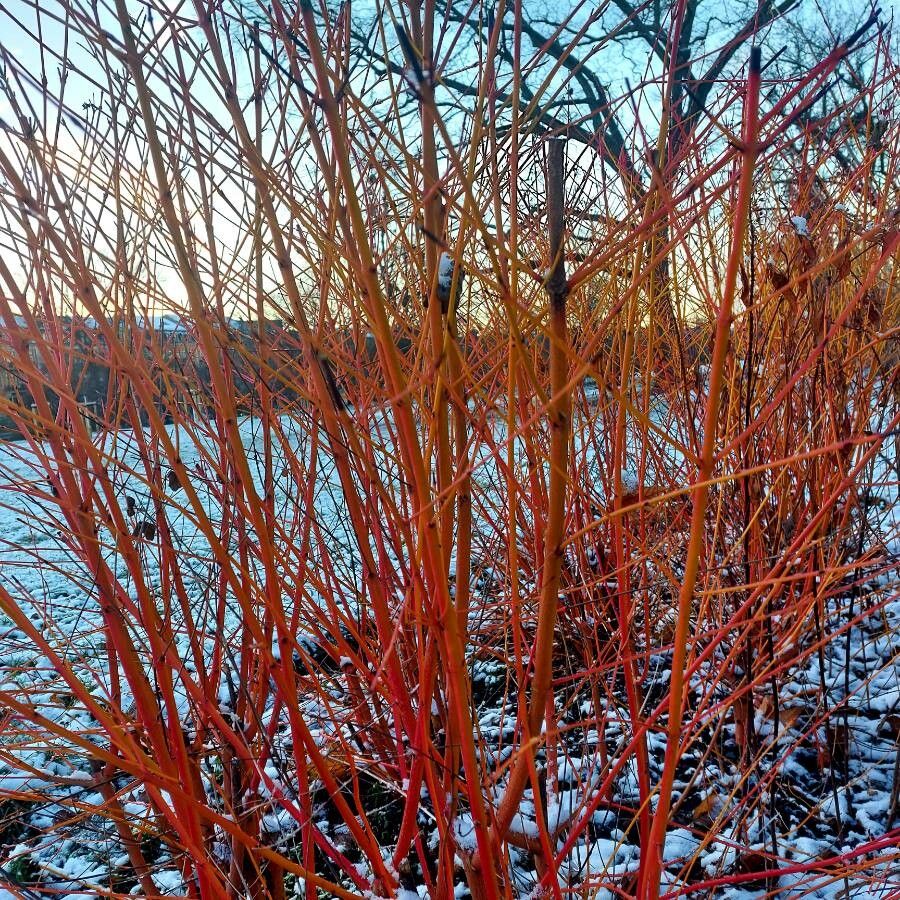
Dense, fast-growing bushes reach 1.5–4 m (5–13 ft) tall with a similar spread. Stems begin green and turn red in their first year, becoming hairless and glaucous as they age. Young wood exposed to full sun has the brightest coral-red winter color; stems more than two years old become duller. 2 3
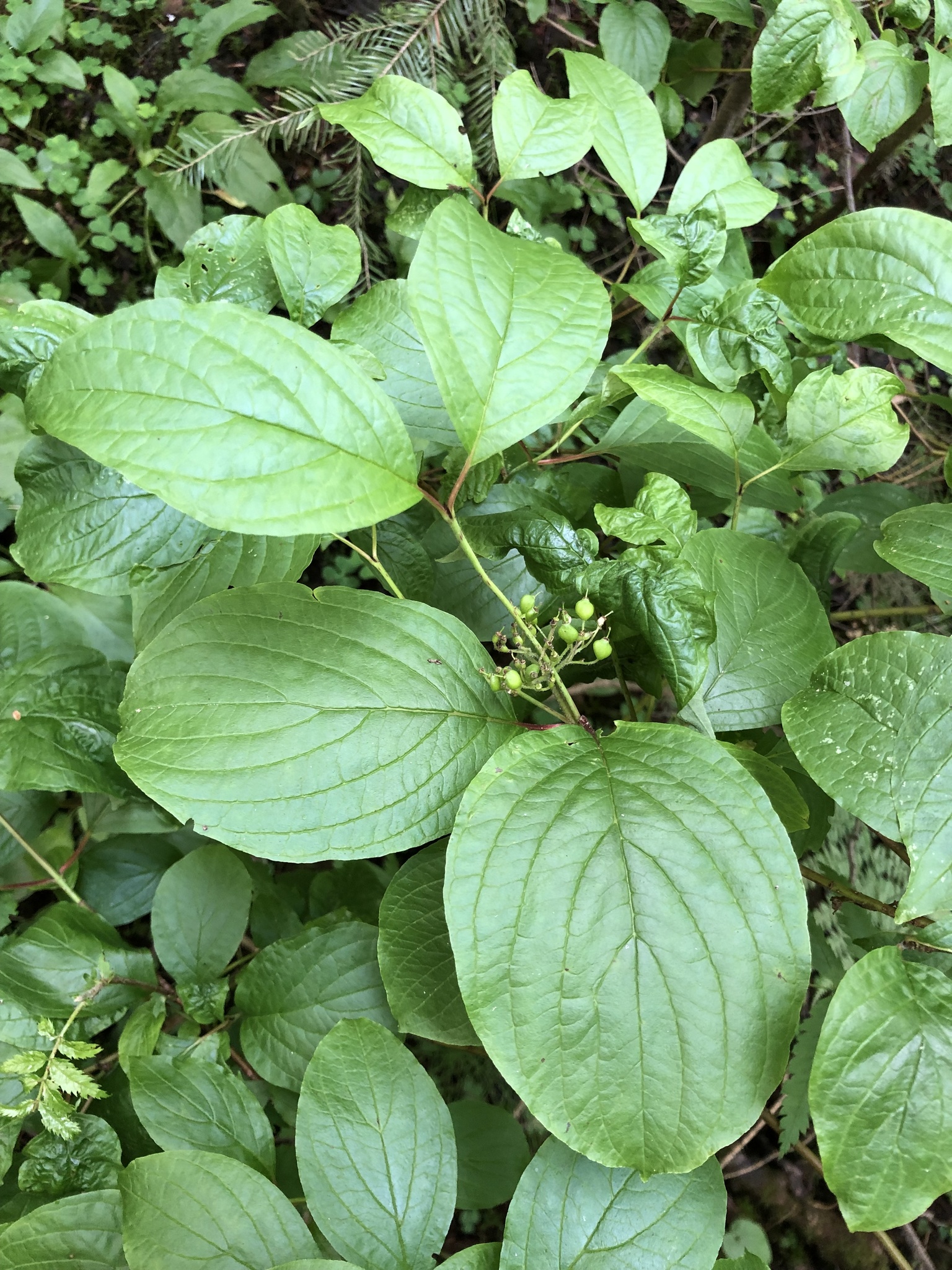
The opposite leaves are elliptic to oval, 4–8.5 cm (1.5–3.5 in) long, dark green above and glaucous underneath. Cream-white flowers, grouped in flat corymbs of 0.6–0.9 cm (about 0.25–0.35 in), open from late spring to midsummer in its Northern Hemisphere range. The following fruits are spherical drupes, 0.5–0.6 cm (about 0.2 in) across, ripening white to bluish from late summer through fall. Their bluish tint distinguishes them from the black drupes of Cornus sanguinea. 3 4
Useful taxonomy
For this species, POWO/WCVP accepts the name Cornus alba L. Frequently cited homotypic synonyms include Swida alba (L.) Opiz and Thelycrania alba (L.) Pojark., genera now included in Cornus. Other names include Cornus tatarica Mill. and the illegitimate Cornus sibirica Raf., long used in nurseries for the 'Sibirica' cultivar group. 1 3
Confusion most often involves Cornus sericea, the North American red-osier dogwood. Some authors propose treating it as a subspecies of Cornus alba, a disputed interpretation. POWO retains the two as separate species, one native to Asia and the other to North America. 3 7
Habitat and range
Across Siberia and the Russian Far East, the range of Cornus alba continues into Mongolia, northern China and North Korea. It colonizes mixed deciduous and coniferous forests and thickets along streams at 600–1,700 m (2,000–5,600 ft) elevation. 6 1
Introduced to western Europe for ornament in the 18th century, Siberian dogwood is now widely planted there for its winter stems. It tolerates occasionally waterlogged soil and readily produces suckers from its base. Without management, thickets can spread along wetland margins, a behavior documented in Europe and North America, without a widespread invasive status recorded to date. 4 6
Life cycle and reproduction
From late spring to midsummer in its Northern Hemisphere range, Siberian dogwood produces corymbs of numerous small, hermaphroditic flowers. These attract bees and other pollinators, including several specialist species of Andrena. 4
Fruit ripens from late summer through fall. Birds digest the pulp and disperse the seeds intact. Seeds need several months of cold stratification before germinating when sown. 6
In cultivation, hardwood cuttings taken in late fall establish faster and more reliably than seedlings. Suckers also arise naturally from the base. North Carolina State University Extension describes this behavior as “weedy” when regular pruning does not contain it. 4 6
Uses and risks
Winter stem color drives its ornamental use. Cutting stems hard to ground level at the end of each winter encourages fresh wood with the brightest color. Without that renewal, stems pass two years old and become dull reddish brown. 3
The fruit is not edible for humans, but no risk is documented: neither PFAF nor the North American horticultural references reports a known hazard to people or domestic animals. 6 In hot, humid climates south of USDA zone 7, the species, especially its variegated cultivars, becomes more susceptible to anthracnose and powdery mildew. These diseases mar the foliage without endangering the shrub. 4
Varieties, look-alikes and related plants
Brilliant coral-red stems characterize the 'Sibirica' selections, while 'Kesselringii' has some of the genus's darkest stems, purple-brown in winter. Among variegated forms, 'Elegantissima' and 'Spaethii', the latter selected at Späth in Berlin in 1884, have admired cream to golden leaf margins. Both lost their RHS AGM in 2020 because of nursery instability. 'Aurea' is an exception: its chartreuse-yellow foliage lasts all summer, making it the most stable selection in the variegated group. 3 2
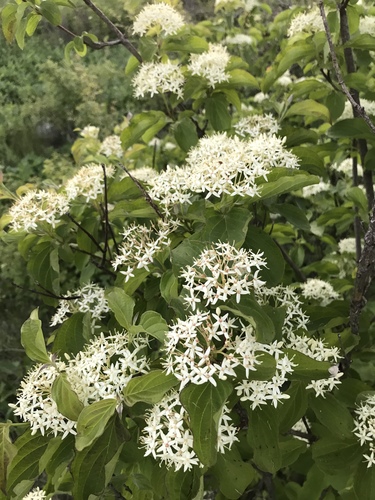
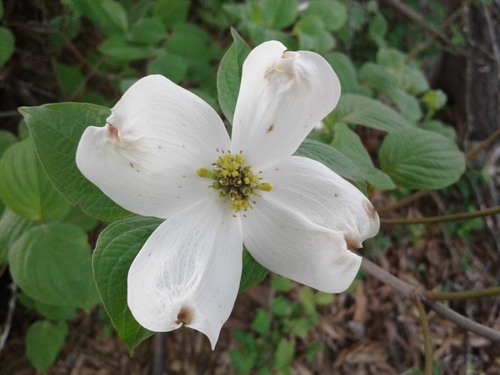
Three dogwoods regularly cause confusion in the field. North American Cornus sericea trails its stems along the ground and has white fruit without a blue tint. European Cornus sanguinea has purplish-black drupes on reddish-brown rather than coral stems. Cornelian cherry, Cornus mas, flowers yellow in late winter and produces edible red fruit, well before the other three come into leaf.
The bluish ripe fruit, upright stems, exceptionally vivid winter color and suckering habit forming dense thickets remain the most reliable field marks for confirming Cornus alba, even outside the flowering season. 3
Main sources
- Plants of the World Online / Kew, Cornus alba L.
- Royal Horticultural Society, Cornus alba L. - red-barked dogwood
- Trees and Shrubs Online (International Dendrology Society), Cornus alba
- North Carolina Extension Gardener Plant Toolbox, Cornus alba
- Missouri Botanical Garden Plant Finder, Cornus alba
- Plants For A Future, Cornus alba
- Integrated Taxonomic Information System, Cornus alba L.
Frequently asked questions
Is Siberian dogwood poisonous?
No. The references consulted, including Plants For A Future, report no known hazard to humans or domestic animals. The fruit is simply not edible because it has no culinary appeal.
How can I tell Cornus alba from Cornus sanguinea?
Asian Cornus alba has blue-white fruit and upright, vivid coral-red stems. European Cornus sanguinea has purplish-black drupes and darker stems tending toward reddish brown.
Why cut Siberian dogwood back hard every year?
The brightest color develops on wood one to two years old. Older stems turn dull reddish brown; cutting back to ground level in late winter renews the colorful wood each season.
Is Siberian dogwood invasive?
It suckers readily and sometimes self-seeds near wetlands, as documented in North America and some European countries. No widespread invasive status is currently recorded.
What is the difference between Cornus alba and Cornus sericea?
North American Cornus sericea often has prostrate stems that root where they touch soil and white fruit without a blue tint. Asian Cornus alba keeps upright stems and slightly bluish fruit.
Which cultivar has the best winter stem color?
The 'Sibirica' group remains the reference for vivid, stable coral red. 'Kesselringii' offers the opposite effect, with some of the darkest purple-brown stems in the genus.
Can Siberian dogwood withstand extreme cold?
Yes. Its Siberian origin is reflected in its cold tolerance: established shrubs withstand temperatures below -35 °C (-31 °F), corresponding to USDA hardiness zone 3.
Similar plants
If you are unsure about a plant’s toxicity, ask a botanist or veterinarian for advice.