
Red osier dogwood (Cornus sericea, )
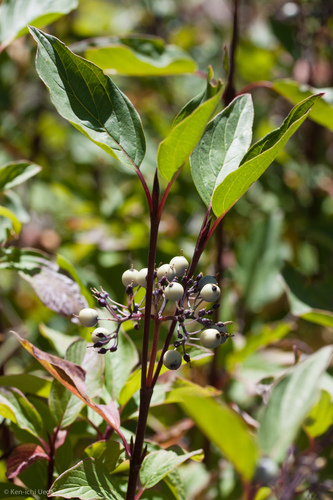
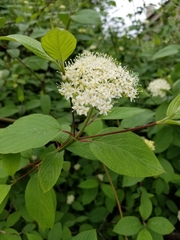
Red osier dogwood (Cornus sericea) is a suckering deciduous shrub in the Cornaceae family, native to North American wetlands from Alaska and Newfoundland south to northern Mexico. Bright red young stems stand out in winter, and its white fruit with a bluish sheen ripens in late summer.
Read moreRed osier dogwood, Redtwig dogwood, Redstem dogwood, Creek dogwood, Red brush and American dogwood
Allow a few hours of direct sun per day, preferably morning or evening.
Full sun to partial shade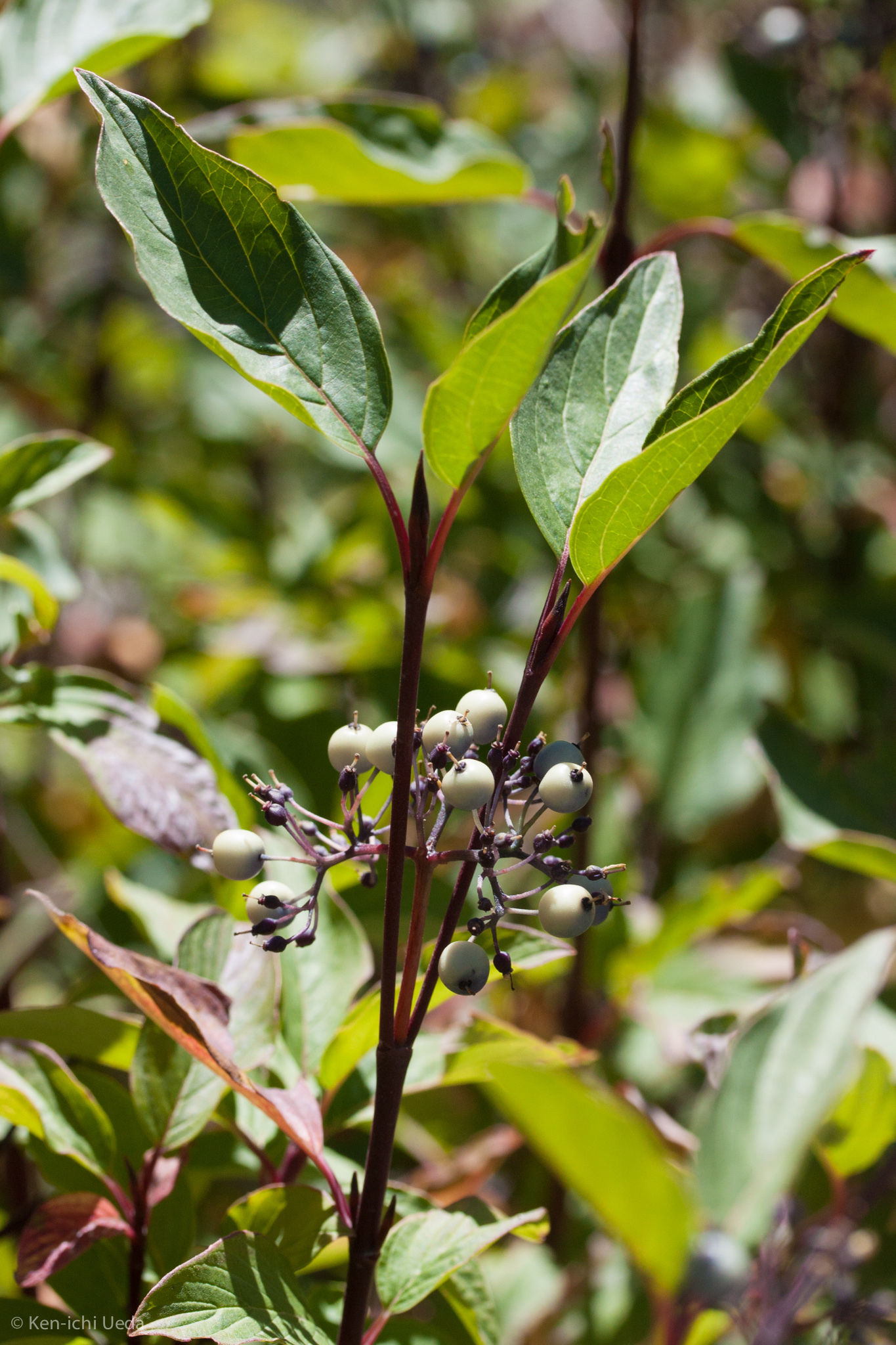
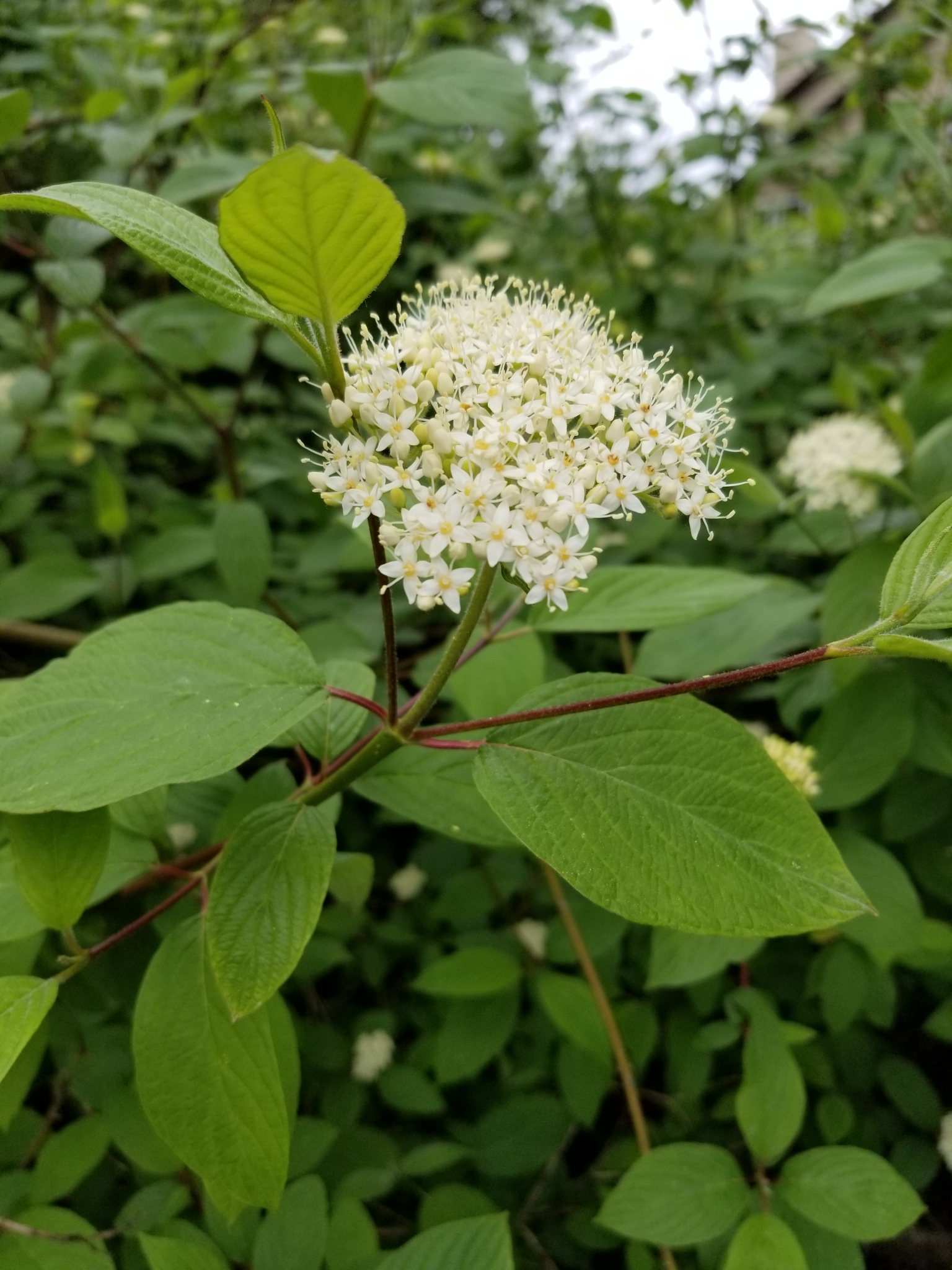
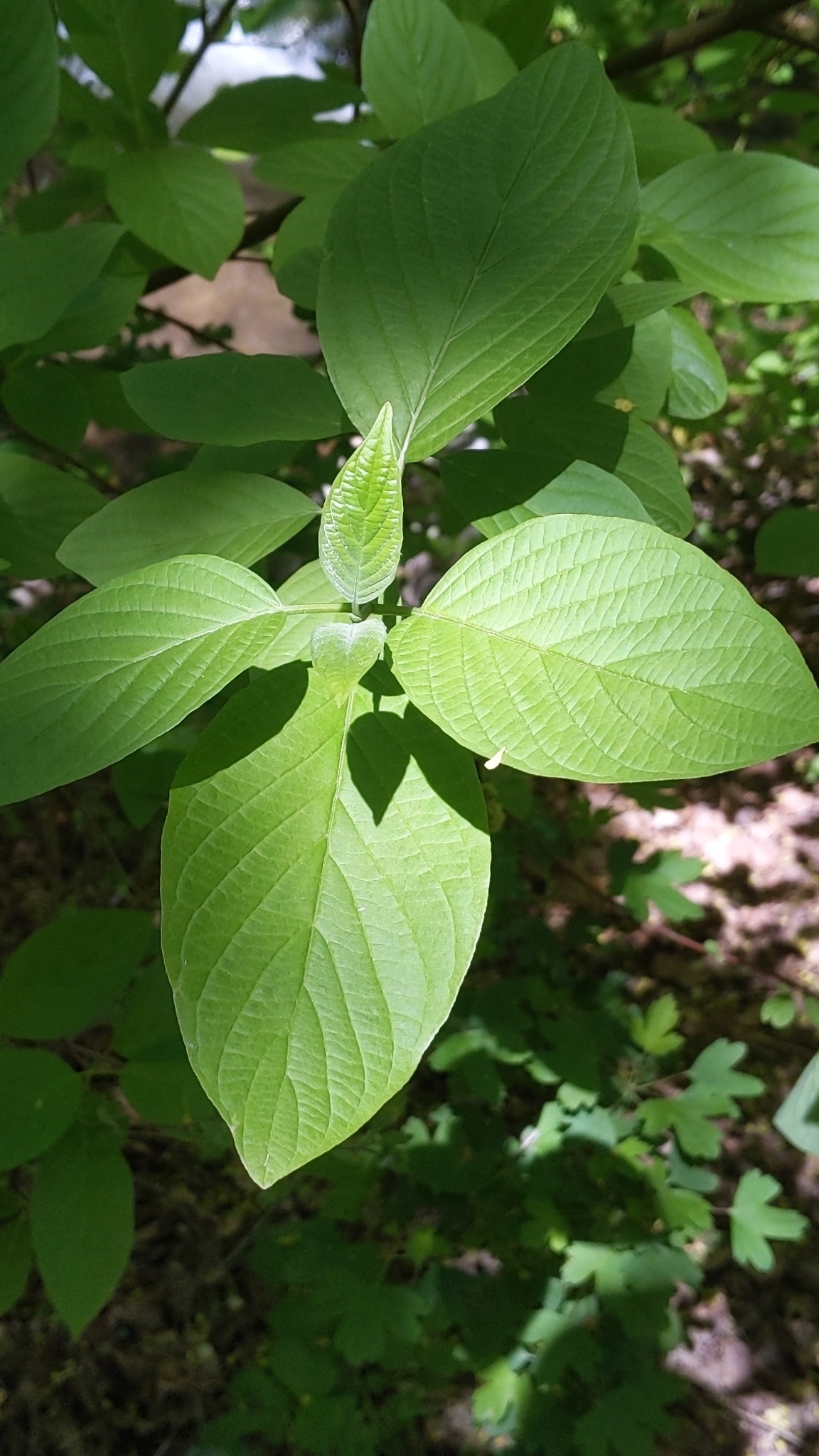


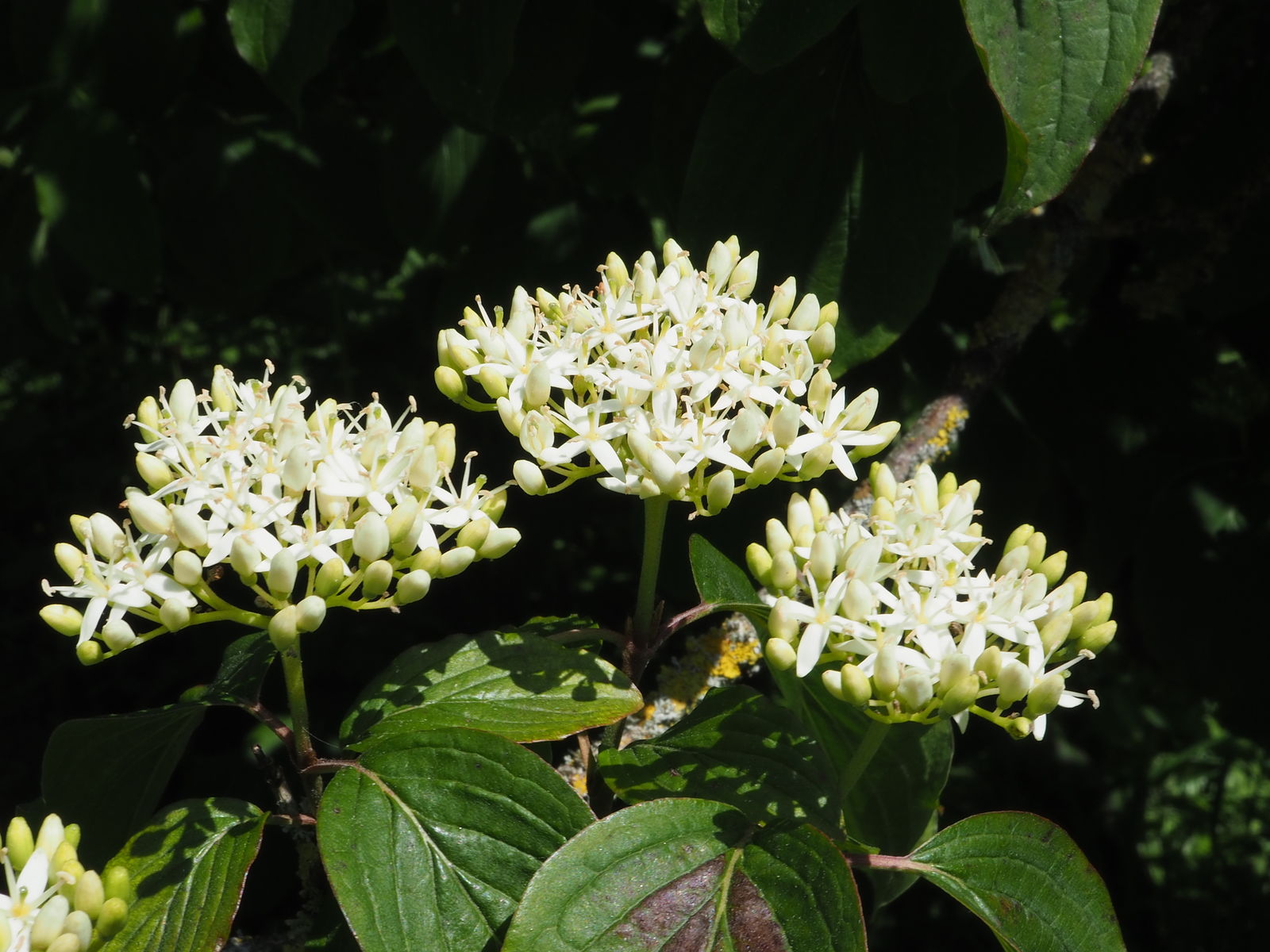


© photo
Ken-ichi Ueda · cc0
Rod · cc0
Mark Connolly · cc0
Taken Oct 17, 2019 by mohammad fazel dehkordi (cc-by-sa)
Taken Sep 28, 2022 by Dominik Muczyński (cc-by-sa)
Taken Mar 13, 2022 by Tristan Jaton-Maria (cc-by-sa)
Taken Oct 20, 2021 by Decobert Didier (cc-by-sa)
Taken Feb 19, 2022 by Annemarie Ahrens-Stehle (cc-by-sa)
© copyright of the Board of Trustees of the Royal Botanic Gardens, Kew.




Global distribution
The native range of Cornus sericea covers much of temperate North America, from Alaska and Newfoundland south to northern Mexico and Virginia. It is cultivated as an ornamental far beyond this range, with scattered records of naturalization in Europe; introduced or invasive status therefore applies to the particular region concerned.
- Native3
- Introduced1
- Invasive1
- Canada
- United States
- Mexico
- United Kingdom
- Switzerland
Hexagons: regions where the plant occurs. Green dots: native range.1
Identity
Red osier dogwood (Cornus sericea L., 1771), also known as redtwig dogwood, is a deciduous shrub in the genus Cornus, family Cornaceae. The epithet sericea means “silky” in Latin and refers to the fine hairs covering young leaves and young shoots, a subtle but consistent identification feature. Its familiar English names emphasize the red stems. 6 1
An older scientific name, Cornus stolonifera, survives in botanical synonymy and points to an important growth habit: the plant spreads abundantly by suckers, forming dense thickets rather than a single trunk. The spreading behavior is central to recognizing the shrub as a whole, beyond the color of an individual branch. 1 3
Recognition
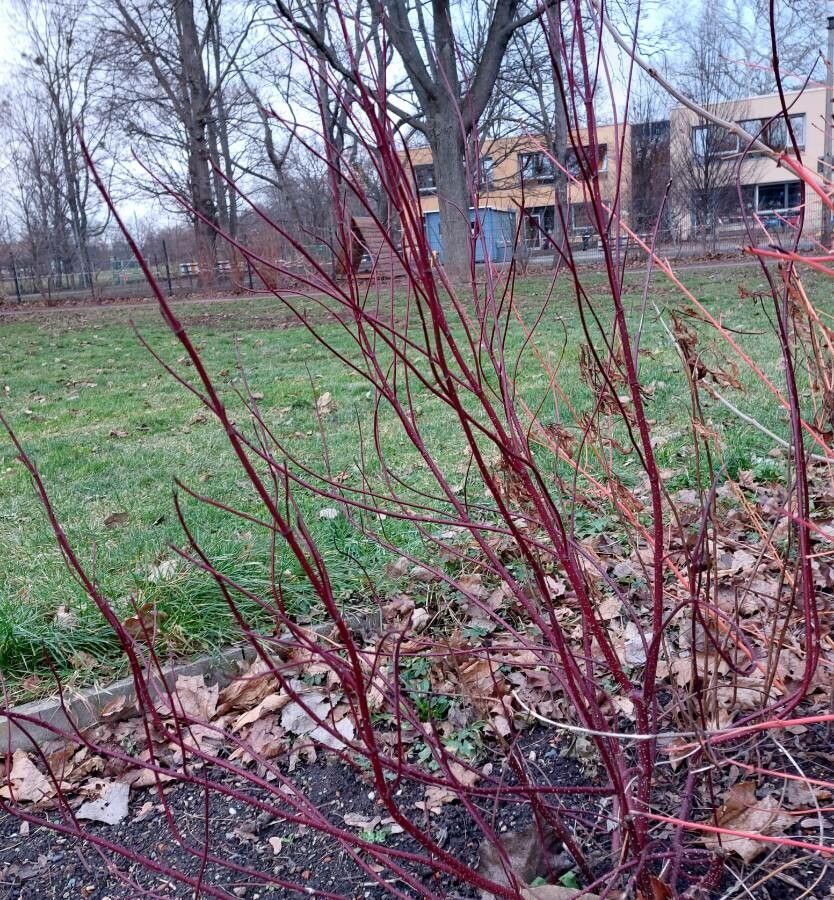
Upright stems form a shrub commonly 1.5–3 m (5–10 ft) tall, with a spread reaching 4 m (13 ft) and rapid growth in wet soil. The hairless stems turn bright to dark red in winter. Color is much stronger on the current year's wood in full sun than on old shaded branches, which often remain greenish. 5 6
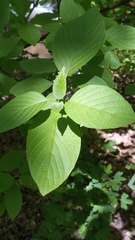
Opposite oval to elliptical leaves measure 5–12 cm (2–5 in) long. Curving veins converge toward the tip of the blade, a useful feature for recognizing the genus Cornus even without flowers or fruit. In fall, red osier dogwood leaves change from green through orange-red to purple before dropping. The changing foliage adds a separate seasonal feature before winter stem color takes prominence. 6 5
Flat, creamy-white cymes cluster at branch tips in spring, sometimes continuing into early summer. The fruit that follows consists of small grouped drupes, white with a bluish sheen, ripening in late summer. Each remains under 1 cm (0.4 in) across, small enough that the cluster is more conspicuous than any single fruit. 5 6
Useful taxonomy
North American horticultural literature still frequently uses the older name Cornus stolonifera, although POWO/WCVP accepts Cornus sericea L. The following names are encountered in the species' synonymy:
- Cornus stolonifera Michx., the older species name;
- Cornus sericea subsp. stolonifera (Michx.) Fosberg, a subspecific combination;
- Cornus sericea subsp. occidentalis (Torr. & A.Gray) Fosberg, another subspecific combination;
- Cornus sericea f. baileyi (J.M.Coult. & W.H.Evans) Fosberg, a botanical form name;
- Swida sericea (L.) Holub, a combination in a different genus.
Some classifications have linked it closely to Cornus alba, native to Siberia and the Russian Far East, sometimes treating the two as synonyms. They remain distinguishable in the field: Cornus alba forms a more compact bush with few suckers, while Cornus sericea spreads by stolons and can cover several square meters of wet ground in one season. 1 2
Habitat and range
Wet ground across much of temperate North America supports the native populations, from Alaska and Newfoundland south to northern Mexico, including Durango and Nuevo León, and Virginia. Streambanks, marshes, ditches and floodplain margins are its main habitats. Consistently wet soil is the shared condition across these otherwise varied settings. 8 7
Hardy in USDA zones 2–7, red osier dogwood tolerates winters down to −40 °C (−40 °F). It copes less well with humid heat toward the southern part of its range, where both wood and foliage become susceptible to fungal diseases. Cold tolerance therefore does not imply equal suitability for every warm summer climate. 6
Introduced to Europe as an ornamental, it has occasionally escaped gardens. Switzerland lists it as an invasive alien species and discourages its commercial sale. That status currently concerns chiefly the Swiss Plateau and should not be generalized to Europe as a whole; the geographic qualification is part of the reported status. 9
Life cycle and reproduction
In its Northern Hemisphere cycle, red osier dogwood flowers from May to June. Fruit develops within weeks after pollination and ripens fully in late summer. Birds and small mammals continue to take it long after leaf fall, extending its role as a seasonal food resource beyond the period of active leafy growth. 6
Vegetative reproduction dominates its biology. Stems lying against damp ground root at the contact point, while the roots continually send up new suckers. Together, spontaneous rooting and repeated sucker production explain the rapid formation of dense riverside thickets without waiting for seeds to germinate. These are two complementary ways for an established plant to spread. 7
Seed propagation is possible but slow. After pulp removal, seeds require 3–4 months of cold stratification, and emergence may take as long as eighteen months. Fall stem cuttings with a heel root within weeks, explaining why nurseries favor them over seeds that may need a much longer wait. 7
Uses and risks
Soil stabilization is a major practical use: dense suckering roots hold streambanks and reduce erosion. North American conservation services document this use of red osier dogwood in wet sites, where its ability to form a connected thicket helps retain the ground rather than simply providing an ornamental display. 8
Garden uses include hedges, wet beds and specimen shrubs valued mainly for winter stem color, especially against snow. The plant also attracts birds and small mammals and hosts the caterpillar of an azure butterfly that flies in spring. These wildlife associations accompany the seasonal display rather than depending on a particular cultivar's stem color. 5 6
Several Indigenous North American peoples used the dried inner bark in kinnikinnick, a traditional smoking mixture with or without tobacco. Whole bark also had historical astringent uses for diarrhea and fever. None of the databases consulted lists the species as toxic to cats or dogs; evidence for horses remains uncertain because no dedicated study is available. 7
Varieties, look-alikes and related plants
Stem color distinguishes several garden selections: 'Cardinal' has bright red to scarlet stems, 'Flaviramea' golden-yellow stems, and 'Silver and Gold' yellow stems combined with creamy-white-variegated leaves. Dwarf forms such as 'Kelseyi' suit small beds, offering a different scale from the spreading species while retaining ornamental interest. 4 5
Other dogwoods with colored stems are the most frequent look-alikes:
- Cornus alba, from Siberia, has coral-red stems and a more compact habit;
- Cornus sanguinea, from Europe, has blood-red stems but black rather than white fruit;
- Cornus amomum, Cornus racemosa and Cornus foemina are North American dogwoods whose stems remain mainly greenish or reddish brown, never as vividly colored in winter.
Fruit color separates red osier dogwood from common dogwood more reliably than stem color after leaf fall: white with a bluish sheen in Cornus sericea, black in Cornus sanguinea. Both can have equally red winter stems, so matching only the bark color can obscure a difference that is immediately visible in their fruit. 6
Main sources
- Plants of the World Online / Kew, Cornus sericea L.
- Integrated Taxonomic Information System (ITIS), Cornus sericea L.
- INPN / MNHN, Cornus sericea L., 1771
- Royal Horticultural Society, Cornus sericea
- Missouri Botanical Garden Plant Finder, Cornus sericea
- NC State Extension Gardener Plant Toolbox, Cornus sericea
- Plants For A Future, Cornus sericea
- USDA NRCS Plant Guide, Cornus sericea (redosier dogwood)
- Info Flora, Cornus sericea (invasive alien species list, Switzerland)
Frequently asked questions
Is red osier dogwood toxic to cats and dogs?
No. None of the databases consulted lists Cornus sericea as toxic to cats or dogs. Evidence for horses remains uncertain, a reservation to retain in the absence of a dedicated study.
Why are my dogwood stems not bright red?
Color is strongest on the current year’s wood in full sun. Older, shaded or unpruned plants retain duller stems; regular spring cutting back renews the colorful wood.
What is the difference between Cornus sericea and Cornus stolonifera?
There is no difference in the field. Cornus stolonifera is an older scientific name for the same plant, now treated as a synonym of Cornus sericea by POWO and WCVP.
Is red osier dogwood invasive?
In Switzerland it is listed as an invasive alien species and its sale is discouraged. That status is not documented elsewhere in Europe, including France, where it remains chiefly an ornamental plant.
Can you eat red osier dogwood fruit?
The fruit is eaten raw or cooked, but several sources describe it as bitter. Some Indigenous peoples mixed it with sweeter fruits such as serviceberries for winter storage.
What is an easy way to propagate red osier dogwood?
Fall stem cuttings with a heel are the fastest, most reliable method. Seeds also work, but need several months of cold stratification and germinate slowly.
Which plants resemble red osier dogwood?
Common look-alikes include Cornus alba, Cornus sanguinea, Cornus amomum, Cornus racemosa and Cornus foemina. Fruit color, white to bluish in Cornus sericea, remains the most reliable distinction after leaf fall.
Similar plants
If you are unsure about a plant’s toxicity, ask a botanist or veterinarian for advice.