
Rocket (Eruca vesicaria, )
Rocket (Eruca vesicaria), also called salad rocket or arugula, is an annual salad plant in the Brassicaceae, native to the Mediterranean region. Cultivated since Greek and Roman antiquity, it is valued for its divided, peppery leaves, harvested young in vegetable gardens within a few weeks.
Read moreRocket, salad rocket and arugula



© photo
(c) Víctor González García, some rights reserved (CC BY-NC), uploaded by Víctor González García · cc-by-nc
Craig Martin · cc0
Tony KM · cc-by
Taken Apr 15, 2011 by Photoflora - Benoit BOCK (©)
Taken Apr 15, 2006 by Photoflora - Benoit BOCK (©)
Taken May 15, 2018 by Photoflora - Benoit BOCK (©)
© copyright of the Board of Trustees of the Royal Botanic Gardens, Kew.




Global distribution
Eruca vesicaria is native to the Mediterranean region, from southern Spain and Morocco to Algeria. Widely grown as a salad, it has spread and naturalized far beyond that range, including western Asia and many temperate regions. Areas of cultivation remain distinct from its native range.
- Native4
- Introduced2
- Spain
- Morocco
- Algeria
- Italy
- Türkiye
- United States
Hexagons: regions where the plant occurs. Green dots: native range.1
Identity
Rocket (Eruca vesicaria (L.) Cav.), also known as salad rocket and arugula, is an annual salad plant in the Brassicaceae. Native to the Mediterranean region, it is grown for divided, distinctly peppery leaves harvested young and eaten raw. 1 5
Cultivated since Greek and Roman antiquity, it is among the quickest salad crops. Spring or autumn sowings in mild conditions yield leaves within a few weeks. The English names salad rocket and arugula share a root with the French roquette. 4 2
Recognition
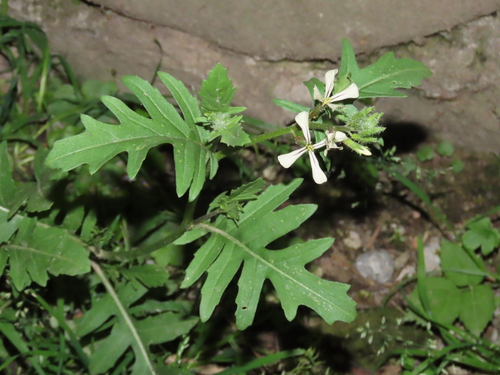
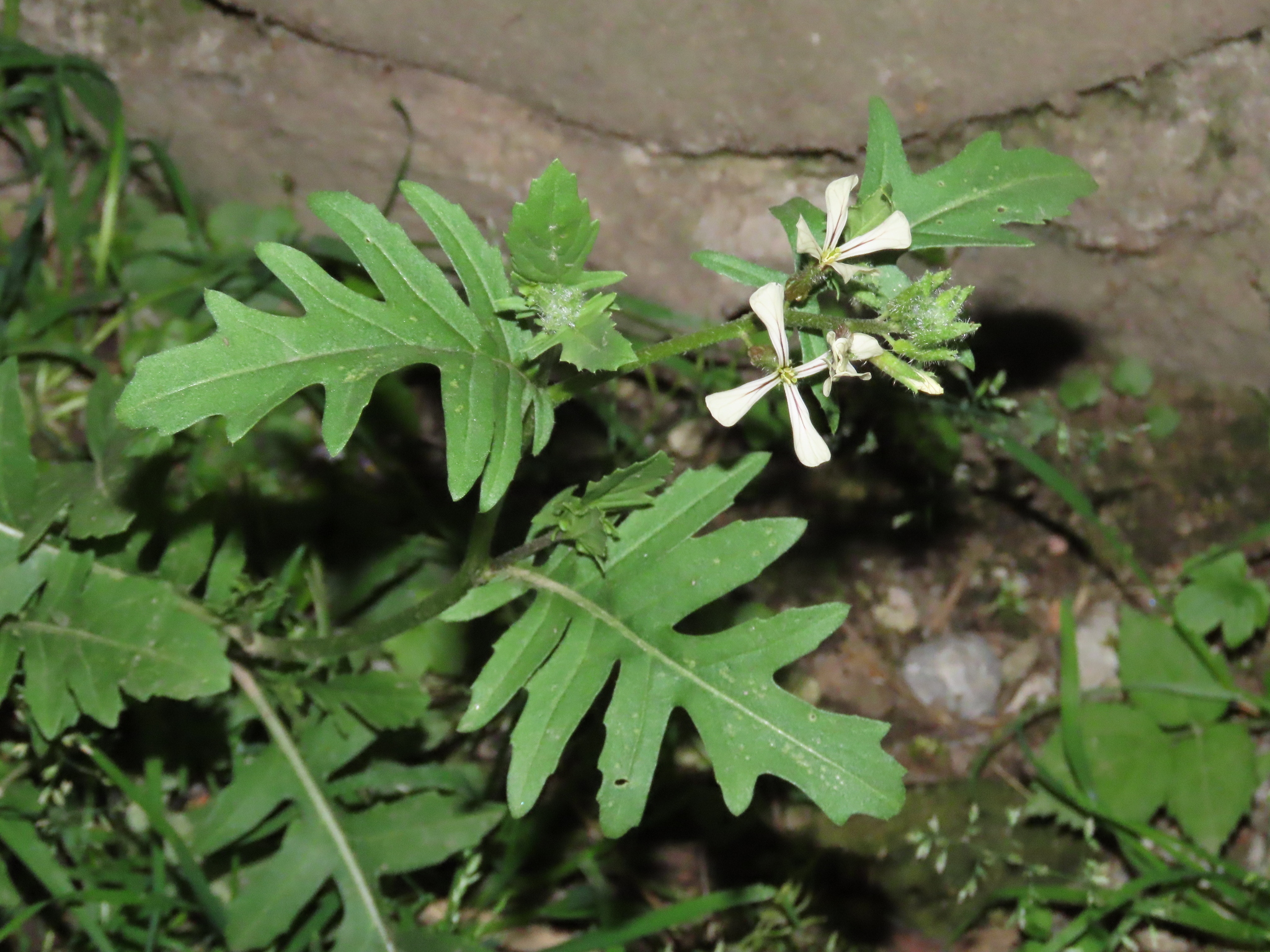
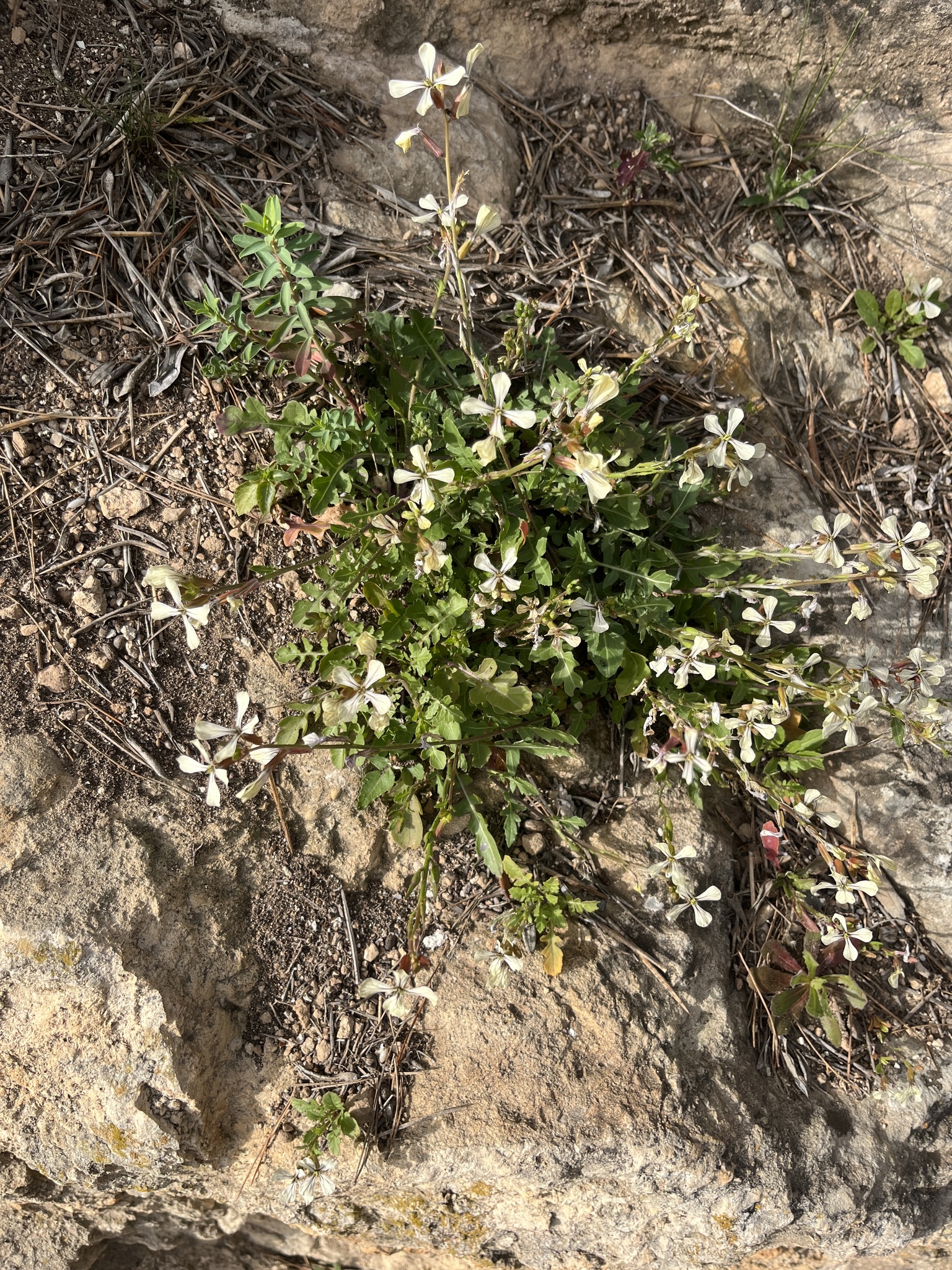
Eruca vesicaria begins as a low rosette of tender leaves, the stage normally harvested. Basal leaves are pinnatifid, with four to ten lateral lobes and a large terminal lobe, and smell peppery when crushed. Plants usually stand 20–30 cm (8–12 in) tall at cutting time. 7 2
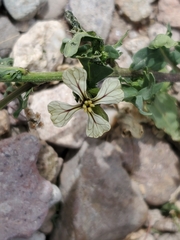
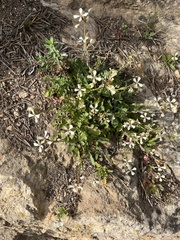
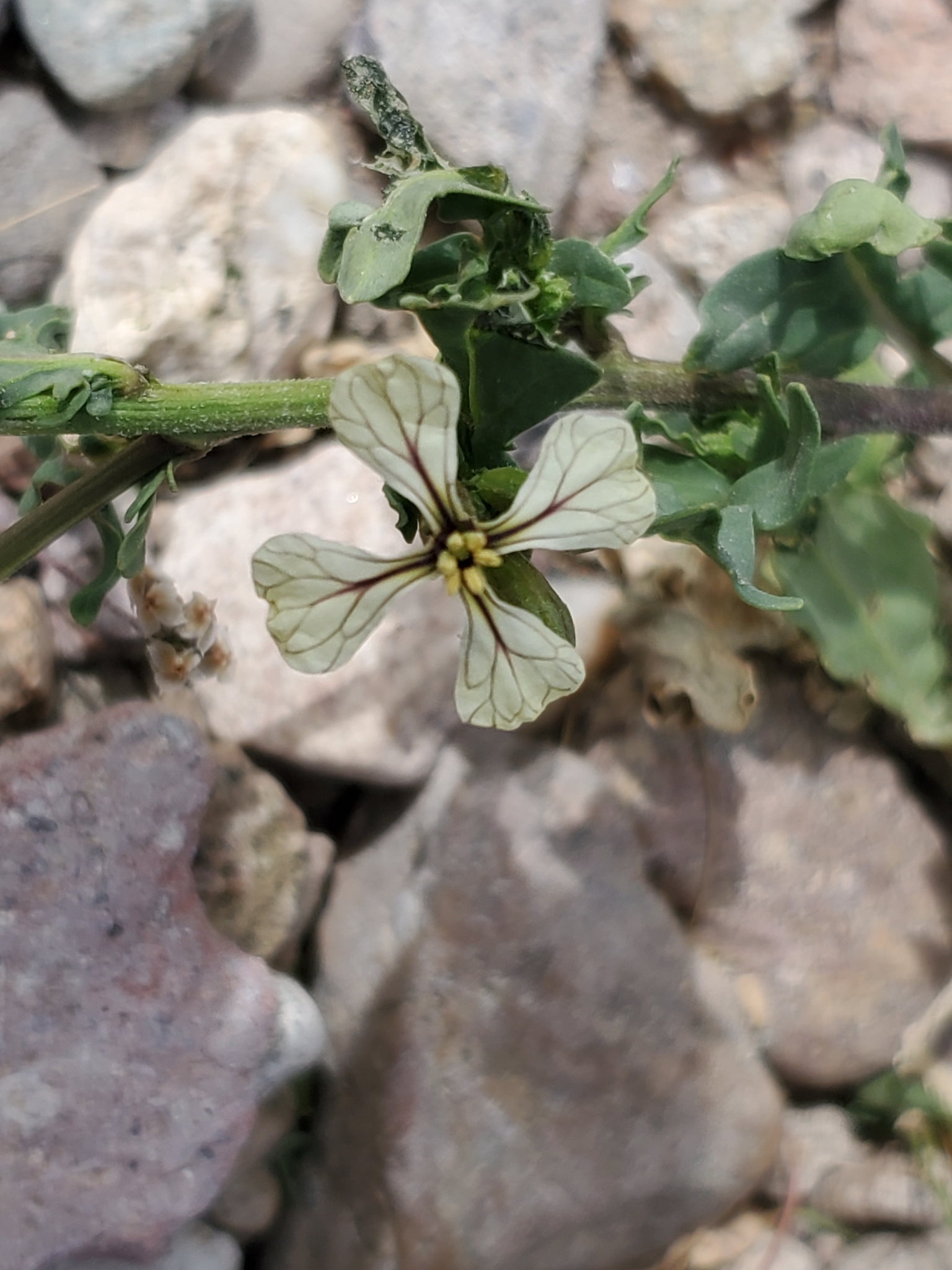
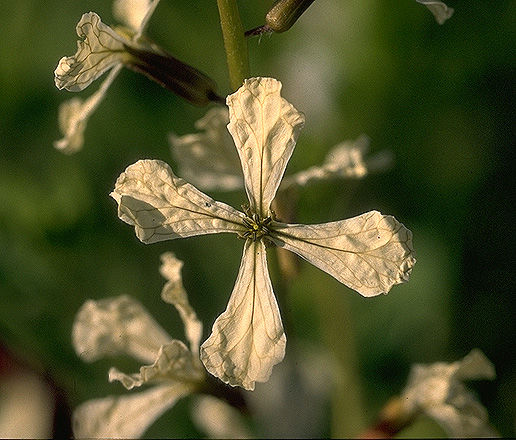
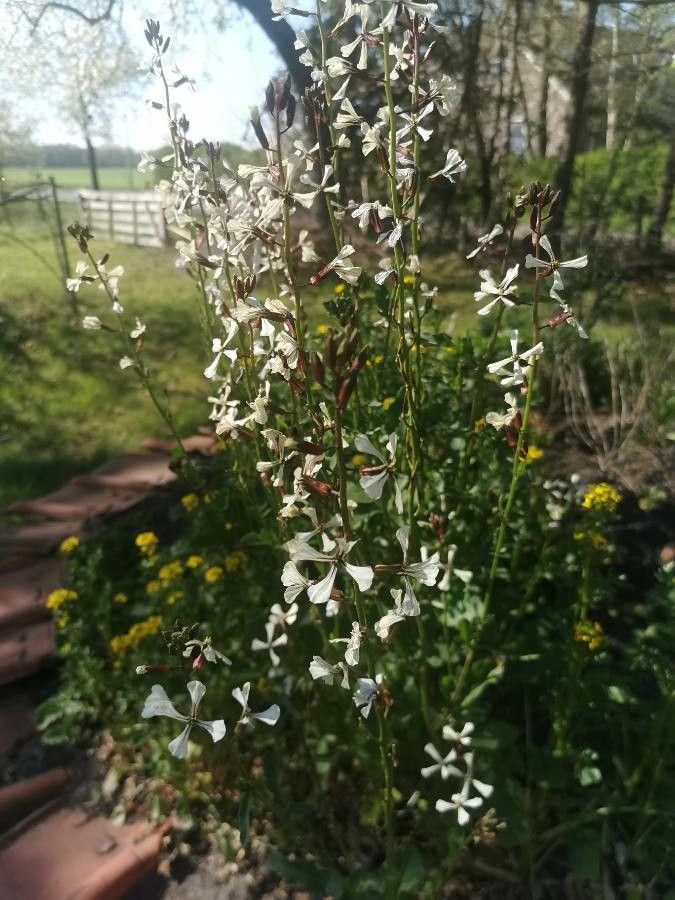
Warm weather triggers bolting. The flower stem reaches up to 100 cm (39 in) and carries four-petaled flowers, cream to whitish with purple or dark red veins, less than 2.5 cm (1 in) across. After pollination, they form elongated siliques with a flattened beak, characteristic of the mustard family. 5 7
The simplest distinction is flavor: peppery, pungent leaves set rocket apart from milder young salad greens. This pungency becomes markedly stronger with heat and as the leaves age. 4 5
Useful taxonomy
The accepted name in this treatment is Eruca vesicaria (L.) Cav. Garden rocket is most often placed under subsp. sativa, while Eruca sativa Mill. is widely used as a synonym of the cultivated plant. The main names encountered are:
- Eruca sativa Mill., a widely used cultivated-rocket name;
- Eruca vesicaria subsp. sativa (Mill.) Thell., a cultivated-rocket treatment;
- Eruca vesicaria var. sativa (Mill.) Thell., a cultivated-rocket treatment;
- Eruca arvensis (L.) Noulet, an older name;
- Eruca ruchetta Spach, another historical name;
- Eruca oleracea J.St.-Hil., an older vegetable-rocket name;
The reference name in this treatment remains Eruca vesicaria. Horticultural labels such as Sky Rocket and Astro refer to vegetable selections of the cultivated subspecies, rather than separate botanical species. 1 3
Habitat and range
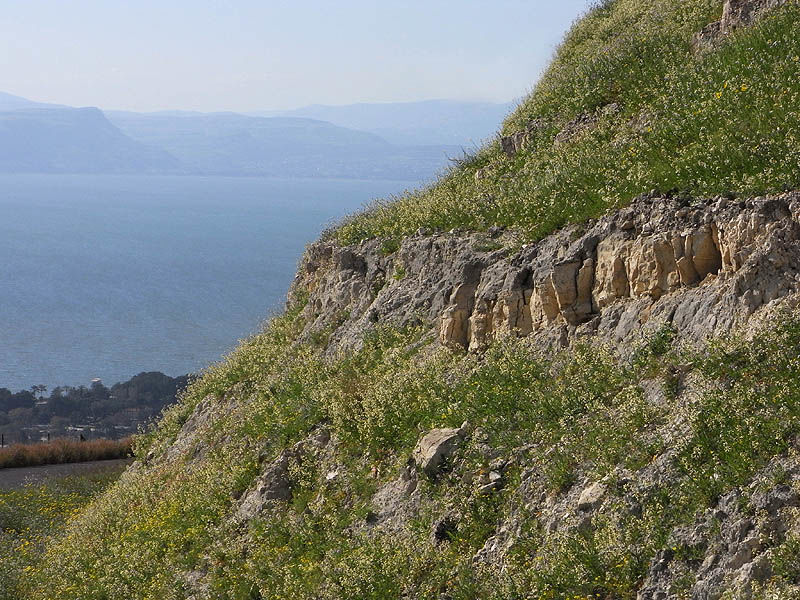
Eruca vesicaria originates in the Mediterranean region, from southern Spain and Morocco to Algeria, growing in waste places, roadsides and cultivated soils. It favors cool seasons, particularly spring and autumn in temperate climates, and performs poorly in summer heat. 1 4
Salad cultivation has carried rocket well beyond its original range, into western Asia, India and many temperate regions, where it grows in cultivation or has naturalized. These cultivation areas remain distinct from the strictly Mediterranean native range. 5 7
In gardens, rocket grows in a wide range of soils, provided they remain rich and moist. Its short life cycle and broad hardiness range, USDA zones 2–11, make it suitable for varied climates. 7 2
Life cycle and reproduction
The annual cycle is rapid: seeds emerge in five to ten days, a rosette develops and the first leaves are ready in four to six weeks. Plants reach full maturity in 40–50 days, then bolt in response to heat and long days. 7 4
Flowering ends the leaf-harvest phase. Stems elongate, pale, veined flowers attract bees and other pollinators, then siliques ripen and release small seeds. These oil-rich seeds have been used as a condiment since antiquity. 5 6
In cultivation, propagation is solely by seed, sown shallowly where it will grow, in rows about 15 cm (6 in) apart. Sow every two weeks through the cool season to extend the harvest. Leaves regrow after cutting if the center of the rosette is left intact, allowing successive harvests before bolting. 3 7
Uses and risks
The principal use is culinary. Young leaves are eaten raw in salads, adding a peppery note associated with Mediterranean cooking. Flowers, young seed pods and seeds are also edible, the latter used as a condiment. Leaves grown young in cool conditions taste mild; after bolting, they become pungent and bitter. 5 7
Rocket is a food plant with no notable toxicity. The ASPCA classifies arugula as non-toxic to cats, dogs and horses. In culinary quantities it presents no known danger. Its pungency comes from glucosinolates, compounds widespread in the Brassicaceae that give the salad its characteristic flavor. 8 4
Varieties, look-alikes and related plants
The cultivated subsp. sativa has milder, leafier growth than the wild form. Sky Rocket, Astro and Victoria are vegetable selections chosen for vigor, earliness or uniform foliage, rather than separate species. Before sowing, check seed freshness and choose an appropriate season. 3
The most frequent look-alikes include:
- Diplotaxis tenuifolia, perennial wild rocket, with finer leaves and a stronger flavor;
- Diplotaxis muralis, wall rocket, another mustard-family plant of disturbed ground;
- young leaves of other Brassicaceae vegetables, such as cress and mustard, sometimes mixed in salad blends.
A rosette of pinnatifid leaves, a peppery smell when crushed, and cream flowers with dark veins are the most reliable features for confirming the identity of Eruca vesicaria sold as rocket. 4 1
Main sources
- Plants of the World Online / Kew, Eruca vesicaria (L.) Cav.
- Royal Horticultural Society, Eruca vesicaria - rocket
- Royal Horticultural Society, Eruca vesicaria subsp. sativa - garden rocket
- Missouri Botanical Garden, Eruca vesicaria subsp. sativa
- Encyclopaedia Britannica, arugula
- Plants For A Future, Eruca vesicaria subsp. sativa
- North Carolina State Extension, Eruca vesicaria
- ASPCA, Arugula (Eruca vesicaria) non-toxic plant entry
Frequently asked questions
Is rocket poisonous to cats or dogs?
No. Eruca vesicaria is an edible salad with no notable toxicity. The ASPCA classifies arugula as non-toxic to cats, dogs and horses. In culinary quantities it is a food plant with no known danger.
Why does my rocket taste too strong?
Heat, drought and older leaves intensify its pungency. Pick leaves young, keep the soil moist and sow in mild seasons for a more moderate flavor.
What is the difference between Eruca vesicaria and Eruca sativa?
Both names refer to cultivated rocket. The taxonomic treatment used here accepts Eruca vesicaria, with garden rocket often treated as Eruca vesicaria subsp. sativa; Eruca sativa is widely used as a synonym.
How soon can I harvest rocket after sowing?
Rocket grows very quickly. The first leaves are generally ready four to six weeks after sowing, and the plant reaches maturity in 40–50 days, depending on the season.
Can rocket grow in a container on a balcony?
Yes. A container at least 20 cm (8 in) deep, rich, moist potting mix and a bright position are sufficient. Successive sowings provide regular harvests on a terrace or windowsill.
When should I sow rocket?
Sow from spring through autumn where conditions are mild, avoiding peak summer heat, which encourages bolting. Sowing every two weeks spreads the supply of tender leaves.
Does rocket regrow after cutting?
Yes, provided you leave the center of the rosette. Cutting the outer leaves and keeping the soil moist allows several harvests before bolting.
Similar plants

If you are unsure about a plant’s toxicity, ask a botanist or veterinarian for advice.