
White ash (Fraxinus americana, )
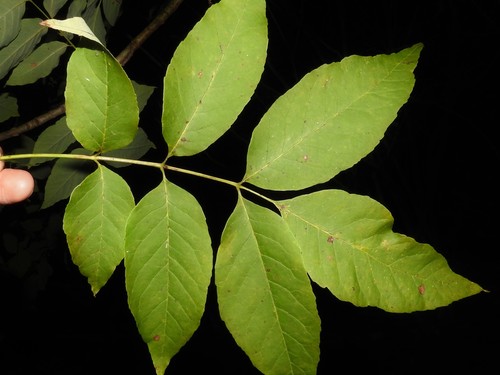
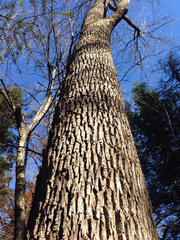
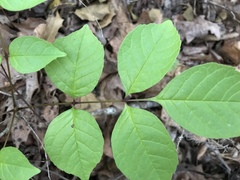
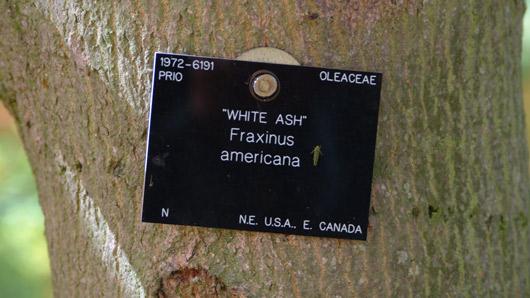
White ash (Fraxinus americana L., 1753) is a large deciduous tree in the olive family, native to eastern and central North America. It differs from other ashes in its distinctly stalked leaflets, C-shaped leaf scars and purple to bright red fall foliage, distinctive among common North American ashes.
Read moreWhite ash and American ash
Allow a few hours of direct sun per day, preferably morning or evening.
Full sun to light partial shade



© photo
(c) William Van Hemessen, some rights reserved (CC BY-NC), uploaded by William Van Hemessen · cc-by-nc
naturalist charlie · cc0
Raven Dandridge · CC BY-NC
Taken May 11, 2020 by fuego (cc-by-sa)
Taken May 16, 2020 by Andre (cc-by-sa)
Taken Jul 7, 2021 by Mont Carol (cc-by-sa)
Taken Jun 3, 2021 by E Vincent (cc-by-sa)
Taken Mar 10, 2020 by William Wall (cc-by-sa)
© copyright of the Board of Trustees of the Royal Botanic Gardens, Kew.


Global distribution
Fraxinus americana is native to eastern and central North America, from Nova Scotia to Minnesota, south to northern Florida and southwest to Texas, with isolated populations farther west in western Texas, Wyoming and Colorado. It has naturalized in Hawaii but remains cultivated, with no recorded naturalization, in mainland France and the United Kingdom.
- Native2
- Introduced1
- Canada
- United States
- Hawaii
Hexagons: regions where the plant occurs. Green dots: native range.1
Identity
White ash (Fraxinus americana L., 1753), also called American ash, is an accepted species of Fraxinus in the olive family (Oleaceae). Linnaeus described it in 1753 as a large deciduous tree from eastern and central North America. 1 3
Whitish, glaucous leaflet undersides account for the name white ash and its French equivalent, frêne blanc. The epithet americana simply identifies its North American origin. The French Canadian name franc frêne marks it as a reference ash species there, distinguishing it from other ashes on the continent. 4
Once among North America's most widespread hardwoods, white ash is now listed by the IUCN as Critically Endangered. Nearly eight billion ashes of all species were counted in the United States, but emerald ash borer, an Asian beetle introduced in the 1990s, has already destroyed tens of millions, an unprecedented loss for North American forestry. The same dense, elastic timber supplied the first baseball bat made in Louisville, in 1884, for Pete Browning. 8 5
Recognition
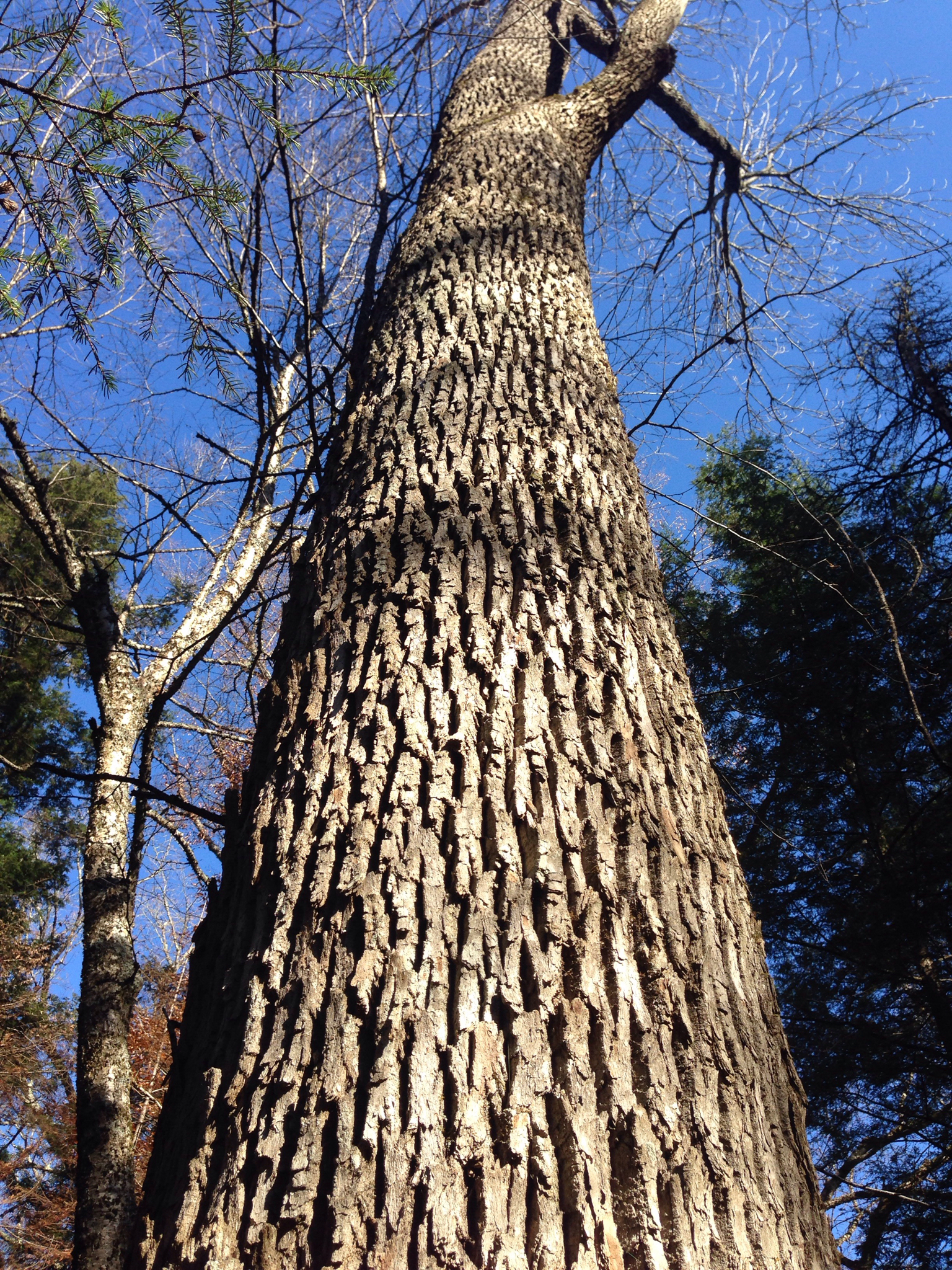
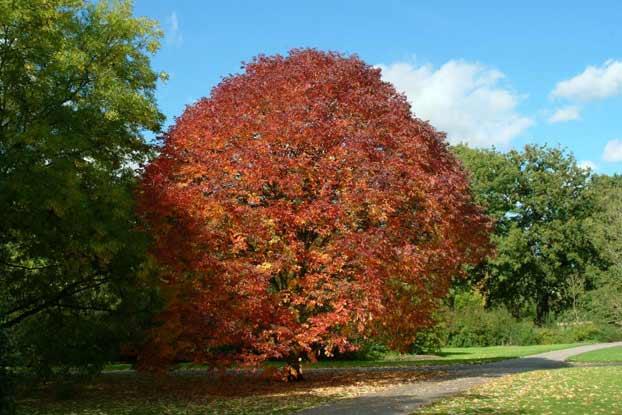
Cultivated white ash commonly reaches 18–25 m (59–82 ft) depending on soil fertility, developing a rounded crown at maturity. Some forest trees exceed 30 m (98 ft). The straight trunk develops gray bark with conspicuous diamond-shaped ridges as it ages. 3 2
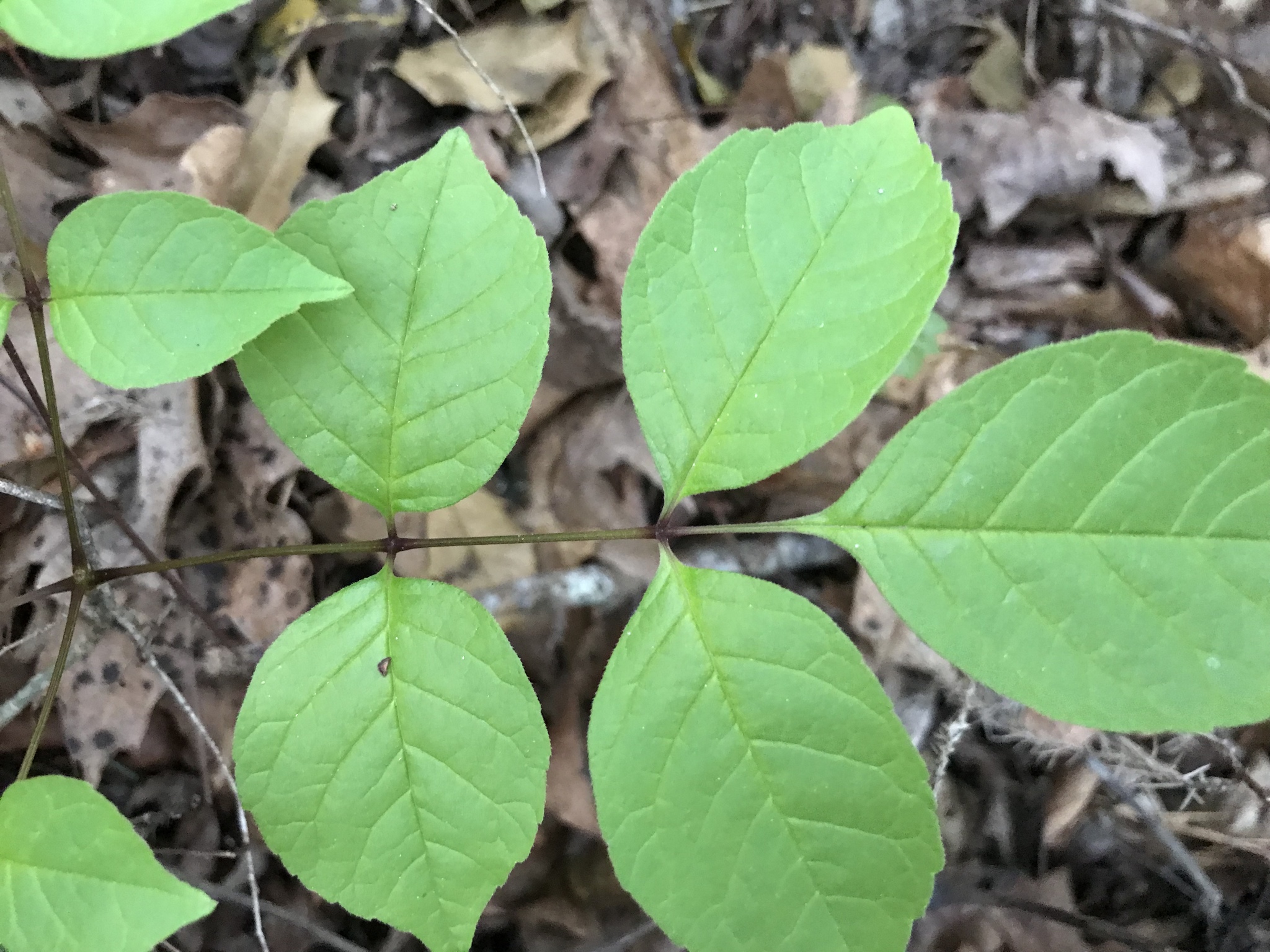
Opposite, pinnately compound leaves typically contain seven leaflets, sometimes five or nine, each distinctly stalked, dark green above and whitish below. Among common North American ashes, white ash is distinctive for turning purple or bright red in fall; others, including green ash, turn yellow. 3
Winter identification rests on the C-shaped leaf scar, with the bud nestled in its hollow. Green ash has a D-shaped scar with the bud sitting above it. This feature remains available throughout the cold season, while fall color and samara shape are visible for only a few weeks each year. 8
Petal-less flowers appear before or with the new leaves in spring, on separate male and female trees. The fruit is a single-winged samara about 5 cm (2 in) long, with a thick rounded seed whose wing does not extend beyond the seed cavity. Clusters hang through part of winter and disperse on the wind. 2 3
Useful taxonomy
For this species, POWO accepts Fraxinus americana L. in the family Oleaceae, with no notable homotypic synonym attached to the binomial. 1
Similar names on planted or sold ashes create more confusion than complex synonymy. North American green ash (Fraxinus pennsylvanica) and black ash (Fraxinus nigra) occupy a broadly similar range and often share moist forests. In mainland France, where white ash occurs only in parks and collections, confusion more often involves European ash (Fraxinus excelsior), planted on the continent for centuries. 4
Habitat and range
From Nova Scotia, white ash ranges west to Minnesota, south to northern Florida and southwest to Texas, with isolated populations in western Texas, Wyoming and Colorado. It tolerates winter cold down to −34 °C (−29 °F), sufficient for its northern populations, and has also naturalized in Hawaii. 6
Deep, well-drained soil in rich hardwood forest suits white ash, often alongside sugar maple. It also grows in moist lowland woods beside streams. Less tolerant of pollution and soil compaction than green ash, it favors relatively undisturbed forest sites, limiting its use as a street tree. 3
Mainland France holds cultivated white ash in parks, arboretums and botanical collections. It is not native there, and no naturalization has been recorded to date. 4
Life cycle and reproduction
Separate male and female white ash trees flower before or during leaf emergence, from March to May depending on climate in its Northern Hemisphere range. An isolated tree, or a cultivar cloned from a male plant, never produces samaras. 2
Early decades bring rapid growth in full light before growth slows with age. Full development takes 40–60 years, as the tree builds its mature crown. Samaras ripen in late summer, disperse by wind through fall and part of winter, and germinate after natural cold stratification. Fresh seed sown soon after harvest germinates better than stored seed. 9
Uses and risks
Dense white timber, around 670 kg/m³ (42 lb/ft³), combines hardness, elasticity and straight grain. Long used for tool handles and hockey sticks, it became especially associated with baseball bats: Bud Hillerich made the first Louisville bat for Pete Browning in 1884, beginning the Louisville Slugger story. Shortages caused by emerald ash borer have since reduced ash to about 5% of professional bats, compared with 75% for maple. 8
Available evidence does not identify ingestion toxicity for usual domestic pets, although eating large amounts of foliage can cause digestive discomfort, as with many plants. The greater threat to the tree is emerald ash borer (Agrilus planipennis), introduced from Asia in the 1990s. It has killed tens of millions of North American trees and threatens most of the continent's eight billion ashes. White ash is slightly more resistant than green ash but remains highly vulnerable; the IUCN has listed it as Critically Endangered since 2017. 5 7
Varieties, look-alikes and related plants
Introduced in 1956, 'Autumn Purple', also called 'Junginger', remains the most widely marketed selection. This male clone produces no samaras and was selected for purple fall foliage. Other horticultural forms include 'Rosehill', valued by nurseries for its regular habit and vigor. 2
Green ash (Fraxinus pennsylvanica) is the likeliest look-alike within the neighboring range. Its D-shaped leaf scar, more nearly stalkless leaflets and narrower, elongated samara distinguish it from white ash's C-shaped scar and clearly stalked leaflets. Black ash (Fraxinus nigra) has stalkless leaflets and grayer, feltlike bark. Leaf scars and buds separate these three more reliably than fall color alone. 8
Main sources
- Plants of the World Online / Kew, Fraxinus americana L.
- Royal Horticultural Society, Fraxinus americana - American ash
- Missouri Botanical Garden, Plant Finder, Fraxinus americana
- INPN / MNHN, Fraxinus americana L., 1753
- IUCN Red List, Fraxinus americana assessment (2017)
- USDA Forest Service, Fire Effects Information System, Fraxinus americana
- Botanic Gardens Conservation International / The Morton Arboretum, The Red List of Fraxinus (2018)
- The Wood Database, White Ash
- Plants For A Future, Fraxinus americana
Frequently asked questions
Is white ash poisonous to cats and dogs?
Available data do not identify toxicity through ingestion in cats or dogs. Eating large amounts of foliage can still cause digestive discomfort, as with many plants, but no major toxic compound is documented.
How can I distinguish white ash from green ash?
The winter leaf scar is the most reliable clue: C-shaped in white ash, with the bud nestled in its hollow, versus D-shaped in green ash. Distinctly stalked leaflets and purple to red fall color usually confirm white ash.
Why is white ash Critically Endangered?
Emerald ash borer, an Asian beetle introduced to North America in the 1990s, has already killed tens of millions of trees and threatens most ash populations on the continent. The IUCN has classified white ash as Critically Endangered since its 2017 assessment.
Why is white ash associated with baseball?
In 1884, craftsman Bud Hillerich made the first Louisville bat from white ash for player Pete Browning. This dense, elastic, straight-grained wood then dominated professional bat making for almost a century.
Does white ash grow naturally in France?
No. White ash is native to North America. In mainland France it occurs only in parks, arboretums and botanical collections, with no recorded naturalization.
Is a white ash that never produces samaras unhealthy?
Not necessarily. Male and female flowers grow on separate trees. A male tree, or a male clone such as 'Autumn Purple', never produces samaras.
Similar plants

If you are unsure about a plant’s toxicity, ask a botanist or veterinarian for advice.