
American basswood (Tilia americana, )
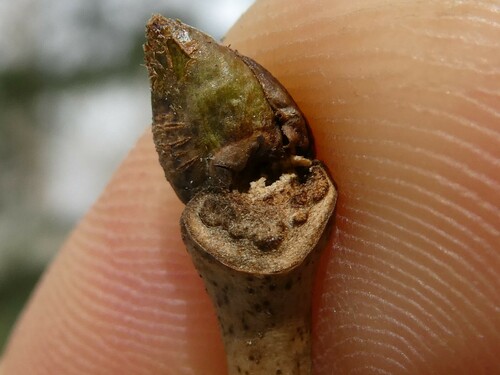
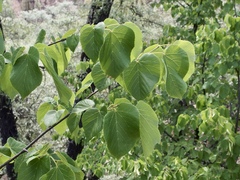
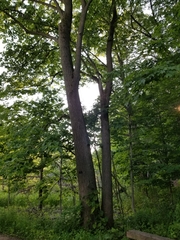
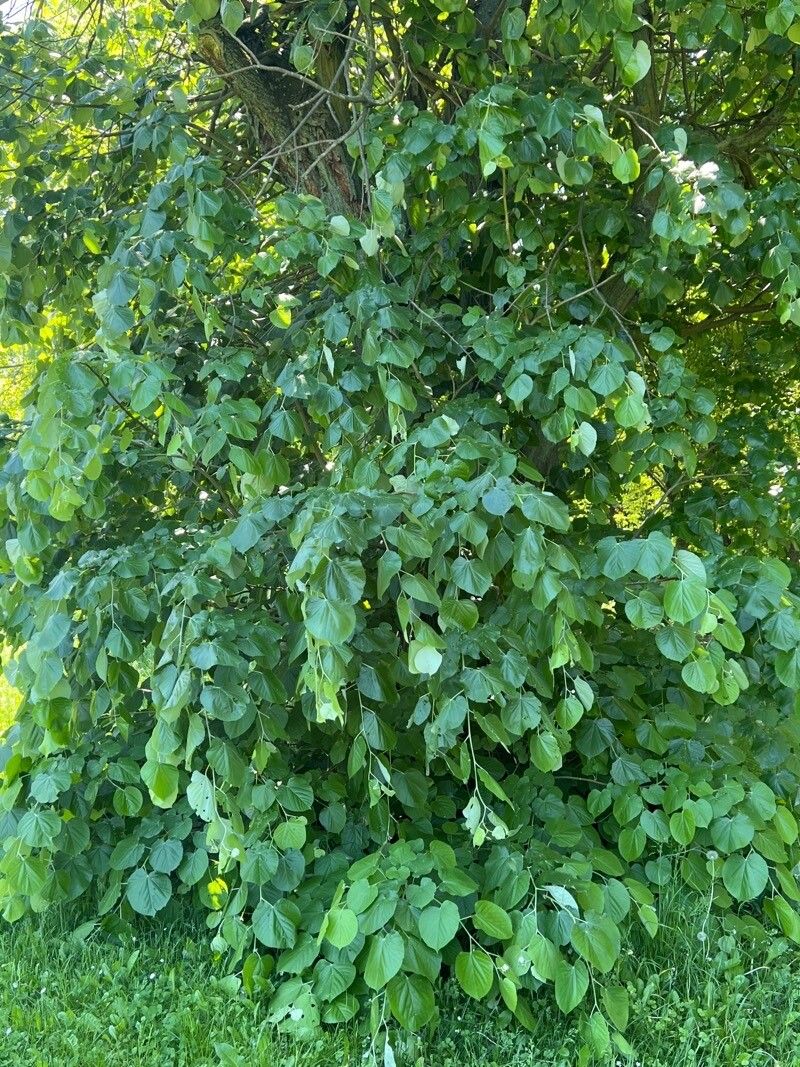
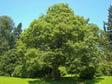
American basswood (Tilia americana L., 1753), known as bois blanc in Quebec, is a large deciduous tree in the Malvaceae family and the only member of Tilia native to the Western Hemisphere. Very large heart-shaped leaves and unusual shade tolerance for a hardwood of its size help identify it.
Read moreAmerican basswood, American linden and Basswood
Give plenty of ambient light without direct sun on the leaves.
Full sun to partial shade; tolerates woodland understory shade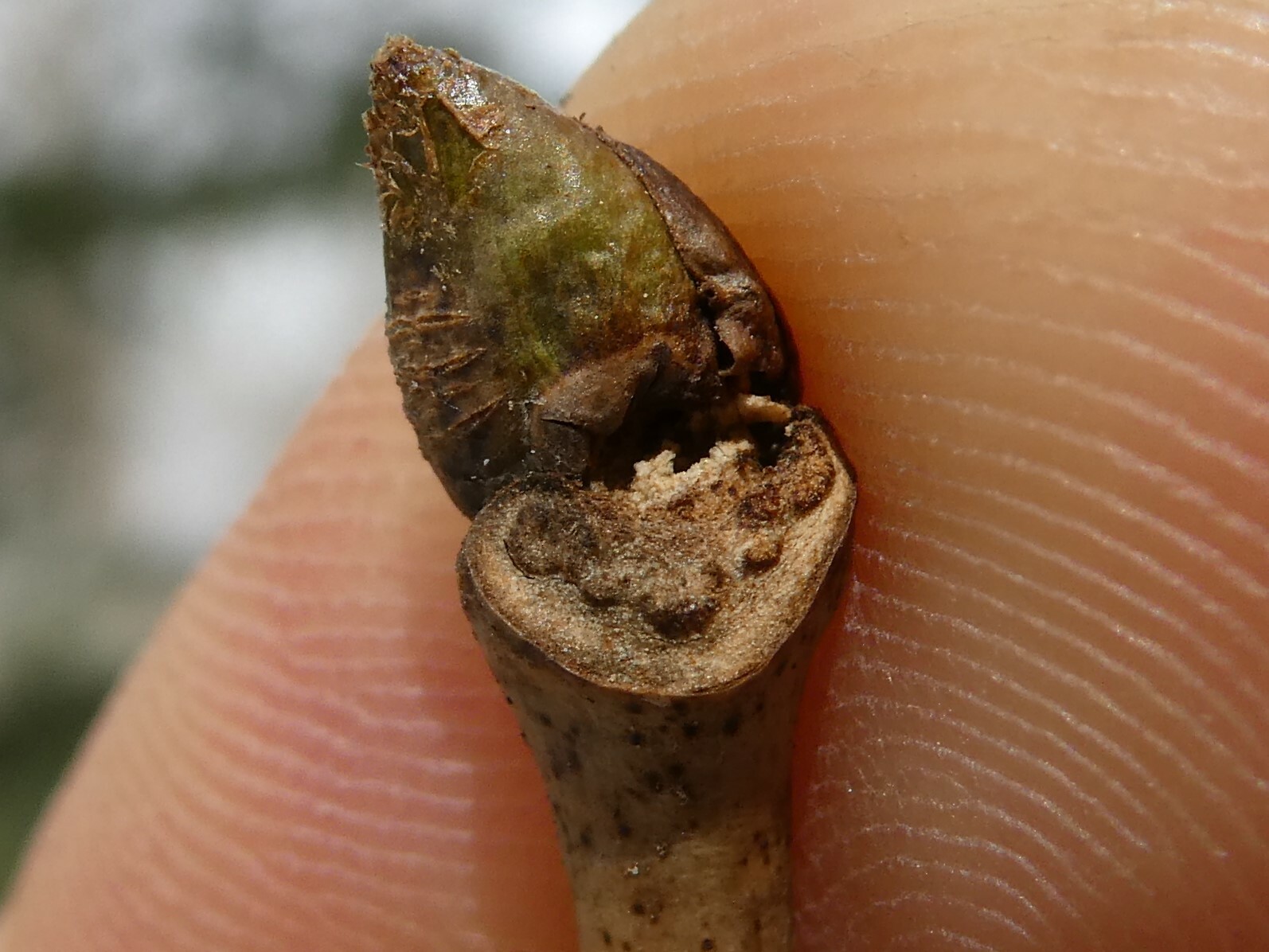


© photo
Bruce Cook · cc0
Sue Carnahan · cc-by
Tys Theijsmeijer · cc-by
Taken Sep 15, 2012 by Photoflora - Jean-Luc TASSET (©)
Taken Nov 16, 2022 by Trap Hers (cc-by-sa)
Taken May 29, 2020 by mohammad fazel dehkordi (cc-by-sa)
© copyright of the Board of Trustees of the Royal Botanic Gardens, Kew.




Global distribution
POWO/WCVP places the native range of Tilia americana from southeastern Canada to the central United States, with southern varieties extending into Mexico. North American foresters describe its core range as southeastern Manitoba to New Brunswick, south to Oklahoma and South Carolina. In France it remains rare, cultivated mainly in collections and arboreta.
- Native4
- Canada (Quebec, Ontario, Manitoba)
- United States (Great Lakes, New England, Appalachians)
- South to Oklahoma and South Carolina
- Mexico (southern varieties)
Hexagons: regions where the plant occurs. Green dots: native range.1
Identity
American basswood (Tilia americana L., 1753), also called American linden, is a large deciduous member of the genus Tilia in the Malvaceae family. Carl Linnaeus described it in Species Plantarum in 1753. POWO/WCVP treats it as the only member of Tilia native to the Western Hemisphere. 1
The familiar name basswood comes from bast, the fiber taken from the inner bark and long used to make rope before its name came to describe the whole tree. In Quebec, the pale color of the sawn timber gave rise to the French name bois blanc, meaning white wood. That name describes the board rather than the living tree. 5 2
Recognition
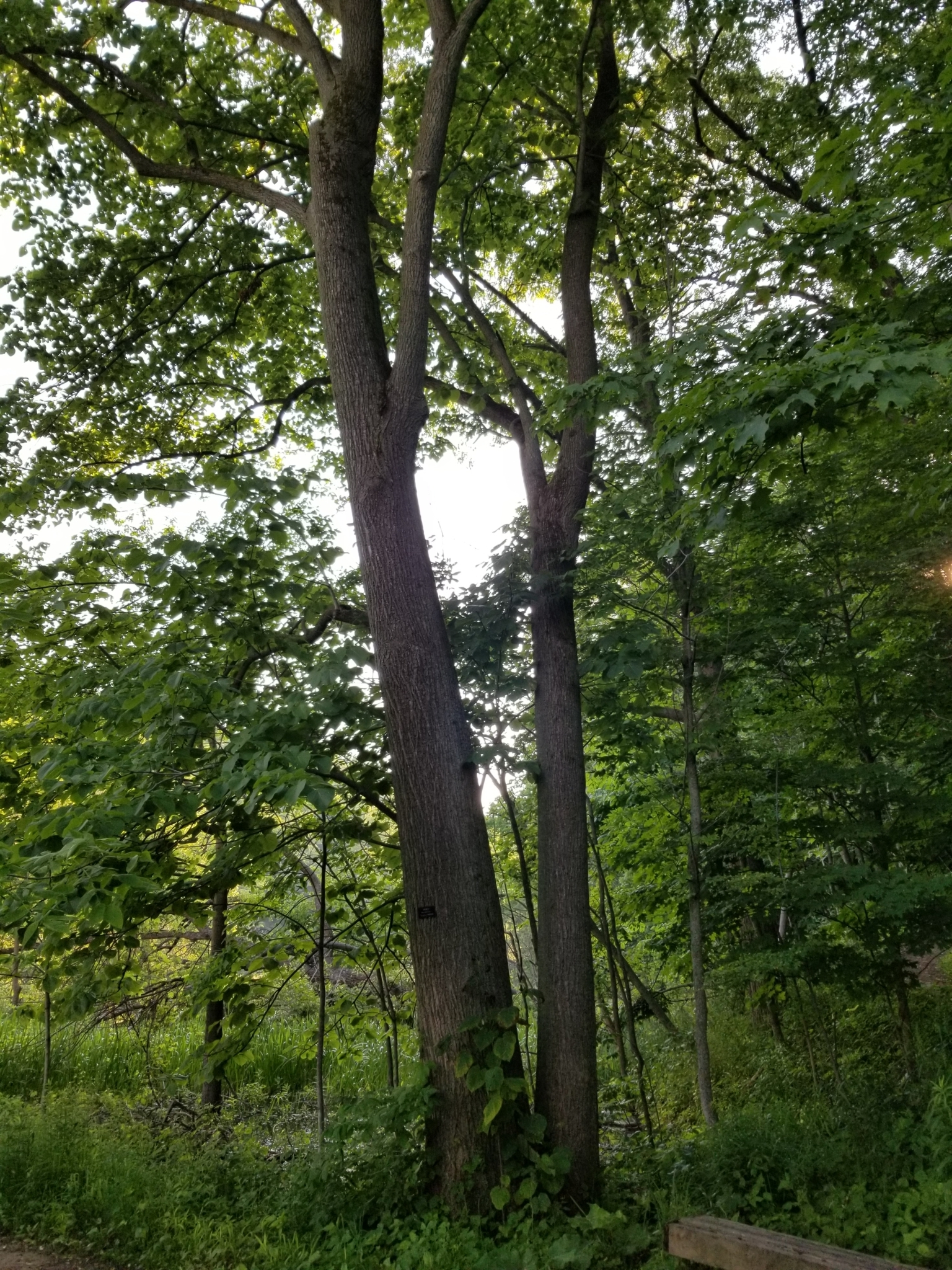
With a usual height of 20–35 m (65–115 ft) and a trunk 60–100 cm (2–3.3 ft) across, Tilia americana is a substantial forest tree; exceptional specimens approach 40 m (130 ft). Its growth outpaces sugar maple and yellow birch, both hardwoods noted for rapid growth in the same northern climate. 2 5
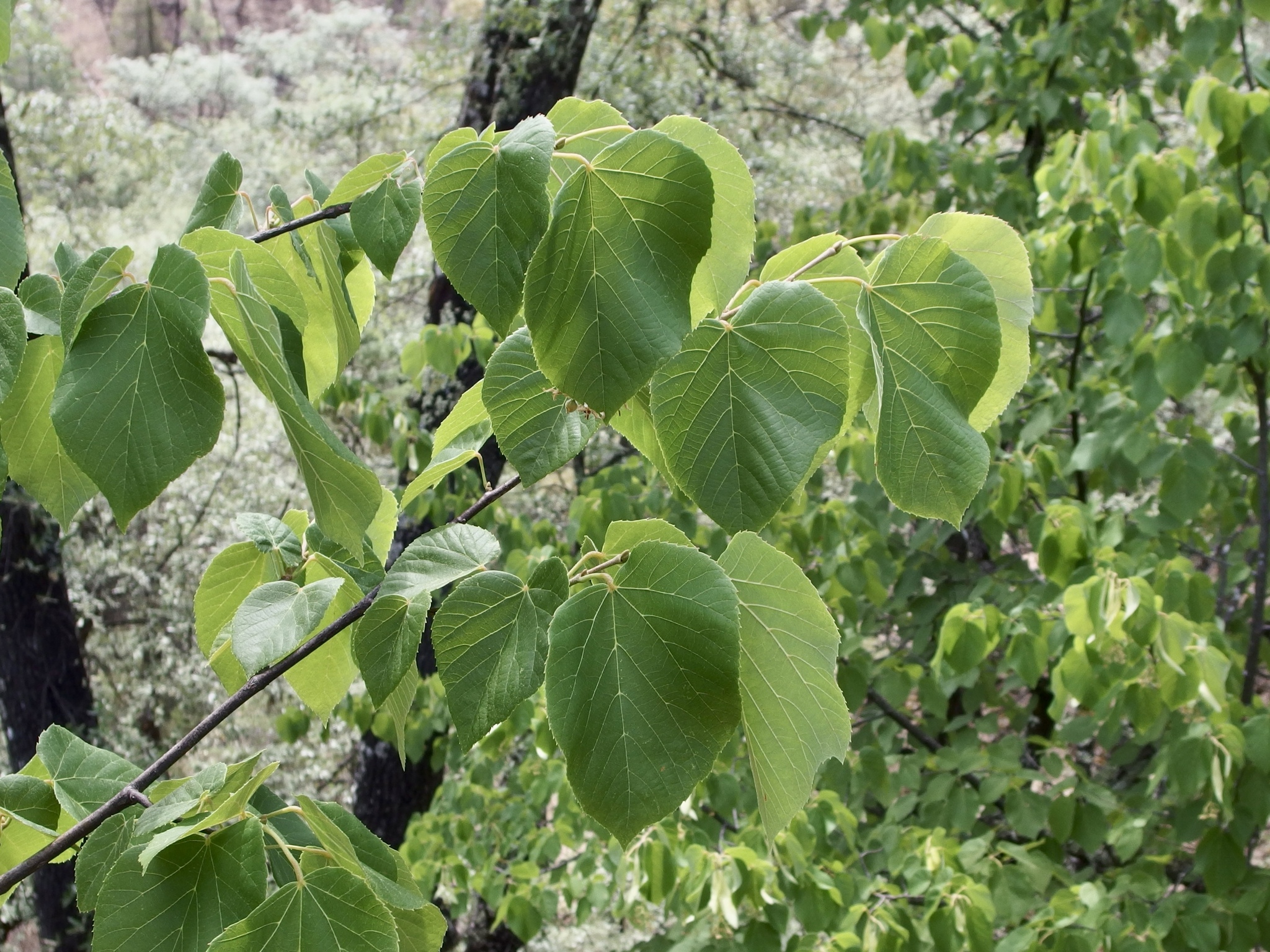
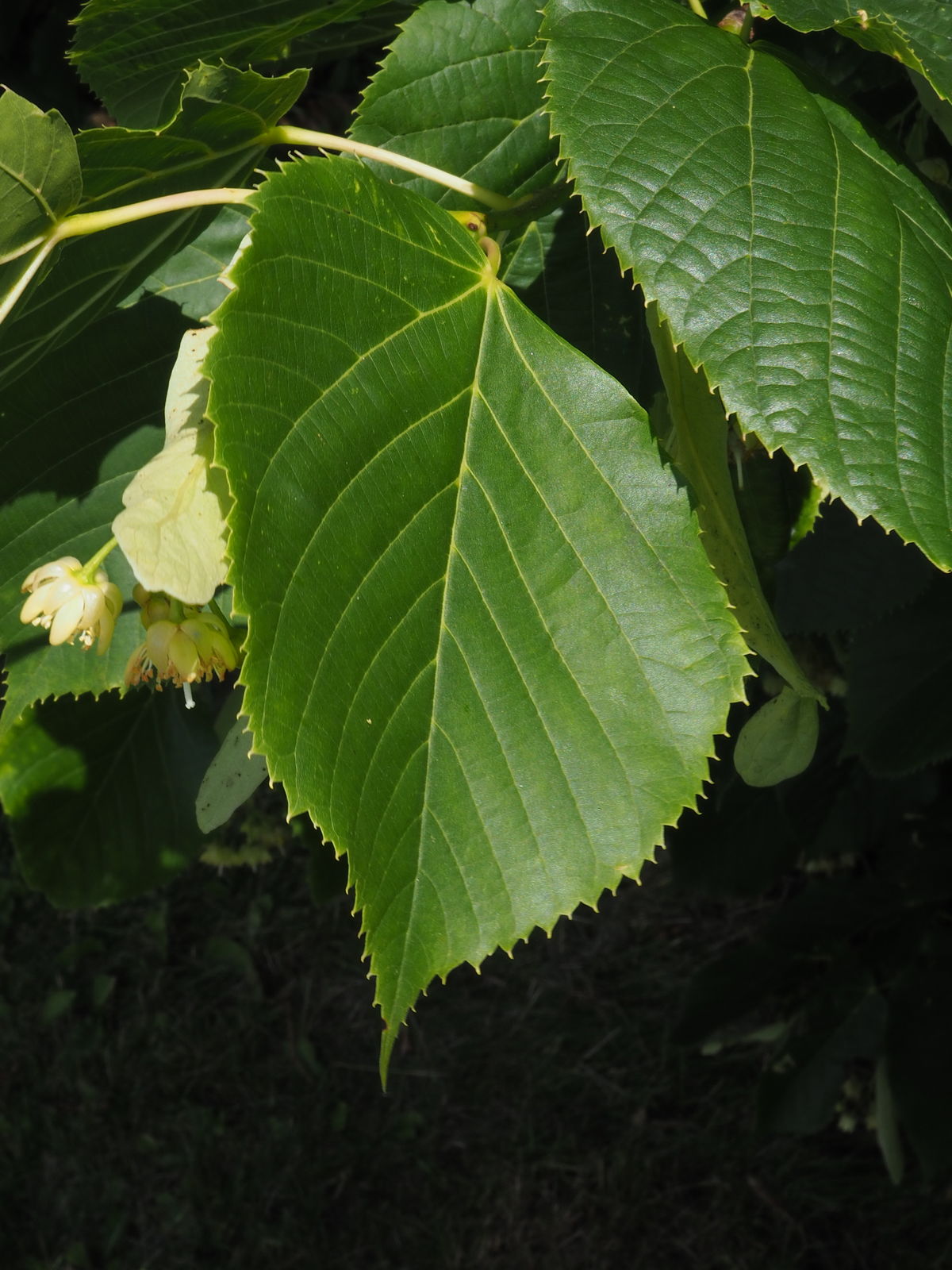
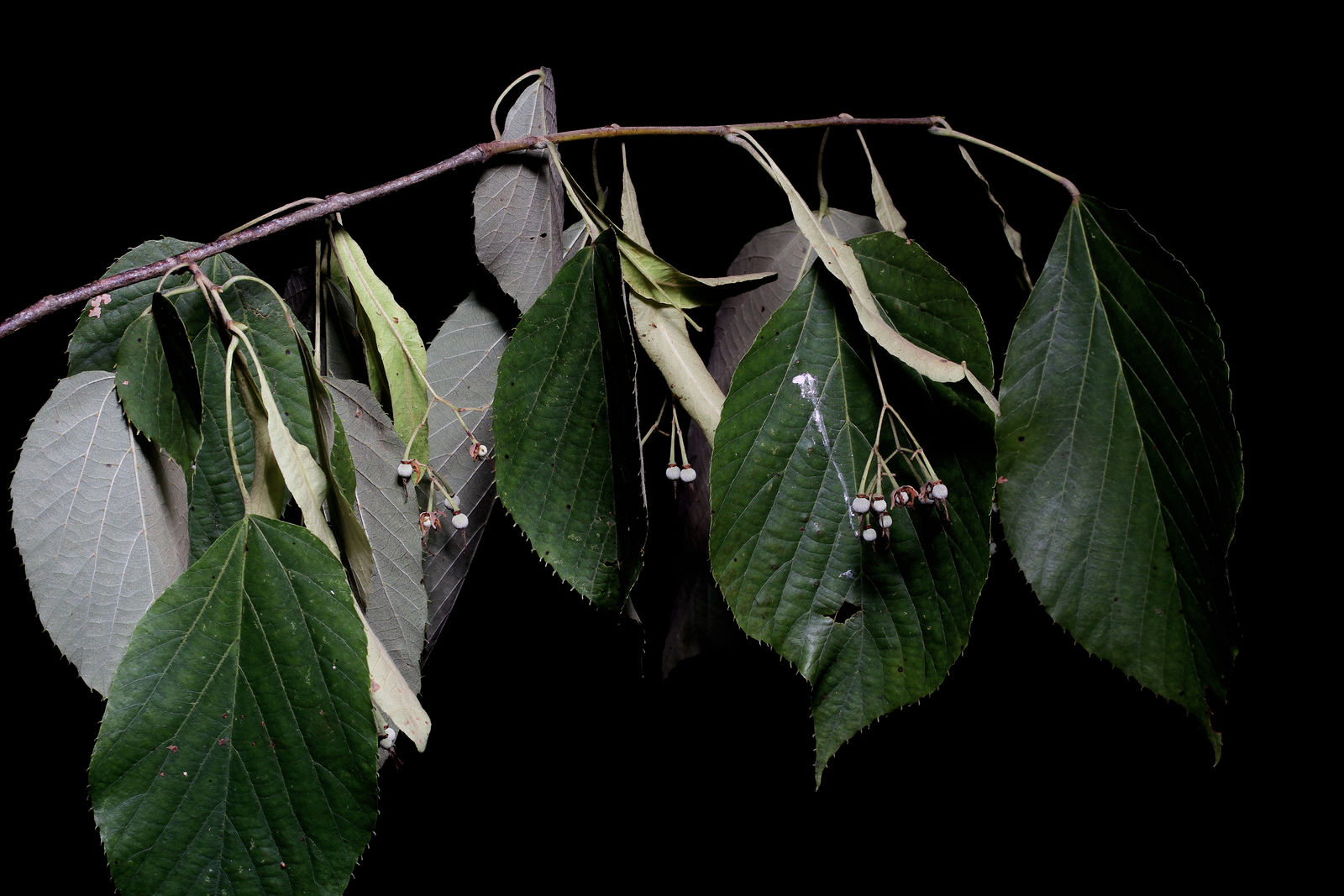
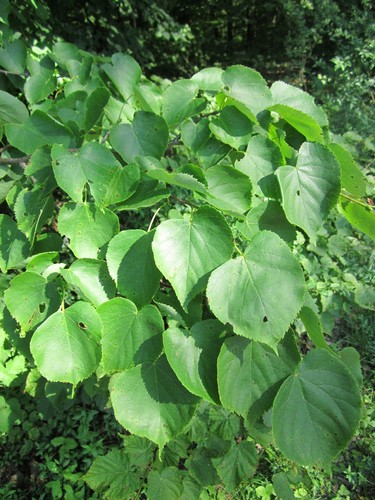
Heart-shaped leaves measuring 10–20 cm (4–8 in) have a strongly uneven base and an elongated tip. They are conspicuously larger than those of European limes. The underside then separates the North American forms: green or pale green in the typical form, white and felted in var. heterophylla, which POWO/WCVP now treats as a variety rather than a separate species. 5 4
Early to midsummer flowering brings drooping cymes of intensely fragrant, creamy white flowers. As throughout the genus, a long, tongue-shaped bract accompanies each cluster. Bees gather in such numbers during these few weeks that North American beekeepers count basswood honey among their most valued harvests. 4 2
Taxonomy and names
For American basswood, the accepted botanical name in POWO/WCVP is Tilia americana L., published in 1753. Several forms once treated as separate species, including Tilia caroliniana and Tilia heterophylla, are now placed at the rank of variety or regarded as local ecotypes of Tilia americana. 1 2
Older books and herbarium labels can therefore assign different names to the same leaf, sometimes as many as three names to one tree. The accepted name Tilia americana provides a consistent reference. Its variety heterophylla is distinguished by the white, felted underside of the leaf. 8
Habitat and range
From southeastern Manitoba, American basswood reaches east to New Brunswick, southwest to Oklahoma and southeast to South Carolina. Southern varieties extend the range into Mexico according to POWO/WCVP, although the temperate hardwood forests of the northeastern continent remain its core habitat. 2 1
Deep, moist, fertile soils suit this species best. In mixed stands it favors north- and east-facing slopes, which retain more moisture than south-facing ones. Shade tolerance allows it to persist in the understory, while vigorous sprouting helps it recover after cutting. 5 2
The IUCN assessment places Tilia americana in Least Concern (LC). Its broad range and ready regeneration from stump sprouts mean that no global threat to the species is identified in that assessment. 7
Life cycle, ecology and cultivation
A globular fruit, covered in brown hairs, ripens in early to mid-autumn. It is an achene and usually contains one seed, occasionally two or three. Seed dormancy is pronounced: untreated seed can take several years to germinate naturally, so nurseries use cold stratification before sowing. 2 3
Cutting or injury prompts abundant stump sprouts. This habit explains both the tree’s persistence in managed woodland and the frequent occurrence of several trunks arising from one old stump. Lifespans exceed 200 years, and trees younger than 120 years have shown few internal defects. 2
Urban planting is relatively uncommon for American basswood because it poorly tolerates compacted ground, reflected heat and deicing salt. European limes such as Tilia cordata and Tilia × europaea are more often chosen for streets. Parks, large gardens and woodland restoration projects generally provide more suitable settings for the North American tree. 4
Uses and risks
Pale, soft wood with a fine grain is one of American basswood’s most valued products. It cuts easily and resists splitting, making it a standard material for hand carving and turning. Electric guitar bodies are another common use: the light weight and even grain are valued for the balanced sound they provide. 2 9
Fibrous inner bark has long supplied rope and woven objects. In some North American traditions, young leaves and flowers are also eaten raw in salads or prepared as tea. Flower tea has a reputation as an antispasmodic and mild sedative, but frequent use is discouraged: herbal literature associates overly regular consumption with heart problems. 3 5
For common domestic animals, the ASPCA lists the genus Tilia, including Tilia americana, as non-toxic to cats, dogs and horses. This animal safety classification is distinct from the caution attached to frequent use of flower tea. 6
Cultivars and look-alikes
Nursery selections of American basswood include 'Redmond', grown for its dense pyramidal habit and widely distributed in North America, and 'Continental Appeal', selected for a stronger central leader. Their crowns are more regular than those of wild trees, but selection does not change the biology or toxicity of the species. 4
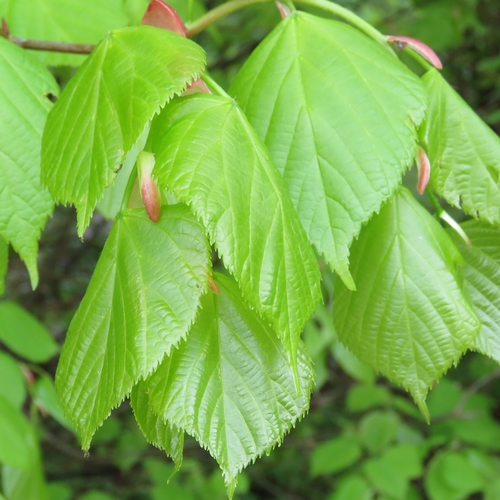
Similar North American and European limes cause most identification difficulties. Tilia americana var. heterophylla, with white, felted leaf undersides, was long treated as Tilia heterophylla; Tilia caroliniana is now viewed as a local ecotype. Introduced European Tilia cordata and Tilia platyphyllos are smaller and more widely planted in towns. Compare leaf size, hairs beneath the blade and planting range together to distinguish these trees reliably. 2 8
Main sources
- Plants of the World Online / Kew, Tilia americana L.
- USDA Forest Service, Silvics of North America, Tilia americana
- Plants For A Future, Tilia americana database entry
- Missouri Botanical Garden, Plant Finder, Tilia americana
- Natural Resources Canada, Tilleul d’Amérique (Tilia americana L.), original fiche 74, modified 12 November 2024; archived 11 March 2026
- ASPCA, Linden toxicity entry
- IUCN Red List, Tilia americana assessment
- USDA GRIN Taxonomy, Tilia americana
- The Wood Database, Basswood (Tilia americana)
Frequently asked questions
Is American basswood toxic?
No. The ASPCA lists Tilia, including Tilia americana, as non-toxic to cats, dogs and horses. The documented precaution concerns overly frequent use of flower tea, which herbal literature advises against.
How does American basswood differ from European limes?
Tilia americana has much larger leaves than Tilia cordata or Tilia platyphyllos and tolerates more shade, but copes less well with urban conditions. European limes remain better suited to street planting.
Why is American basswood called bois blanc in Quebec?
Bois blanc refers to the pale color of the sawn wood, rather than a feature of the living tree. French-speaking North Americans use it alongside tilleul d’Amérique.
Is American basswood used to make guitars?
Yes. Its light weight, fine, even grain and easy working properties make it a common choice for electric guitar bodies and hand carving.
Is Tilia heterophylla a separate species from Tilia americana?
No longer in the POWO/WCVP treatment. This form, recognizable by its white, felted leaf undersides, is treated as a variety of Tilia americana rather than a separate species.
Does American basswood suit a small urban garden?
Rarely. It commonly reaches 20–35 m (65–115 ft), develops a broad crown and poorly tolerates compacted soil or deicing salt, unlike the European limes more often planted along streets.
Similar plants
If you are unsure about a plant’s toxicity, ask a botanist or veterinarian for advice.