
Butternut (Juglans cinerea, )
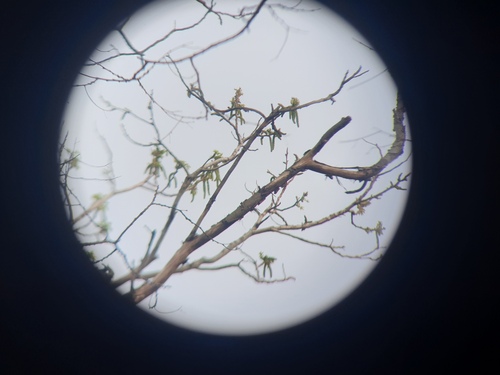

Butternut (Juglans cinerea) is a large deciduous tree in the Juglandaceae native to eastern North America. Hardier than its relative black walnut, it has pale gray bark, an oblong nut in a sticky husk and leaves almost always ending in a well-developed terminal leaflet. A fungal canker has devastated populations since the 1960s, making it one of North America’s endangered trees.
Read moreButternut, White walnut and Oil nut
Allow a few hours of direct sun per day, preferably morning or evening.
Full sun required; does not tolerate overhead shade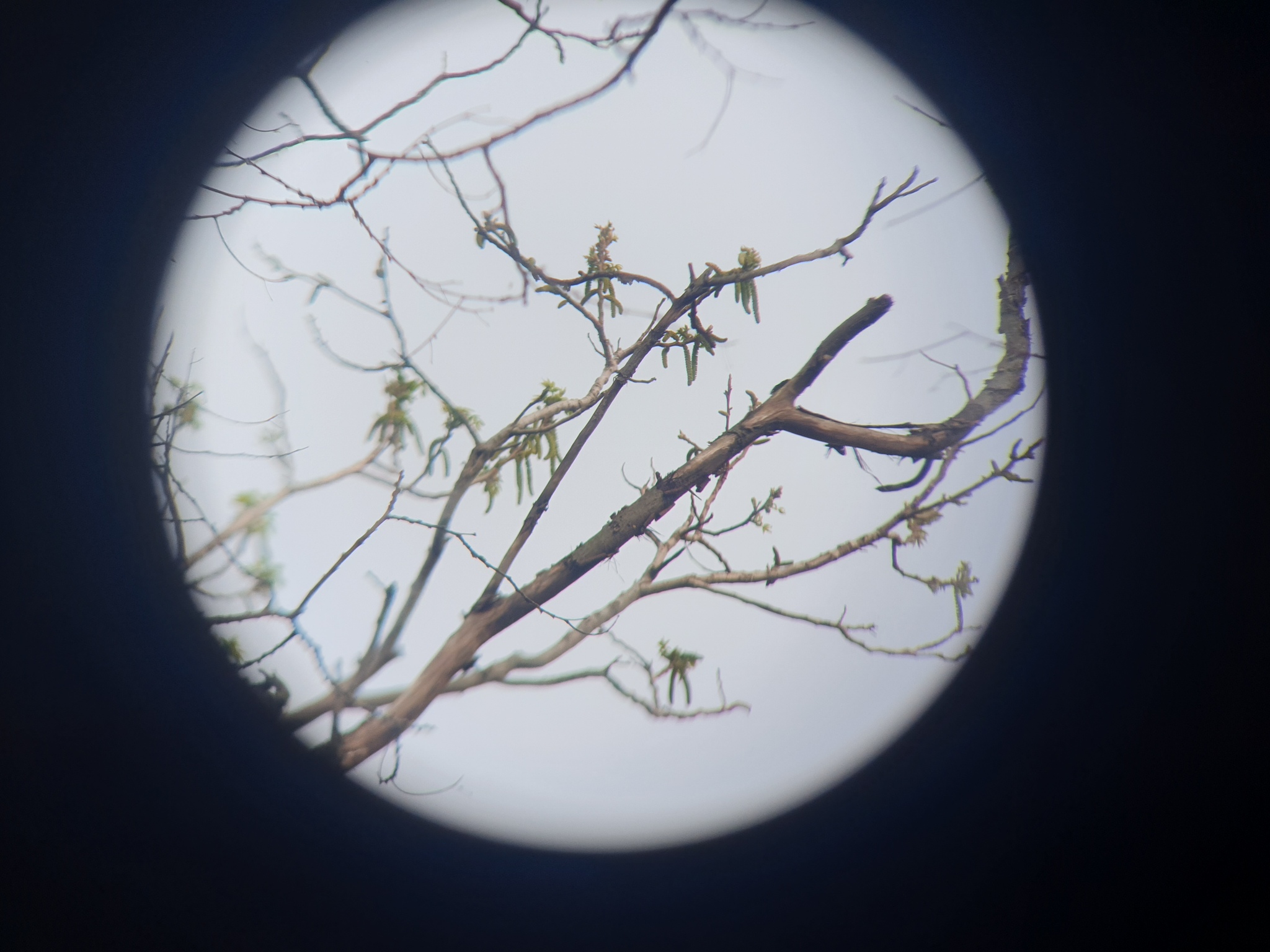

© photo
Étienne Lacroix-Carignan · cc0
Bruce Cook · cc0
(c) Dan Mullen, some rights reserved (CC BY-NC-ND) · cc-by-nc-nd
Taken Apr 1, 2020 by Jorge Pina (cc-by-sa)
© copyright of the Board of Trustees of the Royal Botanic Gardens, Kew.




Global distribution
Juglans cinerea is native to eastern North America, from southeastern New Brunswick and southern Quebec south to northern Georgia, Alabama and Mississippi, and west to Minnesota and Arkansas. Its range overlaps that of black walnut but extends farther north. Outside North America, it is mostly grown occasionally in collections or arboretums.
Identity
Butternut (Juglans cinerea L., 1759), also known as white walnut or oil nut, is a large deciduous tree in the genus Juglans and family Juglandaceae. Native to eastern North America, it shares much of its range with black walnut, Juglans nigra. Its pale gray bark immediately sets it apart from the latter’s almost black, fissured bark. 1 2
Latin cinerea means “ash-colored,” describing the pale gray bark of young trees. An old synonym, Juglans cathartica, recalls an abandoned use: the inner bark served as a purgative in 19th-century North American medicine. 5
Recognition
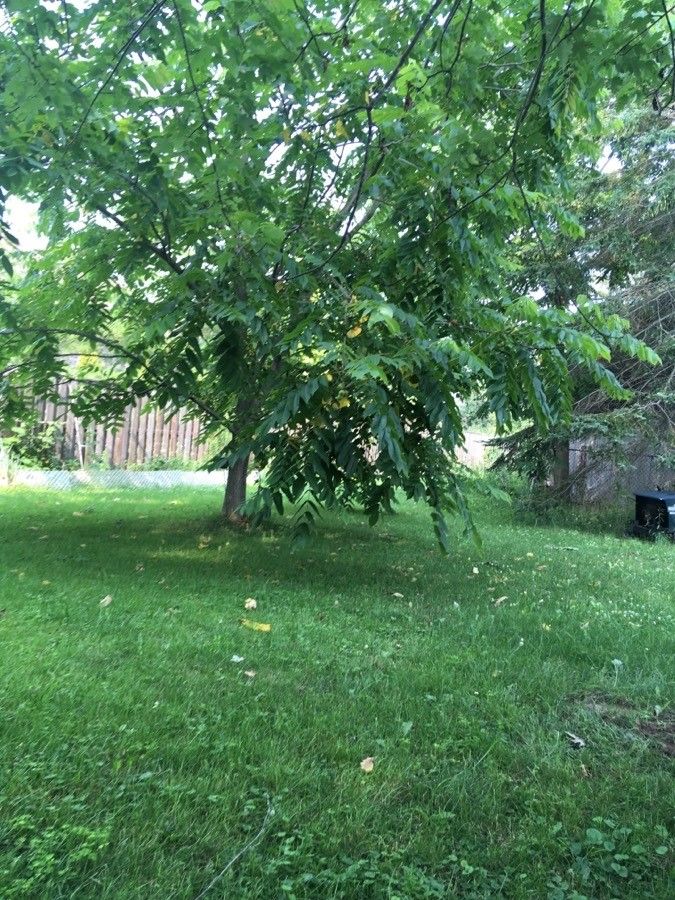
Mature butternuts usually reach 12–18 m (39–59 ft) tall with trunks 30–60 cm (12–24 in) across. The oldest trees rarely exceed 30 m (98 ft) or 90 cm (35 in) in trunk diameter. Overhead shade is fatal to this light-demanding tree: deprived of direct light, a seedling declines before reaching maturity. 3
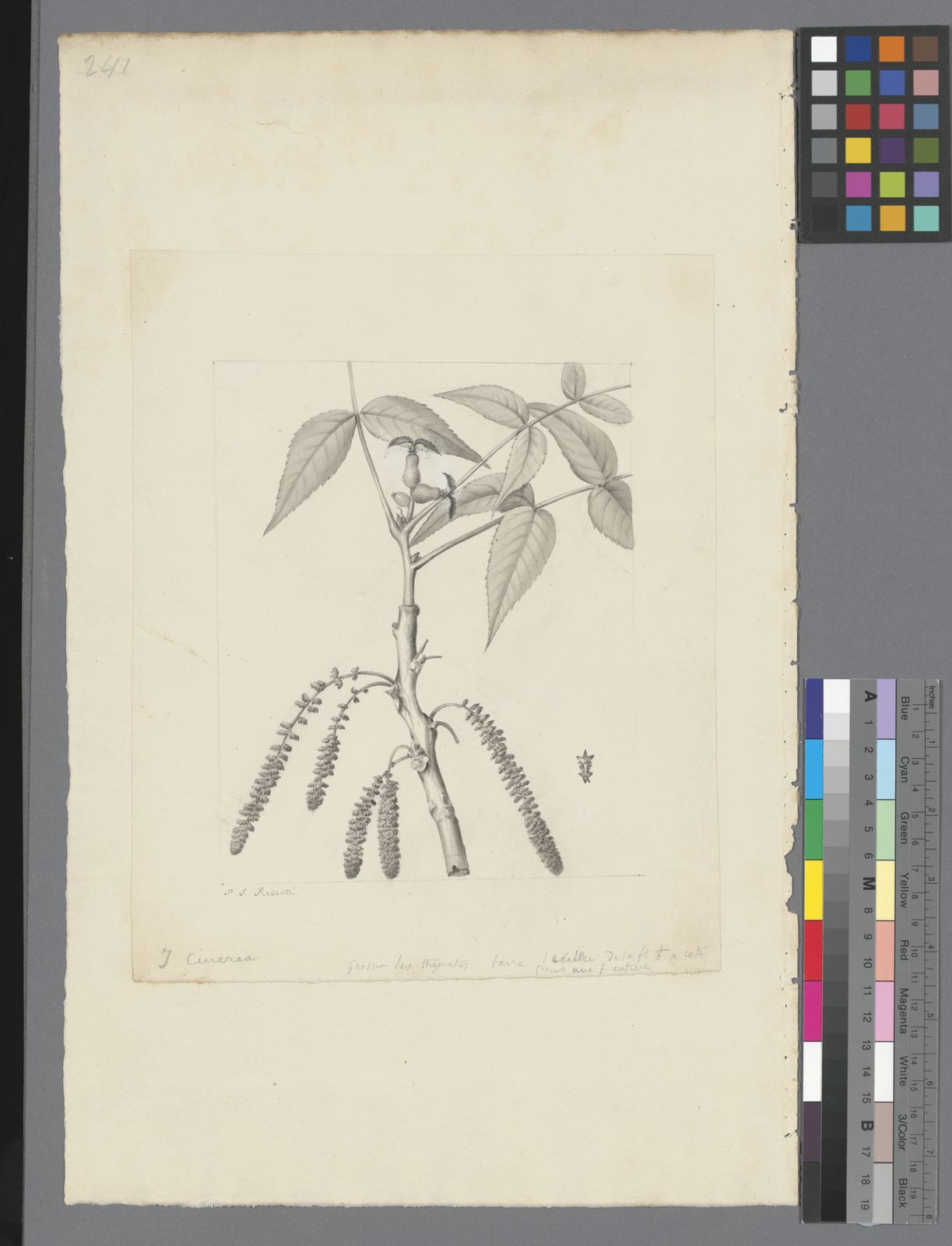
Pinnate leaves measure 30–65 cm (12–26 in) long and bear 11–19 finely toothed, oval-lanceolate leaflets. A well-developed terminal leaflet is almost always present, a feature often missing in black walnut. 2 8
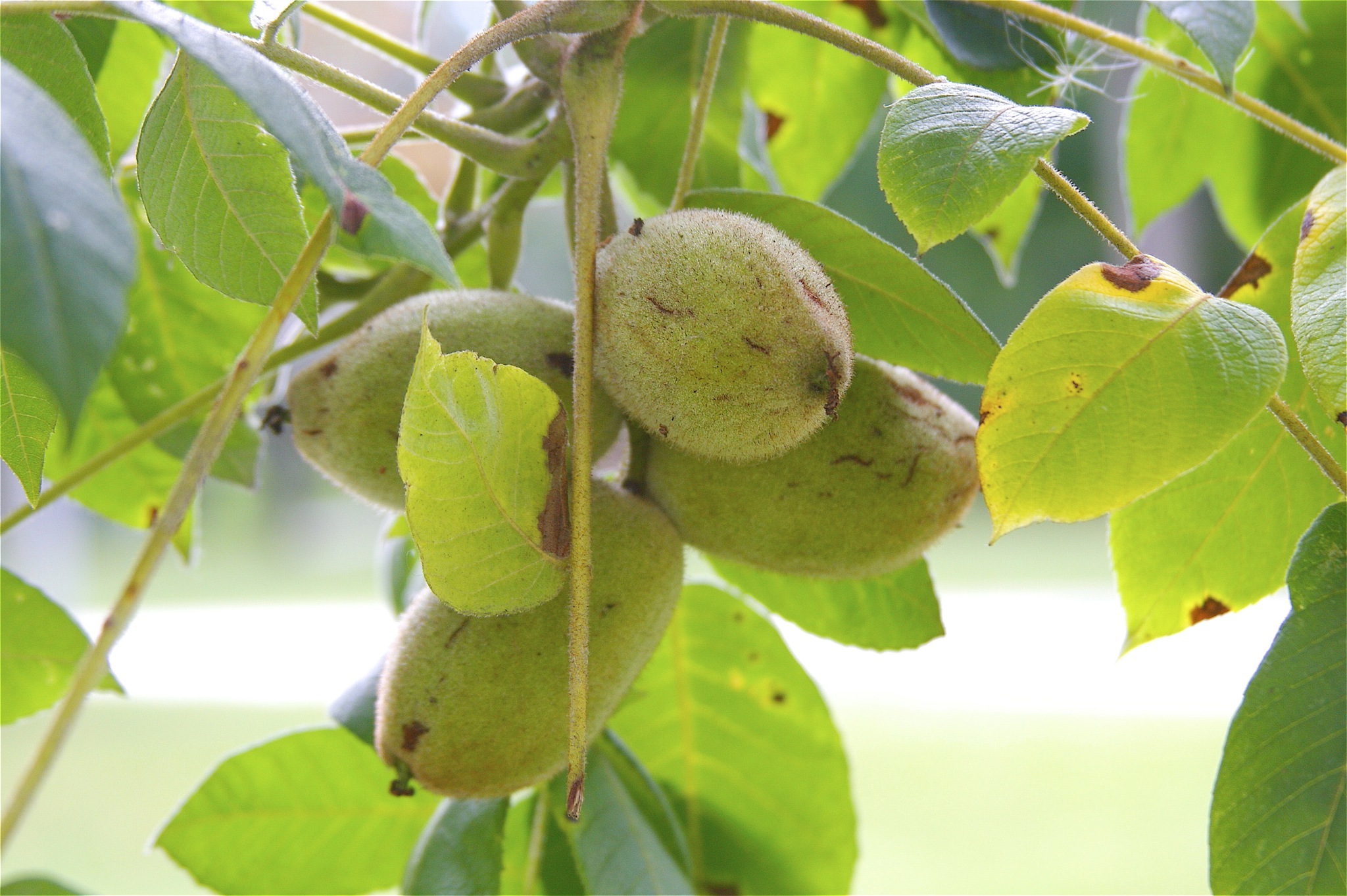
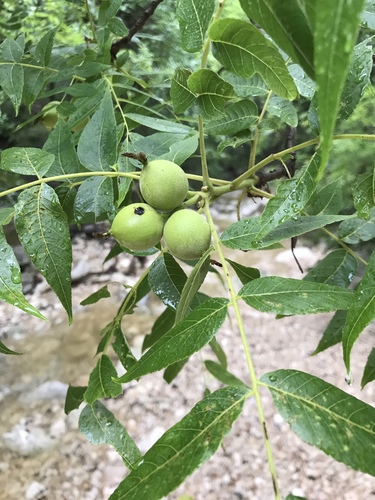
As a monoecious tree, butternut carries both hanging yellow-green male catkins and inconspicuous reddish female flowers in terminal spikes, from April to June in its native range. Its pointed, oblong nut is 3–6 cm (1.2–2.4 in) long, enclosed in a sticky green husk covered with glandular hairs and two to four lengthwise ribs. This differs clearly from black walnut’s smooth, nonsticky husk. 2 4
Useful taxonomy
Linnaeus described Juglans cinerea L. in 1759; POWO/WCVP accepts that name. Several historical names remain attached to the species as synonyms:
- Historical synonym: Juglans cathartica F.Michx.
- Historical synonym: Juglans oblonga Mill.
- Historical synonym: Nux cinerea (L.) M.Gómez
- Historical synonym: Wallia cinerea (L.) Alef.
Other members of Juglans include Juglans nigra, the North American black walnut, and Juglans regia, the Eurasian Persian walnut grown for its smooth-shelled nut. Nut shape, leaf scars, bark shade and the color of the stem’s internal pith are the main features separating these three species. 1
Habitat and range
From southeastern New Brunswick and southern Quebec, the native range reaches south to northern Georgia, Alabama and Mississippi and west to Minnesota and Arkansas. Butternut mainly occupies stream banks and well-drained soils, but tolerates dry, rocky limestone soils better than black walnut. 3 5
Mixed hardwood forests support butternut alongside sugar maple, American basswood, oaks and yellow-poplar. It is hardier than black walnut, tolerating winter temperatures of about −35 °C (−31 °F) in the northern part of its range. 3
The International Union for Conservation of Nature classifies Juglans cinerea as Endangered. Butternut canker has already eliminated the species from the Carolinas and affected 76% of trees in a Wisconsin plantation as early as 1983. 6 3
Life cycle and reproduction
Between April and June, depending on climate, male and female flowers generally open at different times on the same tree. This favors cross-pollination between neighbors over self-pollination. In its native range, nuts ripen in September–October. A vigorous tree starts bearing at around 20 years, produces best between 30 and 60 years and gives good crops every two or three years. 3
For propagation, the usual method is sowing nuts after 90–120 days of cold stratification. Grafting is possible, but techniques are not yet fully mastered for this species. Young trees and stump sprouts can also produce suckers after cutting. 3
Uses and risks
Pale, soft butternut wood, long described as “poor man’s walnut,” is easy to work both with and across the grain. It has been carved into church altars and lecterns as well as used for interior paneling and everyday furniture. Sweet, oily nuts go into maple-butternut candy, a traditional New England confection, although their oil becomes rancid quickly once the shell is opened. 9 2
A yellow-brown dye from the husk was historically used on cloth. During the American Civil War, uniforms dyed with the nuts earned Confederate soldiers the nickname “butternuts.” 5
There is no dedicated ASPCA entry for butternut. In the closely related black walnut, moldy nuts and wood bedding are toxic to dogs and horses. As a precaution, the same caution applies to fallen butternuts and tree debris. 7
Varieties, look-alikes and related plants
Unlike black walnut or Persian walnut, Juglans cinerea has no widely distributed, stable horticultural cultivar. Conservation programs instead cross it with Japanese walnut, Juglans ailantifolia, to produce hybrids called buartnuts. These are more tolerant of canker and are used in North American restoration plantings. 3
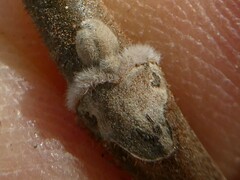
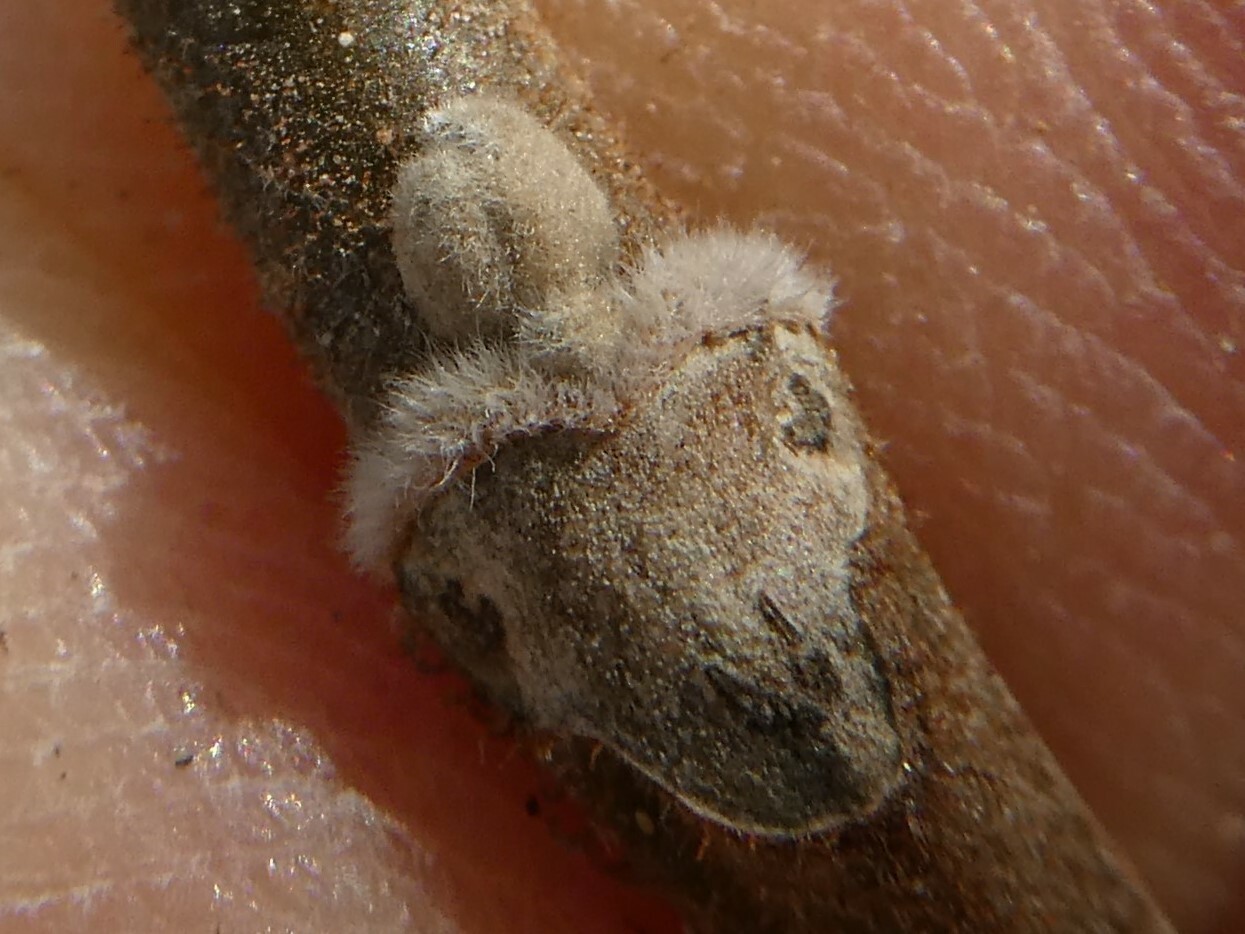
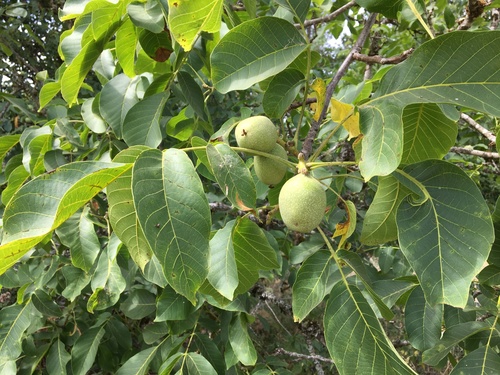
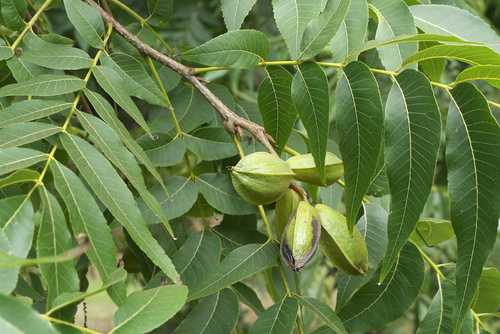
Black walnut, Juglans nigra, is the most likely look-alike. Its deeply notched leaf scar is almost hairless along the top, its pith is dark brown and its nut is nearly spherical with a smooth husk. Butternut has a continuous downy fringe on the scar, pale buff pith and a pointed, oblong nut. Hickories in the genus Carya differ in having husks that split into four distinct valves at maturity. 8 2
Main sources
- Plants of the World Online / Kew, Juglans cinerea L.
- NC State Extension, Juglans cinerea (Butternut)
- USDA Forest Service, Silvics of North America - Butternut
- Missouri Botanical Garden Plant Finder, Juglans cinerea
- Plants For A Future, Juglans cinerea — Internet Archive, 2026-06-06
- IUCN Red List of Threatened Species, Juglans cinerea assessment
- ASPCA, Black Walnut toxicity entry (Juglans nigra)
- bplant.org, Eastern Black Walnut vs Butternut identification
- Woodcraft, WoodSense - Butternut
Frequently asked questions
Is butternut endangered?
Yes. The IUCN has classified Juglans cinerea as Endangered since 2018. Butternut canker has already eliminated the species from the Carolinas and affected 76% of trees in a Wisconsin plantation as early as 1983.
Are butternut and black walnut the same species?
No. Juglans cinerea and Juglans nigra are distinct species in the same genus. Butternut has paler bark, an oblong nut with a sticky husk and an almost always present terminal leaflet; black walnut has a round nut in a smooth husk.
Is butternut poisonous to cats and dogs?
The ASPCA has no dedicated entry for this species. In the related black walnut, moldy nuts and wood bedding are toxic to dogs and horses; as a precaution, apply the same caution to fallen butternuts and debris.
Can you eat butternuts?
Yes. The sweet, oily kernels are used in maple-butternut candy, a traditional New England confection. However, the nut oil turns rancid quickly once the shell is opened.
What is butternut canker?
It is a fungal disease caused by Ophiognomonia clavigignenti-juglandacearum. Cankers develop on lower branches before spreading to the trunk. With no known cure, it kills most affected trees within a few years.
What does the name cinerea mean?
The Latin epithet cinerea means ash-colored and describes the pale gray bark of young trees, much lighter than the bark of black walnut. The French common name also refers to this feature.
How can you identify a young butternut without leaves or nuts?
A barely notched leaf scar with a continuous downy fringe, pale buff pith divided into chambers and light bark with long, continuous ridges allow reliable identification even in winter.
Are any butternut hybrids resistant to canker?
Crosses with Japanese walnut, Juglans ailantifolia, produce hybrids called buartnuts. They are more tolerant of canker and are used in conservation plantings in North America.
Similar plants
If you are unsure about a plant’s toxicity, ask a botanist or veterinarian for advice.