
Air plant (Kalanchoe pinnata, )
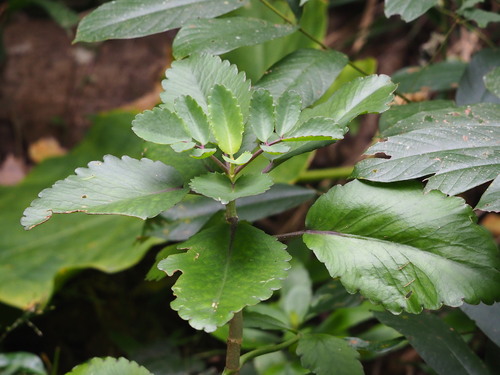

Air plant (Kalanchoe pinnata) is a perennial succulent in the Crassulaceae, native to Madagascar. Its toothed leaf edges produce rows of rooted plantlets capable of developing without touching soil. Cultivated worldwide as a medicinal and ornamental plant, it has naturalized across most tropical and subtropical regions, sometimes becoming invasive.
Read moreAir plant, Life plant, Leaf of life and Cathedral bells
Allow a few hours of direct sun per day, preferably morning or evening.
Bright light; tolerates full sun after acclimation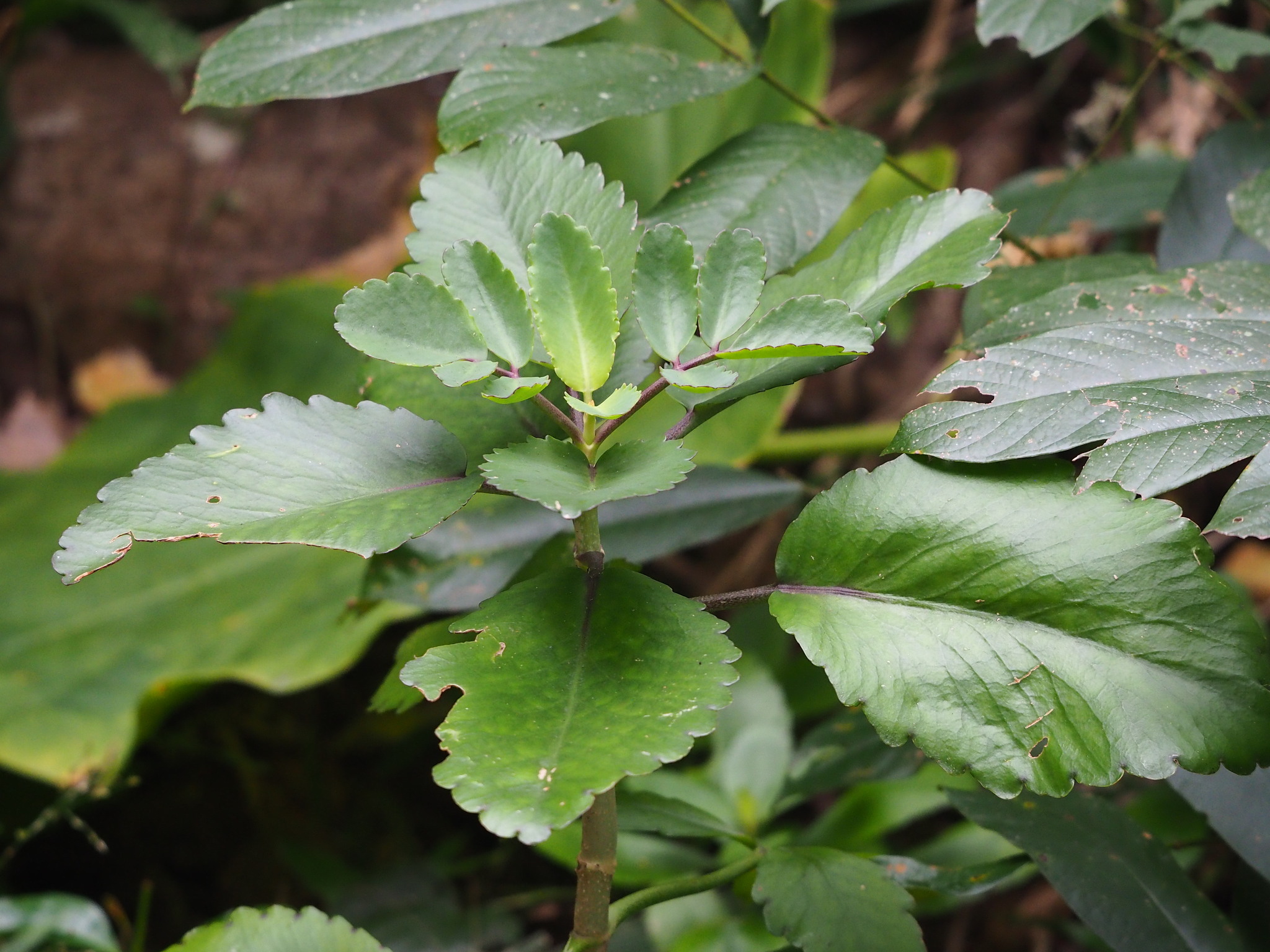
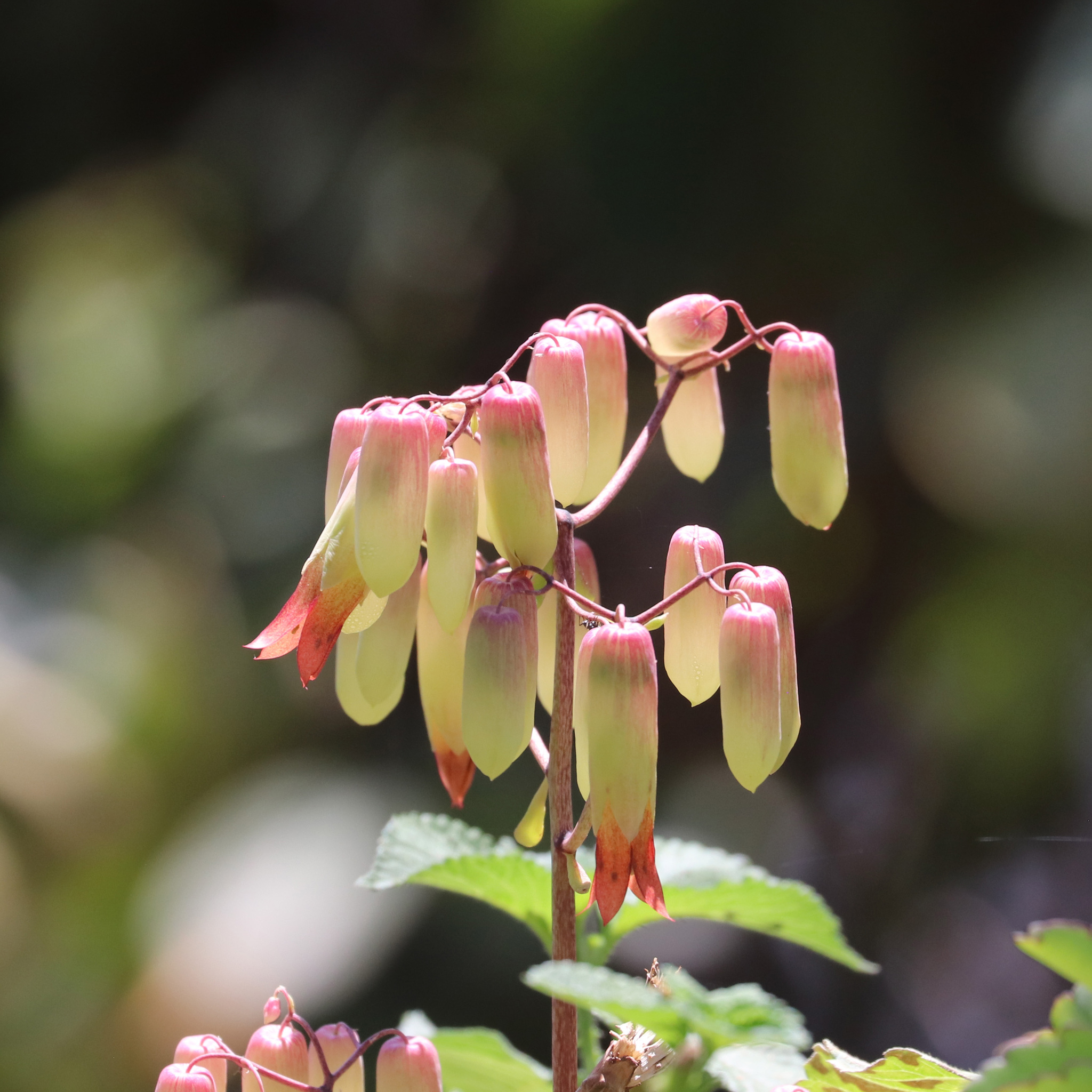
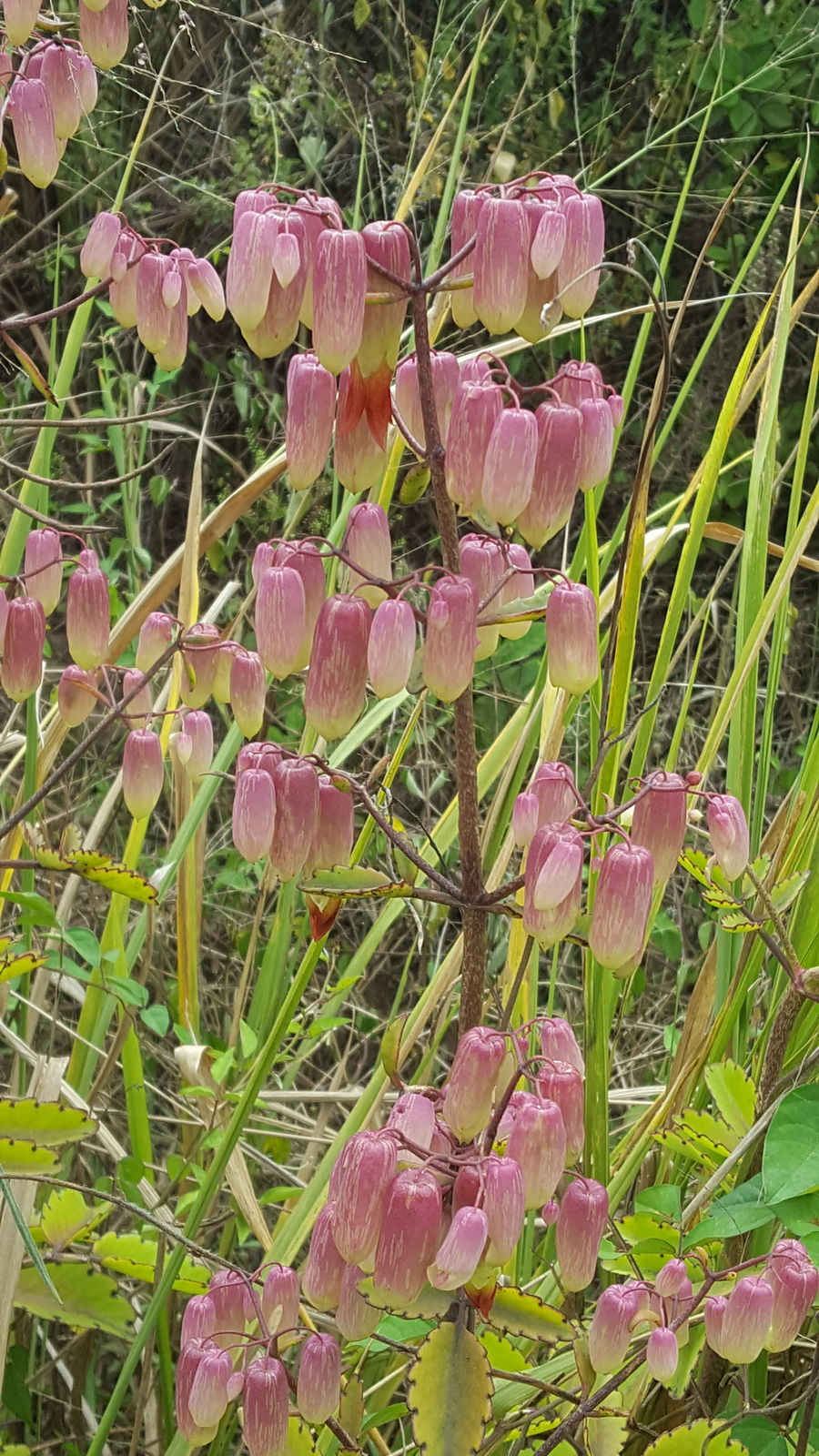

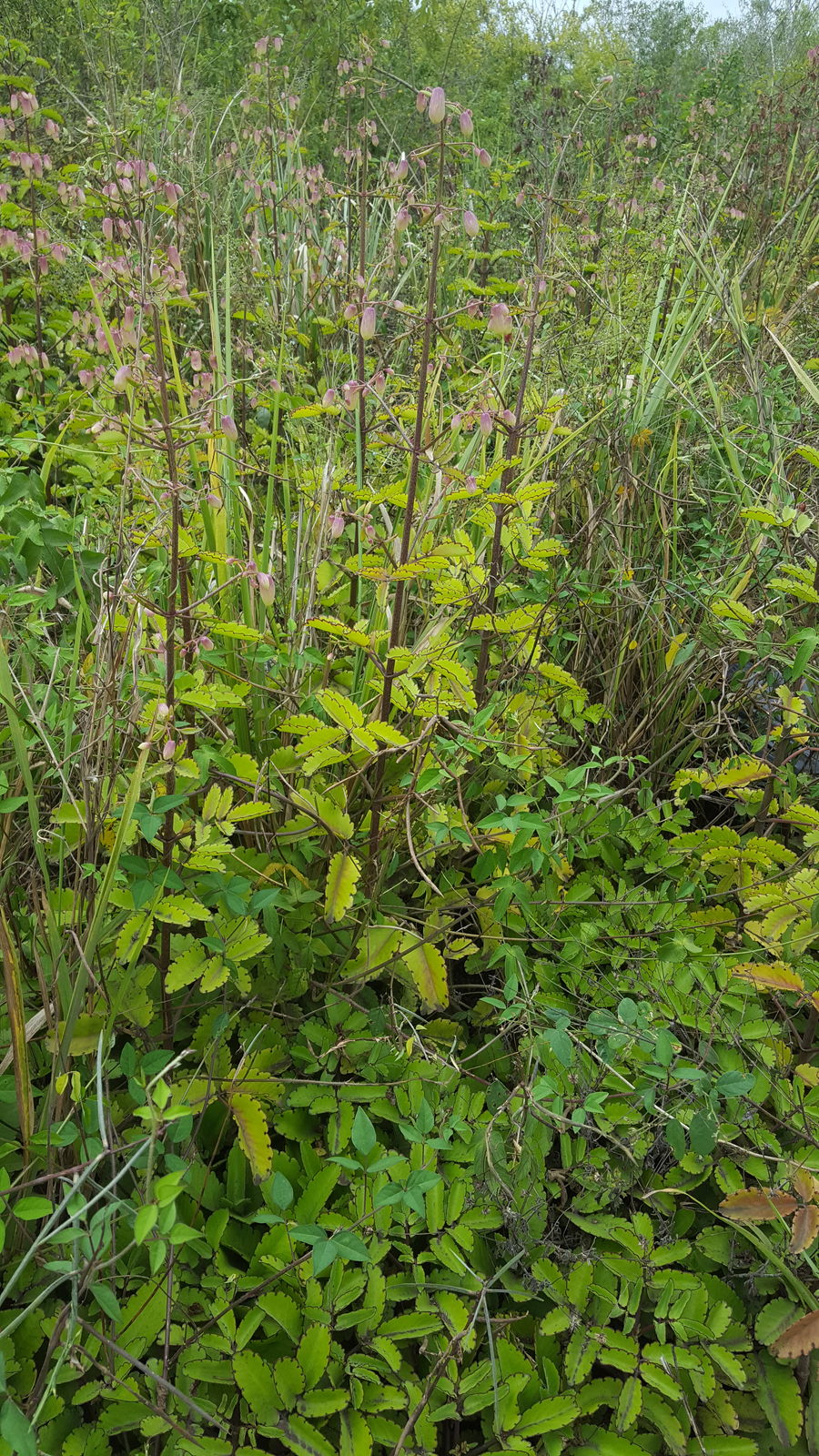
© photo
葉子 · cc0
Liz F · cc0
(c) Paul Kingsnorth, some rights reserved (CC BY-NC-ND), uploaded by Paul Kingsnorth · cc-by-nc-nd
© copyright of the Board of Trustees of the Royal Botanic Gardens, Kew.
Global distribution
The strict native range of Kalanchoe pinnata is limited to Madagascar. Distributed as an ornamental and medicinal plant, it subsequently naturalized across most tropical and subtropical regions. Several French overseas territories, notably Réunion and French Polynesia, officially classify it as invasive. That status does not apply to metropolitan France, where it remains frost-sensitive.
- Native1
- Introduced2
- Invasive4
- Madagascar
- New Caledonia
- Florida
- Mauritius
- Réunion
- French Polynesia
- Hawaii
Hexagons: regions where the plant occurs. Green dots: native range.1
Identity
Air plant (Kalanchoe pinnata (Lam.) Pers., 1805) is a perennial succulent in the genus Kalanchoe, family Crassulaceae. 1 2
Jean-Baptiste de Lamarck first described the species as Cotyledon pinnata in 1786. Christiaan Hendrik Persoon transferred it to Kalanchoe in 1805. At the same time, Richard Anthony Salisbury described it as Bryophyllum calycinum, establishing the genus Bryophyllum, a name still encountered in its synonymy. 1
Names such as Life plant and Leaf of life, alongside the Caribbean names chou de Faffe and zèb maltèt, refer to its ability to produce new plantlets from a detached leaf without soil contact. Cathedral bells is another established name for the same succulent. 6
Recognition
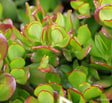
An upright succulent, Kalanchoe pinnata has a cylindrical, fleshy, hollow stem reaching 1–1.5 m (3–5 ft), often reddish when young. Its opposite, thick, fleshy leaves measure 10–30 cm (4–12 in) long. A scalloped or saw-toothed edge distinguishes them from most other potted Crassulaceae. 2
Adventitious buds appear between the teeth along the leaf edge and develop roots and leaves before the leaf falls. A single leaf on the ground can produce several young plants within weeks, explaining the speed with which Kalanchoe pinnata colonizes bare ground. 6
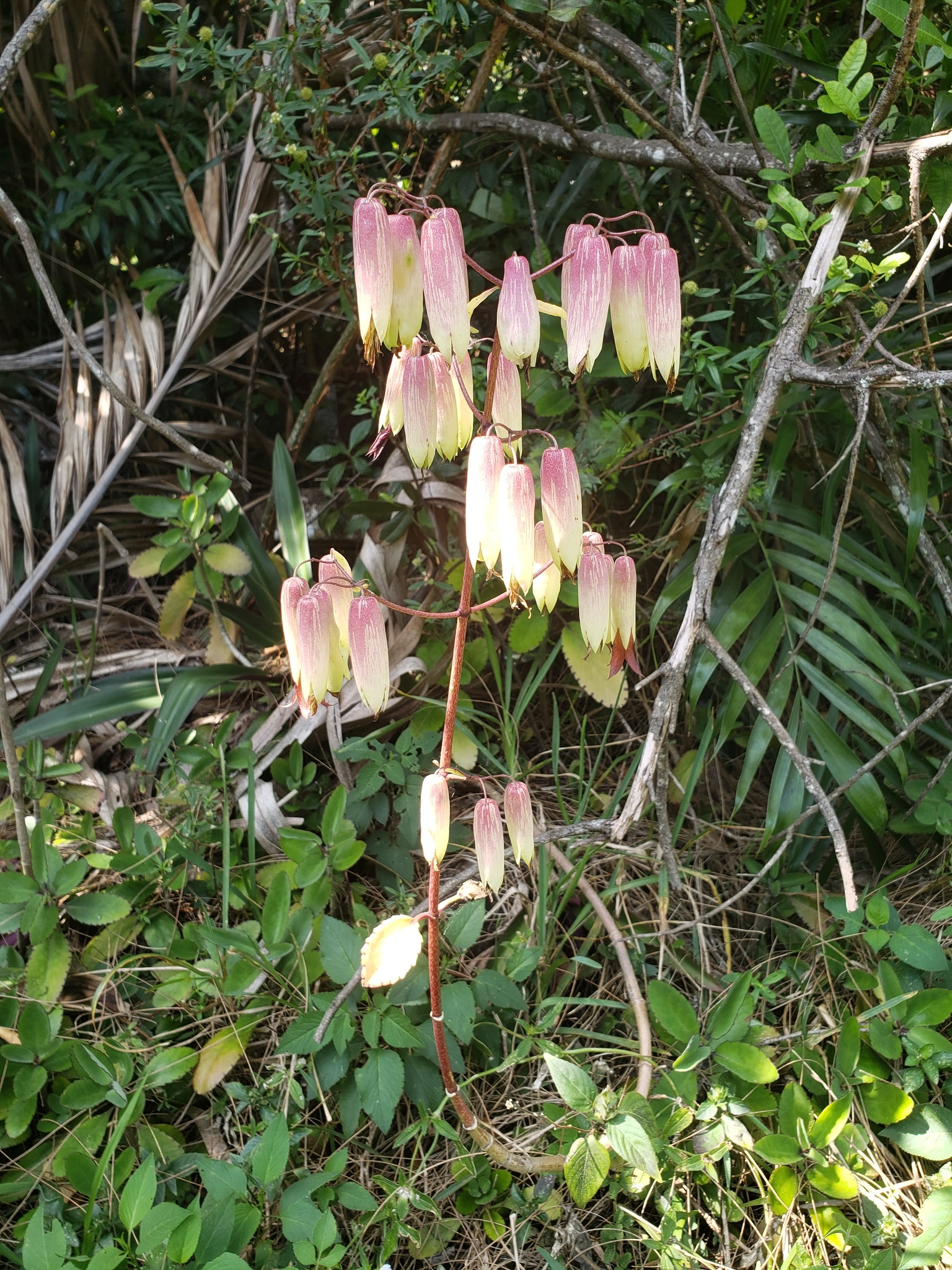
At the stem tip, a panicle bears hanging flowers with tubular corollas up to 5 cm (2 in) long. They are yellowish with red-purple streaks inside and red-orange outside. Depending on climate, flowering may extend through much of the year. 2
Useful taxonomy
Although Kalanchoe pinnata is the accepted scientific name, several synonyms remain in use. These overlap with a separate genus still recognized in some toxicological and veterinary literature:
- Bryophyllum pinnatum (Lam.) Oken, 1841, a widely used synonym
- Bryophyllum calycinum Salisb., 1805, another historical name
- Cotyledon pinnata Lam., 1786, the basionym
- Kalanchoe pinnata var. brevicalyx Raym.-Hamet & H.Perrier, a name included in the synonymy
- Kalanchoe pinnata var. calcicola H.Perrier, another name included in the synonymy
The synonym Bryophyllum pinnatum remains more than a taxonomic relic. McKenzie and Dunster’s study of cattle poisoning, like much toxicological literature, uses it because some botanists continue to recognize Bryophyllum. On a label or in a scientific paper, it denotes the same plant as Kalanchoe pinnata. 1 7
Habitat and range
Native only to Madagascar, Kalanchoe pinnata grows in dry, rocky habitats, waste ground and woodland edges, from sea level to nearly 2,600 m (8,530 ft), depending on the region. 2
Ornamental and medicinal cultivation carried it beyond Madagascar. It subsequently naturalized across most tropical and subtropical regions, including South and Southeast Asia, Africa, Australia, the Americas and Pacific islands. 6
Invasive populations are recorded in Mauritius and Réunion, notably around Étang-Salé, and in French Polynesia, where territorial regulations recognize a threat to local biodiversity. French overseas territories apply their own classifications. Hawaii also regards the species as invasive, and the Florida Invasive Species Council lists it in Category II. 5 4
Metropolitan France generally confines Air plant to pots or conservatories. It needs protection below 10 °C (50 °F), and frost rapidly destroys its succulent tissues. 6
Life cycle and reproduction
Leaf-borne plantlets dominate reproduction in this species. Each leaf produces dozens of marginal bulbils, tiny plants already equipped with roots and leaves, which detach at the slightest touch and root when they reach moist growing medium. 6
Sexual reproduction also occurs: follicles 10–15 mm long contain numerous obovoid seeds about 1 mm long. It plays a secondary role compared with rapid spread through plantlets. 2
Placing a mature Kalanchoe pinnata leaf on well-drained growing medium can produce new plants in a few weeks, without rooting hormone or preliminary cutting. 6
Uses and risks
Traditional medical systems in French Guiana, the Caribbean, South Asia and Southeast Asia have long used Kalanchoe pinnata leaves for fever and inflammation. 6
Documented toxicity accompanies those traditional uses. The plant contains bufadienolides, cardiac glycosides including bryophyllin A. Their biological activity has also been investigated for antitumor effects in laboratory studies. 8
In cattle, eating the flowers has been documented as a cause of death. An Australian study recorded 41 poisoning episodes involving 379 cattle in Queensland between 1960 and 1984, with damage to heart muscle as the main lesion. 7
For household pets, the ASPCA lists Kalanchoe as toxic to cats and dogs, causing vomiting, diarrhea and, more rarely, abnormal heart rhythms. Caution therefore matters both indoors and in gardens, despite the traditional medicinal use of its leaves. 3
Varieties, look-alikes and related plants
Stable cultivars with commercial names are uncommon. The most sought-after form has irregular cream variegation and is sold as Variegata, distinct from the entirely green typical form.
Other members of the genus most often confused with Air plant include:
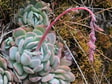
- Kalanchoe daigremontiana, with narrower triangular leaves, often called Mother of thousands;
- Kalanchoe delagoensis, with tubular leaves bearing plantlets at their tips rather than along the edges;
- Kalanchoe blossfeldiana, a smaller plant grown for clusters of colorful flowers and lacking leaf-borne plantlets.
Compare the leaf edges to separate these plants: among the plants discussed here, Kalanchoe pinnata combines a broad, fleshy leaf with rows of plantlets along its teeth. 2
Main sources
- Plants of the World Online / Kew, Kalanchoe pinnata (Lam.) Pers.
- GBIF, Kalanchoe pinnata (Lam.) Pers.
- ASPCA, Kalanchoe toxicity entry
- Atlas of Florida Plants, Kalanchoe pinnata
- Espèces Envahissantes Outre-mer, Kalanchoe pinnata
- Pl@ntUse / PlantNet, Kalanchoe pinnata
- McKenzie & Dunster, 1986, Bryophyllum poisoning of cattle
- Supratman et al., 2001, anti-tumor-promoting bufadienolides from Kalanchoe pinnata
Frequently asked questions
Are Kalanchoe pinnata and Bryophyllum pinnatum the same plant?
Yes. Bryophyllum pinnatum is a botanical synonym still used in some scientific and veterinary literature. Plants of the World Online accepts the name Kalanchoe pinnata.
Is Air plant toxic to cats and dogs?
The ASPCA lists it as toxic to cats and dogs. Its bufadienolides can cause vomiting, diarrhea and, more rarely, abnormal heart rhythms.
Why do its leaves produce tiny plantlets?
Adventitious buds form between the teeth of the leaf edge, developing roots and leaves before the leaf detaches. A single fallen leaf can therefore produce several young plants.
Where does Air plant come from?
Its strict native range is limited to Madagascar. It was later introduced as an ornamental and medicinal plant across most tropical and subtropical regions, where it has often naturalized.
Is Air plant invasive?
Oui, dans plusieurs territoires français d'outre-mer comme "Réunion" et la "French Polynesia", où un arrêté territorial le reconnaît comme une menace pour la biodiversité locale. Ce statut ne s'applique pas à la "Metropolitan France".
Peut-on le cultiver en intérieur en "Metropolitan France" ?
Yes, in a pot with excellent drainage and bright light. It cannot tolerate frost and should remain above 10 °C, limiting outdoor cultivation to the mildest climates.
Is Air plant used in traditional medicine?
Its leaves have long been used for fever and inflammation in several traditional medical systems. That history does not remove its documented toxicity, which calls for real caution, especially around children and animals.
Similar plants
If you are unsure about a plant’s toxicity, ask a botanist or veterinarian for advice.