
Hyacinth bean (Lablab purpureus, )
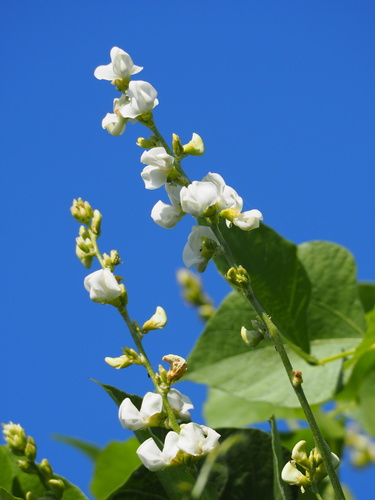

Hyacinth bean (Lablab purpureus) is a climbing legume in the Fabaceae, native to sub-Saharan Africa and now cultivated throughout tropical and subtropical regions. The only species in the genus Lablab, it serves as a food crop, forage, green manure and an ornamental climber on supports.
Read moreHyacinth bean, Lablab bean, Dolichos bean, Egyptian kidney bean, Indian bean and Bonavist bean
Place in full sun, with intense direct light all day long.


© photo
no rights reserved, uploaded by 葉子 · cc0
Meehir Pawar · CC BY-NC
Wikimedia Commons · CC BY-SA or Public Domain
Taken Sep 20, 2022 by tomhuck88 (cc-by-sa)
Taken Apr 23, 2020 by JP Corrêa Carvalho (cc-by-sa)
Taken Apr 7, 2021 by Veronika Thieme (cc-by-sa)
Taken May 4, 2017 by Pierre Bonnet (cc-by-sa)
© copyright of the Board of Trustees of the Royal Botanic Gardens, Kew.


Global distribution
The native range of Lablab purpureus covers sub-Saharan Africa, particularly eastern and southern Africa, with populations also attributed to Cape Verde, Madagascar and India. Ancient domestication and intensive cultivation make the exact origin of some populations, especially Indian ones, difficult to determine. Elsewhere, the species is almost always deliberately sown, although it occasionally naturalizes on tropical waste ground.
- Native4
- Introduced1
- Kenya
- Madagascar
- India
- Cape Verde
- United States
Hexagons: regions where the plant occurs. Green dots: native range.1
Identity
Hyacinth bean (Lablab purpureus (L.) Sweet, 1826) is a climbing legume in the Fabaceae and the only species in the genus Lablab. Linnaeus first described it in Dolichos; Robert Sweet transferred it to its own genus in 1826, giving it its current scientific name. 1 7
Regional names in French include dolique lablab, pois antaque on Réunion and pois boucoussou. The genus name comes from Arabic lablāb, a name for climbing plants that aptly describes this species’ habit. 7
Recognition
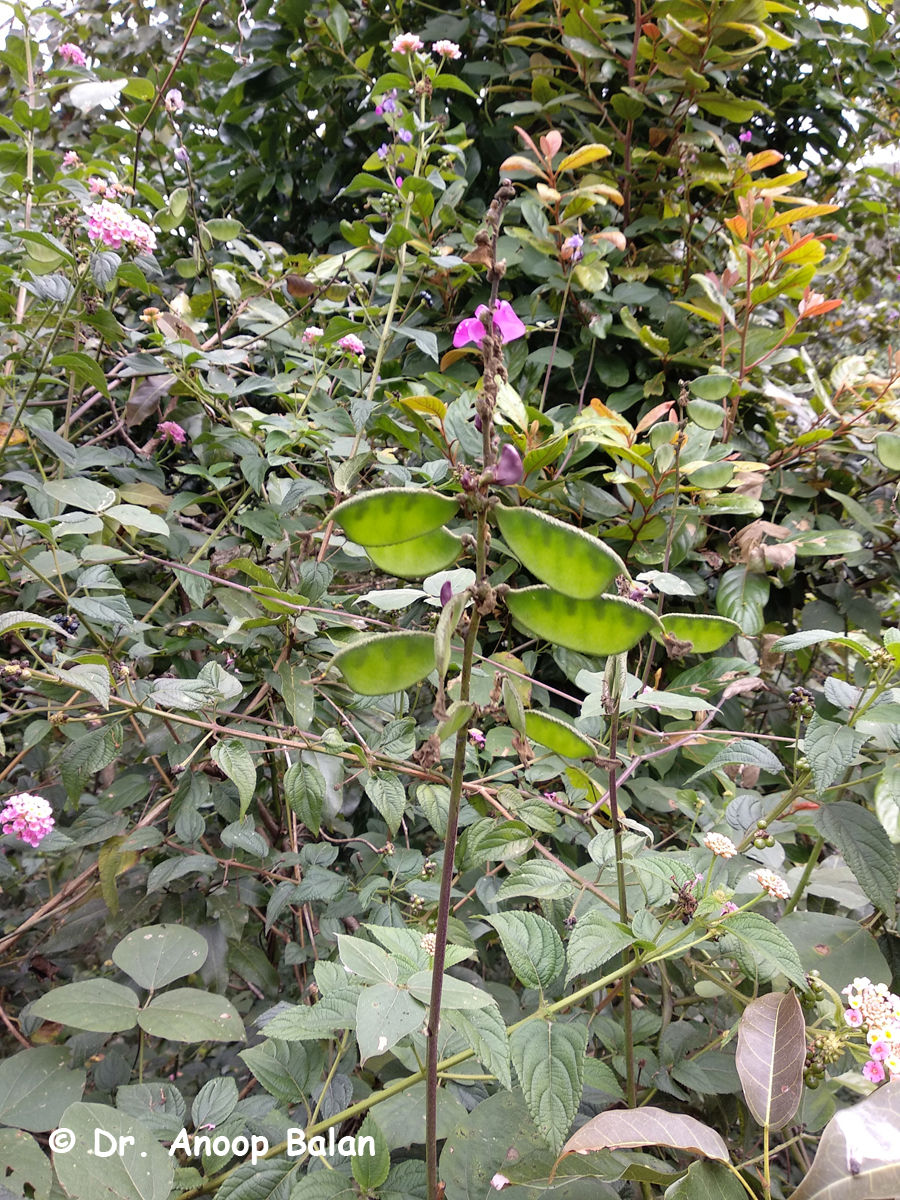
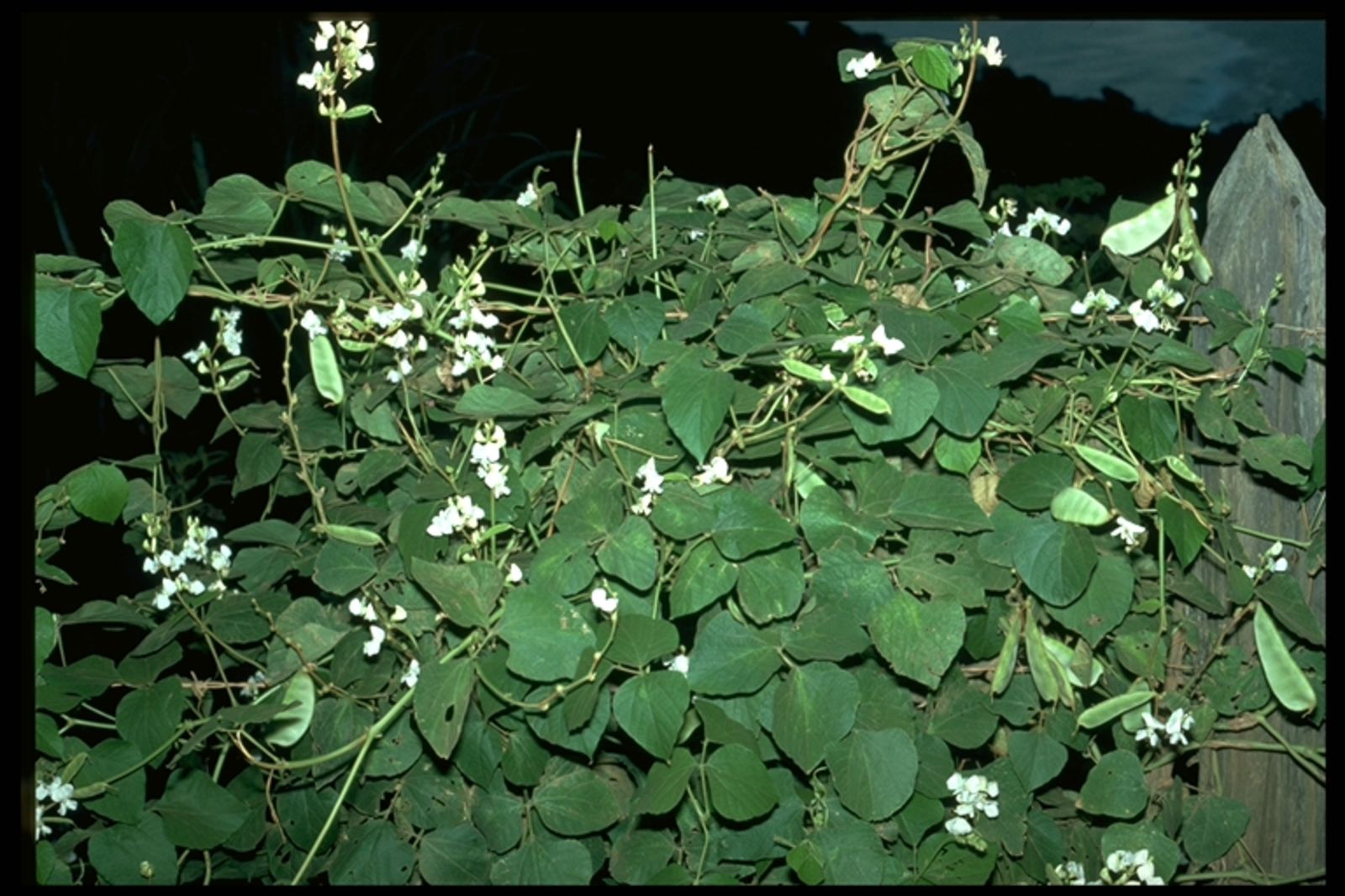
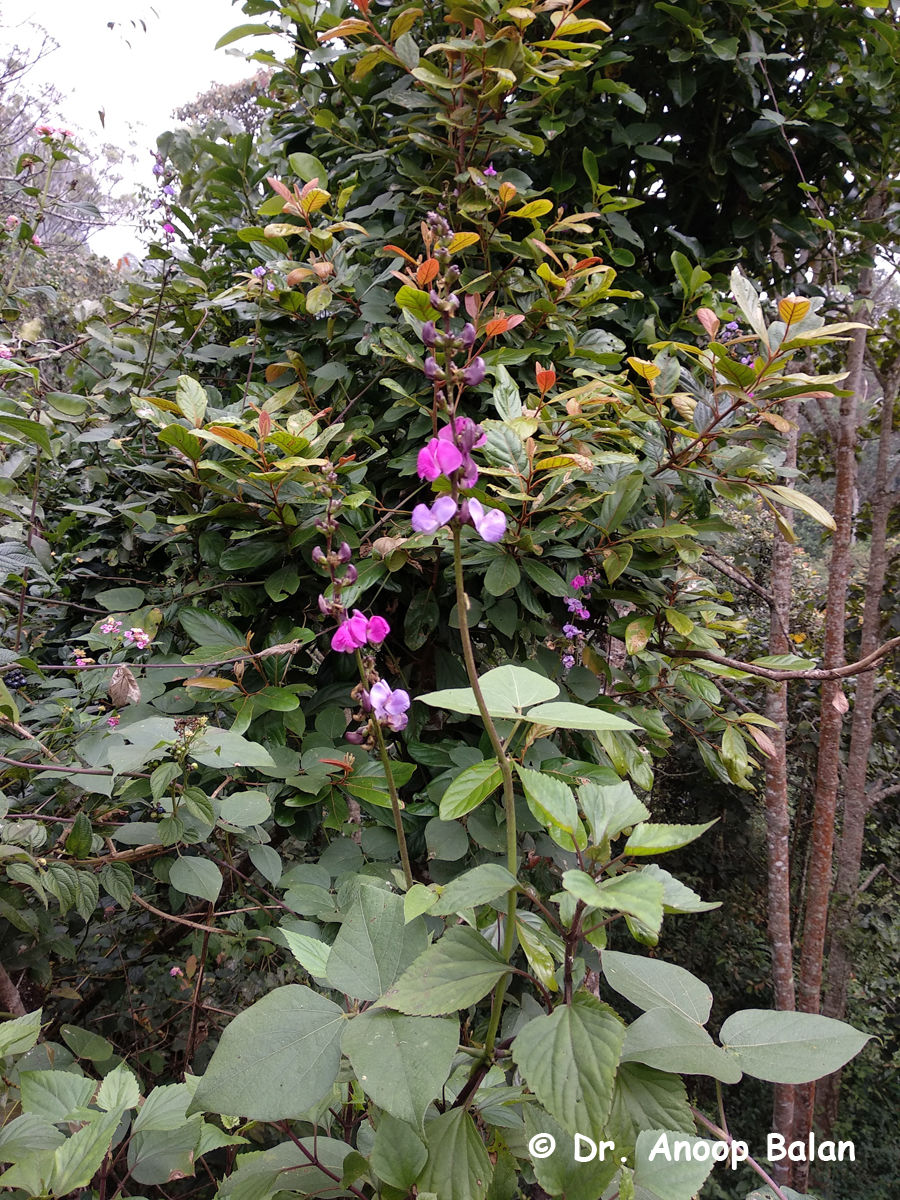
Twining stems, often flushed purple, wrap around available supports and can reach 6 m (20 ft) in a single season. The trifoliate leaves have broad, pointed leaflets, bright green or washed with purple depending on the cultivar. 3 6
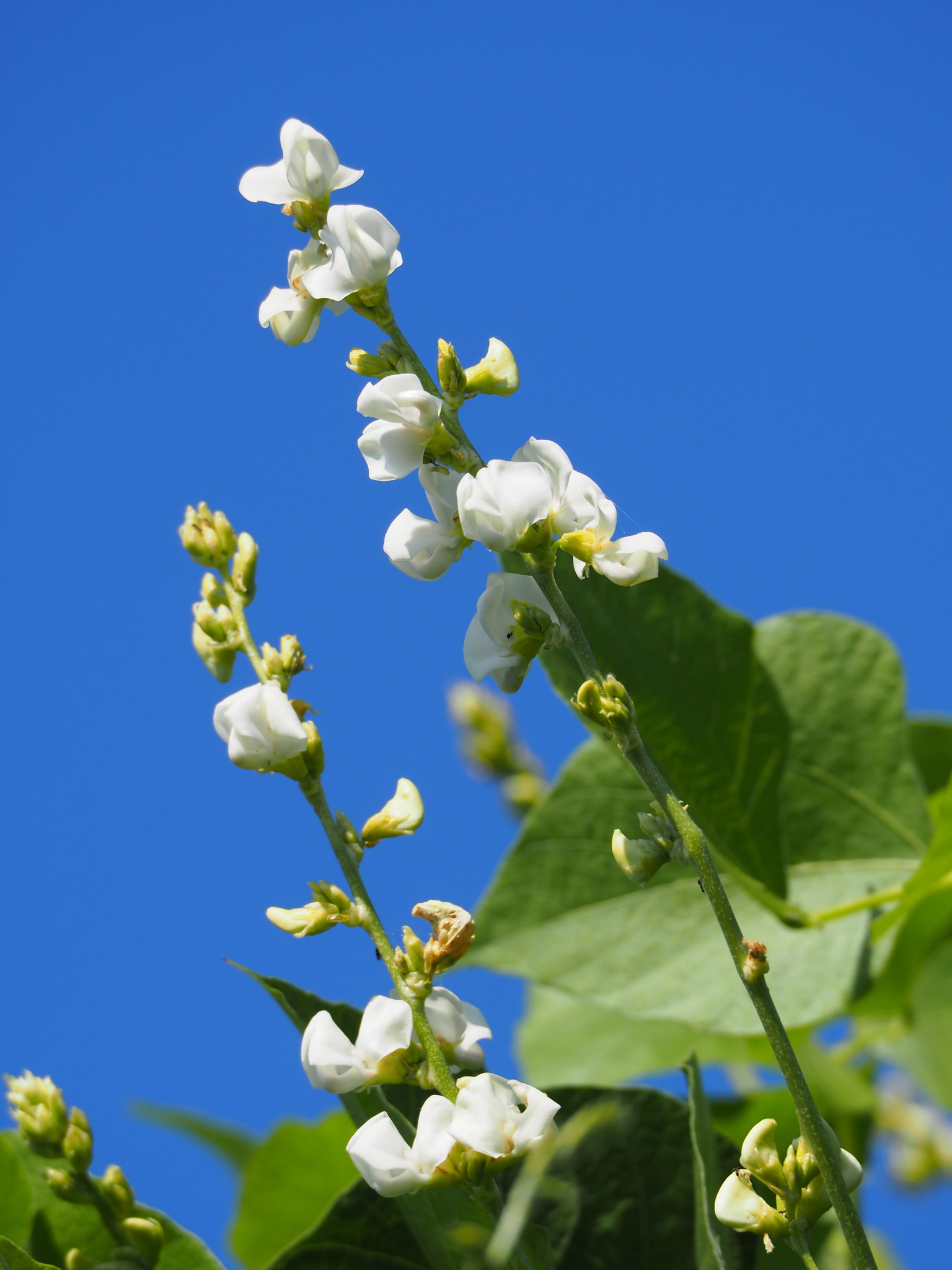
Upright flower clusters range from white through pink to deep purple and have a light fragrance. They develop into flattened green to deep purple pods, a few centimeters long, containing up to four oval seeds with a conspicuous white hilum, or seed scar. 2 3
Below ground, an established plant has a taproot extending deeper than 2 m (6.6 ft). This helps hyacinth bean survive dry spells by reaching water unavailable to shallow roots. 8
Useful taxonomy
Only one species is recognized in the monotypic genus Lablab: Lablab purpureus, although several subspecies and varieties have distinct names. Names encountered in taxonomic accounts include:
- Dolichos lablab L., the basionym under which Linnaeus first described the species;
- Lablab purpureus subsp. bengalensis (Jacq.) Verdc., a subspecific name;
- Lablab purpureus subsp. uncinatus Verdc., the wild form closest to spontaneous African populations;
- Dolichos purpureus L., a historical name.
For identification, the accepted name Lablab purpureus provides the stable reference. Its many synonyms largely reflect the history of a plant long placed in Dolichos, rather than separate botanical species. 1 5
Habitat and range
Sub-Saharan Africa, especially its eastern and southern regions, forms the native range, with populations also attributed to Cape Verde, Madagascar and India. Very ancient domestication makes the origin of some populations, particularly Indian ones, difficult to establish. 1 4
Beyond this range, hyacinth bean is almost always deliberately cultivated, although it sometimes naturalizes on tropical waste ground and roadsides without becoming a serious weed. In Hawaii, for example, it grows outside cultivation without a major documented impact. 3 6
Where winters bring frost, a single night below 0 °C (32 °F) destroys the plant and prevents naturalization in that setting. It therefore grows as a warm-season annual, sown after the last frost and killed by the first cold weather. 2
Life cycle and reproduction
Seeds sown in warmed soil after all frost risk has passed germinate within one to two weeks. Growth is then rapid: the twining stem climbs its support as trifoliate leaves develop, followed by flower clusters whose timing depends strongly on day length. 8 3
Pod maturity takes 70–120 days after sowing, depending on cultivar and climate. Pods are harvested young and tender as a green vegetable, or left to dry on the plant for seed. Agronomic cultivars such as Rongai flower abundantly only when day length falls below a certain threshold; others, including Highworth, were selected to flower early in short growing seasons. 8
Propagation is exclusively by seed. Where soil lacks suitable rhizobia, a specific inoculant markedly improves root nodulation and nitrogen fixation: hyacinth bean does not always associate well with naturally occurring local strains. 8
Uses and risks
Food and forage are its principal uses: green pods are eaten as vegetables, dry seeds supply protein and foliage feeds livestock. Root nodules also fix atmospheric nitrogen, making hyacinth bean an effective green manure; on slopes, its dense foliage helps protect soil against erosion. 3 8
The hazard lies in raw seeds and pods, which contain cyanogenic glycosides capable of releasing substantial amounts of cyanide. Thorough cooking, with several changes of water for dry seeds, destroys these compounds and makes the plant edible for people and livestock. 4 6
As an ornamental, the vine readily climbs pergolas, wire fences and stakes, forming a dense screen of flowers and purple pods in a single season. This role is distinct from its traditional use as a food crop. 2
Varieties, look-alikes and related plants
Rongai is a late forage cultivar with white flowers and pale brown seeds, introduced from Kenya to Australia in 1962 for forage production. Highworth followed from India in 1973 for seed production; it is early and twining, with purple flowers and black seeds bearing a white hilum. The ornamental selection Ruby Moon stands out for its deep purple flowers and pods. 8 2
Other climbing legumes grown for food or ornament are the most frequent look-alikes:
- Vigna unguiculata, cowpea, produces much longer, cylindrical pods than the flattened pods of hyacinth bean;
- Clitoria ternatea, butterfly pea, has bright blue flowers, unlike the white, pink or purple flowers of hyacinth bean;
- Phaseolus vulgaris, common bean, has similar flowers but narrower pods, without the purple coloring seen on hyacinth bean stems and pods.
Flattened pods, a prominent white seed hilum and often purple-tinged stems remain the most useful features for recognizing Lablab purpureus. 3 5
Main sources
- Plants of the World Online / Kew, Lablab purpureus (L.) Sweet
- Royal Horticultural Society, Lablab purpureus - hyacinth bean
- North Carolina State Extension, Lablab purpureus
- Plants For A Future, Lablab purpureus
- USDA PLANTS Database, Lablab purpureus (L.) Sweet
- Useful Tropical Plants Database, Lablab purpureus
- INPN / MNHN, Lablab purpureus (L.) Sweet, 1826
- Tropical Forages, Lablab purpureus cultivar comparison
Frequently asked questions
Is hyacinth bean toxic?
Raw seeds and pods contain cyanogenic glycosides that release cyanide when consumed in large amounts. Thorough cooking, with several changes of water for dry seeds, destroys these compounds and makes the plant edible.
Do hyacinth bean seeds need thorough cooking?
Yes. Uncooked dry seeds contain the highest concentration of cyanogenic compounds in the plant. Prolonged soaking followed by thorough cooking is essential before consumption by people or livestock.
How do Rongai and Highworth differ?
Rongai is a late cultivar with white flowers and an upright habit, selected in Kenya for high forage yields. Highworth is early and twining, with purple flowers and black seeds, selected in southern India for seed production where frost arrives early.
Does hyacinth bean tolerate drought?
Yes, once established. Its deep taproot can extend beyond 2 m (6.6 ft), allowing it to draw water from well below the surface and withstand pronounced dry seasons.
When should hyacinth bean be sown in temperate climates?
Sow directly after all risk of frost has passed, when the soil exceeds 15 °C (59 °F), often in May in temperate Northern Hemisphere regions. The plant is frost-tender, so sowing too early exposes seedlings to potentially fatal cold.
Which plants resemble hyacinth bean?
Other climbing legumes are the most frequent look-alikes, including cowpea with its elongated pods and butterfly pea with its bright blue flowers. The flattened pod and prominent white seed hilum remain useful identifying features.
Where does hyacinth bean come from?
Its native range lies in sub-Saharan Africa, mainly in the east and south, with populations also attributed to Cape Verde, Madagascar and India. Cultivation later spread the plant throughout tropical and subtropical regions.
Similar plants

If you are unsure about a plant’s toxicity, ask a botanist or veterinarian for advice.