
Henna (Lawsonia inermis, )
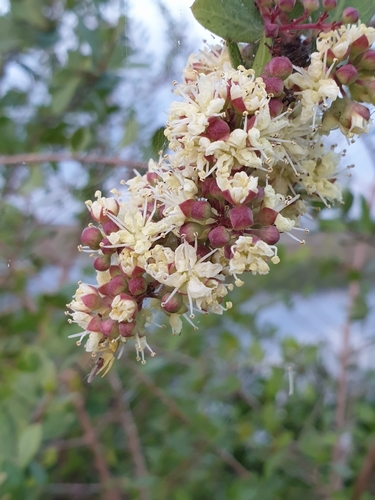

Henna (Lawsonia inermis L.) is a shrub in the Lythraceae, the sole species of Lawsonia, native to northeastern tropical Africa, the Arabian Peninsula and the Indian subcontinent. Cultivated for millennia for the orange pigment in its leaves, it has small opposite elliptical leaves, fragrant flower panicles and round brown capsules.
Read moreHenna, Henna tree, Mignonette tree, Egyptian privet and Mehndi


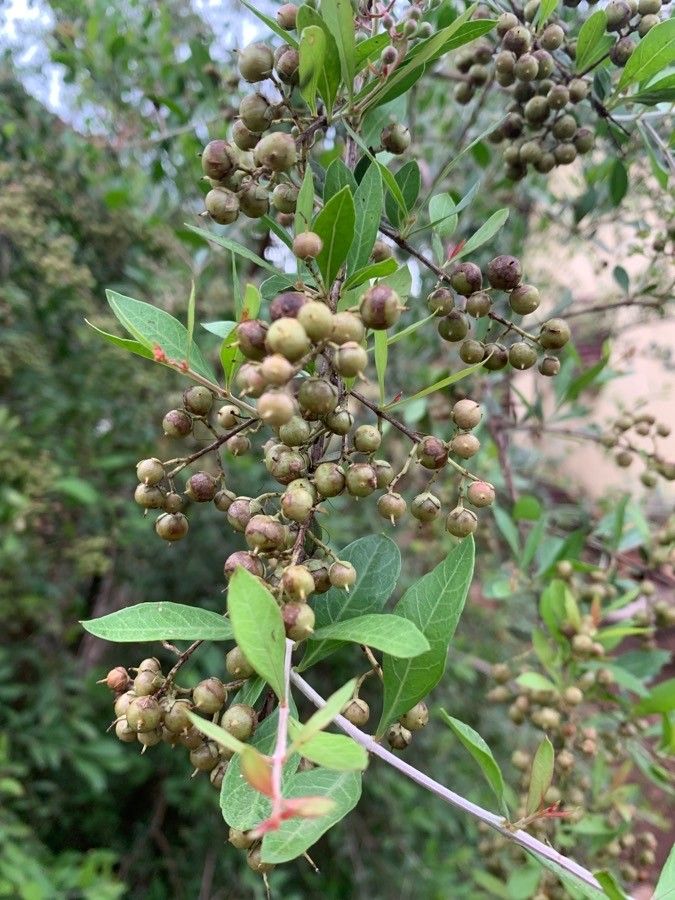
© photo
(c) Aravinth, some rights reserved (CC BY), uploaded by Aravinth · cc-by
Wikimedia Commons · CC BY-SA or Public Domain
Wikipedia · CC BY-SA
Taken Oct 28, 2014 by Tela Botanica − S. Paulin KOURA (cc-by-sa)
Taken May 8, 2014 by Tela Botanica − Sénégal ENGOUEMENT (cc-by-sa)
Taken May 6, 2014 by Tela Botanica − Sénégal ENGOUEMENT (cc-by-sa)
© copyright of the Board of Trustees of the Royal Botanic Gardens, Kew.




Global distribution
The native range of Lawsonia inermis extends from northeastern tropical Africa through the Arabian Peninsula to southern Pakistan and India. Cultivation since antiquity has led to naturalization much farther afield, notably in North Africa and northern Australia; native, cultivated and naturalized populations should remain distinct.
- Native5
- Introduced2
- Sudan
- Yemen
- Saudi Arabia
- Pakistan
- India
- Morocco
- Northern Australia
Hexagons: regions where the plant occurs. Green dots: native range.1
Identity
Henna (Lawsonia inermis L., 1753), also called the henna tree, mignonette tree or Egyptian privet, is a shrub in the Lythraceae and the only recognized species of Lawsonia. Mehndi is another established name associated with the plant. 1 6
Two different histories lie behind the scientific name. Lawsonia honors Isaac Lawson, a Scottish army physician who helped fund Linnaeus's Systema Naturae. The epithet inermis, meaning unarmed, distinguishes the smooth branches of cultivated forms from thorny branches seen in wild plants. 2
English henna and French henné both derive from Arabic hinna'. The Song of Songs mentions the plant as camphire, a textual record of dye use stretching back millennia. Dried and ground leaves have long colored skin, hair, nails and textiles. 7
Recognition
Much-branched and sometimes trained as a small tree, Lawsonia inermis usually reaches 2–6 m (6.5–20 ft). Older specimens in favorable climates have been reported at 7 m (23 ft). 3 2
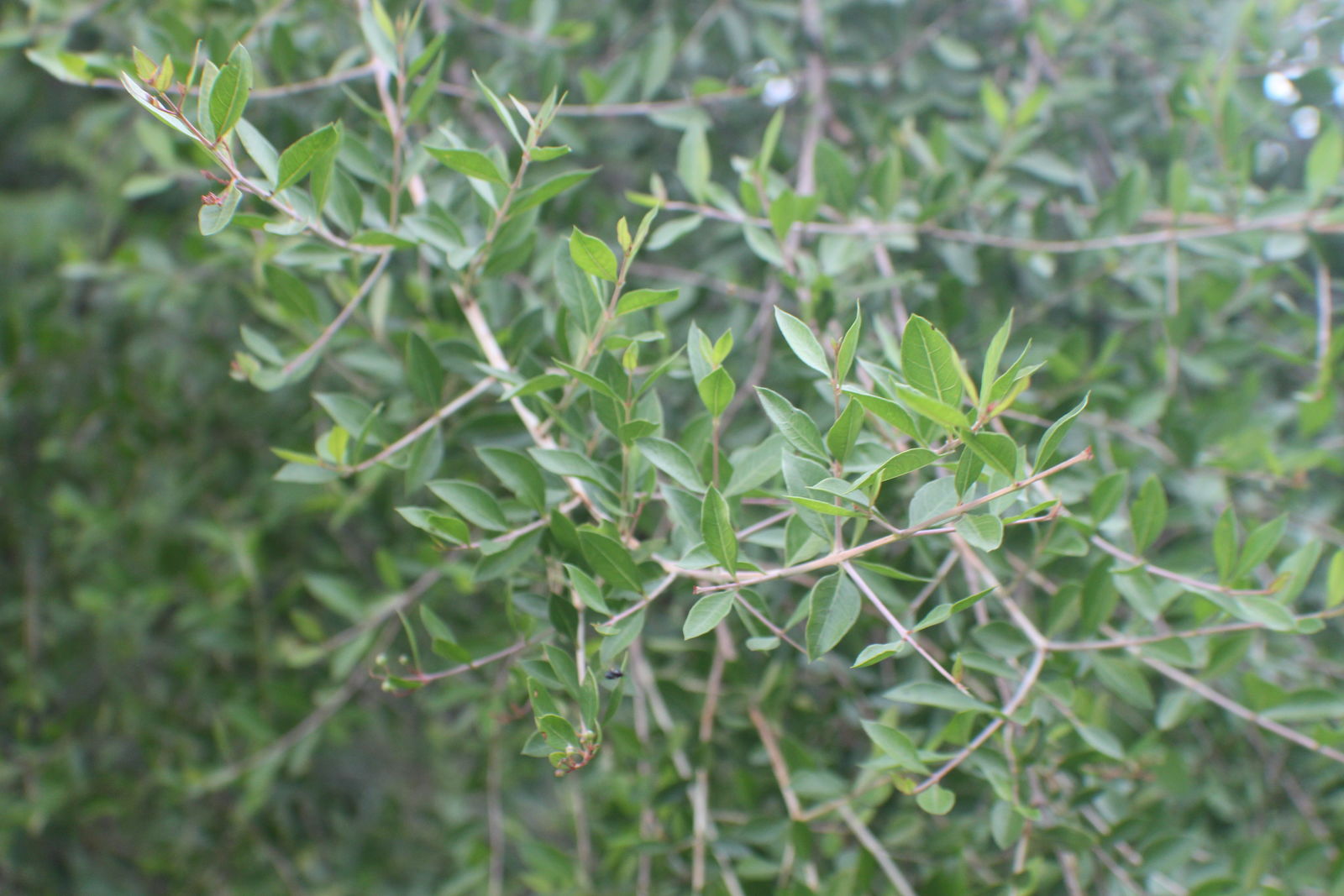
Green, angular young shoots turn gray with age and sometimes end in short spines. This feature once supported a distinction between thorny and unarmed forms. The opposite leaves are elliptical to lance-shaped, unlobed and hairless, measuring 1.5–5 cm (0.6–2 in) long. Their small size helps separate henna from neighboring shrubs with broader foliage. 5 3
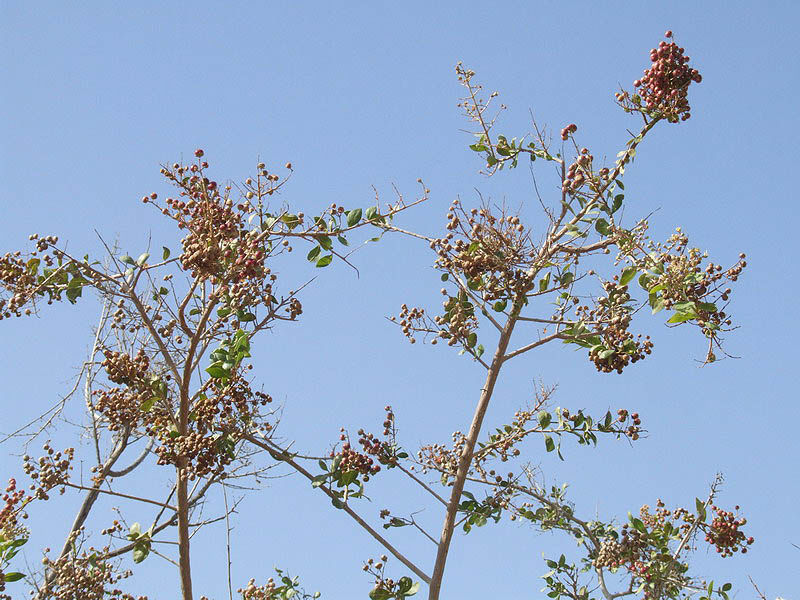
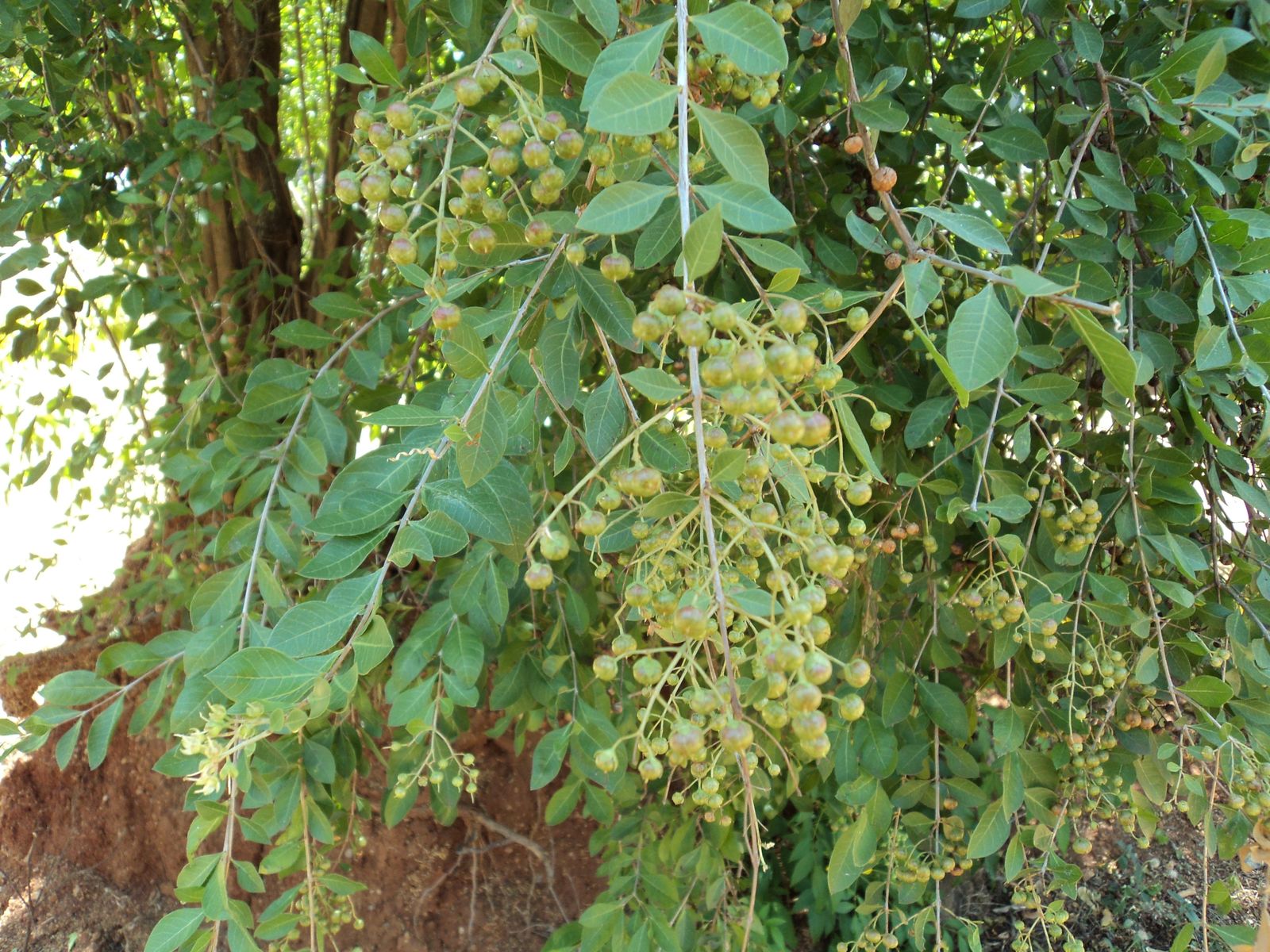
White, pink or red flowers, depending on the population, measure barely 1 cm (0.4 in) across but gather by the hundreds in broad, strongly fragrant terminal panicles. Round brown capsules, 4–8 mm (0.16–0.3 in) across, follow; they split into four sections at maturity to release many angular seeds. 5
Useful taxonomy
A monotypic genus, Lawsonia has only one recognized species, Lawsonia inermis. This simplifies botanical identification, while leaving commercial products as the main source of confusion. Two historical synonyms are especially relevant:
- Lawsonia spinosa L., a name for thorny wild forms before their inclusion in L. inermis;
- Lawsonia alba Lam., an old name retained in some older biblical translations referring to camphire in the Song of Songs.
POWO accepts Lawsonia inermis L. Using that name helps distinguish the plant from products sold as neutral henna or black henna, neither of which describes a recognized botanical variety. 1 6
Habitat and range
Northeastern tropical Africa, the Arabian Peninsula, southern Pakistan and India form the native range recorded for henna. 1
Full sun in dry savannas, coastal scrub and seasonal watercourses suits this shrub. It tolerates poor, sandy or calcareous soils better than many ornamental shrubs. 2 3
Centuries of cultivation since antiquity have spread henna well beyond its original range. It has naturalized in North Africa and northern Australia, where self-sustaining populations occur outside cultivated plots. Sojat, in Rajasthan, concentrates much of India's henna production and has a protected geographical indication associated with the lawsone content of its leaves. 2
Life cycle and reproduction
Seed sowing in warm potting mix at 25–30 °C (77–86 °F) is the main propagation method, alongside semi-ripe stem cuttings in warm weather. Germination takes two to four weeks, and growth is slow during the first year. 3
Leaf harvesting can begin in the first year under good conditions, but full production takes two to three years, once the branching framework is established. Leaves are cut, shade-dried and ground into a green powder, which forms henna paste when mixed with an acidic liquid. 7
In temperate climates under cover, flowering occurs mainly in late summer. Continuously tropical conditions may allow several flowering periods in one year. 3
Uses and risks
Body and hair dyeing are henna's foremost uses. Its pigment, lawsone (2-hydroxy-1,4-naphthoquinone), binds to keratin in skin, hair and nails, producing a reddish-brown stain that lasts one to three weeks depending on the area treated. 7
Pure henna applied to healthy skin is considered non-toxic to humans and domestic animals in the cited account. The documented risk concerns black henna, sold for darker, faster temporary tattoos and mixed with paraphenylenediamine (PPD). This powerful allergen can cause severe contact dermatitis one to two weeks after a first exposure. 8
Beyond cosmetic dyeing, traditional uses include a mild skin antiseptic and a dye for wool, silk and leather. These practices are recorded from ancient Egypt through traditions of the Indian subcontinent. 7
Varieties, look-alikes and related plants
Commercial variation in Lawsonia inermis mainly reflects geographic origin and lawsone content, rather than widely recognized stable horticultural cultivars. Sojat henna, valued for pigment concentration, and Yemeni henna, prized for a darker shade, are origin designations rather than separate taxa. 2
Powder sold as neutral henna is a frequent commercial source of confusion. It generally contains no lawsone and comes from a completely different botanical genus; the misleading name concerns the product rather than a living henna plant. 7
With no other wild species in its monotypic genus, Lawsonia inermis presents little within-genus confusion. It shares the Lythraceae with plants of very different habit and flowers, such as crape myrtles and loosestrifes. The accepted scientific name remains the clearest way to distinguish the living plant from cosmetics sold under trade names. 6
Main sources
- Plants of the World Online / Kew, Lawsonia inermis L.
- Missouri Botanical Garden, Plant Finder — Lawsonia inermis
- Plants For A Future (PFAF), Lawsonia inermis
- INPN / MNHN, Lawsonia inermis L., 1753
- USDA ARS GRIN Global, Lawsonia inermis - taxonomy detail
- ITIS, Lawsonia inermis L. (TSN 503345)
- Wikipedia, Lawsone (2-hydroxy-1,4-naphthoquinone)
- DermNet NZ, Black henna tattoo reaction
Frequently asked questions
Is henna toxic to pets?
No. Lawsonia inermis is considered non-toxic to cats, dogs and humans. The documented risk concerns black henna with added chemicals, rather than the raw leaf.
Is black henna dangerous?
Black henna sold for temporary tattoos often contains paraphenylenediamine (PPD), a powerful allergen that can cause severe contact dermatitis one to two weeks after application.
Can henna grow in cool climates?
In most cool regions, including mainland France, it needs a container or greenhouse. Temperatures below 5 °C (41 °F) are a concern, and it needs full sun and warmth to grow and flower well.
Where does the name henna come from?
It comes from the Arabic hinna', which also gave rise to the French henné. The plant appears in the Song of Songs under the old name camphire.
Are there several botanical varieties of henna?
No. Lawsonia is a monotypic genus with Lawsonia inermis as its only species. Names such as Sojat henna and Yemeni henna describe geographic origins, rather than distinct botanical varieties.
How does henna produce its color?
Lawsone, the pigment in dried, ground leaves, binds to keratin in skin, hair and nails to produce a reddish-brown stain lasting one to three weeks.
Similar plants
If you are unsure about a plant’s toxicity, ask a botanist or veterinarian for advice.