
Myrtle (Myrtus communis, )
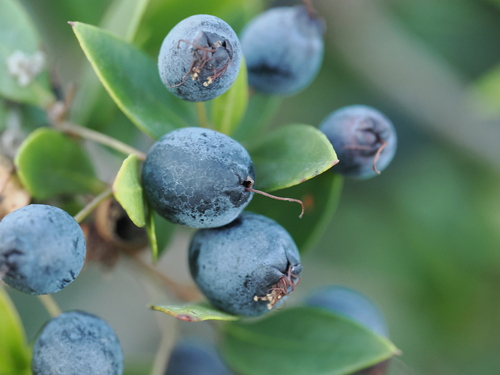
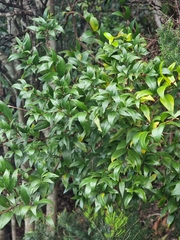
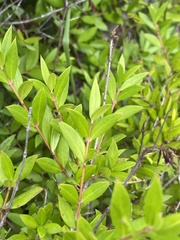
Myrtle (Myrtus communis L., 1753) is an evergreen shrub or small tree in the Myrtaceae family, native from the Mediterranean Basin to Pakistan according to POWO/WCVP. Grown for aromatic leaves and white flowers, it produces edible blue-black berries. Available information classifies it as non-toxic to humans and domestic animals.
Read moreMyrtle, Common myrtle and Mirto
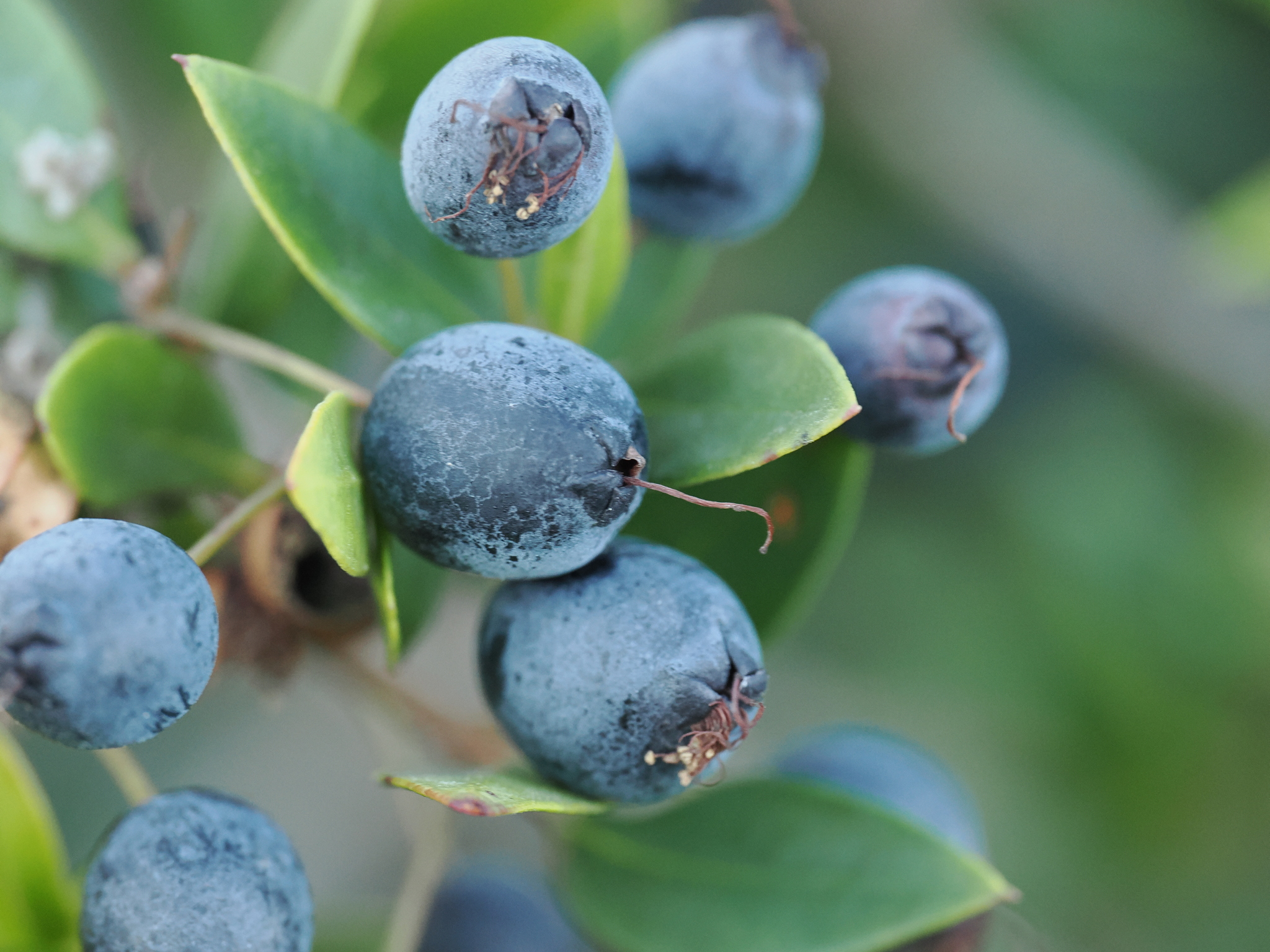


© photo
(c) Daniel Macías Gómez, some rights reserved (CC BY), uploaded by Daniel Macías Gómez · cc-by
Vítor Jorge · cc-by
Thomas Dreux · cc-by
Taken Sep 13, 2014 by Tela Botanica − Esra Gauthier (cc-by-sa)
Taken May 25, 2014 by Tela Botanica − Marie-France PETIBON (cc-by-sa)
Taken Oct 31, 2016 by Yoan MARTIN (cc-by-sa)
Taken Dec 1, 2022 by Stéphane Adamowicz (cc-by-sa)
Taken Sep 9, 2021 by Irmgard Groß (cc-by-sa)
© copyright of the Board of Trustees of the Royal Botanic Gardens, Kew.




Global distribution
Myrtus communis is native from Macaronesia and Portugal through the Mediterranean Basin, North Africa and western Asia to Pakistan. In France it grows wild in coastal maquis and garrigue in Provence and Corsica; elsewhere it is mainly cultivated as an ornamental, with no invasive status recorded.
- Native8
- Introduced2
- Portugal
- Spain
- France (Provence, Corsica)
- Italy
- Greece
- Morocco
- Turkey
- Pakistan
- United States (California)
- South Africa
Hexagons: regions where the plant occurs. Green dots: native range.1
Identity
Myrtle (Myrtus communis L., 1753), also called common myrtle, is an evergreen shrub or small tree of the genus Myrtus, native from the Mediterranean Basin to Pakistan. Crushing a leaf immediately releases a clear fragrance from tiny essential-oil glands within the blade. This distinguishes it at first touch from nearby shrubs with glossy but scentless leaves. 1 2
Regional French names reflect two distinct uses. Myrte juif recalls its role as hadas, one of the four ritual species for the Jewish festival of Sukkot; herbe du lagui is a Provençal vernacular name still used by southern French nurseries alongside the botanical name. 7 8
Recognition
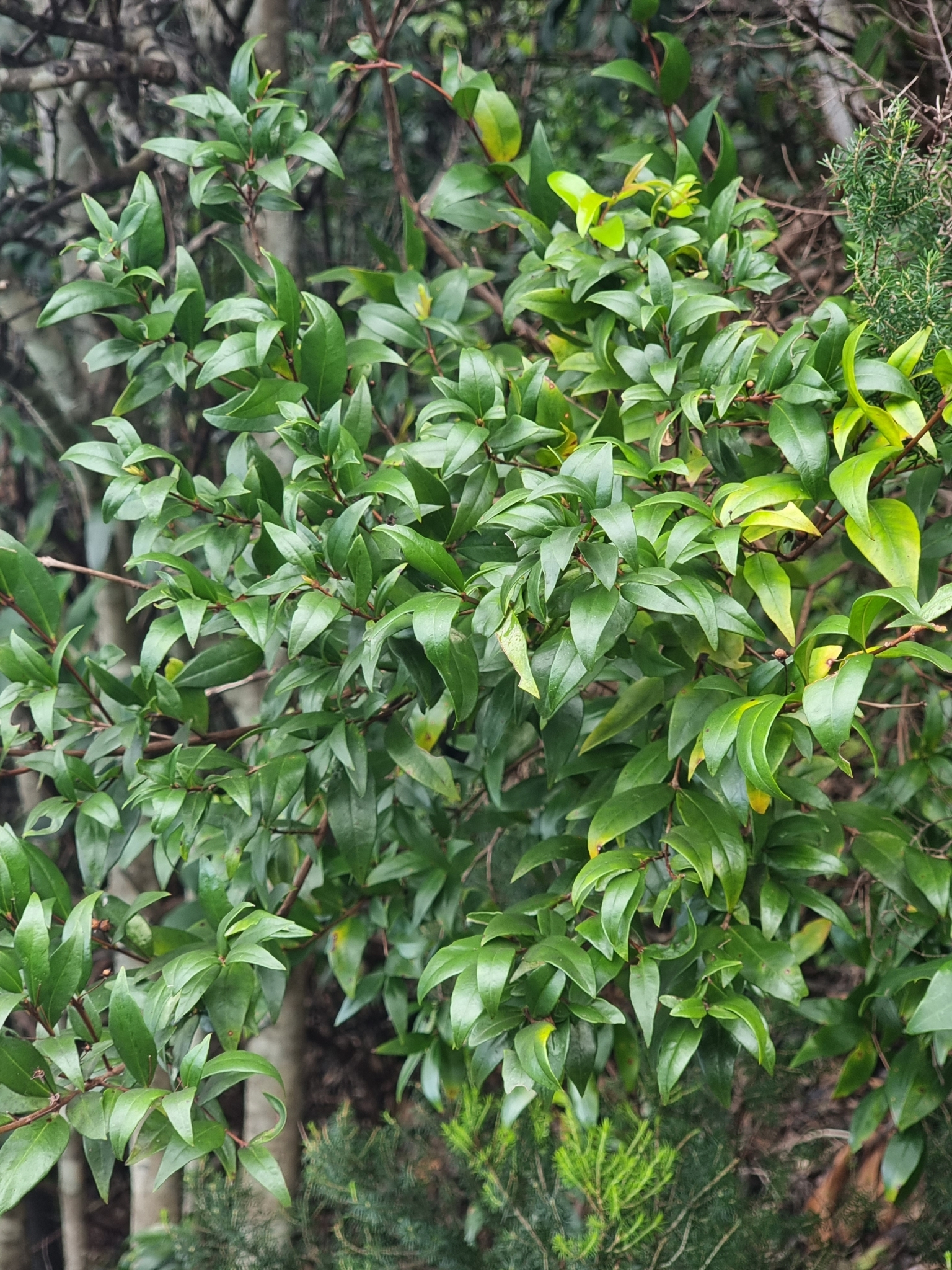
An upright young bush becomes broader with age, forming a dense crown. Myrtus communis can reach 5 m (16 ft) in the wild but rarely exceeds 2–3 m (6.5–10 ft) in gardens. Its opposite, oval to lance-shaped leaves are 2–5 cm (0.8–2 in) long, glossy dark green, with translucent glands that release a distinct fragrance when crushed. 3 2
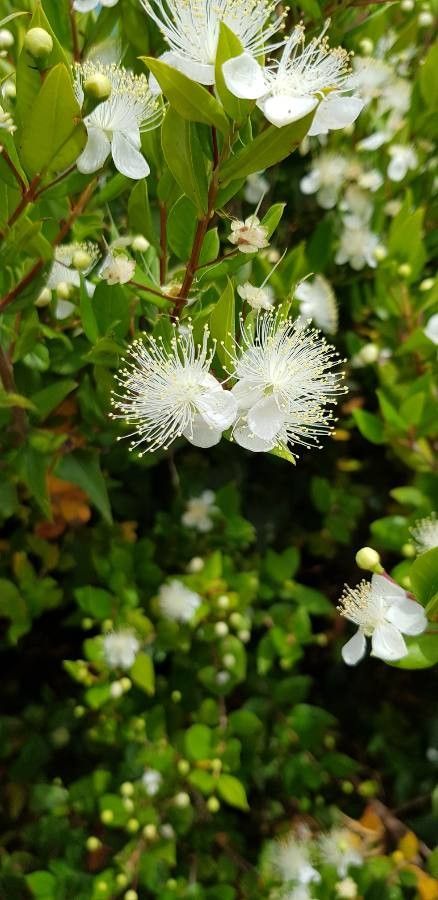
Solitary flowers in the leaf axils have five white petals surrounding numerous yellow stamens and measure about 2 cm (0.8 in) across. Spring-to-summer flowering, depending on climate, is followed by fleshy blue-black to purple-black berries 8–12 mm long, sometimes white in certain forms. 3 4
Useful taxonomy
Two recognized subspecies divide the species: Myrtus communis subsp. communis, the more widespread form, and Myrtus communis subsp. tarentina (L.) Nyman. The latter is a more compact Mediterranean form with smaller leaves and often white berries, sold as Tarentum myrtle. Its distinctly smaller leaves identify it in the field more quickly than berry color. 1
Synonyms mainly comprise former varieties now included within the typical species:
- Myrtus communis var. italica L. (historical synonym)
- Myrtus communis var. baetica L. (historical synonym)
- Myrtus communis var. leucocarpa DC. (historical synonym)
- Myrtus communis var. angustifolia L. (historical synonym)
These names persist on old horticultural labels and describe local variations in foliage or fruiting rather than distinct taxa. The accepted binomial Myrtus communis remains the reliable reference. 1
Habitat and range
From Macaronesia and Portugal, the native range runs through the Mediterranean Basin, North Africa and western Asia to Pakistan. 1 In France, it grows wild in coastal maquis and garrigue in Provence and Corsica, generally below 400 m (1,300 ft). 7
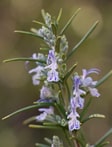
Poor, sandy or stony soil suits myrtle if drainage is good; salt-spray tolerance also makes it useful in coastal gardens. Permanently waterlogged soil instead encourages root rot, the leading cause of decline observed in the ground. Once established, myrtle becomes markedly tolerant of summer drought and grows readily alongside rosemary and lavender, fellow Mediterranean scrub shrubs. 2 5
Birds readily eat ripe berries and disperse the seeds through the maquis. 3 The IUCN assesses Myrtus communis as Least Concern, with a population considered stable throughout its broad Mediterranean and Macaronesian range. 6
Life cycle and reproduction
Bees provide most pollination for flowers borne on the current year’s wood. Abundant fruiting follows several long, hot summers, which limits berry production in cool temperate climates. 3 2
About three months of cold stratification allows seeds to germinate; without this chilling, emergence is rare or absent, explaining many failures with home sowing. Late-summer semi-ripe cuttings from the current year’s wood faithfully reproduce a cultivar such as ‘Compacta’, while genetically variable seedlings may not. 5
Well-established myrtle often lives for several decades, with no pronounced winter rest because it remains evergreen year-round. After a scrubland fire, vigorous regrowth from the base helps explain its persistence in Mediterranean habitats that burn repeatedly. 3
Uses and risks
Fresh or dried ripe berries traditionally replace pepper in several Mediterranean cuisines. They also flavor mirto, a macerated liqueur typical of Sardinia and Corsica. Dried, crushed aromatic leaves season roast meats, an old Sardinian practice that continues today. 5
Essential oil rich in cineole and myrtenol is used in perfumery and traditional respiratory preparations; dried wood also yields good-quality charcoal. Available information classifies myrtle as non-toxic to cats, dogs and humans, although its status in horses remains poorly documented. 5
Ancient Greeks dedicated myrtle to Aphrodite, and Romans to Venus. It crowned newlyweds and victors in peaceful contests, distinct from laurel wreaths reserved for military achievements. Myrtle bridal wreaths remained a tradition extending to British royal weddings. 8
Varieties, look-alikes and related plants
Subspecies tarentina has given rise to ‘Compacta’, with a low habit and small leaves, and various ‘Variegata’ forms with white- or cream-variegated foliage. These selections do not alter the biology of the typical species. Both the typical species and subspecies tarentina hold the RHS Award of Garden Merit for garden performance. 2
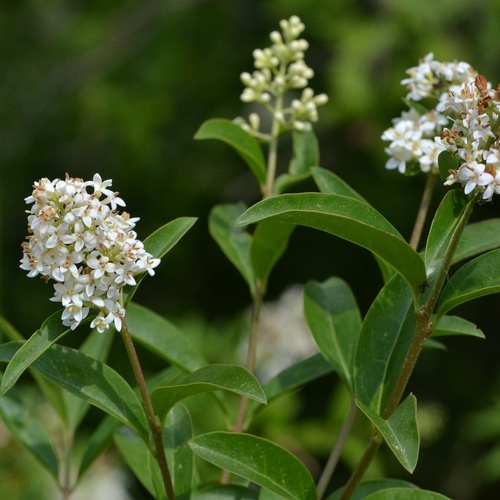
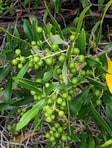
Glossy evergreen Mediterranean shrubs, including privet (Ligustrum spp.) and some Pittosporum, can resemble myrtle in the field. Crushing a leaf provides the quickest distinction: myrtle releases a clear essential-oil fragrance, while privet and Pittosporum remain scentless when crushed. 3
Main sources
- Plants of the World Online / Kew, Myrtus communis L.
- Royal Horticultural Society, Myrtus communis
- NC State Extension, Myrtus communis (Common Myrtle) Plant Toolbox
- Missouri Botanical Garden Plant Finder, Myrtus communis
- Plants For A Future, Myrtus communis
- IUCN Red List, Myrtus communis assessment
- INPN / MNHN, Myrtus communis L., 1753 (cd_nom 109186)
- Smithsonian Libraries and Archives, Myrtle, the provenance and meaning of a plant
Frequently asked questions
Is myrtle toxic to cats and dogs?
Available information classifies Myrtus communis as non-toxic to cats, dogs and humans. Its status in horses remains poorly documented because specific published information is lacking.
Can you eat myrtle berries?
Yes. Ripe berries are edible and traditionally used as a spice or in liqueurs such as Sardinian and Corsican mirto. Unripe berries are more astringent and less pleasant to eat.
Can myrtle survive frost?
Myrtle tolerates brief frosts down to about −10 °C (14 °F), roughly corresponding to USDA zones 8–11. More severe or prolonged freezing damages leaves and potentially the wood.
How does common myrtle differ from Tarentum myrtle?
Tarentum myrtle is Myrtus communis subsp. tarentina, a naturally more compact form with small leaves and often white berries. It is a subspecies recognized by POWO/WCVP rather than a separate species.
Does myrtle grow wild in France?
Yes. Myrtus communis occurs naturally in coastal maquis and garrigue in Provence and Corsica, generally below about 400 m (1,300 ft), alongside rosemary and lavender.
What is the easiest way to propagate myrtle?
Late-summer semi-ripe cuttings from the current year’s wood give the best results and preserve the parent plant’s traits. Seeds require about three months of cold stratification before germination.
Why is my myrtle not flowering?
The most common causes are too little sun, pruning at the wrong time or summers too cool for the growing region. Full sun and pruning just after the previous flowering resolve most cases.
Similar plants

If you are unsure about a plant’s toxicity, ask a botanist or veterinarian for advice.