
Thatch screwpine (Pandanus tectorius, )
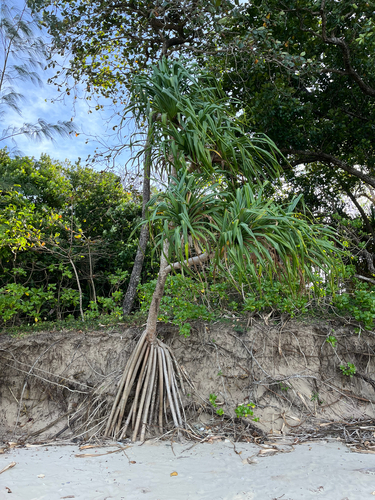
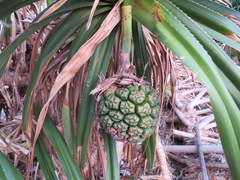
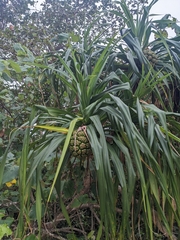
Thatch screwpine (Pandanus tectorius) is a small dioecious tree in the Pandanaceae, native to tropical shores of island Southeast Asia, Papuasia, eastern Australia and the Pacific. Strong aerial prop roots anchor dense stands behind beaches. Its pineapple-like compound fruit is a traditional Pacific food, while long, strap-shaped leaves supply Polynesian weaving, including Hawaiian lau hala.
Read moreThatch screwpine, Pandanus, Vacoa, Hala tree, Hala and Tahitian screwpine
Allow a few hours of direct sun per day, preferably morning or evening.
Full sun; tolerates light shade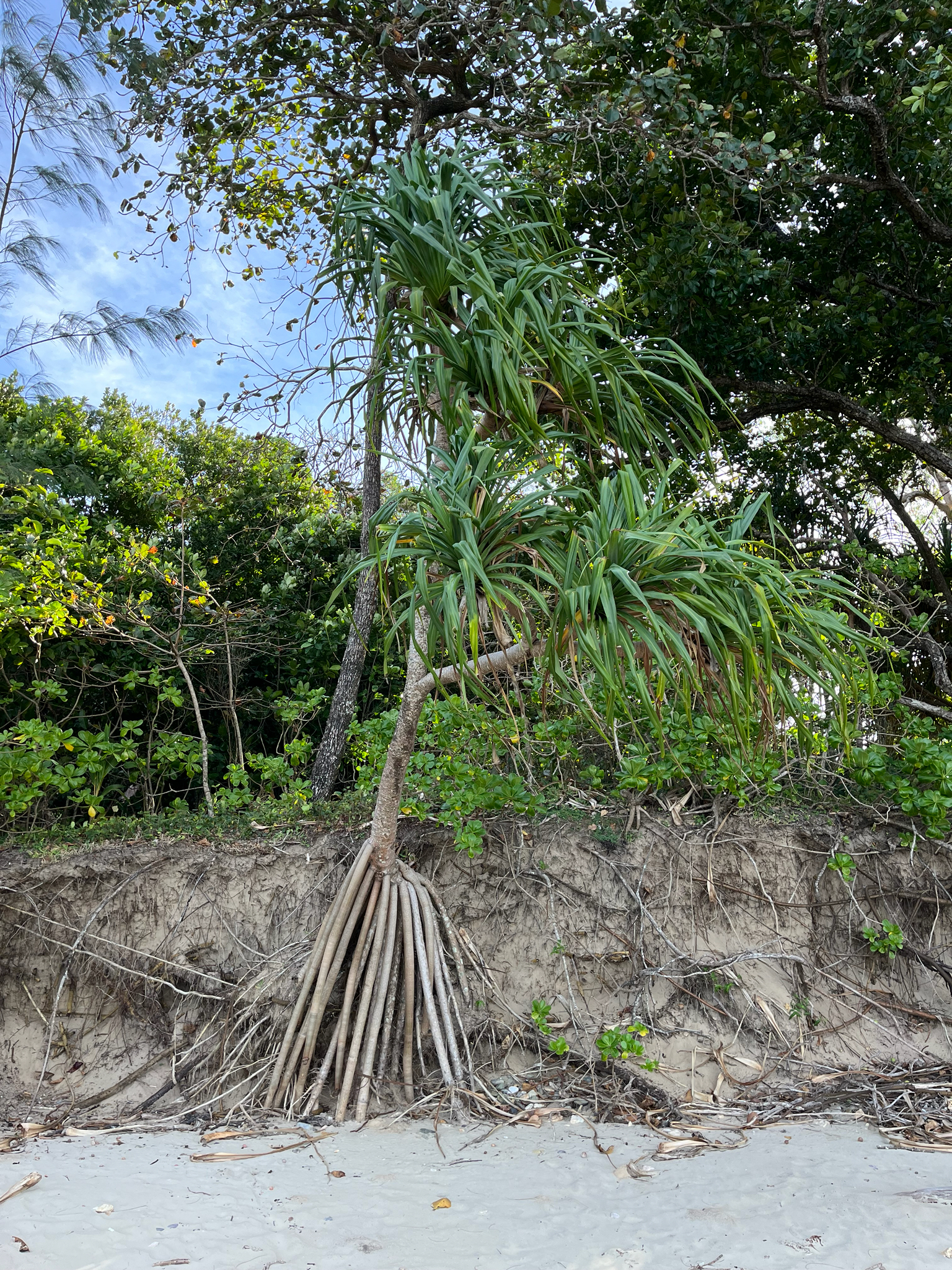


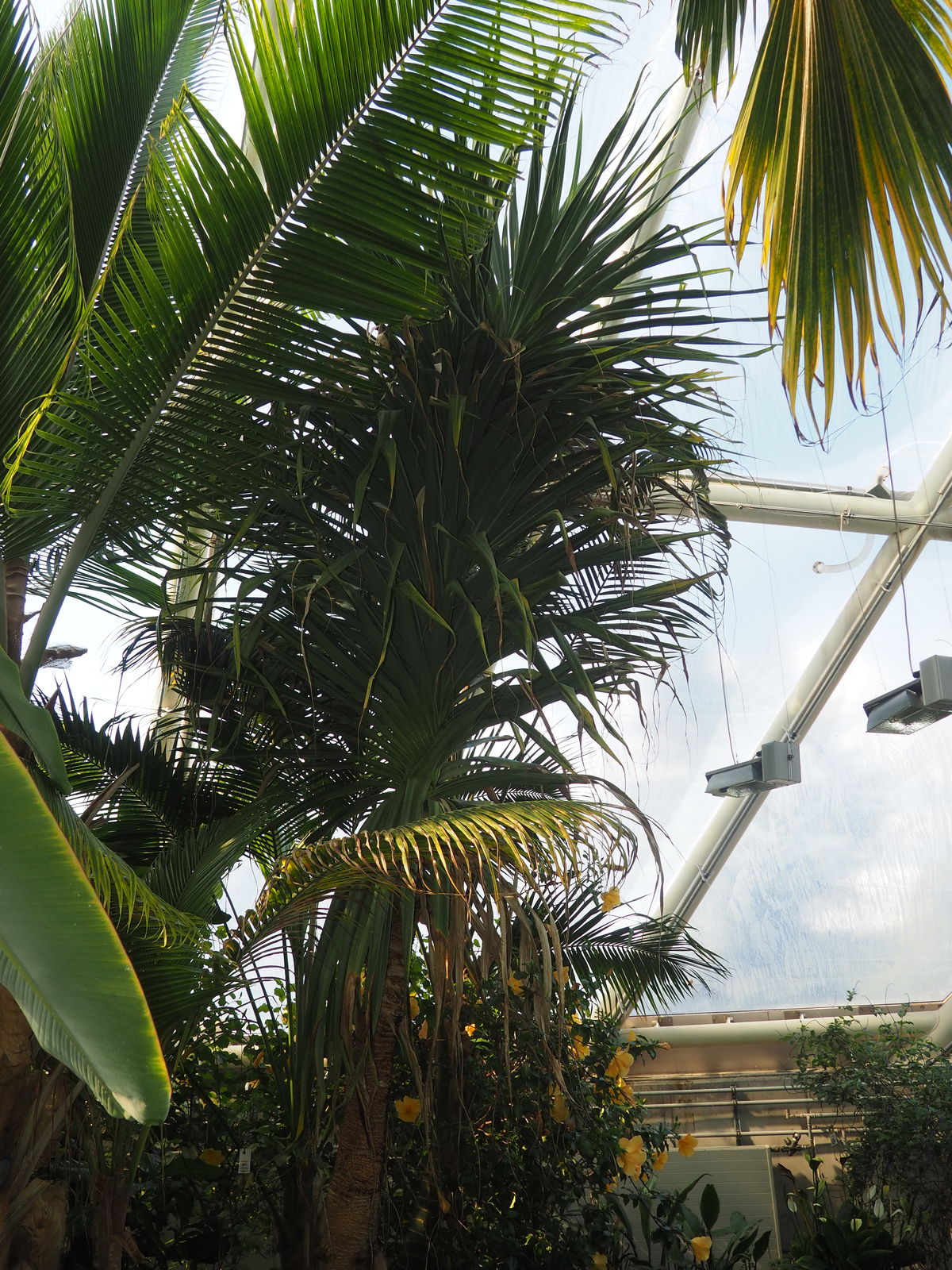
© photo
Brecht Verstraete · cc0
Marco Mussita · cc-by-nc
Matthew Borella · cc-by
Taken Apr 21, 2022 by Daniel Barthelemy (cc-by-sa)
Taken Mar 9, 2013 by Daniel Barthelemy (cc-by-nc)
Taken Dec 19, 2019 by Pierre Bonnet (cc-by-sa)
Taken Mar 13, 2020 by Wellington Well (cc-by-sa)
© copyright of the Board of Trustees of the Royal Botanic Gardens, Kew.




Global distribution
Pandanus tectorius is native to island Southeast Asia, Papuasia, eastern Australia and much of the Pacific. Cultivated for fruit and leaves since the earliest Polynesian migrations, it was later carried well beyond its original range, blurring the boundary between native populations and human introductions in some places.
- Native7
- Introduced1
- Philippines
- Indonesia
- Papua New Guinea
- Australia
- Fiji
- Hawaii
- New Caledonia
- Kiribati
Hexagons: regions where the plant occurs. Green dots: native range.1
Identity
Thatch screwpine (Pandanus tectorius Parkinson, 1773), also called vacoa or hala, is a small dioecious tree in Pandanus, family Pandanaceae. Aerial prop roots become visible in the first years of growth, anchoring it in sand. Their massive size helps distinguish it from other screwpines sold as houseplants. Sydney Parkinson, the natural-history artist aboard James Cook’s Endeavour, supplied the botanical description. He died at sea in 1771; his plates and notes appeared posthumously in 1773. 1 3
Across the Indian Ocean and Pacific, the French common name vacoa broadly denotes cultivated spiny-leaved Pandanus. It does not always distinguish this species from relatives such as Pandanus utilis, sold under the same generic label. Hawaiian hala is more precise, referring to this species and its edible fruit. 2
Recognition
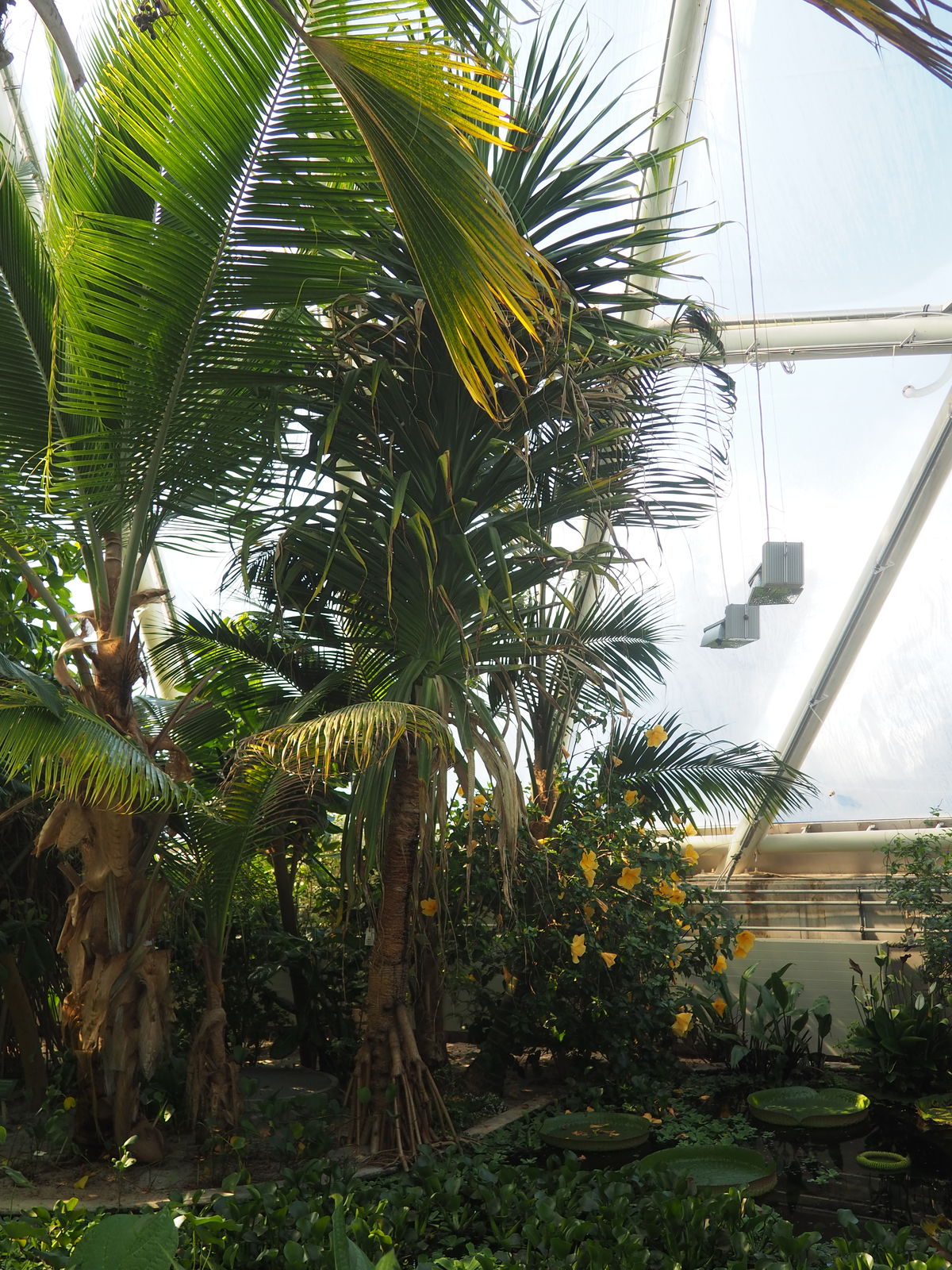
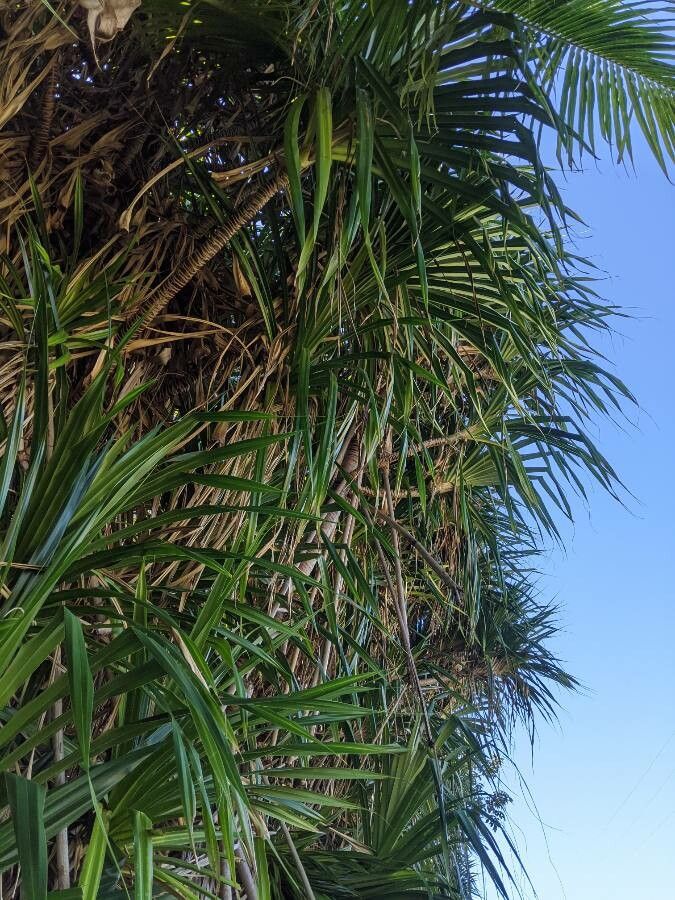
Branching trunks usually carry this small tree to 3–7 m (10–23 ft), though exceptional specimens reach 14 m (46 ft). The often forked trunk rests on strong aerial prop roots that descend obliquely into sand and stabilize the tree on loose ground. 7
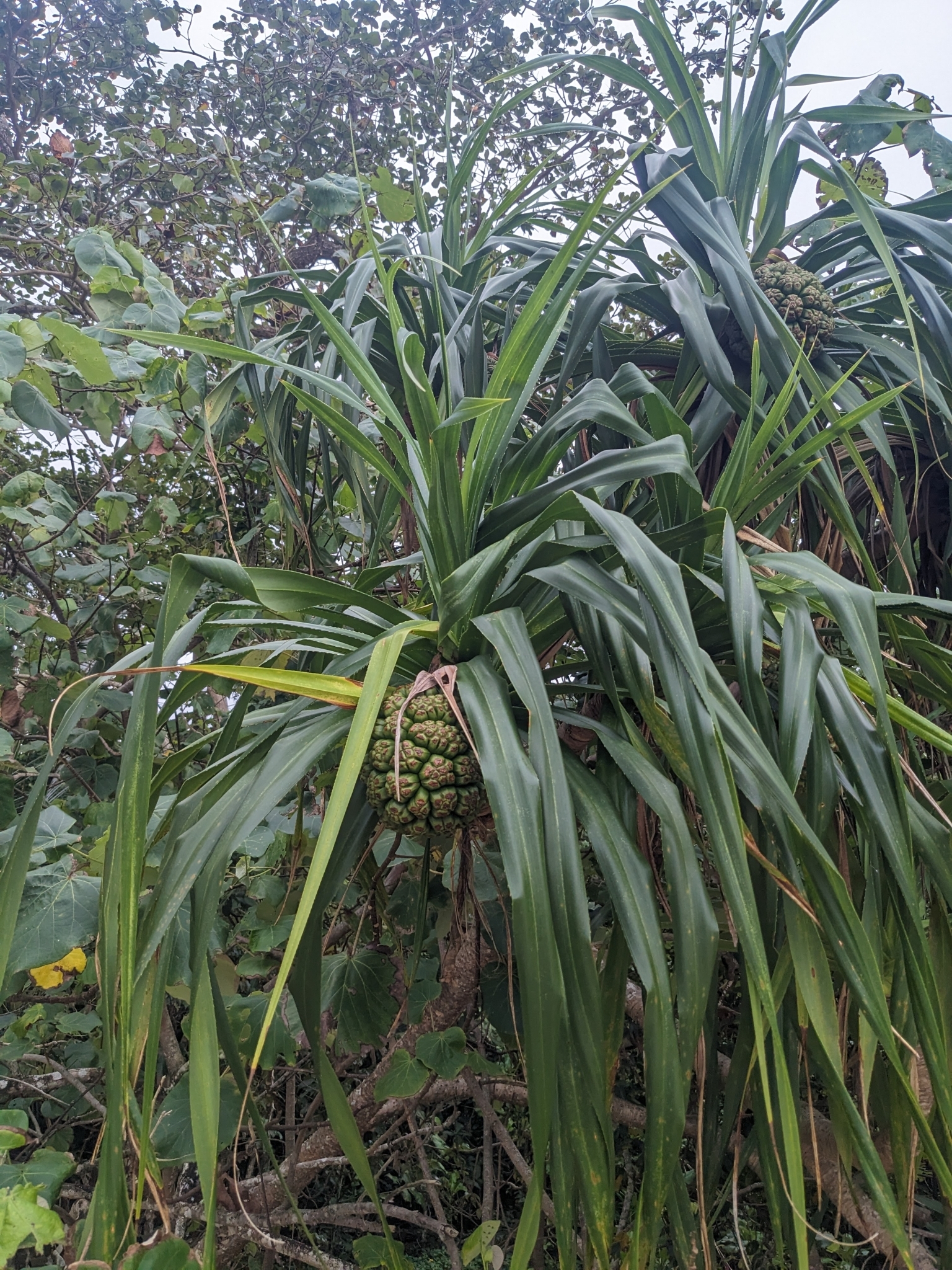
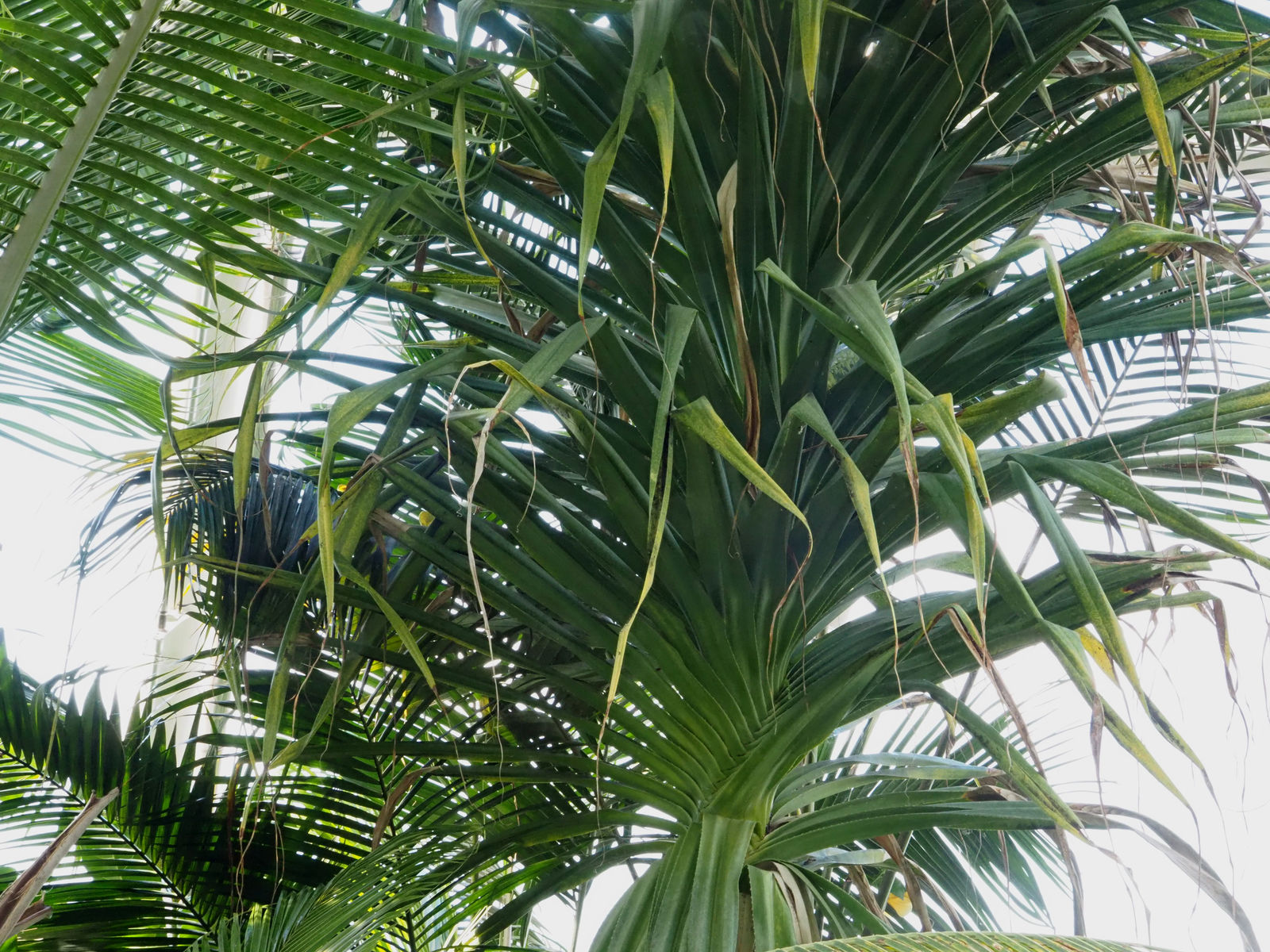
Spirals of strap-shaped leaves crown the branches, explaining the English name screwpine. Leaves can exceed 1 m (3 ft) long. Fine spines along their margins and midribs make bare-handed handling unwise. 7
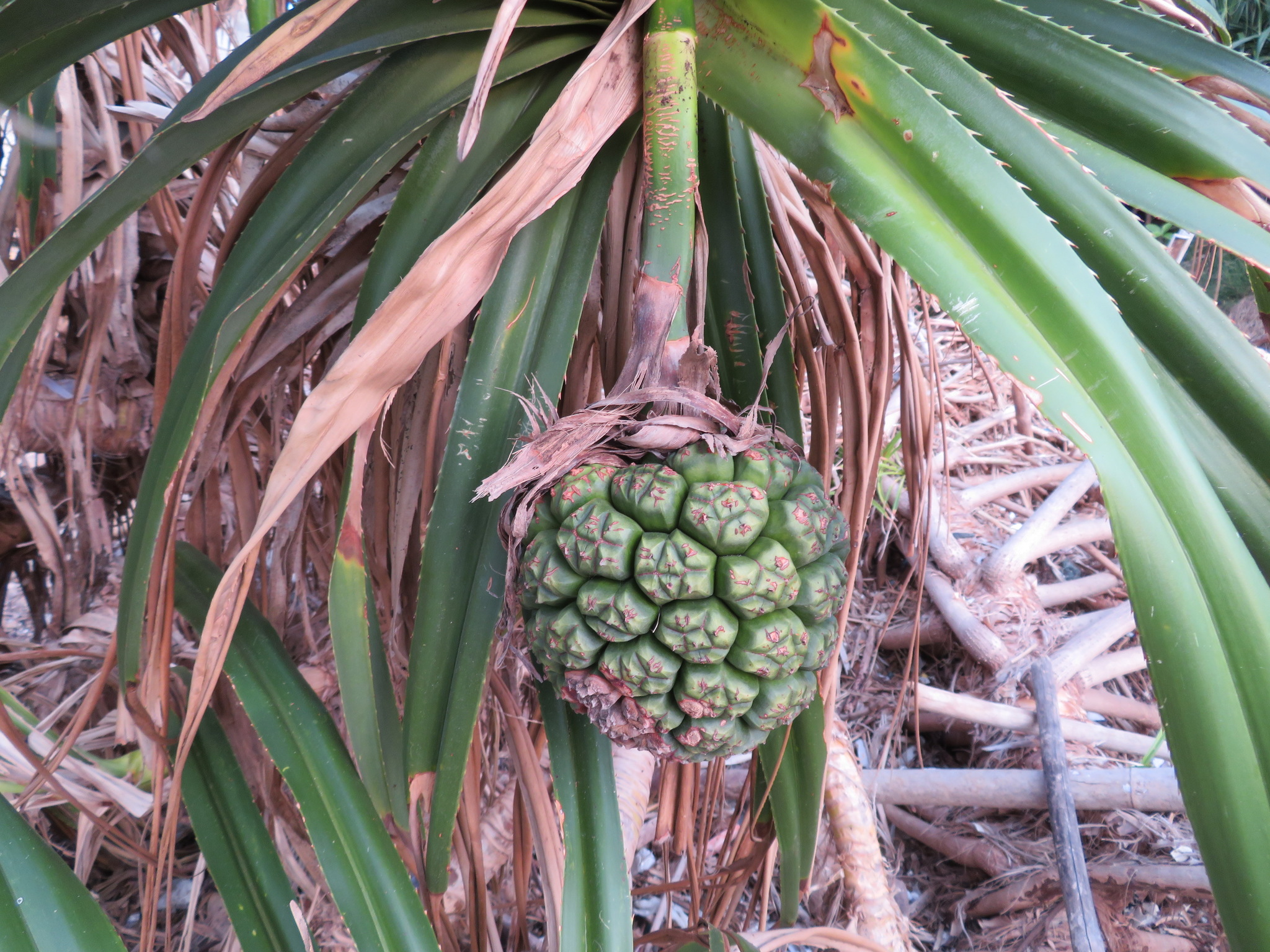
Dioecy means that Pandanus tectorius carries male and female flowers on separate plants. Strongly scented, short-lived male flowers open in large clusters about 30 cm (12 in) long, surrounded by pale bracts. Female flowers form a compact mass resembling a young pineapple before fertilization. Their different outlines allow an adult plant to be sexed before the fruit appears, several months after pollination. 7
Useful taxonomy
Within the hundreds of Pandanus species spread across the Old World tropics from East Africa to the Pacific, POWO/WCVP accepts Pandanus tectorius Parkinson as the name of this coastal tree. 1 2
Regional variation across an immense range led to many described varieties, later reduced to synonymy:
- Pandanus tectorius var. littoralis (Jungh.) Martelli (botanical synonym)
- Pandanus tectorius var. douglasii (Gaudich.) Martelli (botanical synonym)
- Pandanus tectorius var. menziesii (Gaudich.) Martelli (botanical synonym)
- Pandanus tectorius var. chamissonis (Gaudich.) Martelli (botanical synonym)
- Pandanus tectorius f. laevis (Warb.) Masam. (botanical synonym)
Names tied to particular Pacific islands largely trace the history of botanical collecting from island to island. The variation reflects that collecting geography rather than a corresponding set of distinct species; these names remain attached to one accepted taxon. 4
Habitat and range
Island Southeast Asia, Papuasia, eastern Australia and much of the Pacific form its native range. It grows from sea level to about 600 m (2,000 ft), making dense stands immediately behind beaches on pure sand or brackish soils along mangrove edges. 7
For Pandanus tectorius, the IUCN assessment is Least Concern. A very wide range and long cultivation across the Pacific reduce global risk to the species, despite occasional local pressures. 5
Early Polynesian migrations carried this useful tree for its fruit and leaves. Later human dispersal took it well beyond its original range, leaving the distinction between native populations and introductions unclear on some archipelagos. 2
Life cycle and reproduction
Seed-grown trees first pass through a low, spreading juvenile stage without an upright trunk, lasting 4–9 years. The trunk then rises and gains height over 5–12 years before the first flowers. A cutting from an already rooted offset shortens this schedule considerably: flowers may appear at 3–4 years, with fruit at 4–6 years. 7
After a female flower is fertilized, its fruit takes about 12 months to ripen. The spherical syncarp, about 18 cm (7 in) across, contains 40–80 fused drupes, or “keys,” which turn yellow and then red as they mature. Keys float and remain viable for months at sea, allowing natural island-to-island dispersal without human help. 7
Uses and risks
On several Pacific and Micronesian atolls, the fruit is a traditional staple. Sweet flesh is eaten fresh or made into dried paste, including mokwan in the Marshall Islands and te tuae in Kiribati. Seeds supply fats and proteins. Young buds and aerial roots are additional foods on some islands, used as supplements rather than everyday staples. 7
Polynesian weaving draws on its leaves, known in Hawaii through the tradition of lau hala. Mats, baskets, hats, outrigger-canoe sails and thatched roofs are still made from them. Highly fragrant male flowers are distilled into a floral water comparable to the kewra used in Indian cooking. 7
Chemical toxicity has not been documented for this species. The risk lies in its leaf spines, which can cut skin during harvest or routine maintenance; the injury is physical. 7
Varieties, look-alikes and related plants
Suppliers sometimes offer white-striped plants labeled Variegatus. Their exact attribution to Pandanus tectorius, rather than a neighboring species, varies and deserves checking before purchase. Across the Pacific, hundreds of locally named fruit selections differ mainly in the quality of their flesh. 7
Two other screwpines commonly cause confusion. Pandanus utilis is widely sold for indoor horticulture, often with less spiny leaves and a more regular shape. Pandanus amaryllifolius is much smaller, has no prominent spines and is grown for aromatic leaves, producing virtually no fruit in cultivation. The scientific name and massive prop roots identify Pandanus tectorius more reliably than leaf texture alone. 1
Main sources
- Plants of the World Online / Kew, Pandanus tectorius Parkinson
- GBIF Backbone Taxonomy, Pandanus tectorius Parkinson
- International Plant Names Index, Pandanus tectorius
- Tropicos / Missouri Botanical Garden, Pandanus tectorius
- IUCN Red List, Pandanus tectorius assessment (2019)
- Missouri Botanical Garden Plant Finder, Pandanus tectorius (screw pine)
- Tropical Plants Database (Ken Fern), Pandanus tectorius
Frequently asked questions
Is thatch screwpine toxic to cats and dogs?
No chemical toxicity is documented for this species. The risk comes from spines along the leaf edges and midrib, which can cut skin during handling.
Can you eat thatch screwpine fruit?
Yes, when fully ripe. Its sweet flesh is a traditional food on several Pacific atolls, eaten fresh or processed into a dried paste.
Why does my thatch screwpine never fruit?
The species is dioecious, with male and female flowers on separate plants. An isolated plant may flower regularly without producing fruit if no plant of the opposite sex grows nearby.
How does Pandanus tectorius differ from Pandanus utilis?
Pandanus utilis is more often sold as a houseplant, generally with less spiny foliage and a more regular shape. Pandanus tectorius is primarily a coastal fruit-bearing species with strongly spiny leaves.
Can thatch screwpine grow indoors in a temperate climate?
Only in a container, in a bright sunroom or very sunny room, with frost-free shelter. A temperate outdoor climate is unsuitable for this strictly tropical species.
Why are thatch screwpine leaves prickly?
Fine spines line the margins and midrib, a feature of the genus that protects the foliage without constituting chemical toxicity.
Where does the name hala come from?
Hala is the Hawaiian name for the tree and fruit. The word also means passing or fault in Hawaiian, which long associated lei hala fruit necklaces with farewells rather than ordinary celebrations.
Similar plants

If you are unsure about a plant’s toxicity, ask a botanist or veterinarian for advice.