
Moth orchid (Phalaenopsis, )

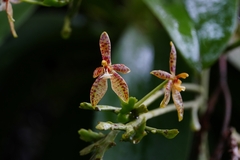

Moth orchid (Phalaenopsis) is a genus of epiphytic Orchidaceae from tropical Asia and Australia, now the world’s best-selling indoor orchid. These monopodial plants have no pseudobulbs: broad, fleshy leaves and thick aerial roots support long, arching stems of flat, lasting flowers. Almost all commercially sold plants are hybrids, readily grown in clear pots filled with bark.
Read moreMoth orchid


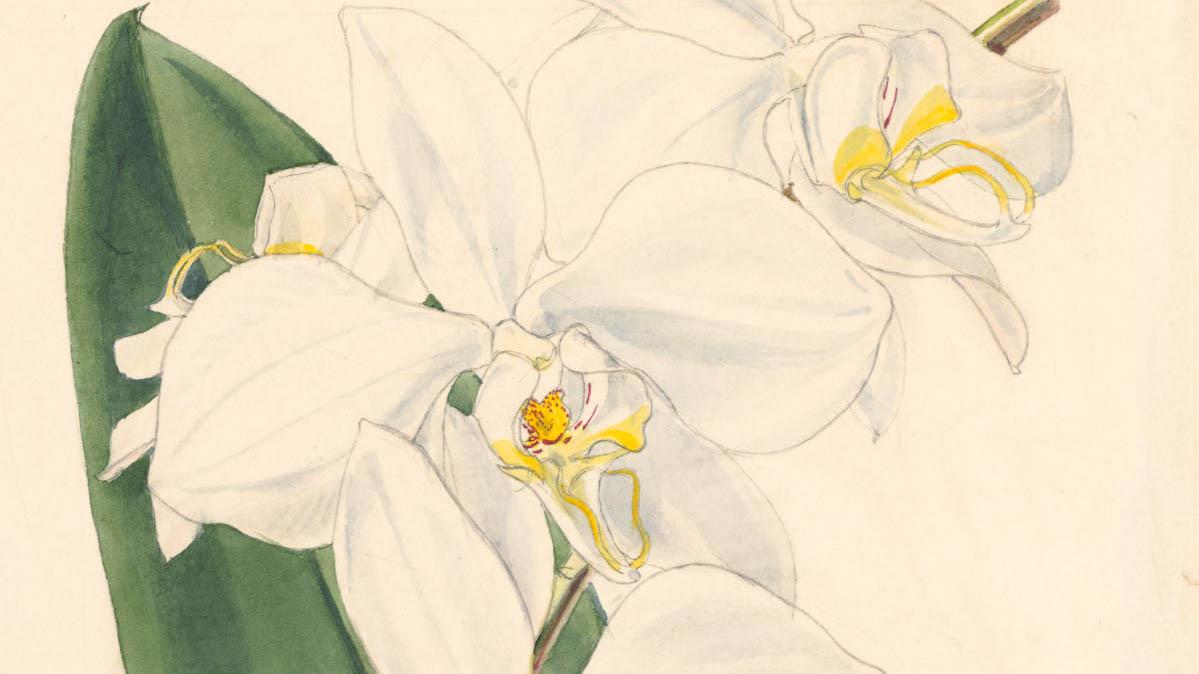
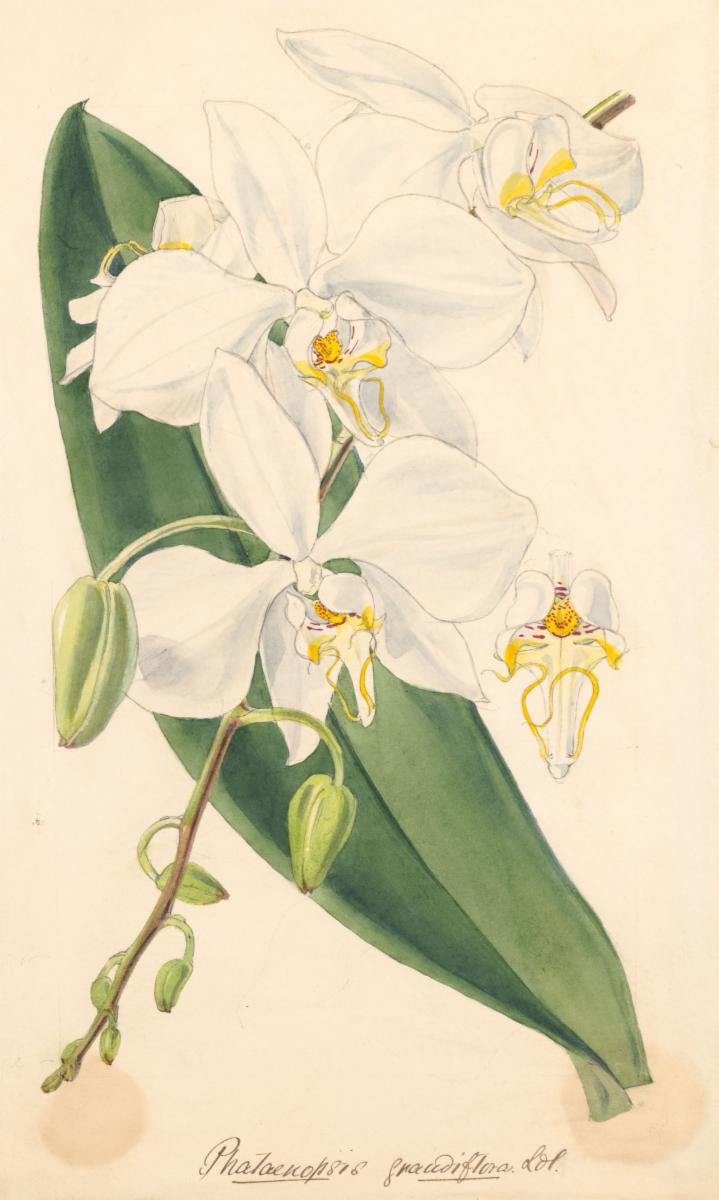
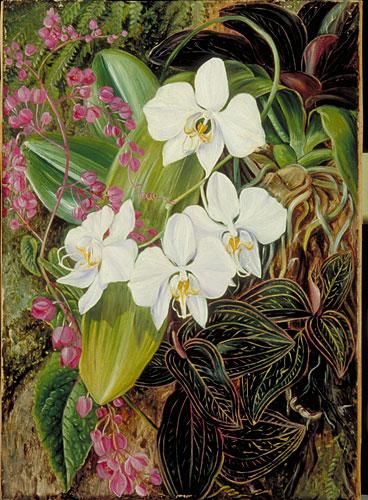
© photo
Apichart Songsangchun · cc-by
Samuel Lee · cc-by
Forest Botial-Jarvis · cc-by-nc
Taken Jul 24, 2021 by pedrogc -- (cc-by-sa)
Taken Aug 25, 2020 by Vieira do Nascimento Paulo (cc-by-sa)
Taken Oct 1, 2022 by Pl@ntNet (cc-by-sa)
Taken Jul 25, 2021 by alfons hochstrasser (cc-by-sa)
Taken Apr 1, 2022 by Irmgard Groß (cc-by-sa)
© copyright of the Board of Trustees of the Royal Botanic Gardens, Kew.




Global distribution
Phalaenopsis is native to tropical and subtropical Asia, from the Himalayas and southern China through Southeast Asia, Indonesia, the Philippines and New Guinea to northeastern Australia. The precise range varies with the species and hybrids; commercial plants are cultivated hybrids found only in cultivation outside this range.
- Native4
- Philippines
- Indonesia
- China
- Australia
Hexagons: regions where the plant occurs. Green dots: native range.1
Identity
Moth orchid (Phalaenopsis Blume, 1825) is a genus in the Orchidaceae family, native to tropical Asia and northeastern Australia. Its name comes from the Greek phalaina, moth, and opsis, appearance: the flat flowers spread along a spike resemble resting moths. Phalaenopsis is also widely used as its everyday horticultural name. 1 4
These are the world’s best-selling indoor orchids and among the easiest for beginners to grow. Commercial plants are almost always hybrids, valued for large, lasting flowers and a flowering period of several weeks, often in the middle of winter. 2 7
Recognition
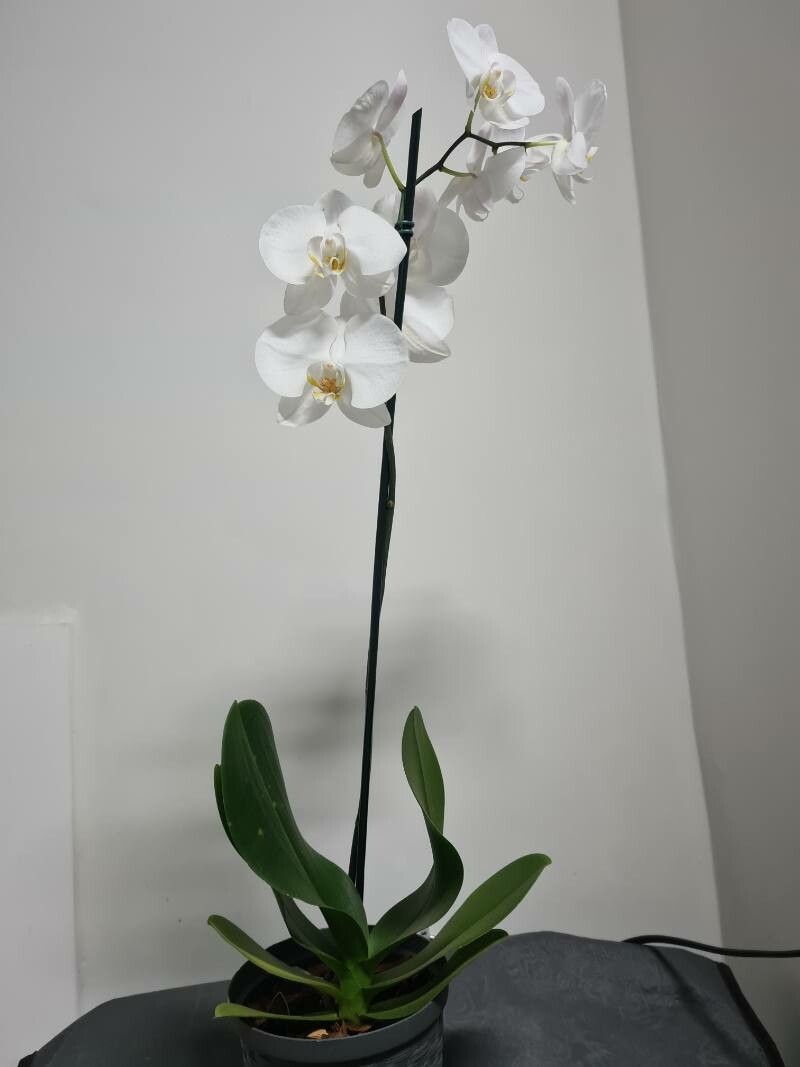
A low rosette with monopodial growth is the first clue to a moth orchid’s identity. It has no pseudobulbs: its broad, thick, glossy leaves are dark green, sometimes mottled with silver. Unlike orchids with pseudobulbs, it cannot store much water and relies on its fleshy leaves. 3 7
Thick, flattened aerial roots are particularly characteristic. Green when wet and silvery when dry, they spill over the pot and photosynthesize. This explains the use of clear pots and coarse bark, allowing air and light to circulate around the roots rather than burying them in dense soil. 5 7
An arching flower spike carries several blooms open together, each with three sepals, two spreading petals and a central lip. Flat and long-lived, the flowers last from several weeks to several months. Hybrids may be white, pink, purple, yellow or striped. 4 2
Useful taxonomy
Dutch botanist Carl Ludwig Blume described Phalaenopsis in 1825, using plants from the Malay Archipelago. The genus belongs to Orchidaceae in the order Asparagales and comprises roughly sixty botanical species, depending on how its limits are drawn. 1 4
Most plants offered for sale are horticultural hybrids rather than wild species. As with many orchids, a named, registered cross forms a grex, a group comprising all offspring of the same parental cross. Thousands of grexes have been registered, alongside intergeneric hybrids involving related genera. 7 2
Notable botanical species include:
- Phalaenopsis amabilis, with large white flowers, an ancestor of many hybrids;
- Phalaenopsis schilleriana, with mottled foliage and branched pink flower spikes;
- Phalaenopsis equestris, with numerous small flowers, ancestral to multiflora types.
The accepted genus name, Phalaenopsis, provides a stable reference. Commercial series names and color descriptions do not represent botanical ranks, so they cannot replace the genus when identifying a plant. 1 3
Habitat and range
Moth orchid species originate in tropical and subtropical Asia, from the Himalayas and southern China through Southeast Asia, Indonesia, the Philippines and New Guinea to northeastern Australia. Each species has its own range; hybrid ancestry also varies. 1 4
In humid lowland forests they grow as epiphytes on trunks and branches, occasionally as lithophytes on mossy rocks. They receive bright, diffuse light without direct sun. This way of life explains their needs in cultivation: plentiful air around the roots, high humidity and protection from scorching sunlight. 5 7
Outside their original range, the plants described here are cultivated. In countries such as France, the United States and Japan, they are sold as houseplants rather than naturalized plants. They cannot withstand frost and need a minimum temperature of about 15 °C (59 °F), making shelter essential wherever outdoor conditions fall below that threshold. 2 3
Life cycle and reproduction
Flowering drives much of moth orchid cultivation. A mature plant with adequate light produces one or two arching spikes, often in autumn and winter, after a drop of a few degrees in nighttime temperature initiates flowering. The flat flowers remain open for several weeks before fading. 7 5
A spike that stays green after its flowers fall can produce new buds from a node. Cutting a living stem because it looks finished removes this opportunity to rebloom. Only a spike that has dried completely and turned brown should be cut back at its base. 2 7
Home propagation relies mainly on keikis, small plantlets that sometimes form on a spike or at the base. Detach them only once they have roots of their own. Division of a clump with several crowns is uncommon, while seed propagation needs sterile laboratory conditions. Sowing is therefore chiefly a professional method, used to produce the many commercial hybrids. 7 3
Uses and risks
A moth orchid is grown exclusively for ornament. This bestselling indoor flowering plant suits a clear pot on a bright windowsill or a well-lit bathroom, where higher humidity meets its needs. Long-lasting flowers and straightforward cultivation explain its commercial popularity. 2 7
For households with animals, its safety profile is reassuring. The ASPCA lists moth orchid as non-toxic to cats, dogs and horses. Eating a large quantity may at most cause mild digestive upset, making it a suitable choice for homes with pets or young children. 6 5
Varieties, look-alikes and related plants
Commercial moth orchids are sold by grex and color rather than by species. Standard large-flowered hybrids have big, rounded white, pink or striped blooms. Multiflora and midi types carry smaller, more numerous flowers on branched spikes; scented novelty hybrids descend from botanical species with waxy, colorful flowers. 2 7
Other indoor orchids can cause confusion:
- Doritis, now often included in Phalaenopsis and crossed with it;
- Dendrobium, with upright growth and cane-like pseudobulbs, commonly sold by florists;
- Cymbidium, forming large clumps of long, strap-shaped leaves and preferring cooler cultivation.
A monopodial rosette without pseudobulbs, thick aerial roots and flat flowers on an arching spike remain the most reliable combination for recognizing a moth orchid.
3 1Main sources
- Plants of the World Online / Kew, Phalaenopsis Blume
- Royal Horticultural Society, Phalaenopsis search results
- Missouri Botanical Garden, Phalaenopsis
- Encyclopaedia Britannica, moth orchid (Phalaenopsis)
- North Carolina Extension Gardener Plant Toolbox, Phalaenopsis
- ASPCA, moth orchid (Phalaenopsis) non-toxic plant entry
- American Orchid Society, Phalaenopsis
Frequently asked questions
Are moth orchids toxic to cats and dogs?
No. The ASPCA lists moth orchid (Phalaenopsis) as non-toxic to cats, dogs and horses. Eating a large amount may at most cause mild, minor digestive upset.
Why is my moth orchid not reblooming?
Usually it lacks bright light or an autumn drop in nighttime temperature. Nights 5–8 °C (9–14 °F) cooler, together with good indirect light, generally trigger a new spike.
Should I cut the flower spike after blooming?
Not if it stays green: new growth may emerge from a node. Only a completely dry, brown spike should be cut at the base. Wait before pruning a stem that is still alive.
Why are my orchid’s roots growing out of the pot?
This is normal. Moth orchid is epiphytic, and its thick green aerial roots photosynthesize and seek air and moisture. Do not force healthy roots into the medium or cut them off.
What potting medium does a moth orchid need?
Use an orchid mix based on coarse pine bark, sometimes blended with sphagnum, in a clear pot with drainage. Ordinary potting soil suffocates the roots and causes rot.
How often should I water a moth orchid?
About once a week. Soak the medium, then let it drain thoroughly, never leaving water standing in the center of the rosette. With no pseudobulbs, the plant should not dry out completely either.
Are store-bought moth orchids wild species?
No. They are almost always horticultural hybrids, selected from thousands of crosses for large, lasting flowers. Botanical species are less common and mainly grown by collectors.
Can a moth orchid grow in a bathroom?
Yes, provided it is bright. The higher humidity in a bright bathroom resembles its native setting, as long as the plant stays above 15 °C (59 °F) and out of drafts.
Species in this genus

Similar plants



If you are unsure about a plant’s toxicity, ask a botanist or veterinarian for advice.