
Wax plant (Hoya carnosa, )
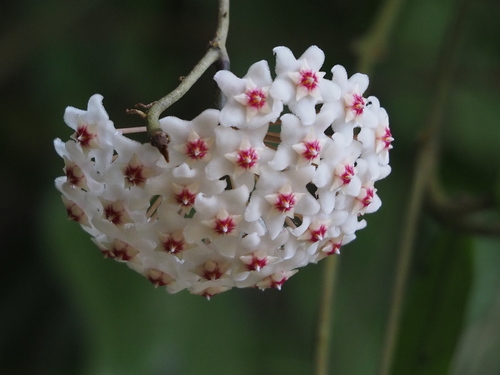
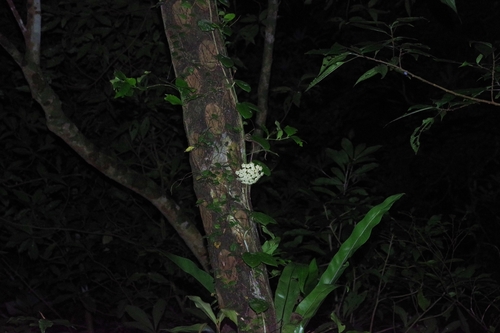
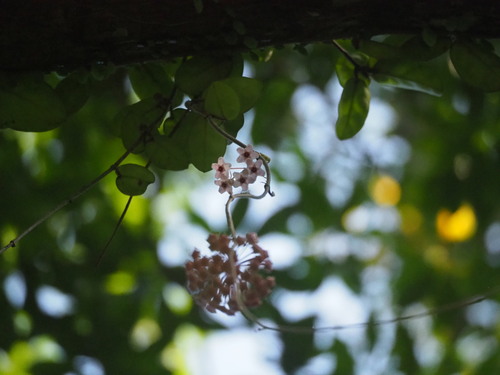
The wax plant (Hoya carnosa), also called porcelain flower, is a succulent epiphytic vine in the dogbane family, Apocynaceae, native to East Asia. It is grown as a houseplant for its thick, waxy foliage and its umbels of fragrant star-shaped flowers, and it adapts equally well to a pot with a small trellis or a hanging basket.
Read morePorcelain flower, Porcelainflower, Wax flower and Hoya
Global distribution
The native range of Hoya carnosa runs from southern China to Laos and from southern Japan (Kyushu) to Taiwan. Widely grown as a houseplant, it is found outside that range mostly in cultivation; those regions of introduction should be kept separate from the East Asian native range.
- Native4
- Introduced2
- China
- Taiwan
- Japan
- Laos
- India
- Australia
Hexagons: sourced regions. Green dots: native range. Statuses according to POWO (Kew).
Identity
The wax plant (Hoya carnosa (L.f.) R.Br., 1810), also known as porcelain flower, is a succulent epiphytic vine in the genus Hoya, part of the dogbane family, Apocynaceae. The genus name honors Thomas Hoy, an English gardener of the late eighteenth century, and has since become an everyday name for the whole group. 1 2
Most growers know the species as an easy houseplant, valued for its thick, waxy foliage and its intensely fragrant clusters of star-shaped flowers. Both wax plant and porcelain flower describe the smooth, almost translucent look of the blooms as much as the texture of the leaves. 3 4
Recognition
Start with the leaves: they are opposite, thick, fleshy and distinctly waxy, dark glossy green, 5–8 cm (2–3 in) long, and borne on supple, twining stems. Those stems wrap around a support and put out adventitious roots that help them hold on. 4 5
The flowers are the showpiece. Rounded, almost spherical umbels gather some twenty small, pinkish white stars, each topped by a more strongly colored central corona. They give off a sweet scent, strongest in the evening, and often drip sticky nectar. 3 2
One detail regularly misleads beginners: the umbels arise on bare, perennial flower spurs, short leafless stalks that rebloom in the same place year after year. A cut stem also oozes milky latex, of no notable toxicity. 4 6
Useful taxonomy
Linnaeus's son first described the species under another genus, and Robert Brown moved it into Hoya in 1810, hence the authority (L.f.) R.Br. The genus is large and was long placed in the milkweed family, Asclepiadaceae, now merged into Apocynaceae. The main names worth knowing are:
- Asclepias carnosa L.f.
- Hoya carnosa var. carnosa
- Hoya picta Miq.
- Sperlingia carnosa (L.f.) Vahl
Rely on the accepted scientific name, Hoya carnosa: cultivar names such as Compacta or Krimson Queen refer to horticultural selections, not to separate species or botanical varieties. 1 7
Habitat and range
Humid subtropical forests of southern China, Laos, southern Japan (Kyushu) and Taiwan are home to Hoya carnosa. There it grows as an epiphyte or lithophyte, climbing trunks, branches and shaded rock faces without drawing anything from its support. 1 2
That way of life explains what it needs in cultivation: a very airy, free-draining mix that mimics the light debris caught on bark, and infrequent watering, which the fleshy leaves offset by storing water. The plant therefore copes with drought far better than with soggy roots. 4 5
Grown as a houseplant worldwide, the species turns up outside its home range mostly in cultivation. Those regions of introduction should be kept apart from the East Asian native range, where it grows wild. 7 6
Life cycle and reproduction
For most growers, flowering is the whole point of a wax plant. A mature plant in good light produces fragrant umbels on its flower spurs from spring into summer. Each umbel holds many small star-shaped flowers with a central corona, and pollination relies on night-flying insects drawn by the scent and nectar. 2 3
What matters most is that the flower spurs are perennial: these short bare stalks rebloom in the same spot every year. Cutting them off as dead wood is the most common mistake, because it strips the plant of its future umbels. Indoors, fruit rarely sets, since the specialized pollinators of the native range are missing. 4 5
In cultivation, propagation is by stem cuttings with a node or by air layering. A cutting taken with at least one node and one or two leaves, allowed to dry and then set in water or an airy mix, forms its first roots in four to eight weeks in warm conditions. Air layering works well on long stems: nick the stem, wrap it in moist sphagnum moss and separate it once roots have formed. 3 6
Uses and risks
Today Hoya carnosa is grown almost entirely as an ornamental, in a hanging basket, on a small stake or on a trellis in a bright sunroom. Waxy leaves and fragrant umbels make it a well-loved houseplant, tough and easy for a beginner to manage. 3 2
Safety is reassuring: the ASPCA lists the wax plant as non-toxic to cats, dogs and horses. The plant bleeds a milky, sticky latex when cut, with no reported toxicity, which makes it a good choice for a home with pets or young children. 8 5
Varieties, look-alikes and related plants
Plenty of forms reach garden centers, and none of them is a separate species. Compacta is the curious form with folded leaves sold as Hindu rope plant; Krimson Queen, Krimson Princess and Tricolor are variegated cultivars that need more light to hold their colors. Before buying, check the cultivar name, the condition of the roots and how firm the leaves are. 3
The most frequent mix-ups involve other members of the genus:
- Hoya bella, with smaller leaves and a more trailing habit
- Hoya pubicalyx, with longer stems and often darker flowers
- Hoya kerrii, with heart-shaped leaves, often sold singly as a cutting
Fleshy, waxy opposite leaves, umbels of fragrant stars and perennial flower spurs are the most reliable clues that a plant sold as a hoya really is Hoya carnosa. 4 1
Main sources
- Plants of the World Online / Kew, Hoya carnosa (L.f.) R.Br.
- Royal Horticultural Society, Hoya carnosa, wax plant
- Missouri Botanical Garden, Hoya carnosa
- Encyclopaedia Britannica, Hoya carnosa
- North Carolina Extension Gardener Plant Toolbox, Hoya carnosa
- Plants For A Future, Hoya carnosa
- USDA PLANTS Database, Hoya carnosa (L.f.) R.Br.
- ASPCA, wax plant (Hoya carnosa) non-toxic plant entry
Frequently asked questions
Is the wax plant toxic?
No. The ASPCA lists Hoya carnosa as non-toxic to cats, dogs and horses. The plant bleeds a sticky latex when cut, but no toxicity has been reported, so it remains a good choice for a home with pets.
Why won't my Hoya carnosa bloom?
The most common causes are too little bright light or cutting off the flower spurs. These bare stems carry one umbel after another and should never be removed. A slightly pot-bound plant in good light blooms more readily.
Should I cut the bare, leafless stems?
No. These perennial flower spurs produce new umbels in the same spot every year. Cutting them removes future flowers; leave them in place, even if they look untidy outside the flowering season.
How much light does a wax plant need?
Bright indirect light, with perhaps a little gentle morning sun, gives the best foliage and encourages flowering. Direct afternoon sun scorches the waxy leaves.
Which plants are mistaken for Hoya carnosa?
Mix-ups mostly involve other hoyas, such as Hoya bella, with smaller leaves, and Hoya pubicalyx. The fleshy opposite leaves and the perennial flower spurs remain good clues.
How often should I water a Hoya carnosa?
Let the potting mix dry out between waterings, roughly every ten to twelve days in summer and far less often in winter. Its fleshy leaves store water and tolerate the occasional missed watering.
Are variegated hoyas different species?
No. Krimson Queen, Krimson Princess and Tricolor are cultivars selected for their variegation, not distinct species. They need a little more light to keep their leaf colors.
Can I grow a wax plant in a hanging basket?
Yes. Its twining stems readily trail or wind around a support, which makes it ideal for a hanging basket near a bright window, or trained on a small trellis.
Similar plants
Botanical data compiled from reference sources (RHS, Kew Gardens, POWO). This profile is for guidance only and is not a substitute for advice from a botanist or veterinarian if you have concerns about toxicity.