
Aleppo pine (Pinus halepensis, )

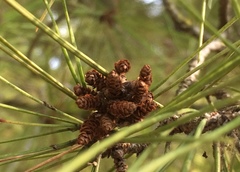
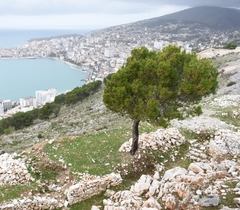
Aleppo pine (Pinus halepensis), also called Jerusalem pine, is a conifer in the Pinaceae family native to the Mediterranean region. A pioneer of dry, limestone soils, it has fine, pale needles and small conical cones that often curve downward. Its timber has limited structural use, but its resin and fire-adapted cones make it a characteristic Mediterranean forest tree.
Read moreAleppo pine and Jerusalem pine


© photo
(c) Σάββας Ζαφειρίου (Savvas Zafeiriou), some rights reserved (CC BY-NC), uploaded by Σάββας Ζαφειρίου (Savvas Zafeiriou) · cc-by-nc
dbmhartley · cc0
Zac Peterson · cc-by
Taken Mar 25, 2007 by Tela Botanica − Errol VELA (cc-by-sa)
Taken Mar 12, 2014 by Tela Botanica − Jean-Luc Gorremans (cc-by-sa)
Taken Sep 29, 2020 by Alain Bigou (cc-by-sa)
Taken Oct 19, 2020 by Renaud Brochiero (cc-by-sa)
Taken Mar 16, 2018 by Mattia Imperatore (cc-by-sa)
© copyright of the Board of Trustees of the Royal Botanic Gardens, Kew.




Global distribution
Aleppo pine is native across the Mediterranean basin, from Morocco, Algeria and Tunisia to Spain, southern France, Italy, Croatia, Montenegro, Albania and Greece, with an isolated eastern population in Syria, Lebanon, southern Turkey, Jordan, Israel and Palestine. Widely planted elsewhere for forestry and ornament, it has naturalized in some Mediterranean-climate regions, notably South Africa and southern Australia, where local control programs operate.
- Native8
- Invasive2
- Mainland France
- Spain
- Italy
- Greece
- Morocco
- Algeria
- Tunisia
- Israel
- South Africa
- Australia
Hexagons: regions where the plant occurs. Green dots: native range.1
Identity
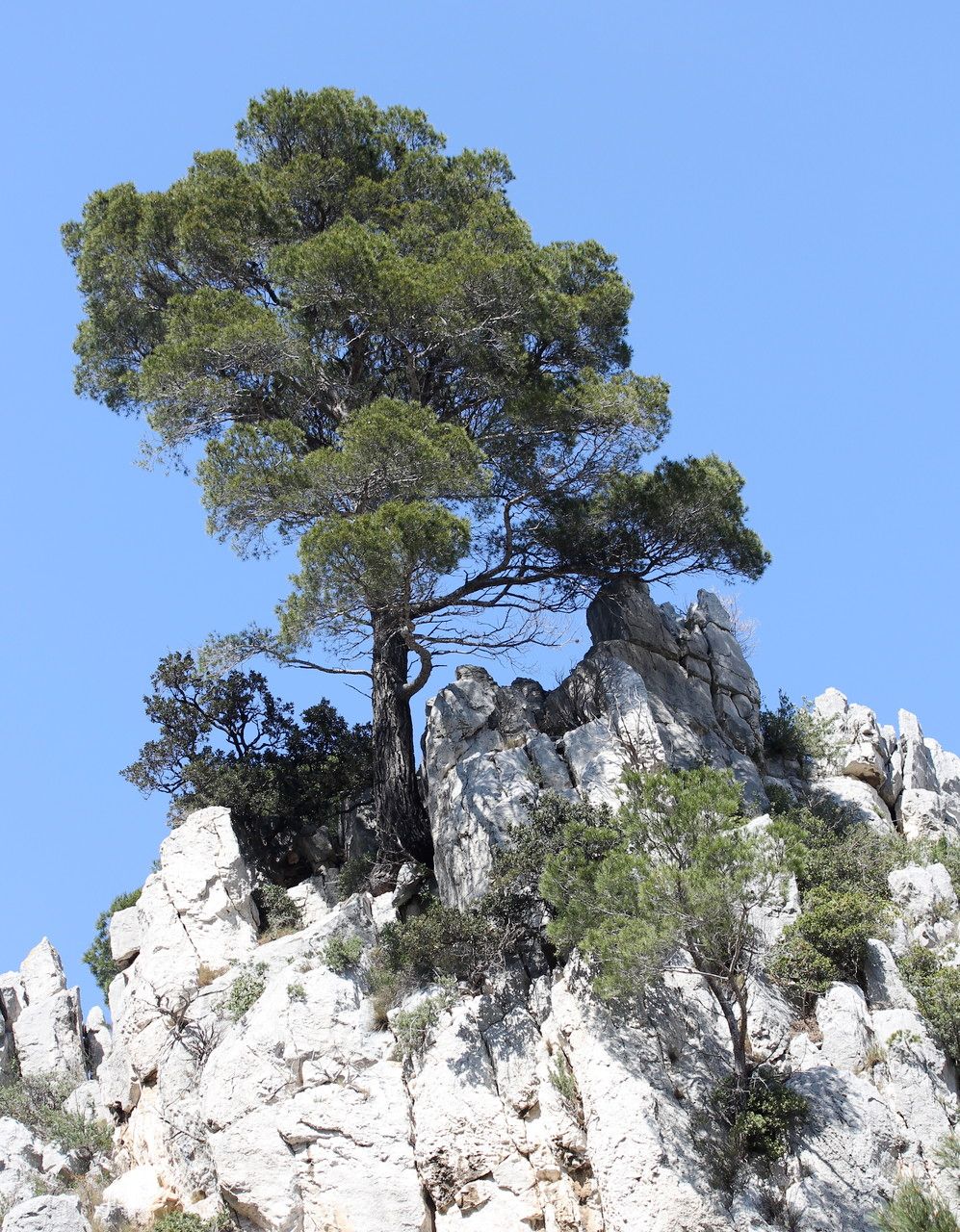
Aleppo pine (Pinus halepensis Mill., 1768), also called Jerusalem pine, is a conifer in the Pinaceae family reaching 15–25 m (49–82 ft) at maturity. This low-elevation Mediterranean species colonizes dry limestone hills around the Mediterranean, often forming extensive, open stands composed almost entirely of this pine. 1 6
An incorrect geographical attribution gave the tree its name. Scottish botanist Philip Miller described it in his Gardener's Dictionary in 1768 without visiting Syria, probably from specimens in an English garden. The pine that actually dominates around Aleppo is Pinus brutia, a close but distinct species. 5 8
Recognition
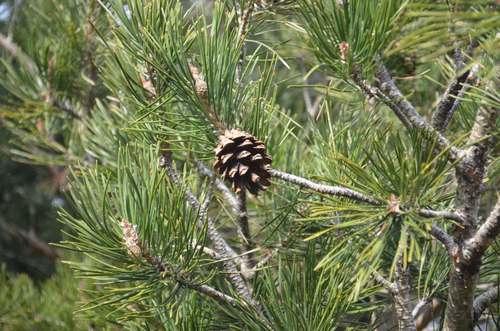
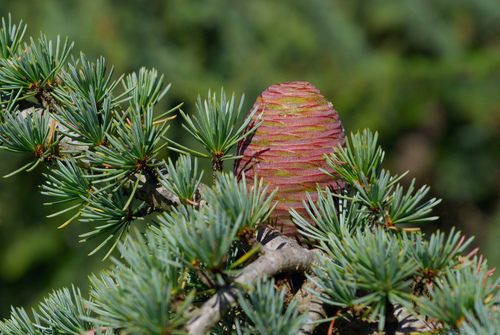
Pale foliage is the first clue to Pinus halepensis: fine needles, flexible and yellowish green, grow in pairs and measure 6–12 cm (2.4–4.7 in) long. They are much thinner than maritime pine needles, giving the crown a light texture and a distinctive pale tint. 4 3
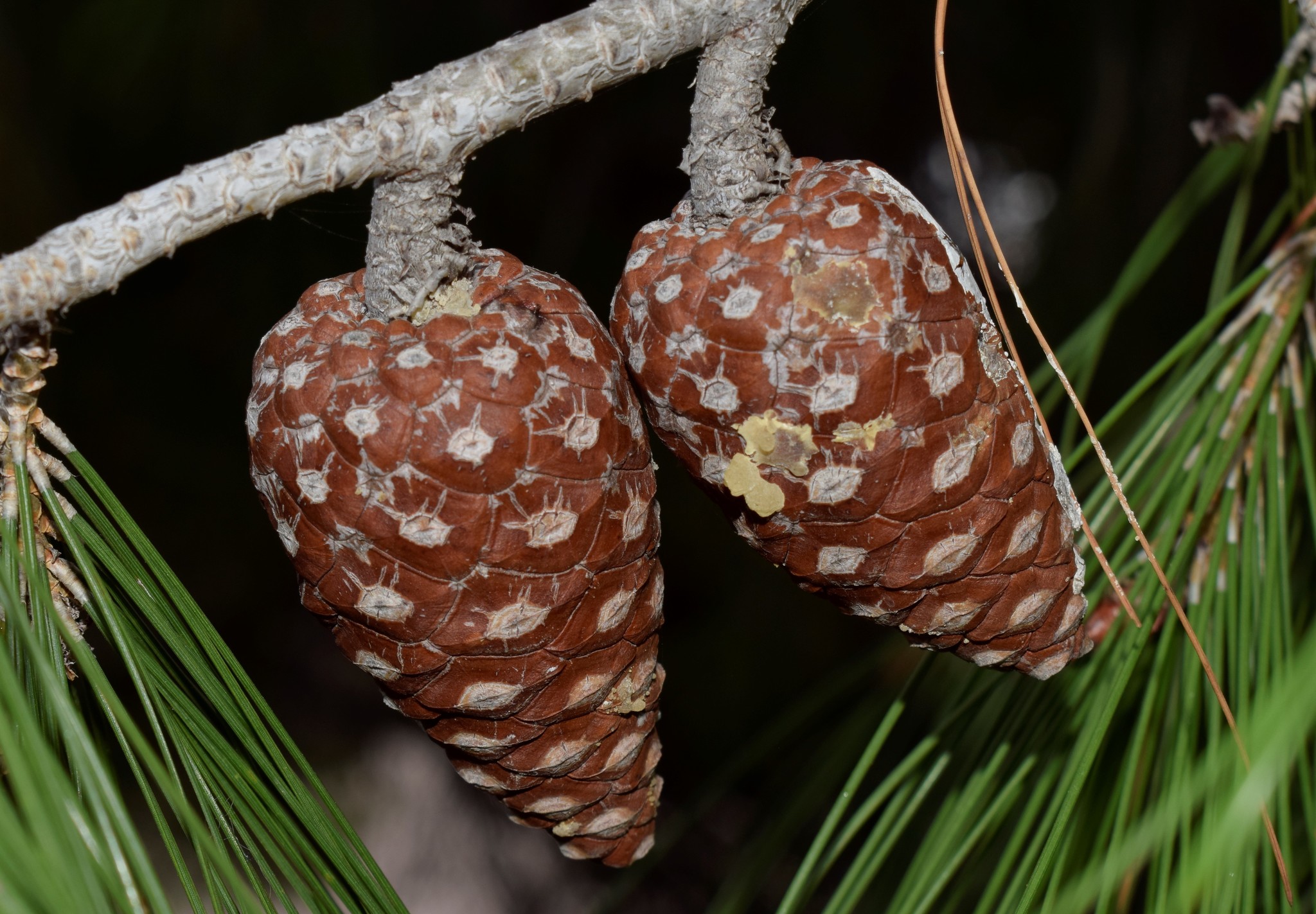
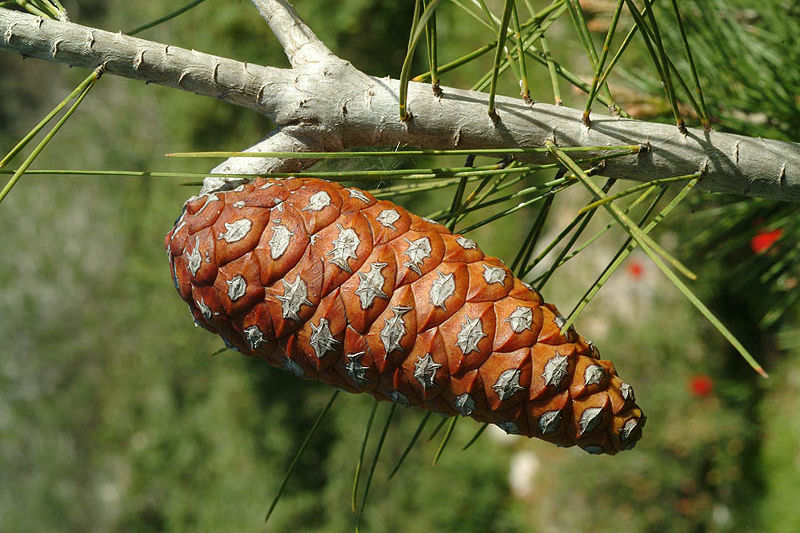
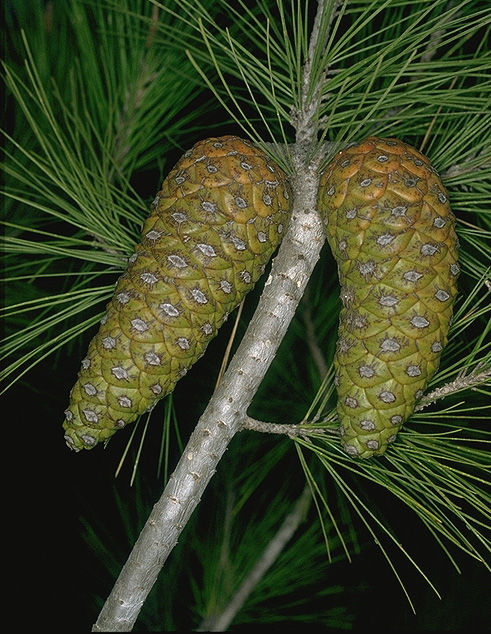
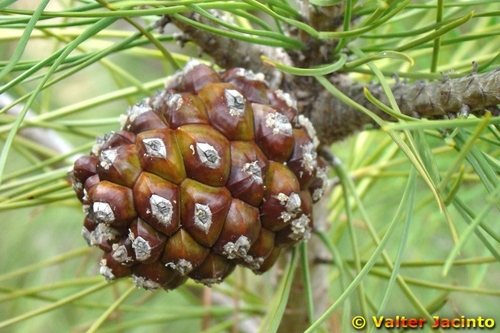
Small, conical cones measure 5–12 cm (2–4.7 in) and sit on a short stalk, often tilting or curving downward. They change from green to glossy reddish brown at about 24 months, then remain closed or partly open on the tree for years. Orange, thick bark at the trunk base becomes deeply fissured with age; higher in the crown it stays thinner and flaky. 4 3
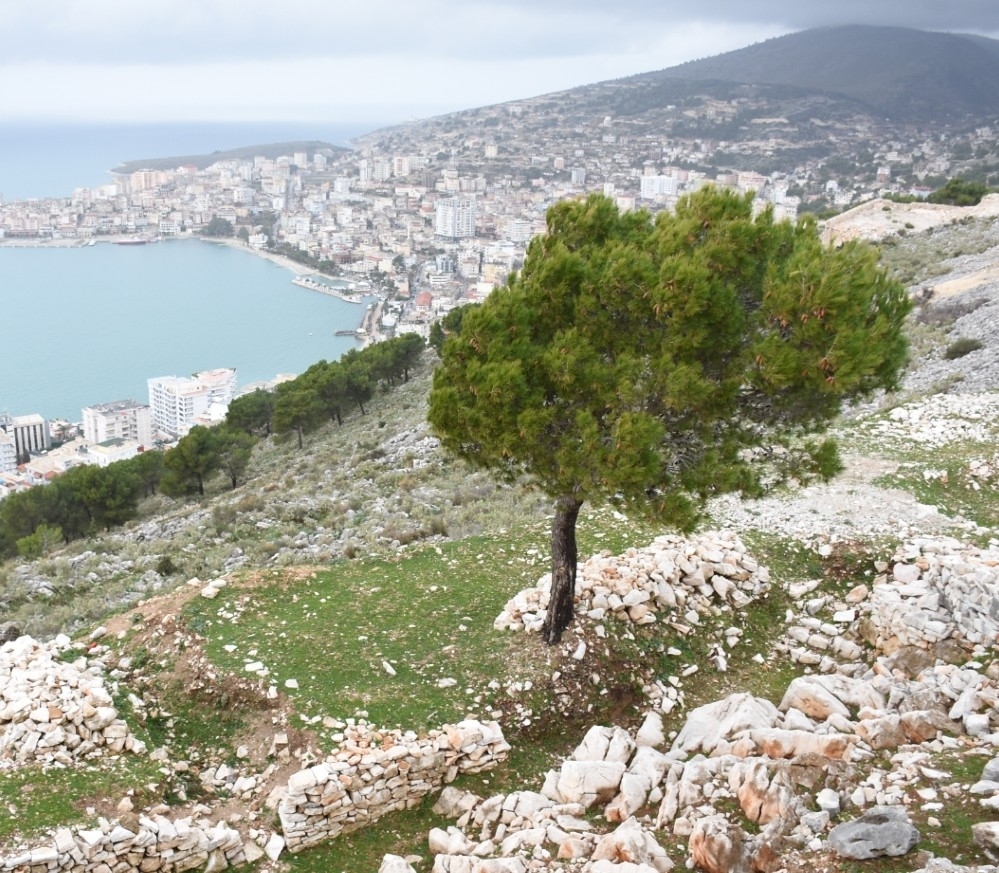
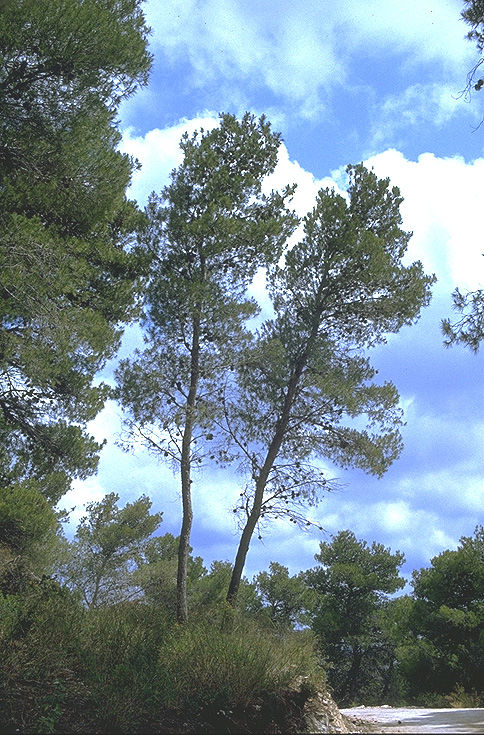
Young trees have a conical outline that develops into an irregular, open crown, often leaning with the prevailing wind. Mature height commonly reaches 15–25 m (49–82 ft), with a trunk seldom exceeding 60 cm (24 in) in diameter. 3 4
Useful taxonomy
Miller published the name Pinus halepensis Mill. in 1768. Other names now treated as synonyms include Pinus maritima W.T.Aiton (an illegitimate name), Pinus hierosolimitana Duhamel, Pinus arabica Sieber ex Spreng., Pinus genuensis J.Cook and Pinus carica D.Don.
Use the accepted scientific name, Pinus halepensis, as a reliable reference; the other names are no longer current in recent literature. Some authors treat Turkish pine (Pinus brutia) as a subspecies of P. halepensis. The most widely used classification recognizes it as a distinct species, with longer, stiffer needles. 1 2
Habitat and range
Across its native Mediterranean basin, Pinus halepensis ranges from Morocco, Algeria and Tunisia to Spain, southern France, Italy, Croatia, Montenegro, Albania and Greece. A separate eastern population occurs in Syria, Lebanon, southern Turkey, Jordan, Israel and Palestine. 4 1
Low elevations are its main setting, generally from sea level to 200 m (660 ft), although it exceeds 1,000 m (3,280 ft) in southeastern Spain, reaches 1,200 m (3,940 ft) on Crete and 1,700 m (5,580 ft) in North Africa. Aleppo pine colonizes dry, stony limestone soils and tolerates shade poorly. 4 6
Within France, Provence and Languedoc form the center of its range, with isolated sites north to the Loire and Essonne. Extensive planting for forestry and ornament has led to naturalization in other Mediterranean-climate regions, notably South Africa and southern Australia, where local control programs operate. 8 4
Life cycle and reproduction
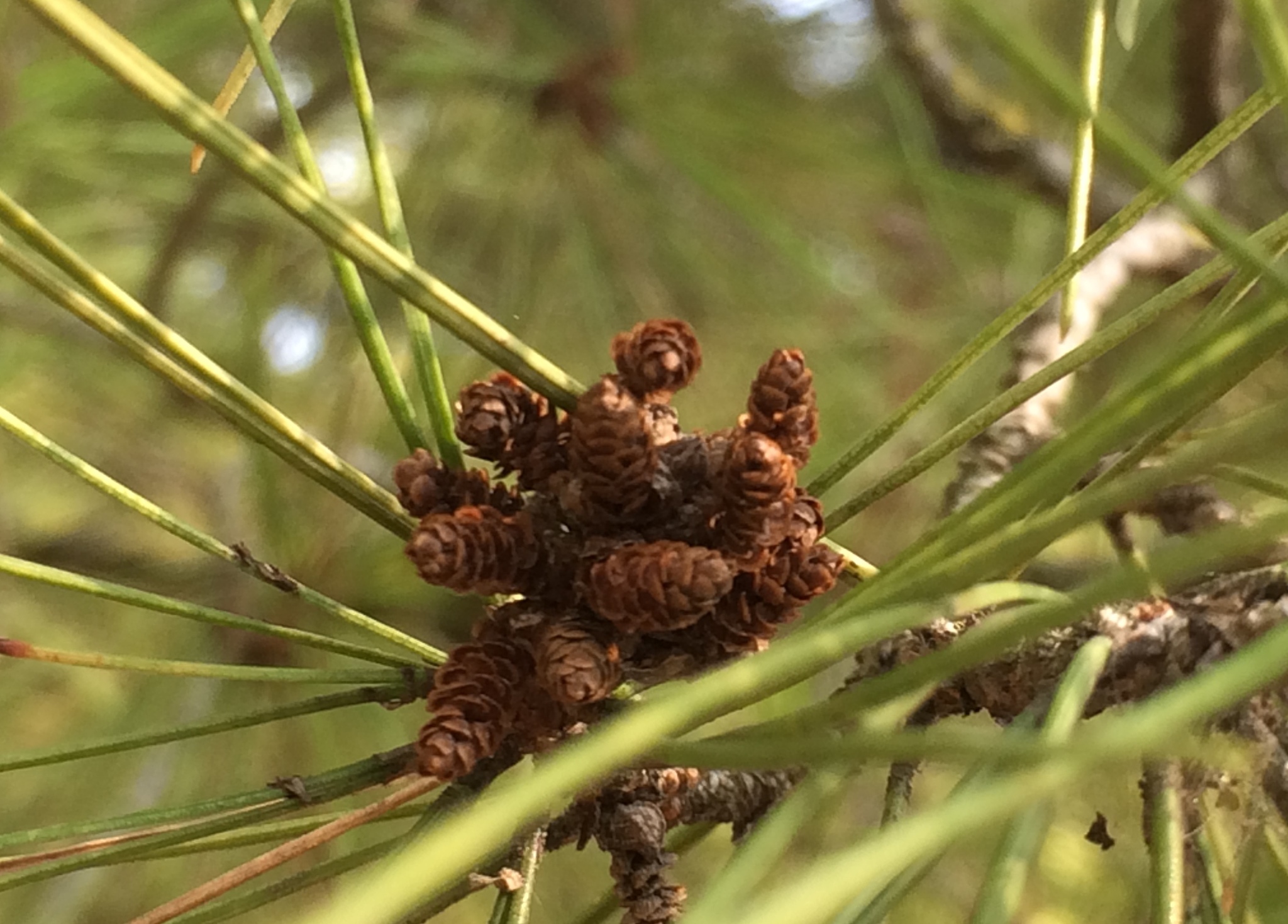
As a gymnosperm, Aleppo pine produces no flowers. Separate male and female cones grow on the same tree. In spring, the male cones release lightweight pollen for wind pollination, the typical conifer mechanism. 5 4
Partial serotiny distinguishes Aleppo pine from pines that shed seeds every fall. A substantial share of each year's cones, often 40–80%, stays sealed with resin and opens fully only after heating by wildfire. Seeds remain stored for years before being released in large numbers after fire, supporting rapid regeneration on burned ground. 8 5
Cultivation relies on seed propagation, with several weeks of cold stratification to break seed dormancy. Small seedlings establish much better with protective mulch. Older plants transplant poorly and can suffer a lasting slowdown in growth. 4
Uses and risks
Often knotty and of moderate quality, Aleppo pine timber formerly supported mine workings and shipbuilding. Today it mainly supplies paper manufacture and bioenergy. Its resin flavors Greek retsina wine, while the seeds go into traditional desserts such as Tunisian assidat zgougou. 8 5
Aleppo pine is not toxic when ingested, but resin, sawdust and wood dust can irritate sensitive skin on contact. Its high flammability poses a much greater risk: dead branches, accumulated cones and volatile compounds make it one of the Mediterranean conifers most vulnerable to fire. In some places, expanding pure stands have replaced garrigue scrub with impoverished “ecological deserts” more vulnerable to major wildfires. 8 4
Varieties, look-alikes and related plants
Rather than ornamental cultivars, Aleppo pine is represented by a typical subspecies that dominates throughout its range. Some eastern populations appear in regional synonymies whose status still needs clarification between sources. 1
The main Mediterranean look-alikes are:
- Pinus brutia, Turkish pine, with longer, stiffer needles than Aleppo pine, often treated as a sister species;
- Pinus pinaster, maritime pine, with much thicker needles and larger cones;
- Pinus pinea, stone pine, with an umbrella-shaped crown and large edible seeds.
Fine, pale needles in pairs, small cones curved on short stalks, and orange, fissured bark remain the best combination of clues for identifying a Mediterranean pine as Pinus halepensis. 4 3
Main sources
- Plants of the World Online / Kew, Pinus halepensis Mill.
- International Plant Names Index, Pinus halepensis Mill.
- Royal Horticultural Society, Pinus halepensis
- Plants For A Future, Pinus halepensis
- Encyclopaedia Britannica, pine (Pinus)
- Tela Botanica, Pinus halepensis Mill.
- INPN / MNHN, Pinus halepensis Mill., 1768 (cd_nom 113665)
- French Wikipedia, Pinus halepensis — fire behavior and productivity
Frequently asked questions
Is Aleppo pine toxic?
Aleppo pine is not toxic when ingested. Resin, sawdust and wood dust can irritate the skin of sensitive people after repeated contact; gloves are recommended when handling resinous wood.
Why is it called Aleppo pine if it does not grow near Aleppo?
Philip Miller described it in 1768 without visiting Syria, probably from trees seen in an English garden. The dominant pine around Aleppo is actually Pinus brutia, a close but distinct species.
Why do Aleppo pine cones stay closed for so long?
The cones are serotinous: resin seals them, and they open slowly over several years, especially when heated by wildfire. This releases large numbers of seeds and helps the forest regenerate after fire.
Does Aleppo pine increase wildfire risk?
Yes. Resin, dead branches and accumulated cones make it one of the most flammable Mediterranean conifers. It can worsen fires while also being one of the first trees to colonize burned areas.
What soil suits Aleppo pine?
Limestone-rich, stony, very well-drained soil. The species tolerates poor soils, drought and wind, but performs poorly in waterlogged or acidic soil.
Which trees look like Aleppo pine?
It is most often confused with Turkish pine, which has longer, stiffer needles, and maritime pine, whose needles are much thicker. Fine, pale needles in pairs are the most reliable clue for Aleppo pine.
Is Aleppo pine invasive?
Not in its native Mediterranean range. Outside that range, notably in South Africa and southern Australia, planted trees seed vigorously and are subject to local control programs.
Similar plants

If you are unsure about a plant’s toxicity, ask a botanist or veterinarian for advice.