
Austrian pine (Pinus nigra, )

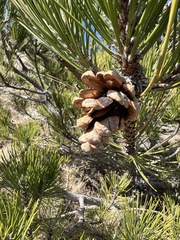
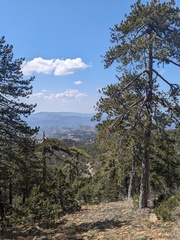
Austrian pine (Pinus nigra) is a conifer in the Pinaceae family native to Mediterranean mountains, from Spain and Austria to the Caucasus and northwestern Africa. Dark fissured bark, stiff needles in pairs and a conical crown that broadens with age distinguish this important reforestation tree of southern Europe.
Read moreAustrian pine, Black pine and European black pine
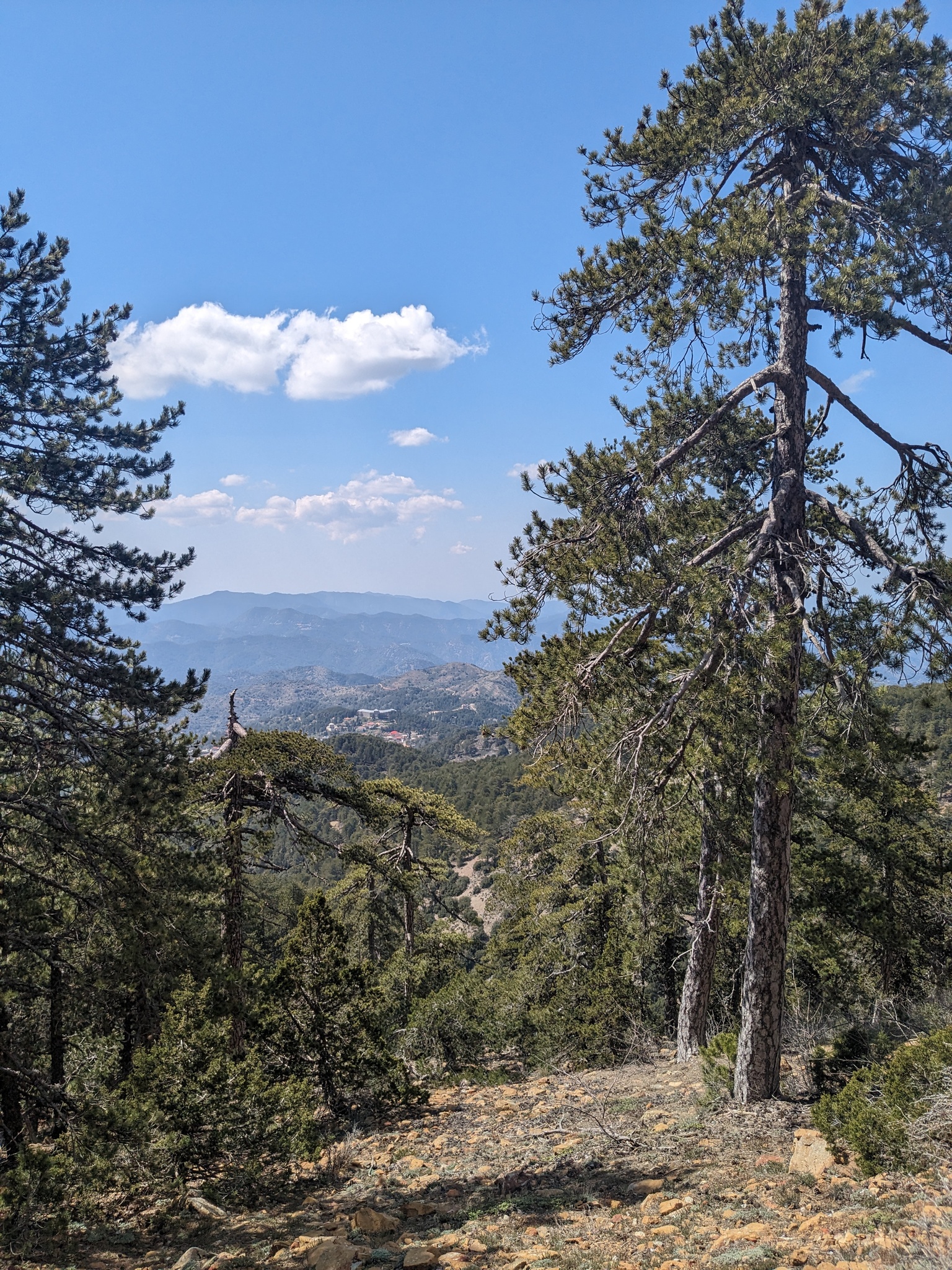


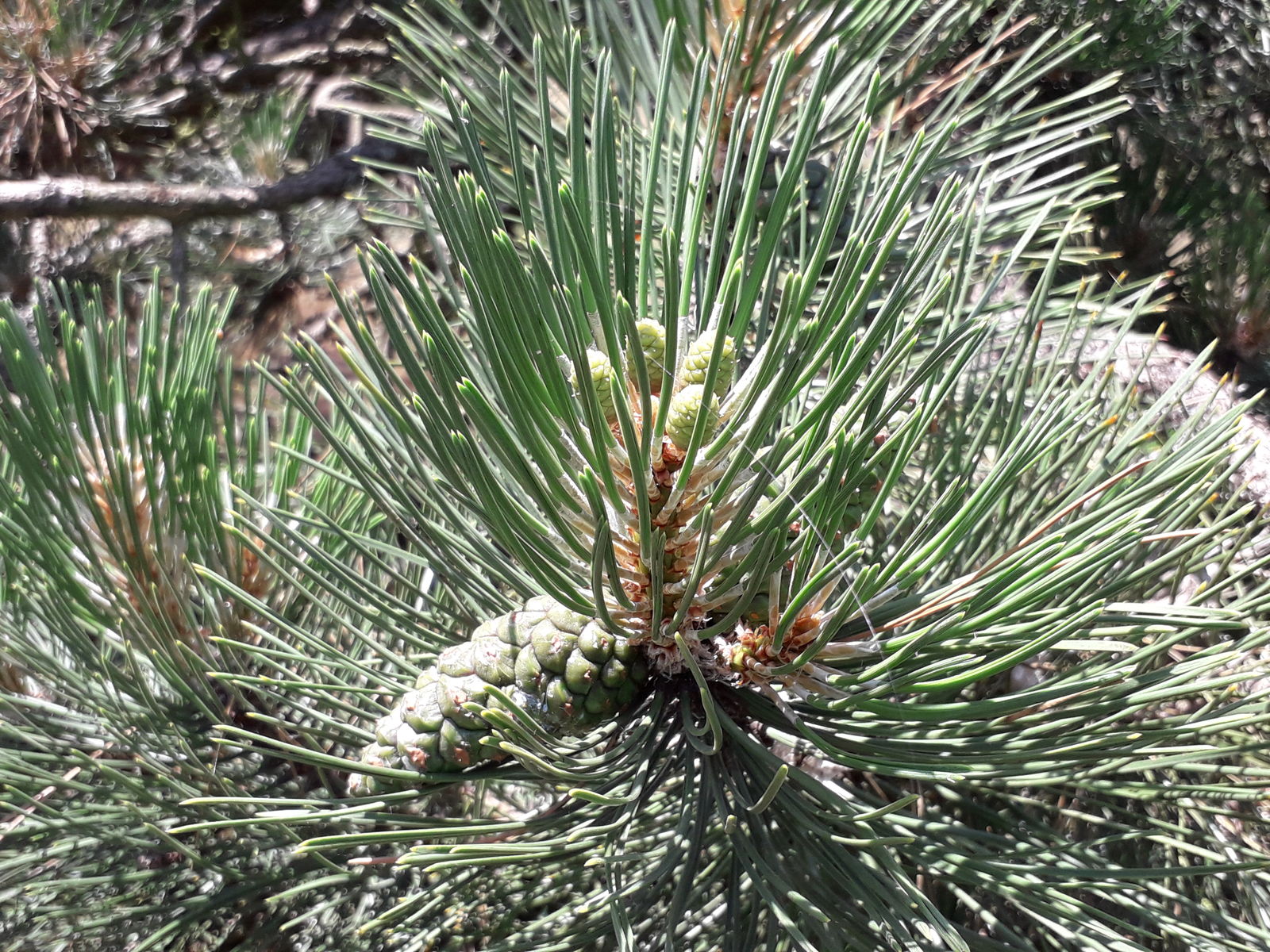
© photo
(c) Dijana Dubrović, some rights reserved (CC BY-NC), uploaded by Dijana Dubrović · cc-by-nc
Mirko Ubović · cc0
Marios Thoma · cc-by
Taken Oct 15, 2014 by Photoflora - Jean-Luc TASSET (©)
Taken Aug 15, 2004 by Photoflora - Jean-Luc TASSET (©)
Taken Jan 1, 1970 by Photoflora - L'Abbé COSTE (©)
© copyright of the Board of Trustees of the Royal Botanic Gardens, Kew.


Global distribution
Austrian pine’s native range forms a continuous belt across Mediterranean mountains, from Spain and Austria to Crimea, the Caucasus, Asia Minor, Cyprus and the mountains of Morocco and Algeria. In France, native populations are localized in Corsica, the Cévennes and Pyrenees; other French plantations result from deliberate reforestation begun in the 19th century, well beyond this strict native range.
- Native8
- Introduced1
- Invasive1
- Austria
- France
- Spain
- Croatia
- Turkey
- Cyprus
- Ukraine
- Morocco
- United States
- New Zealand
Hexagons: regions where the plant occurs. Green dots: native range.1
Identity
Austrian pine (Pinus nigra J.F.Arnold, 1785), also known as black pine or European black pine, is a conifer in the genus Pinus, family Pinaceae. Austrian botanist Johann Franz Xaver Arnold described it in 1785. The species includes five accepted subspecies, distributed from southern Europe to Asia Minor and the Caucasus. 1 5
The epithet nigra, Latin for black, refers to the dark, fissured bark of older Pinus nigra. This feature often rules out the most common look-alike, Scots pine, whose upper bark turns orange with age. 3
Recognition
Check Austrian pine’s bark first in the field. Gray and relatively smooth at the base of young trees, it darkens with age and splits into large gray to blackish plates, without developing the orange upper bark of Scots pine. 3 7
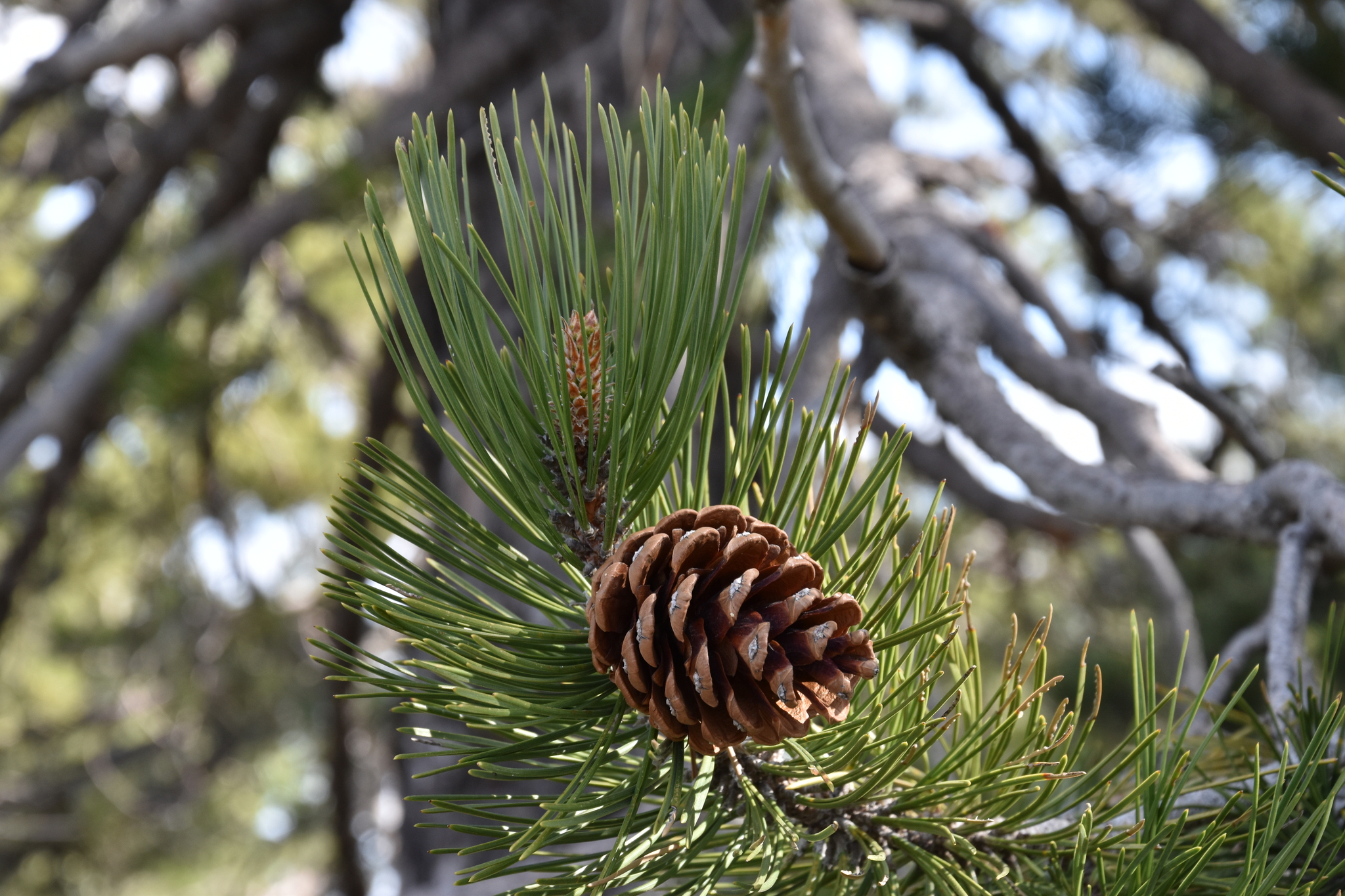
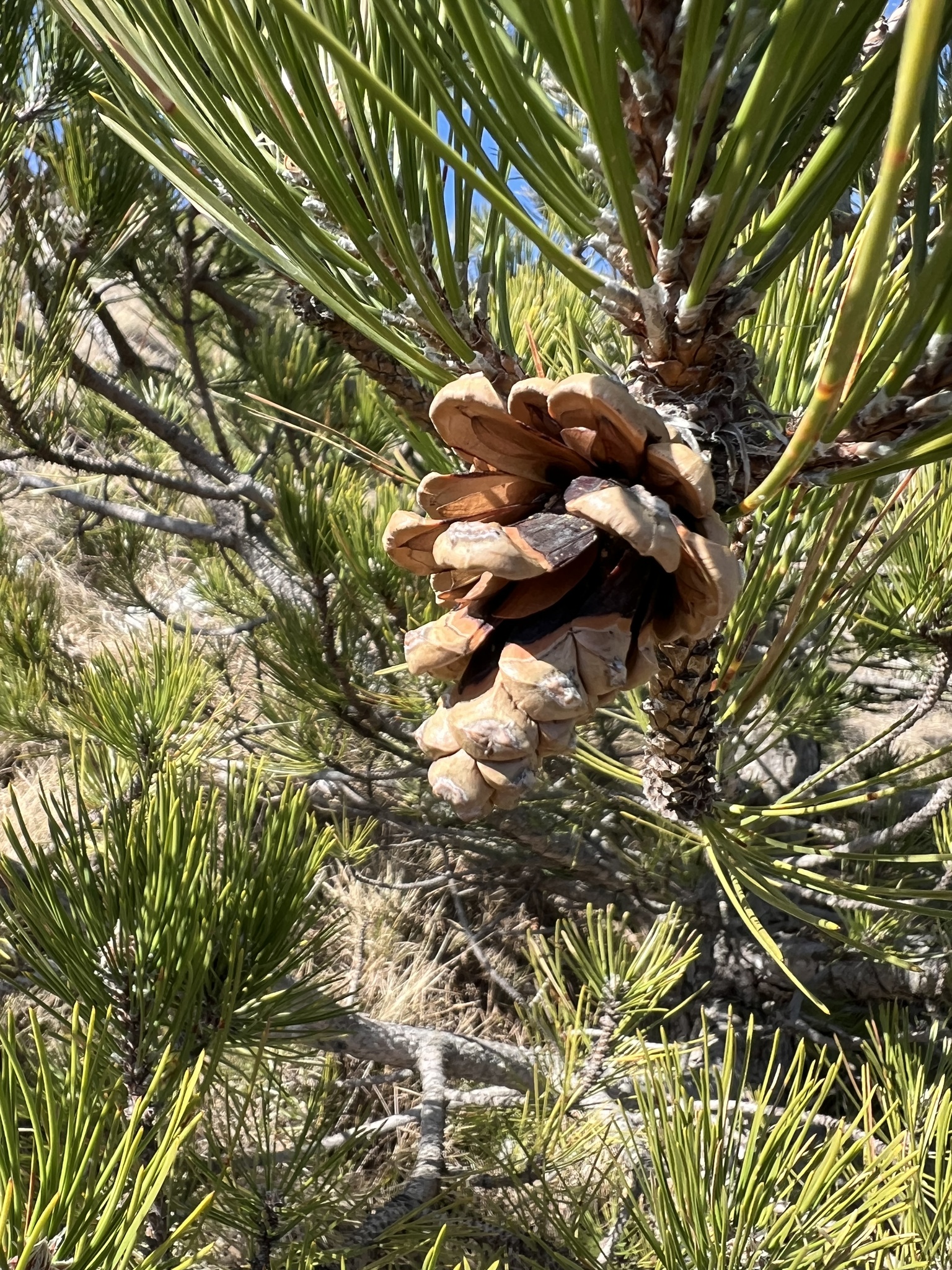
Stiff, dark needles grow in pairs and measure 8–16 cm (3–6.3 in), depending on the population. Western populations, including Salzmann pine, have finer, more flexible needles than eastern ones, whose needles are stiffer and curved. Glossy pale brown, egg-shaped cones measure 5–10 cm (2–4 in) and take two full seasons to mature. 2 7
In gardens and plantations, trees commonly exceed 12 m (39 ft) in height and 8 m (26 ft) in spread. Some old wild trees reach 40 m (131 ft) or more. The young crown is dense and conical, broadening over the decades into an irregular outline, sometimes almost umbrella-shaped. 2 4
Useful taxonomy
Arnold described Pinus nigra J.F.Arnold near Mariazell in Styria in 1785; POWO/WCVP accepts this name. The species comprises five recognized geographical subspecies, associated with distinct names in everyday use:
- Pinus nigra subsp. nigra, Austrian pine in the narrower sense, from the Balkans to eastern Austria;
- Pinus nigra subsp. laricio Palib. ex Maire, Corsican pine, from Corsica, Sicily and southern Italy;
- Pinus nigra subsp. salzmannii (Dunal) Franco, Salzmann pine, from southern France and Spain to Morocco and Algeria;
- Pinus nigra subsp. pallasiana (Lamb.) Holmboe, from Crimea, the Caucasus, Cyprus and Turkey;
- Pinus nigra subsp. dalmatica (Vis.) Franco, restricted to the Croatian coast.
Corsican pine illustrates a common nursery confusion: although sold as a separate species, it is botanically a subspecies of Pinus nigra. 1 5
Habitat and range
A continuous belt of Mediterranean mountains supports native populations, from Spain and Austria to Crimea, the Caucasus, Asia Minor, Cyprus and the mountains of Morocco and Algeria. The altitudinal range extends from sea level to 2000 m (6560 ft), with most stands between 250 and 1600 m (820–5250 ft). Depending on geographical origin, populations favor either limestone or siliceous soils. 1 3
The International Union for Conservation of Nature assesses Austrian pine overall as Least Concern, owing to its wide range and broadly stable population. Subspecies dalmatica, confined to a few islands and the Croatian coast, is instead assessed as Endangered. 6
Outside its original range, Austrian pine has naturalized in the United States Midwest. It is classified as invasive in New Zealand, where shading from its canopy degrades native tussock grasslands. 8
Life cycle and reproduction
Male and female cones share each Pinus nigra tree, making the species monoecious. In spring, male cones release wind-borne pollen that reaches the female cones clustered at the tips of young shoots. 2
After pollination, cones need two full seasons to mature. They then release seeds with wings 15–25 mm (0.6–1 in) long that aid wind dispersal. Open-grown trees in a sunny position often start producing cones at 15–20 years. 7 2
Sowing preserves the species and its geographical subspecies; grafting is needed to reliably reproduce a particular cultivar, including dwarf or columnar forms. 2
Uses and risks
Introduced to France around 1830, Austrian pine stabilized eroded limestone slopes during major mountain-land restoration works undertaken from the 19th century onward in the southern Alps, Lozère and western Corbières. Rapid growth, tolerance of limestone and drought, and good cold resistance made it one of France’s most widely planted forestry trees. 9
Faster growth produces timber that is coarser and less strong than Scots pine wood. Its main uses are construction, fuel and paper pulp. Ornamental planting includes windbreaks and street trees, valued in urban and coastal settings for tolerance of salt, pollution and poor soil. 8
The pine is not classified as toxic to cats or dogs, though swallowed needles and resin may irritate the mouth. A documented danger comes chiefly from pine processionary caterpillars, frequent in Austrian pine plantations in southern France. Their white silken nests contain caterpillars with irritating hairs capable of causing tongue necrosis in a dog that mouths them. 8
Varieties, look-alikes and related plants
Three selections account for much of the small-garden nursery range: ‘Hornibrookiana’, a dwarf spreading form with an RHS Award of Garden Merit; ‘Oregon Green’, with a compact, sculptural outline; and ‘Arnold Sentinel’, a columnar form selected at the Arnold Arboretum in 1984 from Turkish seed. 2
Comparison with these other pines helps identification:
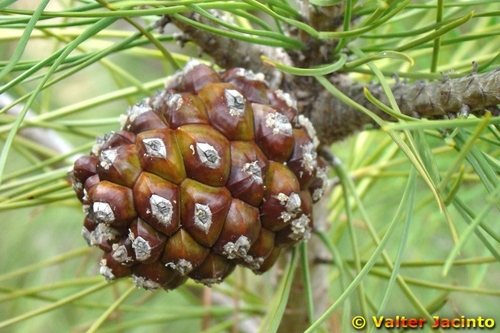
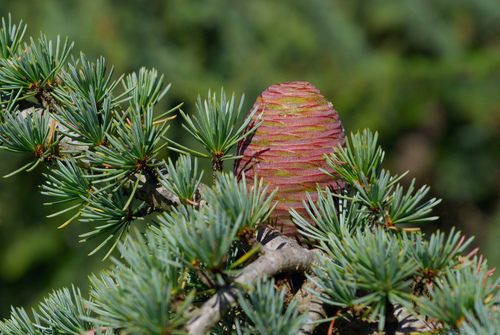
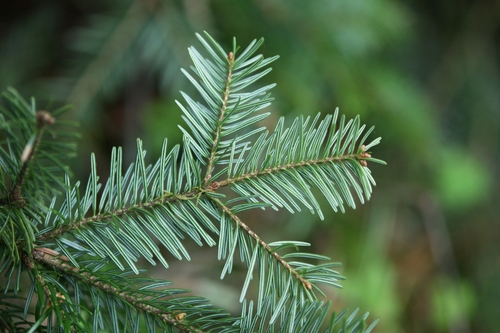
- Pinus sylvestris, with orange upper bark and much shorter, twisted, blue-green needles than Pinus nigra;
- Pinus pinaster, with substantially longer needles than Pinus nigra, mostly coastal in France;
- Pinus halepensis, with finer needles and smaller cones than Pinus nigra, characteristic of hot, dry Mediterranean regions.
Dark fissured bark together with long, stiff needles in pairs distinguishes Austrian pine from all three without needing to inspect its cones closely.
Main sources
- Plants of the World Online / Kew, Pinus nigra J.F.Arnold
- Royal Horticultural Society, Pinus nigra
- NC State Extension, Pinus nigra (Austrian Pine)
- Missouri Botanical Garden Plant Finder, Pinus nigra
- INPN / MNHN, Pinus nigra J.F.Arnold, 1785 (cd_nom 113683)
- IUCN Red List, Pinus nigra assessment (Farjon, 2013)
- Trees and Shrubs Online, Pinus nigra
- Plants For A Future, Pinus nigra
- Centre National de la Propriété Forestière Occitanie, Black pines
Frequently asked questions
How can I tell Austrian pine from Scots pine?
Austrian pine has gray to blackish bark that stays dark even on old trees, with long, stiff, dark needles. Scots pine develops orange bark higher on the trunk and has shorter, twisted, blue-green needles.
Is Austrian pine toxic to cats and dogs?
It is not classified as toxic to these animals. Needles and resin may irritate the mouth if eaten. Pine processionary caterpillars, common on this pine, pose a real, documented danger to dogs in spring.
Where does Austrian pine grow naturally?
Its native range runs from Spain and Austria to Crimea, the Caucasus, Asia Minor, Cyprus and the mountains of Morocco and Algeria. Native French populations are restricted to Corsica, the Cévennes and Pyrenees.
Is Austrian pine threatened?
The IUCN lists the species as a whole as Least Concern because of its wide range and broadly stable population. Subspecies dalmatica, restricted to the Croatian coast, is instead Endangered.
Why was Austrian pine planted so widely in the southern Alps?
Introduced to France around 1830, it gave the best results for stabilizing eroded limestone slopes during large mountain-land restoration projects. Rapid growth and tolerance of limestone and drought made it particularly effective.
Are Corsican pine and Salzmann pine separate species?
No. They are two of the five recognized subspecies of Pinus nigra, native respectively to Corsica and to southern France and Spain. Needle flexibility is a key distinguishing feature.
Is Austrian pine invasive?
It is not invasive within its native European range. In New Zealand, however, it has naturalized and is classified as invasive because its shade degrades tussock grassland.
Similar plants
If you are unsure about a plant’s toxicity, ask a botanist or veterinarian for advice.