
Scots pine (Pinus sylvestris, )
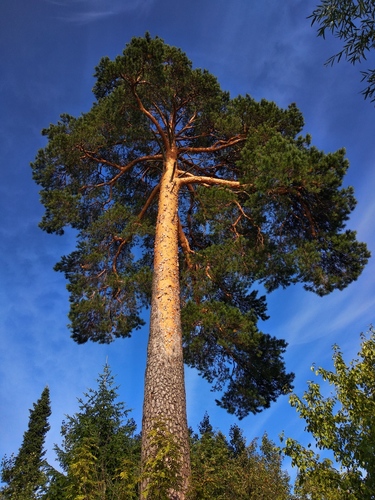
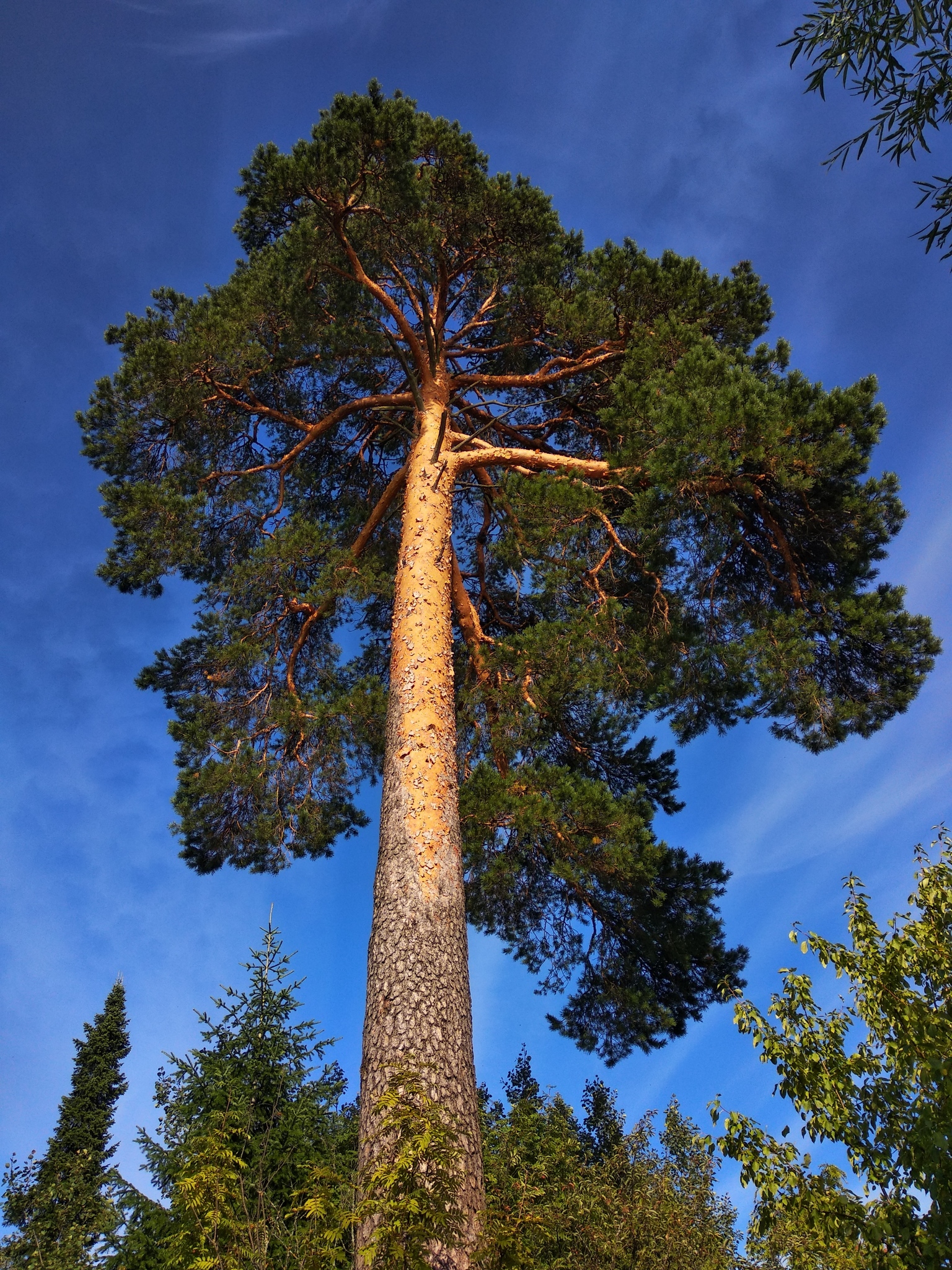
Scots pine (Pinus sylvestris) is a conifer in the Pinaceae family with the widest natural range of any pine, from Scotland and Spain to the Russian Far East. Orange bark peels in plates from the upper trunk and branches, making it recognizable from a distance beneath an irregular crown of long, twisted blue-green needles.
Read moreScots pine, Scotch pine, Baltic pine and European red pine
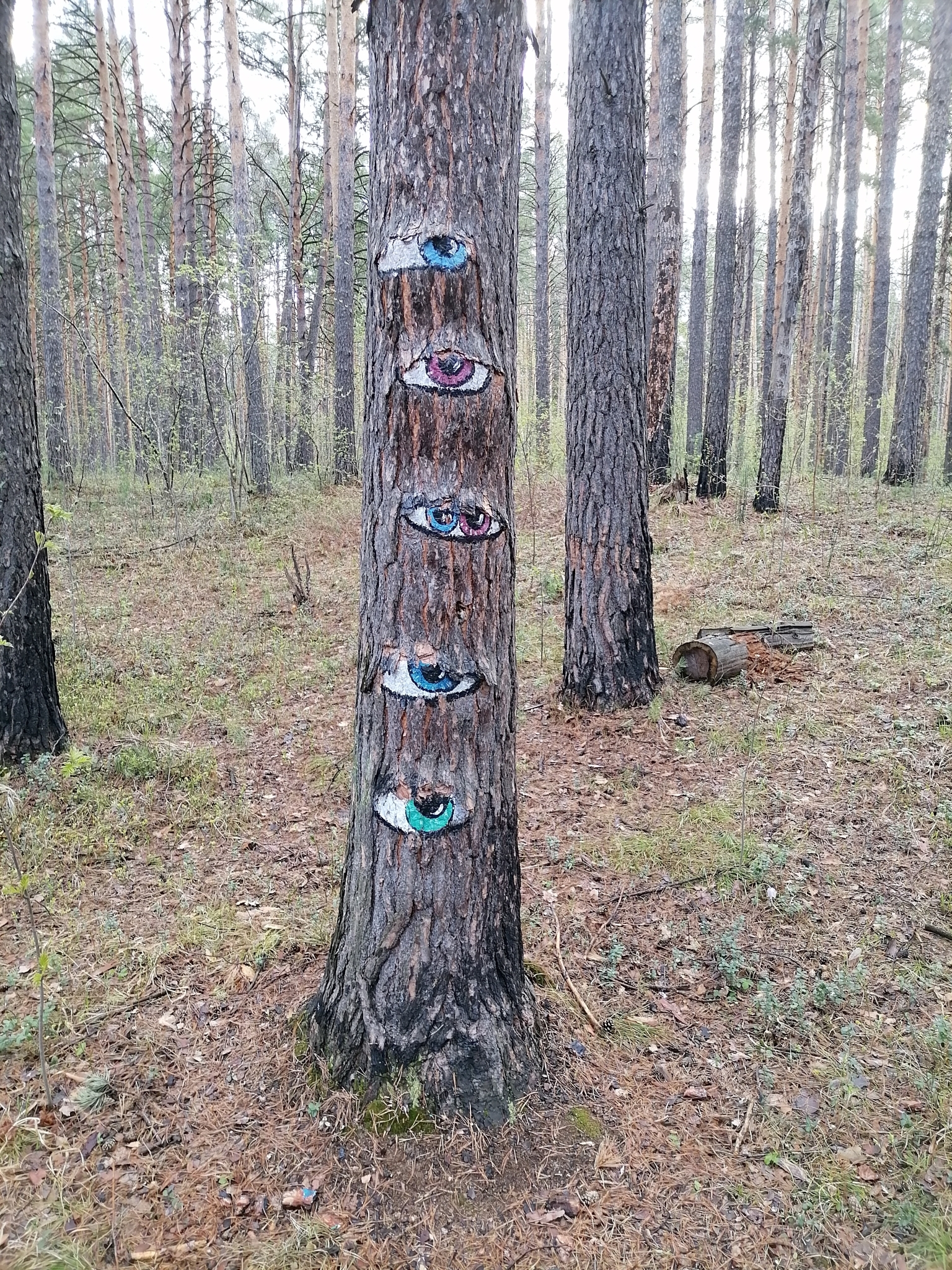
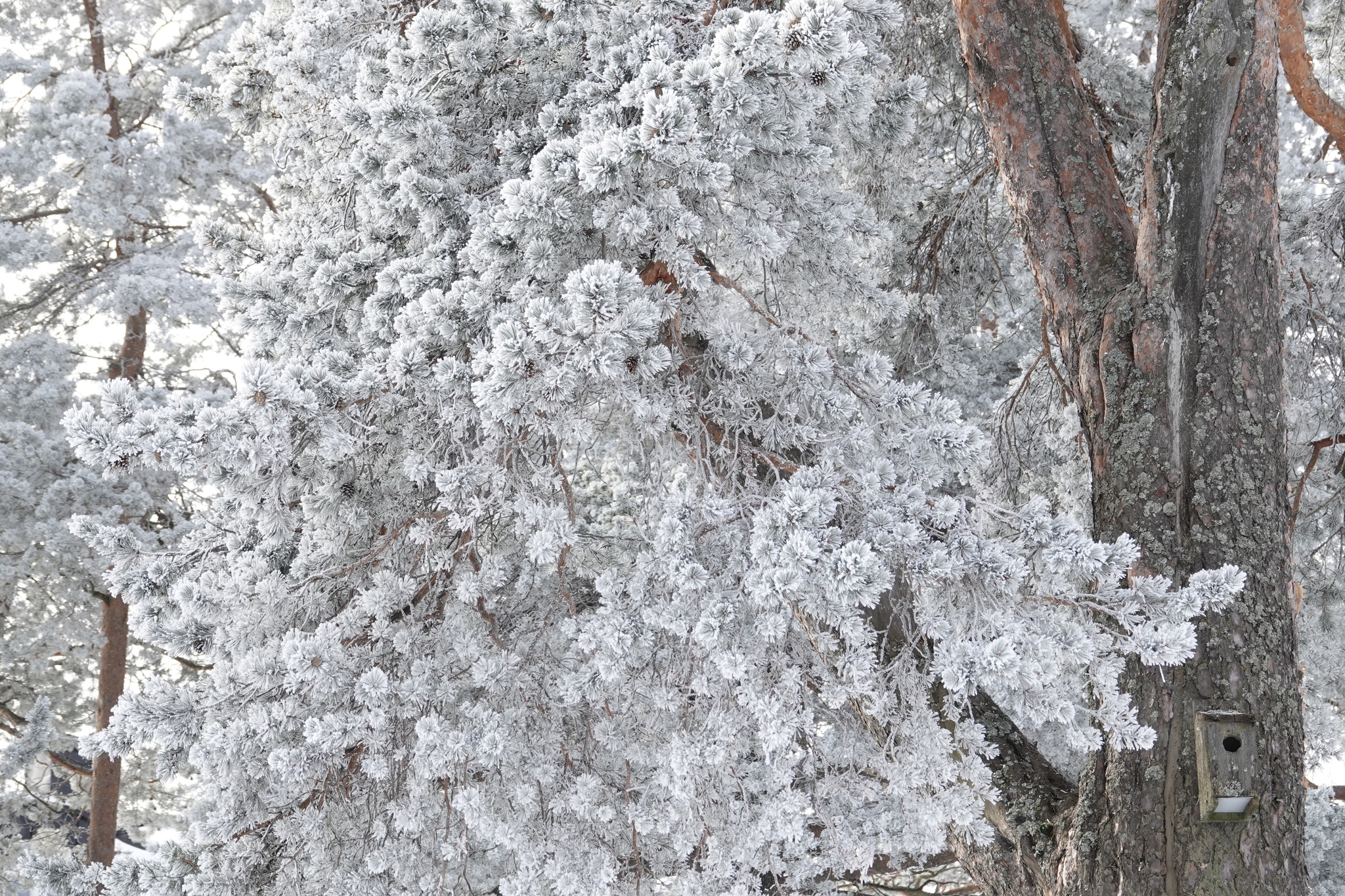
© photo
(c) vyatka, some rights reserved (CC BY-NC), uploaded by vyatka · cc-by-nc
iNaturalist User · cc0
Matthew Blissett · cc0
no rights reserved · cc0
(c) Matthew Blissett, some rights reserved (CC BY) · cc-by
Global distribution
Scots pine has the widest natural range of any pine, from southern Spain and Scotland to the Russian Far East, and from the Caucasus and Anatolia to beyond the Arctic Circle in Scandinavia. In France it mainly grows in mountain ranges and on some poor lowland soils, where it has also been widely planted for forestry.
- Native6
- Introduced1
- France
- United Kingdom
- Norway
- Spain
- Russia
- Turkey
- United States
Hexagons: regions where the plant occurs. Green dots: native range.1
Identity
Scots pine (Pinus sylvestris L., 1753), also known as Scotch pine, Baltic pine or European red pine, is a conifer in the genus Pinus and family Pinaceae. Its natural range is the widest of any pine species, stretching from Scotland and Spain to the Russian Far East. 1 5
Latin silva, meaning forest, gives rise to the epithet sylvestris, describing a plant of woodland. The English name Scots pine reflects its status as the only truly native pine in the British Isles, a survivor of the great Caledonian forest that developed after the last ice age. 4
Recognition
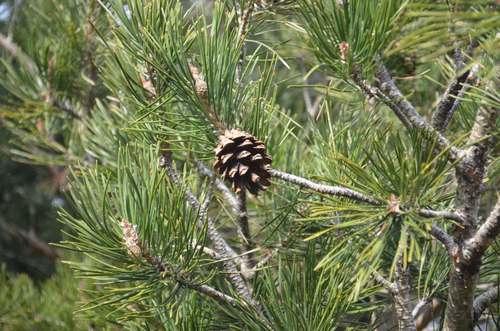
Orange bark high on the trunk is the first feature to check, since needles and cones vary more between pines. Thin plates peel from the upper trunk and branches to reveal a distinctive orange to coppery surface, while the lower trunk retains thick, gray, fissured bark. No other common European pine colors its upper trunk this way, making it an effective guide against the usual misidentifications. 4 5
Paired needles measure 3–7 cm (1.2–2.8 in) long and are twisted, blue-green to gray-green. Egg-shaped gray-brown cones are also 3–7 cm (1.2–2.8 in) long. The central boss on each cone scale lacks a dark ring, unlike the clear ring seen on mountain pine, Pinus mugo. 3 4
A mature tree commonly stands 20–30 m (66–98 ft) tall, with records of 35 m (115 ft) or more in centuries-old northern European trees. Dense and conical when young, the crown becomes thinner and irregular with age, sometimes almost umbrella-shaped on very old isolated specimens. 5 2
Useful taxonomy
Within POWO/WCVP, Pinus sylvestris L., described by Linnaeus in 1753, is the accepted name. Rather than recognizing separate species, POWO places the populations in three geographic varieties: the widespread Eurasian typical variety sylvestris; hamata, whose blue-green foliage persists through winter in the Balkans, Caucasus and Turkey; and mongolica, with very resinous buds, in eastern Siberia and Mongolia. 5 1
Older botanical literature retains several names as synonyms of varieties or local forms, without independent taxonomic standing:
- Pinus sylvestris var. rotundata (Link) Link, historical synonym
- Pinus sylvestris subsp. engadinensis (Heer) Asch. & Graebn., historical synonym
- Pinus sylvestris proles scotica (Beissn.) P.K.Schott, historical synonym
- Pinus sylvestris subsp. nevadensis (Christ) Heywood, historical synonym
Of these four synonyms, scotica is especially frequent in forestry literature. It refers to relict populations of Scotland’s Caledonian forest, distinctive in their history but still included botanically in Pinus sylvestris rather than recognized as a separate taxon. 1
Habitat and range
Scotland and southern Spain mark the western parts of a native range reaching the Russian Far East and northern China. From the Caucasus and Anatolia, it extends north beyond the Arctic Circle in Scandinavia. No other pine covers such a broad area. 1 5
Poor, acidic, well-drained ground often supports the species where competition from broadleaf trees is limited: heaths, bogs, sandy coastal dunes and mountain pinewoods. In France, it mainly occupies mountain ranges and some sandy lowland soils, with extensive additional planting for forestry. 6 3 7
An immense range and generally stable population support the International Union for Conservation of Nature classification of Pinus sylvestris as Least Concern. Scotland’s historical Caledonian forest has nevertheless contracted to a few relict areas, including Loch Maree and Glenmore, despite ongoing restoration programs. 8 4
Life cycle and reproduction
Each Scots pine bears separate male and female cones, making Pinus sylvestris monoecious. In spring, small yellow clusters of male cones release windborne pollen that reaches reddish female cones grouped at the tips of young shoots. 4 6
A pollinated cone needs two full seasons to mature. It enlarges in the first year and releases winged seeds during the second winter or the following spring. Some cones remain closed for several years, holding seeds in reserve rather than indicating a problem. 4
Isolated trees with good light often produce their first cones at 10–15 years. Reproductive maturity comes later in dense stands, where suppressed young trees receive less light. The typical species is propagated by seed, while grafting preserves a selected cultivar’s traits, such as dwarf growth or golden foliage. 6 2
Uses and risks
Timber from Scots pine is widely used for structural work and joinery. It was long traded as Riga pine or northern redwood, names associated with the Baltic port that exported it to western Europe. Resin, pitch and turpentine are other traditional products. 6 5
Scots pine is not classified as toxic to cats or dogs, although needles and resin can irritate the mouth if swallowed. The most serious documented hazard comes from the pine processionary caterpillar rather than the tree. White silken nests form in the crown, and the caterpillars release irritating hairs that can cause tongue necrosis if a dog bites one, an accident frequently seen in southern France in spring. 6
Ornamental uses include windbreaks, stabilizing sandy dunes and specimen planting for the decorative orange bark. Tolerance of salt and air pollution also makes it common in coastal and urban planting, provided it receives full sun. Shade from buildings or taller trees thins the crown and reduces its ornamental value. 3
Varieties, look-alikes and related plants
For small gardens, three cultivars account for much of the horticultural selection: 'Watereri', a slow-growing dwarf with silvery blue-gray foliage; 'Fastigiata', narrow and columnar; and 'Beuvronensis', a rounded dwarf suited to containers or rock gardens. All three are grafted to preserve their characteristics. 2
Common identification problems involve the following pines:
- Pinus nigra has longer, darker, stiffer needles and bark that remains gray to blackish even on old trees;
- Pinus mugo is a bushy, multistemmed species with a clear dark ring around the boss of each cone scale;
- Pinus pinaster has much longer needles and less orange bark, and is mainly coastal in France.
The combination of orange upper bark and short, twisted needles separates Scots pine from Pinus nigra, Pinus mugo and Pinus pinaster without needing to examine the cones.
Main sources
- Plants of the World Online / Kew, Pinus sylvestris L.
- Royal Horticultural Society, Pinus sylvestris - Scots pine
- NC State Extension, Pinus sylvestris (Scots Pine)
- Woodland Trust, Scots pine (Pinus sylvestris)
- Trees and Shrubs Online, Pinus sylvestris
- Plants For A Future, Pinus sylvestris
- INPN / MNHN, Pinus sylvestris L., 1753 (cd_nom 113703)
- IUCN Red List, Pinus sylvestris assessment (Gardner, 2013)
Frequently asked questions
Why is Scots pine bark orange?
Thin plates peel from the upper trunk and branches, exposing an orange to coppery layer. Clearly visible on mature trees, this is the most reliable way to distinguish it from other European pines.
How can you tell Scots pine from black pine?
Scots pine has shorter, twisted blue-green needles and bark that turns orange high on the tree. Black pine has longer, darker, stiffer needles and bark that stays gray to blackish even on old trees.
Is Scots pine toxic to cats and dogs?
It is not classified as toxic to these animals. Needles and resin can irritate the mouth if swallowed. Pine processionary caterpillars, often found on this tree, pose a serious documented danger to dogs.
Where does Scots pine grow naturally?
It has the widest natural range of any pine, from Scotland and Spain to the Russian Far East, and from the Caucasus to beyond the Arctic Circle in Scandinavia.
Is Scots pine threatened?
The IUCN lists it as Least Concern because of its immense range and generally stable population, despite local declines in historical stands such as Scotland’s Caledonian forest.
Why was Scots pine chosen as Scotland’s national tree?
It is the only truly native pine in the British Isles, a remnant of the great Caledonian forest that developed after the last ice age. This symbolic status led to its selection in 2014.
Can Scots pine grow in a small garden?
The typical species soon becomes too large for a small plot. Dwarf cultivars such as 'Watereri' and 'Beuvronensis' provide the same blue-gray foliage at a size suited to a small garden or container.
Similar plants
If you are unsure about a plant’s toxicity, ask a botanist or veterinarian for advice.