
Sugar pine (Pinus lambertiana, )
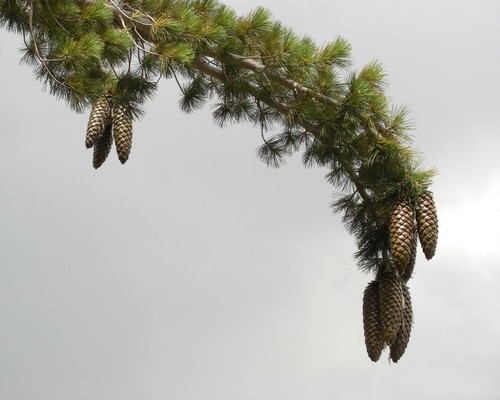
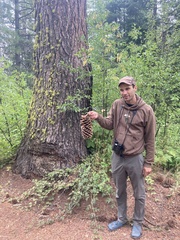
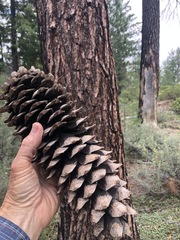
Sugar pine (Pinus lambertiana) is a huge conifer in the Pinaceae family native to Pacific coastal mountains of North America, from Oregon to Baja California in Mexico. The tallest and most massive of all pines, it bears hanging cones that rank among the longest of any conifer.
Read moreSugar pine and Great sugar pine

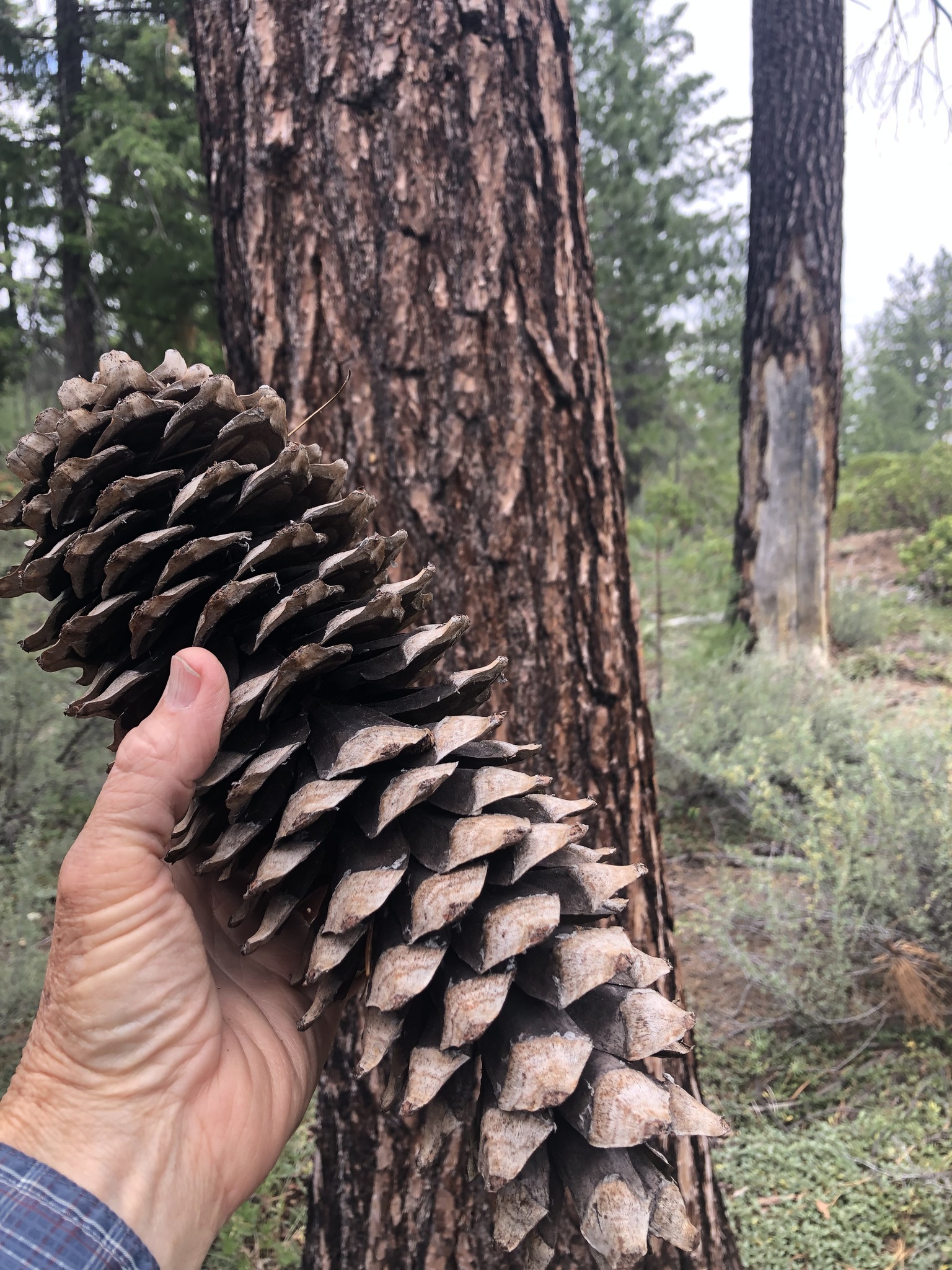


© photo
(c) Jason Hollinger, some rights reserved (CC BY-ND) · cc-by-nd
Adam J. Searcy · cc-by
Bob Earle · cc-by
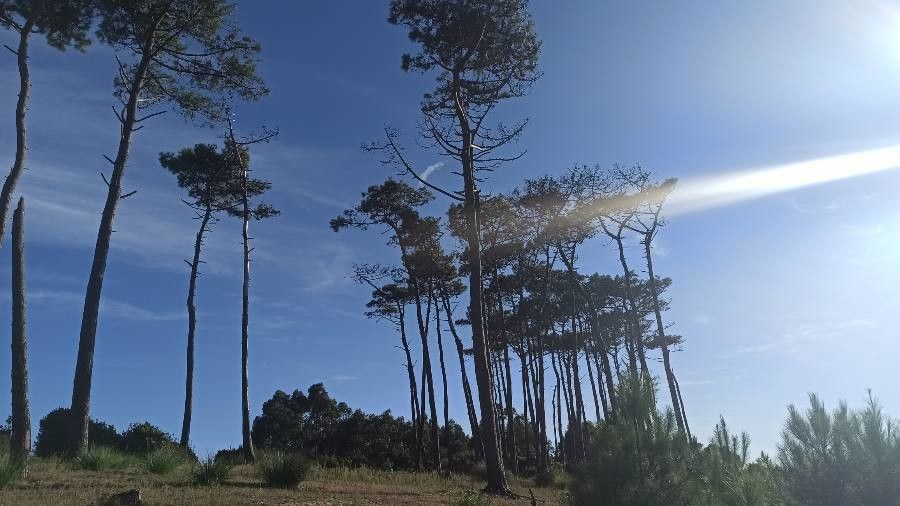
Taken May 25, 2022 by Страхил Иванов (cc-by-sa)
© copyright of the Board of Trustees of the Royal Botanic Gardens, Kew.




Global distribution
Sugar pine is native from central Oregon to the Sierra San Pedro Mártir in northern Baja California, Mexico, through the Cascades, Sierra Nevada and California Coast Ranges. More than 80% of the population is in California.
Identity
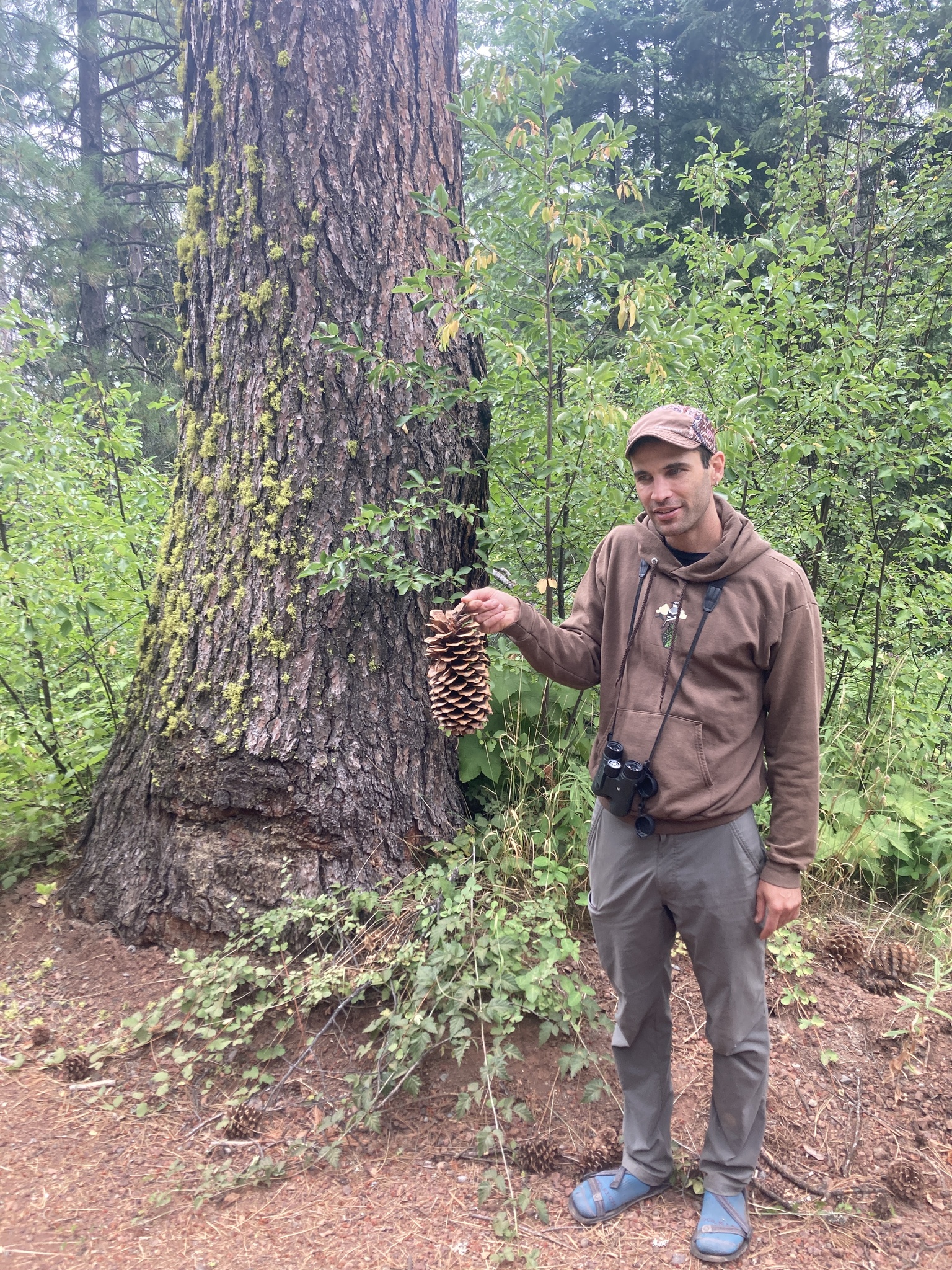
Sugar pine (Pinus lambertiana Douglas, 1827), also known as great sugar pine, is a conifer in the Pinaceae family native to Pacific coastal mountains of North America. Its hanging cones, 25–50 cm (10–20 in) long, rank among the longest of any conifer. They immediately separate it from ponderosa and Jeffrey pines, neighbors in the same forests. Sugar pine also surpasses every other known pine in height and mass, far exceeding those two species. 1 3
Scottish naturalist David Douglas collected sugar pine in southern Oregon in 1826. On that occasion he measured a felled trunk 560 cm (18.4 ft) in diameter, a record that has remained unmatched. The scientific description appeared in 1827 in the Transactions of the Linnean Society of London. The epithet lambertiana honors British botanist Aylmer Bourke Lambert, author of a major monograph on Pinus. 8 3
Sweet resin seeping from wounds in the trunk gives sugar pine its common name. Rich in cyclitols, it was traditionally collected and chewed as gum by Indigenous peoples of the Pacific coast. Large quantities have a laxative effect. 3 5
Recognition
No other pine bears such long cones: sugar pine's cylindrical, hanging cones commonly measure 25–50 cm (10–20 in), with exceptional reports near 66 cm (26 in). A green cone can weigh up to 2 kg (4.4 lb). If a squirrel or jay cuts it loose high in the tree, it becomes a dangerous falling object. 3 2
Five needles grow in each bundle, measuring 5–11 cm (2–4.3 in) long, blue-green and slightly twisted. Smooth, gray bark on young trees becomes purplish brown to gray-brown and splits into broad plates with age. 3 2
Mature sugar pines commonly reach 40–60 m (131–197 ft), occasionally more. The tallest measured living specimen stands 78.94 m (259 ft) near the Rogue River in southwestern Oregon, higher than any other recorded pine. Trunks often exceed 1–2 m (3.3–6.6 ft) in diameter, with reports of more than 3 m (9.8 ft) in the oldest trees. The broad, irregular crown carries long, almost horizontal branches with cones suspended from their tips. 3
Useful taxonomy
For sugar pine, POWO/WCVP accepts Pinus lambertiana Douglas. Several geographical or historical varieties have been described, most now treated as synonyms:
- Pinus lambertiana var. purpurea Lemmon, 1895, for purple-tinted cones
- Pinus lambertiana var. minor Lemmon, 1888, for smaller populations
- Pinus lambertiana var. martirensis Silba, 1990 and its form subsp. martirensis (Silba) Silba, 2009, for the isolated Sierra San Pedro Mártir population in Baja California
Cone color and the size of marginal populations are the main distinctions behind these names. Both vary continuously with elevation and latitude. The binomial Pinus lambertiana provides a more stable reference than the variety names. 1
Habitat and range
Central Oregon marks the northern end of the range, which runs through the Cascades, Sierra Nevada and Coast Ranges to the Sierra San Pedro Mártir in northern Baja California, Mexico. More than 80% of the population is concentrated in California. 2 4
Elevation varies greatly with latitude: 335–1,645 m (1,100–5,400 ft) in the Cascades, 610–2,285 m (2,000–7,500 ft) in the Sierra Nevada and 2,150–2,775 m (7,050–9,100 ft) in Mexico's Sierra San Pedro Mártir at the southern limit. Sugar pine almost always grows in mixed forest with Douglas fir, ponderosa pine, white fir, incense cedar and Jeffrey pine. It rarely makes up more than 25% of a stand at any given site. 2
Intermediate shade tolerance is another feature: young sugar pine tolerates shade better than ponderosa pine, but less well than incense cedar or Douglas fir. This tolerance declines markedly with age. Despite severe local losses, its wide range supports an IUCN Red List status of Least Concern. 2 7
Life cycle and reproduction
Each sugar pine carries both male and female cones. Cone crops are irregular, with good years averaging every four years and intervals of two to seven years between sites. Trees must exceed 31 cm (12 in) in diameter before half the trees in a stand produce cones regularly. 2
Heavy losses occur between pollination and mature seed. Only 40–50% of pollinated conelets mature because of animal predation and natural abortion. The sugar pine cone beetle (Conophthorus lambertianae) alone can destroy up to 75% of the crop in some years. 2
Winged seeds fall when ripe in autumn. Chipmunks, Steller's jays and squirrels disperse many of them and cache them in the ground. Sierra Nevada black bears also eat the seeds in season. Seeds germinate on the ground the following spring without a strict stratification requirement. 2 5
Uses and risks
Lightweight, pale, straight-grained wood offers excellent dimensional stability and bonds easily with glue. These qualities made sugar pine valuable for foundry patterns, piano keys, organ pipes and food crates, where the lack of a resinous odor was appreciated. 2
Traditional foods of several Indigenous Pacific coast peoples included sugar pine seeds eaten raw, roasted or ground into flour. Resin distilled into turpentine was used externally to disinfect wounds and internally for coughs and digestive complaints. 5
Specific toxicity to cats, dogs or horses is not recorded for sugar pine, unlike ponderosa pine with its isocupressic acid. As with most conifers, however, eating large quantities of needles or resin may cause mild, temporary digestive irritation. 5
Varieties, look-alikes and related plants
White pine blister rust (Cronartium ribicola) remains the species' most serious threat. Accidentally introduced from Europe in the early 20th century, this fungus forms lethal trunk cankers. Sugar pine is among the most susceptible North American white pines. The disease spreads through currants and gooseberries of the genus Ribes, obligatory alternate hosts for the fungus. 2
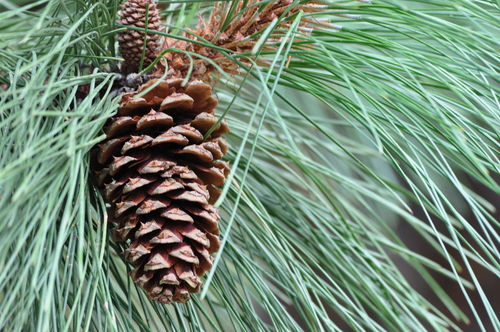
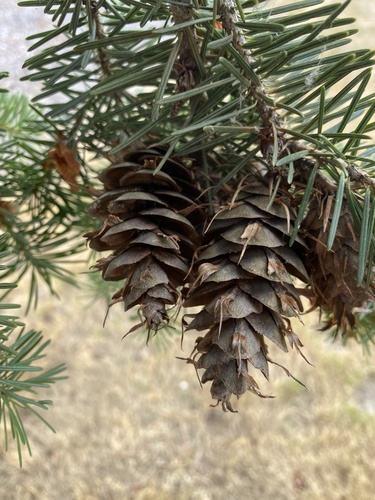
Ponderosa pine (Pinus ponderosa) and Jeffrey pine (Pinus jeffreyi) are the most frequent sources of confusion in the same mountain forests. Their cones measure 8–13 cm (3–5 in), much shorter than sugar pine cones, and their needles grow in threes. Sugar pine has needles in fives and long cones hanging from branch tips. 2
Main sources
- Plants of the World Online / Kew, Pinus lambertiana Douglas
- USDA Forest Service, Silvics of North America, Volume 1: Conifers (1990), Sugar Pine (Pinus lambertiana); archived original chapter 2026-09-01
- The Gymnosperm Database, Pinus lambertiana
- USDA PLANTS Database, Pinus lambertiana (sugar pine)
- Plants For A Future, Pinus lambertiana
- Tela Botanica / BDTFX, Pinus lambertiana - sugar pine
- IUCN Red List of Threatened Species, Pinus lambertiana assessment
- International Plant Names Index, Pinus lambertiana Douglas
Frequently asked questions
Why is sugar pine called sugar pine?
The name comes from the sweet resin that seeps from wounds in the trunk. Indigenous peoples of the Pacific coast formerly chewed it as gum; large quantities can have a laxative effect.
Is sugar pine really the tallest pine in the world?
Yes. It is the tallest and most massive known pine species. Trees commonly exceed 40–60 m (131–197 ft), with a measured record of 78.94 m (259 ft) near the Rogue River in southwestern Oregon.
Are sugar pine cones dangerous?
A green cone cut from a branch high in the tree by a squirrel or jay can weigh up to 2 kg (4.4 lb) and become a dangerous falling object beneath a mature tree.
Is sugar pine threatened?
The IUCN lists it as Least Concern because of its wide range, but white pine blister rust has severely weakened some populations, especially in the northern part of its range.
Can sugar pine be grown in France?
Yes, in deep, well-drained soil and full sun. It remains rare outside collections and large arboretums because few sites have room for a tree destined to exceed 40 m (131 ft).
How can I tell sugar pine from ponderosa pine?
Cone length is the most reliable clue: sugar pine cones reach 25–50 cm (10–20 in), compared with 8–13 cm (3–5 in) in ponderosa pine. Ponderosa needles grow in threes rather than fives.
Is sugar pine toxic to cats and dogs?
No specific toxicity is recorded for this species. As with most conifers, eating large quantities of needles or resin may cause mild, temporary digestive irritation.
Similar plants
If you are unsure about a plant’s toxicity, ask a botanist or veterinarian for advice.