
Roseroot (Rhodiola rosea, )
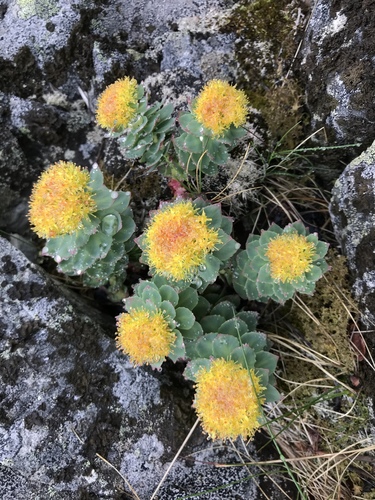
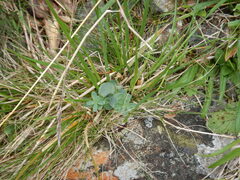
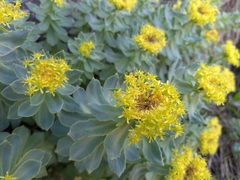
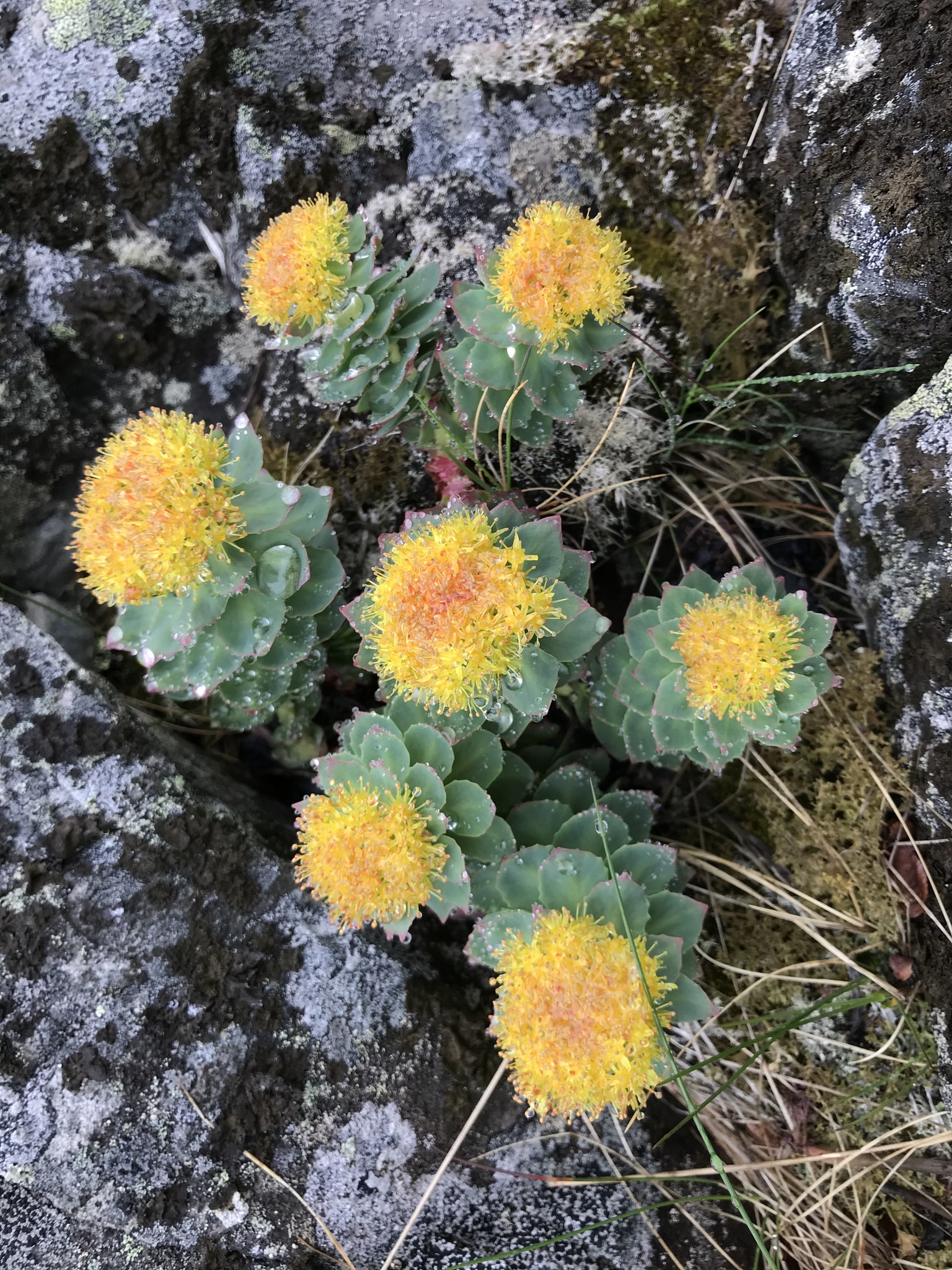
Roseroot (Rhodiola rosea L., 1753) is a succulent perennial in the Crassulaceae family, native to circumpolar Arctic cliffs and high mountains of Europe, Asia and North America. Its thick, knotted rhizome has golden-brown bark and smells of roses when cut, explaining the scientific name and the name golden root. Male and female plants are separate, with yellow flowers in dense cymes followed by follicles that turn red when ripe.
Read moreRoseroot, Golden root, Arctic root, Rose root, Roseroot stonecrop and Rhodiola
Allow a few hours of direct sun per day, preferably morning or evening.

© photo
(c) Thomas Brooks, some rights reserved (CC BY-NC-SA), uploaded by Thomas Brooks · cc-by-nc-sa
iNaturalist User · cc0
© copyright of the Board of Trustees of the Royal Botanic Gardens, Kew.
Global distribution
Rhodiola rosea has a circumpolar Arctic and alpine native range, covering northern tundra, high mountains of Europe, Siberia and Central Asia, and some North American mountain ranges. In France it is present but rare, restricted to alpine and subalpine zones of the Alps and Pyrenees.
- Native7
- Scandinavia and Iceland
- Scotland and the British Isles
- Alps and Pyrenees (France)
- Carpathians and Balkans
- Siberia and Central Asia
- Alaska and the Rocky Mountains
- Eastern Canada
Hexagons: regions where the plant occurs. Green dots: native range.1
Identity
Roseroot (Rhodiola rosea L., 1753), also known as golden root or Arctic root, is a succulent perennial in the genus Rhodiola, family Crassulaceae. The genus name derives from Greek rhodon, “rose,” referring less to its yellow flowers than to the strong fragrance of a freshly cut rhizome, much stronger than the scent of the flowers themselves. 1 4
Older floras sometimes place this plant under Sedum rosea, explaining its historical association with stonecrops; today Rhodiola is the accepted genus. Golden root describes the rhizome’s bronze-brown bark, which develops golden highlights when dried. Gatherers use this feature outside the flowering season, when yellow flowers are unavailable for identification. 5 9
Recognition
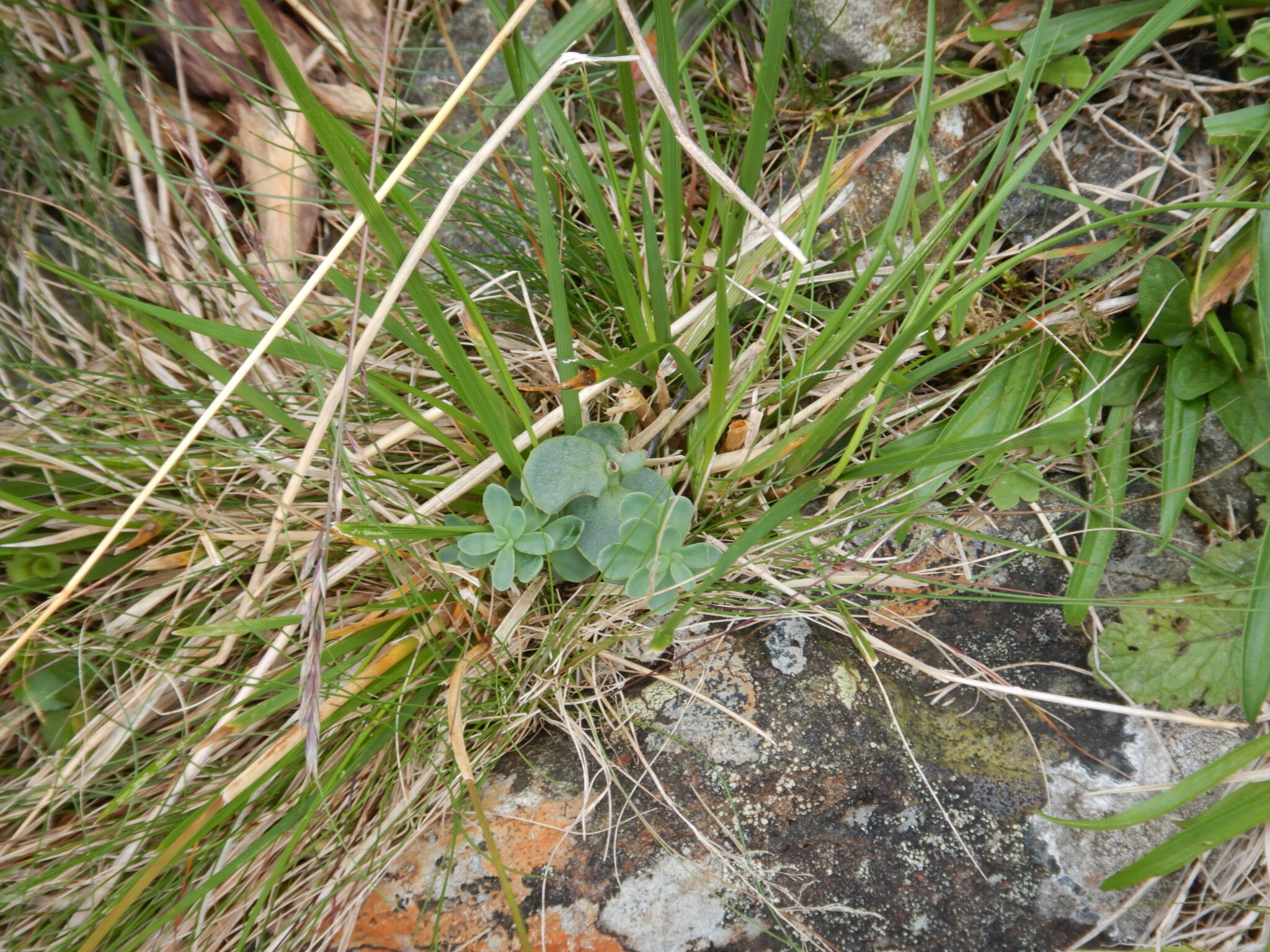
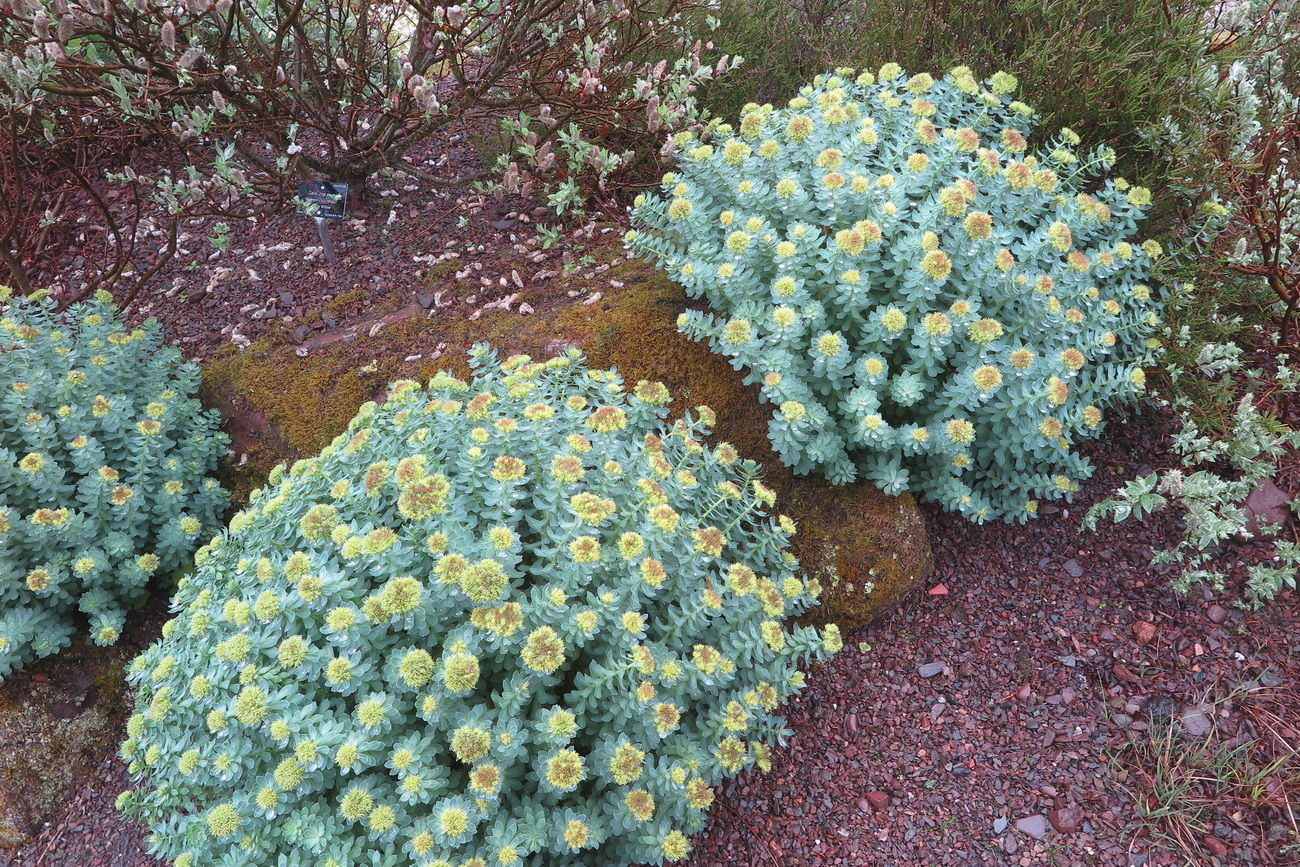
Fleshy upright stems of Rhodiola rosea grow together from a knotted, scaly rhizome. Usually 5–35 cm (2–14 in) tall and rarely taller, the plant has a compact habit suited to ridges and wind-exposed crevices. 5 9
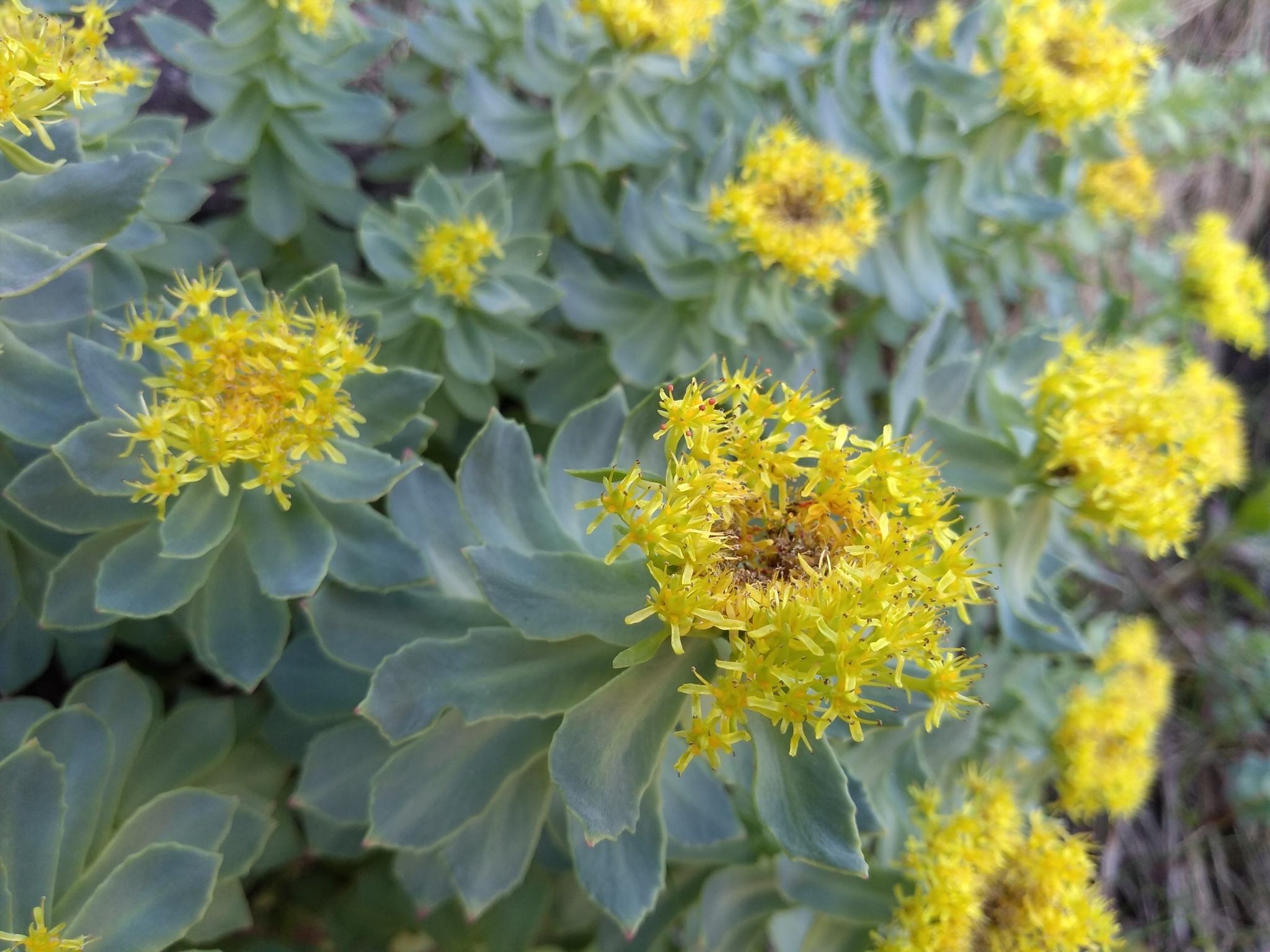
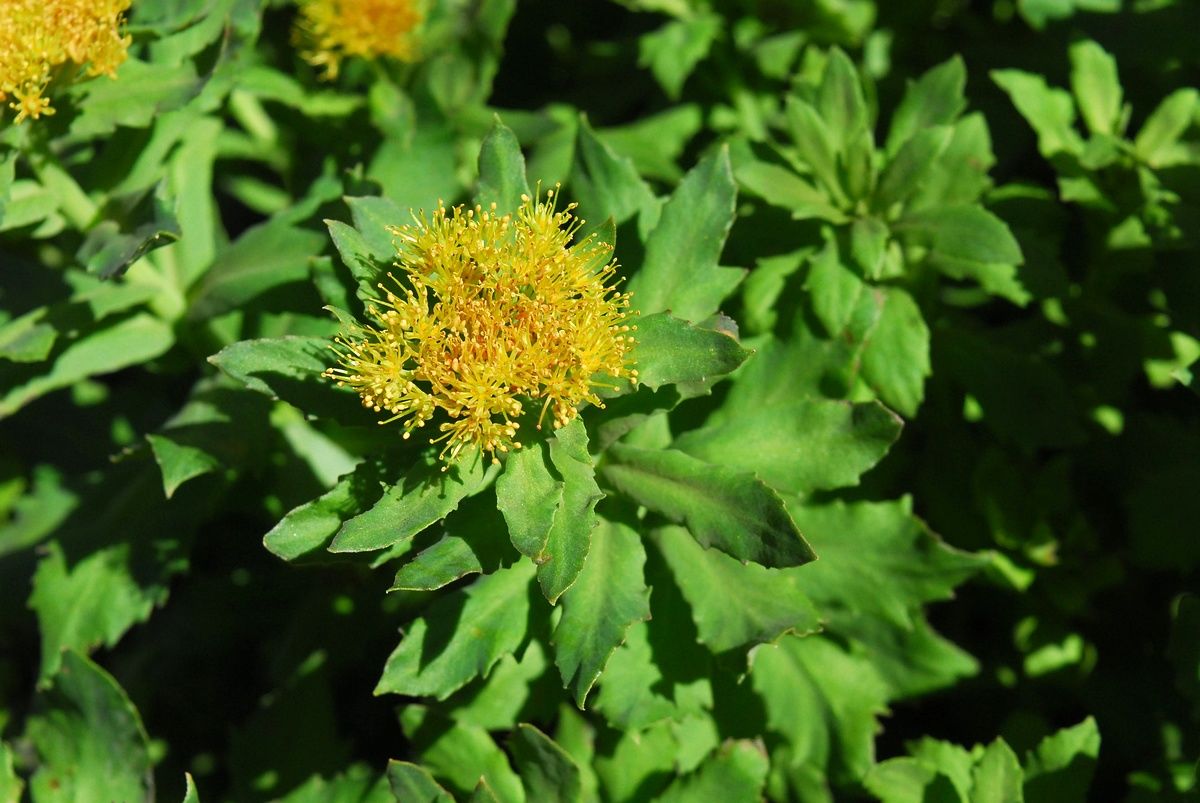
Alternate, fleshy, blue-green leaves are oval to oblong, sometimes finely toothed toward the tip. Like other Crassulaceae, Roseroot stores water in its leaves, helping it withstand drought on the poor, freely draining soils of its natural habitat. 5
Roseroot is dioecious: male and female flowers grow on separate plants, never together on one individual. Small yellow to yellow-green flowers form dense terminal cymes from May to August in its northern range. Fertilized flowers develop follicles that turn red as they ripen, contrasting clearly with the green foliage. 9 5
Useful taxonomy
Kew accepts the name Rhodiola rosea L., published in Linnaeus’s Species Plantarum in 1753. Its extensive synonymy reflects a long history of overlap with Sedum. 1 2
- Sedum rosea (L.) Scop. (botanical synonym)
- Sedum rhodiola Vill. (botanical synonym)
- Rhodiola arctica Boriss. (botanical synonym)
- Rhodiola iremelica Boriss. (botanical synonym)
Historical regional floras often use Sedum rosea; this is the name to search when an older reference does not mention Rhodiola. A North American relative, Rhodiola integrifolia, is frequently confused with Roseroot but more often has purple rather than yellow flowers. 3 4
Habitat and range
Arctic and alpine landscapes define the circumpolar native range of Rhodiola rosea: northern tundra, sea cliffs in Scandinavia, Iceland and Scotland, and high mountains in Europe, including the Alps, Pyrenees and Carpathians. It also occurs in Siberia, Central Asia and some North American ranges, from Alaska and the Rockies to eastern Canada. 1 9
Within France, Roseroot is present but rare, restricted to poor rocky ground and scree in the alpine and subalpine zones of the Alps and Pyrenees. A regional order has protected it in Alsace since 1993 to limit collecting, independently of any national threat category. 7
Across that range, Roseroot occupies exposed sites with poor mineral soils and excellent drainage: salt-sprayed cliffs, windy ridges and rocky scree. It grows from sea level to over 2,000 m (6,560 ft) in the relevant alpine ranges. Its preference for extreme habitats explains local scarcity more than a general decline across the species. 5
Life cycle and reproduction
Altitude and latitude shift Roseroot’s flowering within May to August across its northern range. Because each plant has only one sex, an isolated individual can flower abundantly without ever producing seed if a plant of the complementary sex is absent for cross-pollination. 9
Short Arctic and alpine growing seasons impose a rapid sequence: stems emerge at thaw, flowering is concentrated in summer, and prolonged winter dormancy follows beneath snow. In cultivation, rhizome divisions taken in spring or fall establish in 3–6 weeks in a freely draining mineral substrate. Seedlings may need several years to flower for the first time. 5
Uses and risks
Rhizomes harvested from 3–5-year-old plants and slowly dried are used in herbal medicine as an adaptogen, a category of plants thought to help the body tolerate stress. The principal studied compounds, salidroside and rosavins, vary markedly with the geographic origin of the plant material. 8
Health agencies remain cautious about benefits. The US National Center for Complementary and Integrative Health considers the scientific evidence insufficient to confirm a specific benefit, while describing use for up to 12 weeks as “possibly safe.” Reported mild side effects include dizziness, headaches, insomnia and dry mouth. 6
US sale as a dietary supplement does not involve prior evaluation by the Food and Drug Administration. Several manufacturers have received federal warning letters over health claims judged unproven. 9
Since February 2023, Rhodiola, including Roseroot, has been listed in CITES Appendix II. The listing regulates international trade in wild rhizomes and aims to protect natural populations from commercial harvesting pressure. 9
Varieties, look-alikes and related plants
Widely distributed horticultural cultivars of Roseroot are lacking. Producers and rock-garden enthusiasts mainly grow it under the species name rather than a cultivar name. 5
Identification most often becomes difficult with Rhodiola integrifolia, a North American plant sometimes treated as a subspecies; its flowers are more often dark purple than the yellow flowers of Roseroot. In Asia, Rhodiola crenulata, also CITES-listed, has distinct traditional uses and should not be confused with Roseroot in supplements. 3 9
Young Roseroot clumps may resemble a rock-garden Sedum when only the foliage is visible. A freshly cut rhizome is more decisive than leaf shape: Roseroot has a clear rose scent, while Sedum does not. Historical placement under Sedum rosea helps explain the persistent confusion. 5
Main sources
- Plants of the World Online / Kew, Rhodiola rosea L.
- International Plant Names Index, Rhodiola rosea L.
- USDA GRIN Global Taxonomy, Rhodiola rosea L.
- Integrated Taxonomic Information System, Rhodiola rosea L.
- Plants For A Future, Rhodiola rosea
- National Center for Complementary and Integrative Health, Rhodiola
- INPN / MNHN, Rhodiola rosea L., 1753 - Roseroot
- Panossian, Wikman & Sarris, 2010, Rosenroot (Rhodiola rosea) - traditional use, chemical composition, pharmacology and clinical efficacy
- Wikipedia (en), Rhodiola rosea - CITES listing and range
Frequently asked questions
Is Roseroot toxic?
No acute toxicity is documented for the plant. Prolonged supplement use has been associated with mild side effects, including insomnia, dizziness and dry mouth; discuss these with a healthcare professional.
Why does the Roseroot rhizome smell like roses?
The rhizome contains aromatic compounds similar to those of roses, especially noticeable when it is cut. This scent inspired the Latin epithet rosea and the name golden root.
What is an adaptogen?
An adaptogen is a plant thought to help the body adapt to stress. For Roseroot, health agencies find the scientific evidence insufficient to confirm a specific use.
Why does my Roseroot not flower?
The species is dioecious: each plant bears either male or female flowers. An isolated plant can flower without ever setting seed if no plant of the complementary sex grows nearby.
Can Roseroot be confused with a Sedum?
Confusion is common from leaves alone. The most reliable feature is the cut rhizome, which gives a clear rose scent in Roseroot that rock-garden Sedum plants lack.
Is Roseroot protected?
The genus Rhodiola, including Roseroot, has been listed in CITES Appendix II since 2023 because of pressure from commercial harvesting. Some regions, including Alsace in France, also protect it through regional orders.
How do I propagate Roseroot?
Dividing the rhizome in spring or fall is the quickest and most reliable method. Seed is possible, but germination is slow and a seedling’s sex becomes apparent only at its first flowering.
Similar plants
If you are unsure about a plant’s toxicity, ask a botanist or veterinarian for advice.