
Stone bramble (Rubus saxatilis, )
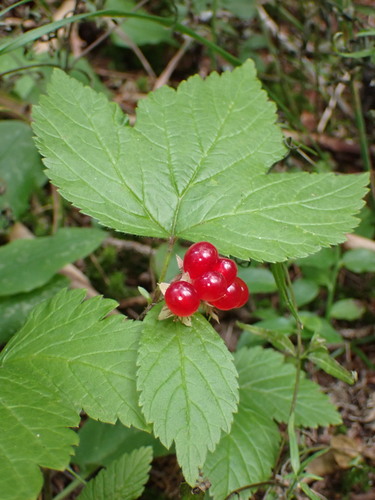
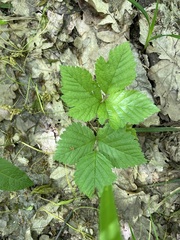
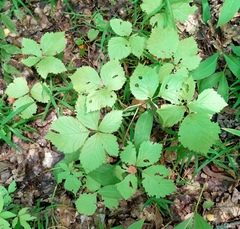
Stone bramble (Rubus saxatilis L., 1753) is a perennial subshrub in the Rosaceae family, found from Europe’s limestone mountains to Siberia and the western Himalayas. It stays low, has few prickles and spreads by creeping runners over screes and shaded woodland edges. Its red fruit consists of just a few large, glossy drupelets, unlike a typical blackberry.
Read moreStone bramble and Roebuck berry
Place in indirect light or in a shaded room.
Partial to light shade; tolerates more light in mountain habitats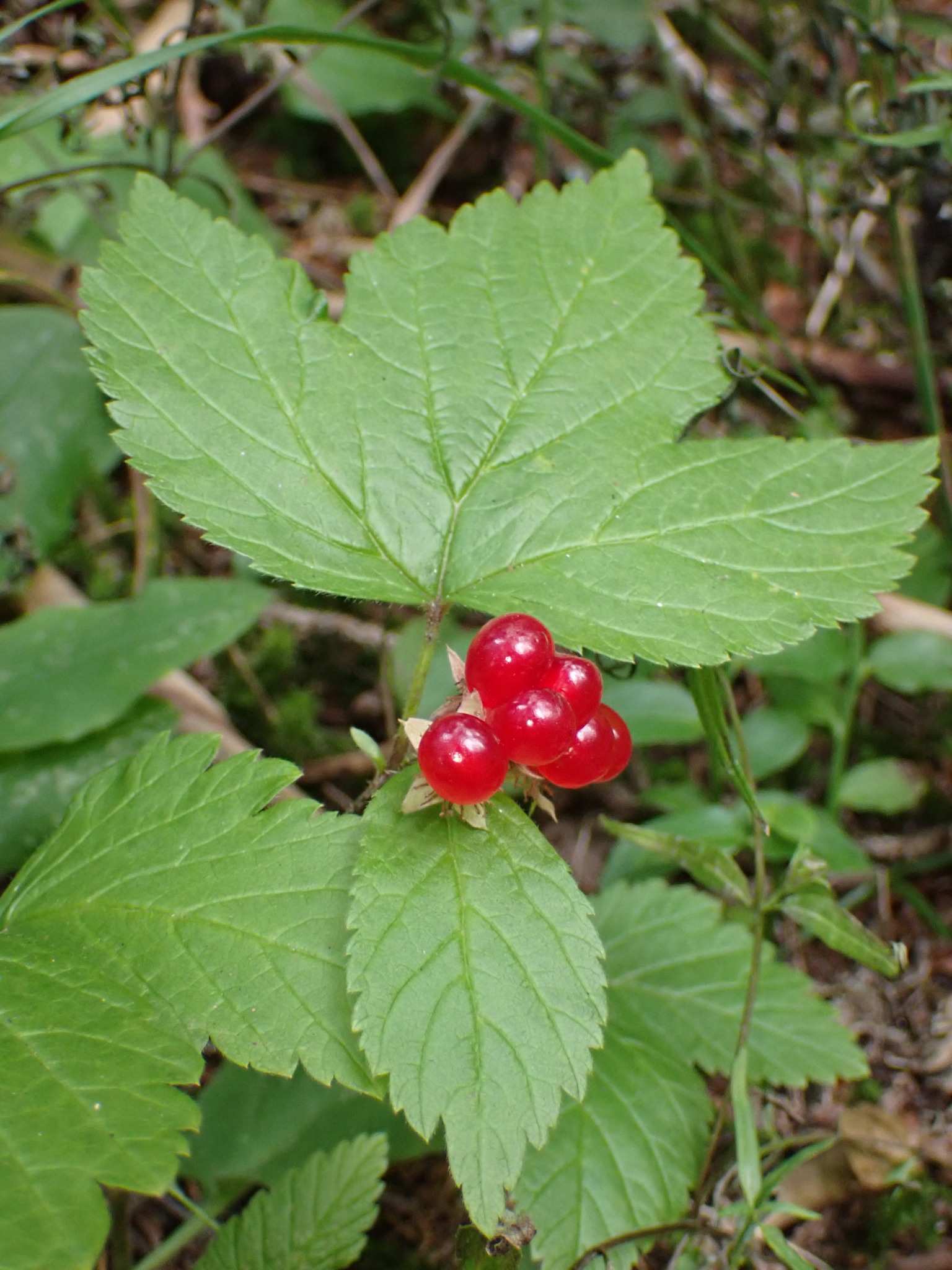


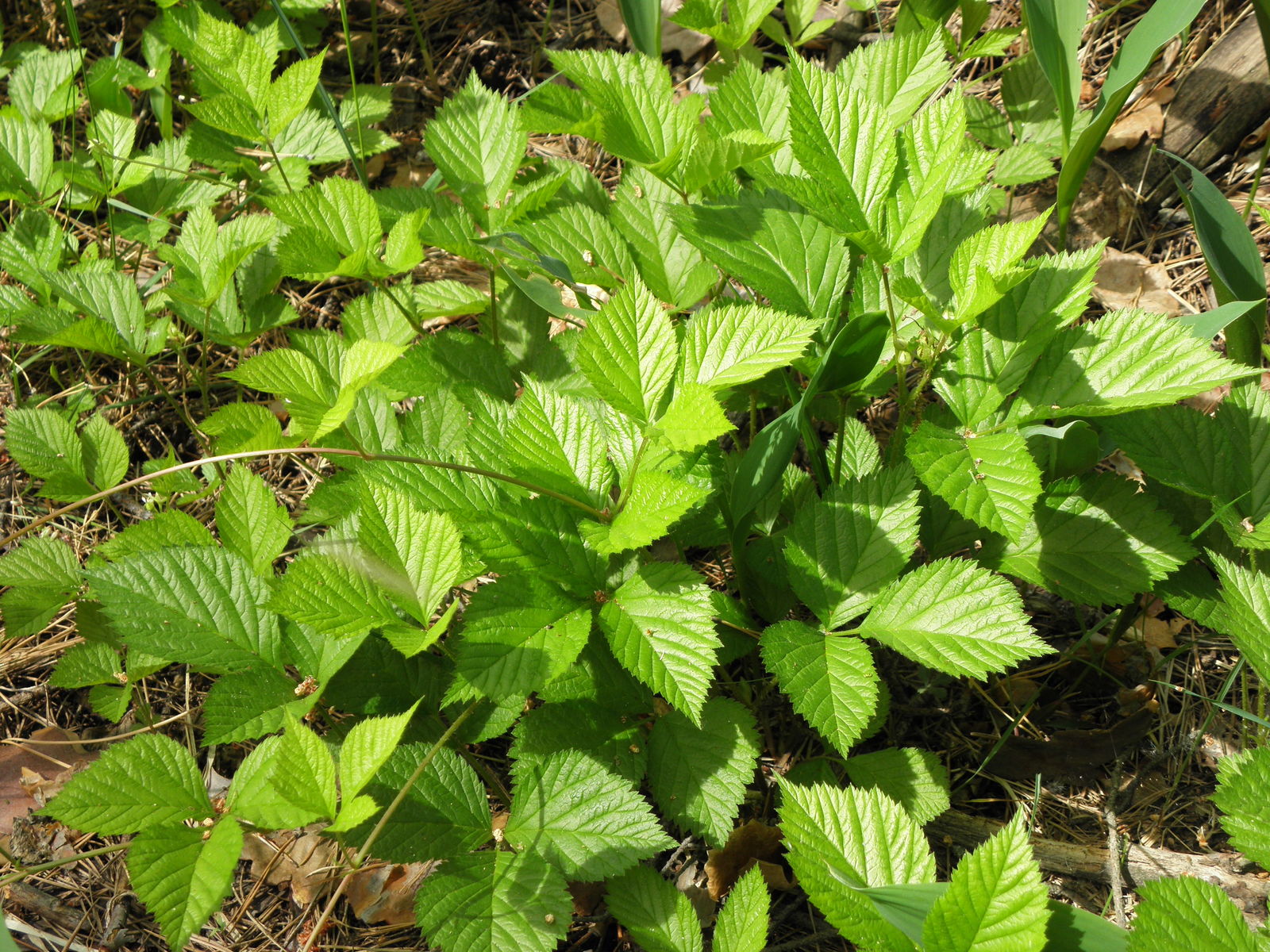
© photo
(c) Gian-Andrea Catrina, some rights reserved (CC BY-NC), uploaded by Gian-Andrea Catrina · cc-by-nc
Силаева Татьяна Борисовна · cc0
Татьяна Горбушина · cc0
Taken Aug 15, 2019 by Photoflora - Jean-Luc TASSET (©)
Taken May 15, 1990 by Photoflora - Jean-Luc TASSET (©)
Taken Jul 15, 2016 by Photoflora - Jean-Luc TASSET (©)
Taken Jul 15, 2010 by Photoflora - Benoit BOCK (©)
© copyright of the Board of Trustees of the Royal Botanic Gardens, Kew.


Global distribution
The native range of Rubus saxatilis is Eurosiberian and cold circumboreal, extending from Greenland and Iceland across Europe to Siberia, the Russian Far East and the western Himalayas. In mainland France it remains a limestone-loving mountain plant, absent from the west where suitable limestone relief is lacking.
- Native8
- Greenland
- Iceland
- British Isles and Ireland
- Mainland France (limestone mountains)
- Switzerland
- Central and northern Europe
- Russia and Siberia
- Russian Far East and western Himalayas
Hexagons: regions where the plant occurs. Green dots: native range.1
Identity
Stone bramble (Rubus saxatilis L., 1753) is an accepted species of Rubus in the Rosaceae family. Linnaeus described it in Species Plantarum in 1753. Its flowering stems stand only 10–30 cm (4–12 in) tall and carry few prickles, setting it apart from the large, heavily armed brambles of hedgerows. 1 2
Rocky limestone habitats give this plant several of its names. In French, ronce des rochers describes the screes and limestone faces of its upland habitat. The standardized French flora name grélotte des rochers coexists with that everyday name, with neither used exclusively. 6 4
The English name stone bramble points to the same rocky habitat. The less frequent name roebuck berry associates the plant with roe deer, regular visitors to its woodland fruit. 8
Recognition
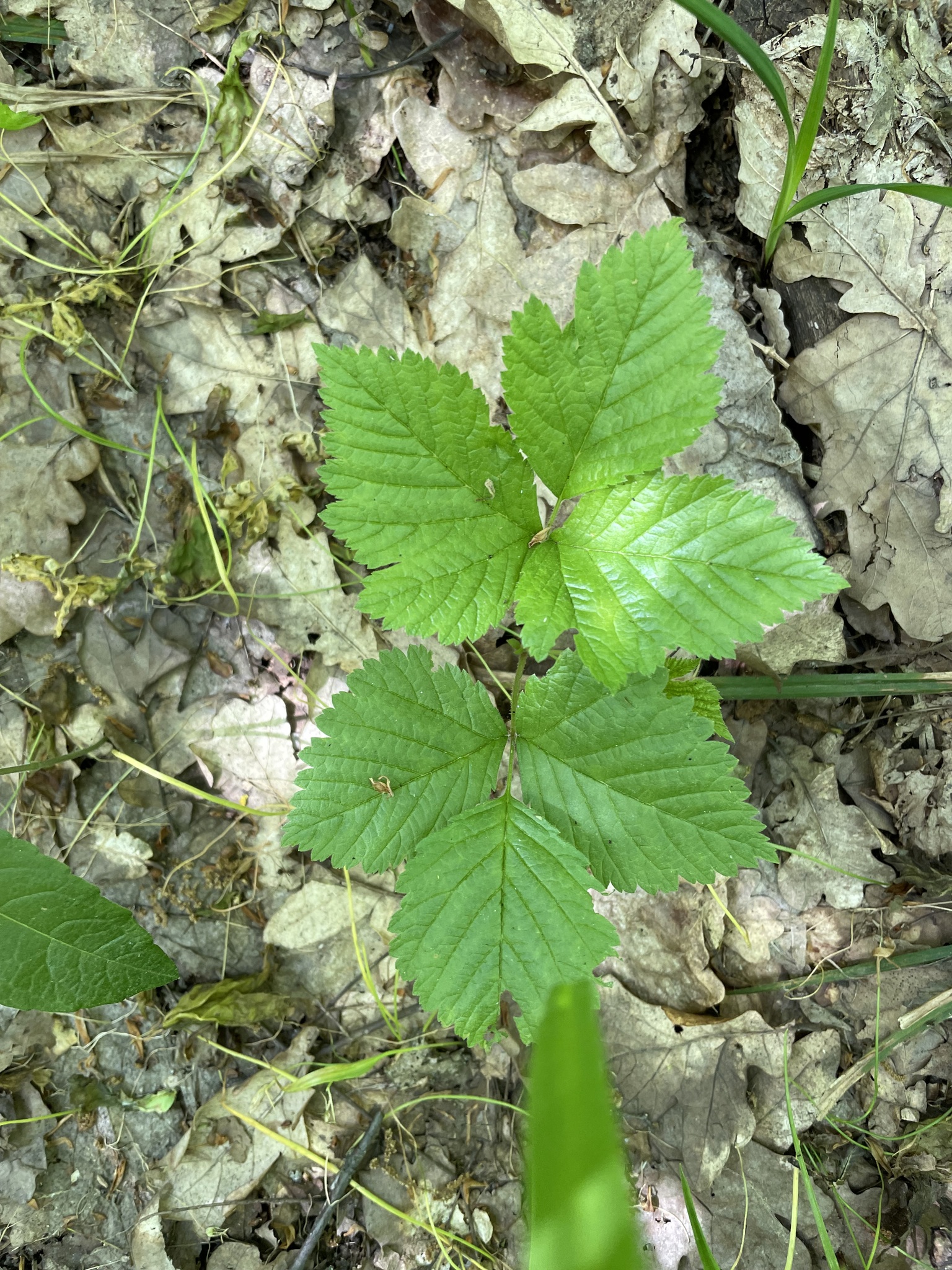
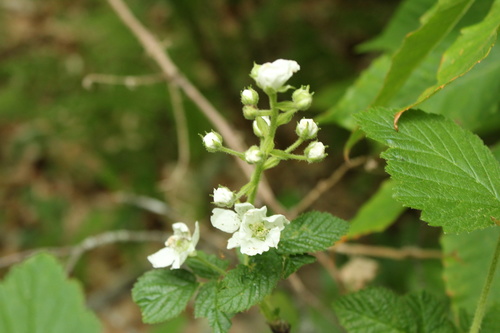
Low perennial subshrubs of Rubus saxatilis bear upright flowering stems 10–30 cm (4–12 in) tall. Creeping runners root where they touch the soil and can extend much farther. Unlike most Rubus, its prickles are fine, sparse or sometimes absent. 7 3
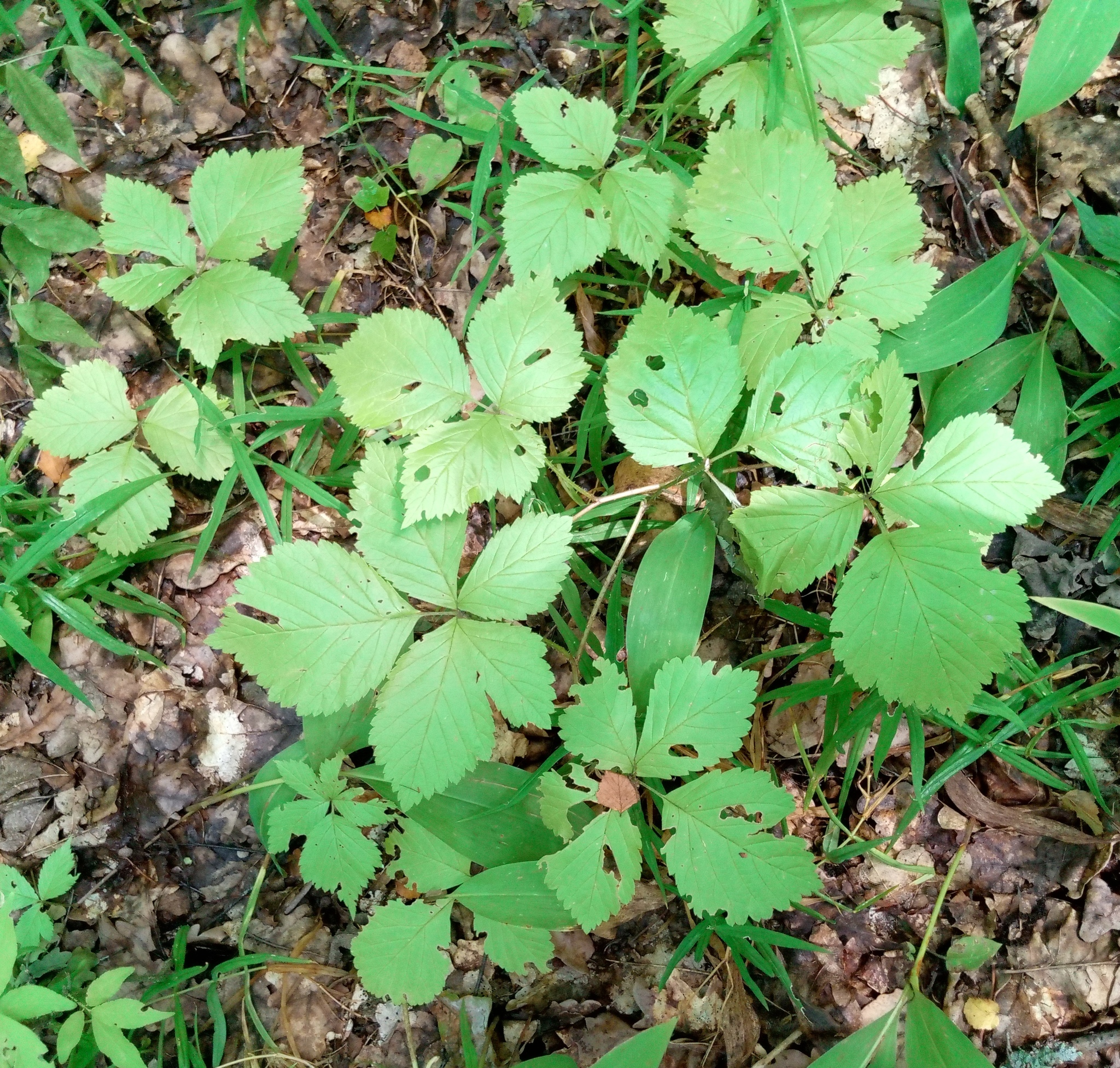
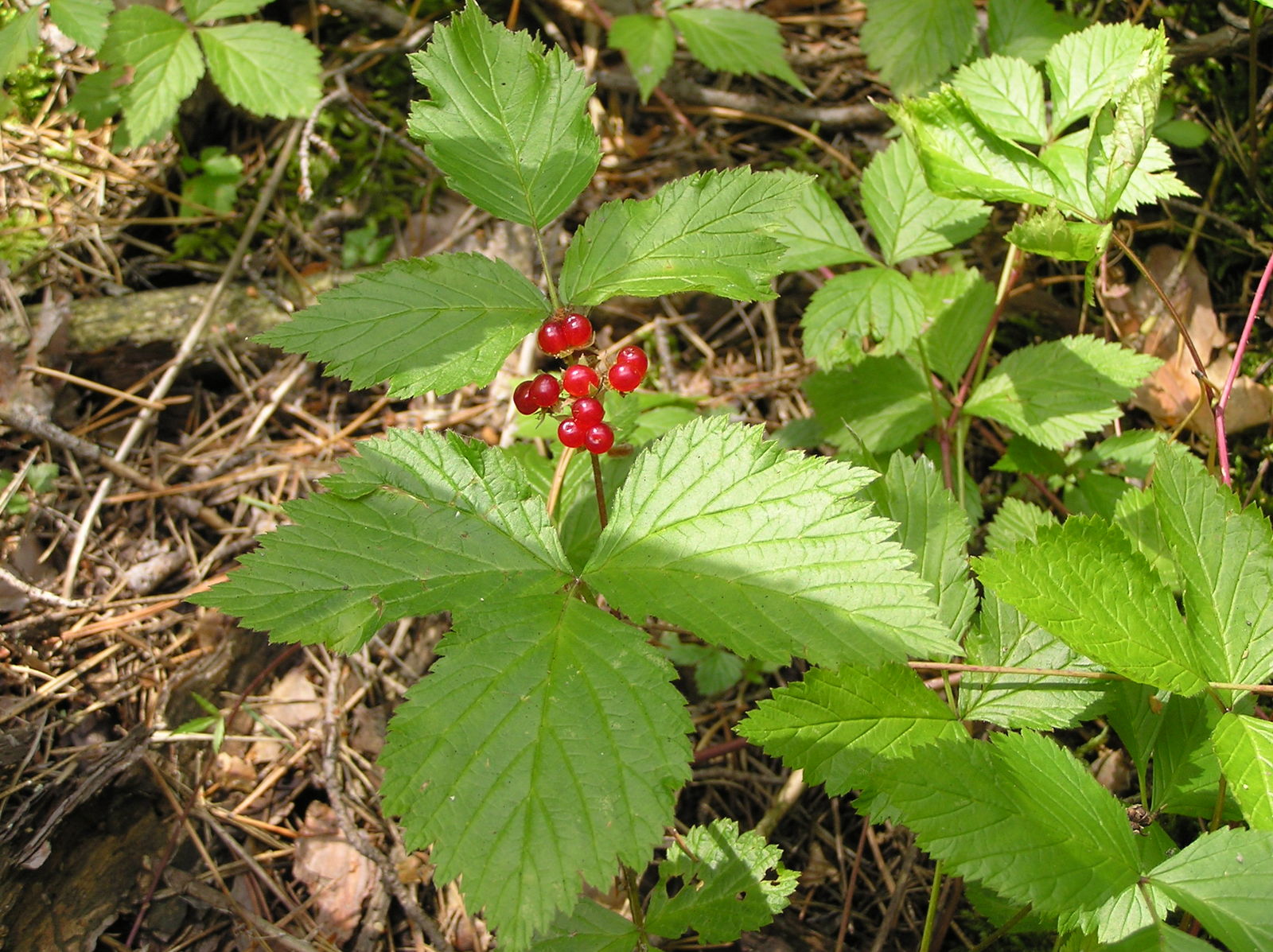
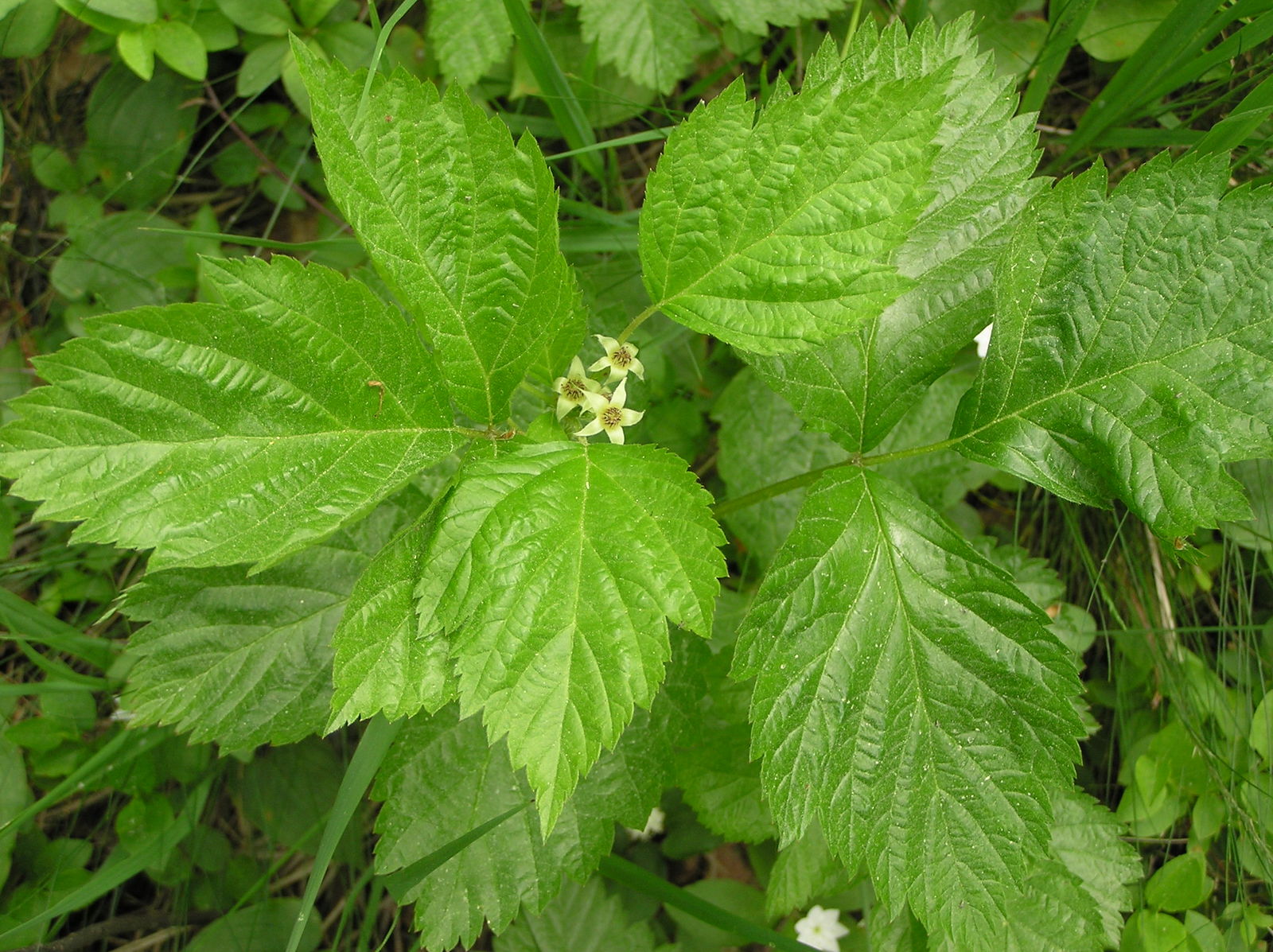
Trifoliate, stalked leaves remain green on both surfaces, without the white felted underside of raspberry leaves. This often rules out raspberry before the prickles need examination. Leaflets have coarse, double teeth, and the central leaflet has its own short stalk. 7
Small white flowers, about 5 mm (0.2 in) across, form loose corymbs of 3–10 flowers at the top of the flowering stems. The small aggregate fruit often has only 2–6 large drupelets, red and glossy, far fewer than the dozens in a typical blackberry. 7 5
Useful taxonomy
Historical varieties now treated by Plants of the World Online as synonyms include Rubus saxatilis var. canadensis Michx., Rubus saxatilis var. inermis Wallr., Rubus saxatilis var. spinulosus Wallr., Rubus saxatilis f. multiloba Hiitonen and Rubus saxatilis var. elongatus H.Post. The name Cylactis saxatilis (L.) Á.Löve, using a formerly separate genus, denotes the same species. 1
André Michaux reused the name Rubus saxatilis in 1803 for a North American plant distinct from Linnaeus’s European species. This illegitimate usage refers to the species now accepted as Rubus pubescens Raf., rather than the stone bramble described here. The full name with its author, Rubus saxatilis L., 1753, avoids that confusion. 1 2
Habitat and range
Greenland and Iceland mark the western end of a Eurosiberian and cold circumboreal range extending across Europe to Siberia, the Russian Far East and the western Himalayas. The plant grows in northern lowlands and, farther south, in mountains, always on base-rich substrates. 1 7
Within mainland France, stone bramble is strictly montane and limestone-loving, occurring in the Alps, Jura, Vosges, Massif Central and Pyrenees. It is absent from the west, where suitable limestone relief meeting its soil requirements is lacking. 6
Native British populations occupy base-rich screes, ravines and rocky woods, reaching more than 1,100 m (3,600 ft) above sea level. Conservation status there remains Least Concern, despite local declines linked to habitat destruction, atmospheric nitrogen deposition and browsing by game animals in some regions. 5
Life cycle and reproduction
Altitude and latitude shift flowering within the period from May to July. Each flowering stem carries a loose corymb of small white flowers. Fruit follows from late July to September, with drupelets changing from firm red to a brighter shade and becoming distinctly softer at full ripeness. 3 7
Flowering stems are often biennial and die after fruiting. The plant persists and spreads mainly through creeping runners that root on contact with soil to form new clumps, a vegetative process compared with that of raspberry. 3
For cultivation from seed, one month of cold stratification is required before germination. Semi-ripe cuttings are taken in summer, while division is carried out in early spring or just before autumn leaf fall. 3
Uses and risks
Its tart fruit is edible raw or cooked, with a pleasant flavor despite a modest edibility rating of 2 out of 5 from Plants For A Future. Eastern European preparations include kissel, kvass, jam and syrup; its sharper taste than raspberry often suits cooked dishes better than fresh use. 3
Fruit also yields a purple to dull blue dye, a traditional use less often documented elsewhere in Rubus. Leaves rich in astringent tannins have occasional traditional use for dysentery and intestinal disorders, while a root decoction was used for whooping cough. 3
Plants For A Future lists no known hazards for this species, either for humans or domestic animals, distinguishing it from many ornamental Rosaceae. 3
Varieties, look-alikes and related plants
No recognized horticultural cultivars are listed for Rubus saxatilis. Unlike raspberry and blackberry, it has not undergone commercial cultivar selection. Its apparent diversity instead reflects historical varieties now treated as synonyms of the typical species. 1
Young raspberry or blackberry shoots are the most frequent field look-alikes. Their white felted leaf undersides and sturdy hooked prickles contrast with the green undersides and absent or very fine prickles of stone bramble. 7
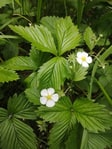
Woodland strawberry shares trifoliate leaves green on both sides and limestone woodland habitat, but remains entirely herbaceous and creeping, without producing an upright flowering cane or drupelet fruit. Two to six drupelets distinguish stone bramble from the dozens in a typical blackberry, even without examining the leaves. 5
Main sources
- Plants of the World Online / Kew, Rubus saxatilis L.
- International Plant Names Index, Rubus saxatilis L.
- Plants For A Future, Rubus saxatilis
- INPN, Rubus saxatilis L. 1753, stone bramble
- Botanical Society of Britain and Ireland, Rubus saxatilis
- Tela Botanica / eFlore BDTFX, Rubus saxatilis
- Info Flora, Rubus saxatilis L.
- Royal Horticultural Society, Rubus saxatilis - stone bramble
Frequently asked questions
Is stone bramble poisonous?
No. Plants For A Future lists no known hazards for this species, and its fruit is traditionally eaten raw or cooked in several parts of Europe and Asia.
Can you eat Rubus saxatilis fruit?
Yes, raw or cooked. It has a pleasantly tart flavor, although Plants For A Future gives it a modest edibility rating of 2 out of 5. In Russia it is used in kissel, kvass and jam.
Where does stone bramble grow in France?
On limestone uplands and mountains, from the Alps to the Pyrenees, including the Jura and Vosges. It is absent from western France, where suitable limestone mountains are lacking.
How can I tell Rubus saxatilis from a young blackberry?
Look for trifoliate leaves green on both sides, fine or absent prickles, and especially fruit made of only 2 to 6 large drupelets rather than the dozens in a typical blackberry.
Are there garden cultivars of stone bramble?
No recognized cultivars are listed. Several historical varieties described in the 19th and 20th centuries have since been treated as synonyms of the typical species.
Why was the name Rubus saxatilis used twice?
Linnaeus published it in 1753 for the European stone bramble. André Michaux reused the name in 1803 for a different North American plant, now accepted as Rubus pubescens.
When should stone bramble fruit be harvested?
From late July to September depending on altitude, once the drupelets turn bright red and become distinctly softer than at the unripe stage.
Similar plants
If you are unsure about a plant’s toxicity, ask a botanist or veterinarian for advice.