
Elmleaf blackberry (Rubus ulmifolius, )

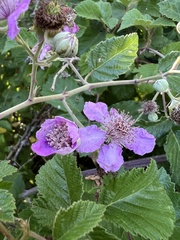
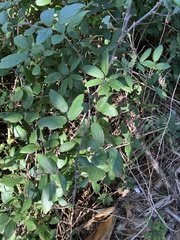
Elmleaf blackberry (Rubus ulmifolius Schott, 1818) is a scrambling shrub in the Rosaceae family, native to western Europe and the Mediterranean region. Arching, often prickly stems and leaves with woolly white undersides distinguish this familiar plant of hedges and waste ground. It is also unusual within subgenus Rubus for reproducing sexually, while almost all its relatives produce clones through apomixis.
Read moreElmleaf blackberry, Elm-leaved bramble, Zarzamora and Mittelmeer-Brombeere
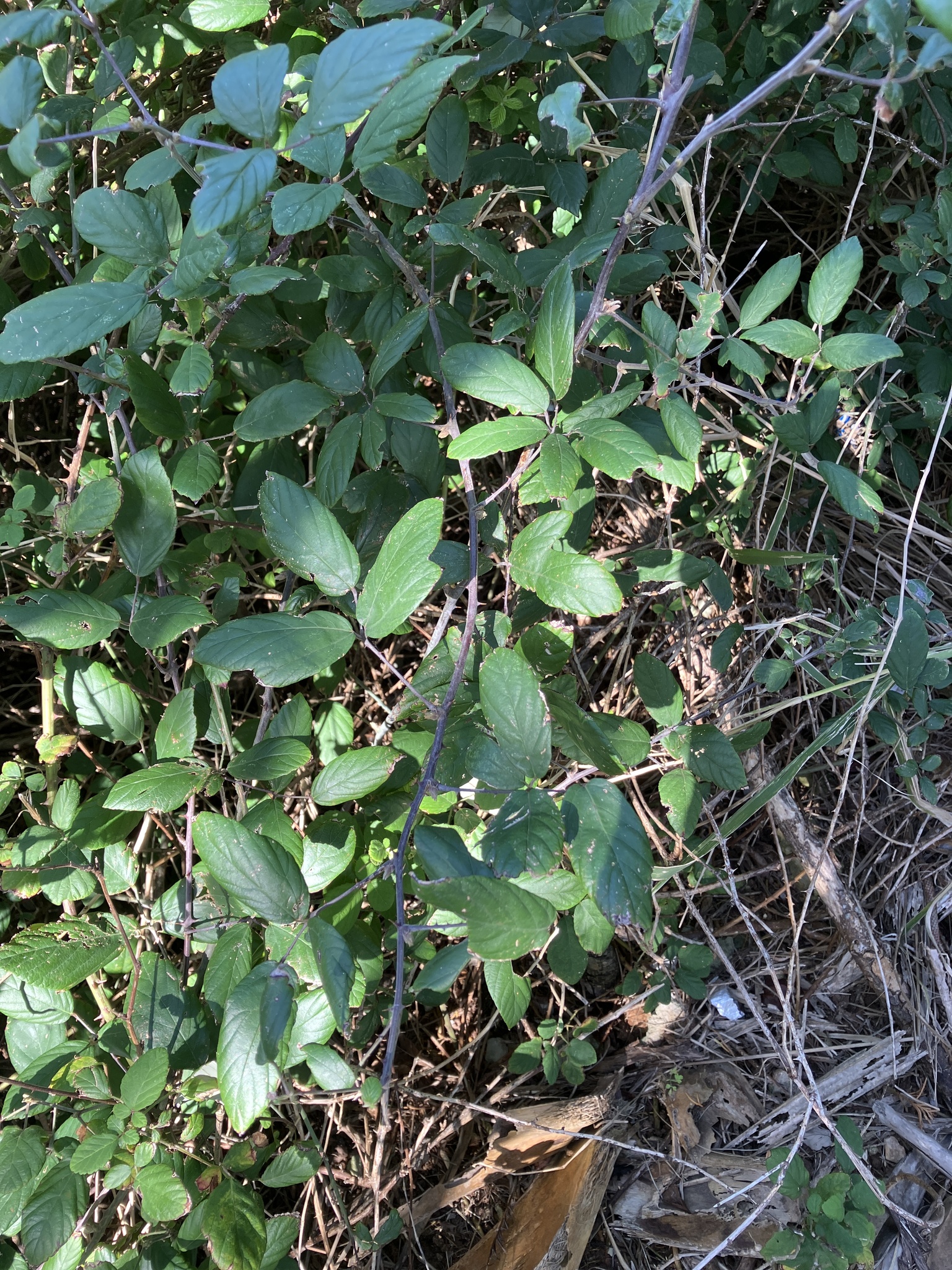


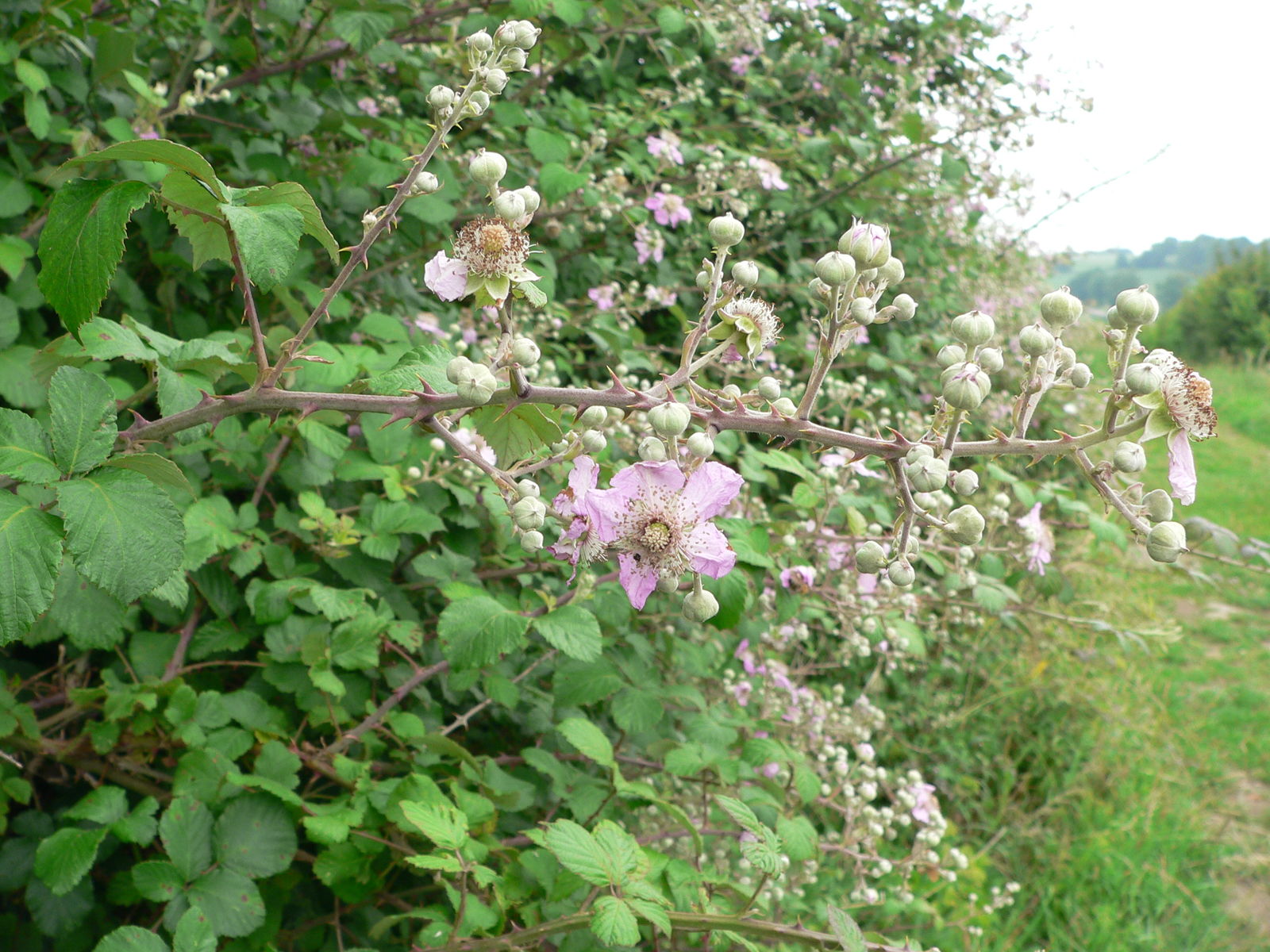
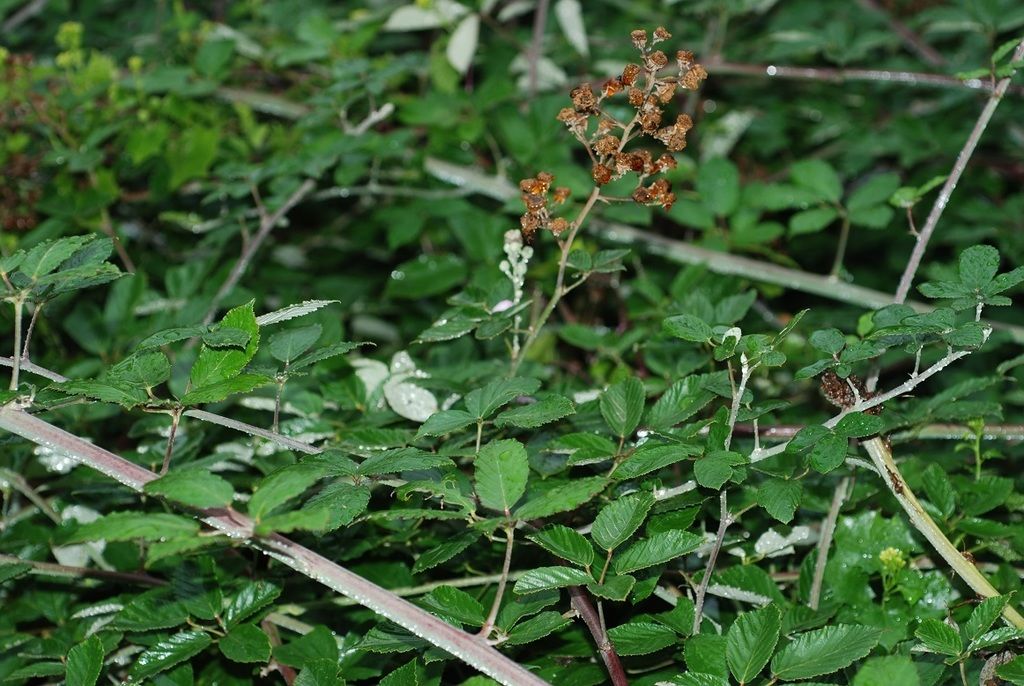

© photo
(c) Joan Simon, some rights reserved (CC BY-SA) · cc-by-sa
Mirko Ubović · cc0
iNaturalist User · cc0
Taken May 28, 2021 by Gianni Del Bufalo (cc-by-sa)
Taken Oct 10, 2021 by Nueblu (cc-by-sa)
Taken Jul 7, 2021 by Manuëlle (cc-by-sa)
Taken Jun 28, 2021 by Gianni Del Bufalo (cc-by-sa)
© copyright of the Board of Trustees of the Royal Botanic Gardens, Kew.


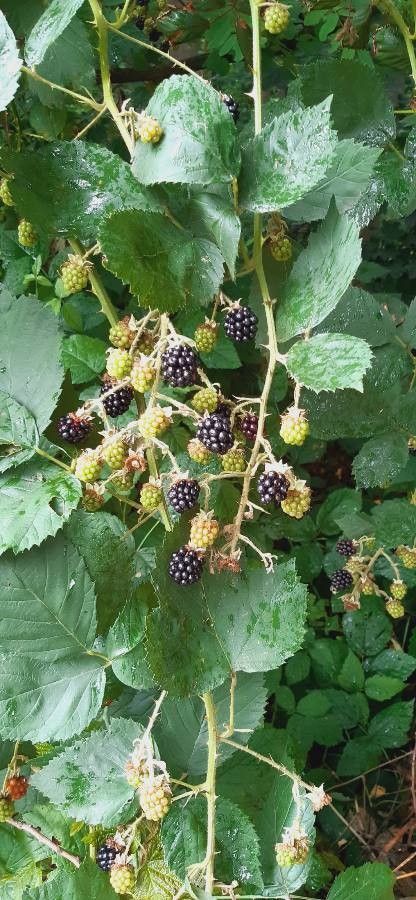


Global distribution
WCVP places the native range of Rubus ulmifolius from northwestern and central Europe to the western and central Mediterranean, with an extension reported into northwestern Africa. Introduced populations in the Americas and Oceania can form extensive stands. On Robinson Crusoe Island in the Chilean Juan Fernández archipelago, it arrived in 1927 and now covers about 7% of the island.
- Native5
- Introduced2
- Invasive2
- France
- Spain
- Italy
- United Kingdom
- Morocco
- New Zealand
- Uruguay
- Chile
- Australia
Hexagons: regions where the plant occurs. Green dots: native range.1
Identity
Elmleaf blackberry (Rubus ulmifolius Schott, 1818) scrambles through hedgerows from France to the Mediterranean region, growing on chalky as well as clay soils. This shrub belongs to the Rosaceae family. Its epithet ulmifolius describes toothed leaflets that resemble elm leaves; it does not imply any botanical relationship with elm trees. 1 5
An unusual genetic feature separates it from its relatives: Rubus ulmifolius uses normal sexual reproduction, whereas almost all other species in subgenus Rubus clone themselves through apomixis. That process preserves hundreds of nearly identical microspecies across Europe. 4
Recognition
Angular, arching or trailing canes often show a reddish tint and carry strong, curved prickles. Elmleaf blackberry reaches 1–5 m (3–16 ft) tall and 2–4 m (6.5–13 ft) across. The size of a thicket depends particularly on its age and the supports available for the stems to climb through. 3
Each leaf has 3–5 toothed leaflets, dark green and glossy above but covered underneath with a distinct white woolly layer. These pale undersides contrast with the green undersides of many brambles in the fruticosus complex. Turning over a leaf is therefore a useful first field check, even before counting the leaflets. 4
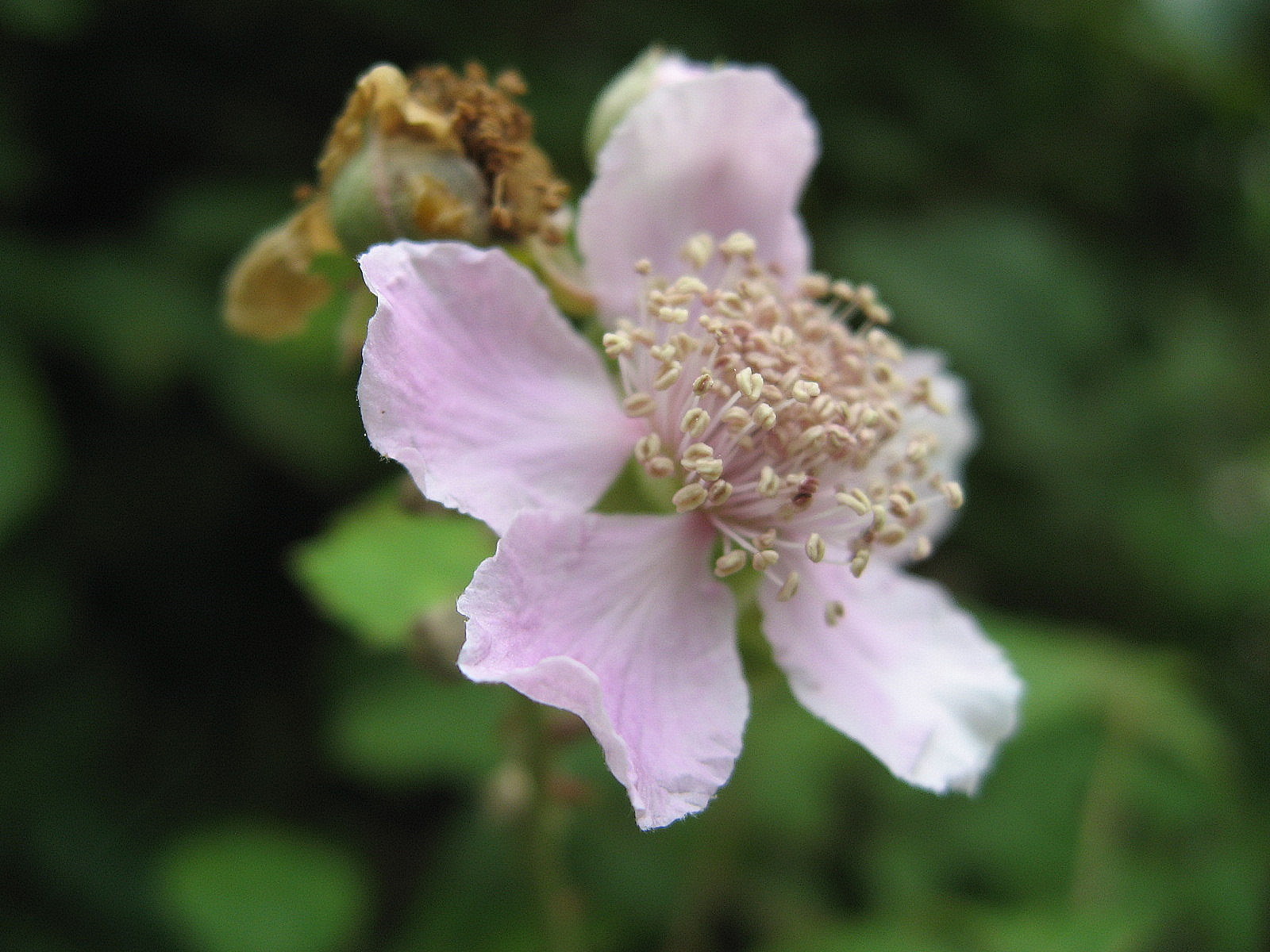
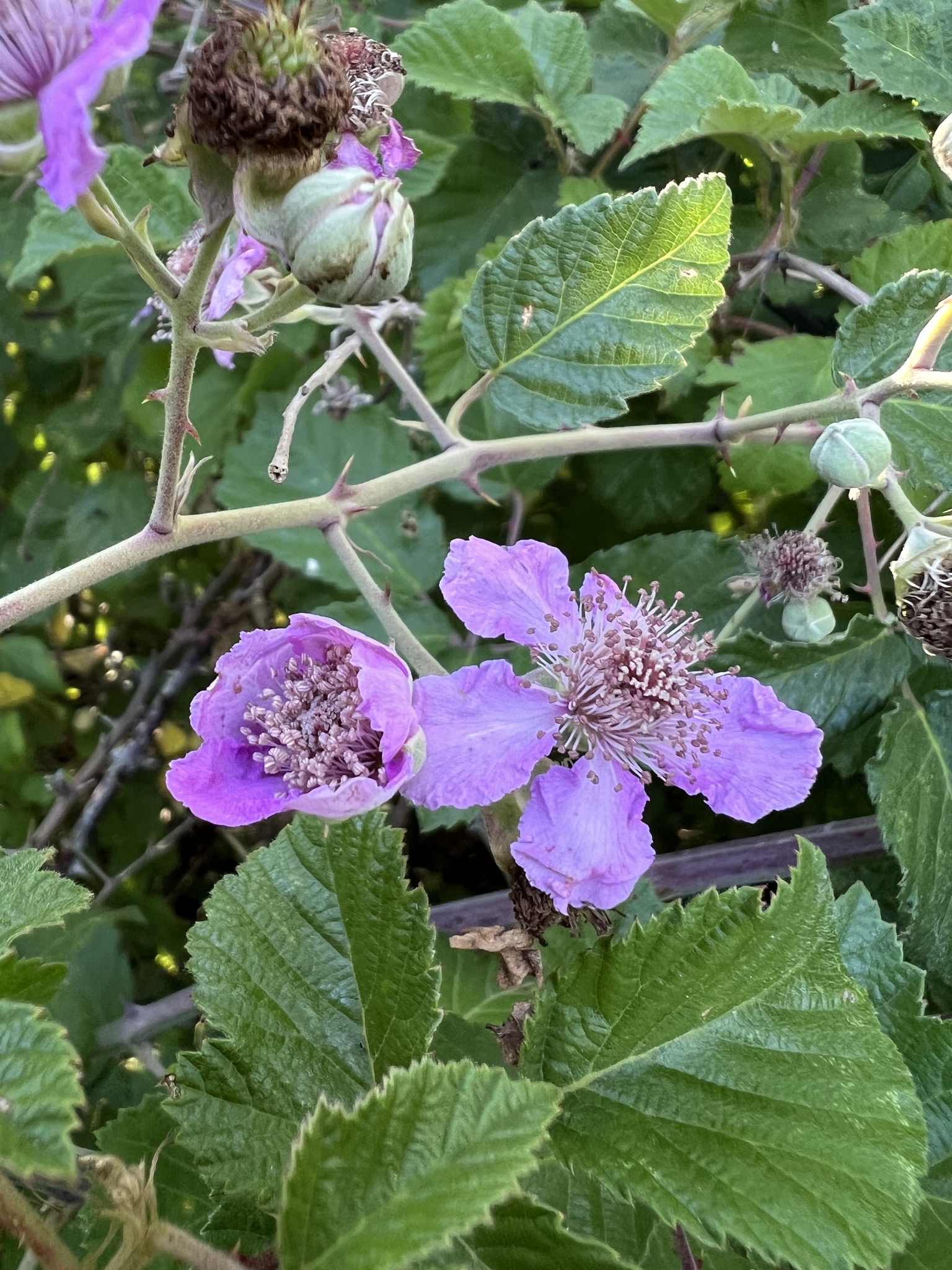
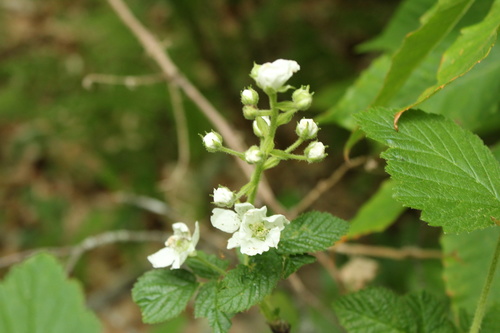
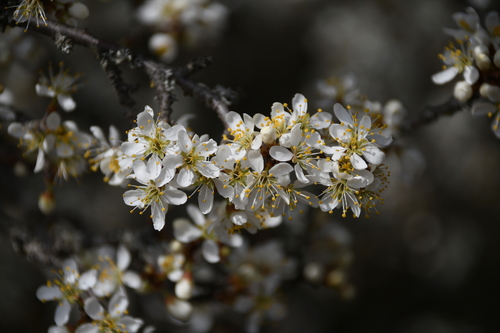
Loose flower clusters appear at the tops of second-year canes. Flowers have five pink or white petals and measure about 2–3 cm (0.8–1.2 in) across. Their aggregate fruits turn from green to red and finally glossy black when fully ripe. The individual drupelets are more tightly packed and less juicy than those of some cultivated blackberries. 7 3
Useful taxonomy
Within the notoriously complex genus Rubus, the established name is Rubus ulmifolius Schott, 1818. Other names have been applied to this species or closely related forms: Rubus rusticanus Mercier, Rubus caldesianus Focke, Rubus cruentiflorus Sudre and, more recently, Rubus maroccensis Huan C.Wang & H.Sun.
The Moroccan case illustrates the difficulty of delimiting brambles. Described as a new species in 2013, that population was subsequently placed in the synonymy of the much earlier-described Rubus ulmifolius. Plants of the World Online currently treats Rubus ulmifolius as the accepted name. 1 2
Habitat and distribution
Northwestern and central Europe connect with the western and central Mediterranean in the native range recorded by WCVP, extending into northwestern Africa. In France, Elmleaf blackberry is considered native across most of the country, without a recognized invasive status there. 1 5 6
Introduced populations have caused documented ecological problems. In Australia, Rubus ulmifolius belongs to the Rubus fruticosus complex, treated as a priority invasive alien weed. That complex infests about 9 million hectares (22 million acres) and forms impenetrable thickets. 7
On Robinson Crusoe Island in Chile's Juan Fernández archipelago, Rubus ulmifolius arrived in 1927. It now covers approximately 7% of the island, which supports a flora with an exceptionally high proportion of endemic plants. 9
Life cycle and reproduction
Pollination and fertilization in Elmleaf blackberry follow the usual sexual process. This contrasts with almost all other brambles in subgenus Rubus, whose seeds can produce copies of the mother plant through apomixis. The difference makes this species useful for studying how apomixis became widespread elsewhere in the genus. 4
Individual canes live for only two years. A cane grows without flowering during its first year, then branches, flowers and fruits in its second year before dying. When a cane tip touches the soil, it roots spontaneously. A single plant can consequently spread across several square meters without human intervention. 3
Fruit-eating birds, particularly blackbirds and thrushes, provide much of the longer-distance seed dispersal. They swallow the blackberries and later pass the seeds intact, often far from the parent plant. Local tip-rooting and distant bird dispersal together explain the rapid colonization seen where the species has been introduced. 9
Uses and risks
Ripe blackberries are the main documented food use, eaten raw or prepared as jam or syrup like the fruits of other Rubus brambles. No toxicity is documented for the fruit or foliage. During picking, the practical hazard comes from the strong stem prickles, which readily scratch exposed skin. 3
Ecological damage is a more significant concern where the species has been introduced beyond Europe without its natural predators and diseases. Dense Rubus ulmifolius thickets exclude native vegetation, alter fire regimes and restrict access to affected land. 7
Australian control programs sometimes use pathogenic fungi such as Phragmidium violaceum, a rust fungus affecting raspberries and brambles, as biological control agents. On Rubus ulmifolius, this disease weakens the foliage without eliminating the plant itself. 7
Varieties and similar plants
Hundreds of closely related microspecies make up the broad Rubus fruticosus complex to which Elmleaf blackberry belongs. Distinguishing every one with confidence usually requires a bramble specialist, known as a batologist. Gardeners and walkers can begin with the woolly white leaf undersides, which already rule out many green-backed brambles. 4
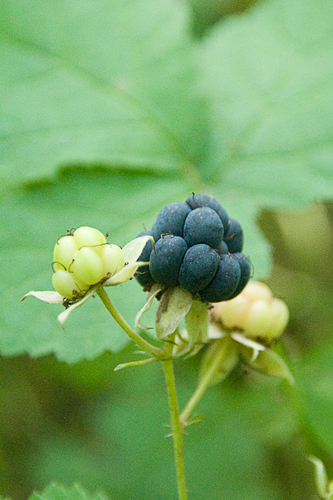
Three nearby relatives cause frequent confusion. Rubus fruticosus, used broadly for the complex, often has less woolly leaf undersides. European dewberry, Rubus caesius, has relatively few prickles and fruit covered by a characteristic bluish bloom. Red raspberry, Rubus idaeus, leaves its receptacle behind when picked, whereas an Elmleaf blackberry retains the receptacle inside the harvested fruit.
The genus name Rubus alone cannot identify an individual bramble. Looking closely at the underside of a leaflet, whether white and woolly or smooth and green, remains an accessible way to separate Elmleaf blackberry from many of its relatives.
Main sources
- Plants of the World Online / Kew, Rubus ulmifolius Schott
- International Plant Names Index, Rubus ulmifolius
- Plants For A Future, Rubus ulmifolius
- Wikipedia EN, Rubus ulmifolius (elmleaf blackberry)
- Tela Botanica / BDTFX reference database, Rubus ulmifolius
- INPN / MNHN, Rubus ulmifolius Schott, 1818
- Weeds Australia, European blackberry (Rubus fruticosus aggregate)
- InfoFlora Switzerland, Rubus ulmifolius
- PMC / NCBI, Human Impacts on the Vegetation of the Juan Fernández (Robinson Crusoe) Archipelago
Frequently asked questions
Is Elmleaf blackberry poisonous?
No toxicity is recognized for the fruit or foliage. The stem prickles can scratch skin during picking.
Can you eat Elmleaf blackberry fruit?
Yes. The fruit is black when fully ripe and can be eaten raw or made into jam or syrup, like other Rubus blackberries.
Why can Elmleaf blackberry become invasive outside Europe?
Introduced to Chile, Australia or New Zealand without its natural predators and diseases, it quickly colonizes open ground through bird-dispersed seeds and stems that root where they touch soil.
How do you recognize Elmleaf blackberry?
The woolly white leaf undersides are the most accessible clue. Compare them with the green undersides of many other brambles in the Rubus fruticosus complex.
Why does Elmleaf blackberry reproduce differently from other brambles?
Rubus ulmifolius reproduces sexually, whereas most brambles in subgenus Rubus clone themselves through apomixis. This helps explain the many very similar microspecies among its relatives.
Where does Elmleaf blackberry usually grow?
In hedgerows, woodland edges, waste ground and along paths, on chalky or clay soils, in full sun or light partial shade.
Is Elmleaf blackberry native to France?
Yes. Rubus ulmifolius is considered native across much of mainland France, where it has no recognized invasive status.
Similar plants
If you are unsure about a plant’s toxicity, ask a botanist or veterinarian for advice.