
Aluminium plant (Pilea cadierei, )
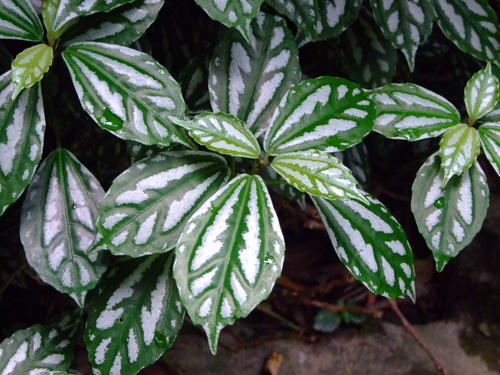

Aluminium plant (Pilea cadierei) is an herbaceous perennial in the Urticaceae family, native to southern China and Vietnam. Its dark green leaves bear silver bands with a metallic sheen, giving the plant its common name. Compact and easy to grow, it is a popular houseplant and is non-toxic to cats, dogs and horses.
Read moreAluminium plant, Aluminum plant, Aluminum pilea, Watermelon plant and Watermelon pilea


© photo
(c) Kai Yan, Joseph Wong, some rights reserved (CC BY-NC-SA) · cc-by-nc-sa
Wikimedia Commons · CC BY-SA or Public Domain
Wikipedia · CC BY-SA
Taken Feb 11, 2016 by OTS - Oviedo-Brenes, Federico (cc-by-nc-sa)
Taken Apr 17, 2019 by OTS - J. González (cc-by-nc-sa)
Taken Jun 25, 2021 by García Citlali (cc-by-sa)
Taken Aug 27, 2019 by Jugoslav Jovanović (cc-by-sa)
© copyright of the Board of Trustees of the Royal Botanic Gardens, Kew.




Global distribution
Pilea cadierei is native only to southern China (Guizhou and Yunnan) and northern Vietnam, where it grows in moist, shaded woodland. Widely cultivated as a houseplant, it occurs elsewhere in greenhouses and homes; these cultivated locations are distinct from its native range.
- Native2
- China (Guizhou, Yunnan)
- Vietnam
Hexagons: regions where the plant occurs. Green dots: native range.1
Identity
Aluminium plant (Pilea cadierei Gagnep. & Guillaumin, 1939) is an herbaceous perennial in the Urticaceae family and the genus Pilea. The common name describes its dark green leaves with slightly raised silver bands, which catch the light like polished metal. 1 4
Compact and easy to grow, it is especially familiar in Europe as a houseplant. English names also include Aluminum plant, Aluminum pilea, Watermelon plant and Watermelon pilea. Small size, decorative foliage and a forgiving nature have given it a reputation as a reliable beginner’s plant. 2 3
Recognition
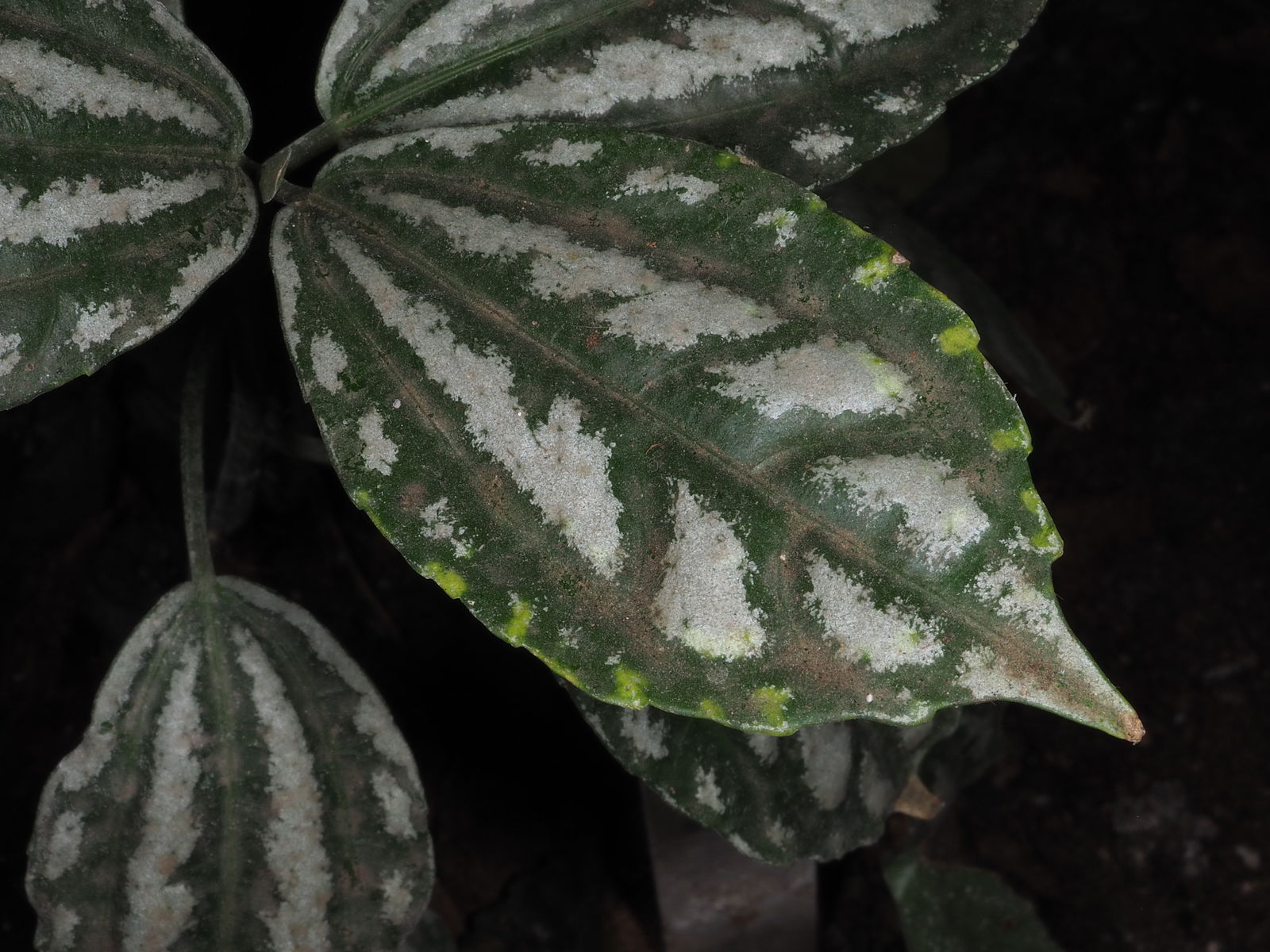
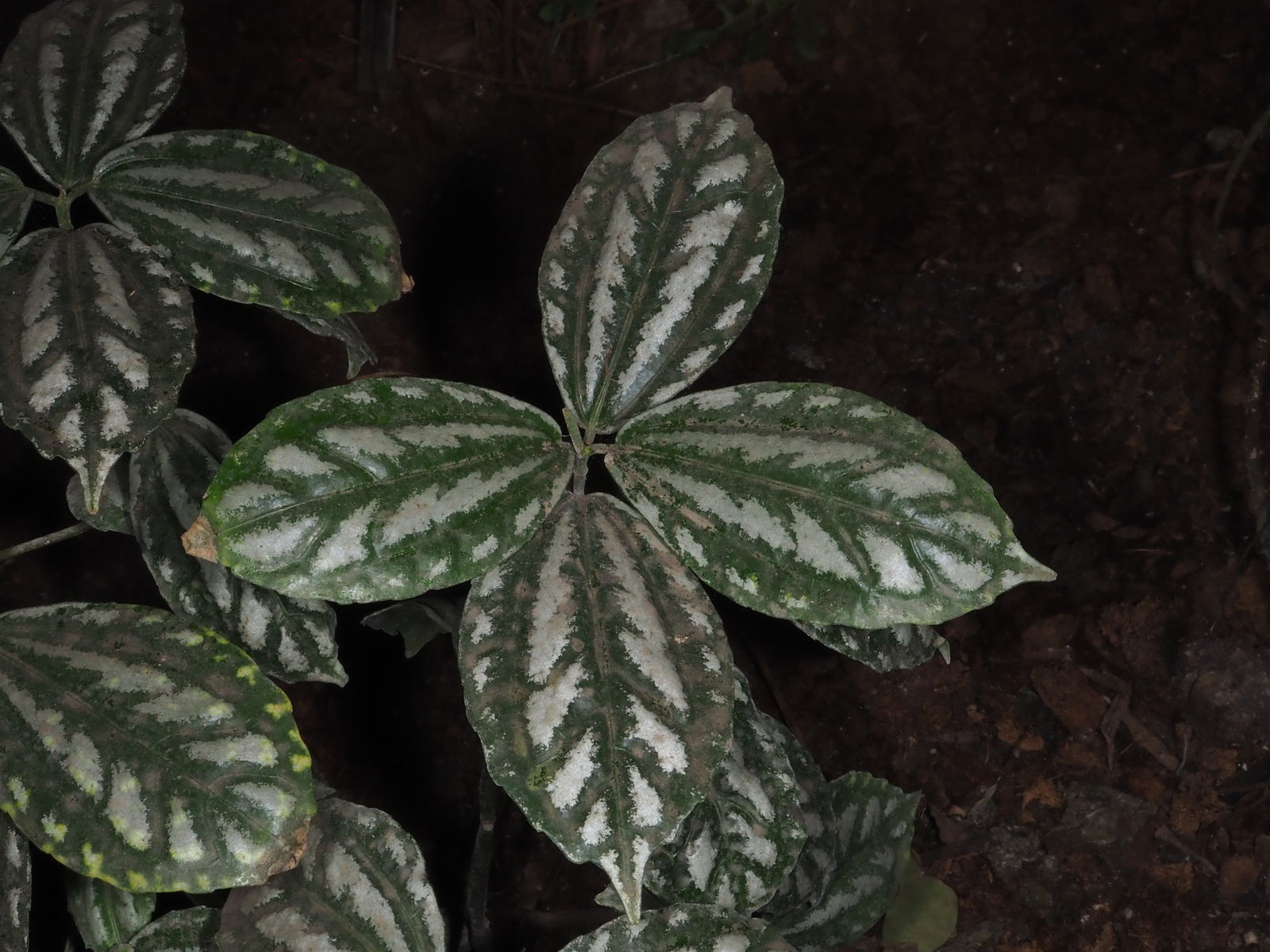
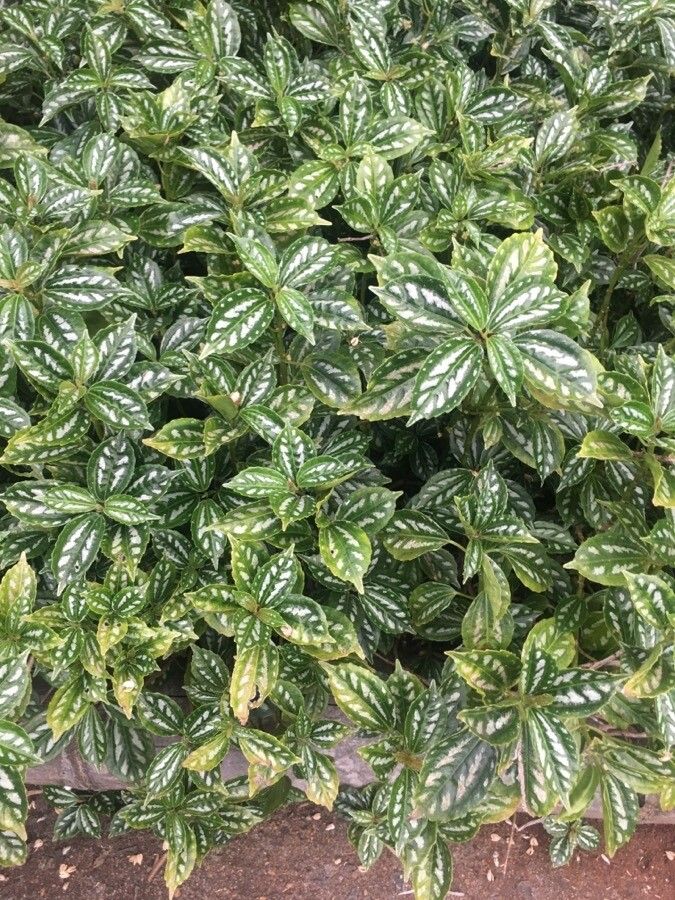
A compact clump, usually 20–30 cm (8–12 in) tall, develops from fleshy stems that begin upright and trail as they age. Leaves are opposite, oval, 5–8 cm (2–3 in) long and dark green, with four silver bands following the main veins. 3 6
Texture provides the clearest identification clue: the silver areas are slightly raised, giving the leaf a quilted appearance and distinctive metallic relief. Leaf margins are finely toothed toward the tip, and the underside is paler green. 2 5
Tiny greenish flowers form inconspicuous axillary cymes and are easily overlooked. Foliage rather than flowering accounts for the ornamental value of this species. 4 3
Useful taxonomy
Gagnepain and Guillaumin described Pilea cadierei in 1939. The epithet cadierei honors the botanist R.P. Cadière. The large Urticaceae genus Pilea contains many shade-growing herbaceous plants, several of which are cultivated indoors. 1 8
For reliable identification, use the accepted scientific name Pilea cadierei. Commercial labels such as Minima and Silver Tree refer to horticultural selections rather than separate species or botanical varieties. Check the binomial instead of relying only on a sales name. 1 2
Habitat and range
Southern China’s Guizhou and Yunnan provinces and northern Vietnam make up the native range. The plant grows in moist, shaded understory of subtropical forests at moderate elevations, with moist soil and humid air. 1 4
Within these forests it occupies the lowest vegetation layer, covering damp ground, streambanks and mossy rocks beneath the canopy. This shaded groundcover ecology explains its strong preference for filtered light in cultivation. 3 5
Worldwide houseplant cultivation extends well beyond its native range, but the species remains frost-tender. It cannot withstand freezing and survives outdoors only in the mildest frost-free climates. Such cultivated regions are distinct from its Chinese and Vietnamese origins. 2 6
Life cycle and reproduction
Spring and summer bring modest greenish flowers in axillary cymes. As in many Pilea, male flowers may release pollen suddenly, a feature behind the genus’s artillery-plant nickname, though the effect is minor in this species. 4 3
Stem sections with a node are the usual means of propagation: cut just below a node and place the piece in water or moist growing medium. First roots form within two to three weeks. Division of a full clump during repotting also produces new plants quickly. 2 5
Aging stems lose their lower leaves, making both propagation methods especially useful. Rooting the shoot tips renews a dense clump, helping preserve the plant’s full, silver-marked display from year to year. 6 3
Uses and risks
Almost all cultivation is ornamental, as a small indoor foliage plant valued for its silver markings. In mild, frost-free climates it can also grow as a shaded groundcover outdoors, although that use is uncommon in cooler temperate regions. 4 2
Pet safety is a useful feature: the ASPCA lists Aluminium plant as non-toxic to cats, dogs and horses, with no known danger from accidental ingestion. It is therefore among the houseplants suited to households with animals or young children, unlike many decorative Araceae. 7 6
Varieties, look-alikes and related plants
Horticultural forms sold under different labels are not separate species. Minima is a compact dwarf form with smaller leaves; Silver Tree is a sales label for strongly silver-marked plants, with status varying by seller. Before buying, check the scientific name, root condition and density of the clump. 2
Several other decorative foliage plants can be confused with Aluminium plant:
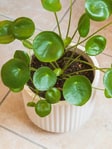
- Pilea peperomioides, Chinese money plant, with round, peltate leaves;
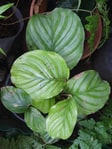
- Pilea involucrata, with quilted leaves lacking clear silver bands;
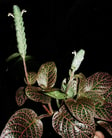
- Fittonia albivenis, from a different family, with similarly decorative leaf veining.
Four raised silver bands against dark green leaves, together with the compact clumping habit, are the most reliable clues for confirming that a plant sold as Aluminium plant is Pilea cadierei. 3 1
Main sources
- Plants of the World Online / Kew, Pilea cadierei Gagnep. & Guillaumin
- Royal Horticultural Society, Pilea cadierei - aluminium plant
- Missouri Botanical Garden, Pilea cadierei
- Encyclopaedia Britannica, aluminum plant
- Plants For A Future, Pilea cadierei
- North Carolina State Extension, Pilea cadierei
- ASPCA, Aluminum plant (Pilea cadierei) non-toxic entry
- International Plant Names Index, Pilea cadierei Gagnep. & Guillaumin
Frequently asked questions
Is Aluminium plant poisonous?
No. The ASPCA lists Pilea cadierei as non-toxic to cats, dogs and horses. It is a suitable houseplant for homes with pets, with no known danger from accidental ingestion.
Why is my Aluminium plant losing its lower leaves?
Pilea cadierei stems naturally lengthen and lose lower leaves as they age. Pinching the tips regularly and rooting tip cuttings renews a dense, compact clump.
Where does Aluminium plant come from?
Its native range includes Guizhou and Yunnan in southern China and northern Vietnam. It grows in moist, shaded woodland there; elsewhere it is a cultivated plant.
How much light does Aluminium plant need?
Bright indirect light gives the strongest leaf contrast. Partial shade is tolerated but makes the silver markings duller, while harsh direct sun bleaches the leaves.
How do I propagate Aluminium plant?
Take a stem with at least one node and put it in water or moist growing medium. Roots begin to appear in two to three weeks; dividing a dense clump is another simple method.
Why are the silver markings fading?
Too little light or direct sun dulls the silver bands of Pilea cadierei. Bright indirect light, fresh growing medium and diluted fertilizer during growth restore the leaf contrast.
How big does Aluminium plant get?
In cultivation it stays compact, about 20–30 cm (8–12 in) tall with a similar spread. It is a tabletop or windowsill plant rather than a large specimen.
Similar plants
If you are unsure about a plant’s toxicity, ask a botanist or veterinarian for advice.