
Nerve plant (Fittonia albivenis, )
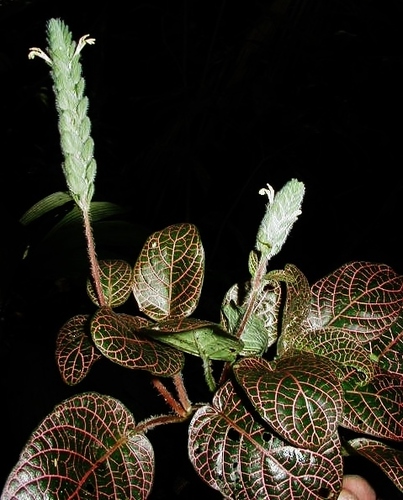
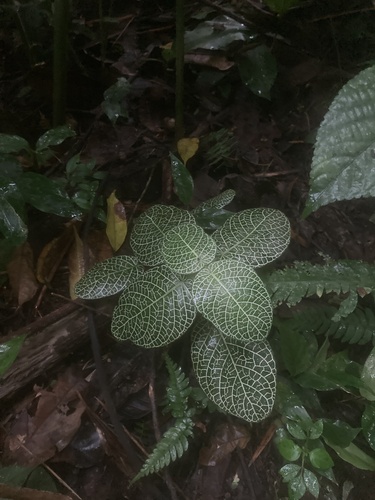
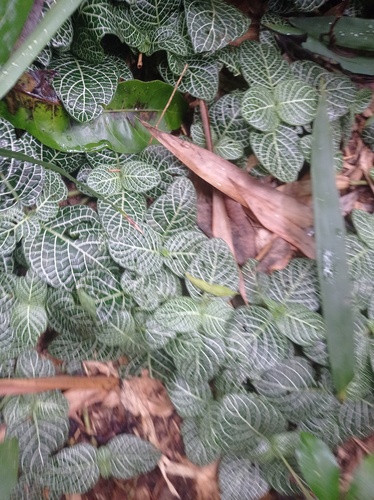
The nerve plant (Fittonia albivenis), also called mosaic plant or fittonia, is a small creeping perennial in the acanthus family, Acanthaceae, native to the humid forests of South America. Its dark green leaves are netted with silvery white or bright pink veins, which makes it a much-loved houseplant and terrarium plant.
Read moreMosaic plant and Fittonia
Global distribution
Fittonia albivenis is native to the tropical rainforests of South America, where it grows in the shaded understory. Its native range covers Colombia, Peru, Bolivia, Ecuador and northern Brazil; elsewhere the species exists only in cultivation, as a houseplant or terrarium plant.
- Native5
- Colombia
- Peru
- Bolivia
- Ecuador
- Brazil
Hexagons: sourced regions. Green dots: native range. Statuses according to POWO (Kew).
Identity
The nerve plant (Fittonia albivenis (Lindl. ex Veitch) Brummitt), also sold as mosaic plant, is a small creeping perennial in the genus Fittonia, part of the acanthus family, Acanthaceae. Both names describe the network of pale veins that cuts the leaf into a mosaic, the feature that identifies the species at a glance. 1 2
Most growers know it as a houseplant and terrarium plant, bought for its dark green foliage veined in silvery white or pink. It stays low and spreading, and it asks for high humidity and soft, filtered light. 3 4
Recognition
Look at the leaves first. Each blade is oval, dark green, matte and slightly puckered, 7–10 cm (3–4 in) long, and crossed by a very dense network of contrasting veins. Depending on the cultivar, those veins are silvery white or pink to bright red. 2 5
The plant stays low and creeping: its sprawling stems root at the nodes and knit into a dense mat only 10–20 cm (4–8 in) tall. That groundcover habit sets it well apart from large upright foliage plants such as ficus or philodendrons. 4 3
One habit often gives the nerve plant away before any botanical check: a dramatic wilt as soon as the potting mix dries, followed by a quick recovery after watering. The inconspicuous flower spikes carry small white or pale yellow flowers between green bracts, but they are rare indoors. 5 2
Useful taxonomy
Brummitt made the combination Fittonia albivenis (Lindl. ex Veitch) Brummitt in 1979, based on an older basionym. The genus Fittonia is small, but its horticultural history has piled up names; the main synonyms to know are:
- Fittonia argyroneura Coem.
- Fittonia verschaffeltii (Lem.) Van Houtte
- Fittonia verschaffeltii var. argyroneura (Coem.) Nicolson
- Eranthemum verschaffeltii (Lem.) Voss
- Gymnostachyum verschaffeltii Lem.
The stable reference is the accepted scientific name, Fittonia albivenis: the old names argyroneura and verschaffeltii now designate cultivar groups within the species, not distinct botanical species. 1 6
Habitat and range
This species comes from the tropical rainforests of South America: Colombia, Peru, Bolivia, Ecuador and northern Brazil. There it grows in the understory, on shaded leaf litter, under light filtered by the canopy. 1 2
That setting explains what it needs in cultivation: high humidity, steady warmth and gentle light. Wherever temperatures drop below 10 °C (50 °F), the plant cannot survive outdoors and has to be grown inside or in a terrarium. 4 5
Beyond its native range, the species is found almost only in ornamental cultivation. It is not reported as naturalized or invasive in temperate climates, where cold confines it to homes and greenhouses. 3 2
Life cycle and reproduction
Given the right conditions, a nerve plant produces small upright flower spikes lined with green bracts, from which white or pale yellow flowers emerge. Flowering stays discreet and infrequent indoors, where the plant is grown for its leaves rather than its blooms. 2 5
Growth runs sideways rather than up: the creeping stems lengthen and root at the nodes wherever they touch moist mix. This is how a few stems fill out into a full groundcover clump within a single season. 4 3
In cultivation, propagation is mostly by stem cuttings with a node or by division of a clump at repotting. For a cutting, take a section with at least one node and root it in water or moist mix; the first roots appear in two to three weeks. Division means splitting a dense clump into several pieces that already have roots, each of which settles in quickly with warmth and humidity. 5 2
Uses and risks
Fittonia albivenis is grown purely as an ornamental: a houseplant, a terrarium or bottle garden subject, and a shade groundcover in humid tropical climates. Its small size and liking for still, enclosed air make it one of the most widely used terrarium species. 4 6
On the safety side, the nerve plant is reassuring. The ASPCA lists it as non-toxic to cats, dogs and horses, and no signs of poisoning have been reported. It can share a home with pets without any particular risk, which sets it apart from many tropical houseplants. 7 4
Varieties, look-alikes and related plants
What garden centers sell falls into two cultivar groups, not separate species. The Argyroneura Group covers foliage with silvery white veins; the Verschaffeltii Group, foliage with pink to red veins. Both have received the RHS Award of Garden Merit, and trade names such as White Anne or Red Anne belong to them. 6 3
The most frequent look-alikes are:
- Hypoestes phyllostachya, with green leaves spotted pink but no continuous vein network
- some Pilea with foliage marked by pale bands
- other ornamental Acanthaceae with variegated leaves
A dense, continuous network of pale veins on a dark green background, combined with a low, creeping habit, remains the most reliable way to confirm that a plant sold as a nerve plant really is Fittonia albivenis. 2 1
Main sources
- Plants of the World Online / Kew, Fittonia albivenis (Lindl. ex Veitch) Brummitt
- Royal Horticultural Society, Fittonia albivenis Verschaffeltii Group
- Royal Horticultural Society, Fittonia albivenis Argyroneura Group
- Missouri Botanical Garden, Fittonia albivenis
- Plants For A Future, Fittonia albivenis
- NC State Extension, Fittonia albivenis
- ASPCA, Nerve plant (Fittonia albivenis) toxicity entry
Frequently asked questions
Is the nerve plant toxic to cats and dogs?
No. The ASPCA lists the nerve plant as non-toxic to cats, dogs and horses. No signs of poisoning have been reported, so it is a safe houseplant to keep around pets.
Why does my nerve plant wilt so quickly?
Its thin leaves lose water fast. As soon as the potting mix dries out, the plant collapses dramatically, then usually perks up within a few hours of a thorough watering. Keeping the mix evenly moist cuts down on these scares.
Is the nerve plant a good terrarium plant?
Yes. Its small size, creeping habit and taste for high humidity make it one of the most common terrarium plants. The closed, humid air of a terrarium closely matches its native forest understory.
How much light does a nerve plant need?
Bright but indirect light, or even partial shade, gives the best foliage. Direct sun bleaches and scorches the leaves; too much shade, on the other hand, makes the stems leggy.
Which plants are mistaken for the nerve plant?
The usual mix-ups involve Hypoestes, with pink-spotted leaves, and some Pilea with patterned foliage. The dense network of pale veins on a dark green background remains the most reliable clue.
Are white-veined and pink-veined nerve plants two species?
No. Silver-veined forms belong to the Argyroneura Group, pink- or red-veined forms to the Verschaffeltii Group. Both are cultivar groups within a single species, Fittonia albivenis.
Similar plants

Botanical data compiled from reference sources (RHS, Kew Gardens, POWO). This profile is for guidance only and is not a substitute for advice from a botanist or veterinarian if you have concerns about toxicity.