
Eggplant (Solanum melongena, )
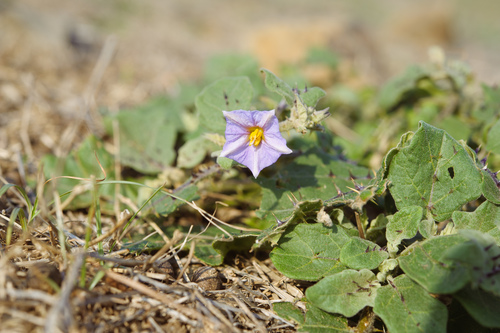


Eggplant (Solanum melongena) is a vegetable plant in the Solanaceae family, grown for its fleshy fruit, which is eaten cooked. A warm-season annual in temperate climates, it is a woody perennial in its tropical homeland. Like other nightshades, its foliage and green fruit contain glycoalkaloids.
Read moreEggplant, Aubergine, Brinjal and Aubergine plant
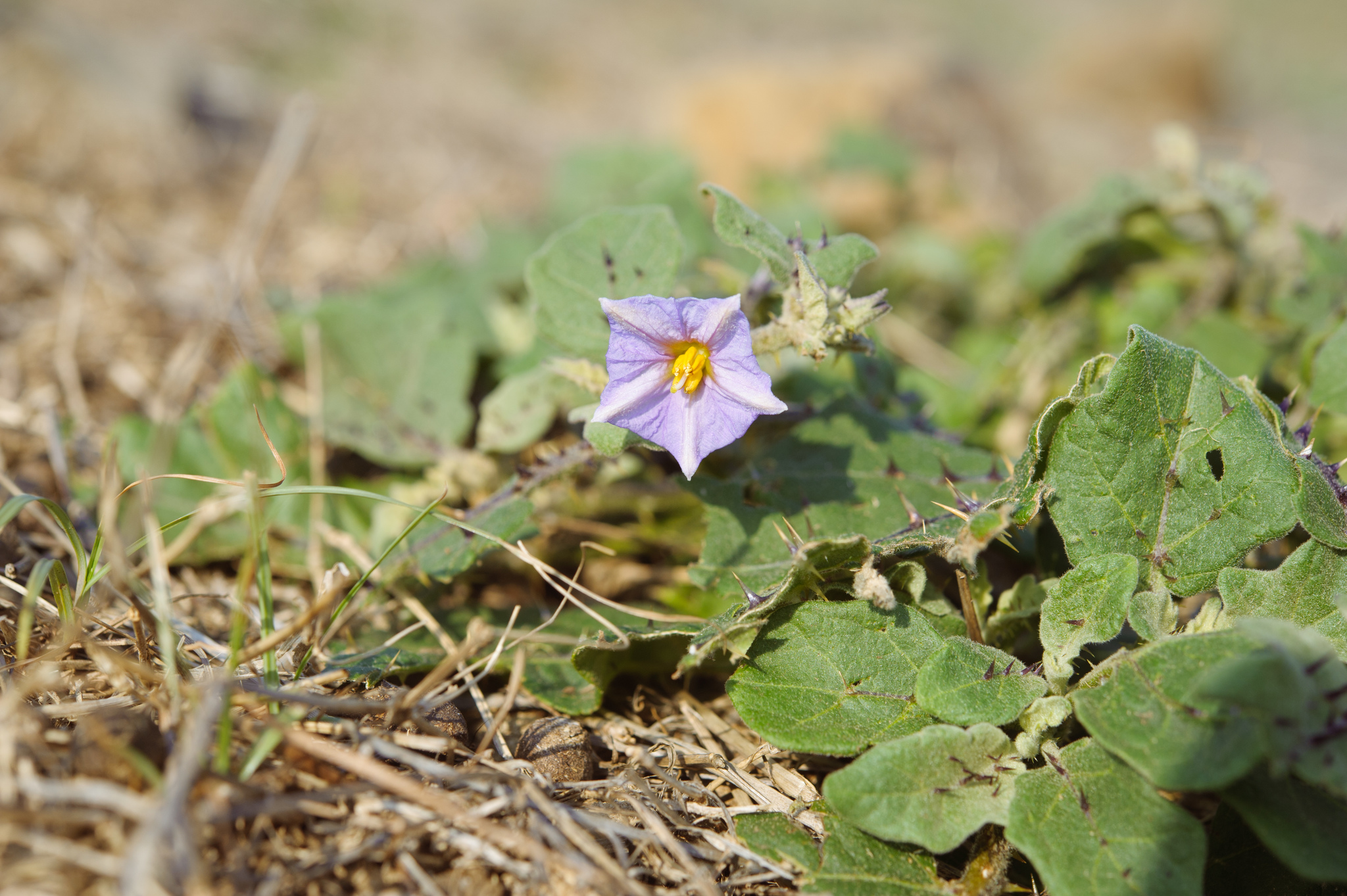


© photo
Cheng-Tao Lin · cc-by
Wikimedia Commons · CC BY-SA or Public Domain
© copyright of the Board of Trustees of the Royal Botanic Gardens, Kew.
Global distribution
Solanum melongena is a cultivated plant absent from temperate wild vegetation. It was domesticated in tropical Asia from wild Indo-Burmese forms, then spread throughout the warm Old World, from the Indian subcontinent to China, the Middle East and the Mediterranean. Its presence reflects cultivation.
Identity
Eggplant (Solanum melongena L., 1753) belongs to the nightshade family, Solanaceae, and the genus Solanum. It is grown for its fleshy vegetable fruit, a glossy berry that may be purple, white or green depending on the variety and is eaten cooked. This cultivated plant arose through a long process of domestication in tropical Asia and is absent from temperate wild vegetation. 1 4
In a vegetable garden, eggplant is a warm-season crop grown as an annual in temperate climates, although it is woody and perennial in its tropical homeland. Also called aubergine or brinjal, it belongs to the same family as tomatoes, peppers and potatoes. Those familiar vegetables help place the crop botanically despite the different appearance of their harvested parts. 2 3
Recognition
An upright, branched and bushy habit is characteristic of Solanum melongena, which reaches 60–120 cm (2–4 ft) in vegetable gardens. Its large, oval, often lobed leaves are dull green and covered with star-shaped hairs. Small prickles sometimes occur along the main leaf vein. 3 5
The purple flowers, borne singly or in groups of two or three, have yellow stamens and are noticeably larger than tomato flowers. They develop into a hanging fleshy berry, the edible fruit, topped by a persistent spiny calyx. Its shiny skin may be dark purple, white, green or striped, while its shape ranges from elongated to a large oval globe. 4 6
Inside, white, spongy flesh contains numerous small seeds. Firm and bitter when raw, it becomes soft after cooking. Fruit shape and color vary greatly between varieties, but the large purple flower and spiny calyx remain characteristic features of the species. 6 3
Useful taxonomy
The name Solanum melongena L. dates to Linnaeus's description in 1753. Within the large genus Solanum, several old synonyms and names for wild or cultivated forms still occur in botanical literature. Useful examples include:
- Solanum esculentum Dunal, an older botanical name;
- Solanum ovigerum Dunal, a historical synonym;
- Solanum melongena var. esculentum (Dunal) Walp., a varietal name;
- Solanum melongena subsp. insanum (L.) Banfi, Galasso & Bartolucci, a subspecies name;
- Solanum trongum Poir., another historical name.
The insanum group includes wild and weedy Indo-Burmese forms considered the direct ancestors of cultivated eggplant and now associated with Solanum melongena. The accepted scientific name remains the stable reference: vegetable varieties are cultivated selections, rather than separate botanical species. 1 5
Habitat and range
Domestication in tropical Asia explains why Solanum melongena is a cultigen, rather than a wild plant of temperate climates. Its wild Indo-Burmese ancestors probably originated in the Indian subcontinent and Myanmar. 1 4
Cultivation spread from this center to China, the Middle East, North Africa and then the Mediterranean basin, where the crop arrived through the Arab world. Today it is grown throughout the world's warm regions, in vegetable beds, large containers or greenhouses in cooler climates. 3 6
Its presence reflects deliberate sowing and planting. Eggplant does not naturalize in temperate climates and is absent from their spontaneous vegetation, a distinction from the wild nightshade species that grow without being planted. 5 1
Life cycle and reproduction
Purple bisexual flowers are pollinated by bees, especially bumblebees, whose vibrations release pollen from the anthers. In a well-exposed position, flowering extends from early summer into fall, following the local warm growing season. 4 5
After fertilization, each flower produces a fleshy berry with many small seeds. Gardeners harvest it before full maturity, while young and glossy, to retain tender flesh. Left on the plant, it hardens, yellows and develops its seeds. Fruit set depends closely on warmth and light: growth stops below 15 °C (59 °F), and buds drop during cool nights. 6 2
Propagation begins with seed sown under cover in late winter at 22–28 °C (72–82 °F), because germination is slow in cool conditions. Commercial growers also use grafting onto resistant rootstocks to limit soilborne diseases such as verticillium wilt. Allow 3–5 months from sowing to harvest, depending on variety and climate. 3 2
Uses and risks
Cooking is central to eggplant's use: the fruit is eaten cooked, grilled, fried, stewed or stuffed, rather than raw. Heat softens its spongy flesh, reduces bitterness and gives it a tender texture. From eggplant purée to moussaka, it is prominent in Mediterranean and Asian cooking. Botanically a berry, it is treated as a vegetable in the kitchen. 4 5
Like other nightshades, eggplant contains solanine-type glycoalkaloids, concentrated especially in its foliage and green fruit. Ripe fruit eaten cooked contains too little to pose a risk to humans, but leaves are not eaten. The ASPCA lists eggplant as toxic to cats, dogs and horses: eating foliage can cause digestive upset and lethargy. Keep animals away from plants and prunings. 7 8
Varieties, look-alikes and related plants
Vegetable selections account for eggplant's many varieties. Violette de Barbentane and Black Beauty produce large dark purple fruits; Ronde de Valence has round, firm fruit; Listada de Gandia has purple-and-white striped skin; Thai types produce small green or white eggplants. Check fruit shape, color and earliness before choosing seed.
Other vegetable nightshades cause the most frequent confusion:
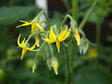
- Solanum lycopersicum, tomato, with yellow flowers and red fruit;
- Capsicum annuum, pepper, with hollow fruit and white flowers;
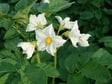
- Solanum tuberosum, potato, grown for its tubers.
A large purple flower with yellow stamens, a persistent spiny calyx on the fruit and star-shaped hairs on the foliage remain the most reliable features for confirming eggplant, Solanum melongena. 3 1
Main sources
- Plants of the World Online / Kew, Solanum melongena L.
- Royal Horticultural Society, aubergines - grow your own
- Missouri Botanical Garden, Solanum melongena
- Encyclopaedia Britannica, eggplant
- Plants For A Future, Solanum melongena — Internet Archive, 2026-03-06
- North Carolina State Extension, Solanum melongena
- ASPCA, eggplant (Solanum melongena) toxicity entry
- Merck Veterinary Manual, plants toxic to animals
Frequently asked questions
Is eggplant toxic?
The cooked fruit is safe for humans. Like other nightshades, however, its foliage and green fruit contain glycoalkaloids. The ASPCA lists eggplant as toxic to cats, dogs and horses, especially when foliage is eaten.
Why is eggplant eaten cooked rather than raw?
Raw flesh is firm, spongy and bitter, with higher glycoalkaloid levels. Cooking softens the flesh, reduces bitterness and makes it tender and digestible, explaining its use in stewed and grilled dishes.
When should I harvest eggplants?
Pick young fruit while it is firm and glossy, before seeds harden and the skin turns dull. Regular harvesting, 3–5 months after sowing, encourages more fruit to develop.
How much sun does eggplant need?
Full sun and warmth are essential. Growth stops below 15 °C (59 °F), and flowers drop during cool nights. In cool climates, a greenhouse or tunnel makes the harvest more reliable.
What plants look like eggplant?
Confusion mainly involves other vegetable nightshades, such as tomatoes and peppers, and inedible ornamental eggplants. The large purple flower and fruit topped by a spiny calyx are useful distinguishing features.
Where did cultivated eggplant originate?
It is a crop domesticated in tropical Asia from wild Indo-Burmese forms. Cultivation then spread to China, the Middle East and the Mediterranean, where it is now a common vegetable.
Does eggplant need frequent watering?
Yes. Water regularly at the base during fruiting, because a shortage of water causes flowers to abort and fruit to harden. Avoid wetting the foliage or waterlogging the soil.
Similar plants


If you are unsure about a plant’s toxicity, ask a botanist or veterinarian for advice.