
New York aster (Symphyotrichum novi-belgii, )
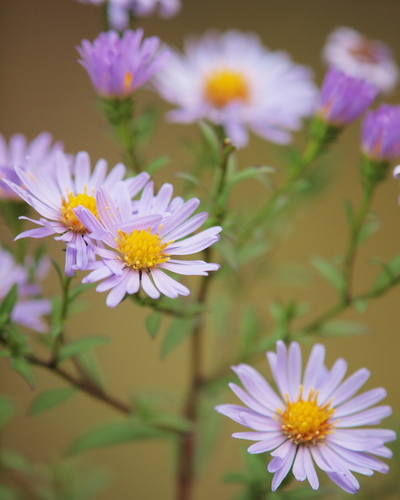
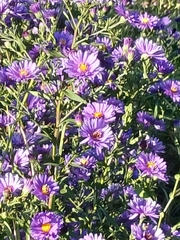
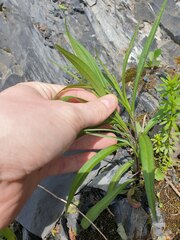
New York aster (Symphyotrichum novi-belgii) is an herbaceous perennial in the Asteraceae family, native to eastern coastal North America from Newfoundland to Georgia. It forms spreading colonies through rhizomes and flowers in late summer and fall, with purple heads surrounding yellow centers. Widely grown in Europe as Michaelmas daisy, it has also naturalized there and is moderately invasive in several countries.
Read moreNew York aster and Michaelmas daisy
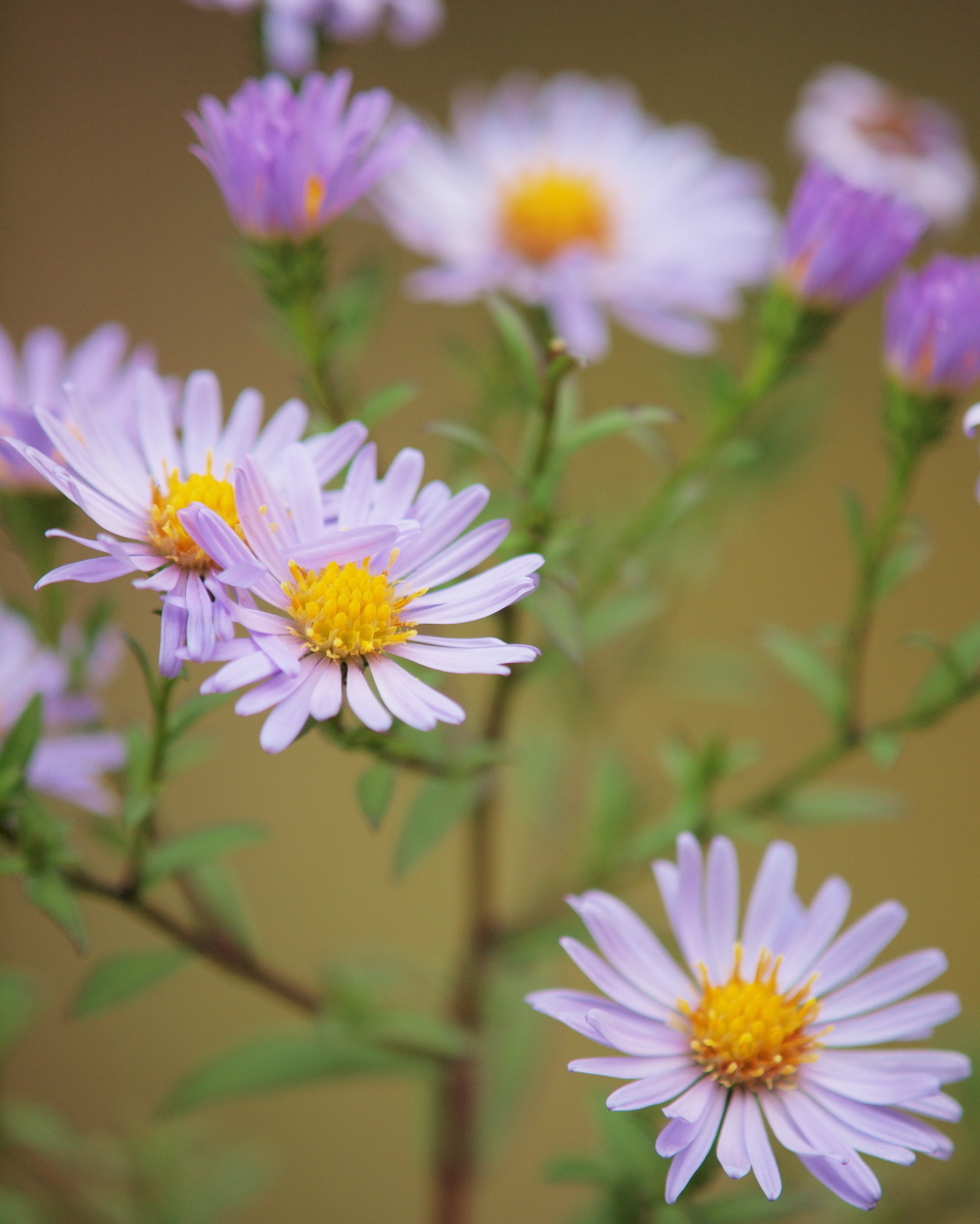



© photo
(c) Hermann Falkner, some rights reserved (CC BY-NC) · cc-by-nc
Stevia · cc0
Étienne Lacroix-Carignan · cc0
Taken Oct 29, 2022 by Jim Knopf (cc-by-sa)
Taken Oct 6, 2020 by Marko Marko Tuomainen (cc-by-sa)
Taken Aug 23, 2020 by Giode Tonpino (cc-by-sa)
Taken Oct 8, 2020 by Dieter Wagner (cc-by-sa)
Taken Sep 21, 2021 by Dieter Albrecht (cc-by-sa)
© copyright of the Board of Trustees of the Royal Botanic Gardens, Kew.




Global distribution
Symphyotrichum novi-belgii is native along the east coast of North America, from Newfoundland and Nova Scotia south to Georgia and Alabama. Introduced to Europe as an ornamental in the 18th century, it has become widely naturalized and is moderately invasive in some areas, including Poland. Introduced range and regional regulatory status are distinct from its strictly native range.
- Native2
- Introduced4
- Invasive1
- Canada
- United States
- United Kingdom
- Metropolitan France
- Germany
- Australia
- Poland
Hexagons: regions where the plant occurs. Green dots: native range.1
Identity
New York aster (Symphyotrichum novi-belgii (L.) G.L.Nesom, 1995) is an herbaceous perennial in the Asteraceae family, native to the east coast of North America. Also known as Michaelmas daisy, it grows naturally in wetlands, from the coast to river margins and peatlands. 2 3
American botanist Guy L. Nesom transferred this species from Aster to Symphyotrichum in 1995. The revision reclassified dozens of North American asters considered too diverse to remain in a single genus. In gardens, New York aster is a late-season perennial: its purple flower heads open in late summer and fall, from August to October in Northern Hemisphere temperate climates, when most summer borders have finished flowering. 1 4
Recognition
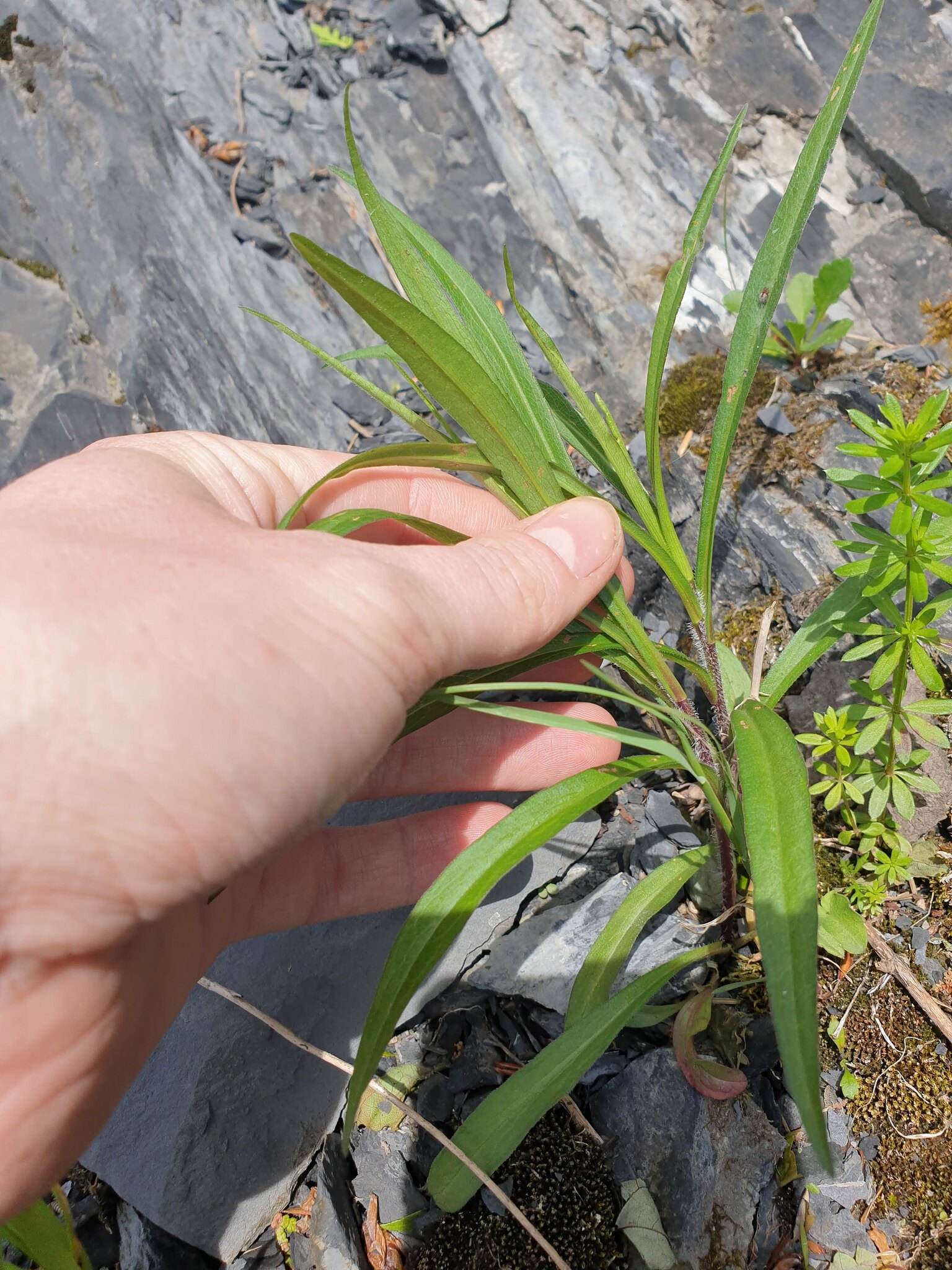
New York aster forms an upright clump 90 cm–1.5 m (3–5 ft) tall, with smooth stems sometimes tinged purple. Its lance-shaped leaves lack stalks; their widened bases clasp the stem with small ear-like lobes, a feature absent from many other garden asters. 3 4
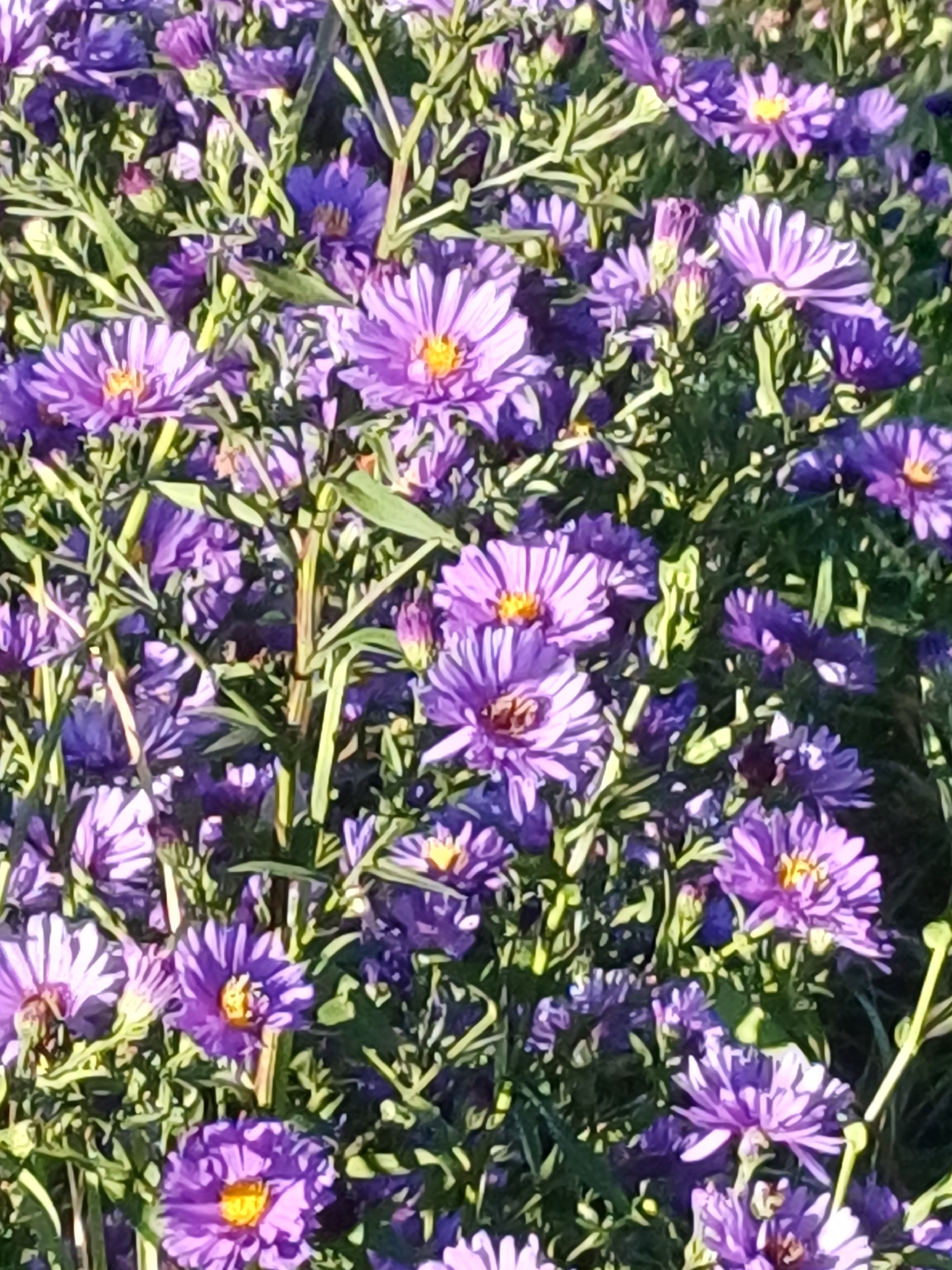
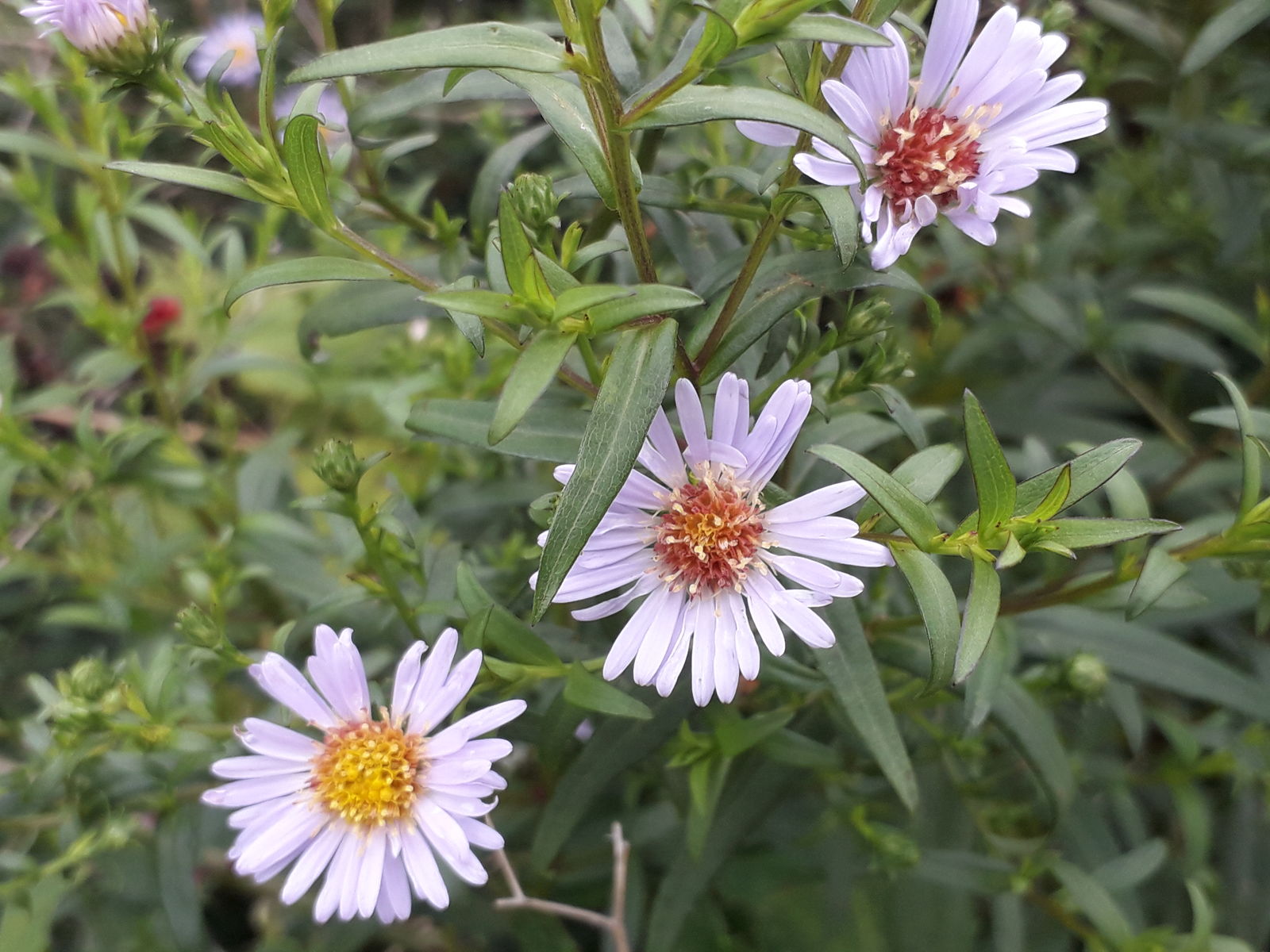
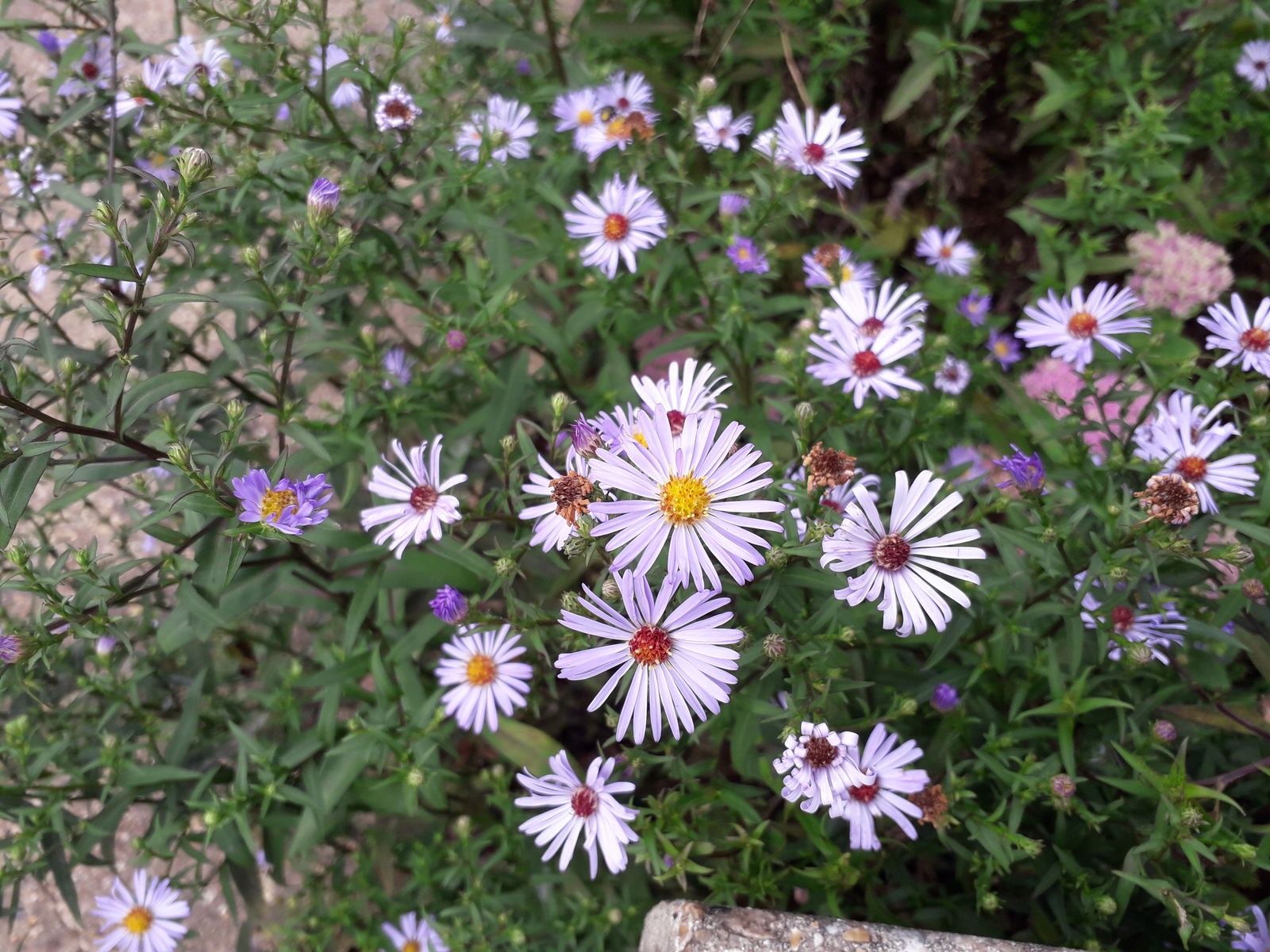
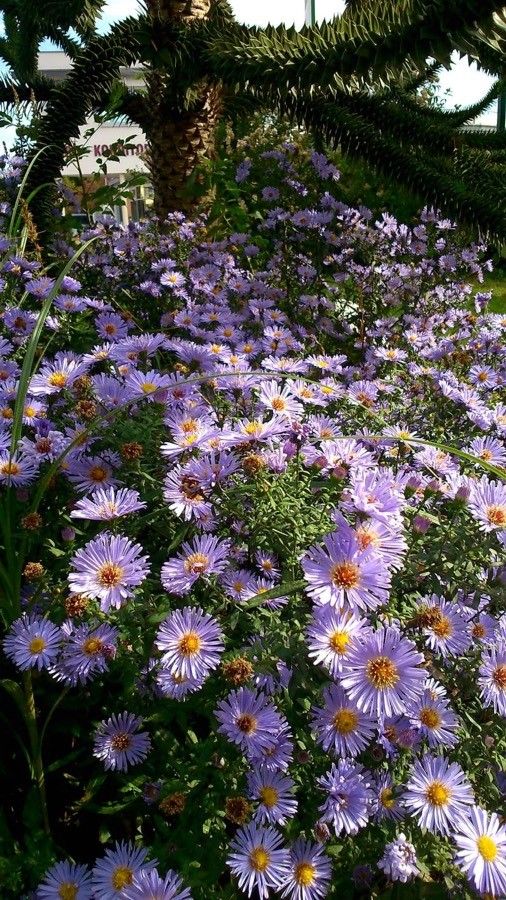
Flower heads measure 2.5–3 cm (about 1 in) across, depending on cultivar, and form dense corymbs at the stem tips. Around a yellow central disk, often turning orange as flowering ends, 15–25 purple, pink or white ray florets open. Blooming extends through late summer and fall, with a September peak in Northern Hemisphere temperate climates. 4 3
Compared with Aster amellus, which remains compact on a fixed rootstock, Symphyotrichum novi-belgii spreads through running rhizomes and gains ground each season unless divided. This spreading habit is the most reliable garden distinction between them. 2 5
Useful taxonomy
Carl Linnaeus originally described this species as Aster novi-belgii L. in 1753. Guy L. Nesom moved it into Symphyotrichum with dozens of other North American asters, showing that the former broad concept of Aster included lineages too different to keep together. The main synonyms and infraspecific ranks include:
- Aster novi-belgii L. (basionym, 1753)
- Aster novi-belgii var. laevigatus (Lam.) A.Gray
- Aster novi-belgii subsp. laevigatus (Lam.) Thell.
- Aster novi-belgii var. floribundus (Willd.) DC.
- Symphyotrichum novi-belgii var. crenifolium (Fernald) Labrecque & Brouillet
- Symphyotrichum novi-belgii var. elodes (Torr. & A.Gray) G.L.Nesom
Botanical varieties are distinct from horticultural cultivar names such as Marie Ballard and Peter Harrison. These designate garden selections rather than recognized taxa. Searching for “Marie Ballard” in a botanical reference such as POWO therefore yields no result: a sales name does not replace the accepted scientific name, Symphyotrichum novi-belgii. 1 7
Habitat and range
Eastern coastal North America is the native range of Symphyotrichum novi-belgii, from Newfoundland and Nova Scotia south to Georgia and Alabama, mainly near the coast. It occupies brackish marshes, wet meadows, riverbanks, lakeshores, peatlands and woodland edges. 3 4
European gardens have grown Symphyotrichum novi-belgii as an ornamental since the 18th century. It has become widely naturalized from gardens: seeds with a pappus travel on the wind, while rhizome fragments spread with inadequately composted plant waste. 6 2
Poland classes Symphyotrichum novi-belgii as a moderately invasive alien species. Widely distributed there, it reduces plant diversity in river valleys and urban wetlands it colonizes. In France, INPN documents it as naturalized, with populations varying in extent between regions. 6 7
Life cycle and reproduction
Winter dormancy is a feature of this herbaceous perennial: aboveground growth dries after flowering, and the rootstock produces new shoots the following spring. Sown in spring, it flowers from its second year, then blooms again each fall once established. 4 5
Late-season nectar feeds bees, butterflies and several specialist wild bee species associated with this genus. Symphyotrichum novi-belgii is also a host plant for pearl crescent butterfly caterpillars, Phyciodes tharos. Its seeds feed seed-eating birds in winter. 3 4
Clump division is the most reliable garden propagation method. Done in spring or fall every two to three years, it faithfully reproduces the color and habit of cultivars such as Marie Ballard and Royal Ruby. Surface sowing and stem cuttings in late spring also work, but seedlings from a garden cultivar produce unpredictable flower colors, sometimes quite different from the parent. 2 5
Uses and risks
Garden uses center on ornament: perennial beds, borders, rain gardens and wet-soil plantings, often with rudbeckias or Jerusalem artichokes for late-season color. Strong stems also make it a cut flower valued by florists. 4 3
Toxicity is not documented for cats, dogs or humans: Symphyotrichum novi-belgii is regarded as non-toxic, and some sources even mention flowers and young leaves used in salads or herbal teas. Its status for horses remains uncertain because species-specific data are lacking. 5
Spreading growth is the main cultivation risk. Running rhizomes can occupy a whole border within a few seasons without regular division. Outside gardens, the same vigor explains its moderately invasive status in several European countries, where it competes with native wetland plants. 6 2
Varieties, look-alikes and related plants
Cultivars are garden selections of Symphyotrichum novi-belgii, rather than separate species. Marie Ballard has double lilac pompom flowers; Professor Anton Kippenberg is a dwarf selection resistant to powdery mildew; Royal Ruby has maroon flowers; and Peter Harrison produces light pink blooms. Check the stated mature height and powdery mildew resistance before buying a cultivar. 4
The most likely look-alikes include:
- Symphyotrichum novae-angliae, New England aster, with hairy leaves and downy stems;
- Aster amellus, a European aster forming compact clumps on dry, calcareous soil, without running rhizomes;
- Symphyotrichum lanceolatum, with smaller flower heads and narrower leaves.
Running rhizomes, ear-like leaf bases clasping the stem and a natural wetland habitat provide the most reliable clues for confirming that a plant sold as New York aster is Symphyotrichum novi-belgii. 3 1
Main sources
- Plants of the World Online / Kew, Symphyotrichum novi-belgii (L.) G.L.Nesom
- Royal Horticultural Society, Symphyotrichum novi-belgii
- NC State Extension Gardener Plant Toolbox, Symphyotrichum novi-belgii
- Missouri Botanical Garden Plant Finder, Symphyotrichum novi-belgii
- Plants For A Future, Aster novi-belgii
- Generalna Dyrekcja Ochrony Środowiska (Poland), Aster novi-belgii - aster nowobelgijski
- INPN / MNHN, Symphyotrichum novi-belgii (L.) G.L.Nesom, 1995
- Encyclopaedia Britannica, aster (plant genus)
Frequently asked questions
Is New York aster poisonous?
No. Symphyotrichum novi-belgii is not listed as toxic to cats, dogs or humans. Its status for horses remains uncertain in the veterinary sources available. Some references mention traditional use of the flowers in salads or herbal teas.
When does New York aster bloom?
It blooms in late summer and fall, from August to October with a September peak in Northern Hemisphere temperate climates. It is among the last seasonal nectar sources for pollinators before winter.
Why does my clump spread so much each year?
The species colonizes through running rhizomes, unlike compact, clump-forming asters such as Aster amellus. Without regular division every 2–3 years, a colony can occupy far more space than originally expected.
How can I distinguish New York aster from Aster amellus?
Aster amellus stays low and forms a compact clump on dry, calcareous soil, without running rhizomes. Symphyotrichum novi-belgii grows taller on wet soil and spreads by rhizomes. Its ear-like leaf bases clasping the stem provide another useful clue.
What does novi-belgii mean?
The epithet means “of New Belgium,” a Latin name for New Netherland, the 17th-century Dutch colony that became New York State. It has no connection with modern Belgium.
Is New York aster invasive in Europe?
Introduced as a garden plant, it has naturalized in several European countries. Poland classes it as a moderately invasive alien species, widespread and capable of reducing plant diversity in the wet habitats it colonizes.
How do I divide New York aster?
Divide in spring or fall every 2–3 years, separating vigorous sections around the edge of the rootstock. Replant immediately in moist soil enriched with compost for quick establishment.
Similar plants


If you are unsure about a plant’s toxicity, ask a botanist or veterinarian for advice.