
Haworth's aeonium (Aeonium haworthii, )
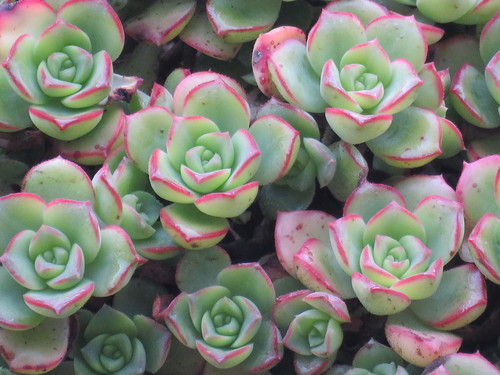


Haworth's aeonium (Aeonium haworthii) forms a succulent subshrub native to Tenerife. A member of the Crassulaceae family, it has matte gray-green rosettes with hairy edges at the tips of small woody branches. It can escape from gardens along Mediterranean coasts.
Read moreHaworth's aeonium and Pinwheel aeonium
Sempervivum haworthii
Place in full sun, with intense direct light all day long.
Sun; bright filtered light under cover
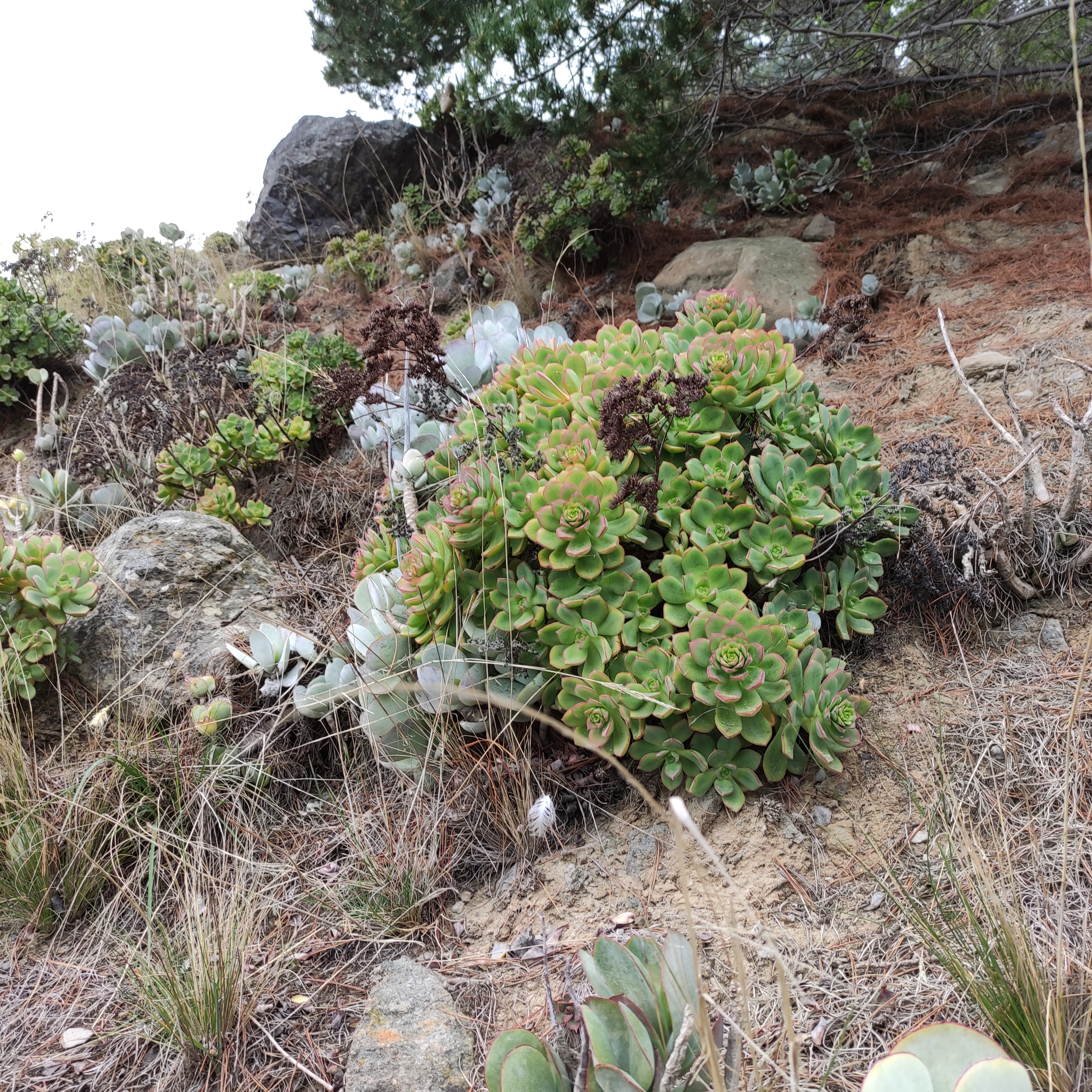


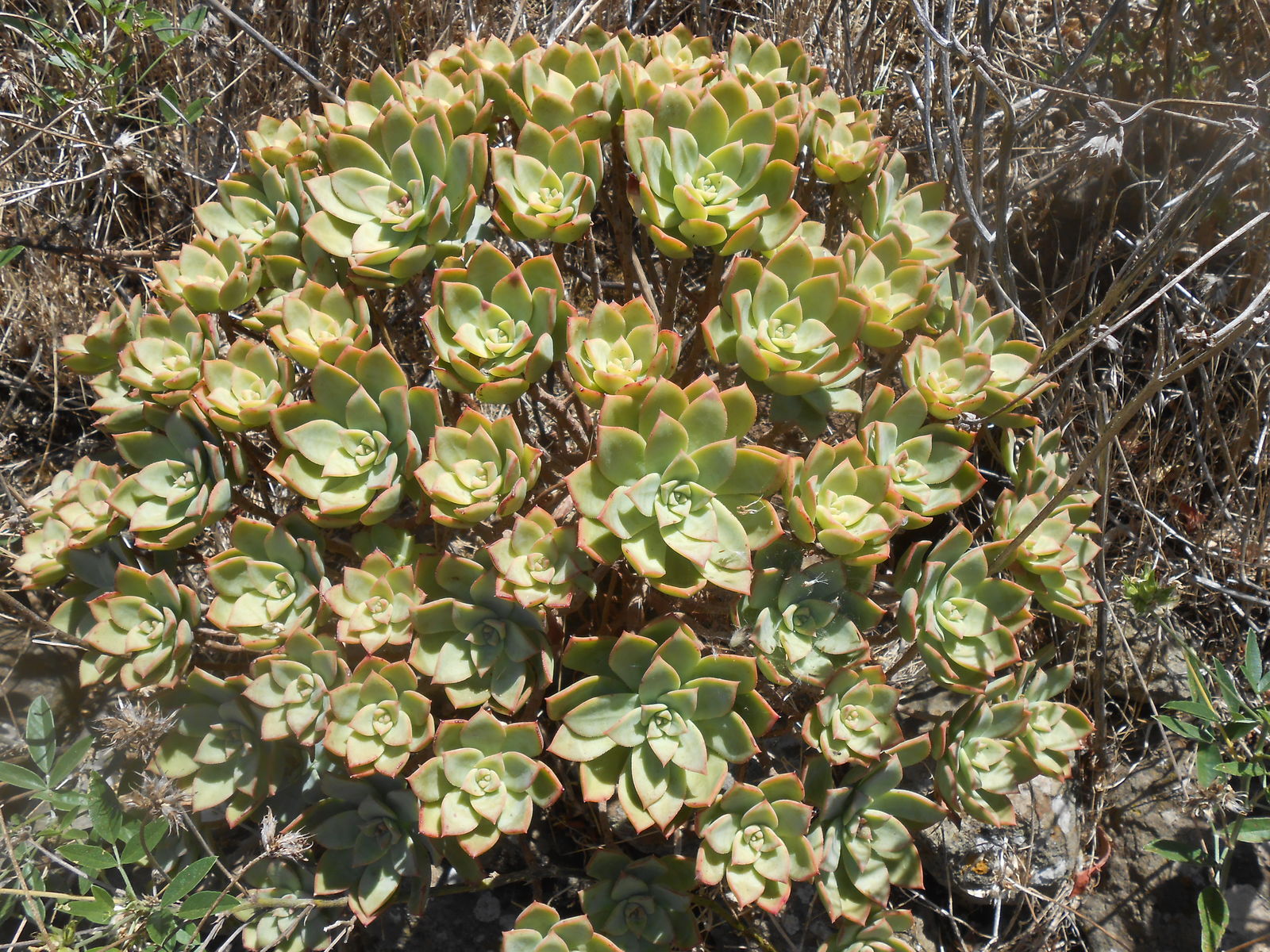
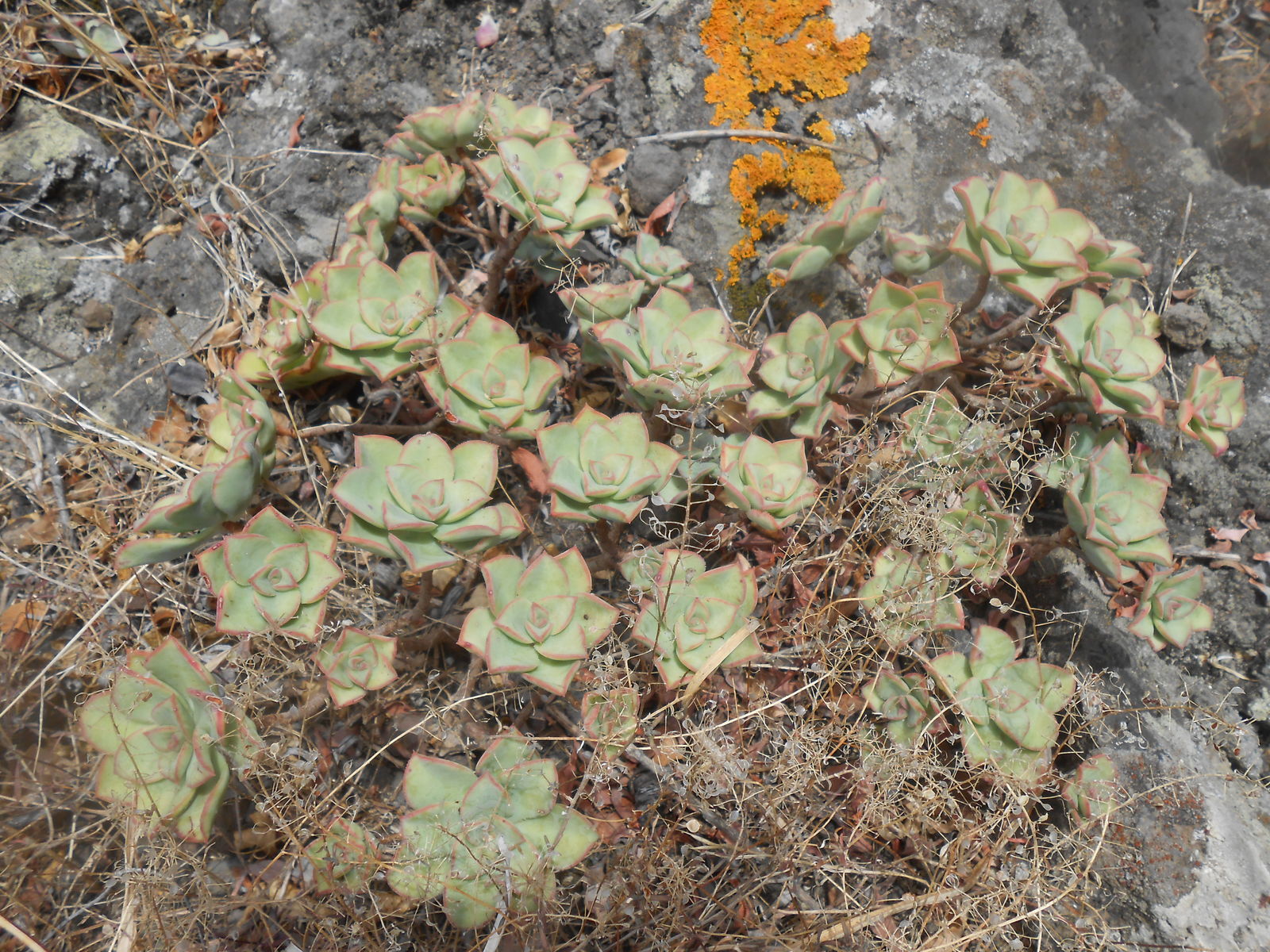

© photo
(c) Jennifer Rycenga, some rights reserved (CC BY-NC), uploaded by Jennifer Rycenga · cc-by-nc
Jenny Saito · cc-by
Wikimedia Commons · CC BY-SA or Public Domain
Taken Aug 12, 2020 by val sil (cc-by-sa)
Taken Mar 19, 2020 by mmans mmans (cc-by-sa)
Taken May 15, 2019 by Millea's Plants (cc-by-sa)
Taken Dec 28, 2020 by Gotopo Virginia (cc-by-sa)
Taken May 12, 2019 by mreggiardo (cc-by-sa)
© copyright of the Board of Trustees of the Royal Botanic Gardens, Kew.


Global distribution
Native to Tenerife in the Canary Islands; introduced in several Mediterranean regions, including France and Corsica.
- Native1
- Introduced2
- Tenerife, Canary Islands
- Mediterranean France
- Corsica
Hexagons: regions where the plant occurs. Green dots: native range.2
Identity
Haworth's aeonium (Aeonium haworthii Webb & Berthel., 1841) has small gray-green rosettes, often edged in purple, at the tips of woody branches. Its French name, aéonium de Haworth, appears in Mediterranean botanical inventories and EPPO nomenclature. This succulent belongs to the Crassulaceae family. ↗ ↗ ↗
The plant forms a spreading subshrub, sometimes covering the ground, rather than a single rosette resting on the soil. Its low branches carry several leafy tips. The flowering stems are red. ↗ Haworth's aeonium is grown as an ornamental, but fragments can establish themselves outside gardens. ↗
Recognition
Matte, glaucous leaves with fine hairs along their edges distinguish Haworth's aeonium. The rosettes reach 5 to 10 cm (2 to 4 in) across. A purple margin can outline each leaf, so color alone cannot identify a particular horticultural form. Examine the hairy leaf edges and the arrangement of the branches as well as the color. ↗
The Mediterranean description gives a height of 15 to 30 cm (6 to 12 in), while the British horticultural description places mature height in a broader range. The two height ranges are reported in distinct descriptive contexts. The small flowers are greenish to pale yellow, sometimes flushed pink, and gather in a dense inflorescence. ↗ ↗
Useful taxonomy
The accepted name is Aeonium haworthii. The older name Sempervivum haworthii (Webb & Berthel.) Salm-Dyck ex Christ is a synonym of this species. A label using that older name needs to be read in its taxonomic context. The word Sempervivum on an old label does not establish that the plant is a hardy houseleek suited to an alpine garden. ↗
The epithet haworthii honors Adrian Hardy Haworth, an English botanist known for his work on succulents. A person's name retained in a botanical epithet does not describe the foliage. Identification still depends on the living plant, particularly its leaves and inflorescences. ↗
Habitat and range
Haworth's aeonium is native to Tenerife, in the Canary Islands. Its native range is distinct from the places where ornamental cultivation has introduced it. Introductions are recorded in France, Corsica, Portugal and Spain, as well as California. ↗
Along the Mediterranean coast, the species occupies rocky shores and cliffs, as well as habitats altered by people. Populations in the Alpes-Maritimes show marked expansion. Dumped garden waste contributes to that spread because discarded pieces can take root where they land. ↗
New Zealand lists Haworth's aeonium as exotic and records its naturalization since 1959. This is a separate introduced range, outside the Canary Islands. ↗
Life cycle and reproduction
Mediterranean descriptions place flowering in April to June, a spring to early-summer period in that region. The inflorescence measures 10 to 20 cm (4 to 8 in) long and produces many small seeds. Wind helps disperse those seeds, while cuttings provide a means of vegetative propagation. ↗
In cultivation, rosettes can be taken as cuttings and kept barely moist until they root. Sow seeds in spring. A living fragment can also establish in the wild: the same rooting process that makes propagation useful in a garden explains part of the risk of spread outside cultivation. ↗ ↗
Growth slows in strong summer heat, and a less pronounced resting period also occurs in winter. Water according to the plant's visible activity. Cultivation guidance calls for moderate watering and a balanced liquid fertilizer during growth, followed by almost dry compost in winter. Reduced activity, rather than a fixed date alone, provides the context for reducing water. ↗ ↗
Uses and risks
Grow Haworth's aeonium in a pot of very free-draining compost, with bright filtered light behind glass. A container allows the plant to be moved under cover during cold weather. For succulents that have outgrown their pots, spring repotting is the general horticultural recommendation. ↗ ↗
The clearest documented risk concerns natural habitats: each discarded segment can produce another plant. Avoid planting beside natural cliffs and dispose of fragments carefully to limit escape. The result of the consultations is "no known toxicity", without proof of safety for humans or animals. The ASPCA lists for cats, dogs and horses, Poison Control and Pet Poison Helpline do not list the genus Aeonium; the PFAF consultation did not provide a page for this species. The former Canadian and FDA databases have been retired. ↗↗↗↗↗↗↗↗ The Canary Islands flora mentions traditional external uses; these do not constitute evidence of food safety. ↗ CliniTox classifies the cultivated close relative Aeonium arboreum as having no known toxicity, although it advises against using the plant as fodder; this finding is not an audience-specific verdict for A. haworthii. ↗
Varieties, look-alikes and related plants
The selection 'Variegatum' has rosettes whose young lemon-yellow leaves become green with a red edge. Horticultural documentation associates the sales names 'Kiwi' and 'Dream Color' with this plant. The selection's variegation should not be attributed to every Haworth's aeonium: it describes a particular cultivated form. ↗
Aeonium arboreum forms a taller subshrub, with spoon-shaped leaves and large, conical yellow panicles. Haworth's aeonium is identified by its low spreading habit and glaucous rosettes with hairy leaf edges. A terminal rosette on its own is a character shared within the genus, so the branching habit and leaf margins provide useful additional checks. ↗ ↗
Main sources
- NC State Extension, cultivation of the genus Aeonium
- Kew, Aeonium haworthii
- RHS, Aeonium haworthii
- INVMED, Haworth's aeonium
- EPPO, Aeonium haworthii
- New Zealand Plant Conservation Network, Aeonium haworthii
- RHS, Aeonium haworthii Variegatum
- RHS, growing cacti and succulents
- RHS, Aeonium arboreum
- FloreAlpes, Haworth's aeonium
- Montana State University Extension, growing succulents
- Iowa State University Extension, growing succulents indoors
- FDA: retired poisonous plant database
- Agriculture Canada: closure of the Canadian poisonous plant system
- Flora of New Zealand, Aeonium haworthii
- Toxic and Non-Toxic Plant List — Cats
- Toxic and Non-Toxic Plant List — Dogs
- Toxic and Non-Toxic Plant List — Horses
- Poisonous and non-poisonous plants: An illustrated list
- Common Poison List
- Flora Canaria — Aeonium haworthii
- pfaf-etalon
- uzh-aeonium-relative
- UConn Home Garden Education — Growing Houseplants
Frequently asked questions
Where does Haworth's aeonium come from?
Its native range is Tenerife in the Canary Islands. Its presence in France results from ornamental introductions.
Why reduce watering for Haworth's aeonium in summer?
The species can enter a resting period as summer temperatures rise. Adjust watering to its growth and the drying of the compost.
Can I discard Haworth's aeonium prunings in the wild?
No. Fragments can root and establish new plants on rocky coasts and cliffs.
If you are unsure about a plant’s toxicity, ask a botanist or veterinarian for advice.