
Lipstick plant (Aeschynanthus radicans, )
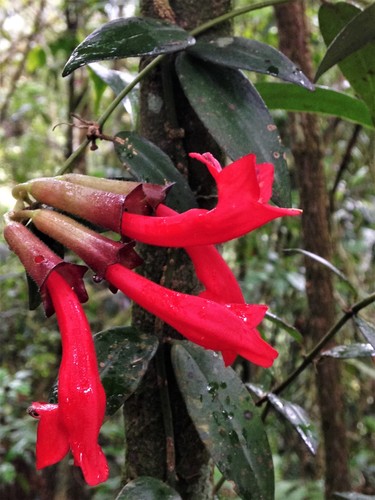


Lipstick plant (Aeschynanthus radicans) combines trailing stems with red flowers that emerge from a tubular calyx. This tropical perennial grows indoors in bright light and well-drained potting mix.
Read moreLipstick plant
Trichosporum radicans
Give plenty of ambient light without direct sun on the leaves.
Bright filtered light, without full sun.


© photo
(c) Mashuri Waite, some rights reserved (CC BY-NC), uploaded by Mashuri Waite · cc-by-nc
Wikimedia Commons · CC BY-SA or Public Domain
Taken Mar 23, 2022 by Renaud Brochiero (cc-by-sa)
Taken Nov 23, 2021 by Barnard Kleynhans (cc-by-sa)
© copyright of the Board of Trustees of the Royal Botanic Gardens, Kew.




Global distribution
Native from southern Myanmar to western and central Malesia.
- Native6
- Myanmar
- Thailand
- Malay Peninsula
- Sumatra
- Borneo
- Sulawesi
Hexagons: regions where the plant occurs. Green dots: native range.1
Identity
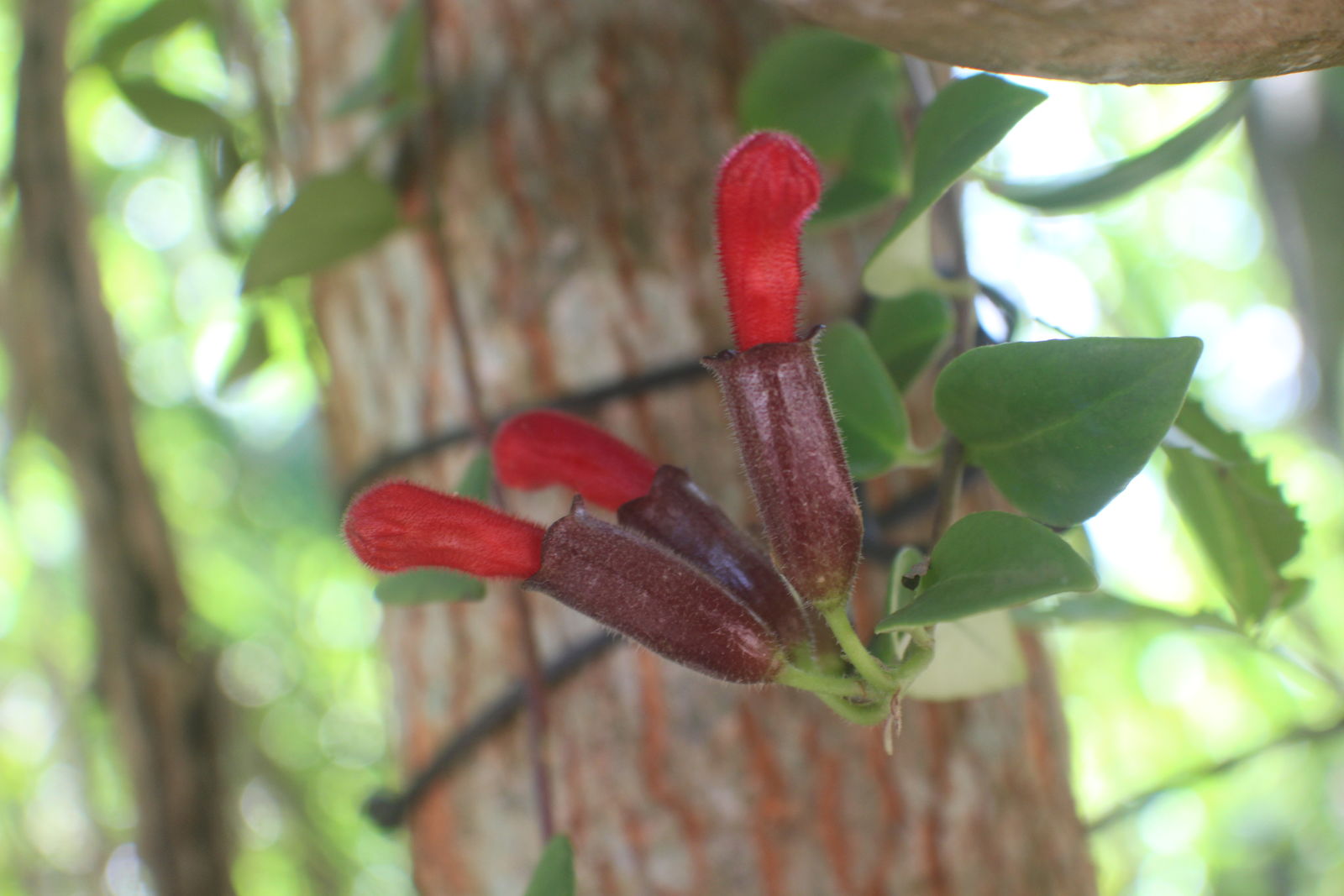
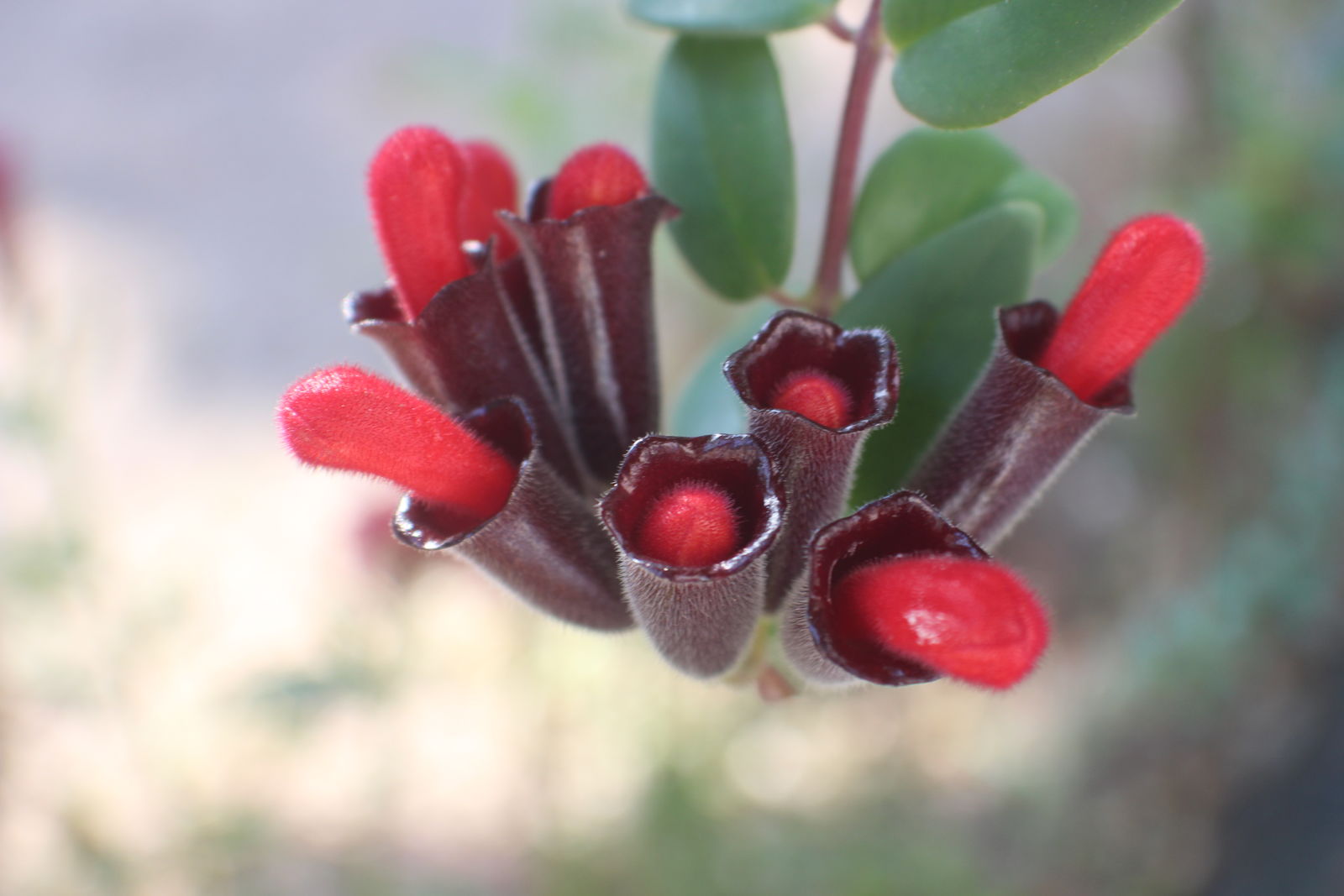
Lipstick plant (Aeschynanthus radicans Jack, 1823) produces red tubular flowers that emerge from a dark calyx. The contrast between the corolla and its surrounding tube explains the English common name: the flower resembles lipstick emerging from its case. The French name "aeschynanthe" is also recorded for this species. 3 4 6 2
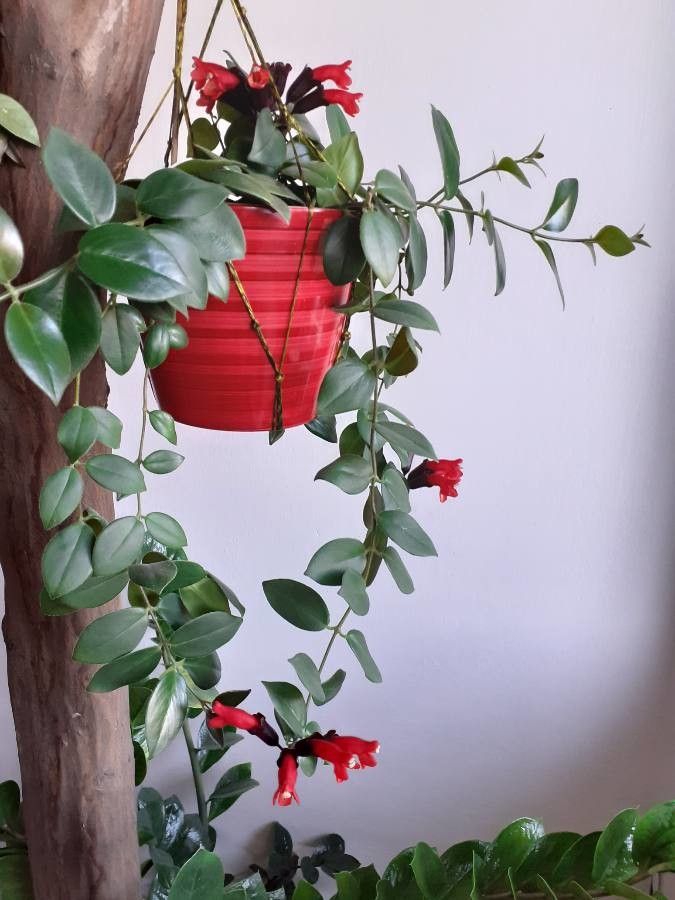
An evergreen perennial in the Gesneriaceae family, lipstick plant grows on trees or rocks in humid tropical regions of Southeast Asia. Its trailing habit suits a hanging basket, where shoots can spill over the edge of the container without being trained upright on a stake. The hanging display follows the direction the shoots take in a pot. 1 3
Recognition
Opposite leaves with entire edges help identify Aeschynanthus radicans. The leaves are slightly fleshy. In the regional botanical description, the blades measure 0.8–2.6 cm (0.3–1 in) wide and have a variable covering of hairs, especially on the underside. The red corolla measures 47.5–58 mm (1.9–2.3 in); the calyx can be purple or green, sometimes veined with red. 5
In horticultural cultivation, the recorded dimensions are 0.5–1 m (1.6–3.3 ft) tall and 0.1–0.5 m (4–20 in) wide. The dimensions for Aeschynanthus radicans describe a cultivated plant with trailing stems. The cultivated dimensions do not measure how far Aeschynanthus radicans spreads along a tree in the forest. 3
Useful taxonomy
Aeschynanthus radicans Jack is the accepted name, published in 1823. The species belongs to the genus Aeschynanthus, within the order Lamiales and the family Gesneriaceae. The author name Jack accompanies the botanical name and helps specify the identity being sought in catalogs. 2
The synonym Trichosporum radicans (Jack) Nees names the same species under a former genus. Aeschynanthus radicans var. lanuginosus Ridl. also appears in its synonymy. The botanical synonyms of Aeschynanthus radicans are separate from cultivar names: a former taxonomic variety and a horticultural selection belong to different categories. An old name in a botanical reference therefore needs to be read in its taxonomic context. 1
Habitat and range
Southern Myanmar marks one end of the native range of Aeschynanthus radicans, which extends to western and central Malesia. The range includes Thailand and the Malay Peninsula, along with Sumatra, Borneo and Sulawesi. The range records for Aeschynanthus radicans concern wild populations. A garden-center plant could have been propagated far from the species' native range. 1
In lowland and hill forests, lipstick plant grows as an epiphyte on trees or spreads over rocks, often near streams. Adventitious roots along the stems can also help it climb. Trailing growth in a hanging pot is therefore only one expression of the species' growth habit, rather than a complete picture of how it grows in its natural habitat. 5
Life cycle and reproduction
Flowering can occur in bursts from spring through fall in cultivation. Bright filtered light supports growth and flowering. During the active season, apply a general liquid fertilizer at half strength once a month, from mid-spring through late summer. Reduce watering for lipstick plant in winter. The calendar expresses this pattern for an indoor plant in mainland France; its indices are relative and do not correspond to a measured volume of water. 3
For stem cuttings, use softwood shoots in spring or semi-ripe shoots in summer. Choose a cutting with several nodes, remove its lower leaves, and place it in a mix of vermiculite and perlite kept moist. Stem propagation produces a new Aeschynanthus radicans plant without waiting for seeds to form. The node-bearing stem is the part used for propagation. 3 4
Uses and risks
Humidity around a potted lipstick plant must be accompanied by air circulation: stagnant humid air favors fungal disease. The plant is grown for its flowers and foliage indoors or under cover. A well-drained potting mix helps keep atmospheric humidity separate from a constantly saturated root environment. Aphids and mealybugs can colonize the shoots; mites are also reported. 4
The toxicity of Aeschynanthus radicans remains undetermined for each audience. A veterinary reference describes the species as probably non-toxic, but explains that qualification by the absence of reports in the literature and advises against using it as animal feed. Such wording does not demonstrate safety for cats, dogs or horses. No specific classification is established here for children or adults, or for other animals. 6
The veterinary entry titled "Lipstick Plant" classifies Aeschynanthus humilis as non-toxic to cats, dogs and horses. The non-toxic classification of A. humilis cannot establish the status of A. radicans, even though the two plants share an English common name. The scientific name determines the scope of that entry. 7
Varieties, look-alikes and related plants
Ovary hairs distinguish Aeschynanthus radicans from the similar A. pulcher, including some hairy-leaved forms. The decisive botanical feature is the covering of the ovary: A. radicans has hairs, whereas A. pulcher has glands only. Red flowers and trailing stems do not, on their own, separate these species. 5
The horticultural names ‘Curly’ and ‘Rasta’ are associated with curled leaves; ‘Tangerine’ with orange-yellow flowers; and ‘Variegata’ with variegated foliage. The cultivar traits describe selections presented under A. radicans. Cultivar traits do not replace the botanical characters of Aeschynanthus radicans and should not be assigned to all its wild populations. A cultivar description needs to remain attached to its named selection. 4
Main sources
Botanical references establish the identity of Aeschynanthus radicans; horticultural profiles describe its cultivation under cover. The reference to A. humilis is used solely to distinguish the scope of the veterinary classification.
- Plants of the World Online, Aeschynanthus radicans Jack
- GBIF Backbone Taxonomy, Aeschynanthus radicans Jack
- Royal Horticultural Society, Aeschynanthus radicans
- NC State Extension, Aeschynanthus radicans
- D. J. Middleton, revision of Aeschynanthus in Singapore and Peninsular Malaysia, 2016
- University of Zurich, CliniTox, Aeschynanthus radicans
- ASPCA, Lipstick Plant, entry concerning Aeschynanthus humilis
Frequently asked questions
Where should I put a lipstick plant indoors?
Choose bright filtered light, away from full sun, with humid air and good air circulation.
How do you propagate Aeschynanthus radicans?
Take a softwood stem cutting in spring or a semi-ripe cutting in summer, then place it in a well-drained mix kept moist.
Is lipstick plant safe for cats?
The status of Aeschynanthus radicans remains undetermined. The non-toxic classification of the plant called Lipstick Plant under Aeschynanthus humilis must not be transferred to this species.
If you are unsure about a plant’s toxicity, ask a botanist or veterinarian for advice.