
Soap aloe (Aloe maculata, )
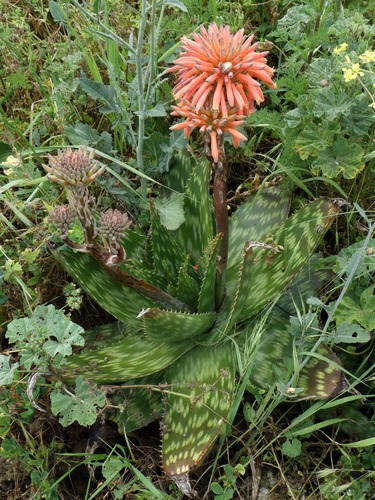
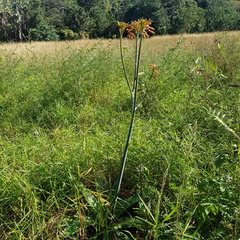
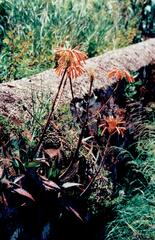
Soap aloe (Aloe maculata) is a succulent from southern Africa with fleshy, white-spotted leaves edged with teeth. Its tubular flowers form flat-topped clusters on branching flower stalks. The height of the clump and the height of the flowering plant are two different measurements.
Read moreSoap aloe
Aloe saponaria, Aloe latifolia and Aloe macracantha
Place in full sun, with intense direct light all day long.
Full sun in horticultural cultivation


© photo
(c) zaca, some rights reserved (CC BY-NC), uploaded by zaca · cc-by-nc
Margaret Burger · cc-by-sa
zebedeugalinha · cc-by
Taken Feb 15, 2011 by Photoflora - Benoit BOCK (©)
Taken Oct 15, 2005 by Photoflora - Benoit BOCK (©)
Taken Jul 31, 2021 by JM F (cc-by-sa)
Taken Feb 13, 2022 by Pasi Laine (cc-by-sa)
Taken May 17, 2021 by Sanchez Cesar (cc-by-sa)
© copyright of the Board of Trustees of the Royal Botanic Gardens, Kew.




Global distribution
Native to southern Africa, including South Africa and Lesotho. Escaped from cultivation in several Australian regions and introduced in Corsica and Réunion.
- Native2
- Introduced3
- South Africa
- Lesotho
- New South Wales
- Corsica
- Réunion
Hexagons: regions where the plant occurs. Green dots: native range.9
Identity and names
Soap aloe (Aloe maculata All., 1773) is a succulent plant from southern Africa. Its French name, “aloès maculé,” is used for this binomial in a natural history atlas of Occitanie, France. The abbreviation All. accompanies the name published by Allioni; it matters when comparing old labels that bear the same binomial. 5 2
The species belongs to the Asphodelaceae, in the order Asparagales. It forms rosettes of fleshy leaves and can develop dense clumps through its offsets. It usually has no visible stem, or only a short one. A low-growing plant can therefore gradually occupy more space around the original rosette. 4 3 7
Identifying the plant
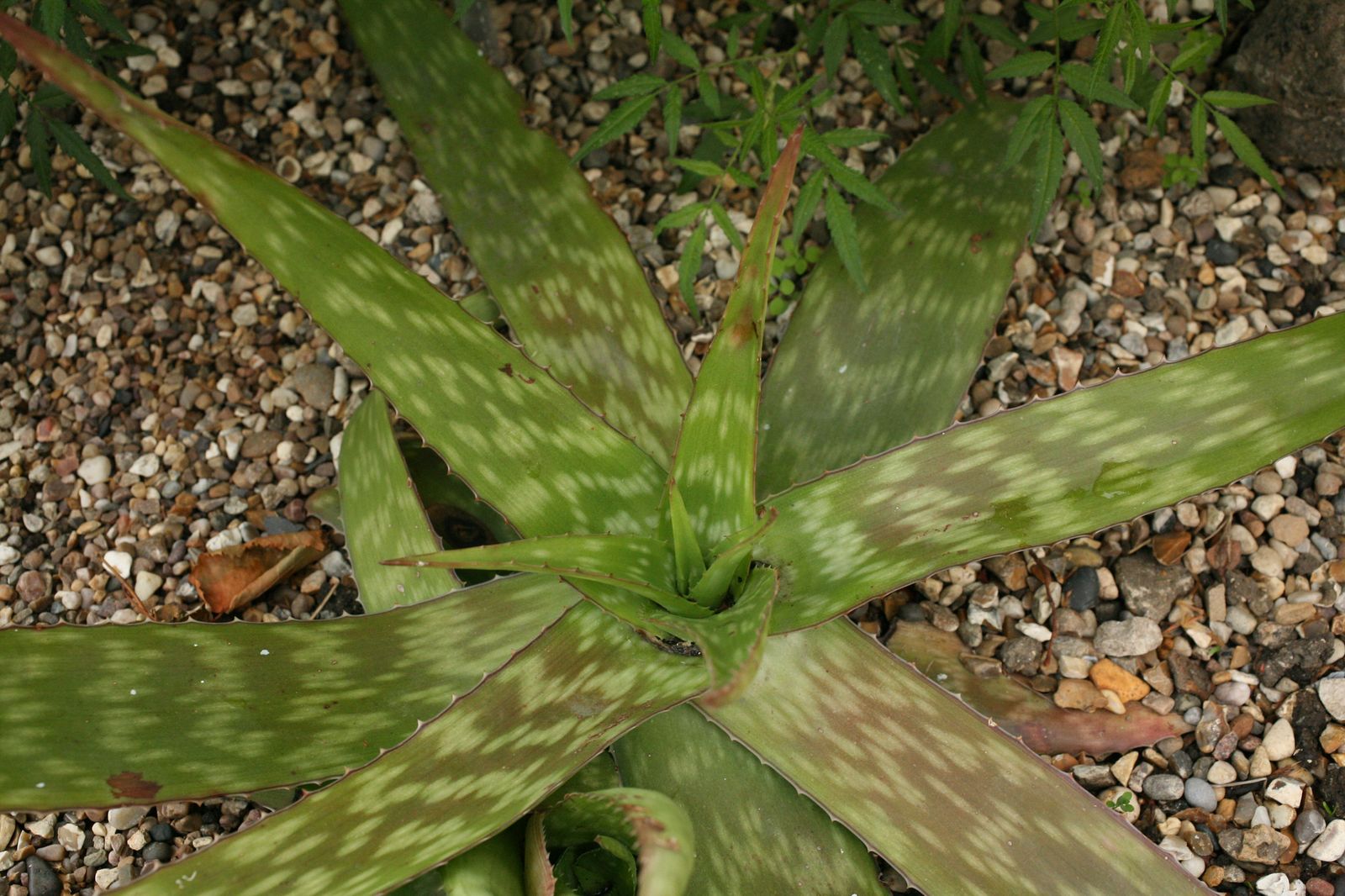
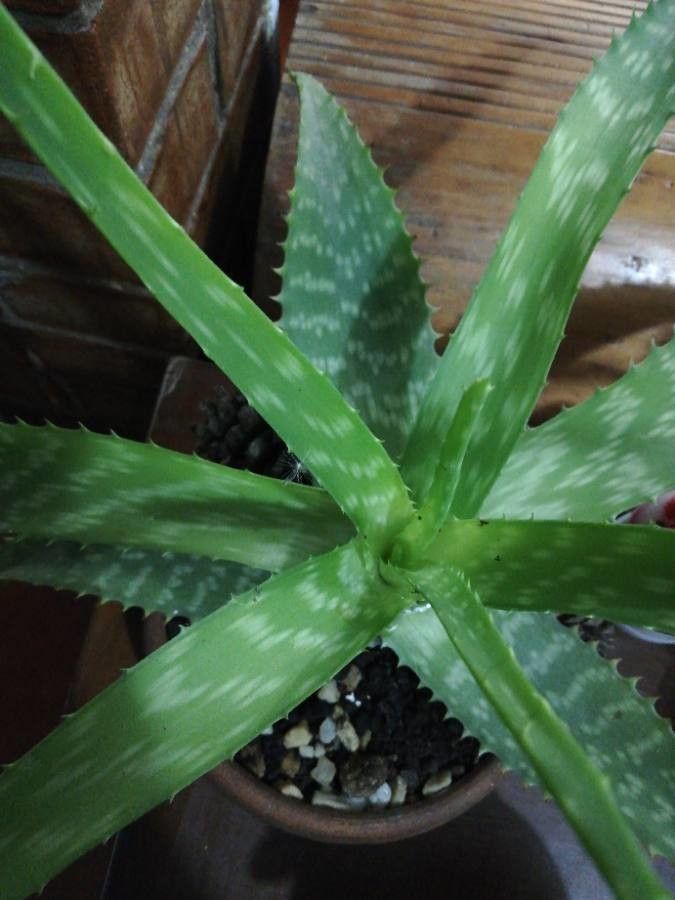
The leaves are lance-shaped to oval, thick, and edged with brown-tipped teeth. In the flora of New South Wales, they are described as 10–30 cm (4–12 in) long and 5–10 cm (2–4 in) wide; the teeth reach 4–5 mm (0.16–0.20 in). The green upper surface bears white spots, while the lower surface is paler and lacks these spots in that description. 3
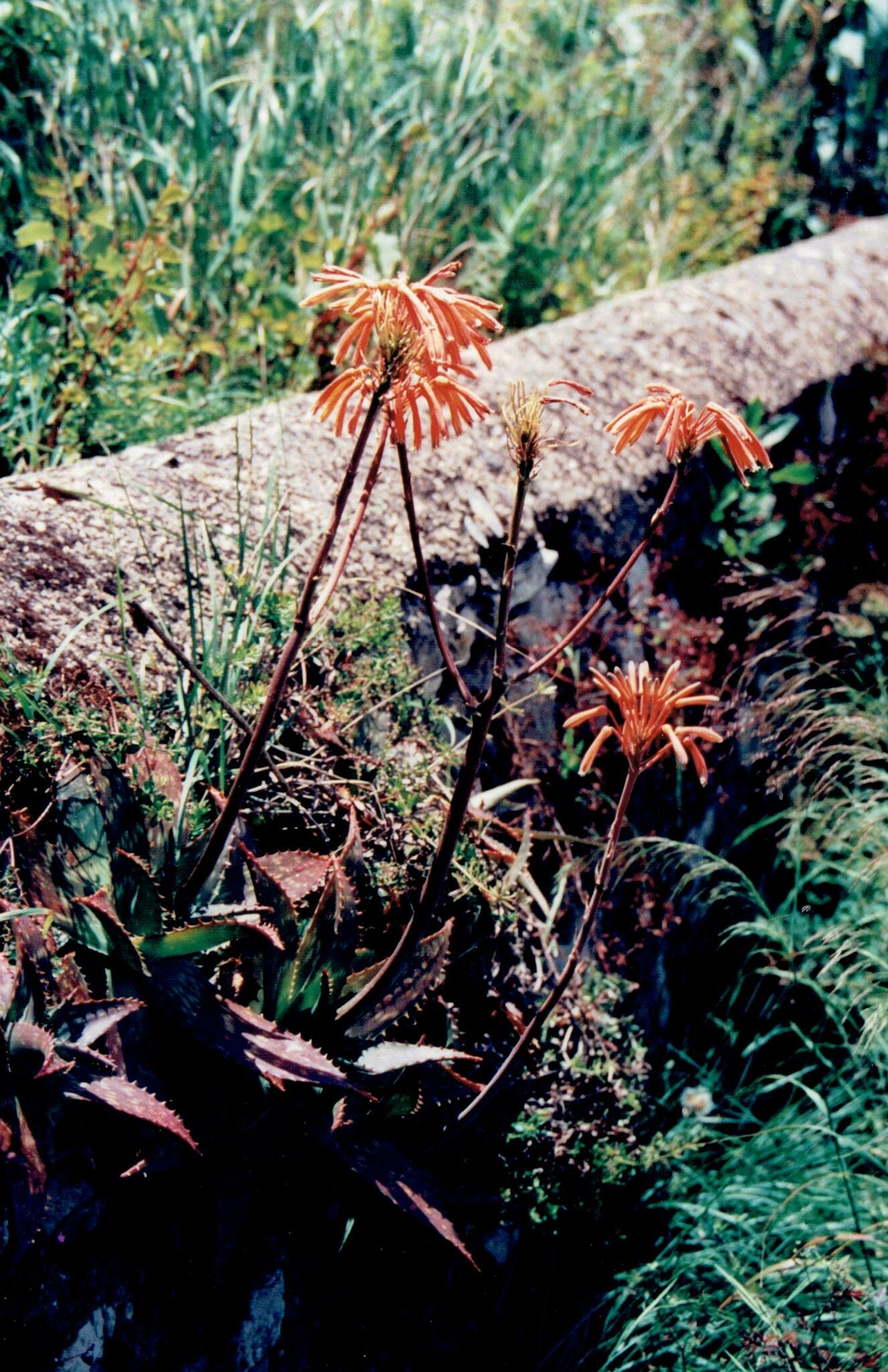
The inflorescence provides another clue: the flowers form flat-topped clusters. Leaves alone do not always distinguish spotted aloes, because this species is highly variable and readily hybridizes with other aloes, both in gardens and in the wild. The triangular leaves may curve toward a dried, twisted tip. 1
Taxonomy and related species
The name Aloe maculata All. dates to 1773. Two later, identical names, attributed to Forsskål in 1775 and Thunberg in 1785, are illegitimate homonyms: their matching spelling alone does not make them synonyms of Allioni’s species. The family “Aloaceae” recorded in the historical nomenclatural entry does not replace its current placement in the Asphodelaceae. 2 4
Aloe saponaria, Aloe latifolia, and Aloe macracantha remain names encountered in horticultural synonymy. By contrast, Aloe maculata subsp. ficksburgensis (Reynolds) Gideon F.Sm. & Figueiredo is a combination published at subspecies rank in 2012. This botanical rank does not denote a cultivar, and a name containing ficksburgensis should not automatically be shortened to the species name alone. 7 8
Habitat and distribution
Soap aloe is native to southern Africa, including South Africa and Lesotho. 9 In South Africa, its distribution includes the Cape provinces and eastern regions. Soap aloe grows in varied habitats: rocky outcrops, scrub, and grasslands. Its populations are therefore not all exposed to the same rainfall, terrain, or coastal climate. 1
Outside its native range, it can escape from gardens. The flora of New South Wales records infrequent escapes from cultivation in several Australian districts. 3 The species is also listed as introduced in Corsica and Réunion. 9 Observations from Occitanie concern the same taxon. On their own, they do not establish that it is naturalized or invasive there. 5
Flowering and reproduction
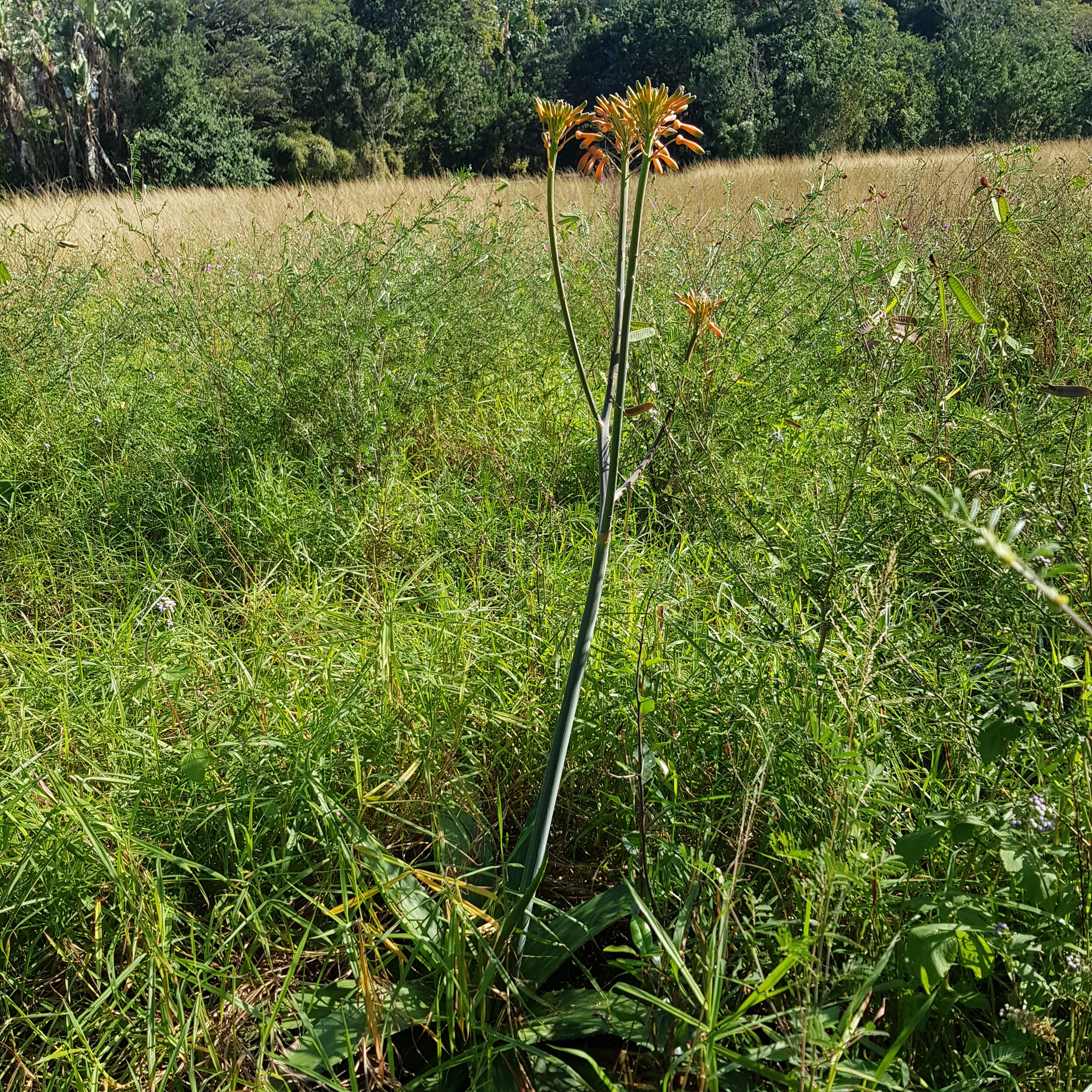
The tubular flowers range from yellow to red and orange. They grow on a flower stalk that may branch. The Australian description gives a floral tube length of 25–45 mm (1–1.8 in); open flowers hang downward, while young buds stand upright. Flowering is followed by oblong capsules 20–35 mm (0.8–1.4 in) long, containing seeds with a membranous wing. 1 3
There is no universal flowering date. In South Africa, some forms flower in Southern Hemisphere summer, winter, or spring. These seasons do not translate directly into the French calendar, or into a single calendar for English-speaking readers. The nectar attracts sunbirds within its South African range. Alongside reproduction by seed, offsets help the clumps develop. 1 3
Uses and precautions
Soap aloe is grown as an ornamental plant, particularly in rock gardens. Its spotted leaves and colorful flower stalks contribute to this use. Leaf sap is also reported as a traditional substitute for soap in several cultures; that use is not evidence of food safety. 1
Its safety remains undetermined for humans, children, cats, dogs, horses, and other animals. The old name saponaria and the use of its sap do not establish that the leaves are edible. Properties attributed to another aloe, especially Aloe vera, cannot be transferred to this species. The teeth along the leaves are also a physical feature to consider when handling the plant. 2 3
Growing it in the garden
Full sun and well-drained soil are the horticultural guidelines given for soap aloe. South African recommendations suggest free-draining soil enriched with compost and describe slow growth. The choice of a site also depends on local climate: its presence in a South African rock garden does not prove that it withstands every French winter, or winter conditions elsewhere. 1 7
To plan for its size, the horticultural range of 0.5–1 m (1.6–3.3 ft) in height and spread gives a useful approximation. This horticultural height differs from its height in flower, which reaches about 1.2 m (4 ft) in the Australian flora. A tall flower stalk above a low rosette therefore does not indicate a vegetative stem of the same height; offsets, meanwhile, account for the widening of the clumps. 7 3
Main sources
- Aloe maculata | PlantZAfrica
- Aloe maculata | International Plant Names Index
- PlantNET - FloraOnline
- GBIF, exact match for Aloe maculata
- Soap aloe, Aloe maculata | Biodiv’Occitanie - OC’nat
- Wikidata, identity Q135018
- Aloe maculata | soap aloe
- Aloe maculata subsp. ficksburgensis | International Plant Names Index
- Aloe maculata All. | Plants of the World Online
Frequently asked questions
How do you identify soap aloe?
Its fleshy leaves have white spots and brown teeth along their edges. The tubular flowers form flat-topped clusters, a useful feature among spotted aloes.
Is Aloe saponaria another name for Aloe maculata?
Yes. Aloe saponaria is an older name still encountered for this aloe. The author abbreviation All. distinguishes Aloe maculata from homonyms published by other botanists.
How tall does Aloe maculata grow?
The horticultural range given is 0.5–1 m (1.6–3.3 ft). The flora of New South Wales describes a height of up to about 1.2 m (4 ft) when the plant is in flower; the flower stalk rises above the rosette.
Does soap aloe always flower in the same season?
No. The season varies with the form and region. South African observations record flowering in Southern Hemisphere summer, winter, or spring.
Can its leaves be used like those of Aloe vera?
Uses attributed to Aloe vera must not be transferred to Aloe maculata. The traditional use of its leaf sap as soap does not establish that this plant is safe to ingest.
If you are unsure about a plant’s toxicity, ask a botanist or veterinarian for advice.