
Common whitebeam (Aria edulis, )
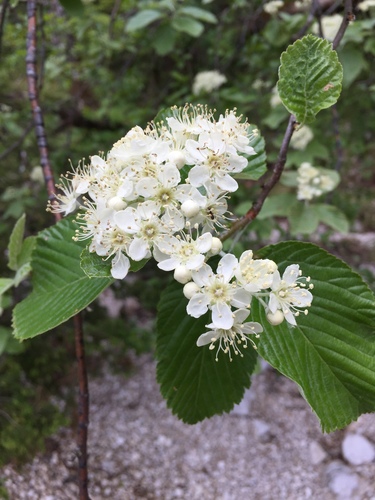
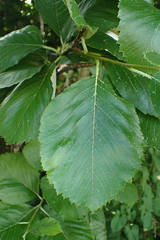
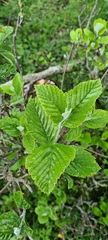
Common whitebeam (Aria edulis) is a deciduous tree in the Rosaceae, native to Europe and northwestern Africa. White-felted leaf undersides distinguish it; spring flowers develop into orange-red fruits in fall.
Read moreCommon whitebeam and Whitebeam
Sorbus aria, Crataegus aria and Pyrus edulis
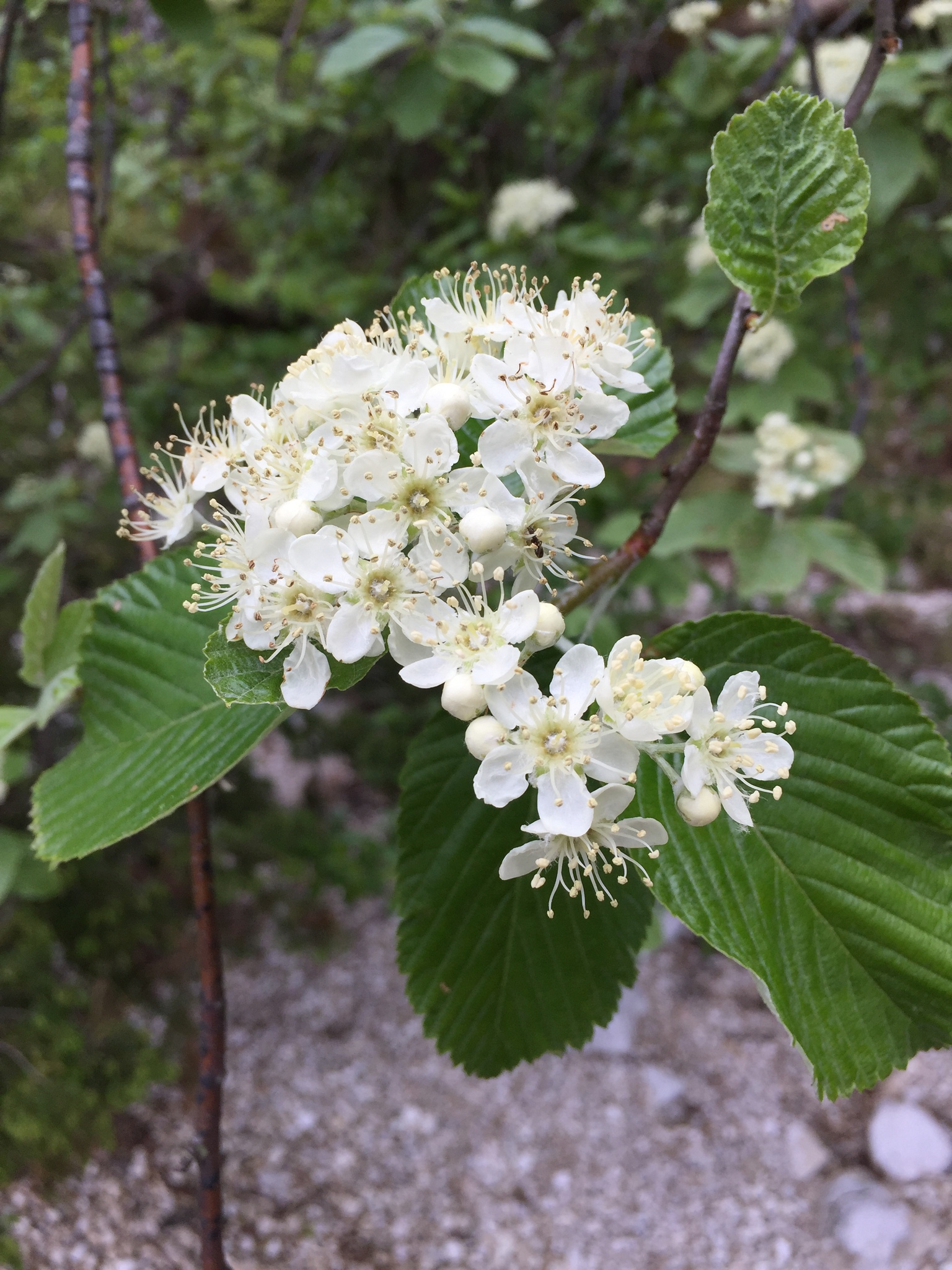


© photo
(c) profpiper, some rights reserved (CC BY-NC) · cc-by-nc
Robert H. Wardell · cc0
Vincenzo Lattanzi · cc-by
© copyright of the Board of Trustees of the Royal Botanic Gardens, Kew.
Global distribution
Native to western, central and southern Europe and northwestern Africa.
Identity
Common whitebeam (Aria edulis (Willd.) M.Roem., 1847) is recognized first by the white undersides of its leaves. The botanical combination Sorbus aria (L.) Crantz remains widely used for this tree. It belongs to Rosaceae, the family of apples and pears, and loses its leaves in winter. Young garden trees are relatively upright, later forming a broadly columnar outline. 2 3
Also called whitebeam in English, it has French names including alisier de Bourgogne, alouchier and sorbier des Alpes. These vernacular names refer to the same tree. 7 2
It reaches 8–12 m (26–39 ft) tall and 4–8 m (13–26 ft) wide. Allowing for this space before planting avoids repeated crown reduction later. Final dimensions are reached in 20–50 years, depending on growing conditions. 3
Recognition
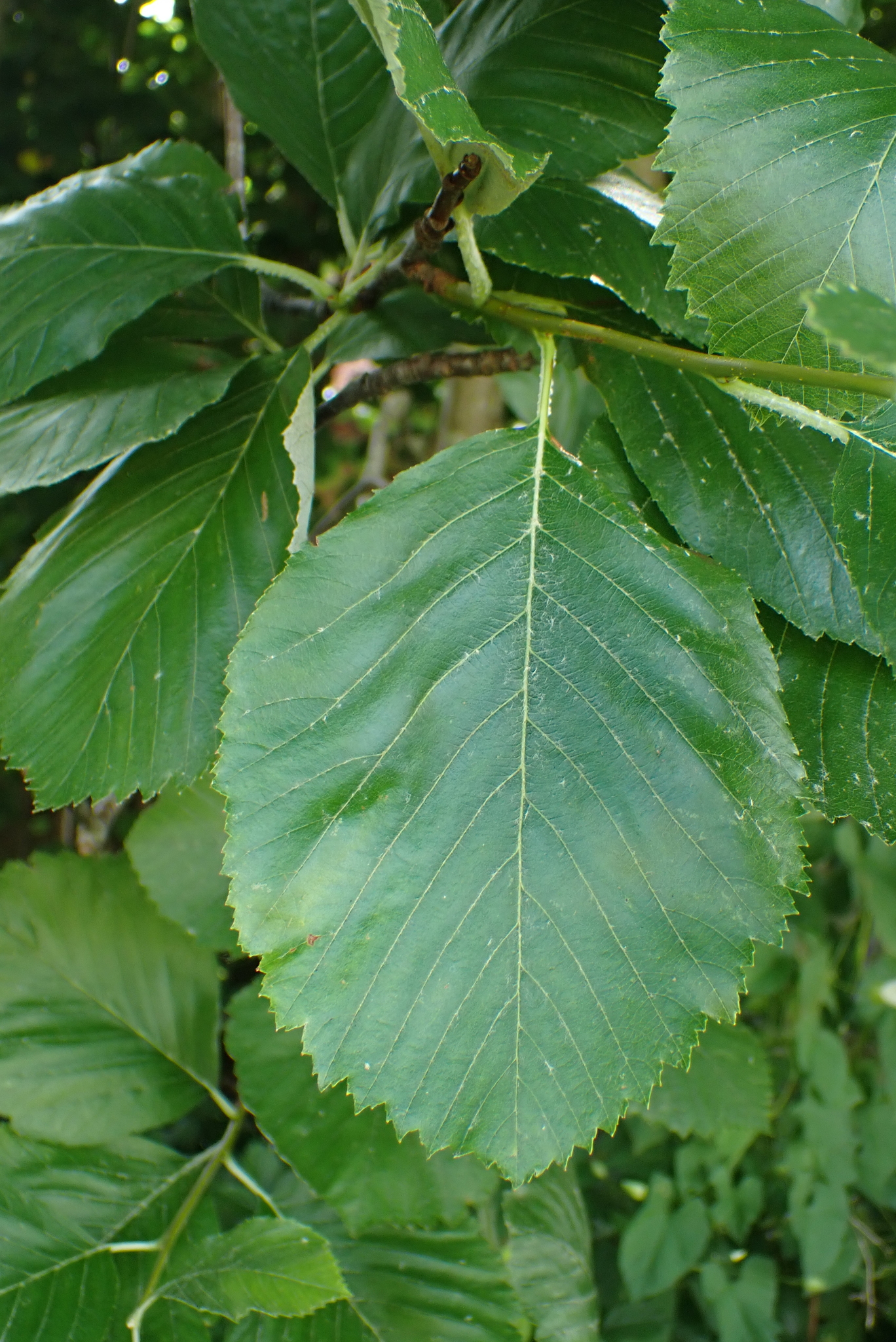
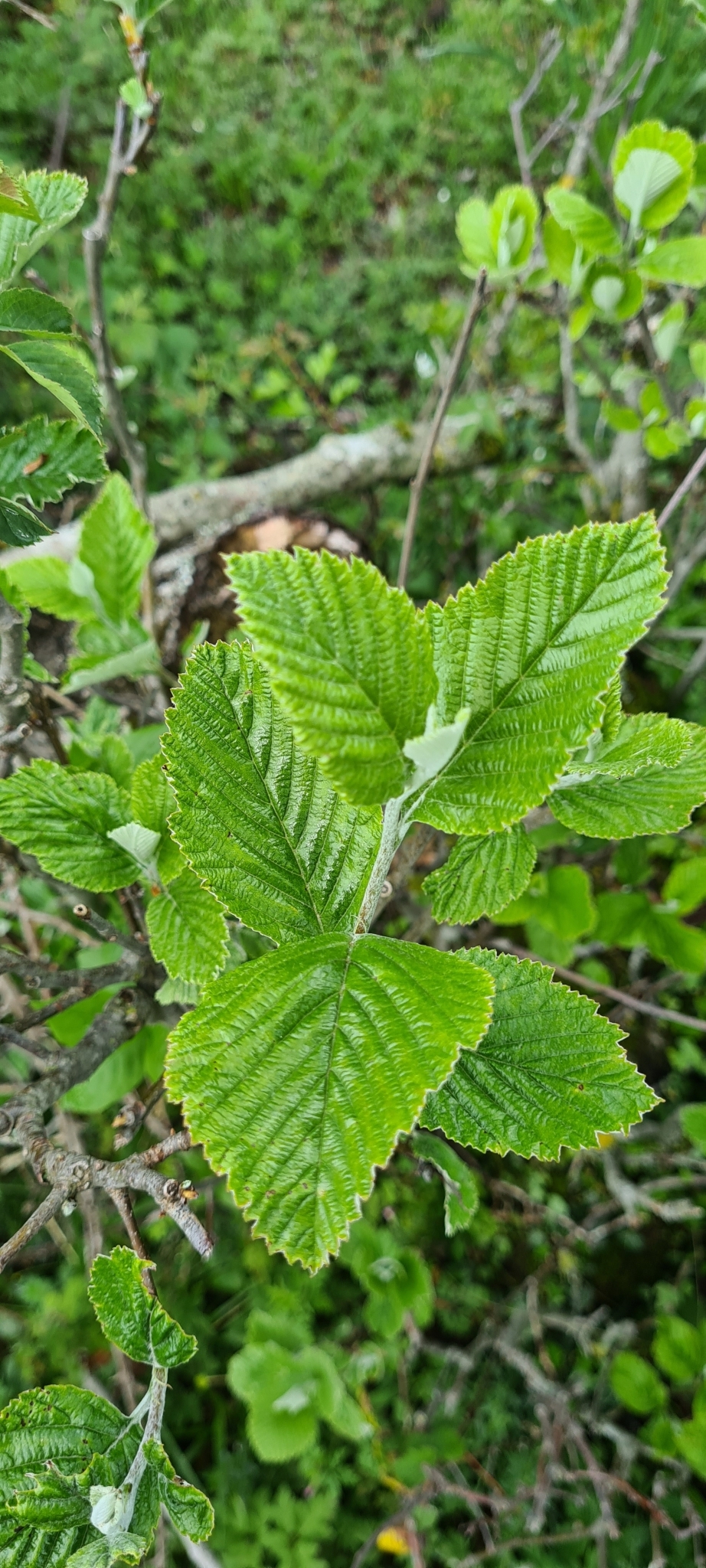
Turn over a leaf for the clearest clue. White felt covers the underside, while the upper surface is green, hairless and wrinkled. The oval to elliptical blade has double teeth, sometimes with small lobes. Its prominent 8–12 pairs of veins help verify an identification on a nonflowering branch. The leaf stalk is short relative to the blade. 2
White spring flowers gather in fairly broad corymbs. Their petals spread around two free styles, hairy at the base. Almost spherical fruits turn orange-red and have mealy flesh. Slightly downy buds complement the observation without replacing examination of the foliage. 2
Useful taxonomy
Aria edulis is the accepted botanical name, although many floras and nurseries still use Sorbus aria (L.) Crantz. The present combination dates to 1847 and has an extensive synonymy. Searching both names therefore opens access to botanical references and horticultural guidance. 1
Pyrus edulis Willd., published in 1809, is a homotypic synonym based on the same nomenclatural type as the current combination. Crataegus aria L., published in 1753, also appears in the synonymy. Changes of genus explain different labels for the same whitebeam. 1 2
Habitat and range
The native range includes western, central and southern Europe and northwestern Africa, notably France, Corsica, Spain, Italy, Morocco, Algeria and Tunisia. Ireland, the Netherlands and several northern European countries are instead listed as introduction regions. Local occurrence alone therefore cannot establish native status. 1
French habitats include woodland and mountain rocks, as well as scrub on chalk and limestone. This ecological preference does not require exclusively calcareous garden soil: several textures are accepted if drainage is good. Light shade is possible, and an open, sunny position suits it. 2 6
In mainland France, the national Red List classifies it as Least Concern. It is protected in Haute-Normandie, where the regional Red List classifies it as Critically Endangered; picking and uprooting wild specimens are prohibited there. These conservation statements retain their French regional scope. 7
Life cycle and reproduction
In the northern temperate conditions described, flowering occurs in May and June, with fruit in September and October. French observations concentrate mainly on May flowering and September fruiting. Timing varies with climate. Flowers are hermaphrodite and insect-pollinated. Birds eat the fruit and help disperse it. 2 6
Propagation uses outdoor sowing in local fall, softwood cuttings in early summer, summer budding and winter grafting. 3 Cultivars are propagated by cuttings, budding or grafting, rather than seed: seedlings do not guarantee a horticultural selection's foliage. 4 5
Uses and risks
Ornamental plantings benefit successively from flowers, contrasting foliage and fruit. Nectar-rich flowers attract pollinators, and birds seek the fruits. Moderately fertile, humus-rich, well-drained soil is suitable; dry conditions and atmospheric pollution are tolerated. 3 6
Calling a fruit edible does not guarantee safety. Food use of very ripe, bletted fruit is reported, but the seeds carry a probable cyanogenic risk. Horticultural precautions remain to avoid eating ornamental fruit and keep it away from pets. Keeping fruit out of young children's reach prevents unidentified ingestion. No data establish a safe status for horses. 6 3
Garden cultivars
'Lutescens' develops silvery-gray leaves in local spring, later gray-green. A compact habit and elliptical leaves up to 12 cm (4.7 in) explain its garden use. Nevertheless, it reaches 8–12 m (26–39 ft) tall: compact does not mean a shrub for a small flowerbed. 4
'Majestica' has a broadly columnar habit and elliptical leaves up to 15 cm (6 in), glossy dark green above and whitish below. Leaves turn yellow in fall before dropping. Cream-white flowers precede dark red fruit. 'Decaisneana' is listed among its horticultural synonyms. Compare young foliage and overall outline when choosing between cultivars, rather than fruit color alone. 5
Main sources
Common whitebeam appears in floras and garden guides under both Aria edulis and Sorbus aria. These references document nomenclature, identifying characters and precautions concerning fruit.
Frequently asked questions
How can I recognize common whitebeam?
Its simple, oval, toothed leaves are white-felted underneath, with 8–12 pairs of veins.
Are Aria edulis and Sorbus aria the same tree?
Yes. Aria edulis is the accepted name, with Sorbus aria listed as a synonym.
Can whitebeam fruits be eaten?
Use of bletted fruit is reported, but eating ornamental fruit remains discouraged. Do not consume the seeds.
If you are unsure about a plant’s toxicity, ask a botanist or veterinarian for advice.