
Eve's needle cactus (Austrocylindropuntia subulata, )
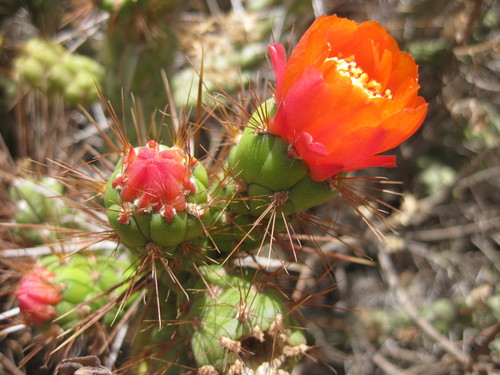
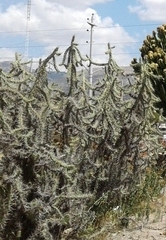
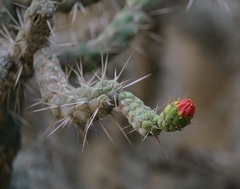
Eve's needle cactus (Austrocylindropuntia subulata) has branching cylindrical stems and narrow, fleshy leaves. This South American perennial in the Cactaceae family needs a well-drained mix that dries between waterings. Its long spines call for a position away from accidental contact.
Read moreEve's needle cactus and Eve's pin cactus
Pereskia subulata, Opuntia subulata, Cylindropuntia subulata, Pereskiopsis subulata and Austrocylindropuntia exaltata
Allow a few hours of direct sun per day, preferably morning or evening.
Sun or partial shade; a bright position for container plants.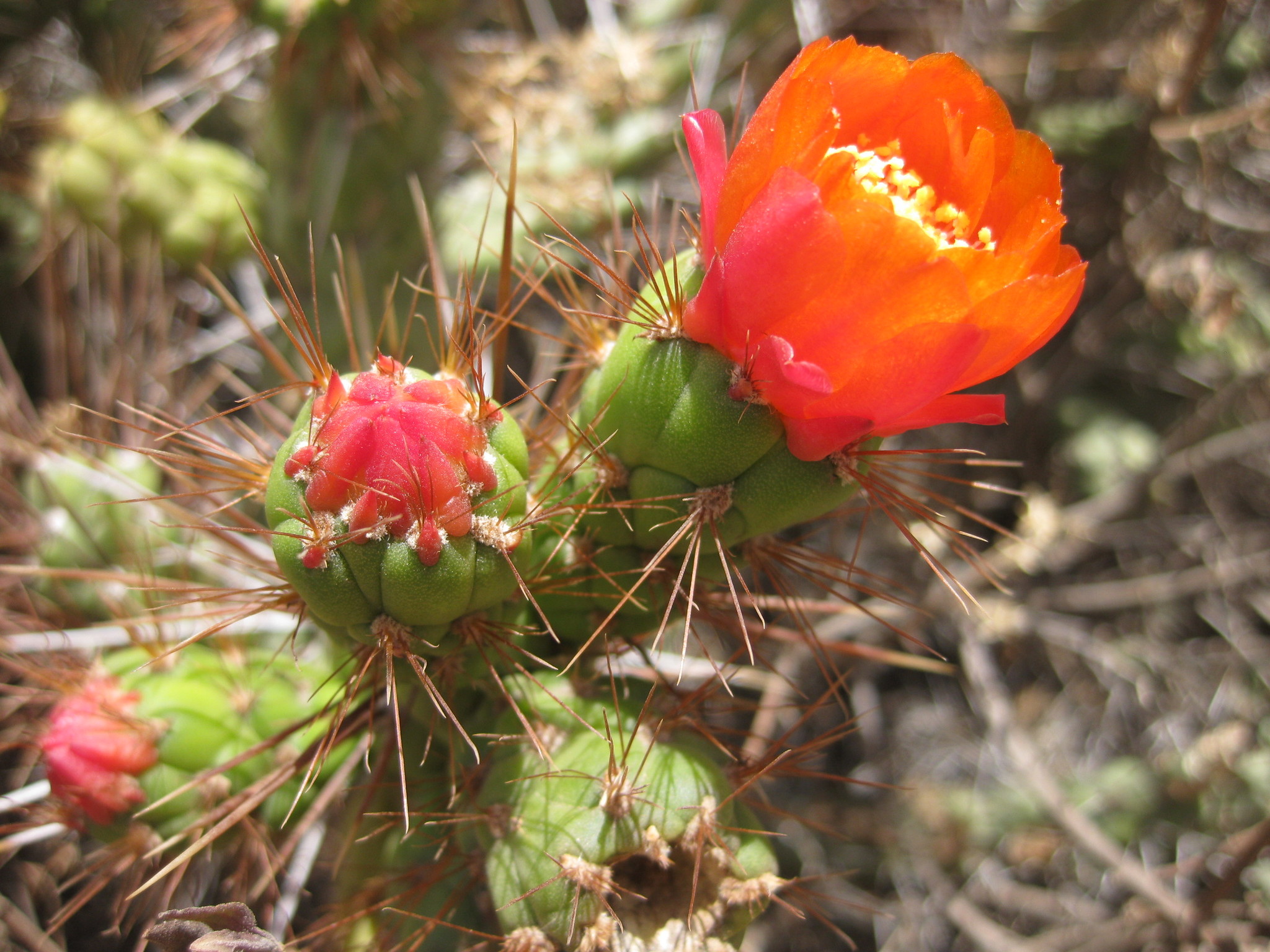


© photo
(c) paddeladdi, some rights reserved (CC BY-NC), uploaded by paddeladdi · cc-by-nc
Luis Capeletti · cc0
Tim · cc-by
Taken Jul 18, 2022 by Shayna (cc-by-sa)
Taken Sep 3, 2019 by Fedan Hacizade (cc-by-sa)
Taken Nov 20, 2022 by galleli gelson (cc-by-sa)
© copyright of the Board of Trustees of the Royal Botanic Gardens, Kew.


Global distribution
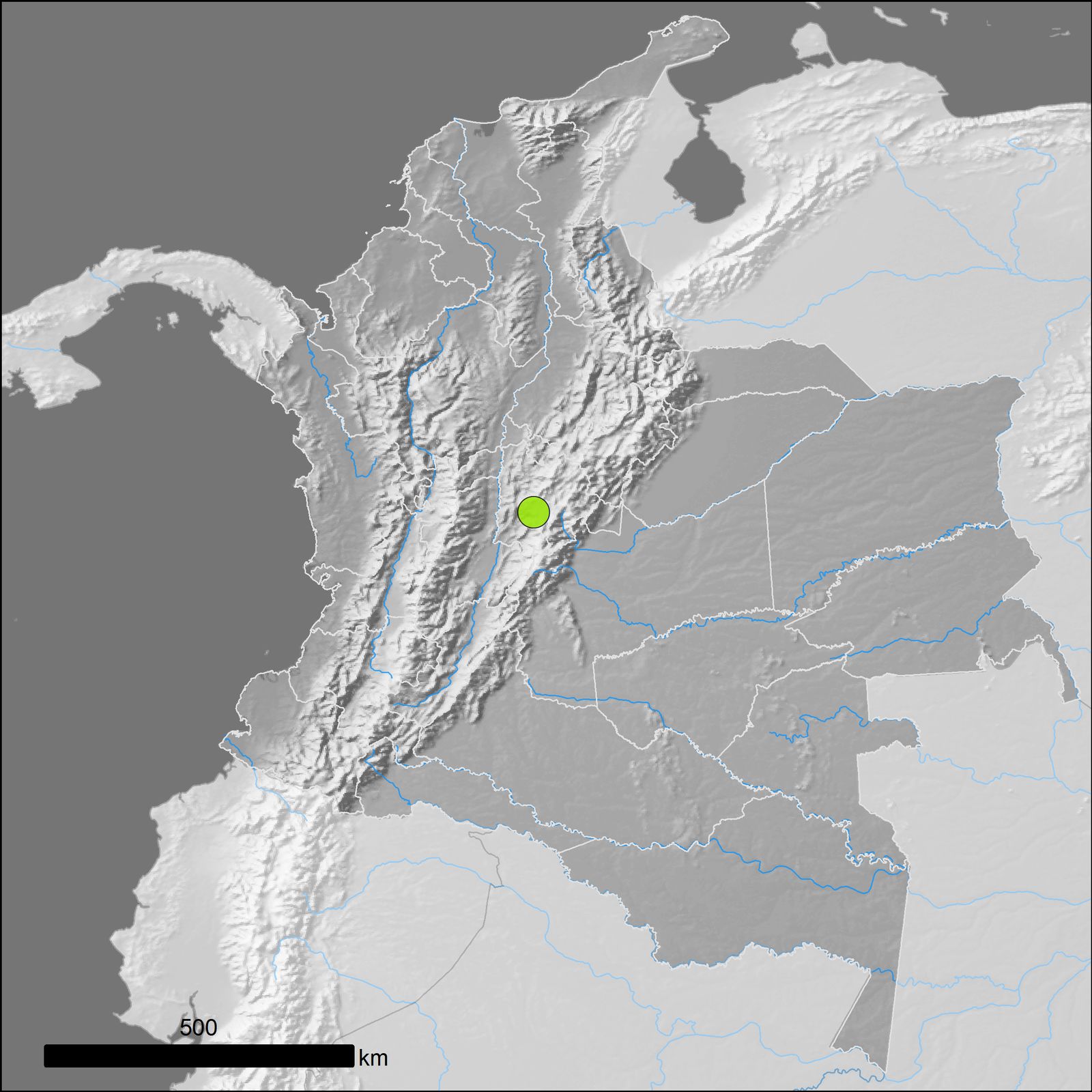
Native to Peru and Bolivia; introduced in several Mediterranean regions and elsewhere.
- Native2
- Introduced3
- Peru
- Bolivia
- Colombia
- Spain
- Mainland France
Hexagons: regions where the plant occurs. Green dots: native range.1
Identity
Narrow, fleshy, needle-shaped leaves grow along the branching cylindrical stems of Eve's needle cactus (Austrocylindropuntia subulata (Muehlenpf.) Backeb., 1942). The leaves and spines are separate organs: a soft green point on a growing shoot belongs to the foliage. This species is a member of the Cactaceae family, in the order Caryophyllales. 2 1 3
French flora records use the name "cholla subulé" for this species. The epithet subulata means awl-shaped, after the narrow tool with a pointed end; in this cactus, it refers to the leaf shape. Eve's pin cactus is another established English name for the same plant. The shared needle imagery refers to its pointed foliage. 2 3
Recognition
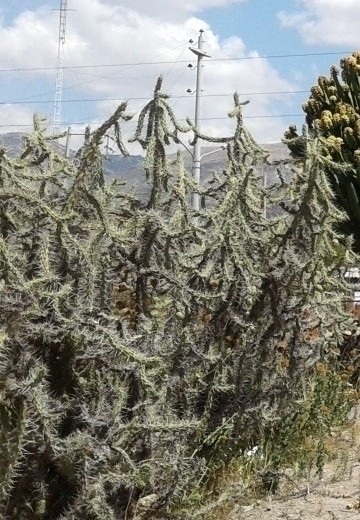
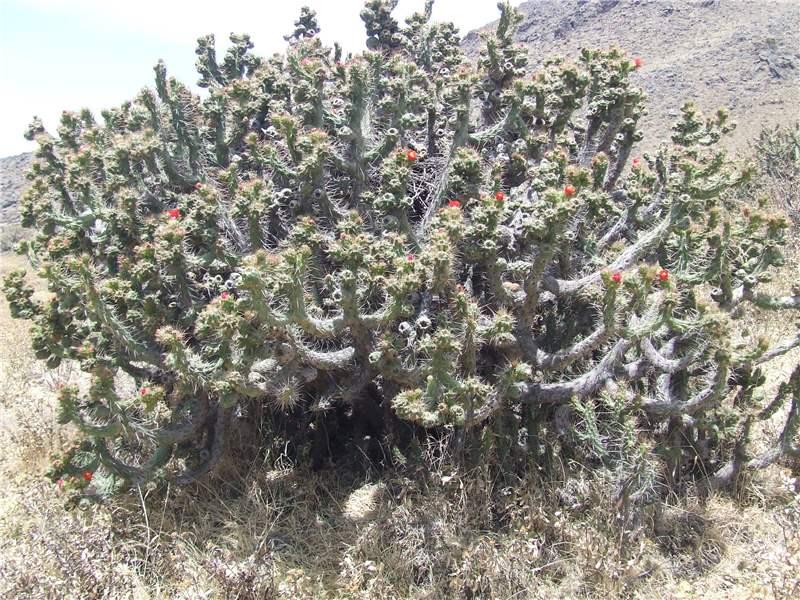
A shrub-like or tree-like cactus, Eve's needle cactus can reach a maximum of 4 m (13 ft) in descriptions of large specimens. That figure does not predict the size of a container-grown plant. The slightly brittle cylindrical branches reach 50 cm (20 in) long. Oval to diamond-shaped bumps form spiral rows across the stem surface. 4 3
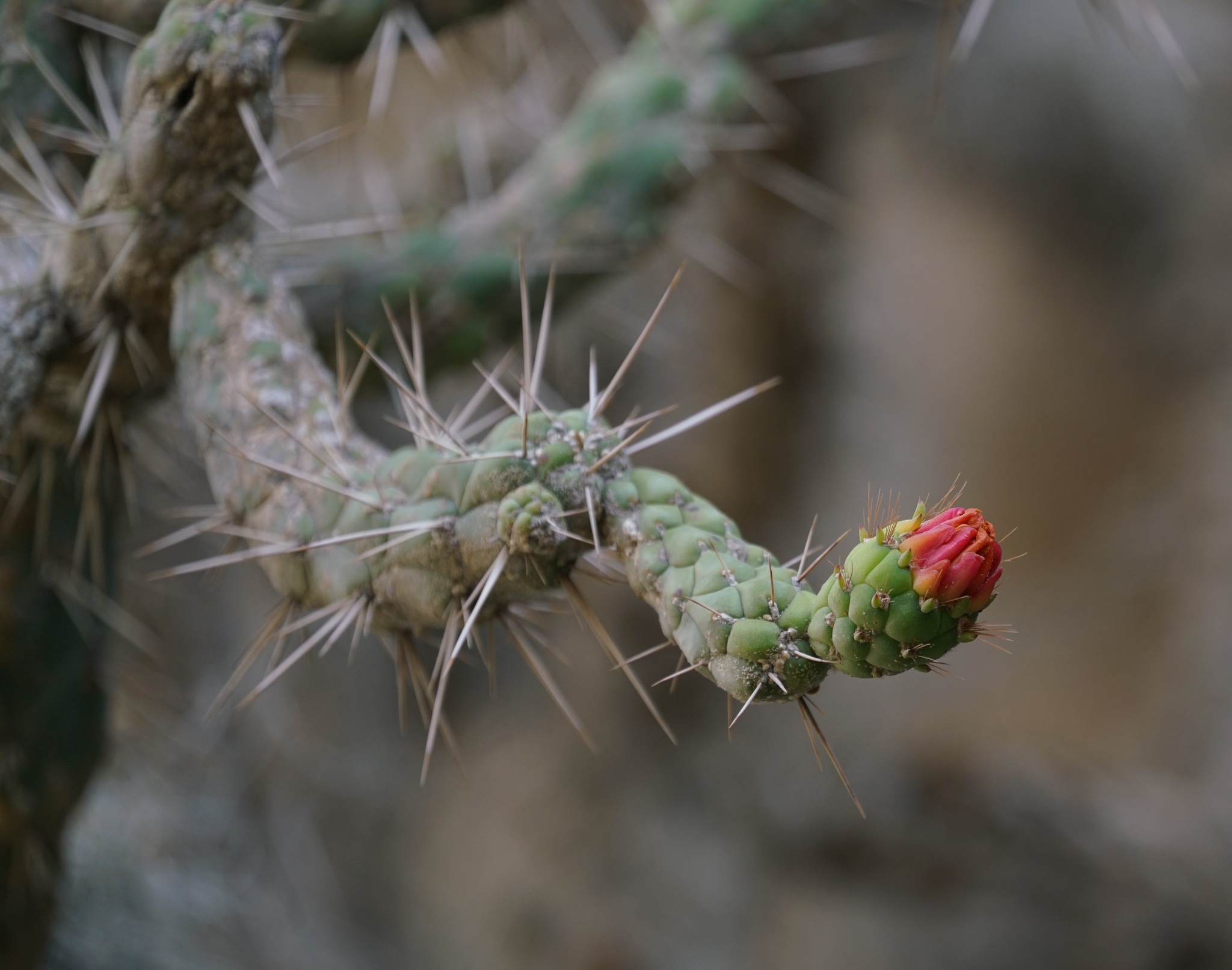
An areole at the top of each bump bears the spines. The large, straight, grayish-white spines can reach 8 cm (3 in), with one to four per areole. Narrow leaves reach 12 cm (5 in), while one horticultural description gives 13 cm (5 in). The developed foliage is therefore conspicuous even on a plant that has not flowered; the soft leaves should be distinguished from its rigid spines. 4 3
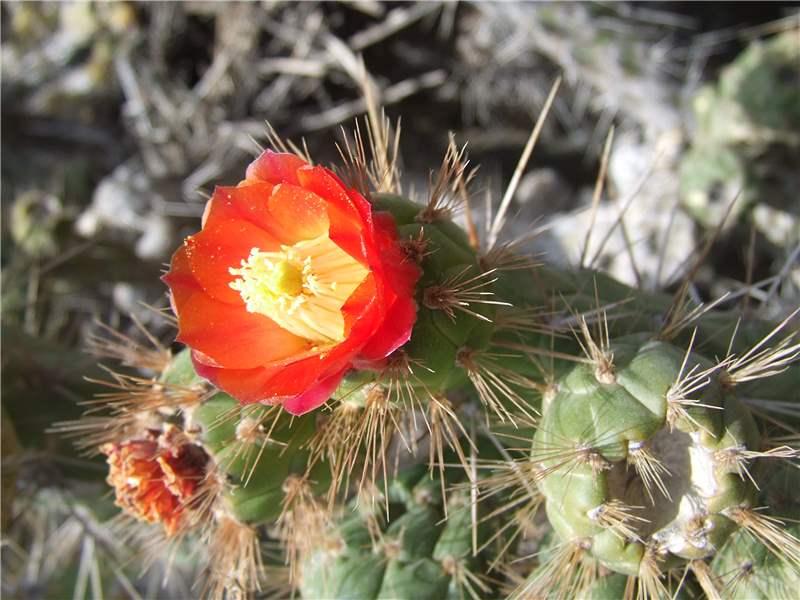
Flowers appear at the stem tips and are described as pink, orange, or red. Flower color alone is a weak identification character for this cactus. Cylindrical branches combined with long, pointed leaves provide a more useful guide when examining a plant without flowers. 3 4
Useful taxonomy
The accepted name is Austrocylindropuntia subulata. The current combination was published in 1942, while the original name Pereskia subulata Muehlenpf. dates to 1845. These dates mark different naming acts, rather than separate discoveries of the plant. 1
Earlier classifications explain several names still found on labels: Opuntia subulata (Muehlenpf.) Engelm., Cylindropuntia subulata (Muehlenpf.) F.M.Knuth, and Pereskiopsis subulata (Muehlenpf.) Britton & Rose all refer to this species. Austrocylindropuntia exaltata (A.Berger) Backeb. is also included in its synonymy. An old genus name followed by "subulata" calls for checking the complete name before treating the plant as a different species. 1
Habitat and range
Peru and Bolivia form the native range adopted for Eve's needle cactus, in deserts and dry shrublands. Within this treatment, Colombia is classified as an introduction, although a horticultural account includes it in the native range. The Colombian status therefore differs between the two accounts; neither description should be silently substituted for the other. 1 3
Introductions are recorded in Spain, Portugal, and Italy, among other places. In mainland France, the species is recorded as introduced with accidental occurrence. That floristic record is distinct from a designation as an invasive species, and describes the French record rather than the status in every country. 1 2
In Australia, the plant can form thickets that obstruct movement and exclude native vegetation. Its documented invasive behavior there is a reason to contain fragments from cultivated plants, since plant pieces can contribute to its spread. 5
Life cycle and reproduction
As a perennial succulent, Eve's needle cactus needs a well-drained growing mix in containers. Let the mix dry completely before watering thoroughly. Sun or partial shade suits it. These species-level horticultural recommendations apply independently of the monstrose forms sold to collectors. 3
For sheltered cultivation in mainland France, the calendar follows seasonal advice for indoor cacti: resume watering in spring, reduce it in winter, and repot in spring if the container has become too small. An excessively large pot retains more moisture and increases the risk of rot. The monthly scores express relative changes in activity and water needs, rather than an amount of water to pour into the pot. 6
During active growth, apply a liquid cactus fertilizer or a high-potassium fertilizer once a month. The British horticultural guide places this period from April to September. This general cactus advice provides a seasonal reference; adjust feeding to the plant's actual growth rather than assuming that those months apply in every growing climate. 6
Stem or fruit fragments can take root when they come into contact with soil. Whether the plant's seeds are viable in Australia remains uncertain. Vegetative regrowth and seed viability are separate questions, so uncertainty about seed does not remove the risk of spread from plant fragments. 5
Uses and risks
The branching shape makes Eve's needle cactus an ornamental plant for containers and dry gardens. Its documented hazard is mechanical injury from spines. People, dogs, and other exposed animals can suffer painful wounds. In livestock, spines lodged around the mouth may prevent feeding. The injury risk comes from contact with the plant, independently of any question about ingestion. 3 5
Safety after ingestion remains undetermined for people, cats, dogs, and horses. Precautions focus on avoiding contact: keep the cactus out of reach of children and pets, and protect hands and eyes when handling it. No particular sensitivity in children or specific classification for horses is established here. 5
Varieties, look-alikes and related plants
The monstrose form, written 'montrosa', has shorter leaves and reduced or absent spines. These horticultural traits do not describe every individual of the species. A plant with few spines therefore cannot be identified solely by the absence of the long needles associated with its ordinary form. 5
The look-alike Austrocylindropuntia cylindrica also has cylindrical stems, but its spines are shorter. A flora description gives 1–2 cm (0.4–0.8 in) for its spines and describes barrel-shaped fruit. Those measurements belong to Austrocylindropuntia cylindrica, rather than Eve's needle cactus. Examine the foliage and areoles as well as the overall branching shape when comparing the two species. 7
Main sources
- Plants of the World Online, Austrocylindropuntia subulata
- Tela Botanica, eFlore BDTFX, French flora record
- NParks Flora & Fauna Web, Austrocylindropuntia subulata
- Brisbane City Council, Eve’s pin cactus
- NSW WeedWise, Eve’s needle cactus
- Royal Horticultural Society, How to grow houseplant cacti and succulents
- Royal Botanic Gardens Victoria, VicFlora, Austrocylindropuntia cylindrica
Frequently asked questions
Does Eve's needle cactus have real leaves?
Yes. Its fleshy, narrow, pointed leaves are distinct from the rigid spines borne on the areoles.
Should I water Eve's needle cactus every week?
Wait until the growing mix has dried completely before watering again. A fixed interval does not suit every container or every season.
Does the monstrose form represent the whole species?
No. The monstrose horticultural form has shorter leaves and reduced or absent spines; these traits do not describe the entire species.
If you are unsure about a plant’s toxicity, ask a botanist or veterinarian for advice.