
Wavy hair-grass (Avenella flexuosa, )
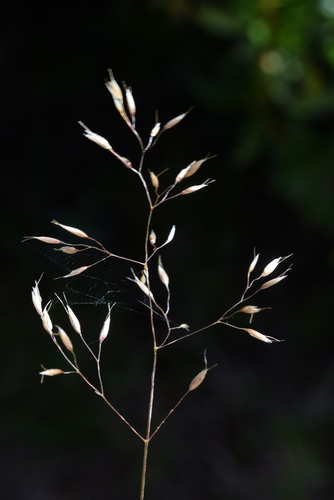
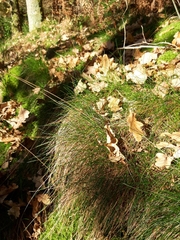
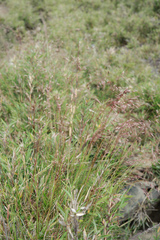
Wavy hair-grass (Avenella flexuosa) is a perennial Poaceae grass of acidic heaths and woodland. Very fine leaves form a low tuft, topped in summer by airy panicles with wavy branches.
Read moreWavy hair-grass, Common hairgrass and Crinkled hairgrass
Deschampsia flexuosa and Aira flexuosa
Give plenty of ambient light without direct sun on the leaves.
Light partial shade; dense shade reduces flowering.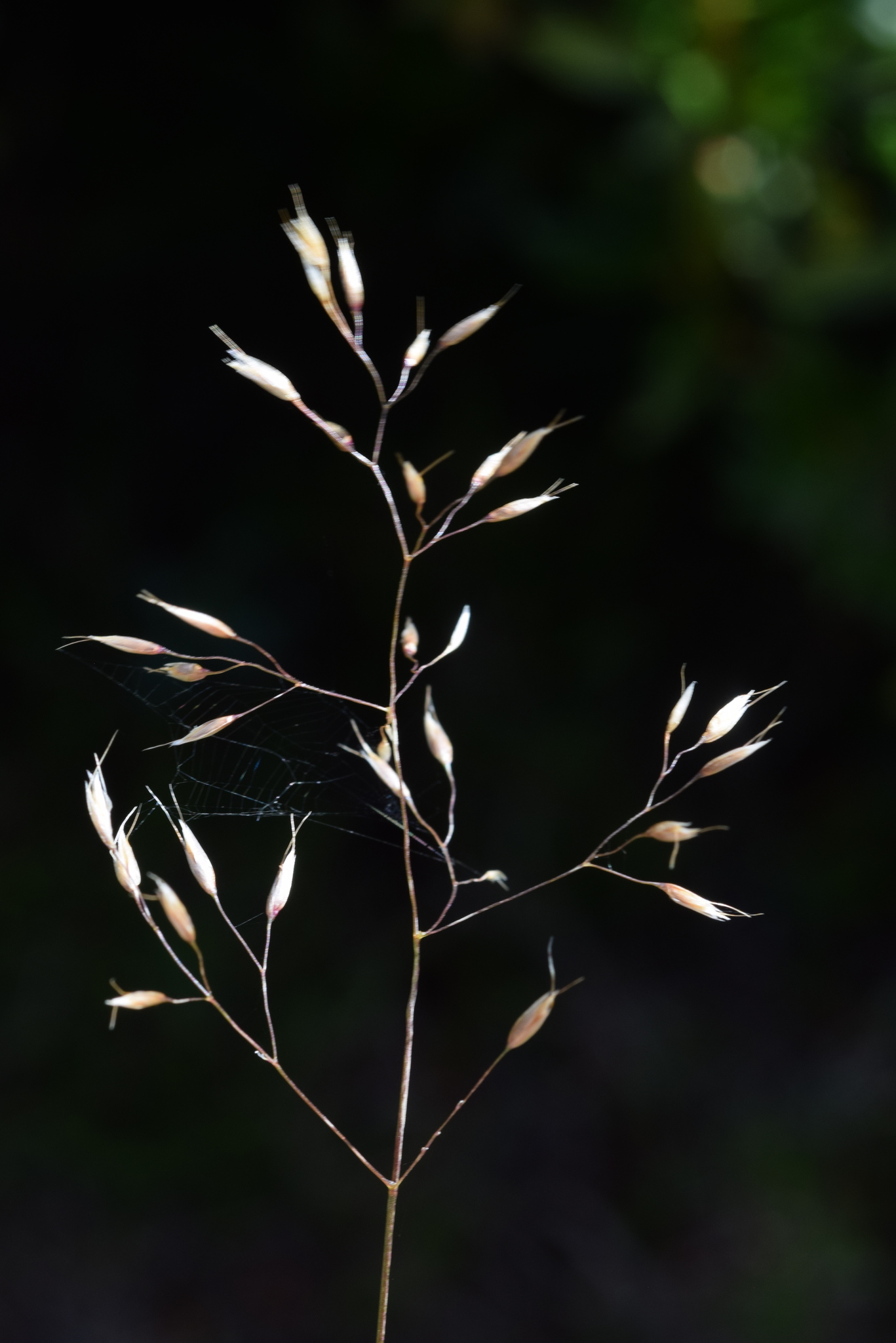
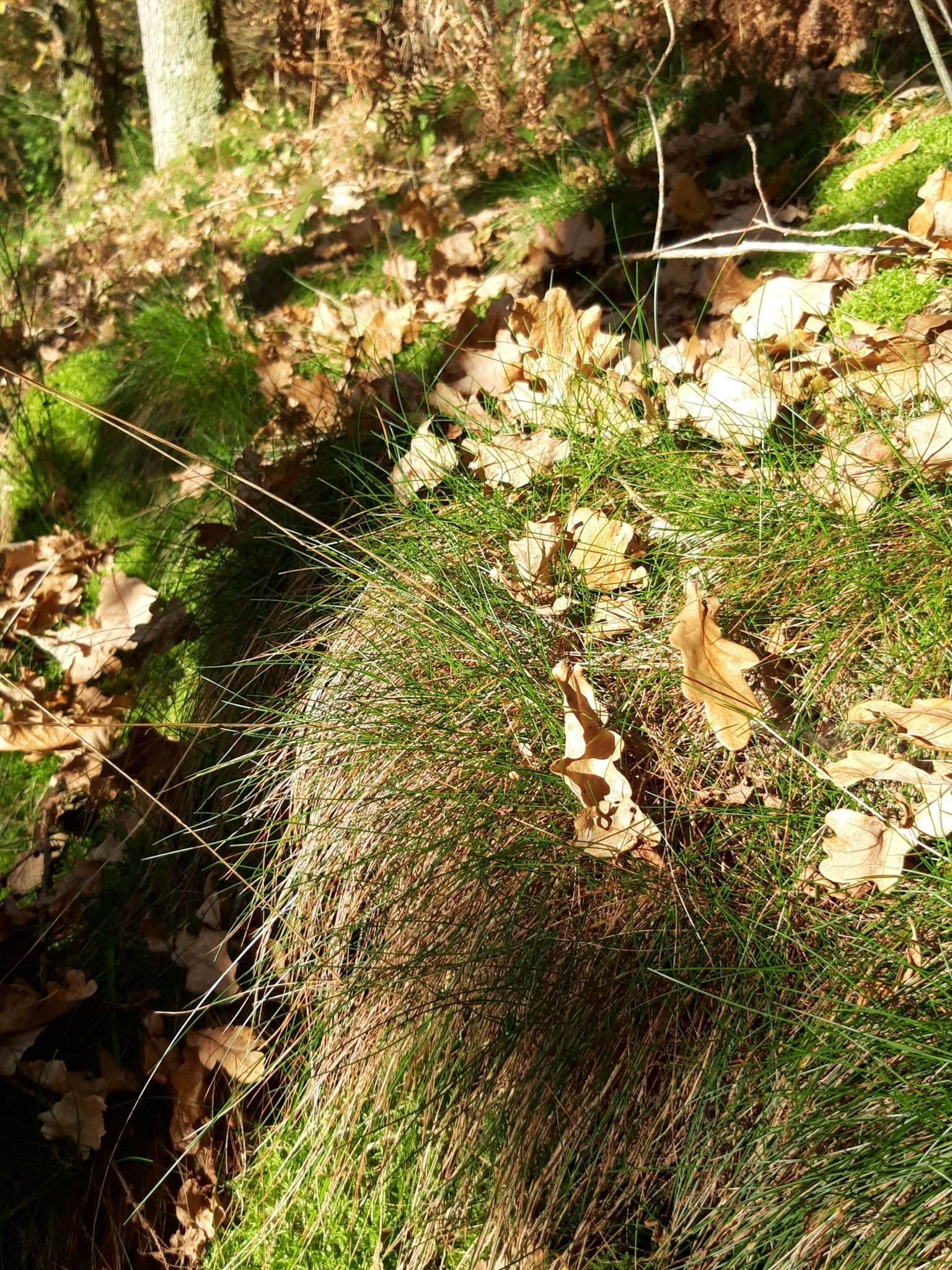
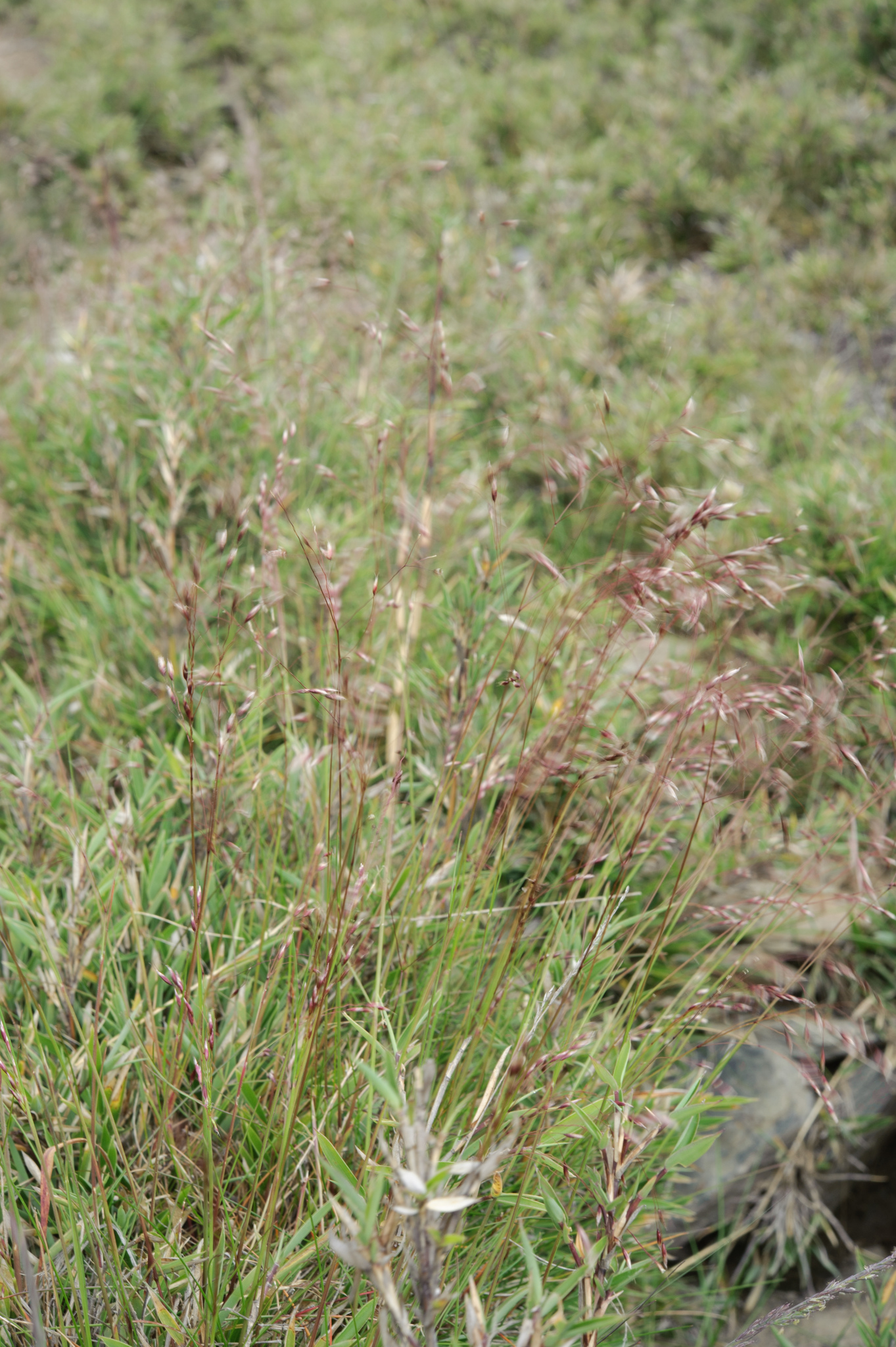
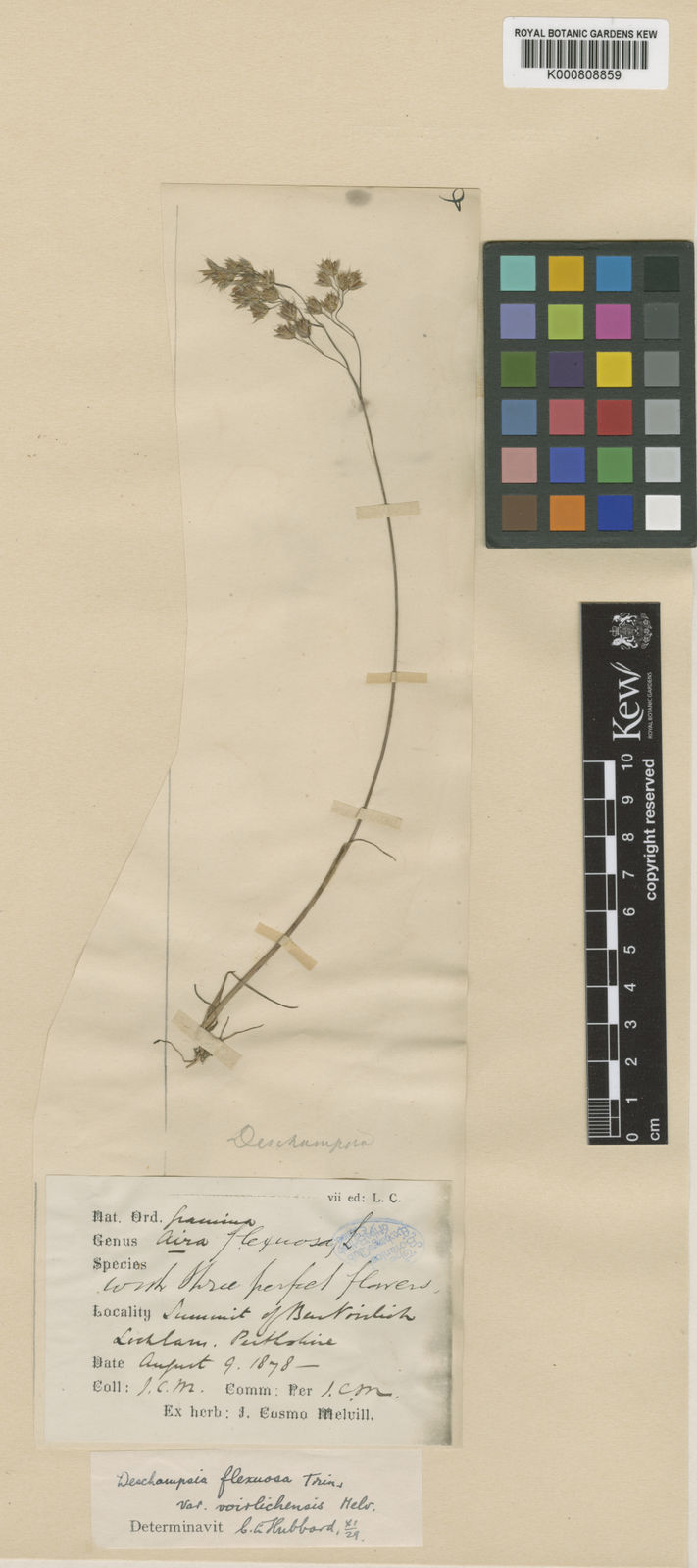
© photo
(c) Giovanni Perico, some rights reserved (CC BY-NC), uploaded by Giovanni Perico · cc-by-nc
Floris Vanderhaeghe · cc0
Cheng-Tao Lin · cc-by
© copyright of the Board of Trustees of the Royal Botanic Gardens, Kew.


Global distribution
Widely native across Eurasia, Africa, the Americas and Atlantic islands, chiefly in temperate regions and mountains.
Identity
Wavy hair-grass (Avenella flexuosa (L.) Drejer, 1838) has thread-like leaves and open panicles with wavy branches. The foliage forms the low part of the plant, while upright flowering stems remain airy and spaced apart. This perennial grass belongs to Poaceae in the order Poales. 21
The scientific name Deschampsia flexuosa remains familiar in horticultural trade. It refers to the same species, rather than a finer-leaved variety. Keeping both scientific names when searching accounts or comparing photographs avoids artificially separating cultivation information from botanical descriptions. Several French common names likewise refer to this single grass. 19104
Recognition
Flowering plants usually measure 30–70 cm (12–28 in) tall. Dark-green, shiny leaves roll inward and look almost bristle-like. A nonflowering tuft can therefore appear much smaller than a flowering plant. The ligule, a small membrane where blade meets sheath, reaches about 2 mm (0.08 in). 27
Loose panicles carry spikelets about 5 mm (0.2 in) long, each with two fertile florets. Colors combine purplish brown and silvery white. Wavy branches create a sinuous outline rather than a compact spike. Identification photographs should include the whole panicle, close spikelet details and leaf bases; general appearance is not always sufficient among fine-leaved grasses. 2
Botanical names and synonyms
The accepted combination Avenella flexuosa dates to 1838. Deschampsia flexuosa (L.) Trin. remains widely used. The basionym Aira flexuosa L., published in 1753, records the original combination. Parentheses around L. indicate that the epithet came from a name previously published in another genus. 19
Transfer to another genus did not make this a different plant. An inventory should nevertheless use the accepted name consistently: pooling records under one entry avoids counting two species. An older nursery label can still identify the species correctly if its epithet and the plant match wavy hair-grass. 1
Habitat and range
Its extensive native range stretches from Europe to Japan and the mountains of Malesia, with natural occurrences in Africa and the Americas. Temperate regions predominate, but tropical mountains also support it. Occurrence on several continents does not mean it was introduced everywhere. In France it occurs across almost the entire country, including Corsica, and is Least Concern on the national Red List. 179
Broadleaved and coniferous woods, forest clearings, heathland and poor grassland on siliceous substrates provide habitat. Sites range from moderately dry to moist, avoiding calcareous ground. A woodland occurrence does not imply a requirement for permanent moisture: drainage and acidity also help explain establishment. 67
Life cycle and ecological role
Summer flowering falls in June–August in the European accounts, sometimes starting in May. The perennial plant retains its tufted organization. Spikelets contain two fertile florets and subsequently produce dry grass fruits. Distinguishing the vegetative tuft from the current year's flowering stems helps compare population photographs taken before and after flowering. 271
In woodland it can colonize openings following felling. Dense populations may compete with newly planted young trees. Its presence therefore offers practical information for forestry: inspect vegetation around saplings rather than treating every herbaceous cover as neutral. Effects depend on the site and local density. 5
Cultivation and care
Light partial shade and well-drained soil suit cultivation. Deep shade reduces flowering. Relatively dry conditions are tolerated, whereas excess watering creates problems. A moist position is not equivalent to airless soil: water must drain away so roots can breathe. 4
Natural habitats are often nutrient-poor. Exposure varies with elevation: woodland is common lower down, while open sites occur in mountain and subalpine zones. Choose exposure for the local climate rather than making partial shade a universal rule. Regular fertilizer is unnecessary to reproduce its poor-soil habitats. 3
Look-alikes and precautions
Tufted hair-grass (Deschampsia cespitosa) also has large, loose panicles. Its flat, rough leaves are 2–5 mm (0.08–0.2 in) wide, its ligule is long and lance-shaped, and its straight awn barely projects beyond the spikelet; it also favors wet sites. Wavy hair-grass instead has fine, rolled, almost bristle-like leaves, a short ligule and a conspicuous bent awn. Compare blade and ligule rather than relying on flower-head color alone. 872
A fine-leaved grass is not automatically a hard-wearing lawn or desirable forage. Wavy hair-grass is sensitive to grazing and adapted to poor, acidic soils. 3 Species-specific human and animal toxicology data are unavailable. That absence does not establish safety or recommend consumption.
Main sources
Avenella flexuosa and Deschampsia flexuosa name the same grass; Drejer published the accepted combination in 1838. 19
- Kew, Plants of the World Online
- InfoFlora, Flora Helvetica 2018
- FAO, grasses and herbs suited to particular sites
- University of Tennessee, Tennessee Smart Yards
- Royal Forestry Society, woodland plant identification guide
- FloraWeb, German Federal Agency for Nature Conservation
- Tela Botanica, eFlore, Avenella flexuosa
- Tela Botanica, eFlore, Deschampsia cespitosa
- INPN, TAXREF, Avenella flexuosa
- Canadensys, VASCAN, Avenella flexuosa
Frequently asked questions
Are Avenella flexuosa and Deschampsia flexuosa different?
Both names refer to the same species. Avenella flexuosa is accepted; Deschampsia flexuosa remains a frequent synonym.
Does wavy hair-grass grow in shade?
It tolerates light shade, but dense shade reduces flowering.
What soil suits wavy hair-grass?
Acidic, nutrient-poor, well-aerated soil, dry to moist, matches its usual habitats.
If you are unsure about a plant’s toxicity, ask a botanist or veterinarian for advice.