
Upright brome (Bromus erectus, )
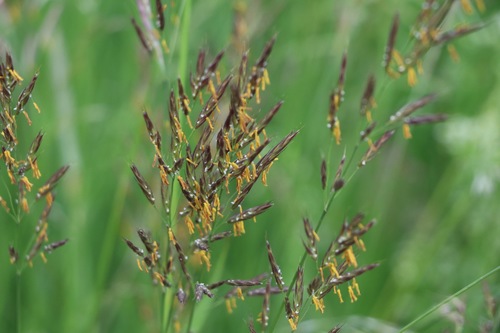
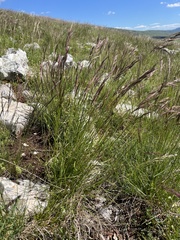
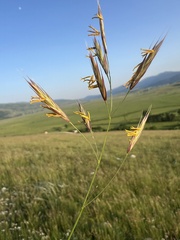
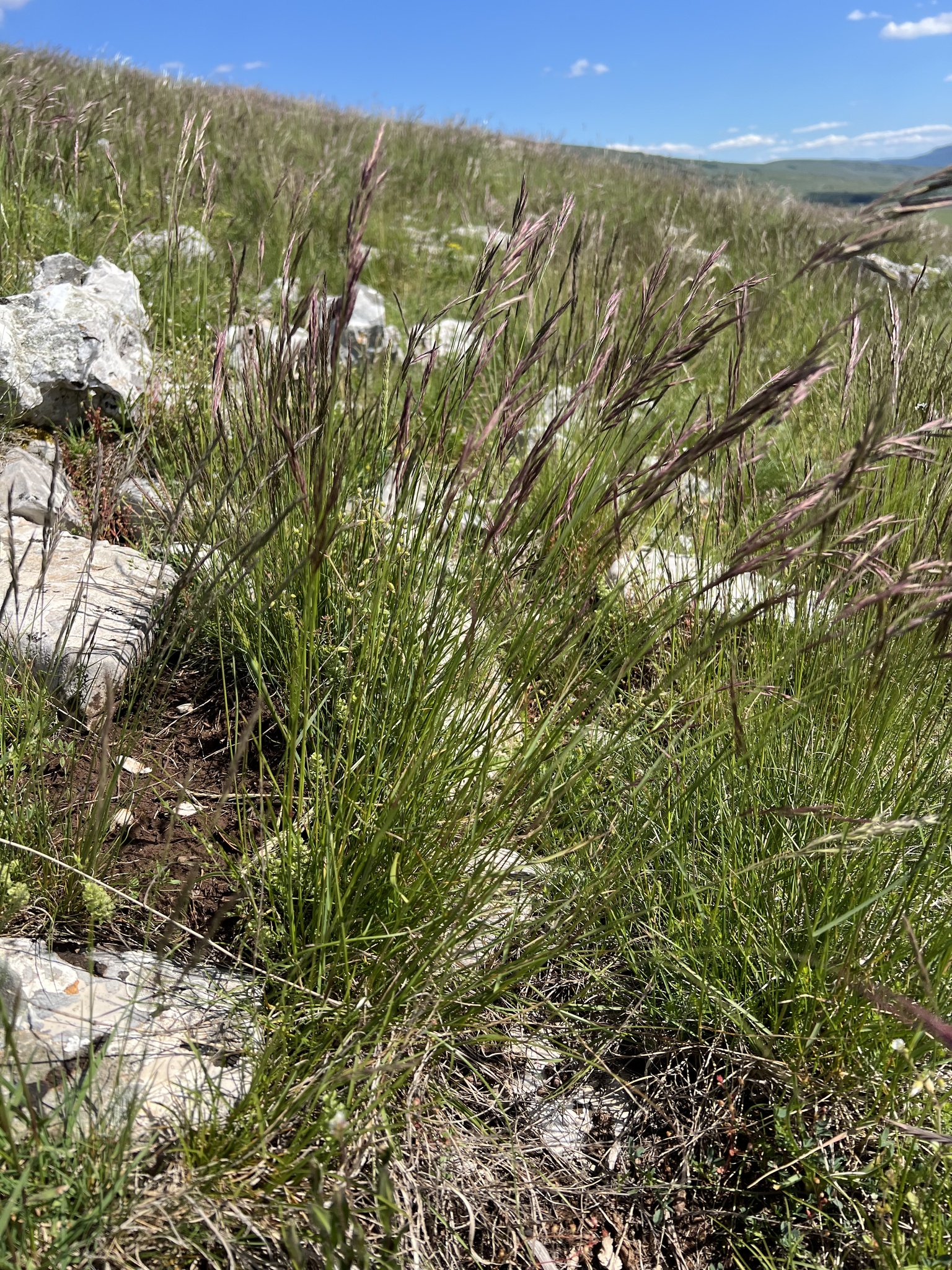
Upright brome (Bromus erectus) is a tufted perennial grass in the Poaceae, characteristic of many dry calcareous grasslands. Narrow leaves and upright panicles are most conspicuous in local spring and summer.
Read moreUpright brome and Erect brome
Bromopsis erecta, Festuca erecta and Zerna erecta

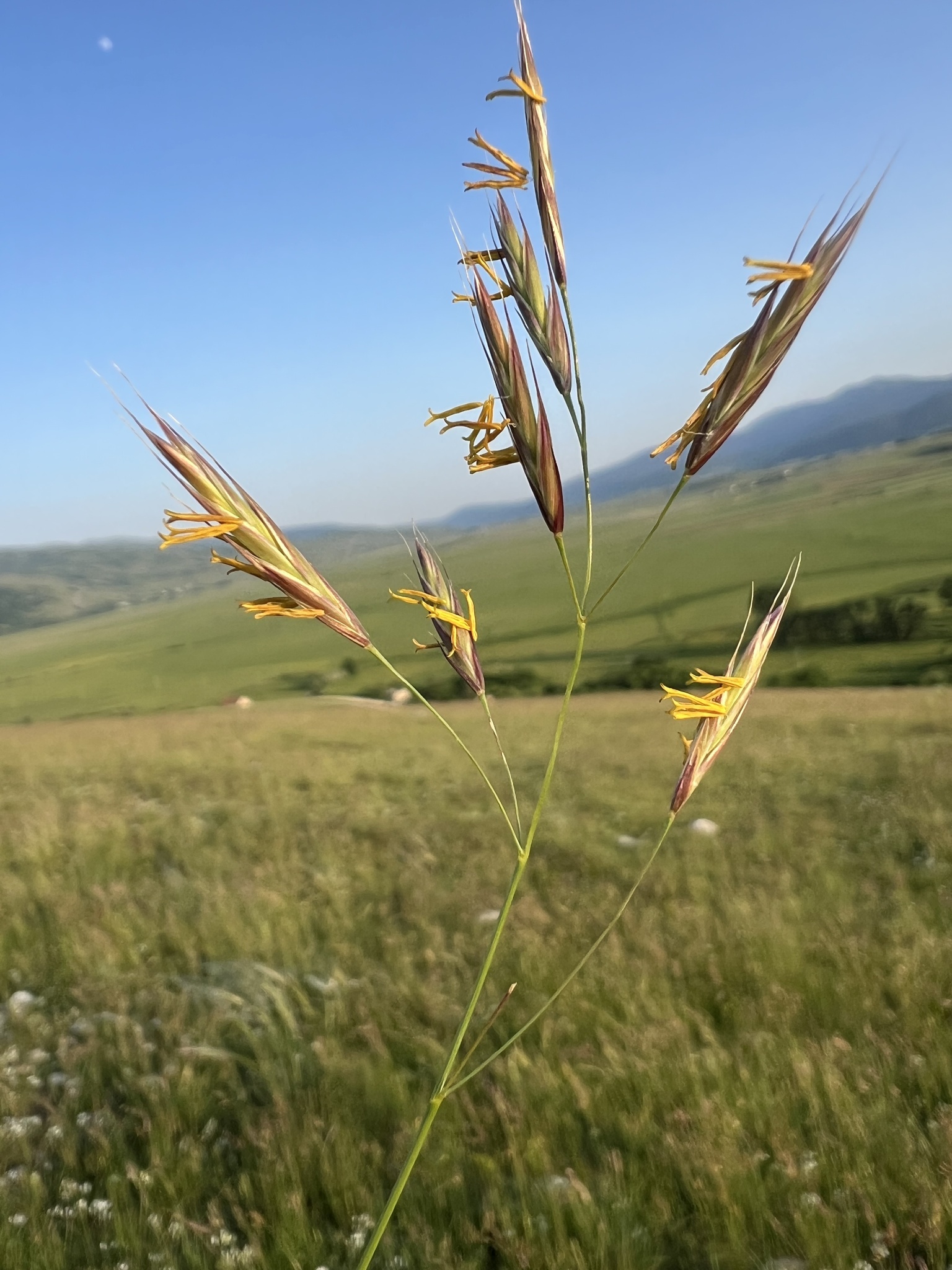
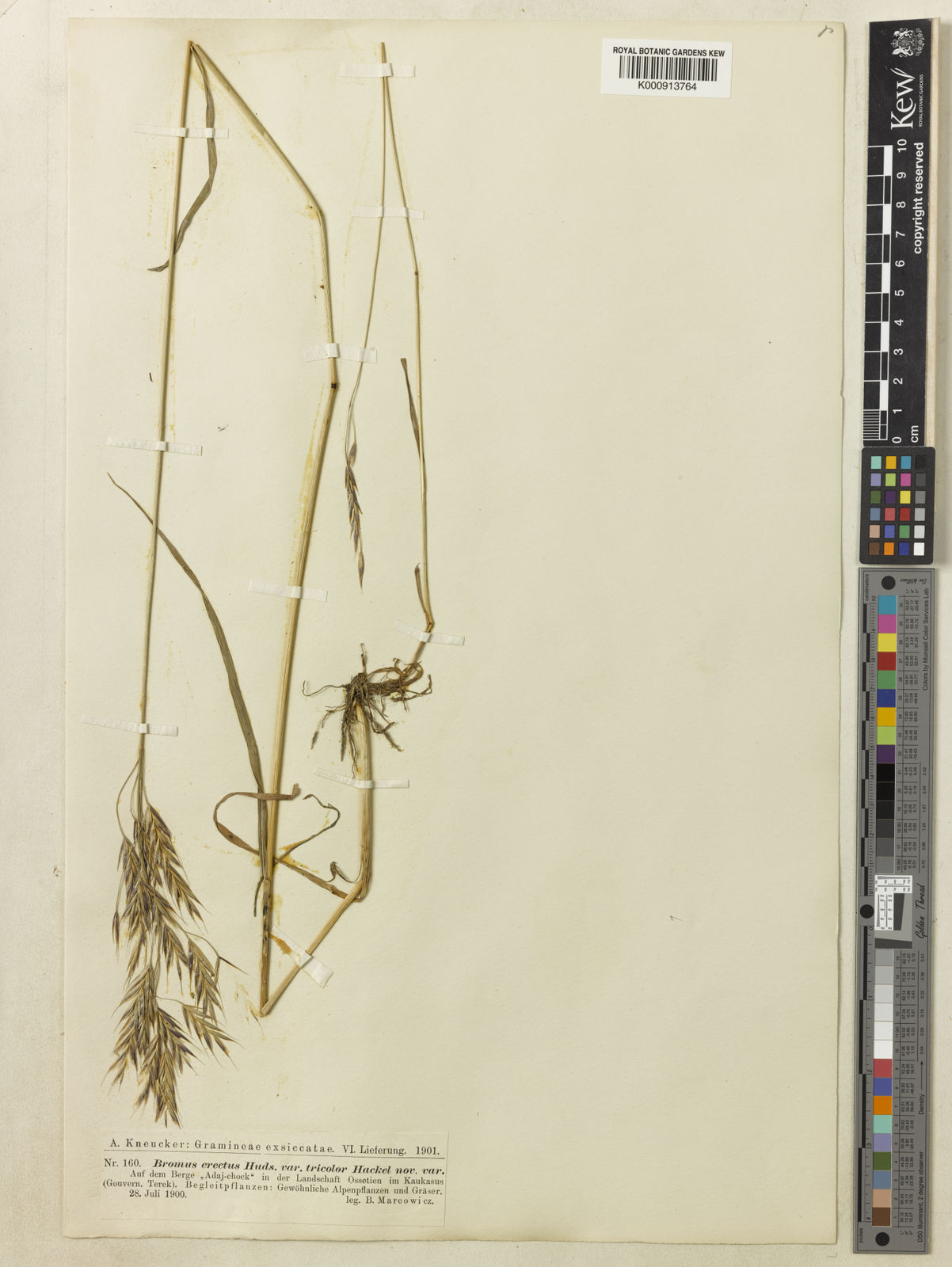
© photo
(c) anneblohm, some rights reserved (CC BY-NC), uploaded by anneblohm · cc-by-nc
Mirko Ubović · cc0
© copyright of the Board of Trustees of the Royal Botanic Gardens, Kew.


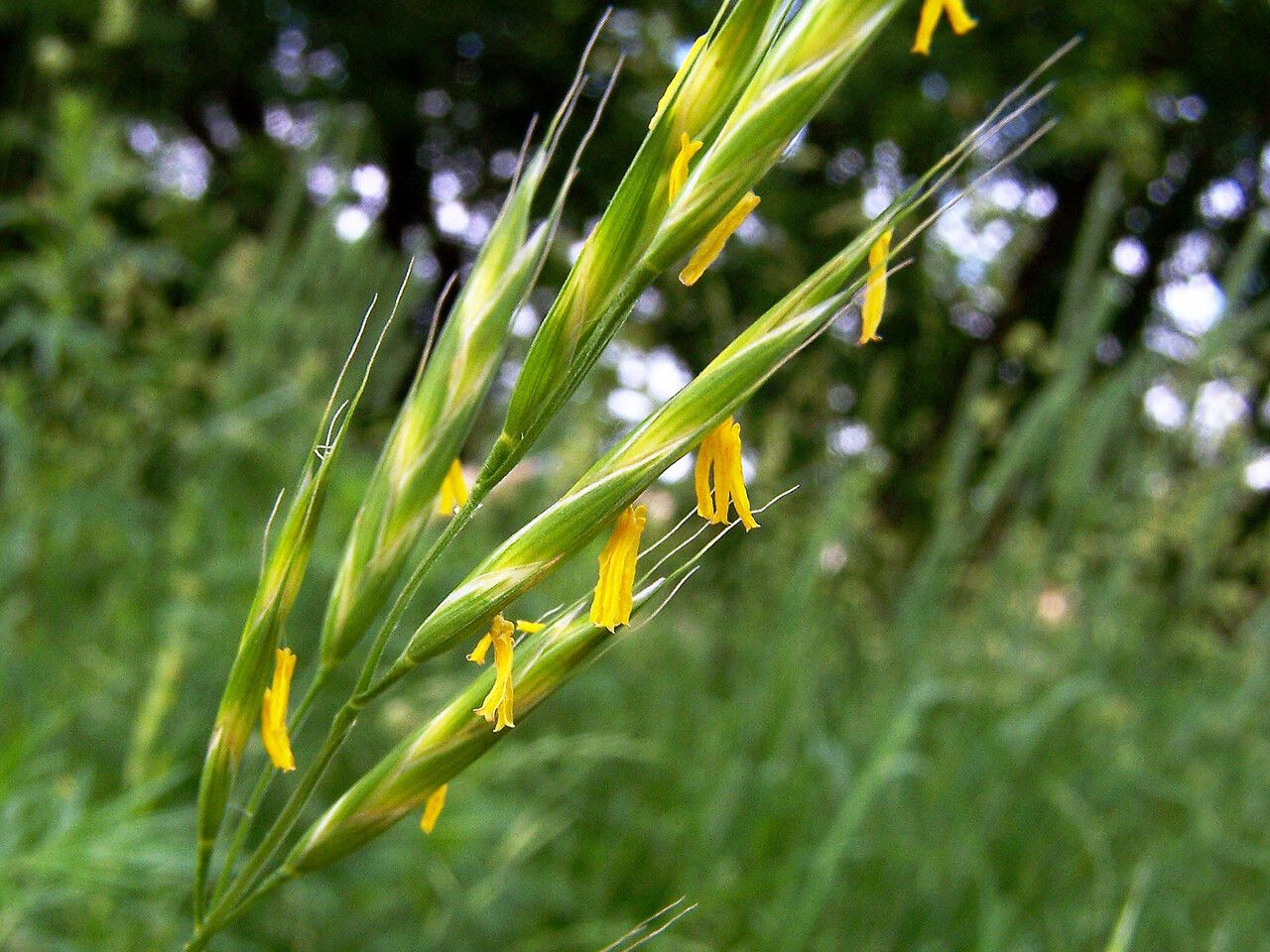


Global distribution
Native from western and central Europe through the Mediterranean to Iran, and in Tibet; introduced in other temperate regions.
- Native2
- Introduced1
- France
- Iran
- Korea
Hexagons: regions where the plant occurs. Green dots: native range.1
Identity
Upright brome (Bromus erectus Huds., 1762), also called erect brome, is a perennial grass in Poaceae. It forms lasting tufts rather than an isolated stem appearing for one season. Characteristic of many calcareous grasslands, it takes its name from the usual upright habit of stems and panicles. 3 7 8 5
Upright growth alone cannot identify it: many grasses have straight stems. Combine the tuft of narrow leaves, often hairy margins and elongated spikelets. Examine these closely before assigning a name to an entire grassland. 5
Recognition
Spaced hairs along the leaf margins are useful in common forms. Leaves are 2–4 mm (0.08–0.16 in) wide; narrow basal leaves are folded into a keel. The ligule, a membrane between sheath and blade, is short. A hand lens distinguishes true marginal hairs from a merely rough edge. 4 8
The upright panicle carries generally purplish-brown to green spikelets, commonly 2–4 cm (0.8–1.6 in) long excluding awns. Each contains several florets, rather than a single grain. Plants often reach 30–100 cm (12–39 in), varying locally. A photograph taken from farther away makes the plant's overall outline visible, whereas a close photograph lets you examine awn length and the distribution of hairs. 4 8
Useful taxonomy
Hudson published Bromus erectus in 1762 in Flora Anglica. This dates the botanical description, not the plant's arrival in a region. Huds. identifies the author and distinguishes a nomenclatural reference from a horticultural name. 2
Bromopsis erecta (Huds.) Fourr. refers to the same taxon under another generic classification. Festuca erecta (Huds.) Wallr. and Zerna erecta (Huds.) Gray are also synonyms. France uses Bromopsis erecta (Huds.) Fourr., 1869. Do not add records under the two names without checking: they may describe the same population. 1 7
Habitat and range
Dry to semi-dry grassland, especially on base-rich, often calcareous soils, is characteristic. Meadows, ruderal vegetation and some banks also support it. Bright conditions suit it better than dense shade. In France it occurs in dry meadows and hillsides across almost the entire country and is not threatened. Grassland here means natural herbaceous vegetation, not necessarily mown lawn. 5 8 7
Its native range includes western and central Europe, parts of the Mediterranean and western Asia to Iran, with occurrence in Tibet. France belongs to that range. Introductions include several North and South American regions. Interpret maps using native or introduced status, rather than presence colors alone. 1
Life cycle and reproduction
This perennial flowers mainly from spring to early summer. French flowering is chiefly May–July, with later records through October. Such a range summarizes scattered observations; it does not promise continuous flowering by every tuft for months. 8 5
Reduced grass flowers lack large colored corollas. Wind carries pollen, and orange-brown anthers become visible at flowering. Reproduction is by seed, and the cited biological account also describes spread by rhizomes. Perennial status concerns the rootstock and its renewed shoots: a brown flowering stem at season's end does not establish that the tuft has died. 6 5
Uses and risks
Upright brome informs habitat description before becoming a garden subject. Record neighboring species and vegetation condition in natural plots. Its frequency in calcareous grassland explains its value for describing these habitats, but local abundance alone cannot establish the site's overall ecological quality. 5 8
Natural grassland management need not follow ornamental-lawn practice. Ecological indicators associate this grass with relatively nutrient-poor conditions, so its presence does not justify routine fertilizer. Intervention should serve the site's purpose, such as maintaining open vegetation, rather than respond only to stem height. 5 8
No toxicological data establish safety for people, cats, dogs or horses. No reported toxicity and suitability for consumption are different things. Botanical identification cannot replace assessment of food or forage.
Varieties, look-alikes and related plants
Subspecies are not cultivars. Leaf-margin hairs, sheath hairiness and lemma length distinguish groups. The significance of one vegetative character can vary with the group covered by a key. Use a consistent reference throughout identification. 4
Other grassland grasses also have upright panicles. A dense tuft, narrow, often hairy-edged leaves and awns shorter than the lemma guide examination, but final identification needs well-developed spikelets. Check the base too: the fibrous or slightly creeping perennial rootstock persists between years, unlike a plant completing its cycle in one season. 5 4 8
Main sources
Bromopsis erecta and Bromus erectus refer to the same taxon under different generic classifications. The former is used in France, the latter accepted globally; both derive from Hudson's 1762 description. Upright brome is native and unthreatened in France. 2 1 7
- Plants of the World Online, Bromus erectus
- International Plant Names Index, Bromus erectus
- EPPO Global Database, BROER
- InfoFlora, upright brome
- FloraWeb, Bromus erectus, description and ecology
- FloraWeb, Bromus erectus, reproduction and dispersal
- INPN, TAXREF : Bromopsis erecta
- Tela Botanica, eFlore : Bromopsis erecta
Frequently asked questions
Is Bromopsis erecta the same grass?
Yes. Bromopsis erecta is a botanical synonym of Bromus erectus.
Which features identify upright brome?
Combine the perennial tuft, narrow leaves with often hairy margins, and upright panicles of elongated spikelets with relatively short awns.
Does upright brome indicate wet soil?
It chiefly occurs in dry to semi-dry grassland, often on limestone. Its presence alone does not describe all the moisture conditions of a plot.
If you are unsure about a plant’s toxicity, ask a botanist or veterinarian for advice.