
Littleleaf boxwood (Buxus microphylla, )
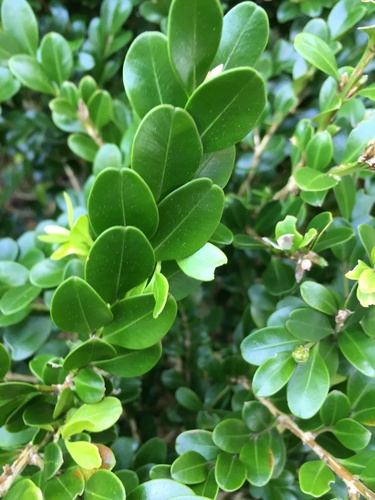

Littleleaf boxwood is a slow-growing evergreen shrub from Japan. Its dense foliage suits borders and topiary; its opposite leaves distinguish it from small-leaved hollies.
Read moreLittleleaf boxwood and Littleleaf box
Buxus japonica var. microphylla (Siebold & Zucc.) Müll.Arg. ex Miq. and Buxus sempervirens var. microphylla (Siebold & Zucc.) Hayata
Allow a few hours of direct sun per day, preferably morning or evening.
Prefers partial shade; sun is possible if the soil stays moist.


© photo
(c) janmomsen, some rights reserved (CC BY-NC), uploaded by janmomsen · cc-by-nc
Wikimedia Commons · CC BY-SA or Public Domain
Wikipedia · CC BY-SA
Taken Jun 23, 2013 by Tela Botanica − Yoan MARTIN (cc-by-sa)
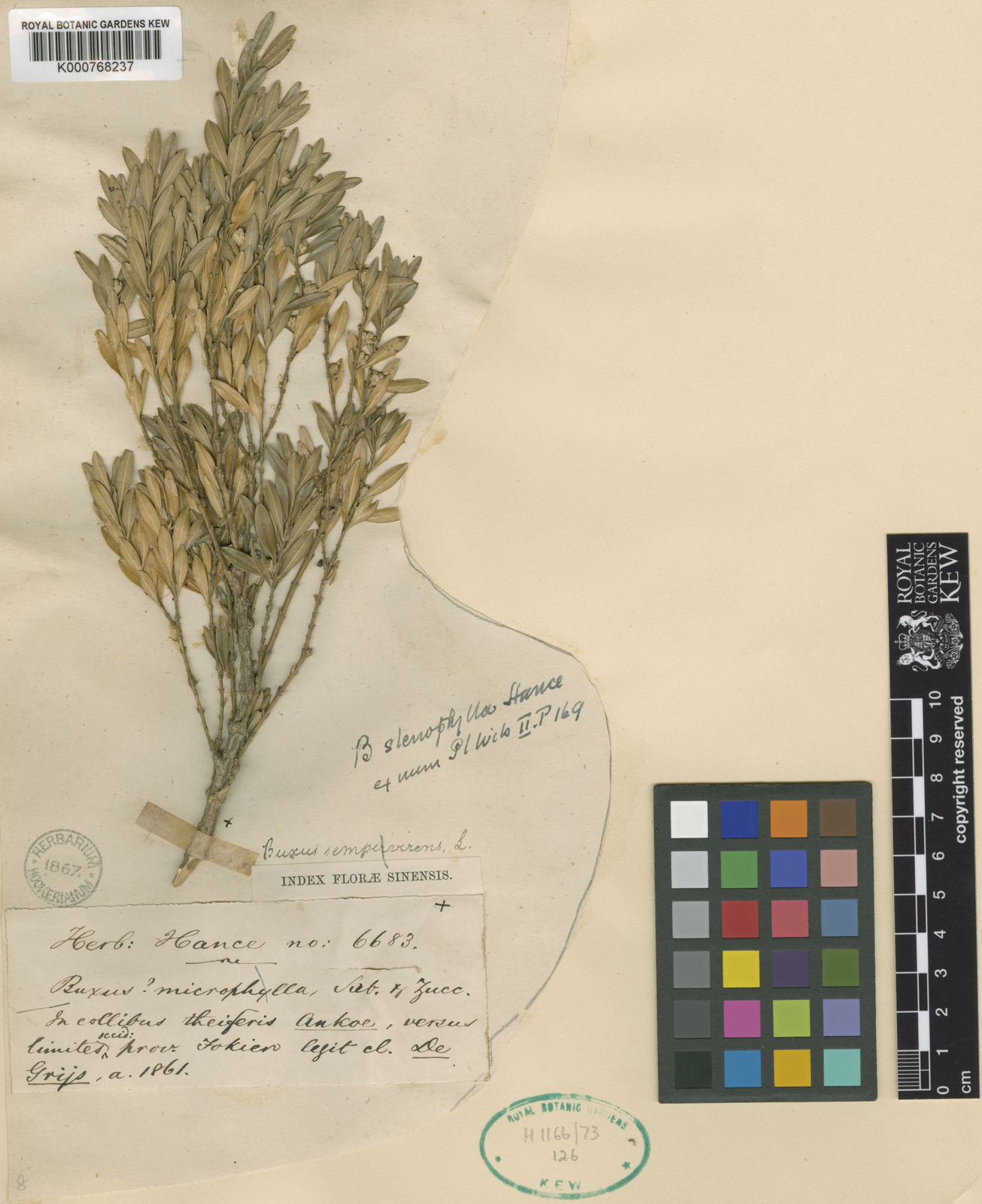
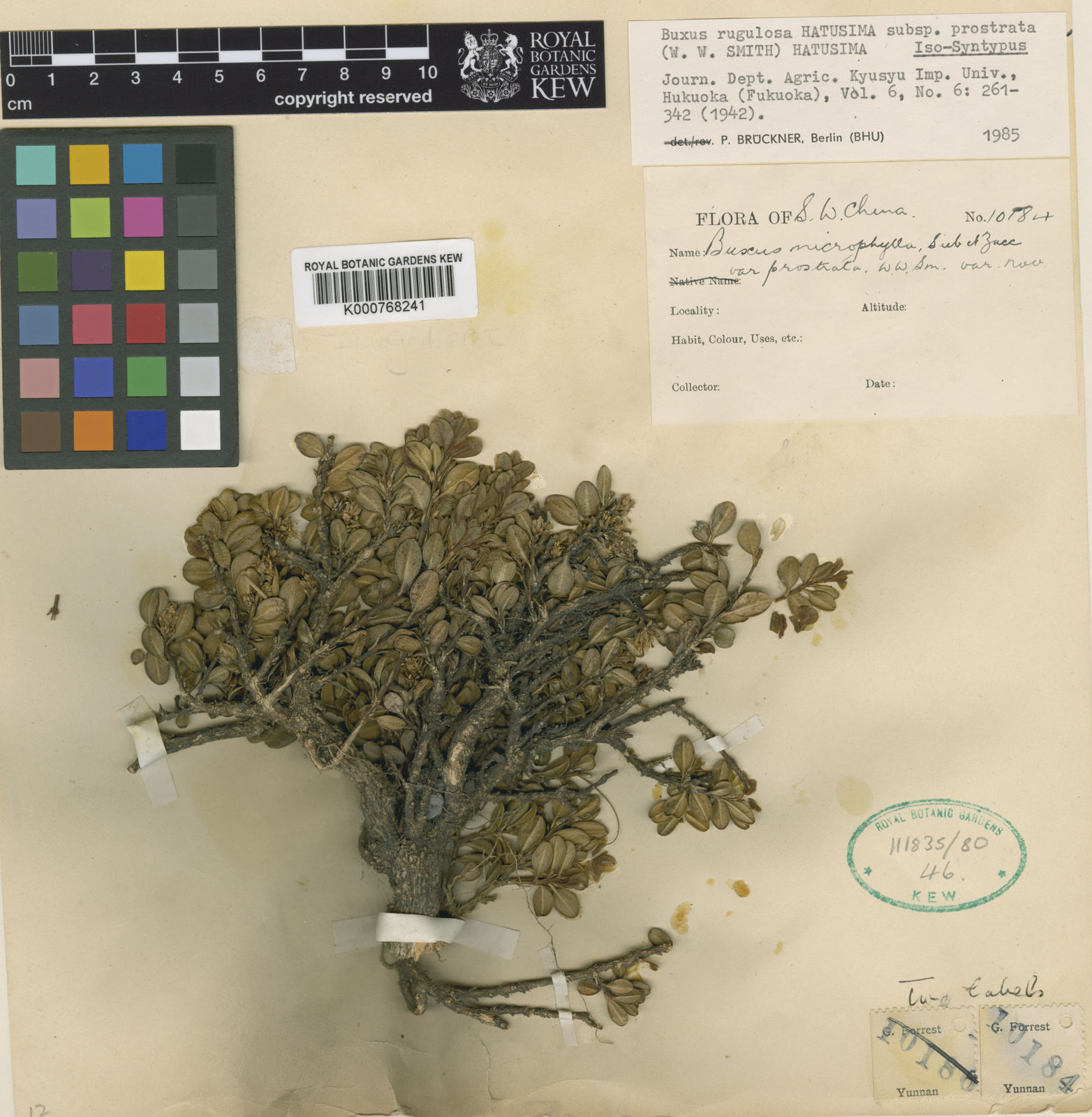
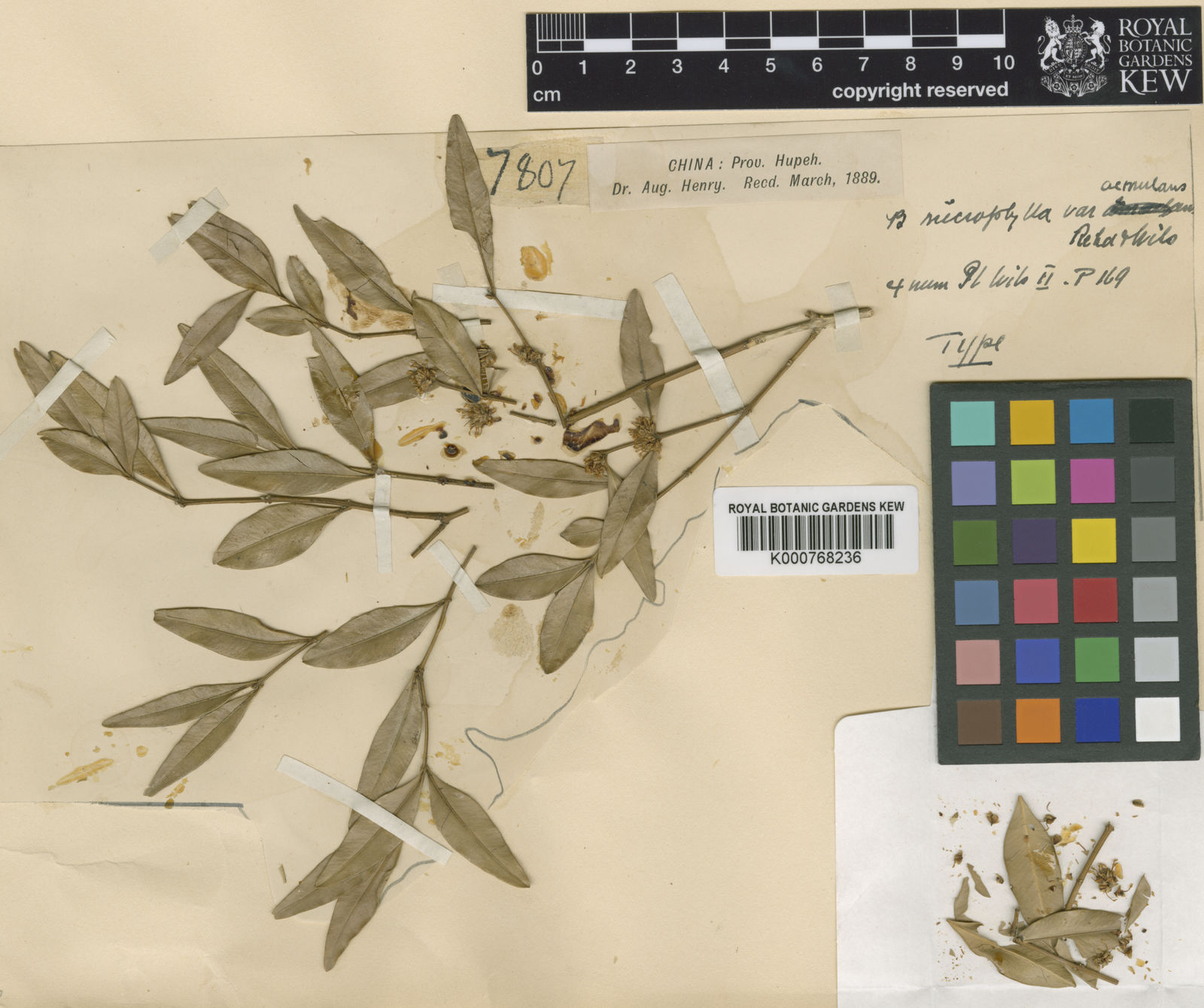
© copyright of the Board of Trustees of the Royal Botanic Gardens, Kew.


Global distribution
Native to central and southern Japan, according to Kew.
Identity
Littleleaf boxwood (Buxus microphylla Siebold & Zucc.) is an evergreen Japanese shrub whose small, opposite leaves form a dense surface that is easy to trim. Its French name, “buis à petites feuilles,” is recorded by Floriscope. The species belongs to the Buxaceae and retains its foliage all year. 62
Its slow growth suits borders, hedges and topiary. The RHS horticultural profile gives a height and spread of 1 to 1.5 m (3.3 to 4.9 ft), reached in five to ten years; dwarf selections and regularly trimmed plants stay smaller. 32
Recognition
The opposite leaves with smooth margins are the first clue: they face each other on the shoot and have no teeth along their edges. Simple, leathery and rounded to elliptical, they reach 2 cm (0.8 in) long in the RHS description. Young stems are green, later brown, and square in cross-section. 32
Small yellow-green flowers appear in the leaf axils in spring; Floriscope specifies April and May. Inconspicuous but fragrant, they attract bees. The fruit develops into a brown, three-chambered capsule that opens when ripe. Bronze foliage in winter can be seasonal coloration and is not enough to diagnose disease. 362
Useful taxonomy
Kew accepts the name Buxus microphylla Siebold & Zucc., published in 1845. The names Buxus japonica var. microphylla and Buxus sempervirens var. microphylla are among its synonyms. These older combinations explain associations with other boxwoods in catalogs, without establishing that all their horticultural properties are identical. 1
The reference also distinguishes the botanical varieties microphylla and riparia within the species. A botanical variety and a nursery cultivar are different categories: ‘Compacta’, for example, is a horticultural selection, rather than the name of a botanical variety accepted by Kew. 12
Habitat and distribution
Littleleaf boxwood is native to central and southern Japan, according to Kew, which places it mainly in the temperate biome. Its presence in gardens and nurseries does not describe its natural range. Growing advice concerns plants established and tended outside their original habitat. 13
In the garden, the shrub prefers moist but well-drained soil in light partial shade. It tolerates sun if water remains available; in dry soil, this exposure can dull or scorch the foliage. Its shallow roots benefit from moisture-retaining mulch. Drought tolerance applies mainly to established plants. 32
The RHS hardiness rating H6 corresponds to minimum temperatures of −20 to −15 °C (−4 to 5 °F) under British conditions. This rating does not remove the need to protect plants from winter winds and harsh weather, to which the foliage remains sensitive. 32
Life cycle and reproduction
Littleleaf boxwood is a woody perennial that flowers in spring. It can be propagated from seed, by semi-ripe cuttings in summer, or by grafting in winter. Cuttings are particularly useful for propagating selections described for their habit or foliage. 32
The calendar reflects container growing in a temperate Northern Hemisphere climate. Its scores express relative seasonal changes: moisture still needs monitoring in winter, while growth and summer water needs increase. The RHS general guide to boxwoods recommends a general-purpose organic liquid fertilizer in summer, following its instructions; a boxwood in fertile garden soil does not need routine feeding. 4
For container growing, that guide recommends a pot at least 45 cm in diameter (18 in), filled with a peat-free, loam-based growing medium. In spring, top-dress by replacing the upper 5 cm (2 in) of growing medium with fresh mix. Top-dressing renews only the container’s surface layer. 4
Uses and risks
The dense foliage suits low edging, geometric shapes and bonsai. Trim hedges in summer; pruning that encourages young shoots needs to take account of late frost risk. Box tree moth and fungal box blight can strip plants of their leaves: the species’ small size does not protect it from these problems. 23
The steroidal alkaloids in the leaves and bark are reason to avoid ingestion. NC State describes low-severity toxicity in humans, with possible digestive upset and usually minor skin irritation. This is not a guarantee of safety for a child. 2
Vomiting and diarrhea are reported in cats and dogs. The risk can be serious for horses, with colic, seizures or respiratory failure. The ASPCA documents these effects for boxwoods generally, and NC State repeats them in its species profile. Contact a veterinarian promptly after an animal eats the plant. 52
Cultivars, lookalikes and related plants
The cultivar ‘Compacta’ is used for very low hedges and bonsai. ‘Curly Locks’ has twisted shoots and narrow, curved, yellow-green leaves. These traits apply to the named selections; they do not describe all littleleaf boxwoods. 2
To resolve confusion with the holly Ilex crenata, examine the shoot: that holly has alternate leaves with finely scalloped edges, while boxwood leaves are opposite and smooth-edged. Its black fruit, produced by pollinated female plants, differs from boxwood’s brown capsules. When fruit is absent, the leaves are the best guide. 72
Main sources
Kew documents identity and native range; horticultural profiles describe identification and growing conditions. General seasonal advice for boxwoods is distinguished from traits specific to the species.
Frequently asked questions
How can I distinguish this boxwood from a small-leaved holly?
Boxwood has opposite leaves with smooth margins. Ilex crenata has alternate leaves with finely scalloped edges, and black fruit on pollinated female plants.
Does bronze foliage in winter mean the plant is diseased?
A bronze tint in winter can be a normal seasonal change in the foliage. Leaf loss or dying shoots require a separate examination.
Does a potted boxwood need watering in winter?
Yes, monitor the growing medium even in winter. Established boxwoods in the ground mainly need watering during prolonged droughts.
Is littleleaf boxwood toxic?
Ingestion can cause digestive upset in humans, cats and dogs. Respiratory effects and seizures are reported in horses; contact a veterinarian promptly after an animal eats the plant.
If you are unsure about a plant’s toxicity, ask a botanist or veterinarian for advice.