
Fancy-leaved caladium (Caladium bicolor, )
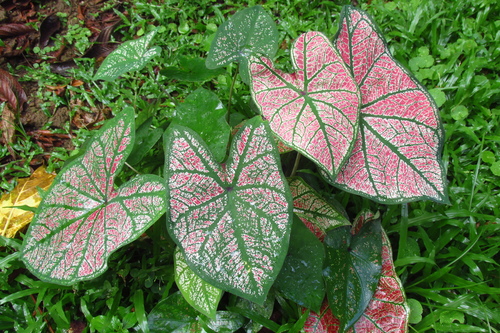
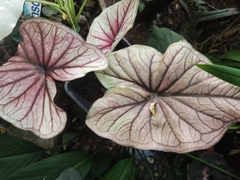
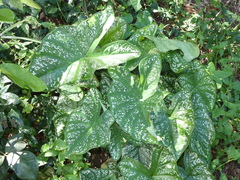
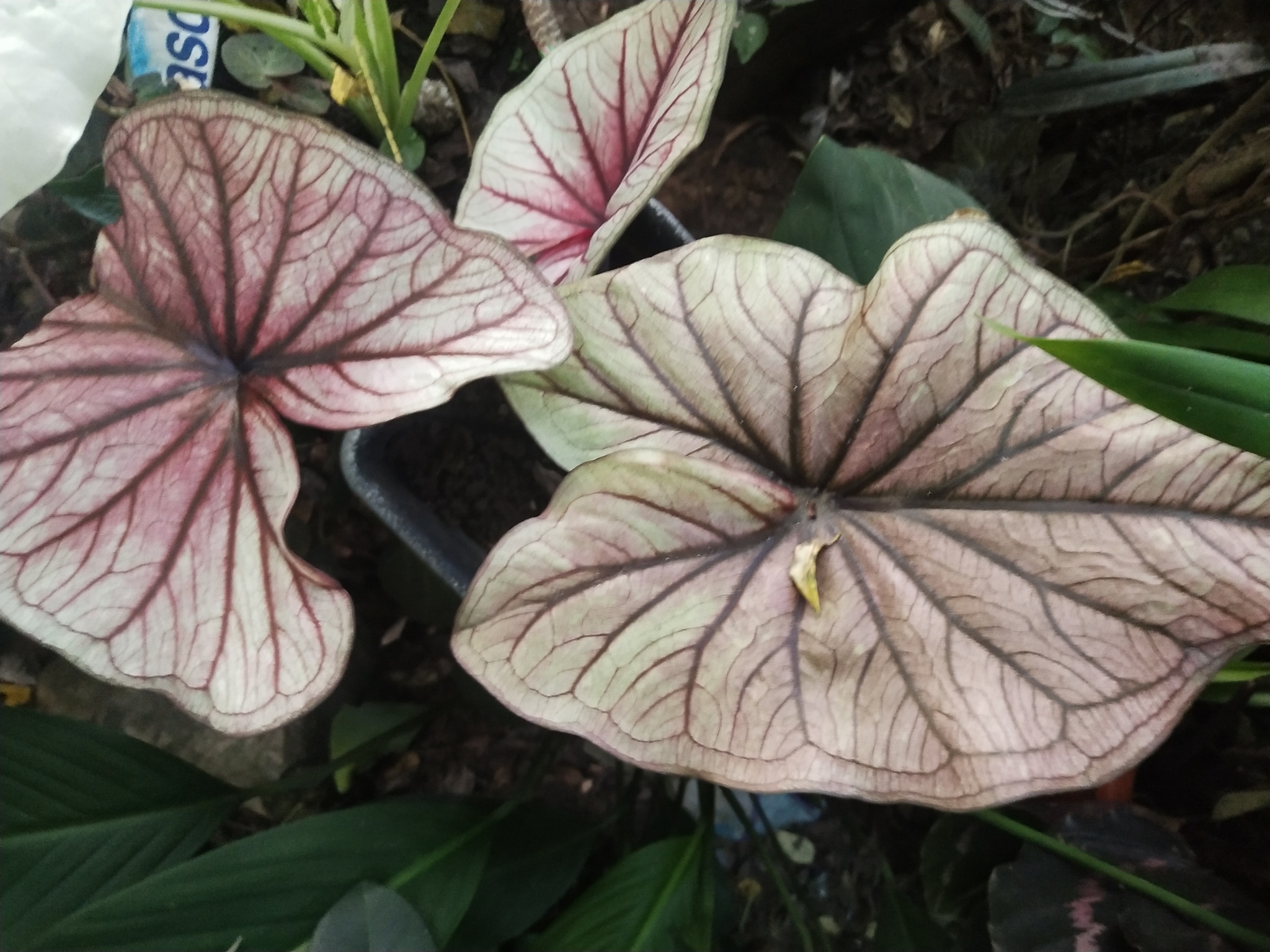
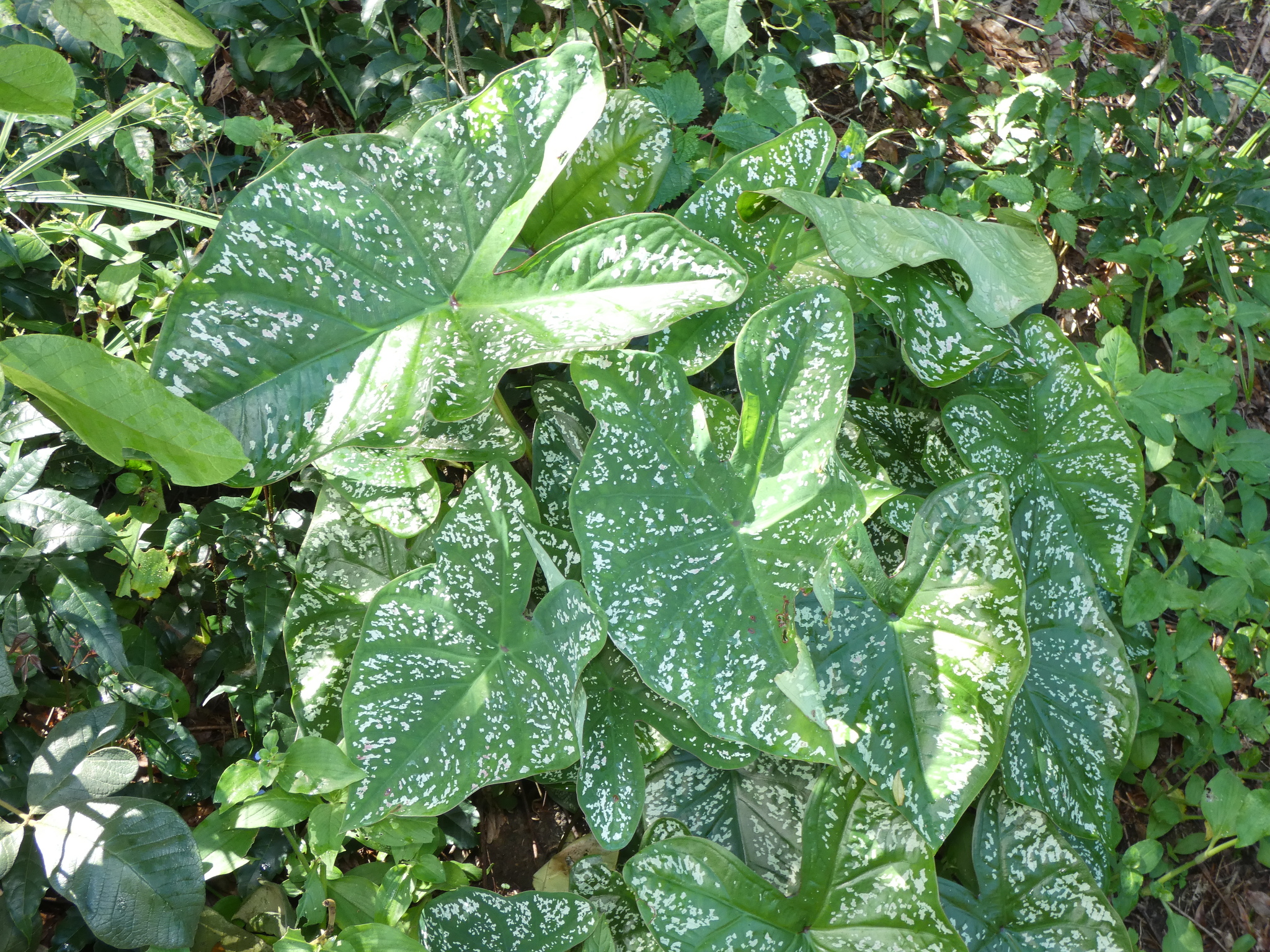
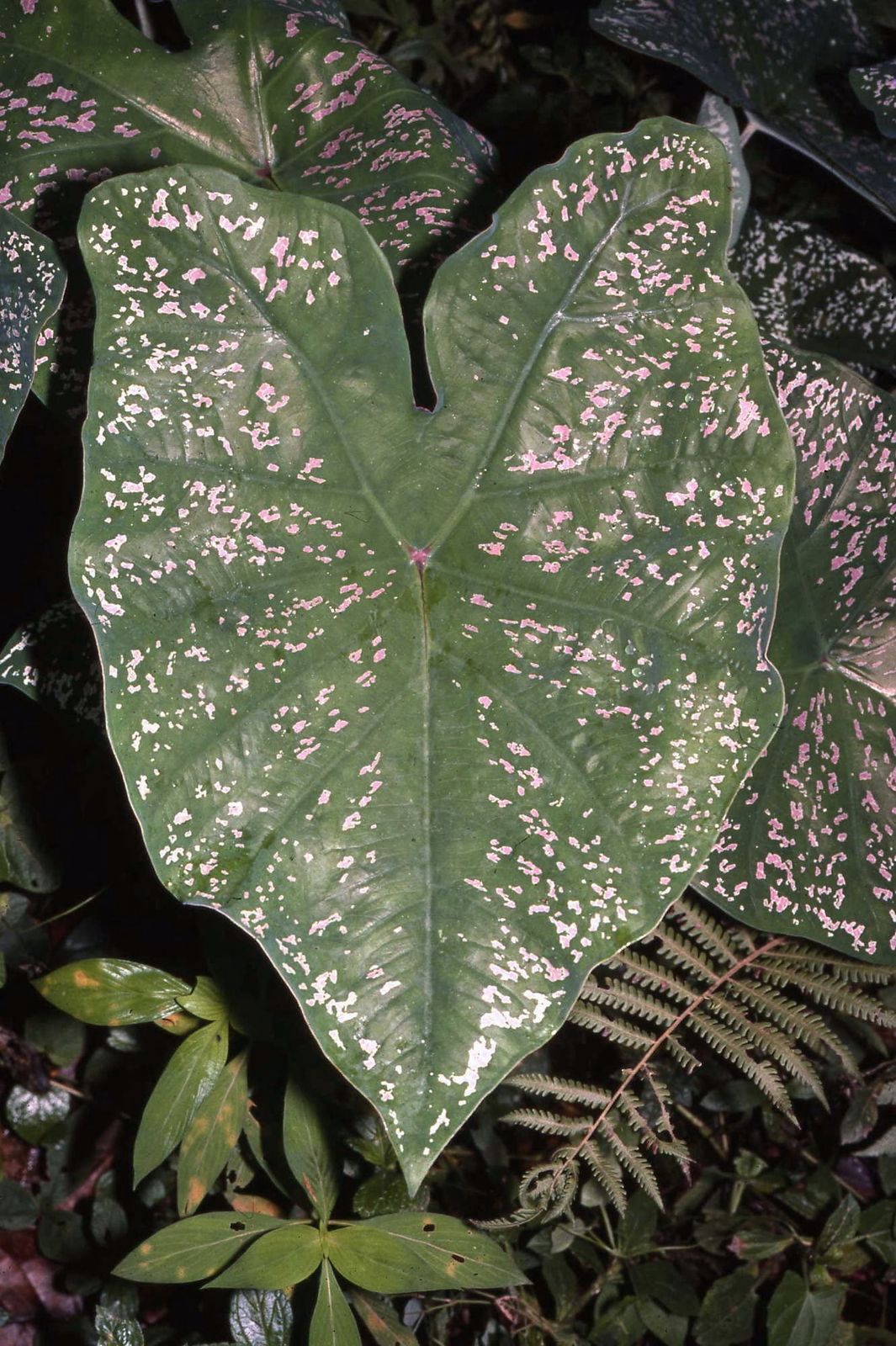
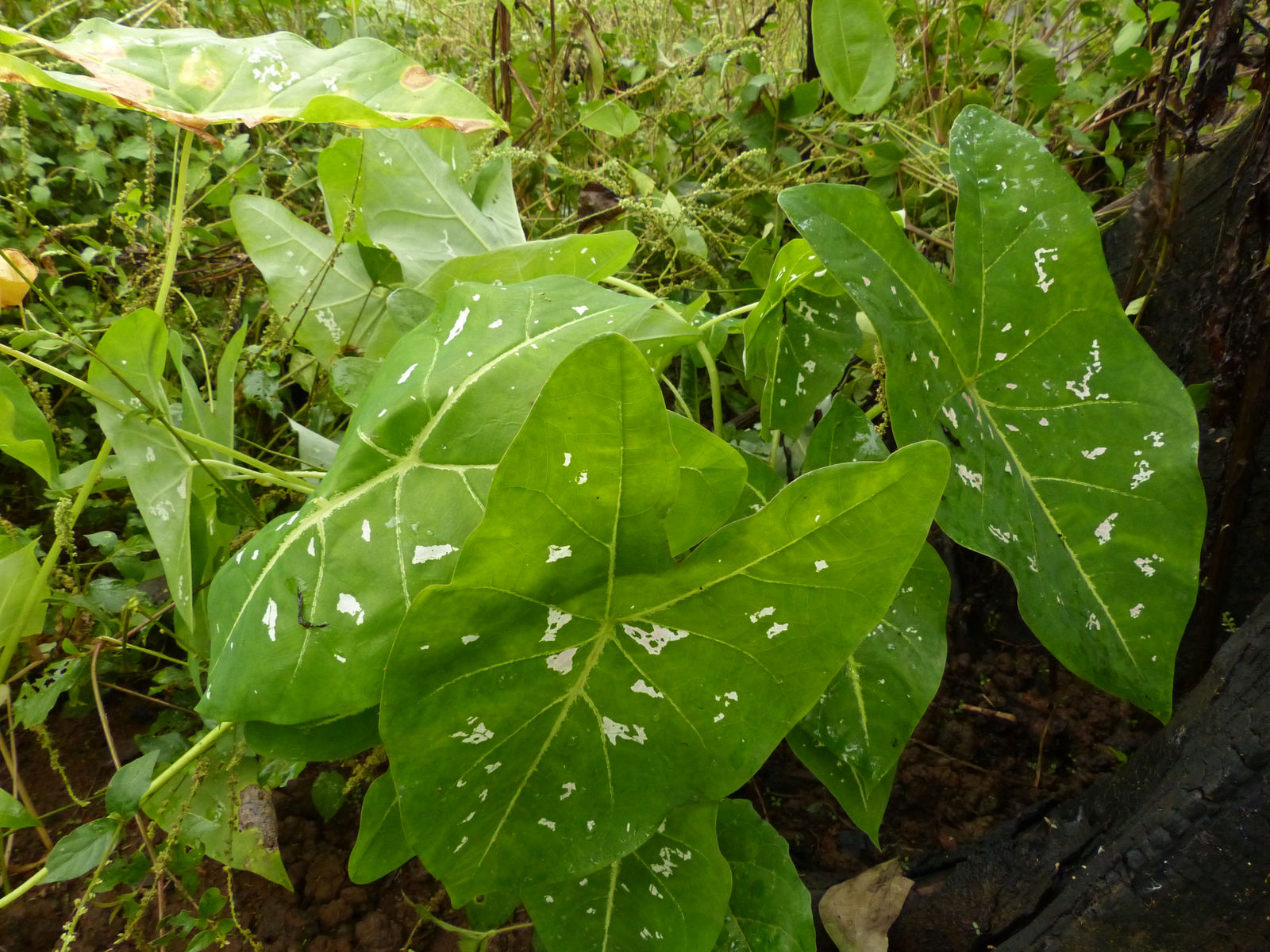
Fancy-leaved caladium (Caladium bicolor) bears heart-shaped or arrow-shaped leaves marked with white, pink or red. This tropical perennial has an underground storage organ and can lose its leaves during dormancy, even indoors.
Read moreFancy-leaved caladium, Heart of Jesus and Angel wings
Arum bicolor and Cyrtospadix bicolor
Place in indirect light or in a shaded room.
Indirect light indoors; shade or partial shade outdoors.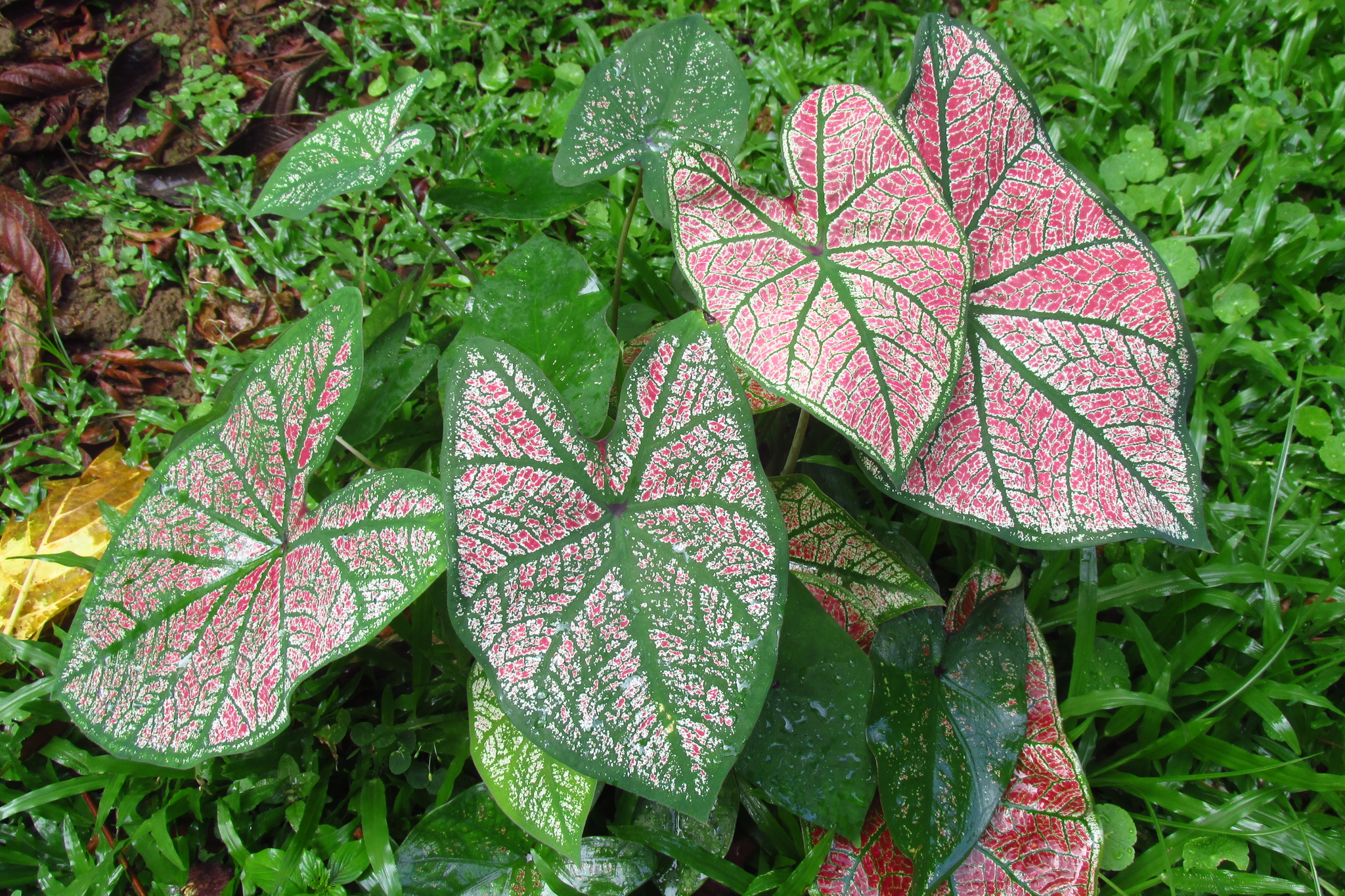


© photo
(c) valeria_scura, some rights reserved (CC BY-NC), uploaded by valeria_scura · cc-by-nc
Greg III Espera · cc-by
Helio Lourencini · cc-by
Taken Apr 27, 2021 by Asim Kumar Mishra (cc-by-sa)
Taken Oct 3, 2022 by Norman Reyes (cc-by-sa)
Taken Aug 16, 2022 by Fabrice Rubio (cc-by-sa)
Taken Aug 28, 2021 by Gustavo Marin (cc-by-sa)
Taken Apr 17, 2019 by OTS - R. Aguilar (cc-by-nc-sa)
© copyright of the Board of Trustees of the Royal Botanic Gardens, Kew.


Global distribution
Native from Central America to northwestern Argentina, with introductions in other tropical regions.
- Native6
- Introduced2
- Costa Rica
- Panama
- Colombia
- Brazil
- French Guiana
- Northwestern Argentina
- India
- Seychelles
Hexagons: regions where the plant occurs. Green dots: native range.2
Identity
Fancy-leaved caladium (Caladium bicolor (Aiton) Vent., 1800) has heart-shaped or arrow-shaped leaves whose white, pink or red patches contrast with green. This tropical member of the Araceae family is a perennial with an underground storage organ, so seasonal leaf loss does not necessarily mean the plant has died. 2 8
“Palette de peintre” is another attested French common name. Caladium is grown for its foliage, in pots indoors or in shaded plantings during the warm season. Its ornamental use comes with a constraint: the plant is toxic if eaten, and its sap can irritate skin. 4 5
Recognition
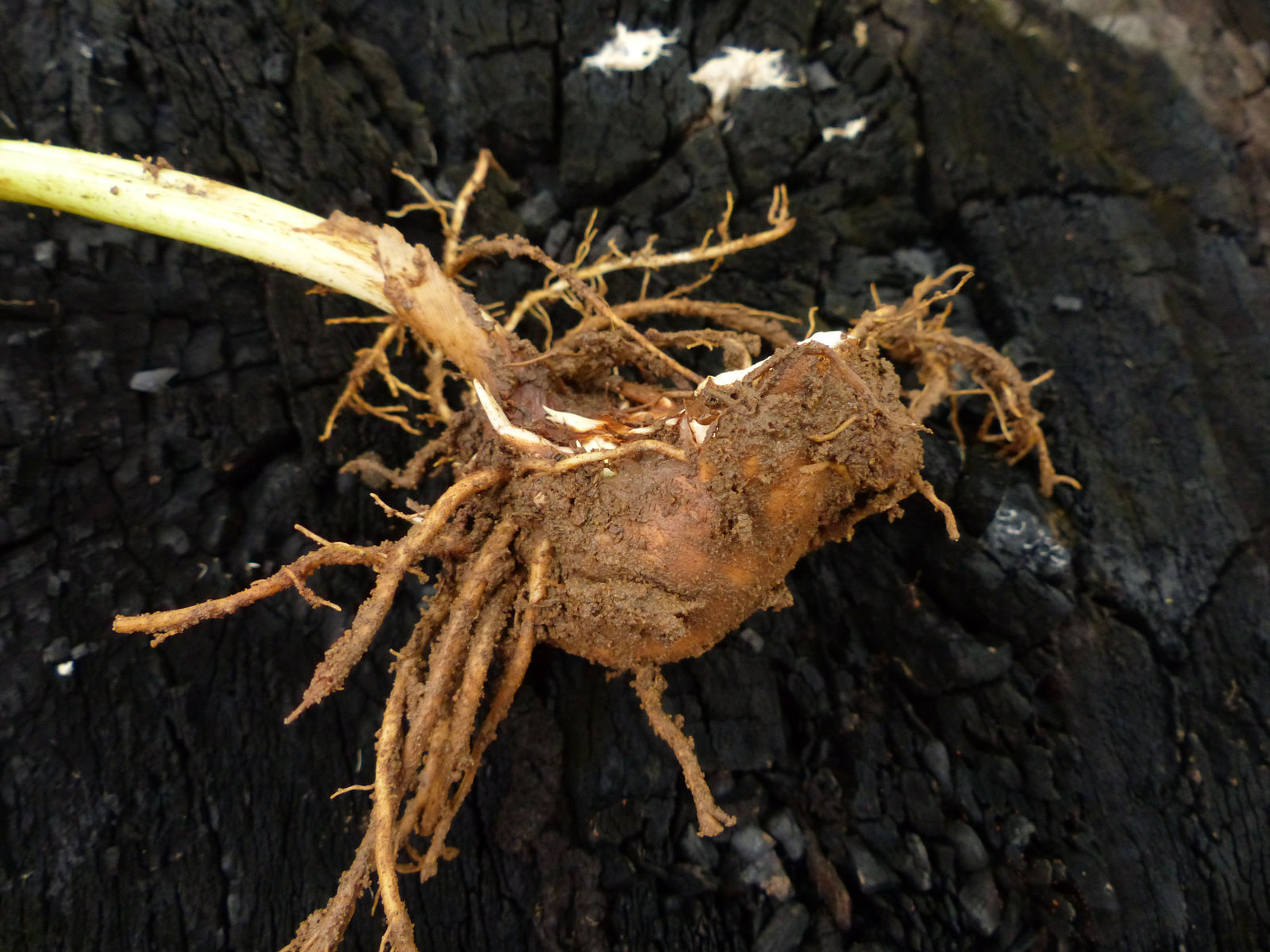
Fancy-leaved caladium has no upright aboveground stem bearing its leaves: the long petioles emerge from a swollen underground organ, called a corm or tuber in horticultural descriptions. The peltate leaf blade attaches to the petiole on its underside. Its heart-shaped base extends into a pointed tip, with variable variegation across the blade. 5 8
In the botanical description, leaf blades measure 13–37 cm (5–15 in) long and 9–26 cm (3.5–10 in) wide. Cultivated forms may have different patterns and proportions. The spathe measures 7–13 cm (3–5 in): its lower part forms a swollen green tube, while the upper blade is white. The caladium spathe surrounds the spadix, which bears the small flowers. 3
Useful taxonomy
The accepted name is Caladium bicolor. The basionym Arum bicolor Aiton, published in 1789, and the combination Cyrtospadix bicolor (Aiton) Britton & P.Wilson, published in 1924, are homotypic synonyms: their names are based on the same nomenclatural type. These changes of genus therefore do not identify different cultivars. 2
The name Caladium × hortulanum needs a different interpretation. One horticultural treatment lists it among the synonyms of C. bicolor, while caladiums presented under this name in Florida form a horticultural hybrid group. A commercial label alone cannot establish that a selection corresponds exactly to the botanical species. Species names, group names and cultivar names describe distinct levels of identity. 9 10
Habitat and range
Fancy-leaved caladium is native from Central America to northwestern Argentina, in the Salta region. Its range includes Costa Rica, Panama, Colombia, Brazil and French Guiana. Caladium grows mainly in the wet tropical biome; its native range is therefore not confined to Brazil. 2
The species has also been introduced to distant tropical territories, including India and the Seychelles. Naturalized populations occupy roadsides and shaded ground in the West African forest region. Presence outside the native range and invasiveness are different findings: an introduction does not establish invasive status in every territory. 2 3
Life cycle and reproduction
Caladium can enter a leafless rest period, even indoors after a few months of growth. For indoor cultivation in metropolitan France, the calendar expresses relative editorial scores for growth and watering: spring regrowth, summer activity and then winter dormancy. Caladium’s calendar scores measure neither a water volume nor a biological growth rate. Repotting and feeding periods are conditional windows; emerging shoots and declining foliage take priority over the displayed month. 7 5
During growth, keep the potting mix moist without saturating it. When the leaves die and the plant enters dormancy, stop watering; resume when new shoots appear. Divide the storage organ in spring before potting, leaving at least one bud on each piece and allowing the cut surfaces to dry for a few days. 7
Uses and risks
Caladium adds color to shaded beds and containers. Indoors, bright indirect light, warmth and humidity suit the cultivated forms. Waterlogged growing media expose the underground organ to rot; a pot with drainage holes allows excess water to escape. 7 6
Feed during growth, especially when plants are grown in pots. A balanced or low-nitrogen fertilizer is documented; excess nitrogen can alter leaf color. Fertilization must take the growing medium into account: practices described for Florida soils do not define a universal dose for a container plant in a different setting. 7 10
Calcium oxalate crystals, together with unidentified compounds, can cause burning and swelling of the mouth as well as digestive problems. The risks concern humans, children, cats, dogs and horses. Ingestion can be fatal to livestock or pets; safety cannot be assumed for other animals. The sap can cause skin irritation. 5
Varieties, look-alikes and related plants
Cultivated caladiums include forms with large heart-shaped leaves and compact forms with narrow leaves. These categories describe the horticultural appearance of the foliage; they are not additional species. The English common name “elephant ears” is shared with the genera Alocasia, Colocasia and Xanthosoma, so it cannot identify a caladium on its own. 7
Grayum’s botanical treatment distinguishes Caladium bicolor from Colocasia esculenta by the spadix: that of Colocasia esculenta bears a sterile appendage at its tip, which fancy-leaved caladium lacks. This character can be observed on a flowering plant; foliage alone does not reveal it. 1
Among the documented selections, ‘Fallen City’ has dark green leaves marked with dark red patches; ‘Summer Breeze’ has pale green to white leaves crossed by green veins. ‘Candidum’ is recognizable by its white leaves with green veins. Cultivar names should stay associated with their distinguishing traits and should not be confused with the species’ older botanical names. 5 6
Main sources
The botanical description gives the dimensions of the leaf blades and spathe; the horticultural references describe cultivated forms and their growth cycle in cultivation. 3 7
- Missouri Botanical Garden, Grayum: treatment of Caladium
- Kew, Plants of the World Online: Caladium bicolor (Aiton) Vent.
- Flora of Tropical East Africa, S. J. Mayo, 1985: description reproduced by Kew
- EPPO Global Database: Caladium bicolor, French common names
- NC State Extension: Caladium bicolor
- Clemson Extension, HGIC 1160: Caladium
- University of Wisconsin Extension: Caladiums
- NParks, Flora & Fauna Web: Caladium bicolor cultivars
- Royal Horticultural Society: Caladium bicolor (v)
- University of Florida IFAS, Gardening Solutions: Caladiums
Frequently asked questions
Why does my caladium lose its leaves indoors?
Caladium can become dormant after a few months of growth, even inside the house. When the foliage disappears, let the underground organ rest dry and resume watering when new shoots appear.
Is fancy-leaved caladium toxic to cats?
Yes. Ingestion can poison cats; the sap is also irritating. Keep the plant out of reach of pets and children.
Is Caladium × hortulanum a cultivar?
This name is used for horticultural caladiums and a hybrid group. It does not describe a single cultivar; cultivars have their own names, such as Fallen City or Summer Breeze.
If you are unsure about a plant’s toxicity, ask a botanist or veterinarian for advice.