
Turtle vine (Callisia repens, )
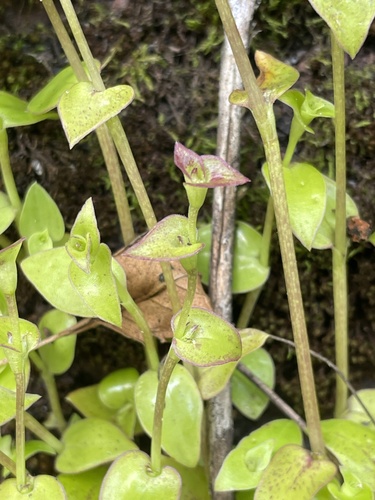
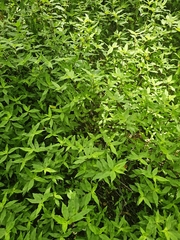
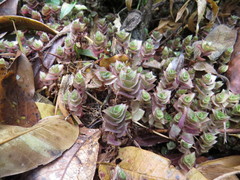
Turtle vine (Callisia repens) forms mats of small fleshy leaves on stems that root at the nodes. Native to the Americas, this trailing member of the Commelinaceae grows in hanging baskets under filtered light; ingestion poses a risk to children and pets.
Read moreTurtle vine, Creeping basket plant and Creeping inch-plant
Hapalanthus repens Jacq.
Give plenty of ambient light without direct sun on the leaves.
Bright filtered or indirect light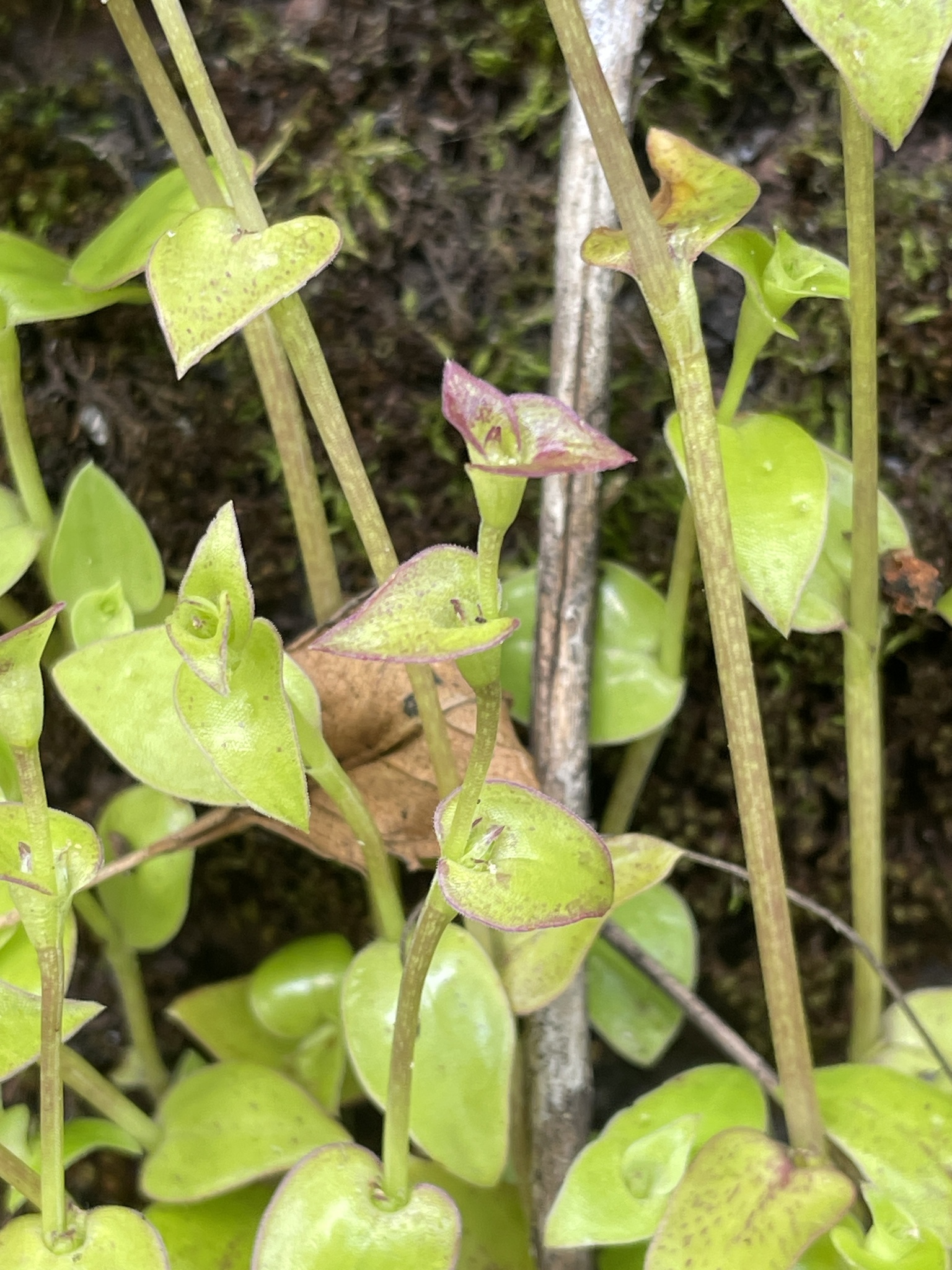


© photo
iNaturalist User · cc0
ritirene · CC BY-NC
Victor Farjalla Pontes · cc-by
Taken Mar 13, 2021 by Machado Emillyn (cc-by-sa)
Taken Oct 15, 2021 by Fernanda Fernandes (cc-by-sa)
Taken Mar 29, 2022 by بیژن ملاقدیمی (cc-by-sa)
© copyright of the Board of Trustees of the Royal Botanic Gardens, Kew.






Global distribution
Native from southeastern Texas to tropical America; documented introductions include Asia and the southern United States.
- Native4
- Introduced4
- Texas
- Mexico
- Colombia
- Northern Argentina
- Bangladesh
- Southeastern China
- Florida
- Louisiana
Hexagons: regions where the plant occurs. Green dots: native range.2
Identity
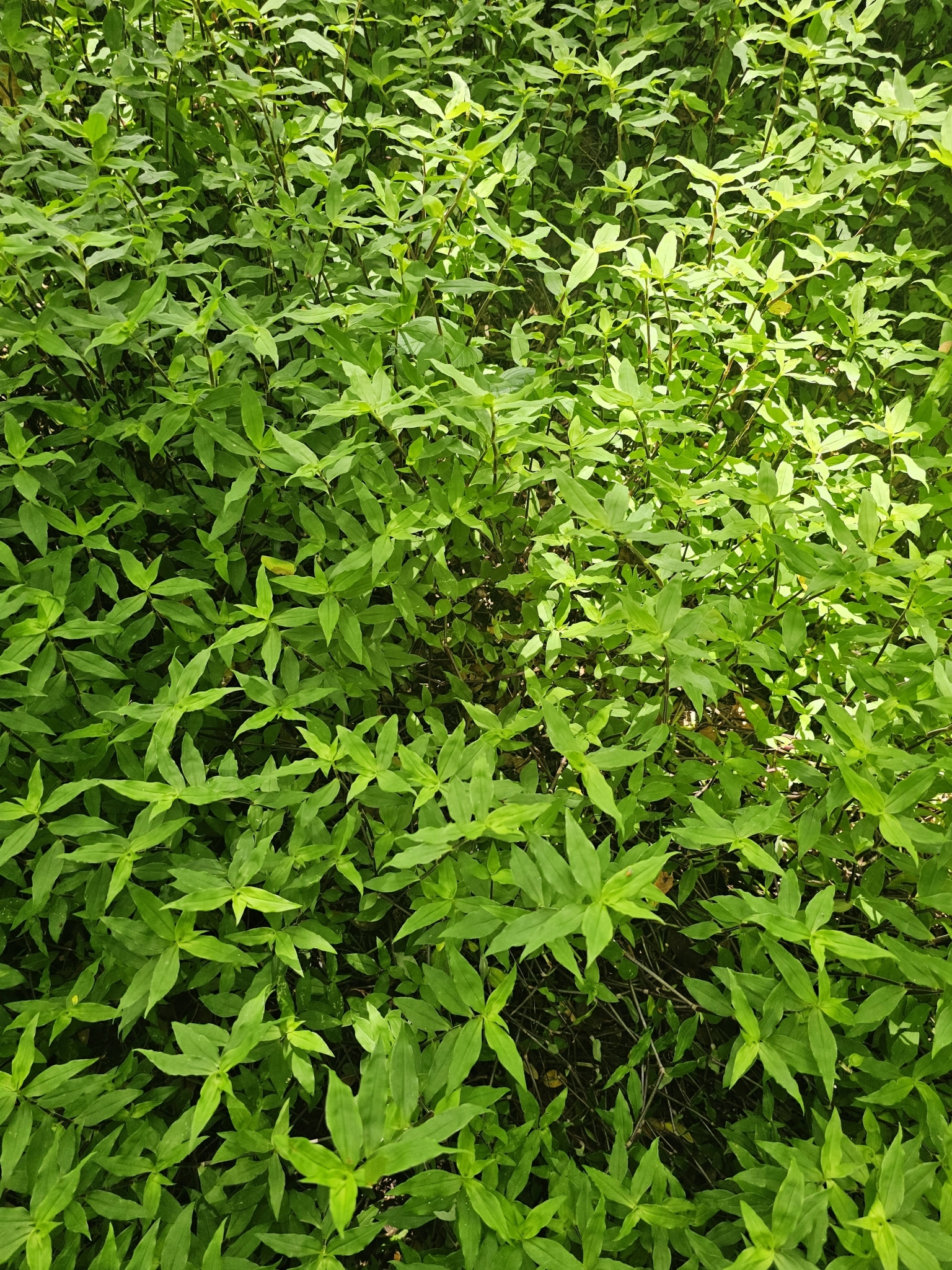
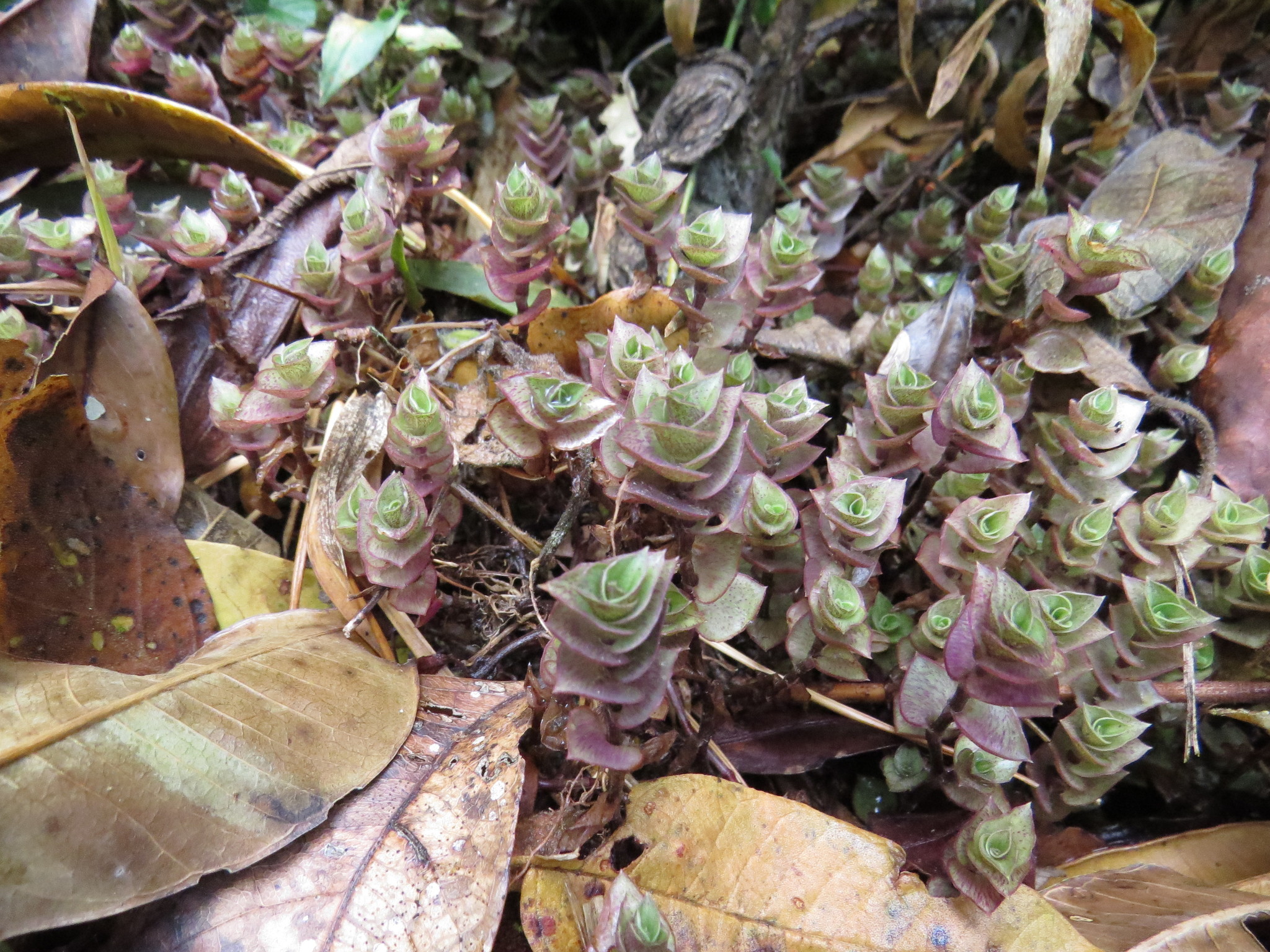
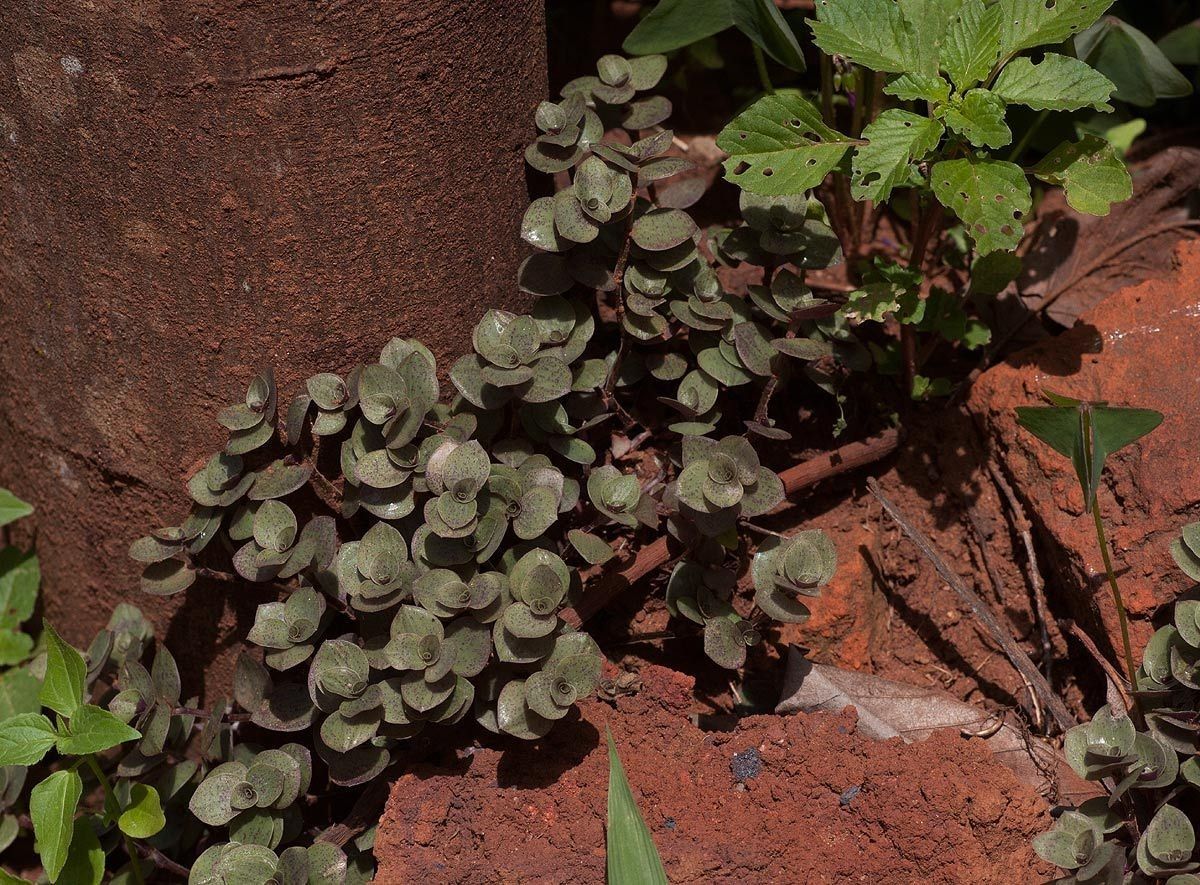
Turtle vine (Callisia repens (Jacq.) L., 1762) spreads on branching stems that root at the nodes. Small fleshy leaves form a mat, then a cascade as the shoots trail over the edge of the pot. The French names “callisie rampante” and “liane tortue” are recorded for this species. 4 5 1
Turtle vine belongs to the Commelinaceae, in the order Commelinales. The Latin epithet repens means “creeping” and describes its growth habit. Pink or cream coloring belongs to particular cultivars; those colors do not define every plant of the species. 3 6
Recognition
Turtle vine leaves are broadly oval, slightly fleshy and pointed at the tip. They reach 4 cm (1.6 in) long in the British horticultural description. The undersides are frequently purple, and tiny hairs line the leaf edges. Examining the margins adds an identifying feature to leaf color, which varies between cultivars. 5 6
For cultivated plants, the RHS gives a height of 0.1–0.5 m (4–20 in) and a spread of 0.5–1 m (1.6–3.3 ft). These dimensions describe the whole cultivated plant, rather than the length of each trailing stem. The purple stems branch and anchor themselves wherever they touch the substrate, which explains how the dense mat develops. 5 6
Useful taxonomy
Kew accepts the name Callisia repens (Jacq.) L. Its basionym, Hapalanthus repens Jacq., was published in 1760; the combination in Callisia dates from 1762. A basionym is an earlier scientific name attached to the same species, whereas “Pink Lady” identifies a cultivar. 2 4 6
Descriptions of the life cycle differ. Kew lists an annual or subshrub, while the RHS and NC State Extension describe a horticultural perennial. Lifespan therefore needs context: treating turtle vine as a perennial in cultivation comes with an explicit difference between botanical and horticultural descriptions. 2 5 6
Habitat and range
Turtle vine is native from southeastern Texas to tropical America. The range includes Mexico and Central America and extends to northern Argentina. The plant grows in shaded rocky places, forests and shrublands; Kew places it mainly in the seasonally dry tropical biome. 2 6
Bangladesh and southeastern China are among the documented introductions, alongside Florida and Louisiana. Introduced status records arrival outside the native range; it does not establish invasive status in every territory. When grown as ground cover, however, the dense growth can smother less vigorous neighboring plants. 2 6
Life cycle and reproduction
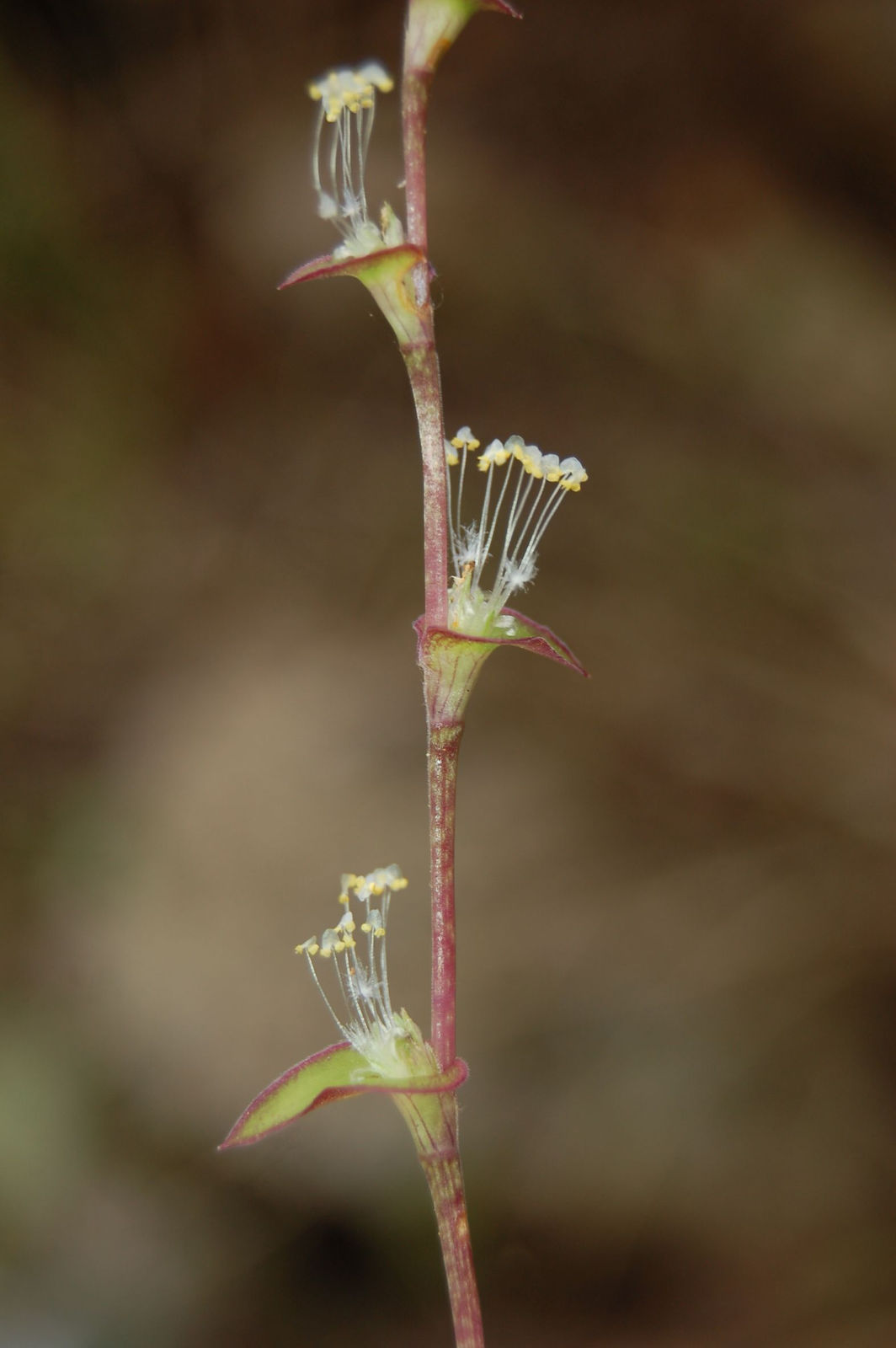
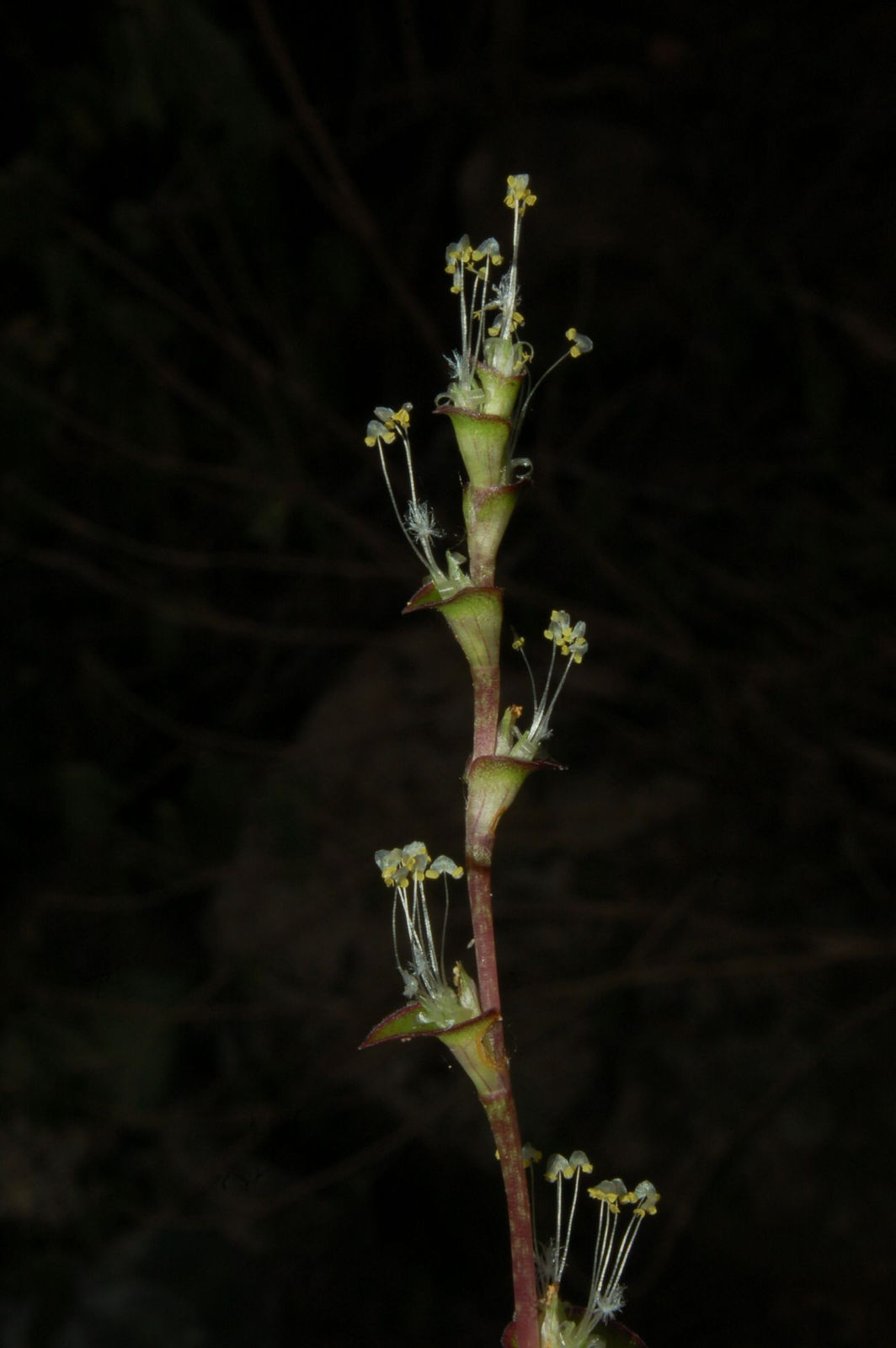
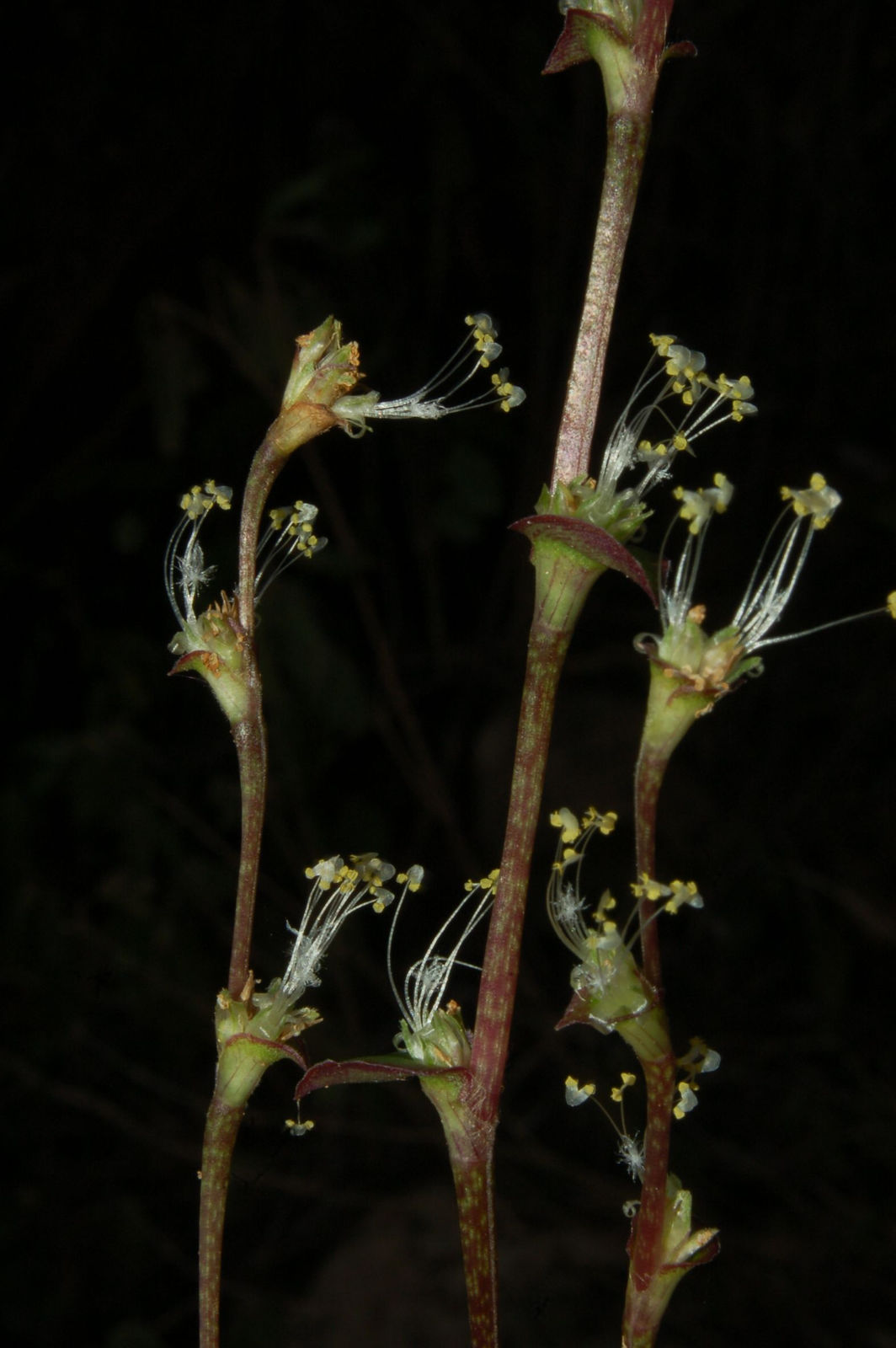
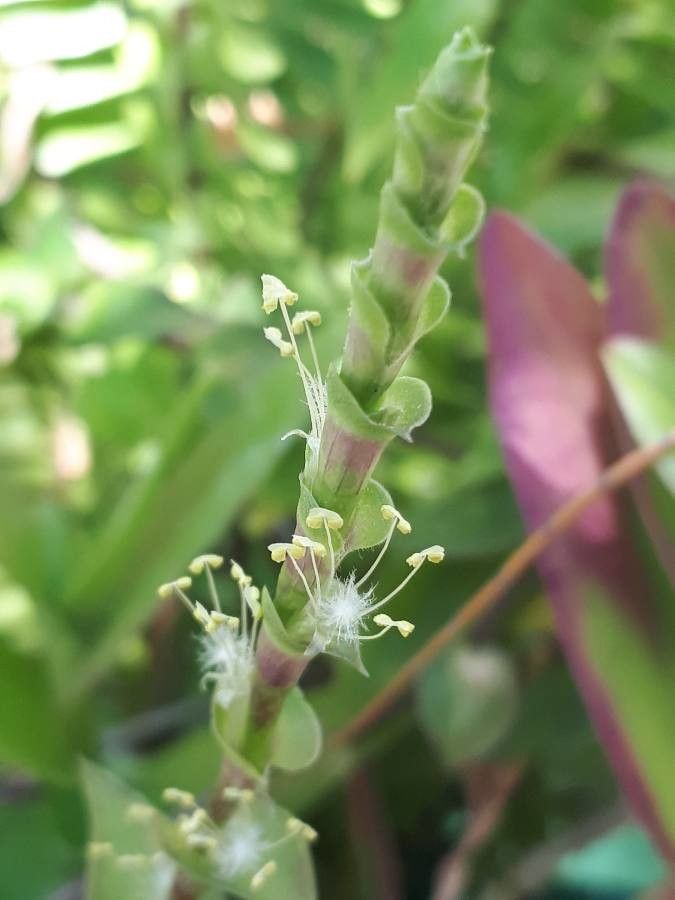
Small flowers grow in clusters in the leaf axils on ascending turtle vine stems. Flowering is described in late spring and early summer. The white flowers, or pink flowers in the American description, are followed by seed capsules. 5 6
Propagation by stem cuttings or separation of rooted offsets makes use of the plant's natural ability to root at its nodes. Several cuttings planted together in one pot produce dense coverage. The cited recommendations do not establish a fixed rooting time. 5 6
The calendar represents indoor cultivation in mainland France under natural light, with reduced growth during the darker season. Water and growth indices are relative editorial guides. For houseplants, the University of Maryland recommends feeding during the growing season, from spring into early fall in its Northern Hemisphere setting, then stopping in winter as light and growth decline. Apply that seasonal window only while the plant is growing actively; the monthly frequency for turtle vine comes from the RHS. 8 5
For a turtle vine whose roots are emerging from the drainage hole and running out of room, Maryland horticulturists recommend repotting in spring. The French calendar translates that season into a routine repotting window when the need is confirmed. Other seasons fall outside the selected window but do not rule out urgent work. Under grow lights, or if growth continues through winter, adjust the calendar to the plant's actual activity. 9 5
Uses and risks
Turtle vine suits hanging baskets and indoor pots in bright filtered light. Keep the substrate moist and well drained, with a pH of 5.0–6.5. Intense direct sun can scorch the leaves; excessive shade produces weak, elongated stems. Too much water increases the risk of root rot and fungal disease. 5 6
The RHS recommends outdoor cultivation only where winter temperatures stay above 10 °C (50 °F). This threshold concerns keeping the plant outdoors, rather than an ideal growing temperature. Turtle vine does not tolerate frost. 5 6
NC State Extension reports toxicity following ingestion by children and pets, and names cats and dogs among the affected animals. The sap can irritate skin. Reported effects include digestive upset or throat swelling, with calcium oxalate crystals identified as the toxic principle. The risk remains unknown for horses; that lack of assessment does not establish general safety. 6
Varieties, look-alikes and related plants
Turtle vine cultivars differ in their foliage. “Bianca” has white streaks that turn pink; “Gold” has yellow-green leaves with bronze undersides. “Pink Lady” combines green, pink or cream with burgundy undersides. “Pink Panther” has white streaks across green and pink foliage. 6
“Green Cricket” is described in the RHS horticultural bulletin as a cultivar with light green streaks on young leaves and no pink pigmentation. The absence of observed flowers in that description applies to the cultivar; it does not mean the species never flowers. Cultivar characteristics therefore cannot replace the botanical description of turtle vine. 7
NC State identifies the genus Tradescantia as a possible source of confusion. Tradescantia zebrina has two silvery or white lengthwise bands on its leaves and lavender-purple flowers; the turtle vine described by the RHS has green leaves and white flowers. For variegated turtle vine cultivars, check the flowers as well: stripes alone cannot settle the identification. 6 10 5
Main sources
The RHS bulletin describes “Green Cricket” separately from the general characteristics of the species. Botanical references establish identity and native range; horticultural descriptions document cultivation and its risks.
- Pl@ntNet, Callisie rampante, Callisia repens
- Plants of the World Online, Kew, Callisia repens
- EPPO, Callisia repens, classification and distribution
- International Plant Names Index, Callisia repens
- Royal Horticultural Society, Callisia repens
- NC State Extension, Callisia repens
- RHS, Cultivar Registration Bulletin no 3, Green Cricket
- University of Maryland Extension, Fertilizer for Indoor Plants
- University of Maryland, Ask Extension, Care for Callisia Repens
- NC State Extension, Tradescantia zebrina
Frequently asked questions
How do I identify turtle vine?
The branching stems root at the nodes and form a trailing mat. Leaves are small, fleshy, oval and pointed; their undersides may be purple.
Is turtle vine toxic to cats?
NC State Extension reports an ingestion risk for pets and names cats and dogs among the affected animals. The sap can also irritate skin; the risk to horses remains unknown.
Can turtle vine stay outdoors in winter?
The RHS recommends outdoor cultivation only where winter temperatures stay above 10 °C (50 °F). NC State Extension states that the plant does not tolerate frost.
Is Pink Lady another name for the species?
Pink Lady is described as a cultivar with variegated leaves. Turtle vine refers to the species Callisia repens, whose cultivars have different leaf colors.
If you are unsure about a plant’s toxicity, ask a botanist or veterinarian for advice.