
Common heather (Calluna vulgaris, )
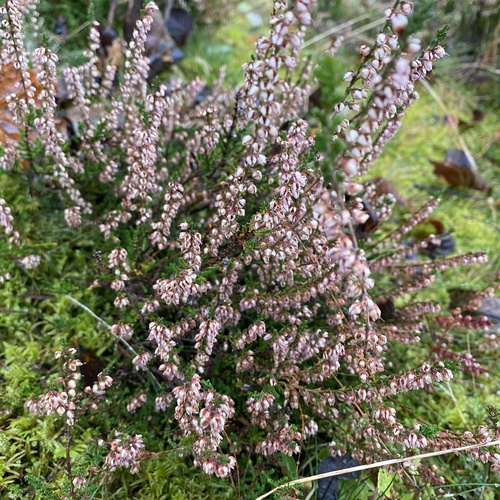
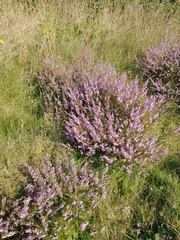

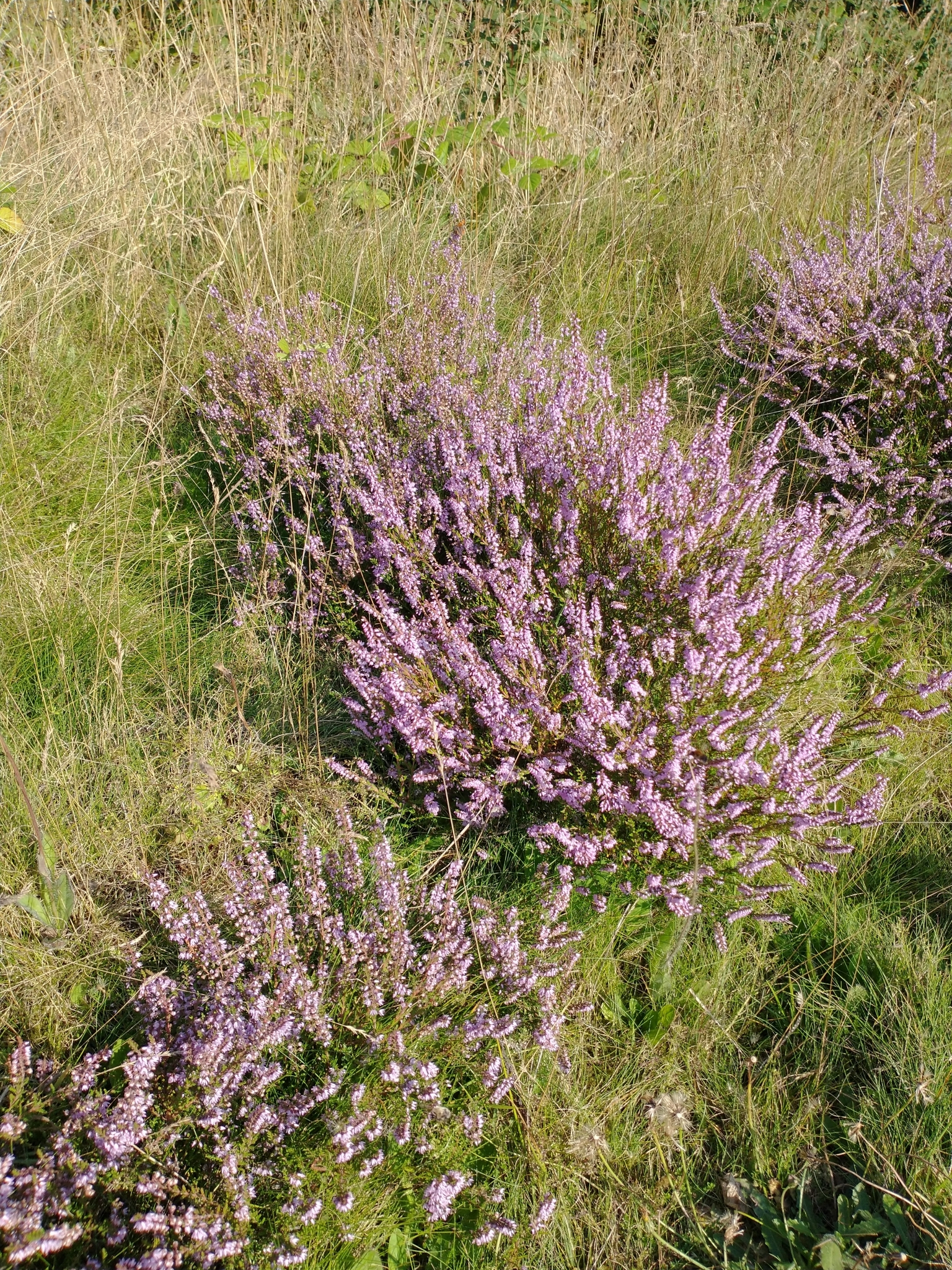
Common heather (Calluna vulgaris) is an evergreen subshrub in the Ericaceae, native to acidic heathlands across its European range and beyond. Tiny leaves form four tight rows on the shoots, with pink to mauve flowers coloring late summer.
Read moreCommon heather, Heather and Ling
Erica vulgaris and Calluna erica
Allow a few hours of direct sun per day, preferably morning or evening.
Sun; tolerates light shade.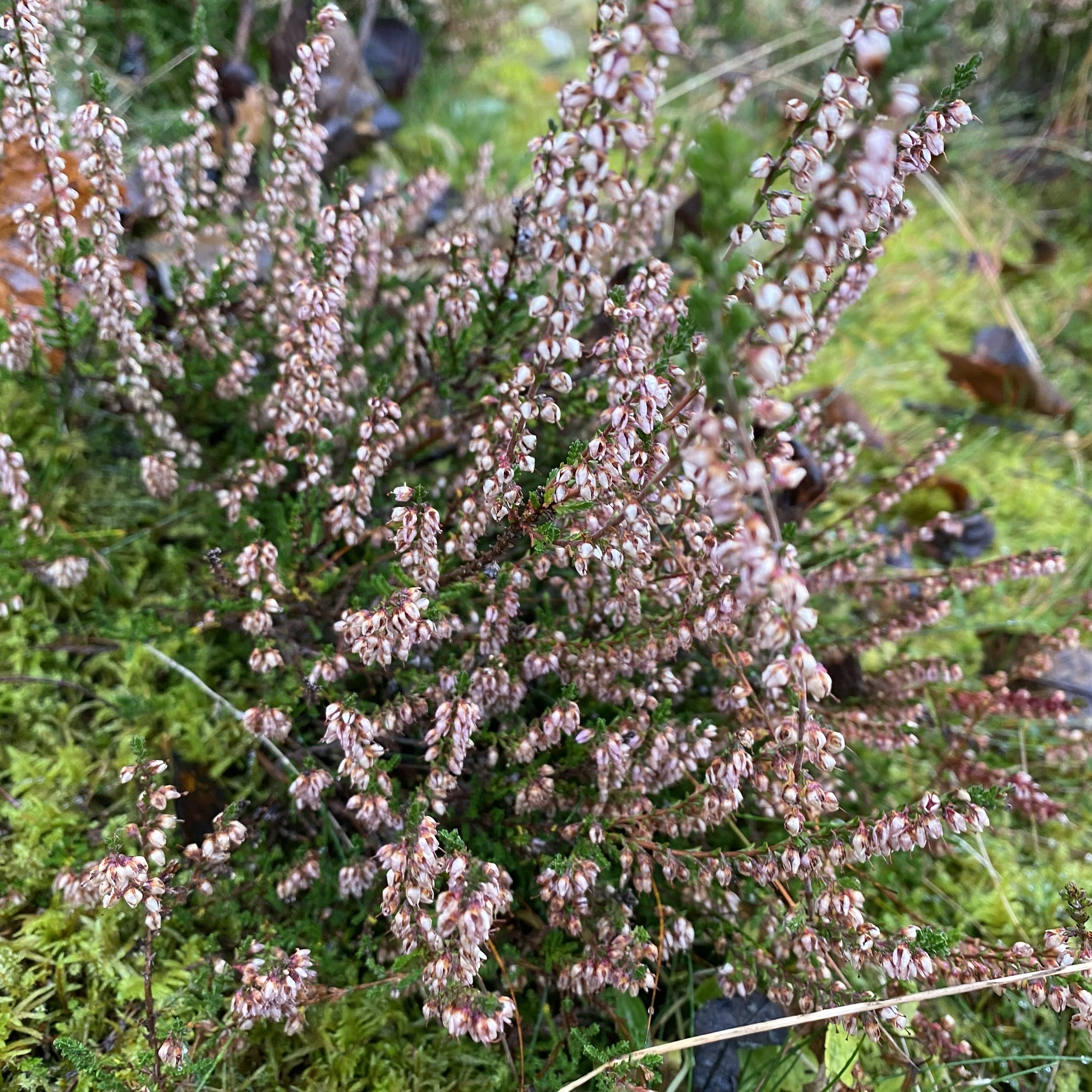

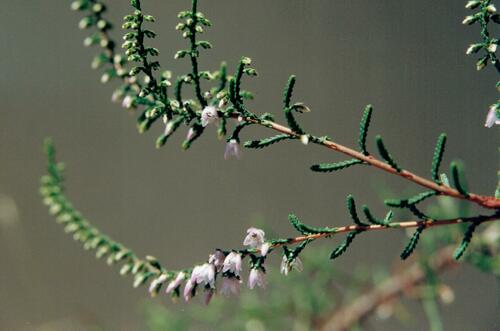
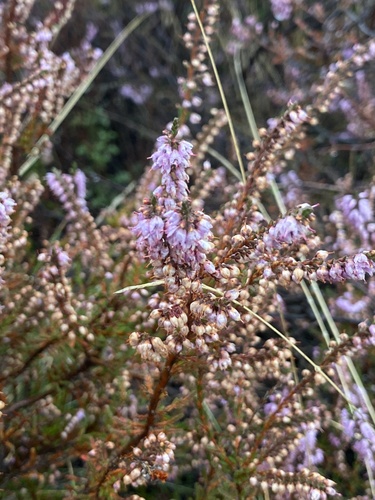
© photo
Dag Endresen · cc0
Darrel Watts · cc0
(c) Karsten, some rights reserved (CC BY-NC-ND), uploaded by Karsten · cc-by-nc-nd
(c) zebedeugalinha, some rights reserved (CC BY) · cc-by
(c) Thomas Dreux, some rights reserved (CC BY) · cc-by
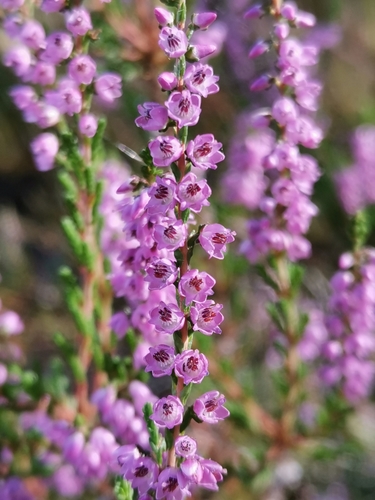
Global distribution
Native from Macaronesia and Europe to central Siberia, and northern Morocco; introduced in North America, Tasmania and New Zealand.
- Native1
- Introduced1
- France
- New Zealand
Hexagons: regions where the plant occurs. Green dots: native range.1
Identity
Common heather (Calluna vulgaris (L.) Hull, 1808) is the small woody plant coloring many heaths in late summer. Evergreen foliage and membership of Ericaceae link it with Erica. Its low, woody habit makes it a subshrub rather than an herbaceous perennial. Temperate regions form its principal setting. 1 5
Also called heather or ling, it needs a botanical label when several heathers share a bed. A familiar common name does not identify a purchased plant. Its tightly packed foliage provides characters that can be examined outside flowering time. 7 8 5
Recognition
Scale leaves in four rows are the best field character. Opposite and overlapping, they surround the small shoots and measure 1–3 mm (0.04–0.12 in). They differ from the more distinct needles of many Erica. Plants commonly stand a few tens of centimeters tall, with developed specimens approaching 90 cm (35 in). 5 6 10
Racemes bear numerous pink to purple, sometimes white flowers. Large colored sepals, about 4 mm (0.16 in) long, project beyond the small corolla, with green bracts at the base. This colored calyx is the most conspicuous floral part. A hand lens helps separate the structures. 6
Useful taxonomy
Calluna vulgaris (L.) Hull is accepted. The older Erica vulgaris L., published in 1753, is its basionym. Hull published the Calluna combination in 1808 in the second edition of his British flora. Parentheses around Linnaeus's abbreviation record this generic transfer, rather than two species. 21
Latin vulgaris means common. Calluna is associated with a Greek verb concerning cleaning, recalling use of the branches in brooms. This explains a name without providing an identification character. Older catalogs may also use the synonym Calluna erica DC.. 41
Habitat and range
Acidic, often nutrient-poor soils support heather in moderately dry to wet heaths, bogs and pine or oak woodland. This habitat diversity prevents treating it simply as a permanently saturated bog plant; avoidance of lime is the more consistent feature. In France it occupies heaths, woods and dry hillsides on siliceous ground across almost the whole country. 6 8
The native range includes Europe, Macaronesia and northern Morocco, extending to central Siberia. France, including Corsica, belongs to that range; the species is not threatened in mainland France. Introductions include parts of North America, Tasmania and both main New Zealand islands. A global presence map therefore does not establish native status. 1 7
Life cycle and reproduction
Flowering is chiefly August–October in the northern temperate conditions described, beginning as early as July in France. Climate and cultivar affect timing. Small capsules follow, about 2 mm (0.08 in) across. Mature capsules and retained floral remains should not be mistaken for a fresh flush of flowers. 56 8
Garden propagation uses spring sowing, softwood cuttings, division and summer layering, following the local season. Choose the method for the intended result: vegetative propagation preserves a named cultivar. Flowers supply pollen and nectar, so pollinator plantings benefit from genuinely accessible flowers. 3
Uses and risks
Late flowers suit borders and acidic rock gardens. Drainage matters as much as acidity: moist, well-drained soil is preferable to a permanently full saucer, since wet ground encourages rot. Containers need drainage holes and acidic mix. Choose full sun; light shade is tolerated, but a heated interior is not its usual position. British guidance rates its cold hardiness H7. 3 9 4
Fertilizer requirements are low. Humid heat encourages stem rots, although the soil should not dry out. Light trimming of old flowering shoots keeps the habit compact. 4 3
Flowers and young shoots have flavored infusions and beers, but historical use does not supply a dosage. The cited garden-plant list classifies heather as major ingestion toxicity, without specifying a toxic principle or symptoms. Contact poison control if a child has chewed it. No data establish safety for cats, dogs or horses. 4 11
Varieties, look-alikes and related plants
Color alone cannot distinguish Calluna from Erica. Examine leaves and floral structures rather than relying on an autumn-heather label. Erica has tiny needle-like leaves; Calluna retains recognizable opposite, overlapping scales in four rows after flowering. 10 5 6
Cultivars differ in habit and foliage. 'Firefly' is selected for seasonal color changes; 'Kinlochruel' has white flowers. Both are horticultural selections of the same species. Check the exact cultivar before designing a border: a vigorous selection can become much taller than a small flowering pot suggests. 4
Main sources
The accepted name is Calluna vulgaris (L.) Hull, published in 1808. Native and unthreatened in France, it has cultivars of differing dimensions.
- Kew, Plants of the World Online : Calluna vulgaris
- International Plant Names Index : Calluna vulgaris
- Royal Horticultural Society : Calluna vulgaris
- NC State Extension : Calluna vulgaris
- InfoFlora: common heather
- German Federal Agency for Nature Conservation, FloraWeb : Calluna vulgaris
- INPN, TAXREF : Calluna vulgaris
- Tela Botanica, eFlore : Calluna vulgaris
- Royal Horticultural Society : growing common heather
- Royal Horticultural Society : growing Erica
- University of California: toxic garden plants
Frequently asked questions
How does common heather differ from Erica?
Calluna has tiny, opposite, overlapping scale leaves in four rows; Erica leaves are needle-like. Its colored calyx projects well beyond the corolla.
Can common heather grow in calcareous soil?
No. It needs acidic, well-drained soil. On limestone ground, use a pot with drainage holes and ericaceous potting mix.
When does common heather flower?
Mainly in late summer and fall, August–October in the northern temperate conditions described; French flowering can begin in July.
If you are unsure about a plant’s toxicity, ask a botanist or veterinarian for advice.