
Shepherd's-purse (Capsella bursa-pastoris, )
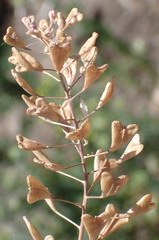
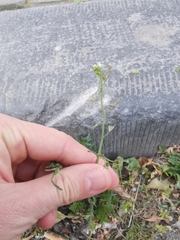
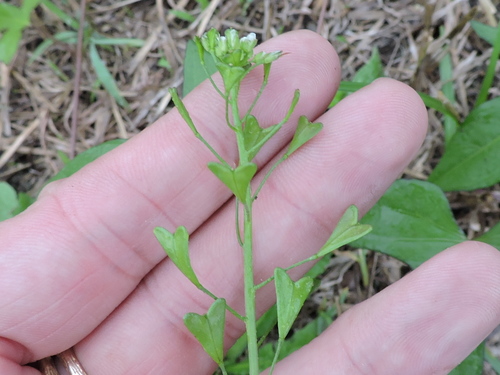
Shepherd's-purse (Capsella bursa-pastoris) is a small plant in the Brassicaceae, native to temperate Eurasia and North Africa. Flat, triangular or inverted-heart-shaped fruits beneath tiny white flowers provide its clearest identification feature.
Read moreShepherd's-purse
Thlaspi bursa-pastoris
Allow a few hours of direct sun per day, preferably morning or evening.
Sun to partial shade.
© photo
(c) José MarÃa Escolano, some rights reserved (CC BY-NC-SA) · cc-by-nc-sa
Mike Palmer · cc0
iNaturalist User · cc-by-sa
(c) Sam Kieschnick, some rights reserved (CC BY) · cc-by
(c) zebedeugalinha, some rights reserved (CC BY) · cc-by
Global distribution
Native to temperate Eurasia and North Africa; widely introduced on other continents.
- Native1
- Introduced2
- France
- North America
- Australia
Hexagons: regions where the plant occurs. Green dots: native range.1
Identity
Shepherd's-purse (Capsella bursa-pastoris (L.) Medik., 1792) is recognized chiefly by small, flattened triangular or inverted-heart-shaped fruits. Their resemblance to a shepherd's bag explains its name. It belongs to Brassicaceae, like cabbages and mustards, but its tiny flowers attract less attention than the fruits arranged along the stems. 3 6
Usually annual, sometimes biennial depending on germination and conditions, this short-lived herb can form a fall rosette that survives winter before flowering. Plants recurring in one place over several years need not be the same individual. 1 6
Recognition
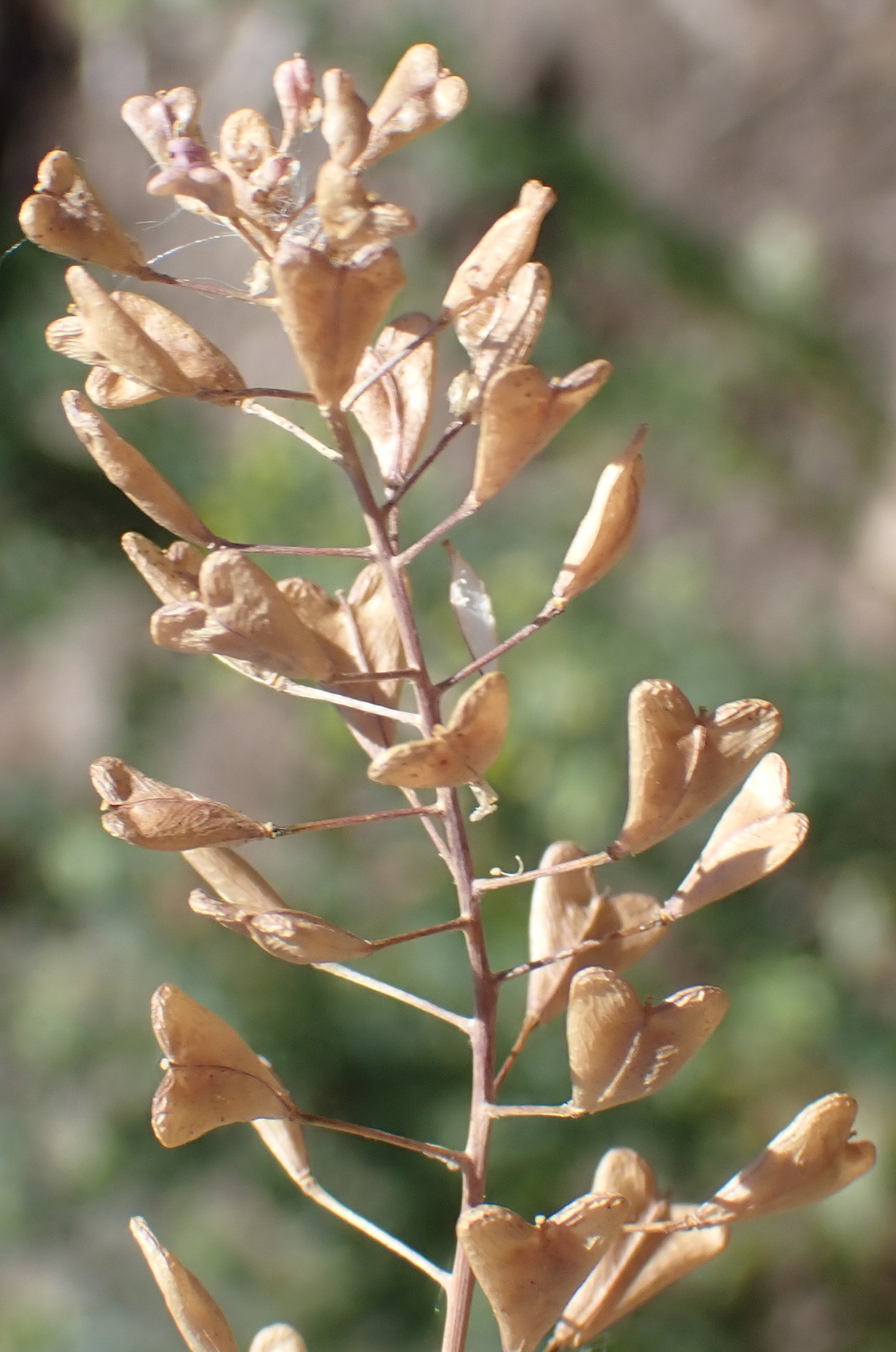
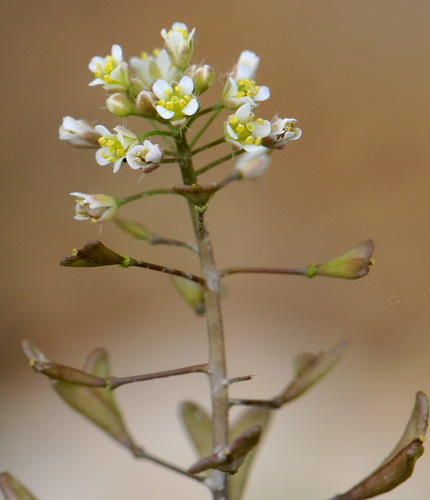
Flattened triangular silicles with a slight notch at the top are the first feature to seek. A silicle is a short dry fruit containing several seeds. Fruits stand on fine stalks below the flowering tip, so a stem with flowers and ripening fruit offers several useful stages for identification. 4 5
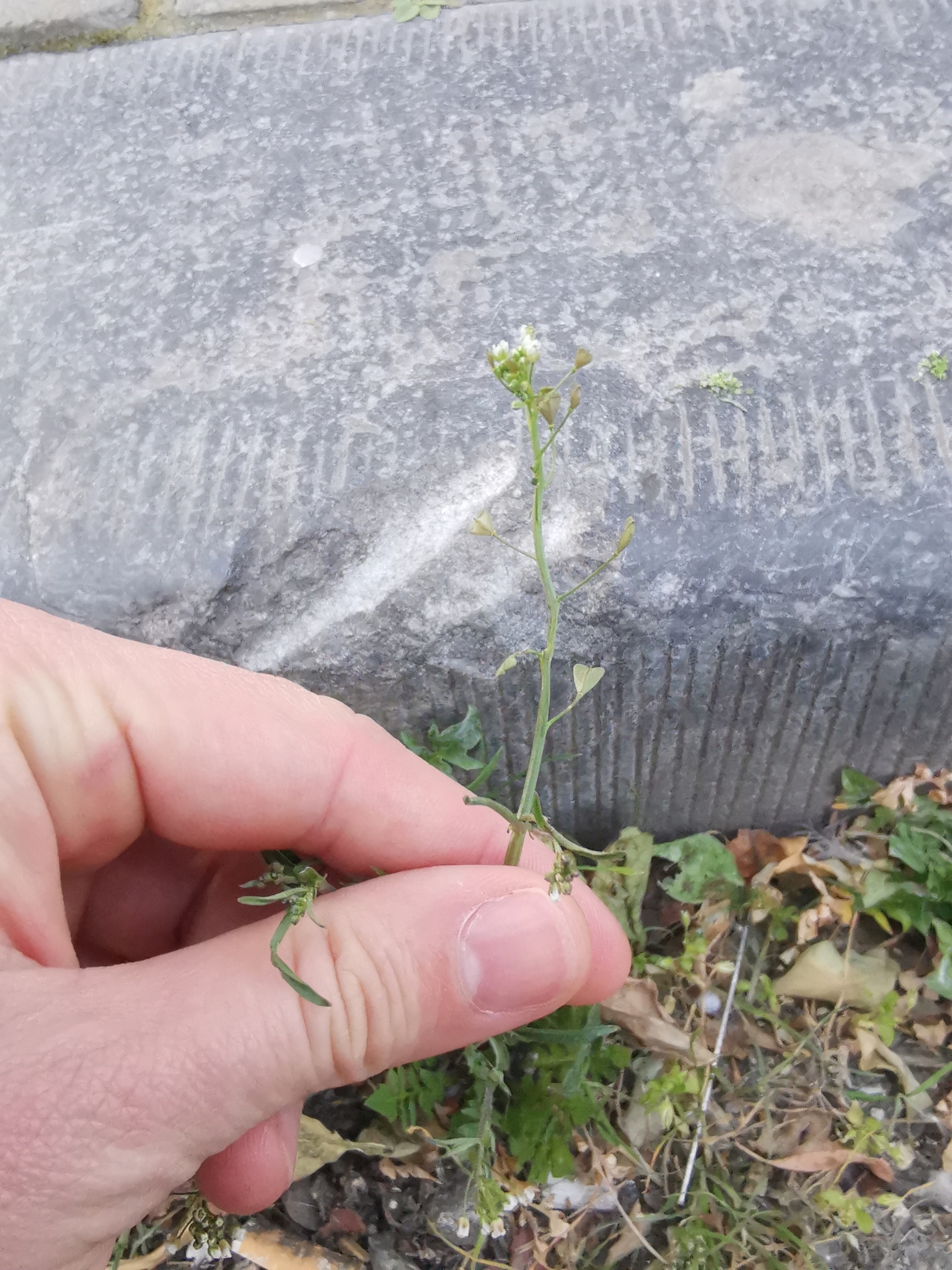
Four white petals, 2–3 mm (0.08–0.12 in) long, form a tiny cross. Plants usually measure 5–40 cm (2–16 in) tall, occasionally 70 cm (28 in), while stressed specimens remain very small. Basal leaves form a variably divided rosette; smaller stem leaves clasp the flowering stem at their bases. Photographing a divided leaf alone omits the much more characteristic fruits. 5 4 6
Useful taxonomy
The species was first described as Thlaspi bursa-pastoris L.. Its transfer to Capsella dates to 1792. Parentheses around L. in the authority record this new combination: the species was already described before entering its current genus. 2 1
French variants include bourse à pasteur commune, capselle bourse-à-pasteur and boursette. The full scientific name avoids uncertainty between vernacular forms. The hyphen in bursa-pastoris belongs to the epithet; it does not separate two species or a species from its cultivar. 3 8 7
Habitat and range
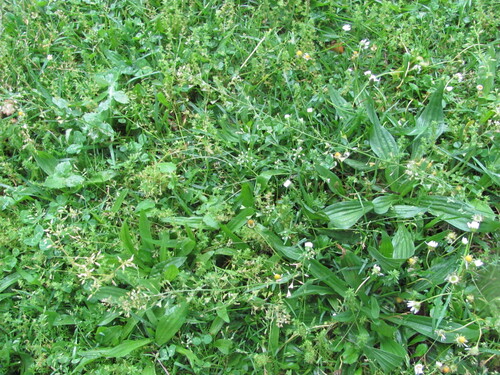
Disturbed soil and open spaces provide its habitat: crops, gardens, pathsides and waste ground. A small strip between cultivated plants often suffices. Its presence chiefly indicates room and conditions for germination rather than a garden disease. 5 4
The native range covers temperate Eurasia and North Africa, including France. It is now widespread elsewhere, notably in the Americas and Australia. Long association with human activity makes local history harder to interpret than a presence map. Common occurrence does not establish native status in every country; Great Britain, for example, treats it as introduced. The French national Red List classifies it as Least Concern. 1 8
Life cycle and reproduction
Flowering can occur through much of the year in favorable weather. This does not mean one individual flowers continuously for twelve months. Successive generations and staggered germination can produce both winter flowers after mild weather and strong spring populations. 5
Seeds germinate in local spring or fall. The plant is self-fertile and reseeds, so lack of a nearby individual need not prevent seed production. Young flowers remain at the top of the raceme as older fruit ripens below. This progression explains the long fruiting stem compared with its initially small flower cluster. 6 4
Uses and risks
Young leaves have documented food uses, raw or cooked. This presupposes certain identification and collection from a suitable site. A rosette alone can resemble other plants; flowers or fruits permit more reliable checking. Avoid polluted roadsides and recently treated plots. 6
No species-specific toxicity data are available for people or domestic animals, and food use does not establish safety for every audience. Culinary use cannot justify a medicinal treatment. Traditional uses, for example for nosebleeds, provide neither a validated medical indication nor an improvised dose. Identifying a garden plant does not generate therapeutic advice. 6 1
To limit it in a bed, remove plants before fruits ripen to reduce fresh seed inputs. No special fertilizer program is needed. Management concerns soil occupation and the plants intended to remain: bare ground after weeding can host another generation. 6
Varieties, look-alikes and related plants
Leaf shape varies considerably, from deeply divided to almost entire. This alone does not define cultivars. Identification based only on the depth of divisions can reject real specimens or include other species' rosettes. Add fruits to the examination. 4
Red shepherd's-purse (Capsella rubella) is the closest relative, treated as a distinct species or subspecies according to the reference. Red stem color alone cannot establish that identity: shepherd's-purse stems themselves range from light green to reddish purple. Other Brassicaceae also have flattened fruits, but not the same triangular outline. Examining a whole plant is more reliable than naming an isolated rosette. 8 7 6 4
Main sources
Fruits identify shepherd's-purse more reliably than leaf shape alone. The inverted-heart-shaped or triangular silicles remain recognizable while rosette leaves vary between individuals, from entire to toothed or deeply divided. 5 4
- Plants of the World Online, Capsella bursa-pastoris
- International Plant Names Index, Capsella bursa-pastoris
- EPPO Global Database, CAPBP
- InfoFlora, shepherd's-purse
- FloraWeb, Capsella bursa-pastoris
- North Carolina Extension, Shepherd’s purse
- Tela Botanica, shepherd's-purse
- INPN, TAXREF : Capsella bursa-pastoris
Frequently asked questions
How can I identify shepherd's-purse?
Look for flattened triangular or inverted-heart-shaped fruits on fine stalks beneath small, four-petaled white flowers.
Can shepherd's-purse flower in winter?
Yes, flowering can continue during mild winter weather; not every site flowers all year.
Why does it return after weeding?
It reproduces by seed, with germination possible in local spring and fall. Disturbing the soil can create new openings.
If you are unsure about a plant’s toxicity, ask a botanist or veterinarian for advice.