
Cuckooflower (Cardamine pratensis, )
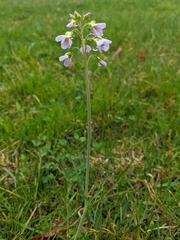
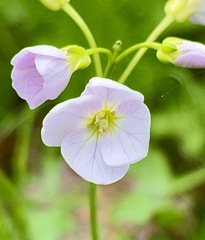
Cuckooflower is a perennial of damp meadows. Its four-petaled lilac flowers appear in spring above divided leaves that differ at the base and along the stem.
Read moreCuckooflower and Lady’s smock
Ghinia pratensis and Crucifera pratensis
Allow a few hours of direct sun per day, preferably morning or evening.
Light to deeper shade in cultivation, with moist soil.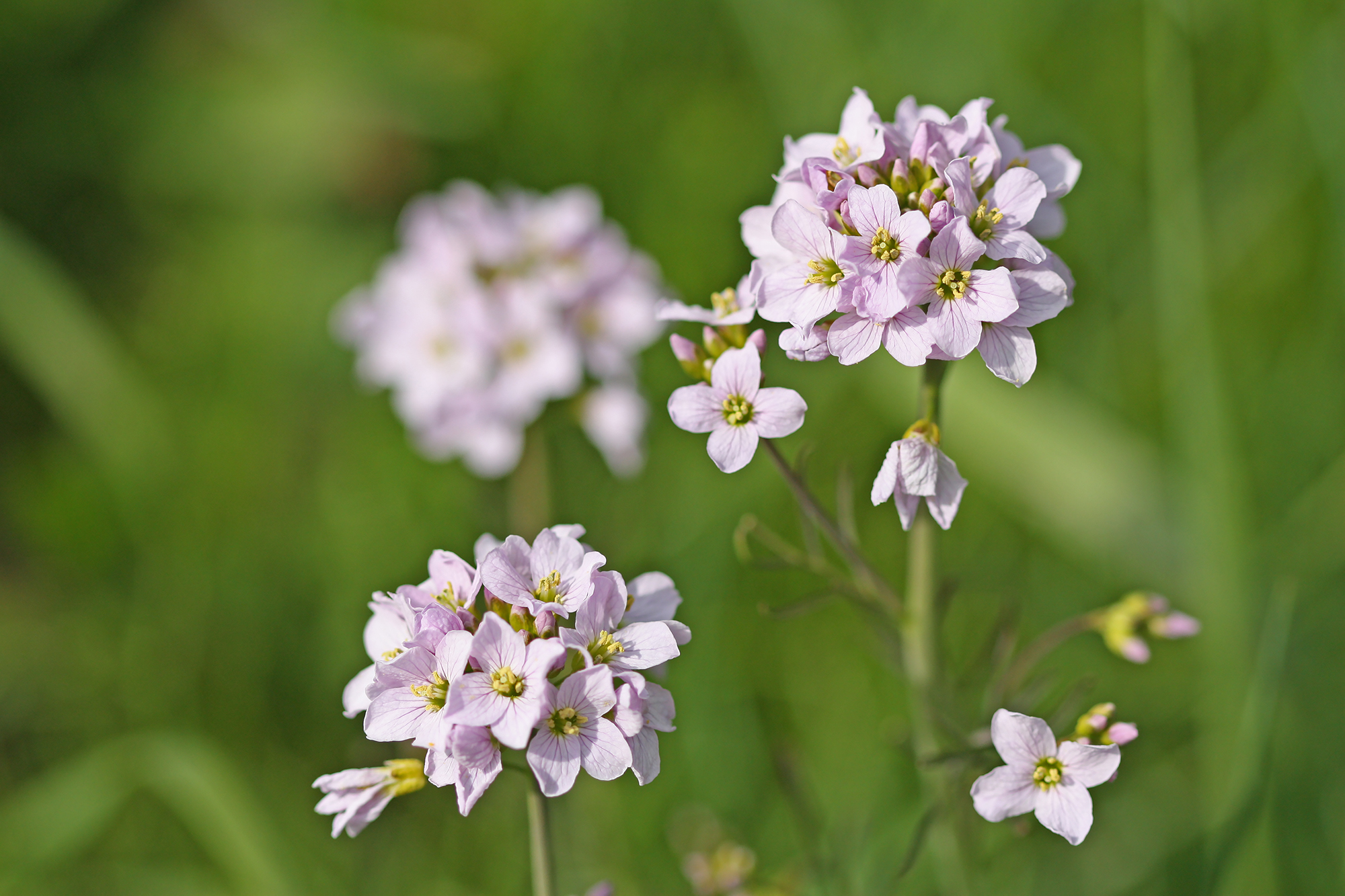
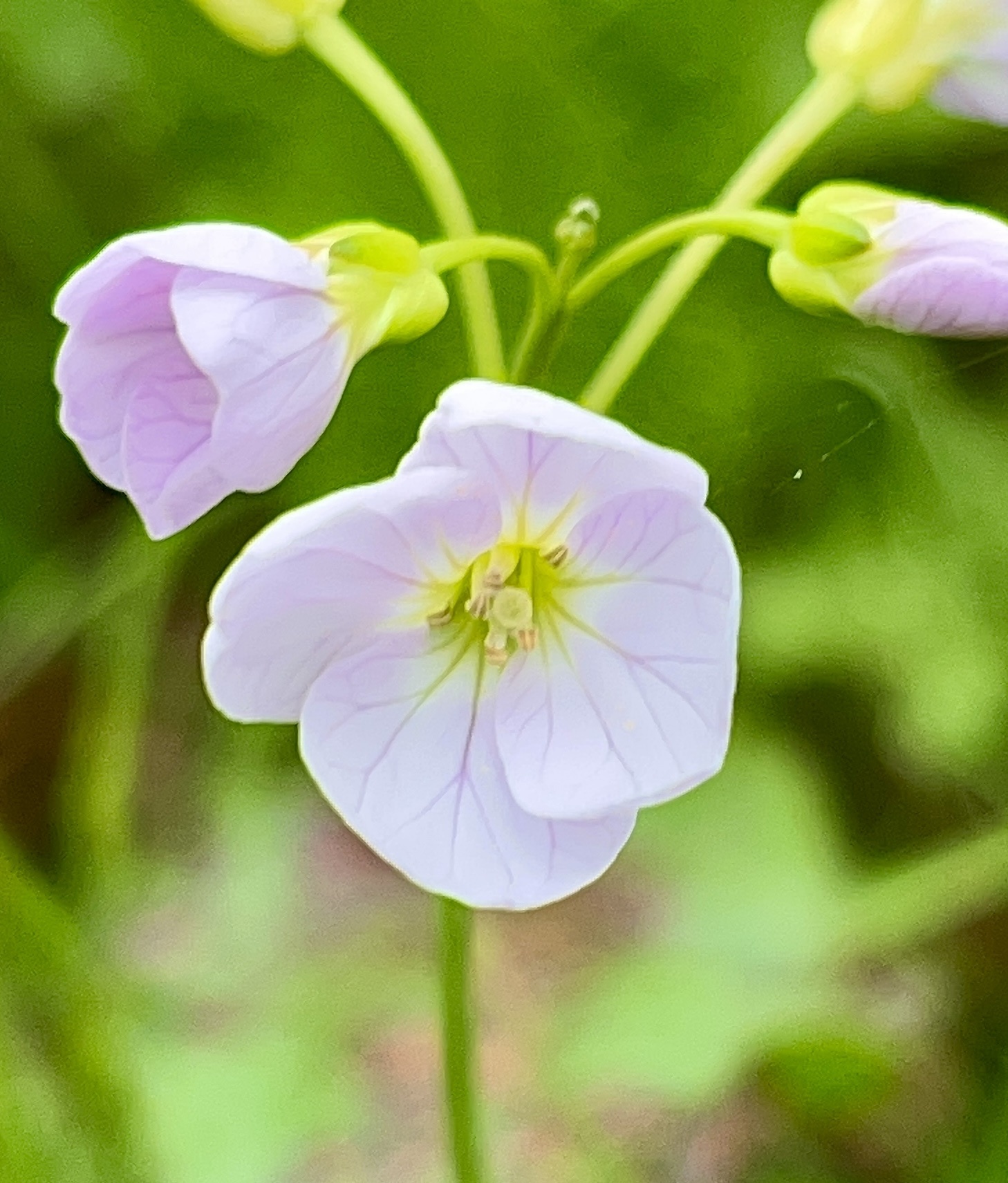
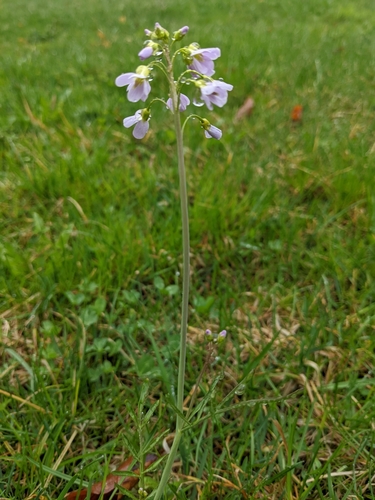
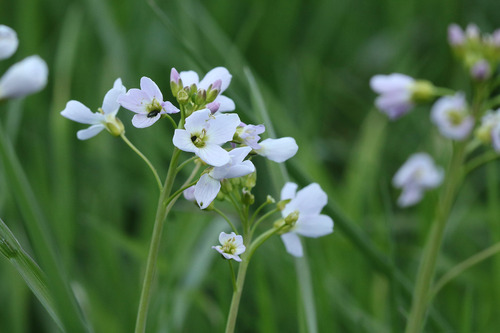
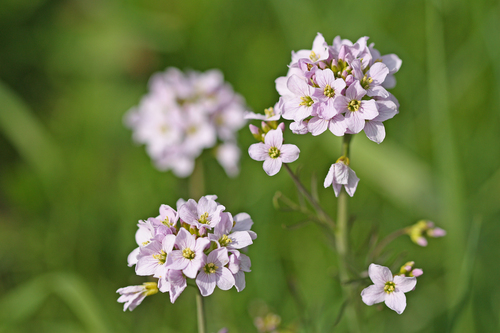
© photo
(c) Karen Andrea Boehme, some rights reserved (CC BY-NC), uploaded by Karen Andrea Boehme · cc-by-nc
Tobias Schönberg · cc0
Kieran Roy Powell · cc0
no rights reserved · cc0
(c) Holger Braun, some rights reserved (CC BY) · cc-by
Global distribution
Native from Greenland to the north-central and northeastern United States, the Azores and temperate Eurasia, with a presence in Ethiopia.
- Native2
- Introduced1
- France
- Switzerland
- New Zealand
Hexagons: regions where the plant occurs. Green dots: native range.1
Identity
Cuckooflower (Cardamine pratensis L., 1753) is a wet-ground perennial recognized by lilac flowers with four petals. Its French name cressonnette recalls its use as a condiment. It belongs to Brassicaceae, also called Cruciferae after the cross-shaped arrangement of its petals. A flowering stem rises above a rosette of divided leaves. 2 7 4
Cuckooflower is most conspicuous in spring, when its flowers rise above still-short grass. Its rootstock persists beyond the brief flowering season. An absence of flowers in a summer survey therefore does not establish absence from a meadow. Photographs of the rosette and surrounding vegetation help compare a site across seasons. 2 4
Recognition
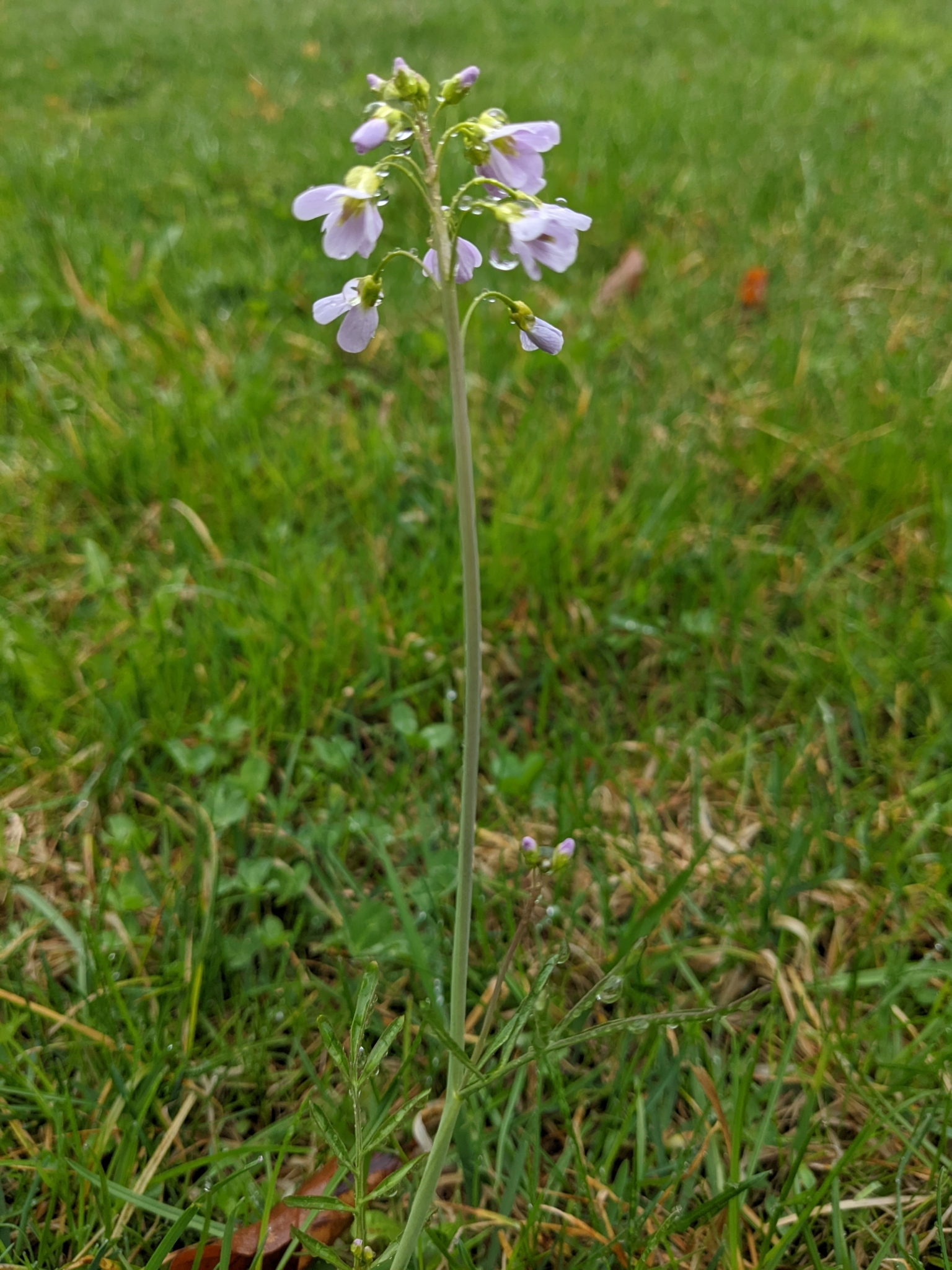
Basal and stem leaves differ on the same plant. Lower leaves have oval to rounded leaflets; upper leaves have narrower, elongated divisions. This is normal variation. A photograph showing only an upper leaf can therefore give an incomplete picture of its characters. 2
The simple stem bears a short, loose raceme of lilac, sometimes pink or white flowers, with petals 8–12 mm (0.3–0.5 in) long and yellow anthers. After flowering, the fruits elongate into narrow siliques, angled upward and about 25–40 mm (1–1.6 in) long. Their stalks remain shorter than the fruits. Fruit shape and position thus remain useful identification features after flowering. 2 6 3 4
Useful taxonomy
Linnaeus published the accepted name in Species Plantarum, page 656, in 1753. “L.” identifies the botanical author. Current classification places it in Cardamine, Brassicaceae and Brassicales. The scientific name is accepted in both France and Switzerland. 1 3 7
Ghinia pratensis (L.) Bubani and Crucifera pratensis (L.) E.H.L.Krause occur in its synonymy, so older searches may encounter another genus. Floras also differ in how broadly they define the species, and several subspecies are recognized. Compare characters and taxonomic scope rather than automatically treating every neighboring name as a duplicate. 1 6
Habitat and distribution
Its native range extends well beyond Europe: temperate Eurasia, the Azores, and North America from Greenland to the north-central and northeastern United States, with a presence in Ethiopia. New Zealand instead represents an introduction. A continental record alone does not establish local native status. 1
Cuckooflower occupies moist to damp meadows, stream margins and some open woodland. A damp shaded site can suit it as well as an open meadow; its meadow associations do not exclude woodland records. Recording soil moisture and vegetation openness is more informative than simply labeling a site a garden or roadside. 6 2
In France it grows across almost the entire country but is scarce in the south. It is Least Concern on the national Red List and Vulnerable on the Provence-Alpes-Côte d’Azur regional Red List. 2 7
Cycle and reproduction
April-to-June flowering in France makes it a spring plant. Seeds ripen afterward, chiefly from May to July. Bees, flies and butterflies or moths visit its flowers. Pale flowers can therefore contribute to the resources of a flowering meadow. 2 5
Propagation is by seed or division. Division retains an already identified plant; leaving fruits to ripen also supports seed reproduction. Mowing during flowering removes stems before seed maturity. To retain a lawn population, time the first cut to the observed cycle rather than one fixed date every year. 4 5
Uses and precautions
Peppery leaves and young shoots are eaten raw or cooked. Their watercress-like flavor suits small salad quantities. The French name cressonnette does not denote a standardized product: identify the plant before harvesting and know its source. A streamside location alone does not guarantee clean leaves. 5 2
No toxicological data establish safety for people, cats, dogs or horses: no toxic effect is reported, which does not prove harmlessness. Condiment use does not justify feeding it to animals. Historical medicinal uses likewise establish neither a dose nor a validated treatment. 5
Cultivation and lookalikes
For cultivation, choose humus-rich soil that remains moist to damp, in partial or deeper shade. The growing medium should not remain dry for long between waterings. Loamy or clay soils can suit it; maintaining appropriate moisture matters more than finding the light, dry soil of a rock-garden plant. 4
Four-petaled flowers occur in many Brassicaceae. Combine the rounded basal leaflets, narrower upper leaves and relatively large lilac or white flowers. Long, narrow fruits provide confirmation after flowering. An isolated white flower or peppery taste cannot distinguish different bittercresses and related plants. 6 2
Main sources
The accepted name Cardamine pratensis L. was published in Species Plantarum in 1753; Ghinia pratensis and Crucifera pratensis are synonyms. 1
Frequently asked questions
Where does cuckooflower grow?
In damp meadows, along streams and in moist, open woodland.
When does cuckooflower bloom?
From April to June in France, with variation according to local conditions.
Can cuckooflower leaves be eaten?
The leaves are traditionally eaten in small quantities in salads. Harvesting requires certain identification and a clean source; no data establish safety for animals.
If you are unsure about a plant’s toxicity, ask a botanist or veterinarian for advice.