
Bluebeard (Caryopteris, )
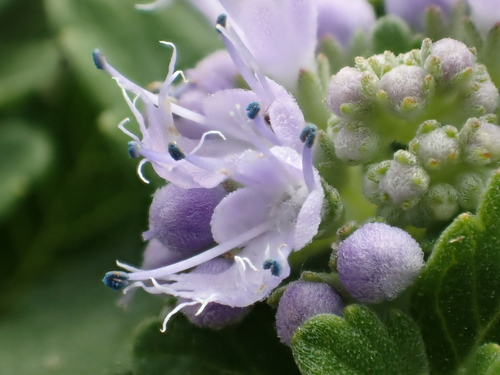
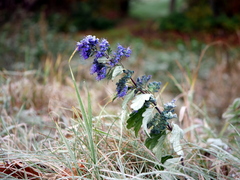

Bluebeard (Caryopteris) is a genus of small shrubs in the Lamiaceae family, native to East Asia. Its aromatic foliage and late blue-purple flowers are familiar in sunny borders, where the cultivated plants are most often the garden hybrid Caryopteris × clandonensis.
Read moreBluebeard


© photo
葉子 · cc0
Wolfgang Jauch · cc-by
Wikimedia Commons · CC BY-SA or Public Domain
© copyright of the Board of Trustees of the Royal Botanic Gardens, Kew.
Identity
Bluebeard (Caryopteris Bunge) belongs to the Lamiaceae family. POWO, WFO and IPNI all treat Caryopteris as a genus rather than a species. The name therefore covers a broader group than the familiar garden hybrid, and a plant labeled simply “bluebeard” has not necessarily been identified to species. 1 2 3
Gardeners most often encounter bluebeard as a small shrub with blue-purple flowers in late summer. The Floralens blog specifically features Caryopteris × clandonensis. That hybrid is a useful reference for garden plants, while Caryopteris remains the correct name for the genus as a whole. 8 7
East Asia is the native home of this group, with species recorded in China, Japan, Korea, Mongolia and neighboring areas, depending on the taxonomic treatment. Its origins help explain the preference for bright summers and freely draining soil. Cold, lingering moisture can be more troublesome than a reasonable period of dry weather. 4 1
Recognition
A typical garden bluebeard forms a small deciduous shrub, often 60 cm to 1.2 m (2–4 ft) tall. Its opposite, simple leaves may be gray-green or green, depending on the cultivar. Crushed leaves often release an aromatic scent, a recognizable feature consistent with membership in the mint family. 4 6
Late summer brings the main display, usually continuing into early autumn where the season allows. Blue, blue-purple or sometimes white flowers gather in conspicuous clusters as many summer perennials begin to fade. Their cool color earns bluebeard a place in the Floralens selection of purple flowers, especially among plants for warm, sunny borders. 8 5
Although its framework is woody, bluebeard often behaves like a shrubby perennial. Some stems may suffer winter damage, followed by fresh growth from the base or lower branches. Pruning belongs toward the end of winter rather than as a severe cut immediately after flowering. 6 7
Useful taxonomy
Botanical identification starts by separating the genus from its garden hybrid. Caryopteris has the IPNI identifier 41221-1 and a distinct WFO record. Caryopteris × clandonensis is a narrower horticultural entity within that broader group; the two names should not be treated as interchangeable. 3 2
Older accounts placed several species in Caryopteris that are now assigned to other Lamiaceae genera. These changes help explain why garden references often focus on cultivated bluebeards instead of presenting a complete botanical checklist. For everyday identification, the useful distinction is Caryopteris the genus and C. × clandonensis the hybrid. 4 1
Nursery bluebeards are most commonly Caryopteris × clandonensis. This hybrid supplies sunny borders, dry beds and late-summer planting schemes with blue-flowered or golden-leaved cultivars. Knowing the hybrid name makes garden advice more precise while keeping the wider genus in view. 7 5
Growing in the garden
Full sun gives bluebeard its strongest garden performance. Plants may survive in light shade, but flowering becomes less dense and the outline less compact. In cool or humid conditions, morning sun and air moving around the plant matter almost as much as the amount of water it receives. 6 5
Good drainage is the key soil requirement. Ordinary, lean or stony ground suits bluebeard better than rich but heavy soil. Established roots tolerate moderate drought, whereas soil that stays waterlogged through winter can lead to dieback and rot. A sunny site alone cannot compensate for persistently wet roots. 6 7
Wait until late winter or early spring to prune, when cold damage is visible. Remove dead stems and retain a low framework that can produce fresh flowering shoots. Pruning too late removes some of the growth that would have carried that season’s flowers, reducing the late display. 5 6
Uses and planting combinations
A warm, sunny border is a natural setting for bluebeard. Lavender, Russian sage, gaura, fine grasses and sedums work alongside its aromatic foliage and late flowers. Against the yellow and orange often prominent in late summer, blue-purple blooms provide a cooler transition into autumn. 8 5
Container-grown plants need a wide pot with drainage holes and a mineral-rich medium rather than compost that stays wet all winter. Water regularly during the first growing season, then less frequently after establishment. Constantly saturated compost undermines the drought tolerance that bluebeard shows in suitable garden soil. 6 7
Bees, bumblebees and butterflies visit the flowers, particularly when other floral resources are declining. This value to pollinators favors avoiding routine insecticide treatment for minor insect activity. Planting bluebeard among a succession of other flowering plants also provides more continuous forage than an isolated shrub. 4 5
Precautions and look-alikes
Available references do not document major toxicity comparable to lily of the valley, autumn crocus or chrysanthemums for pets. Bluebeard therefore carries a low-risk assessment with ordinary precautions. Avoid improvised food uses, discourage pets from chewing it, and wash after pruning if aromatic stems irritate your skin. 6 4
The most consequential mix-up concerns plant names. A label or article may use “bluebeard” for a specific cultivar of Caryopteris × clandonensis while a broader reference uses the genus. Reading the full name avoids mistaking a garden hybrid for a botanical species and leaves room for other species and cultivars. 8 1
One distinction makes plant labels easier to read: Caryopteris names the genus, while Caryopteris × clandonensis is the blue-flowered hybrid most familiar in gardens. For that garden plant, a warm exposure, freely draining soil and late-winter pruning remain useful practical guideposts. 2 7
A genus-level reference also remains useful when a particular species or cultivar is identified later. The narrower name adds detail without changing what the genus name means. 1
Main sources
- Plants of the World Online / Kew, Caryopteris
- World Flora Online, Caryopteris
- International Plant Names Index, Caryopteris
- Wikipedia EN, Caryopteris
- Royal Horticultural Society, Caryopteris search results
- NC State Extension, Caryopteris × clandonensis
- Wikipedia EN, Caryopteris × clandonensis
- Floralens, selection of purple flowers
If you are unsure about a plant’s toxicity, ask a botanist or veterinarian for advice.