
Grape ivy (Cissus alata, )
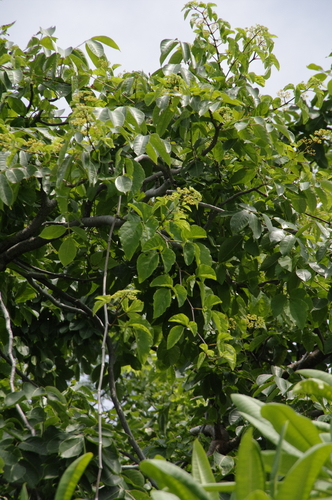

Grape ivy (Cissus alata) climbs with forked tendrils opposite its leaves. This evergreen American vine has leaves divided into three toothed leaflets and is still widely known by the synonym Cissus rhombifolia.
Read moreGrape ivy and Oak leaf ivy
Cissus rhombifolia, Cissus pubescens, Vitis rhombifolia and Vitis alata
Give plenty of ambient light without direct sun on the leaves.
Bright indirect light; tolerates lower light levels.



© photo
(c) Eric Knight, some rights reserved (CC BY) · cc-by
Wikimedia Commons · CC BY-SA or Public Domain
Wikipedia · CC BY-SA
Taken Apr 28, 2017 by Nelson Zamora Villalobos (cc-by-nc)
Taken Jul 12, 2020 by Daniel Bäck (cc-by-sa)
Taken Jun 22, 2021 by javad54 (cc-by-sa)
Taken Mar 8, 2020 by sg pipe (cc-by-sa)
© copyright of the Board of Trustees of the Royal Botanic Gardens, Kew.


Global distribution
Native to the tropical Americas, from Mexico to Bolivia and Trinidad.
- Native9
- Mexico
- Guatemala
- Costa Rica
- Panama
- Colombia
- Venezuela
- Peru
- Bolivia
- Trinidad and Tobago
Hexagons: regions where the plant occurs. Green dots: native range.1
Identity
Grape ivy (Cissus alata Jacq., 1763) attaches itself with forked tendrils and bears leaves divided into three toothed leaflets. A perennial vine in the Vitaceae family, grape ivy is still commonly sold as Cissus rhombifolia. The older name refers to the same species, with the same care needs. 1 3
Grape ivy is also known as oak leaf ivy in English. The French names “vigne d'appartement” and “vigne-lierre” refer to its climbing habit. On a plant without a reliable label, the combination of leaflets and tendrils gives a more precise identification clue than a common name alone. 2 8 3
Identification
The terminal leaflet of grape ivy is larger than its two side leaflets, which are often asymmetrical. The upper surface is dark green, while the undersides and young shoots carry brownish to reddish hairs. Side veins end at teeth along the leaf margin. Hair on a young stem, by itself, is therefore no sign of disease. 8
A horticultural description gives leaflet dimensions of 5–9 cm (2–4 in) long and 4–8 cm (1.6–3.1 in) wide, with a mature plant reaching 3–5 m (10–16 ft) tall and 2–3 m (7–10 ft) wide. The figures describe potential growth in cultivation; a hanging plant and a vine trained on a trellis occupy space differently. 4
Useful taxonomy
The accepted name, Cissus alata Jacq., was published in 1763. Synonyms include Cissus rhombifolia Vahl, Cissus pubescens Kunth, and Vitis rhombifolia (Vahl) Baker. An older label bearing one of these names can refer to the same species. 1
The genus name comes from the Greek kissos, meaning “ivy,” while alata means “winged.” The names help explain horticultural terminology, but identification depends on plant structure. Look for a forked tendril opposite a compound leaf on a sufficiently developed stem. 3
Habitat and distribution
Grape ivy is native from Mexico to Bolivia and Trinidad. Its range includes Central America, Colombia, and Venezuela, extending into Peru and Ecuador. Cissus alata grows mainly in the wet tropical biome; growing the plant in a temperate home does not change its tropical origins. 1
In horticulture, grape ivy grows under cover, in greenhouses, or in hanging baskets. Keep the growing medium moist in summer and let it dry further between winter waterings. The species is very sensitive to stagnant moisture: a humid natural habitat does not justify leaving the root ball waterlogged inside a decorative outer pot. 2
Growth cycle and propagation
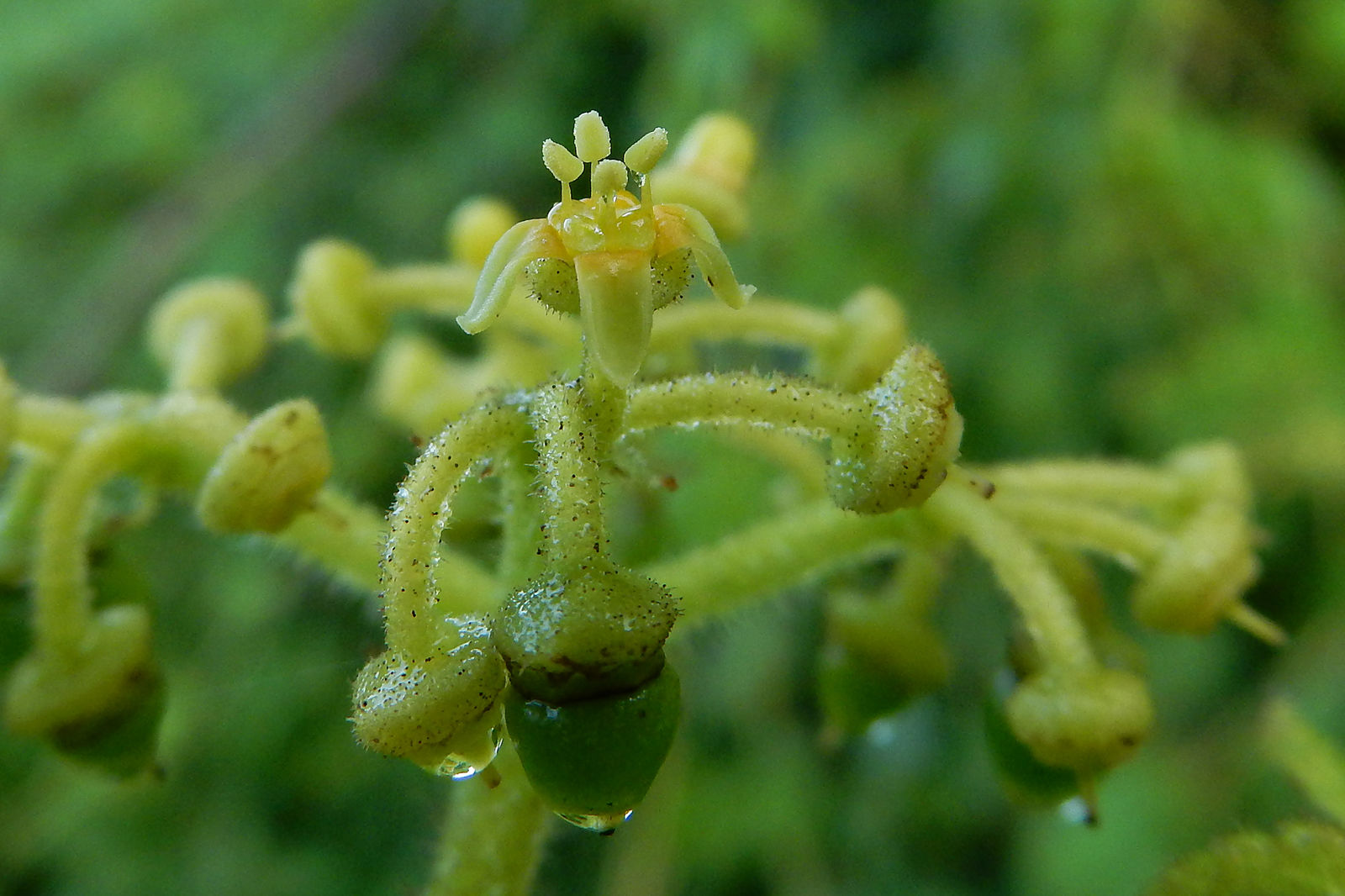
Grape ivy retains its foliage throughout the year. The small greenish flowers are inconspicuous and rarely seen in cultivation, and the berries turn purplish black. A plant grown indoors can provide ornamental foliage without flowering. 3
Horticultural propagation uses stem cuttings. Advice for the genus places cuttings in spring or early fall. Young plants are generally repotted in spring, while larger specimens need less frequent repotting. 3 5
The seasonal schedule follows indoor growing conditions in metropolitan France: stronger growth from spring through summer, then less watering in winter. Let the surface of the potting mix dry before watering again. A documented horticultural recommendation is to space four fertilizer applications across the growing season. The monthly indices reflect these seasonal trends and do not prescribe a fixed volume of water. 5 3
Uses and risks
Grape ivy can climb a trellis or trail from a hanging basket. Tendrils grip supports, while unsupported stems hang down. Either way of training the plant suits the same botanical species. 4
Under the name Cissus rhombifolia, a poison-control listing classifies grape ivy as non-toxic to cats, dogs, and horses. The classification does not establish that the plant is edible for people or harmless to other animals. 6 Contact with the plant's juice or sap can irritate the skin; gloves during pruning reduce exposure. 7 5
A conflicting veterinary assessment describes low toxicity in all parts of the plant, without distinguishing between animals. Discourage ingestion in view of this disagreement. Risks specific to children and other animal species remain insufficiently defined. A toxic mechanism described in another member of the Vitaceae family should not automatically be attributed to Cissus alata. 8
Cultivars and similar plants
The cultivar ‘Ellen Danica’ has deeply lobed leaflets and a bushy habit. ‘Mandianna’ has thicker stems and climbing or trailing growth. The descriptions apply to the named cultivars; deeply cut leaflets are not a feature of every grape ivy plant. 3
Grape ivy differs from Cissus antarctica, which has simple, toothed leaves. Rex begonia vine, Cissus discolor, has elongated heart-shaped leaves marked in gray and green, with purple undersides. To distinguish the plants, first check for simple or compound leaves, then examine the color underneath. A trailing habit alone is not enough for identification. 5
Main sources
Botanical references establish the accepted name and native range, while horticultural resources describe cultivation. The risk assessments concern different audiences and types of exposure.
- Kew, Plants of the World Online, Cissus alata Jacq.
- Plante & Cité, Floriscope, Cissus alata
- NC State Extension, Cissus alata
- Kwantlen Polytechnic University, Cissus alata
- A. Bihaki, Gerbeaud, Vigne d'appartement, Cissus rhombifolia
- ASPCA, Grape Ivy, Cissus rhombifolia
- University of California, Safe and Poisonous Garden Plants
- University of Zurich, CliniTox, Cissus alata
Frequently asked questions
Are Cissus alata and Cissus rhombifolia the same plant?
Yes. Cissus rhombifolia Vahl is a botanical synonym of Cissus alata Jacq., the accepted name. Older horticultural labels still use rhombifolia.
How can I identify grape ivy?
The leaves are divided into three toothed leaflets, with a forked tendril opposite a leaf. The terminal leaflet is larger than the two side leaflets.
Is grape ivy toxic to cats?
A poison-control listing classifies the plant as non-toxic to cats, dogs, and horses under the name Cissus rhombifolia. A different veterinary assessment reports low toxicity without distinguishing between animals; discourage deliberate ingestion.
Why is my grape ivy losing leaves?
Both overly wet soil and a shortage of water can cause leaf drop. Check the potting mix's moisture before changing your watering routine.
If you are unsure about a plant’s toxicity, ask a botanist or veterinarian for advice.