
Sage-leaved rock-rose (Cistus salviifolius, )
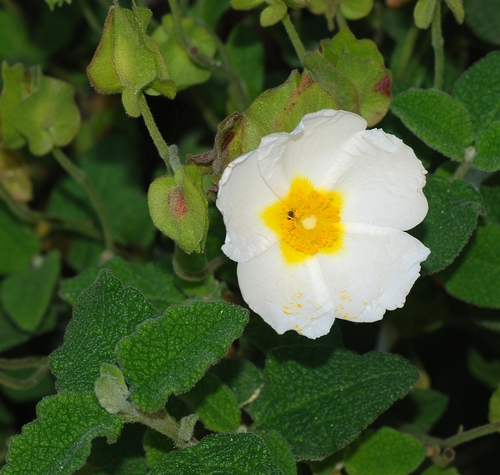

Sage-leaved rock-rose (Cistus salviifolius) is a small evergreen Mediterranean Cistaceae shrub with wrinkled oval leaves and white flowers. Nonsticky foliage and long flower stalks distinguish it from several other cistus species.
Read moreSage-leaved rock-rose, Salvia cistus and Gallipoli rose
Ledonia peduncularis and Ledonia rhodanensis
Allow a few hours of direct sun per day, preferably morning or evening.
Full sun in a sheltered position.




© photo
(c) Alvesgaspar, some rights reserved (CC BY-SA) · cc-by-sa
zebedeugalinha · cc-by
Mehdi Chetibi · cc-by
Taken Feb 1, 2014 by Tela Botanica − Nicolas SUBERBIELLE (cc-by-sa)
Taken May 11, 2014 by Tela Botanica − Michel GAU (cc-by-sa)
Taken Oct 4, 2014 by Tela Botanica − Ruddy BENEZET (cc-by-sa)
Taken May 13, 2017 by Lilian Car (cc-by-sa)
Taken Apr 16, 2015 by Tela Botanica − Liliane Roubaudi (cc-by-sa)
© copyright of the Board of Trustees of the Royal Botanic Gardens, Kew.




Global distribution
Native to south-central Europe and the Mediterranean east to northwestern Iran; introduced in California and Madeira.
Identity
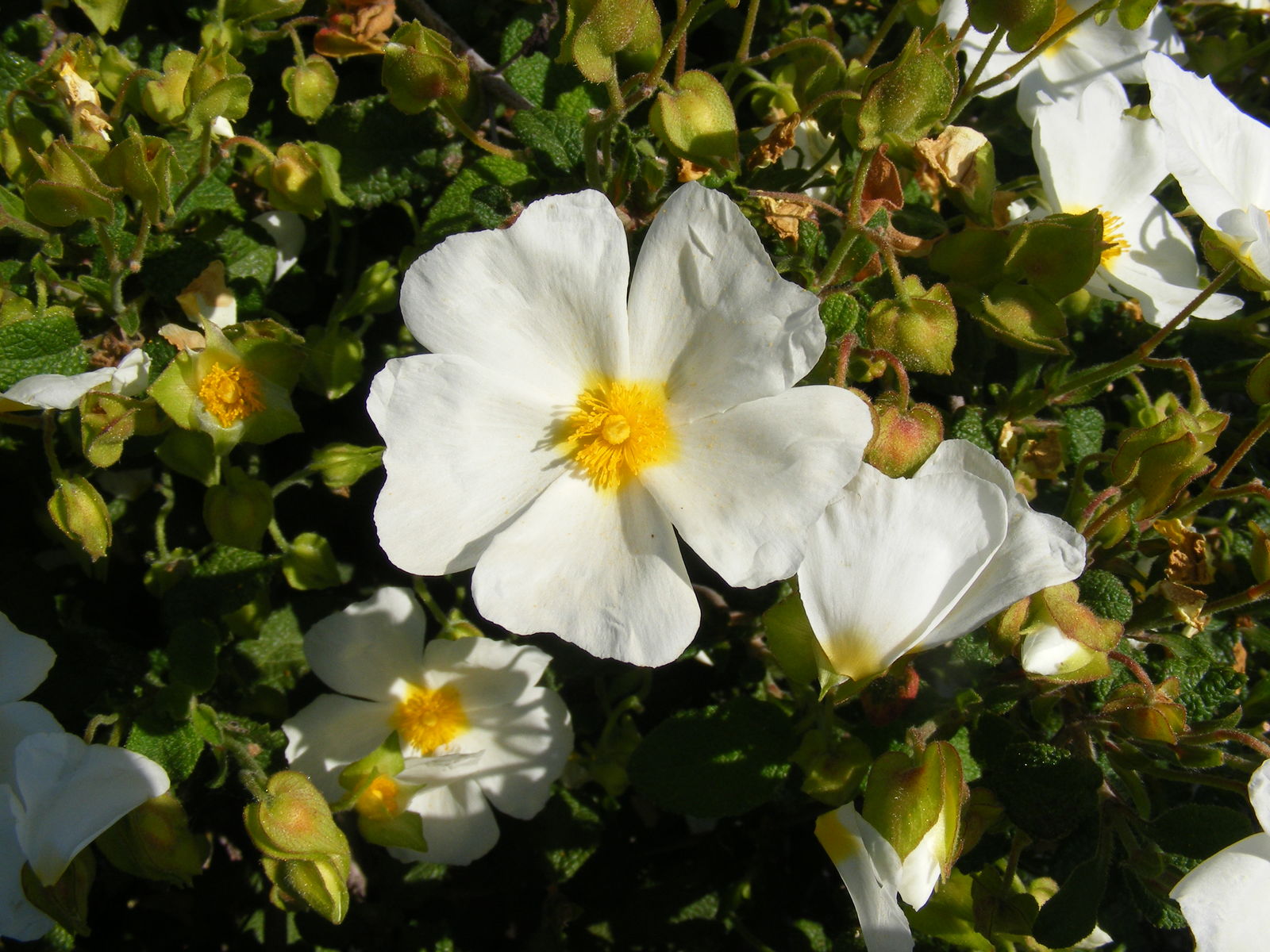
Sage-leaved rock-rose (Cistus salviifolius L., 1753) has small, wrinkled oval leaves and white flowers. Its foliage is nonsticky, unlike that of several resinous cistus species. This low, often spreading Cistaceae subshrub retains leaves in winter. The common name refers to the leaf surface without making it a true sage; the French name mondré also refers to this plant. 2 4 7
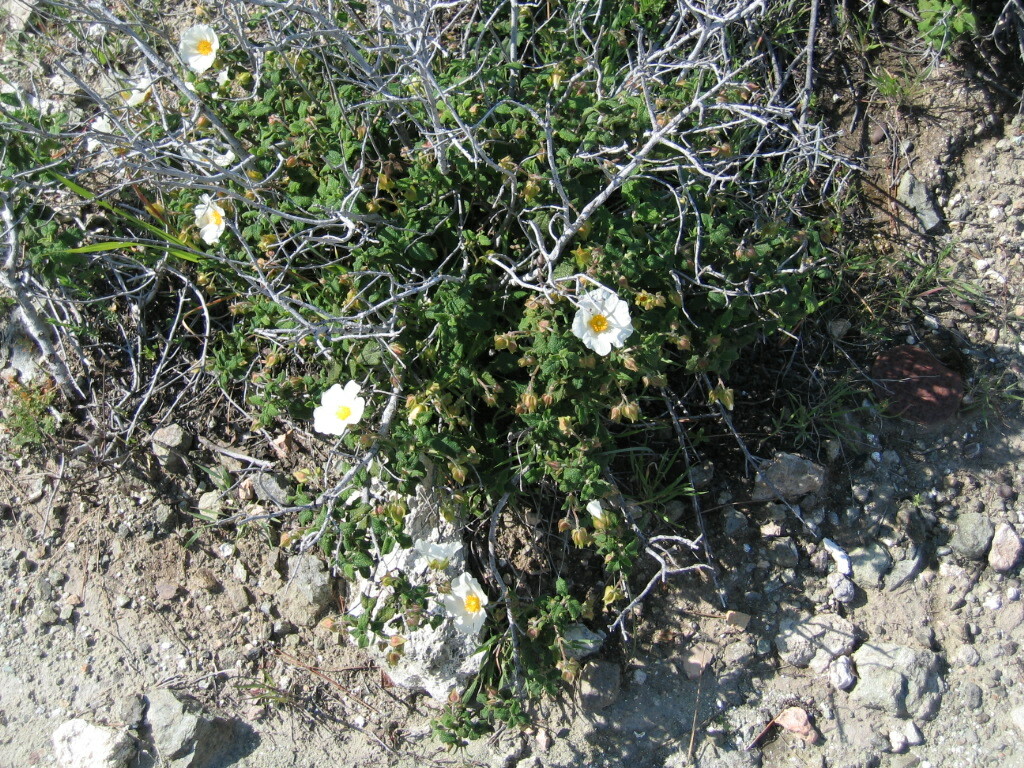
Wild plants reach 30–80 cm (12–31 in) tall. They can occupy the front of a dry border if room is also allowed for spreading. Garden dimensions are about 60 cm high by 80 cm wide (24 by 31 in). Width therefore matters as much as height when planting. 2 4 5
Recognition
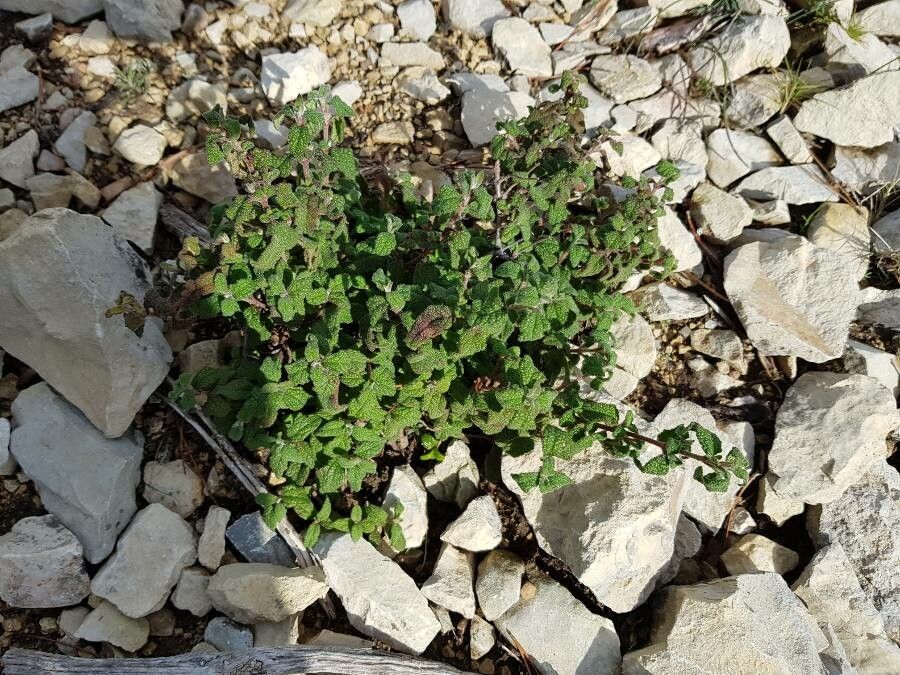
Opposite, wrinkled, short-stalked leaves provide the best initial clue. Blades are oval to oblong with a visible network of veins. Small star-shaped hairs cover young shoots and foliage, which does not feel sticky. Examine a leafy shoot rather than identifying from a white flower alone, a character shared by several species. 3 2
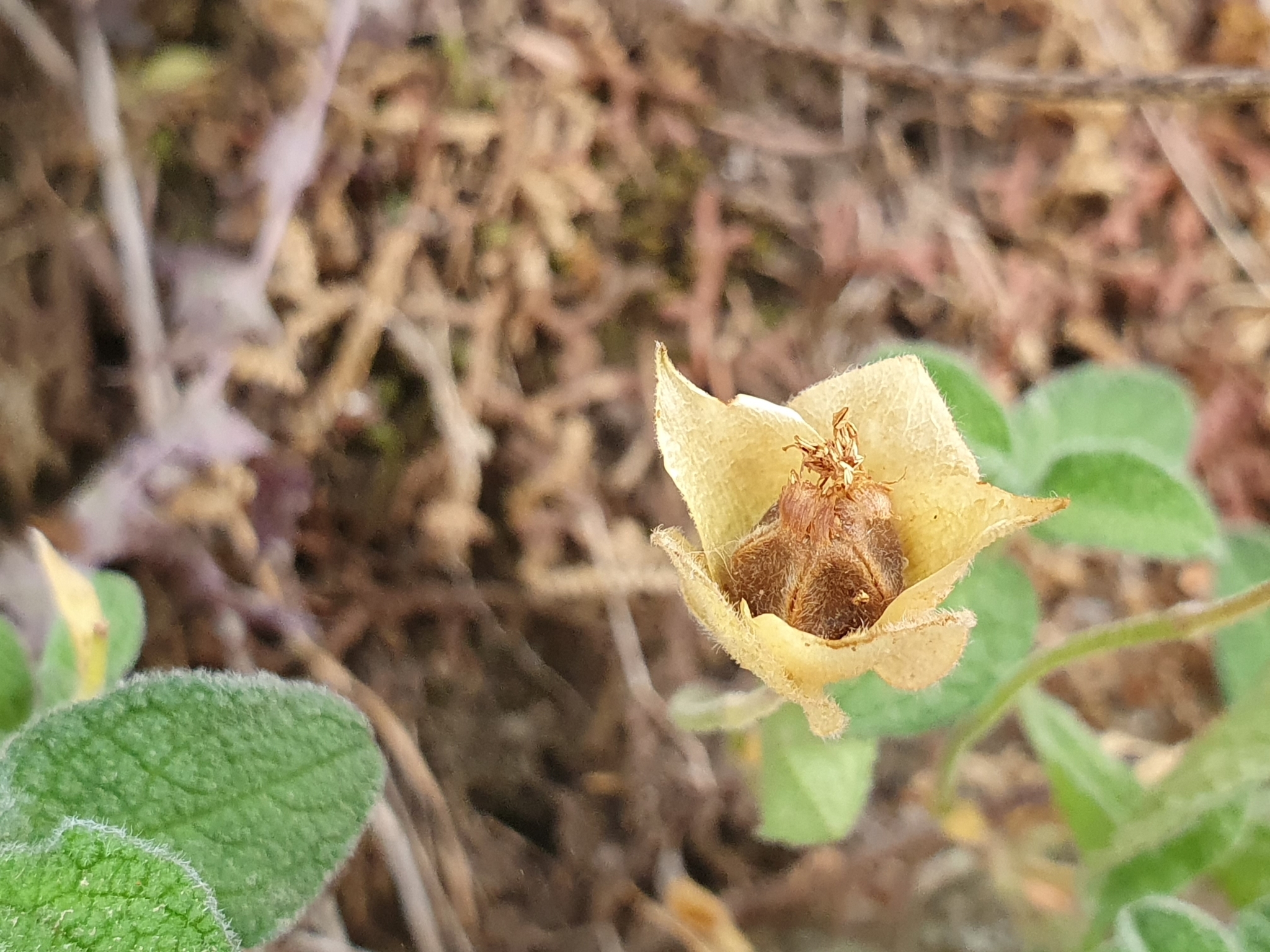
Flowers generally measure 4–5 cm (1.6–2 in) across. Five white petals surround numerous yellow stamens; petal bases can be yellow. Flower stalks arise from leaf axils and bend before opening. The style remains very short. After flowering, an upright five-chambered capsule 5–8 mm (0.2–0.3 in) long replaces the corolla. 2 3
Useful taxonomy
Cistus salviifolius is an accepted name, published by Linnaeus in Species Plantarum in 1753. It remains in Cistus and grows principally in the subtropical biome. Older floras may spell it Cistus salviaefolius; salviifolius is the accepted spelling. 1 2
Ledonia peduncularis Spach and Ledonia rhodanensis Jord. & Fourr. occur among its 53 synonyms. These historical scientific names are not nursery selections. Conversely, a quoted name after the binomial can identify a cultivar selected for habit. Keeping the distinction makes labels easier to interpret. 1 2 6
Habitat and range
The native range covers south-central Europe and the Mediterranean east to northwestern Iran; California and Madeira are introduced territories. It is therefore not exclusively French. Mediterranean landscapes and open woodland provide the light and relatively dry soils suited to natural populations. 1 5
In France it grows in woods and on siliceous slopes across the south, extending to Ain, Loire, Cantal and Vendée, and in Corsica. Swiss sites are sunny, rocky, scrub-covered slopes in Ticino. It is Vulnerable in Switzerland, a national rather than global status. Habitat closure and increasing shade are local threats. 2 3
The French national Red List assesses it as Least Concern, but regional lists classify it as Vulnerable in Auvergne, Limousin and Pays de la Loire. It is protected in Pays de la Loire and Dordogne, where destruction, picking, uprooting and sale of wild specimens are prohibited. 7
Life cycle and reproduction
An individual flower is brief, but successive buds sustain the display. In France it blooms in May and June, with climatic variation. Insects, especially bees, pollinate the flowers; capsules subsequently contain many fine seeds. 2 5 4 6
Cistus can be propagated by seed or cuttings. Take semi-ripe shoots from summer to early autumn, then overwinter them in a frame or unheated greenhouse. A cultivar's seedlings can differ from the parent; prefer cuttings to preserve a selected habit. 6
Cultivation and precautions
Winter drainage matters as much as summer drought tolerance. Plant in sun and shelter, without standing water. The RHS H4 rating refers to British conditions, with minimum temperatures around −10 to −5 °C (14–23 °F); moisture and exposure affect garden performance. 4
New plantings need water to establish roots. Established shrubs then require little watering and no routine fertilizer. Overly fertile soil produces soft shoots and a barer plant. No hazards are reported for the species, but missing data do not establish safety for children or animals. Group-specific information remains insufficient. 6 5
Look-alikes and horticultural forms
Montpellier cistus has narrower, sticky leaves. Its stalkless, linear-lanceolate leaves have rolled margins, accompanied by hairy, sticky shoots. 8 Sage-leaved rock-rose instead has broader, oval, wrinkled, nonsticky leaves. Checking several shoots is more reliable than comparing white petal color. Size and hairiness vary within the species. 2
Prostratus is a low, spreading selection reaching about 30 cm (12 in) tall. Choosing a form suited to the available space avoids severe pruning: old cistus reshoots poorly from bare wood. Light trimming of young shoots preserves branching more readily than late cutting of an already bare shrub. 6
Main sources
Sage-leaved rock-rose is native from the Mediterranean region to northwestern Iran. Botanical description and garden needs, including sun, drainage and hardiness, complement each other when choosing its position. 1
Frequently asked questions
How can sage-leaved rock-rose be recognized?
Its opposite, wrinkled leaves are oval, short-stalked and nonsticky. White flowers have many yellow stamens.
Does sage-leaved rock-rose need watering?
Water regularly while it establishes, then greatly reduce frequency. Established plants tolerate drought but dislike waterlogging.
Can an old cistus be cut back hard?
Avoid severe cuts into old wood, which reshoots poorly. Light trimming of young shoots or replacement of a very bare plant is preferable.
If you are unsure about a plant’s toxicity, ask a botanist or veterinarian for advice.