
Golden rat-tail cactus (Cleistocactus winteri, )
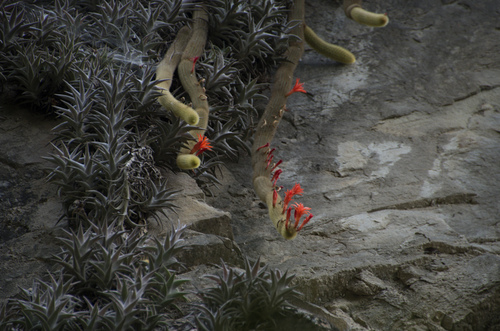

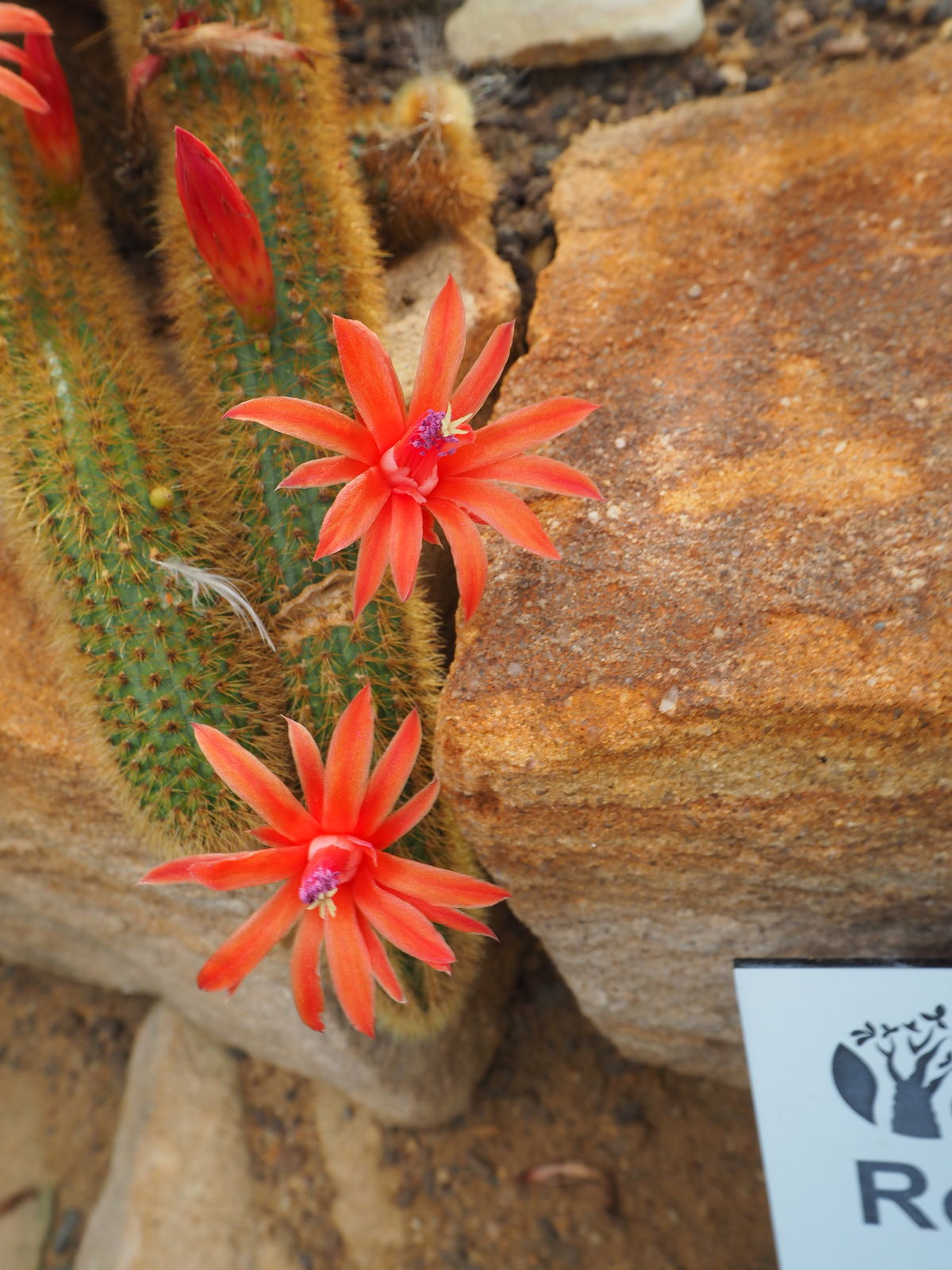
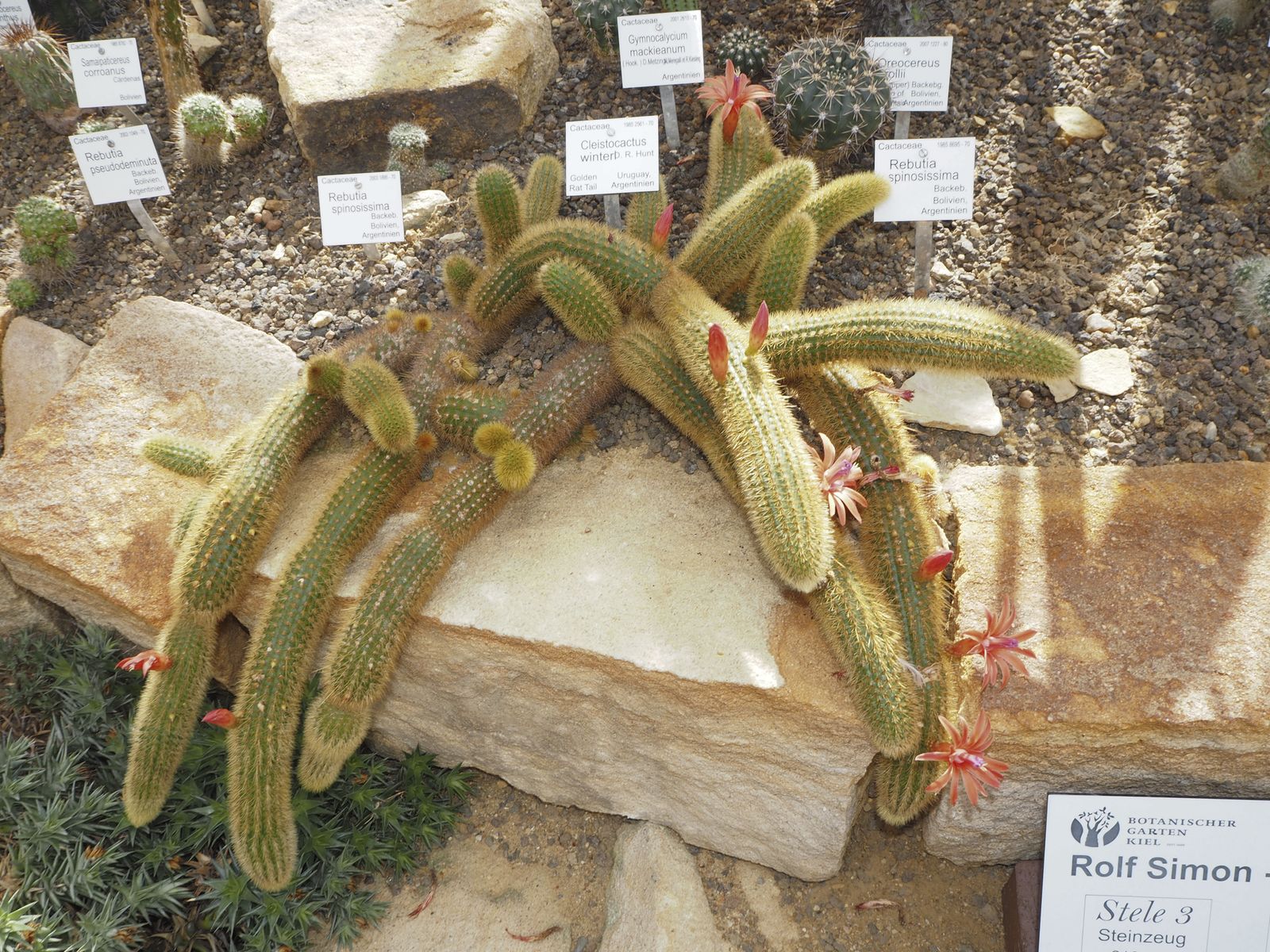
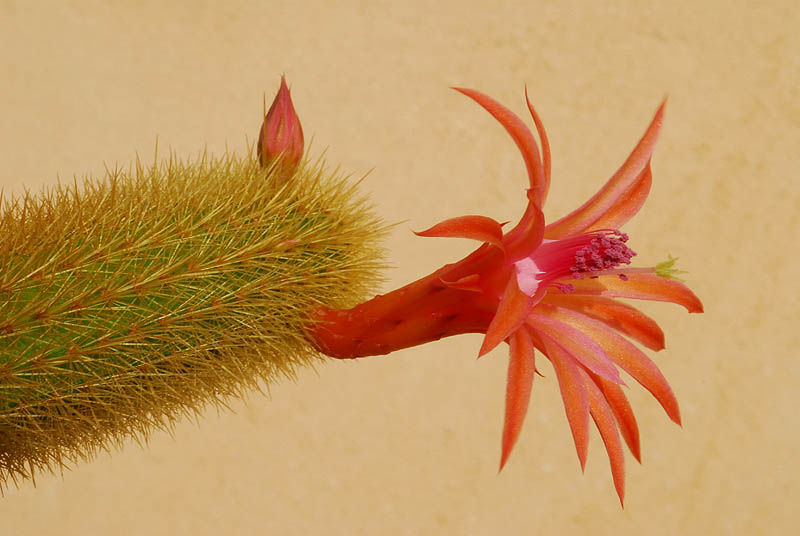
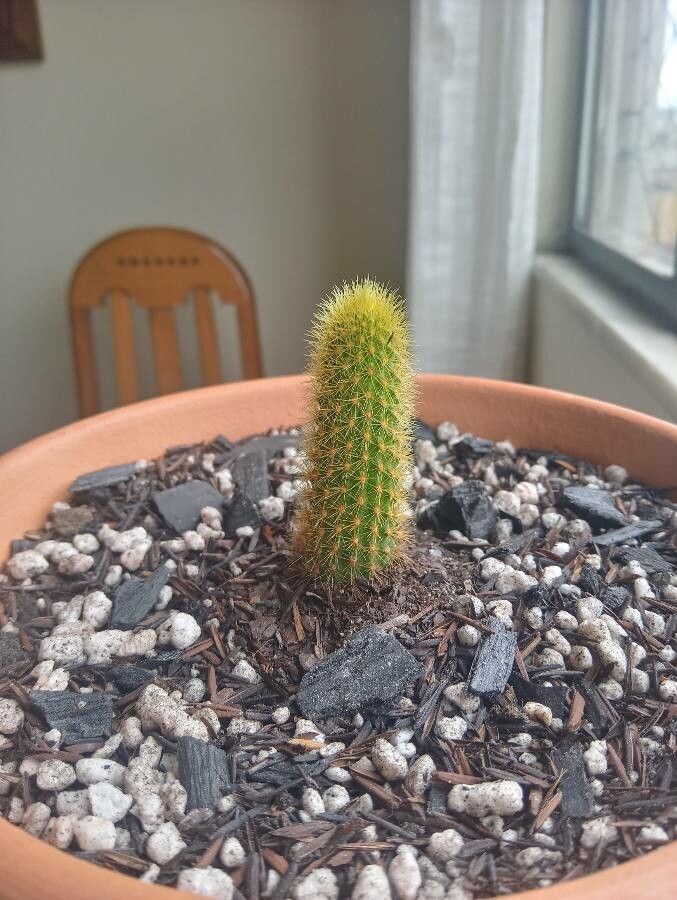
Golden rat-tail cactus (Cleistocactus winteri) has long, cylindrical stems covered in golden-yellow spines and orange-red flowers. In temperate climates, it is mainly grown in hanging containers in a conservatory or greenhouse, with plenty of light and a free-draining growing medium.
Read moreGolden rat-tail cactus
Winteria aureispina, Winterocereus aureispinus, Hildewintera aureispina, Borzicactus aureispinus, Cleistocactus aureispinus (F.Ritter) D.R.Hunt and Bolivicactus aureispinus
Place in full sun, with intense direct light all day long.
Full sun in a conservatory or temperate greenhouse.


© photo
(c) Martin Lowry, some rights reserved (CC BY-NC), uploaded by Martin Lowry · cc-by-nc
Wikimedia Commons · CC BY-SA or Public Domain
Wikipedia · CC BY-SA
Taken Apr 11, 2021 by Lee Cheng Ong (cc-by-sa)
Taken Apr 26, 2022 by William Coville (cc-by-sa)
© copyright of the Board of Trustees of the Royal Botanic Gardens, Kew.




Global distribution
Native to Bolivia, in the department of Santa Cruz.
Identity
Golden rat-tail cactus (Cleistocactus winteri D.R.Hunt, published in 1988) is a cactus with long, trailing stems covered in golden-yellow spines. The genus Cleistocactus belongs to the Cactaceae family, in the order Caryophyllales. The golden appearance of the stems comes from their covering of spines. 3 2 1
In cultivation in temperate climates, this trailing habit suits a hanging container in a conservatory or temperate greenhouse. The container allows the stems to hang freely, so space is needed below the pot as well as around the clump itself. 1
Identification
The stems are cylindrical and fleshy. Their dense covering of golden, bristle-like spines is the first identification clue. The stems can reach 1.5 m (5 ft) in length in the horticultural description; this measures a trailing stem and should not be interpreted as the height of an upright trunk. 1
For a specimen grown in a conservatory or temperate greenhouse, the horticultural height and spread categories are both 1–1.5 m (3.3–5 ft). These guidelines describe a developed plant in that growing environment. The way it is suspended and the direction of its stems matter when planning its position. 1
The orange-red flowers can reach 5 cm (2 in) in length. The British horticultural description places flowering in summer. This seasonal indication concerns that cultivation under cover and is not a universal calendar for wild populations in Bolivia. 1
Useful taxonomy
The name Cleistocactus winteri was published in Bradleya, volume 6, page 100, in 1988. It replaces a combination under Cleistocactus aureispinus that conflicted with an existing name, published by Frič in 1928. Names accompanied by different authors are therefore not interchangeable without checking their identity. 3
Several older labels refer to the same species: Winteria aureispina F.Ritter, Winterocereus aureispinus (F.Ritter) Backeb., and Hildewintera aureispina. The name Borzicactus aureispinus also appears in horticultural synonymy. Keeping these older names helps trace a plant in older catalogs without artificially multiplying the number of species. 2 1
Habitat and conservation
Bolivia is the species’ documented country of origin. The global assessment published in 2013 places its populations at 1,300–1,400 m (4,300–4,600 ft) above sea level, in habitat classified as forest. Conditions at a window or in a greenhouse remain a horticultural setting distinct from this natural habitat. 4
The assessment was carried out on September 21, 2010, and published in 2013. It classified the species as Endangered, with two locations, a severely fragmented population, and a decreasing trend. The entry indicates that an update is needed: the status must therefore be read with its date, rather than presented as a new field assessment. 4
Collecting wild plants is among the listed threats. When building a collection, choosing plants propagated in cultivation avoids contributing to that pressure on natural populations. 4
Growth cycle and propagation
The summer flowering described under cover accompanies a plant growing in a sunny position. For indoor cacti, British recommendations combine strong light with a cooler, drier rest period. This general approach must remain distinct from a cold-tolerance threshold specific to C. winteri. 1 6
During growth, check the growing medium before watering: the surface should have dried. Then allow excess water to drain and empty the saucer. In fall and winter, reduce watering substantially according to temperature and plant activity. These guidelines concern indoor cultivation in a temperate Northern Hemisphere climate. 6
Stem-forming cacti can be propagated by cuttings. The cut is allowed to dry and form a callus before the cutting is placed in a free-draining mix, kept only slightly moist during rooting. Sowing seeds is another method of propagating cacti; young seedlings require different moisture monitoring from a mature plant at rest. 6
Uses and risks
Its main use is ornamental, for the hanging stems and colorful flowers. A sandy growing medium suits the cultivation described for this species. General advice for indoor cacti calls for a very free-draining mix and discourages using an oversized pot: unused growing medium can remain wet and encourage rot. 1 6
Problems described for indoor cacti provide some useful clues: excess water can damage roots and cause rot; too little water causes shriveling and slows growth. Insufficient light produces weak, misshapen plants. Checking the growing medium helps distinguish these situations before adding more water. 6
The spines require protection during handling. To move or repot spiny cacti, thick strips of folded newspaper or suitable protection prevent direct contact with bare hands. The physical hazard of the spines must be distinguished from chemical toxicity. No safety classification has been established for humans, children, or the various animal groups; their status remains unknown. 6
Similar and related plants
Cleistocactus colademononis has long, white, hair-like spines, while those of C. winteri are golden and resemble bristles. Its flowers are described as red or pink. Both cacti have a trailing habit, but the color and texture of their covering distinguish them. 5 1
The former name Cleistocactus winteri subsp. colademono refers to C. colademononis. This earlier placement explains labeling confusion; it does not justify automatically transferring that plant’s characteristics or horticultural names to C. winteri. 5
Main sources
- Royal Horticultural Society, Cleistocactus winteri
- EPPO Global Database, Cleistocactus winteri (CSXWI)
- International Plant Names Index, Cleistocactus winteri
- IUCN, Cleistocactus winteri, 2010 assessment published in 2013
- Royal Horticultural Society, Cleistocactus colademononis
- Royal Horticultural Society, How to grow cacti and succulents
Frequently asked questions
How do you identify Cleistocactus winteri?
Its trailing cylindrical stems are densely covered in golden-yellow, bristle-like spines. The flowers are orange-red.
Are Cleistocactus winteri and Cleistocactus colademononis the same?
The two names refer here to distinct species. Cleistocactus colademononis, formerly also called C. winteri subsp. colademono, has white, hair-like spines; those of C. winteri are golden.
Can Cleistocactus winteri be grown in a hanging container?
Yes. A hanging basket suits its long, trailing stems. The horticultural cultivation described is in sun, in a conservatory or temperate greenhouse.
What conservation status is documented for Cleistocactus winteri?
The global assessment carried out in 2010 and published in 2013 classified it as Endangered, with a decreasing population. The entry notes that this assessment needs updating.
If you are unsure about a plant’s toxicity, ask a botanist or veterinarian for advice.