
New Zealand Cabbage Tree (Cordyline australis, )

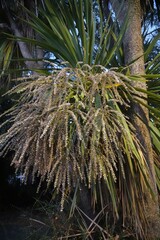
New Zealand Cabbage Tree (Cordyline australis) bears tufts of long, narrow leaves at the ends of thick branches. This evergreen New Zealand tree suits mild, sheltered gardens; in containers, its needs change between summer growth and overwintering.
Read moreNew Zealand Cabbage Tree, Cabbage Tree and Torbay Palm
Dracaena australis and Dracaenopsis australis
Place in full sun, with intense direct light all day long.
Sun or partial shade; a position sheltered from cold.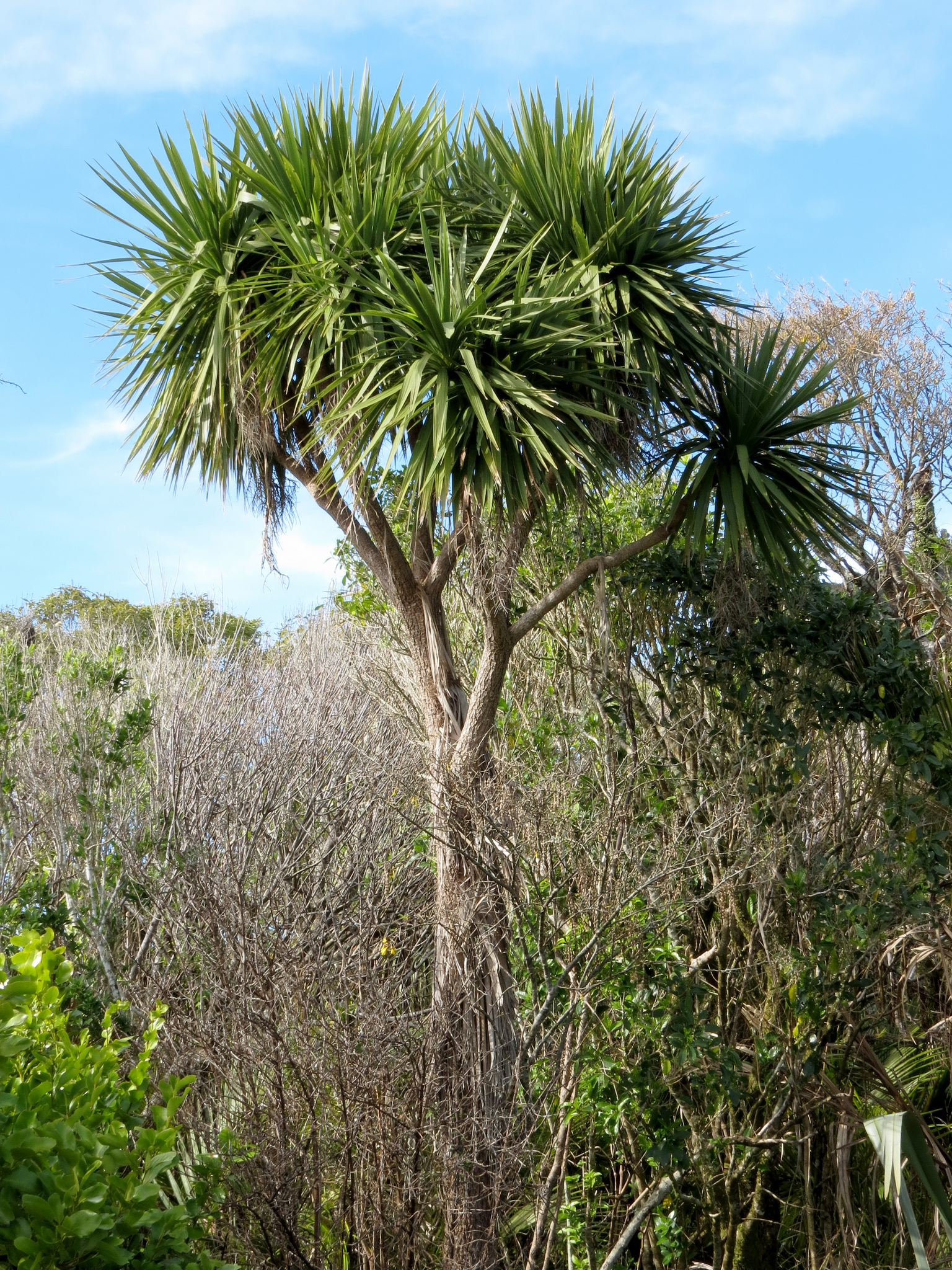



© photo
Katja Schulz · cc0
Colin Meurk · cc-by
Jon Sullivan · cc-by
Taken Nov 16, 2021 by francois tissot (cc-by-sa)
Taken Dec 8, 2002 by Alejandro Carrasco (cc-by-sa)
Taken Apr 25, 2022 by Manuel Hernández (cc-by-sa)
Taken Apr 26, 2022 by hooman ahmadi (cc-by-sa)
Taken Oct 21, 2021 by Jörg D (cc-by-sa)
© copyright of the Board of Trustees of the Royal Botanic Gardens, Kew.




Global distribution
A species endemic to New Zealand, grown as an ornamental tree in Europe and North America.
Identity
New Zealand Cabbage Tree (Cordyline australis) (G.Forst.) Endl., 1833 bears tufts of narrow leaves at the ends of thick branches. This evergreen tree belongs to the Asparagaceae, in the order Asparagales. Its appearance explains the English names cabbage palm and Torquay palm; the Māori name tī kōuka denotes this New Zealand species. 1 3 6
The older names Dracaena australis G.Forst. and Dracaenopsis australis appear among its synonyms. The epithet australis means “southern.” These botanical names do not denote colorful-leaved cultivars. 1 5
Recognition
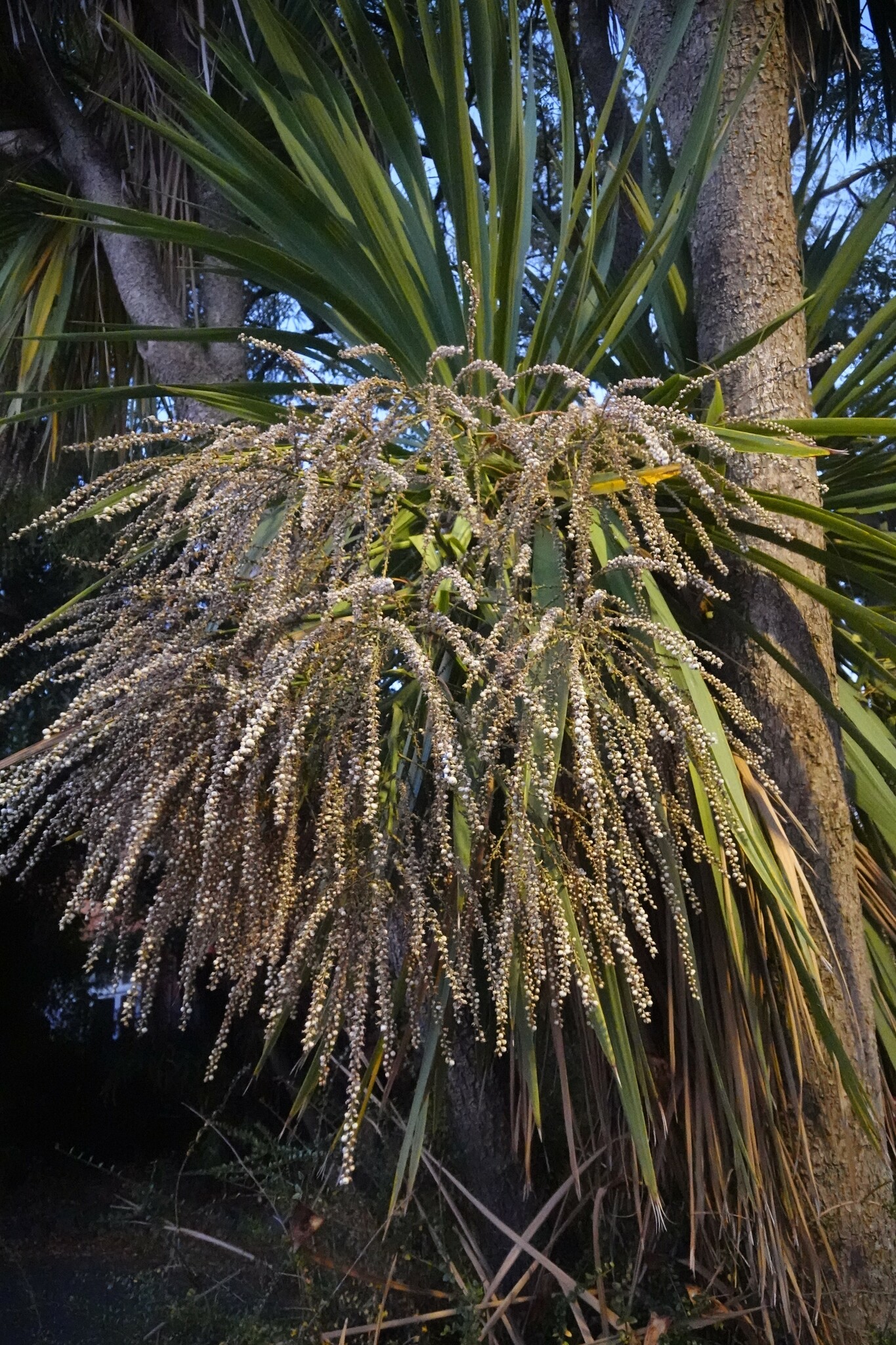
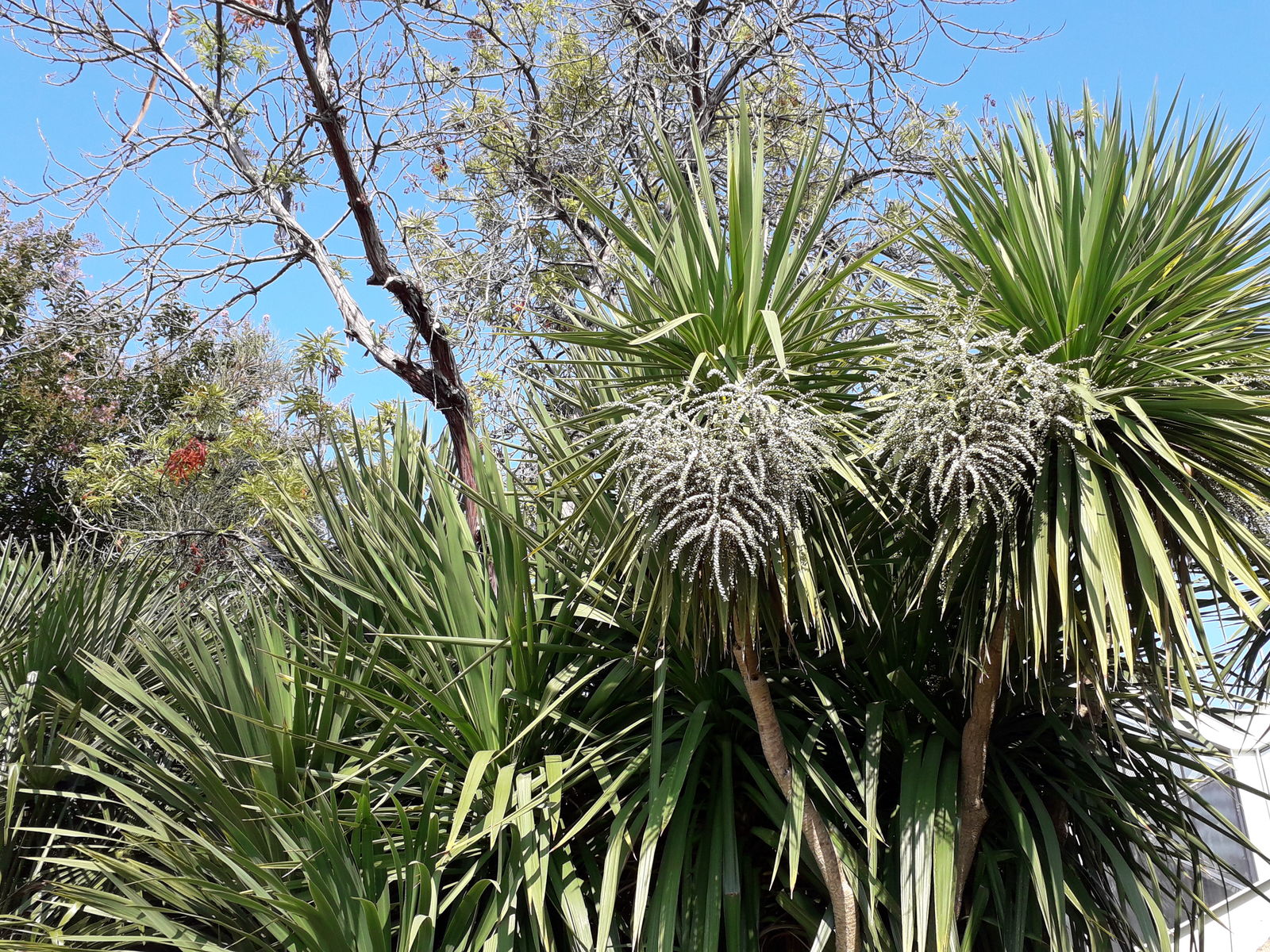
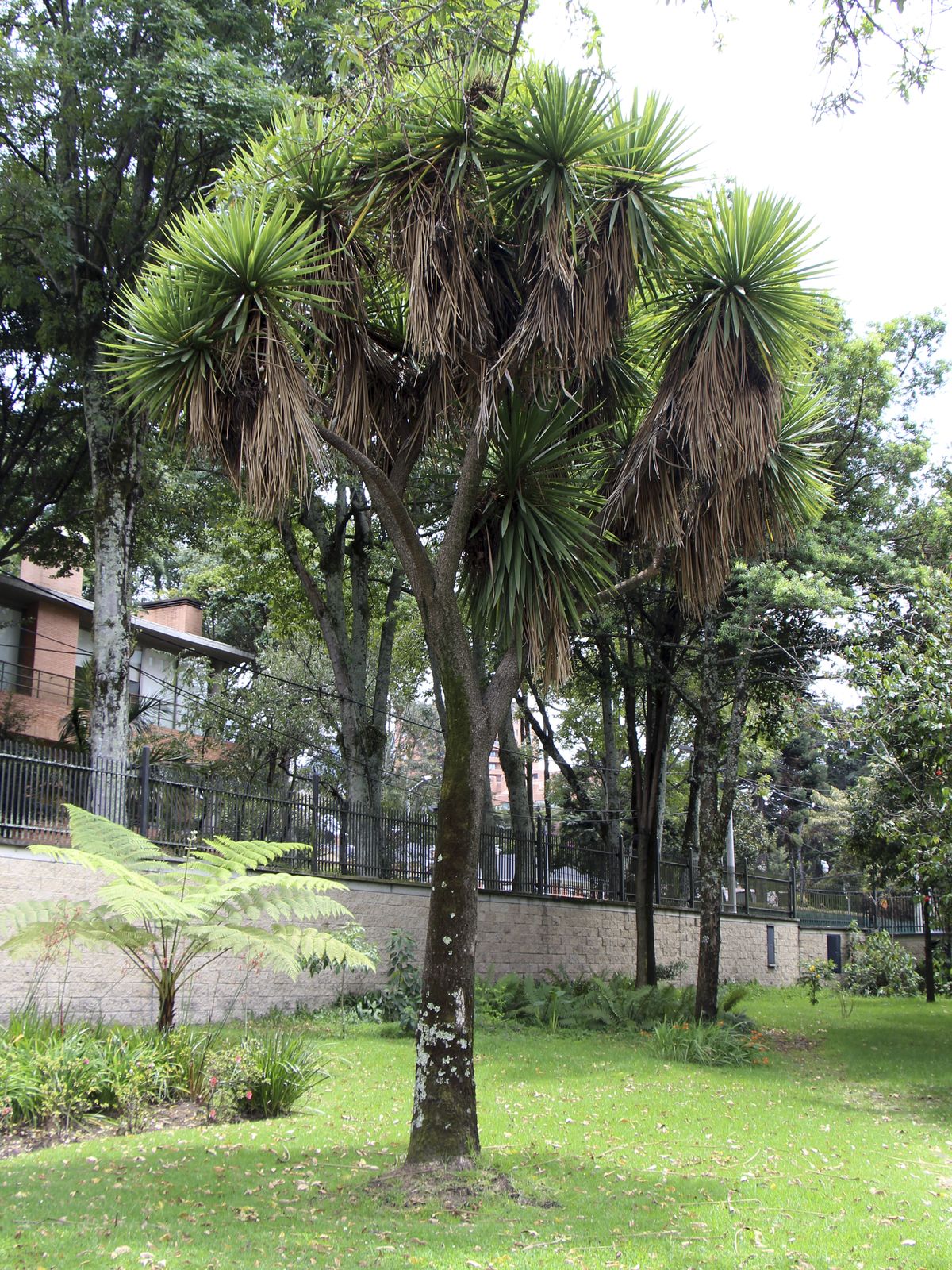
The leaves of Cordyline australis are long, pointed and clustered at branch tips. They reach 1 m (3.3 ft); dead leaves may persist as a skirt beneath the tufts. The gray bark is fissured and corky. Before the first flowering, the trunk generally remains unbranched; branches appear afterward. 6 5
The RHS gives a garden height of 4 to 8 m (13.1 to 26.2 ft), with a spread of 2.5 to 4 m (8.2 to 13.1 ft). The Department of Conservation describes trees 12 to 20 m (39.4 to 65.6 ft) tall in New Zealand. These dimensions reflect different contexts: a container plant does not reproduce the development of a tree in its natural habitat. 3 6 2
Habitat and distribution
Cordyline australis is endemic to New Zealand. The species occupies alluvial terraces and margins, as well as wet open spaces. Its presence on dry slopes shows broader ecological tolerance than that of a strictly aquatic plant. The Department of Conservation records it up to 1,000 m (about 3281 ft) above sea level. 5 6
This cordyline is widely cultivated in Europe and the United States. Tolerance of wet soils in some native habitats does not justify overwintering in a waterlogged pot: the RHS stresses damage from cold combined with persistent moisture in cultivation. 6 4
Care through the seasons
For Cordyline australis, choose well-drained soil and a sheltered position, in sun or partial shade. The RHS recommends planting cordylines in spring after the last frosts, giving the roots a growing season before winter. A large, deep container provides space for the taproot. 3 4 2
In containers, water regularly during growth, then reduce watering in winter. In the ground, pay particular attention to young plantings during their first summer; established plants tolerate drought better. Guidance for the genus recommends a balanced liquid fertilizer from spring to late summer for pots, without routine feeding in the ground. 4
In spring, top-dressing renews the upper layer of potting mix in a permanent container. This differs from full repotting. The monthly guidelines here concern a container in a temperate Northern Hemisphere climate: they translate this seasonal advice into relative indices, without prescribing water volumes. In cold winters, move the pot somewhere frost-free or protect the plant. Young specimens and colorful cultivars remain more vulnerable. 4
Life cycle and propagation
Panicles of fragrant flowers, white to cream, appear on mature plants. NC State places the first outdoor flowering often after 6 to 10 years, and describes flowering as rare in containers. The small, bluish-white berries feed birds, which disperse the seeds. 3 2 6
Fresh seed and stem cuttings allow Cordyline australis to be propagated. For the genus, the RHS recommends separating rooted suckers in spring. Flowering months reported in New Zealand belong to the Southern Hemisphere and do not determine the French care calendar. 5 4
Uses and risks
Māori have used fibers from Cordyline australis to make baskets and ropes. The Department of Conservation also describes food uses of prepared parts. These traditional practices are insufficient to establish general food safety. 6
The ASPCA lists the species as toxic to cats and dogs, because of saponins. Ingestion can cause vomiting, sometimes bloody, lethargy, loss of appetite and excessive salivation; dilated pupils are reported in cats. Suspected ingestion calls for prompt contact with a veterinarian. 7
Status remains unknown for human children and adults, and for animals other than cats and dogs. NC State flags a possible problem for horses without specifying an equine pattern of symptoms; this warning does not establish safety for them. 2 7
Cultivars and similar plants
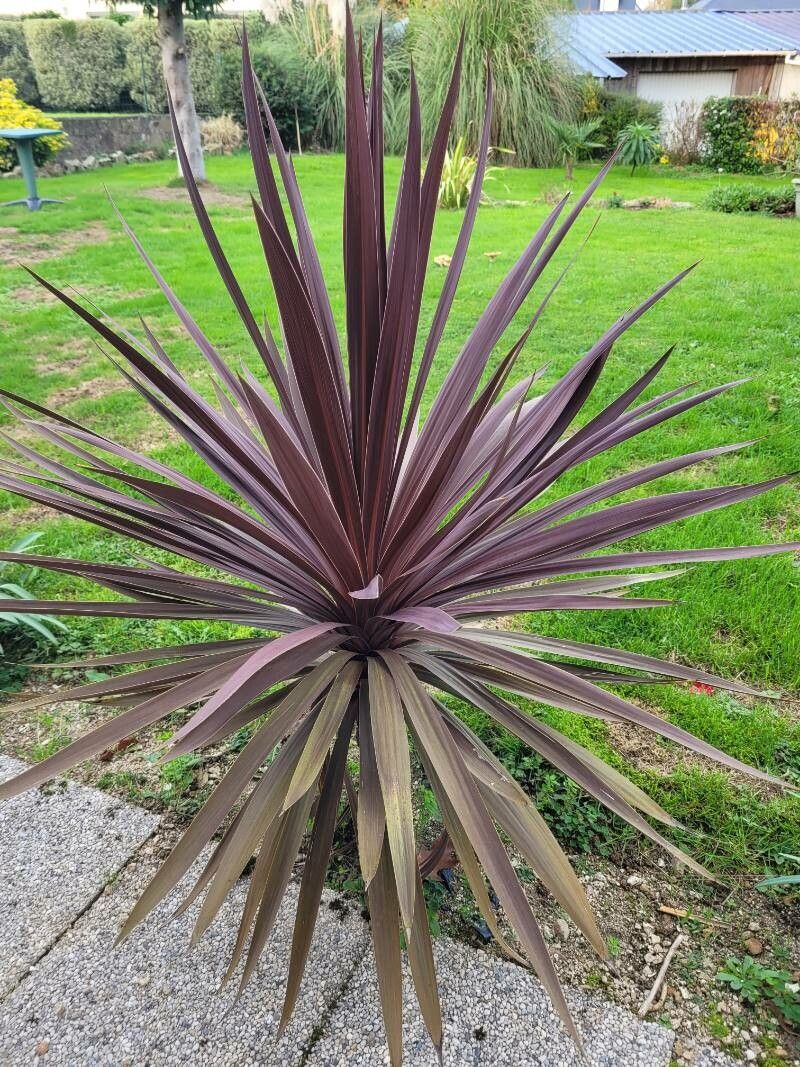
‘Torbay Dazzler’ has leaves strongly striped with creamy white. The RHS gives it a height of 2.5 to 4 m (8.2 to 13.1 ft): this range concerns the cultivar. ‘Red Star’, listed by NC State, differs in its narrow, bronze-red foliage. These horticultural features do not describe the whole species. 8 2
Cordyline indivisa has broader, blue-gray leaves and occurs in montane forest habitats. Cordyline pumilio generally lacks a trunk. The Department of Conservation reports hybridization between C. banksii and C. australis; a hybrid should therefore not automatically receive the identity or every feature of the pure species. 6
Main sources
The botanical sources describe the wild species; horticultural profiles specify growing conditions, and the ASPCA documents veterinary risks. The ‘Torbay Dazzler’ profile concerns that cultivar alone.
- GBIF Backbone Taxonomy, Cordyline australis
- NC State Extension, Cordyline australis
- Royal Horticultural Society, Cordyline australis
- Royal Horticultural Society, How to grow cordyline, guidance for the genus
- New Zealand Plant Conservation Network, Cordyline australis
- Department of Conservation, Cabbage tree/tī kōuka
- ASPCA Poison Control, Palm Lily, Cordyline australis
- Royal Horticultural Society, Cordyline australis ‘Torbay Dazzler’
Frequently asked questions
How large can New Zealand Cabbage Tree grow?
The RHS gives 4 to 8 m (13.1 to 26.2 ft) in gardens, while New Zealand sources describe trees reaching 20 m (65.6 ft) in their natural habitat. Climate and container cultivation alter dimensions.
Can New Zealand Cabbage Tree overwinter outdoors?
The species can stay outdoors in a mild, sheltered climate. Wet cold particularly threatens young plants and colorful cultivars; protect container plants or move them somewhere frost-free.
Is New Zealand Cabbage Tree toxic to cats?
Yes. The ASPCA lists the species as toxic to cats and dogs because of saponins. Contact a veterinarian promptly if ingestion is suspected.
If you are unsure about a plant’s toxicity, ask a botanist or veterinarian for advice.