
Rock samphire (Crithmum maritimum, )
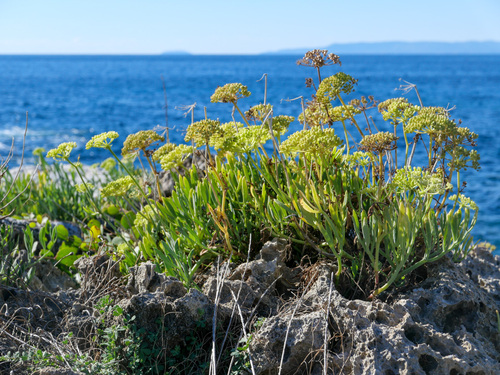

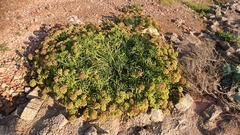
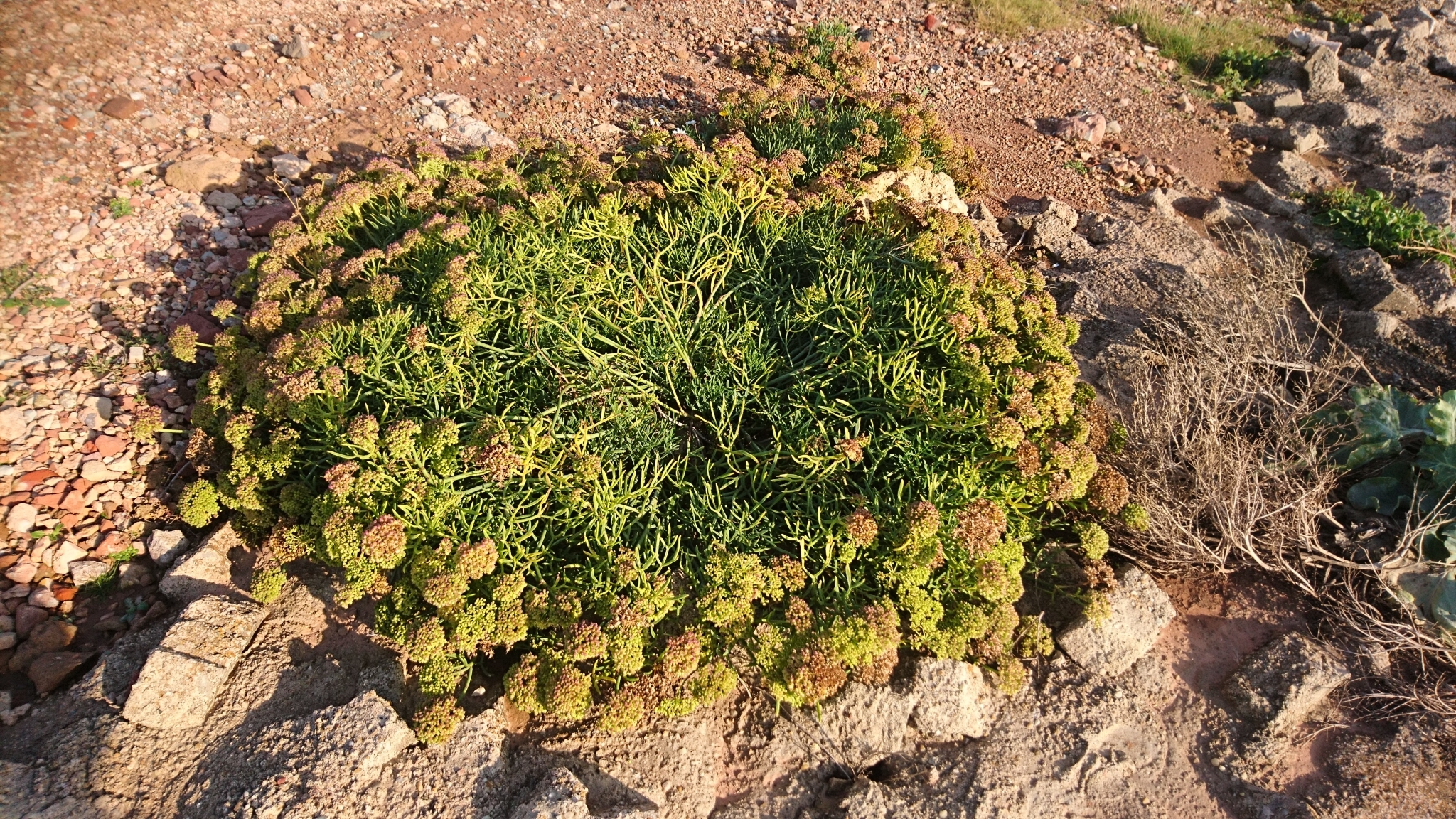
Rock samphire (Crithmum maritimum), also called sea fennel, is a perennial in the Apiaceae native to rocky coasts of western Europe, the Mediterranean and neighboring regions. Fleshy, narrowly divided leaves and greenish umbels distinguish it from glassworts and common fennel.
Read moreRock samphire and Sea fennel
Cachrys maritima and Crithmum canariense
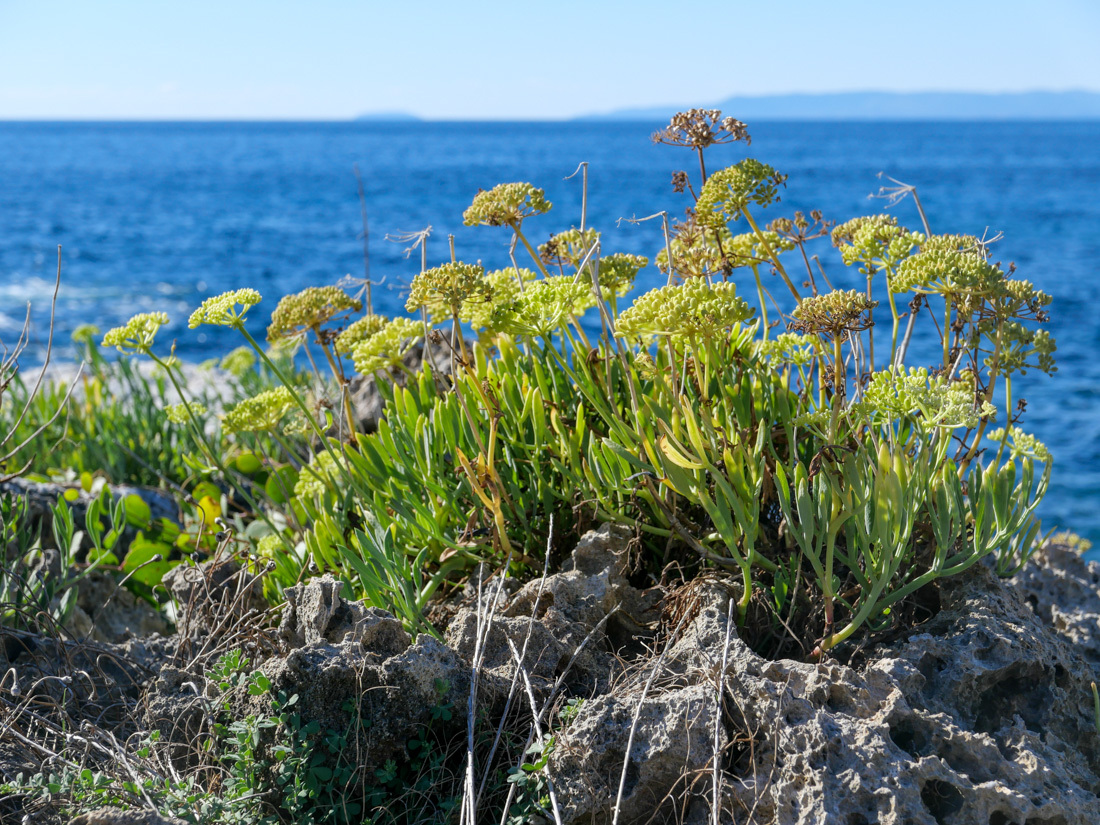
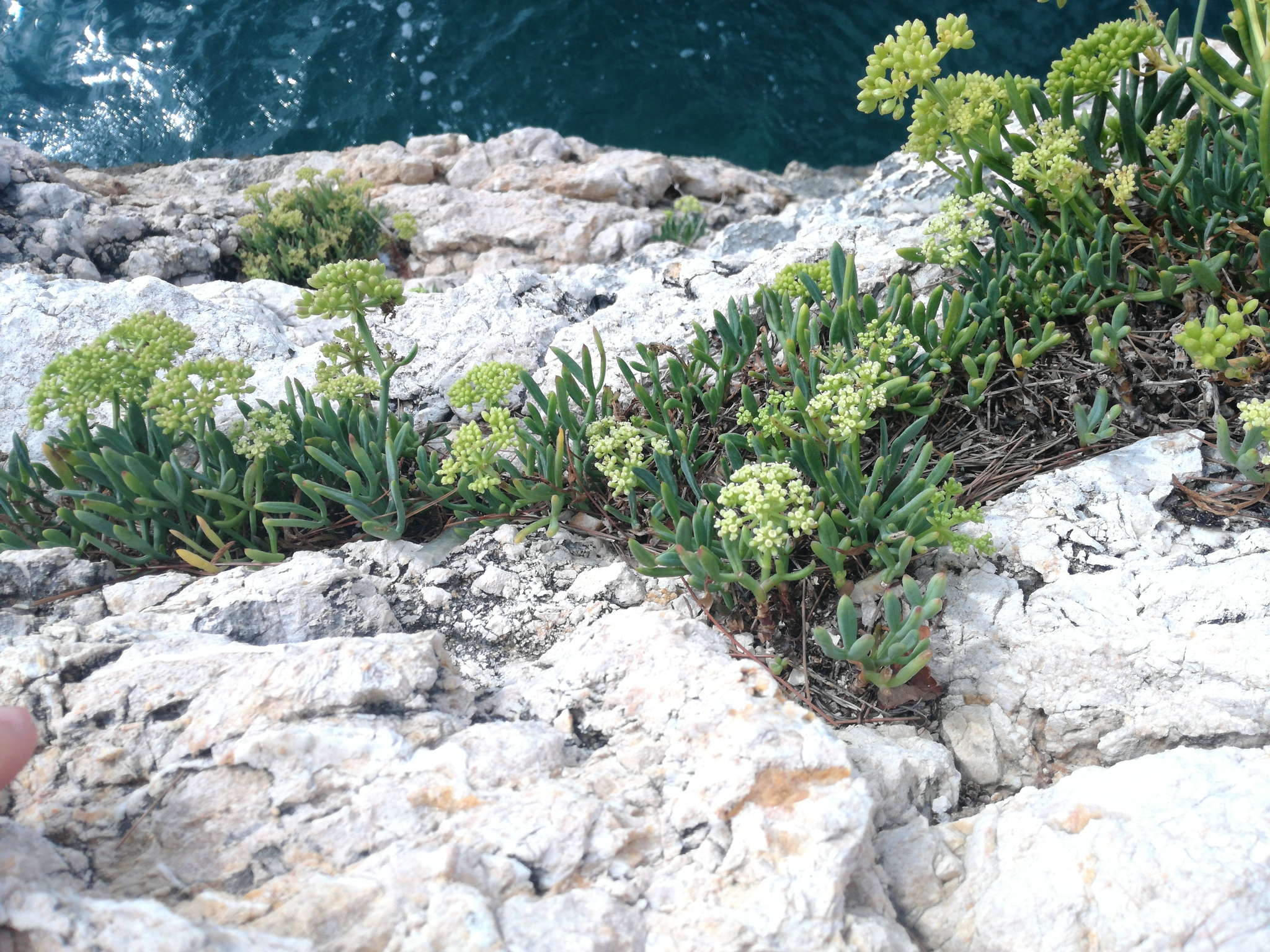


© photo
(c) Leif Fryle, some rights reserved (CC BY-NC), uploaded by Leif Fryle · cc-by-nc
iNaturalist User · cc0
Christoph Moning · cc-by
© copyright of the Board of Trustees of the Royal Botanic Gardens, Kew.
Global distribution
Native to Macaronesia, western Europe, the Mediterranean and western Caucasus; introduced in Germany.
- Native4
- Introduced1
- France
- Spain
- Morocco
- Madeira
- Germany
Hexagons: regions where the plant occurs. Green dots: native range.1
Identity
Rock samphire (Crithmum maritimum L., 1753), also called sea fennel, is recognized by fleshy, divided leaves and pale umbels. This perennial Apiaceae forms a branched clump about 20–50 cm (8–20 in) tall, with stems sometimes woody at the base. Its low, succulent form differs clearly from the familiar tall fennel with threadlike leaves. 361
French coastal names include crithme maritime, criste marine, fenouil marin and perce-pierre. Local usage changes between coasts, while the binomial provides a shared reference. The whole plant has a characteristic aroma, but smell alone cannot establish identity sufficiently for a food use. 836
Recognition
Thick, narrow, pointed leaf segments form lance-shaped strips. Leaves divide two or three times on hairless, ridged stems, often bending in a zigzag. Organ surfaces can give the green a bluish appearance. Photograph a complete leaf and its attachment to the stem rather than only one fleshy segment; the branching pattern helps interpret the whole structure. 36
Small flowers gather in compound umbels, described as greenish-white to greenish-yellow according to stage and account. Rays are thick and bracts numerous. Oval fruits have prominent ribs. Examining fruit complements identification after flowering, when flower color is no longer available as a character. 34
Useful taxonomy
Crithmum maritimum L. was published on May 1, 1753 in volume one of Species Plantarum, page 246. L. identifies Linnaeus as the author. This nomenclatural reference does not date the plant's arrival on coasts or the beginning of its consumption. 2
Cachrys maritima (L.) Spreng. and Crithmum canariense Cav. are synonyms. The epithet canariense in an old name does not automatically establish a separate Canary Islands species. Following synonymy between older and current documents avoids counting the same biological group several times. 1
Habitat and range
Coastal rocks and sand, especially cliff crevices and stony shores, support the plant. Its rootstock establishes in gaps accumulating little soil. Strong light, spray and rapid drainage characterize these habitats; they differ from a constantly moist freshwater bank. The maritime setting should therefore be considered together with the plant's structure when selecting a garden site. 35
The native range extends from Macaronesia through western Europe and the Mediterranean to the western Caucasus. France, Portugal, Morocco and Greece are among native territories; Germany is listed as introduced. Country boundaries do not capture the difference between a favorable rocky shore and inland areas where the species is absent. 1
Life cycle and reproduction
Summer flowering can continue into fall. In France it runs July–October; cultivated umbels are recorded April–September in the northern conditions described. Climate and position affect timing. Look for buds, open umbels and fruits on one clump to follow the cycle, rather than reducing the plant to a single week of bloom. 34
Fruit develops after insect pollination and ripens August–October in these northern records. For cultivation, local fall sowing is advised: short-lived seed is best sown soon after ripening. A young plant needs to establish before showing the resilience of a rooted clump. Watering must therefore account for growth stage even in a species associated with dry habitats. 54
Uses and risks
Leaf condiment uses are documented, raw or cooked and often preserved in vinegar. Strong, salty, aromatic flavor explains use in small quantities; pickling is traditional in Mallorca. Food records concern particular parts and preparations. They do not validate every concentrated extract or medicinal use sometimes attributed to the species. 563
Wild collection is regulated in several French departments. In Landes, protection prohibits destruction and picking. Finistère limits family collection to one handful per day; authorized commercial collection is by hand without uprooting, during May–June and September–October. In Ille-et-Vilaine, collection for sale requires prefectural authorization. The French national Red List assesses the species as Least Concern. These rules retain their French local scope. 8
No species-specific toxicological status is established for cats, dogs or horses. Dangerous-plant lists do not cover every plant, so absence of an entry cannot mean safe. Veterinary data remain insufficient, with no established toxic principle or characteristic clinical pattern. Before human collection, identify the entire plant: aroma and a seaside location alone cannot name it. 7
Varieties, look-alikes and related plants
Sea fennel is not a glasswort. Divided leaves and umbels place it in Apiaceae; a popular name describes aroma rather than close relationship with every salty plant sold as a sea vegetable. Precise leaf and inflorescence descriptions go beyond this resemblance of use. The French names do not identify separate cultivars. 618
Garden cultivation favors full sun and well-drained sandy or stony soil. Exposed positions and gravel gardens are suitable. Inland, very well-drained, poor, dry soil, warmth, shelter and cold-winter protection replace coastal conditions; cultivation outside its habitat remains delicate. Allow a lasting position and monitor establishment: mature size takes several years rather than one season. 45
Main sources
Identification, coastal habitat and collection rules are distinct from food uses, which do not establish general veterinary safety.
Frequently asked questions
Is rock samphire a glasswort?
No. Rock samphire belongs to Apiaceae, with divided leaves and umbels unlike glassworts.
Can rock samphire grow inland?
Yes, but cultivation is delicate. Away from the coast, provide very well-drained, poor, dry soil, a warm sheltered position in full sun and protection during cold winters.
Which parts have documented food uses?
Leaves are used raw, cooked or pickled as a condiment; fruits also have condiment uses. Collection is regulated in several French departments, and culinary use does not establish veterinary safety.
If you are unsure about a plant’s toxicity, ask a botanist or veterinarian for advice.